This site is supported by our readers. We may earn a commission, at no cost to you, if you purchase through links. This content is for general informational and educational purposes only and is not a substitute for professional medical, dermatological, or nutritional advice.

Your stylist says "balayage," your friend swears by highlights, and every TikTok you scroll is serving ombre realness. Three techniques, a hundred opinions, and somehow you still have to pick one before your next appointment.
The difference between them isn’t just aesthetic. It shapes how often you’ll sit in a salon chair, how much damage your strands absorb, and whether your color still looks fresh at week ten or sad by week four.
Understanding balayage vs highlights vs ombre means you can walk in knowing exactly what you want, and walk out actually getting it.
Table Of Contents
- Key Takeaways
- Balayage Vs Highlights Vs Ombre: Key Differences
- Balayage: Freehand Color for Natural Dimension
- Highlights: Foiled Brightness From Root to Tip
- Ombre: a Bold Dark-to-Light Gradient
- How to Choose Balayage, Highlights, or Ombre
- Frequently Asked Questions (FAQs)
- Is balayage out of style in 2026?
- Is ombré or balayage more expensive?
- What looks better, highlights or balayage?
- Is ombré outdated?
- Can balayage, highlights, or ombre be combined?
- How much does each coloring technique typically cost?
- Do these techniques work on curly or coily hair?
- Can you do balayage or highlights at home?
- How do you transition between different coloring techniques?
- Conclusion
Key Takeaways
- Balayage’s freehand, root-skipping application means your grow-out blends naturally, stretching touch-up appointments to every 8–12 weeks and keeping damage lower than foil highlights.
- Highlights deliver the most uniform, root-to-tip brightness but require the most frequent upkeep — plan for a salon visit every 4–6 weeks to avoid a sharp, visible regrowth line.
- Ombré is the lowest-maintenance option of the three, since its dark-to-light gradient simply shifts as your hair grows, with color refresh needed only every 12–16 weeks.
- Your natural base color, hair texture, and honest assessment of your lifestyle — not just a Pinterest photo — should drive your technique choice, since each method has real, lasting trade-offs in cost, damage, and salon time.
Balayage Vs Highlights Vs Ombre: Key Differences
So you’ve got three gorgeous options and zero clue which one is your match? Don’t stress, babe. Let’s break down the key differences in how each one is applied, where the color lands, and how much salon time they’ll actually cost you, so you can walk into your next appointment knowing exactly what to ask for.
If uneven results are already on your radar, knowing how to fix hair that dyed unevenly can help you troubleshoot before your appointment — or decide it’s time to call in a pro.
Application Methods
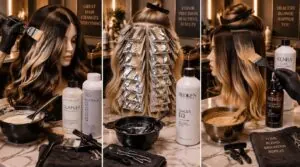
Picture your colorist at work: balayage relies on a freehand painting technique, sweeping lightener onto the surface for soft, lived-in dimension. Highlights use foils to isolate strands, delivering precise, predictable lift from root to tip. Ombre? Your colorist applies the color in blended horizontal sections, building a smooth gradient.
Since each technique takes a different amount of chair time, it helps to see how long it takes to dye hair at a salon before you book your appointment.
| Technique | Tool |
|---|---|
| Balayage | Freehand strokes |
| Highlights | Foil wraps |
| Ombre | Sectioned blending |
So which method slays your vibe?
Color Placement and Contrast
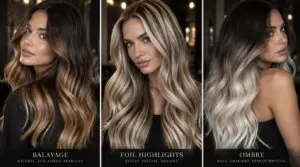
Where the color lands changes everything. Balayage keeps saturation on the midlength and ends, skipping the root for that sun-kissed lift. Highlights pack the entire section saturated in a foil, so brightness runs root to tip. Ombre builds one bold horizon, dark fading to light. Your hair color contrast sets the mood, and dimension plays throughout the hair differently in each.
| Technique | Contrast Level |
|---|---|
| Balayage | Soft, natural |
| Highlights | Bright, defined |
| Ombre | High, dramatic |
So, subtle glow or statement shade?
Grow-Out and Longevity
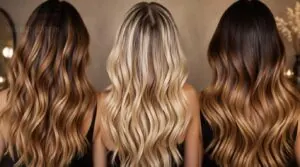
Here’s where placement pays off. Balayage grows out softly because freehand color skips the root, so your hair regrowth patterns melt right in at 8 to 12 weeks. Highlights show the sharpest line and need the most frequent touchups. Ombre? Lowest maintenance wins, since the gradient simply shifts as your hair color grows out.
For a deeper look at how often you’ll actually need to book that salon appointment, the partial balayage vs. full balayage maintenance breakdown lays out exactly what to expect in terms of touch-up timelines.
| Technique | Grow-Out Window |
|---|---|
| Balayage | 8–12 weeks |
| Highlights | 4–6 weeks |
| Ombre | 12–16 weeks |
| Darker bases | Less visible regrowth |
| Cooler toners | Slower fading |
Notice the softness in the regrowth? That’s balayage doing its thing.
Maintenance Schedules
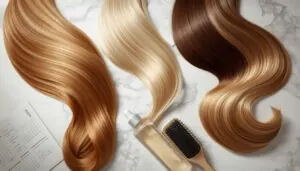
That softness in the regrowth? Gorgeous, but it only lasts if you book smart. Here’s your cheat sheet:
| Technique | Touchups | Toner/Gloss |
|---|---|---|
| Balayage | 8–12 weeks | 6–8 weeks |
| Highlights | 4–6 weeks | Every visit |
| Ombre | 12–16 weeks | 4–6 weeks |
Highlights demand the most frequent touchups, while ombre stays low maintenance. Book your next appointment before you leave, and use color-safe shampoo to stretch every window.
Damage and Hair Health
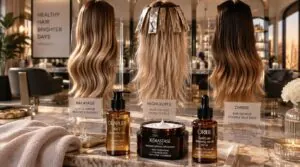
One big truth: hair damage depends more on per-strand lift than technique labels. Balayage concentrates lightening mid-length to ends, foils insulate and heat strands, and ombre pushes ends hardest.
Understanding how bleaching and heat accumulate damage strand by strand matters even more when underlying factors like stress or iron deficiency are quietly weakening hair before a single foil touches it.
| Technique | Max-Lift Zone | Damage Risk |
|---|---|---|
| Balayage | Mid-lengths | Lower |
| Highlights | Root to tip | Higher |
| Ombre | Ends | Moderate |
Protect with hair health preservation: bond builders, colorprotecting products, deep hair hydration masks, and gentle hair maintenance between appointments.
Balayage: Freehand Color for Natural Dimension
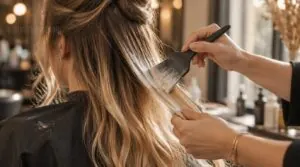
Painting lightener freehand is what sets balayage apart, and honestly, it’s why the result looks so natural. Your colorist literally sweeps product onto the surface of your hair freehand painting style, no foils, no rigid patterns, just intuition and a light hand.
Here’s what makes it slay:
- Clean, dry or slightly damp hair gets the lightener
- Sweeping and feathering motions create soft blended highlights
- Mid-lengths and ends get the lift, not your roots
- Sectioning and hand speed shape the final look
- Contrast stays gradual, so regrowth hides beautifully
The payoff? That natural sunkissed glow people pay big for. Because the freehand method of sweeping lightener skips the base, your grow-out stays soft, and your touch-ups stretch to every 8 to 12 weeks. Less damage, more dimension, your fave.
Freehand color skips your roots so grow-out stays soft and touch-ups stretch to every 8–12 weeks
Highlights: Foiled Brightness From Root to Tip
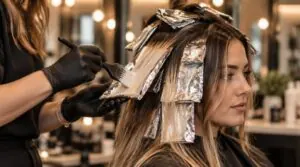
Picture crisp silver packets stacked along a head of hair, each one wrapping a promise of lift. That’s hair foil application, simply put: precise, controlled, and unapologetically bright. Your colorist paints lightener onto selected strands, and each entire section is saturated in a foil so heat builds and the lift stays even. The result? Allover brightness with clearly defined lightened areas, applied from roots to ends when you want maximum glow. Professional colorists rely on salon hair highlighting foils to keep each painted section crisp, preventing bleed and locking in even heat for that flawless, luminous result.
Here’s the quick cheat sheet:
| Factor | What Happens | Why It Matters |
|---|---|---|
| Developer | 20–30 volume | Controls lift strength |
| Placement | Starts at midshaft | Protects regrowth, softer line |
| Face framing | 1–2 inches off scalp | Brightens without overpowering base |
| Upkeep | 6–8 week touch-ups | New growth only, not full re-foil |
Foil work gives you that uniform, camera-ready brightness balayage can’t quite match, but it grows out with a visible foil line, so book your toner refresh every 3–6 weeks to keep brass at bay. Slaying the shine game? Deep condition weekly, because high lift raises your hair’s moisture needs fast.
Ombre: a Bold Dark-to-Light Gradient

Imagine dipping your hair into a sunset: deep espresso at the crown melting into caramel, then honey, then barely-there gold at the tips. That’s ombre, the hair gradient effects queen.
Here’s the vibe: the color gradient starts at your natural root, stays darkest there, and diffuses through freehand painting into lighter ends. No foil lines, just a smooth fade.
Think of the drama dial in three stops:
- Low-key: gradient begins at the mid-lengths for subtle warmth.
- Medium: a noticeable shift from dark roots to lighter ends.
- Full glam: high-contrast ends that slay with every flip.
Bonus? Lightening concentrates on your ends, sparing your crown from processing. Pair it with bond builders and color-safe shampoo, and your ombre stays gorgeous for 6–12 weeks between root shadowing and gloss appointments.
How to Choose Balayage, Highlights, or Ombre
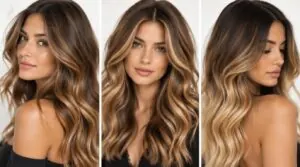
Choosing the right technique comes down to a few key factors that are totally personal to you. Your lifestyle, natural base color, and how much salon time you’re willing to commit all play a role. Here’s what to keep in mind before you book that appointment.
Desired Color Result
Your desired look is everything here. Want relaxed, beachy dimension? Balayage delivers that soft natural dimension without harsh lines.
Craving bold drama with a dark roots to lighter ends shift? Ombre’s your move.
Prefer all-over brightness? Highlights cover every strand.
Knowing the vibe you’re chasing makes hair color blending so much easier to nail.
Base Color and Lift
Your natural base is basically the rulebook here. Dark roots to lighter ends already give balayage its magic, since handpainted saturation lives on the midlength and ends.
Deeper bases below level 5 demand serious lift for cool or neutral results. Highlights handle that lift most uniformly, while ombre needs tight control at the mix zone so color contrast reads intentional.
Hair Length and Texture
Once you’ve sorted your base, hair texture and length are the next call. Freehand painting on medium to longer hair lengths softens the visible root line as the hair lightening process develops.
- Wavy hair blurs harsh contrast
- Curly textures need softer freehand painting
- Straight hair reads tonal shifts sharply
- Longer lengths hold ombre gradients beautifully
- Fine hair lifts fastest overall
Lifestyle and Salon Upkeep
Your texture and length shape how often you’ll need to sit in that salon chair. Balayage is the low-maintenance fave, stretching your hair appointment to every 10-12 weeks.
Highlights demand frequent touchups every 6-8 weeks to keep roots looking crisp and fresh. Hair color longevity really lives and dies by your hair maintenance routines, so be honest about your schedule.
Color-Safe Aftercare
Salon visits only go so far, and your color-safe aftercare routine is what actually drives hair color longevity. Swap sulfate-heavy shampoos for gentler formulas, rinse with cool water, and wash less often to slow pigment loss.
UV exposure and heat are sneaky faders, so a protectant spray also keeps hair healthy before styling. Good maintenance keeps any technique slaying longer.
Frequently Asked Questions (FAQs)
Is balayage out of style in 2026?
Balayage is definitely not going anywhere. It’s still one of the most in-demand hair color trends of 2026, with clients requesting it specifically for that soft, natural low-maintenance grow-out and effortlessly sun-kissed dimension it delivers.
Is ombré or balayage more expensive?
Honestly, it depends on your hair. Ombré often costs more upfront because it needs heavy pre-lightening and a smooth mix. But multi-tonal balayage on long hair can match or exceed that price.
What looks better, highlights or balayage?
Beauty’s in the eye of the beholder, but here’s the truth: neither wins outright. Balayage delivers natural hair dimension and depth with soft, blended color placement. Highlights give brighter, uniform contrast. Your hair goals decide.
Is ombré outdated?
Nope, ombré isn’t outdated. It’s evolved. Think soft gradients, reverse ombré, and lower-contrast transitions instead of harsh lines. Customize your darkness-to-light ratio and it’s still slaying. Your fave color mix just got smarter.
Can balayage, highlights, or ombre be combined?
Absolutely, and the combos are excellent! Layer foils over balayage for targeted brightness, or mix ombre with balayage for a softer fade. Your colorist can mix techniques for fully suited, slaying dimension.
How much does each coloring technique typically cost?
Expect to pay roughly $100–$260 for balayage, $70–$210 for highlights, and $120–$260 for ombre, depending on length. Long, thick hair? Those hair coloring services can climb to $500, since hair stylist expertise and processing time cost extra.
Do these techniques work on curly or coily hair?
Yes, all three work on curls and coils! Your stylist just needs texture-aware sectioning and saturation. Balayage follows curl clumps, highlights risk striping, and ombre transitions can look stair-stepped. Porosity matters most.
Can you do balayage or highlights at home?
Oh sure, freehand painting hair with bleach in your bathroom mirror sounds foolproof. Technically you can, but balayage needs trained hands, and foil highlights demand precise timing, so professional assistance slays every time.
How do you transition between different coloring techniques?
Switching techniques? Girl, it’s an art. Deepen your root shadow before foiling, keep mini-reserves of base color at junctions, then schedule color melting and targeted toning 2–4 weeks later for a smooth gradient mix.
Conclusion
Three techniques, one decision. Knowing the difference between balayage vs highlights vs ombre means you’re not just picking a color, you’re choosing how you live with it for the next several months.
Grow-out, damage, salon visits all factor in. Your lifestyle, your base, your patience for upkeep all matter just as much as the Pinterest photo you’re clutching.
Pick the technique that fits your actual life, not just your feed.