This site is supported by our readers. We may earn a commission, at no cost to you, if you purchase through links. This content is for general informational and educational purposes only and is not a substitute for professional medical, dermatological, or nutritional advice.
Your razor drags across your jaw and your skin answers with a hot, red sting. By lunch, the itch starts. By Friday, you’ve got bumps along your neckline and a beard that feels like steel wool.
Most guys blame the blade. The real culprit is usually everything around it: the rushed rinse, the dry skin, the missing prep. Smart beard shaving and skin care turns that cycle around, and it takes minutes, not hours.
You’ll learn how to build a simple routine, match products to your skin, shave with control, and calm irritation before it spreads. Your smoothest shave starts here.
Table Of Contents
- Key Takeaways
- Build a Daily Beard Skin Care Routine
- Choose Beard Products for Your Skin Type
- Prepare Your Beard and Skin for Shaving
- Shave Gently and Keep Your Razor Clean
- Soothe and Protect Skin After Shaving
- Manage Beard Itch, Dandruff, and Ingrown Hairs
- Frequently Asked Questions (FAQs)
- What to put on skin After shaving a beard?
- Will my chin grow back thicker if I shave it?
- What is the best skin care routine for men with beards?
- What do dermatologists recommend for shaving?
- How often should I replace my razor blades?
- Can I shave immediately after working out?
- What causes razor burn and ingrown hairs?
- Should I shave against or with grain?
- How do I treat cuts from shaving?
- How long does it take to grow a full beard?
- Conclusion
Key Takeaways
- You’ll get fewer nicks, bumps, and burns when you prep first with warm water, preshave oil, and a few minutes of patience, then shave with the grain using light strokes and a sharp blade.
- You’ll keep your skin calm when you match products to your skin type, skip alcohol and fragrance if you’re sensitive, and patch test anything new on your jawline for 48 hours.
- You’ll protect your skin after every shave by rinsing with cool water, applying a fragrance-free moisturizer with ceramides and glycerin while your face is damp, and wearing SPF 30 or higher.
- You’ll beat itch, flakes, and ingrown hairs by treating your beard like skin: hydrate daily, wash with beard shampoo only two to three times a week, use ketoconazole 1% shampoo for dandruff, and swap your blades every five to seven shaves.
Build a Daily Beard Skin Care Routine

You get a better beard when you treat it like skin, not just hair. Great beard shaving and skin care starts with a daily routine you actually stick to. Think of it as your beard’s training plan.
If a dye job leaves your beard looking patchy or too dark, how to remove beard dye safely can help you fix it without stripping your skin.
Treat your beard like skin, not just hair, and a daily routine you actually stick to becomes its training plan
Start each morning with a lukewarm rinse to clear sweat and salt. Apply a few drops of beard oil, then brush through to set your style.
At night, cleanse only if you need to, then add oil or butter so skin and hair recover while you sleep. Nighttime conditioning with a light layer of oil or butter also helps prevent dryness, brittleness, and breakage, leaving you with a softer, smoother beard by morning.
Wash with beard shampoo only 2 to 3 times a week, massaging it into the skin. Shaving days need proper preparation: warm water and preshave oil, sharp blades with light strokes, then postshave moisturizers without alcohol.
Choose Beard Products for Your Skin Type

Your routine works best when the products match your skin. Beard shaving and skin care isn’t one-size-fits-all, so start by naming your skin type.
- Oily: Choose jojoba or grapeseed oil and a gel wash with salicylic acid.
- Dry: Reach for argan oil, sweet almond oil, or shea butter, applied on damp skin.
- Combination: Use light oil on your T-zone and richer balm on your cheeks.
- Sensitive: Pick fragrance-free, alcohol-free formulas with oatmeal, aloe, or chamomile.
- Normal: Keep it simple and stick with what’s working.
Patch test anything new on your jawline for 48 hours.
Once a product passes your patch test, ease it in slowly using this step-by-step guide to building a skin care routine from scratch so your skin has time to adjust.
That pays off at the razor. Proper preparation, warm water and preshave oil, sharp blades with light strokes along your hair’s natural grain love balanced skin.
Prepare Your Beard and Skin for Shaving

Your products are set. Now put them to work before the blade ever touches your face.
Proper preparation takes about five minutes and makes every pass easier. Start with washing and conditioning your beard using lukewarm water and a gentle cleanser. Then hold a hot towel on your face for 30 seconds to soften hair.
Next comes preshave skin prep. Massage a few drops of preshave oil into your beard area and let it soak in. Add a thick layer of alcohol-free cream, then wait one to two minutes. A brush lifts hairs and builds a richer lather.
Face shape determines which beard styles work, so tidy your neckline accordingly. Sharp blades with light strokes then finish the job smoothly.
Shave Gently and Keep Your Razor Clean
Now Shave Gently and Keep Your Razor Clean, and every pass gets easier.
Rinse the razor under warm water first. Use light strokes with hair growth and let the blade glide. Pressing hard invites nicks and ingrown hairs, so treat light pressure as skin sensitivity care. Rinse every few strokes to clear hair and foam.
Good razor hygiene doesn’t end at the last stroke. Rinse under lukewarm water, shake off the excess, and dry the razor with a clean towel.
Treat razor blade maintenance as part of your routine. Swap your blades after five to ten shaves, or sooner if you feel tugging or spot rust. Once a month, scrub the parts with a soft toothbrush and warm soapy water.
Soothe and Protect Skin After Shaving

You finish the last pass, but you’re not done yet. Aftercare for shaved skin decides whether you stay smooth or end up sore.
Rinse with cool water to clear leftover lather, then press a clean, damp cloth against your face. Skip the ice. Extreme cold can injure skin.
While your face is still damp, apply a fragrance-free moisturizer with ceramides and glycerin. Shaving strips surface oils, so this step rebuilds your moisture barrier and helps prevent razor burn.
Pick beard alcoholfree products, especially if you have sensitive skin. Alcohol stings, and fragrance can trigger reactions on the skin under your beard.
Apply broad-spectrum SPF 30 or higher and reapply every two hours. If pain, swelling, or pus appears, see a clinician.
Manage Beard Itch, Dandruff, and Ingrown Hairs
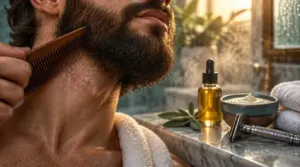
Itch, flakes, and bumps don’t have to run your beard. You can take back control of your skin with a few simple fixes. Here are the three problems you’ll tackle, one at a time.
Beard Itch and Dry Skin
Is your beard itch actually dry skin in disguise? Often, yes. Your beard wicks moisture away fast, especially in cold, dry air.
For beard itch relief, imagine this:
- Skin tight and flaky by noon
- Hair acting like a thirsty sponge
- Hot showers stripping your oils
- Winter wind sucking out moisture
- Harsh soap leaving a squeaky, stressed face
Fix it with beard hydration products, a gentle wash, and a daily beard moisturizing routine.
Beard Dandruff and Flaking
Flakes are your skin’s smoke signal: something’s burning underneath.
Fight beard dandruff with antidandruff shampoo: ketoconazole 1% beard dandruff shampoo, two or three times weekly. These beard dandruff solutions work fast.
| Sign | Cause |
|---|---|
| Greasy yellow flakes | Yeast |
| Dry, no redness | Dryness |
| Itchy, red | Inflammation |
Beard dandruff prevention means gentle cleansing and no petroleum jelly. Calm itchiness with twicedaily beard oil.
Razor Bumps and Ingrown Hairs
Every trapped hair is a thorn beneath your skin.
Razor bumps and ingrown hairs happen when cut hairs curl back inward. Here’s how you stop them:
- Shave with grain, not against grain.
- Replace blades every 5-7 shaves.
- Exfoliate gently once or twice weekly.
- Press a cool, damp cloth on skin afterward.
Skip them, and razor burn crashes your smooth finish.
Frequently Asked Questions (FAQs)
What to put on skin After shaving a beard?
Reach for a fragrance-free moisturizer right after you shave, while your skin’s still damp. Cream beats lotion. Look for glycerin and ceramides. Skip alcohol aftershave. Add SPF 30 by day.
Will my chin grow back thicker if I shave it?
Nope, shaving won’t make your chin hair grow back thicker. It only cuts the dead shaft above the skin and never touches the follicle. Stubble just feels coarser because the blunt tip is razor-cut.
What is the best skin care routine for men with beards?
Picture Mark, who skipped his beard grooming routine and scratched his chin all day. Now he cleanses twice daily, washes with beard wash 2-3 times weekly, and applies beard oil. Itch gone. Control gained.
What do dermatologists recommend for shaving?
Dermatologist-recommended shaving is simple: warm, wet skin, moisturizing cream, light strokes with hair growth, and a sharp blade. Pack a gentle beard wash in your beard grooming kit. Sensitive skin? Skin irritation prevention starts fragrance-free.
How often should I replace my razor blades?
Swap them every 5 to 7 shaves. Daily shavers, that’s weekly. Tugging, rough passes, or irritation mean it’s time. Rinse well, dry fully, and you’ll keep your skin safe.
Can I shave immediately after working out?
Skip it. Sweat and open pores make beard postworkout shaving a gamble, and friction on fresh skin is one of the top razor burn causes. Shower first, then shave with the grain for ingrown hair prevention. Shaving against grain? Save it.
What causes razor burn and ingrown hairs?
Razor burn starts when your blade scrapes away surface skin cells and wrecks your barrier. Dry shaving, hard pressure, and extra passes make it worse. Ingrown hairs happen when sharp, close-cut tips curl back into skin.
Should I shave against or with grain?
Most guys who battle razor bumps find the culprit is one angle. Should I shave against or with grain? Start with the grain. Your skin stays calmer, and razor burn prevention gets easier.
How do I treat cuts from shaving?
Treating cuts from shaving starts with steady pressure for ten minutes. Rinse with water, skip harsh antiseptic use, then finish with bandage application. Keep skin under beard clean, and watch cuts and sores for infection.
How long does it take to grow a full beard?
Most guys need two to six months of uninterrupted growth, so expect a real beard growth timeline, not an overnight fix. Hair grows about half an inch monthly. Genetics and age decide your pace.
Conclusion
What if the sting, the itch, and the bumps were never about your blade? They weren’t. Beard shaving and skin care comes down to a few steady habits: prep before you shave, glide with light pressure, rinse the razor often, and soothe your skin after.
Stick with that routine for two weeks and watch your face change. Calmer skin, softer hair, cleaner lines. You’re in control, so keep your next shave simple, smooth, and yours.
- https://www.niveausa.com/articles/education/skin/how-to-shave
- https://athenaclub.com/blogs/news/how-does-exfoliating-before-shaving-prevent-clogged-razors-better-than-after
- https://carbonshavingco.com/blogs/resources-and-blog/ultimate-guide-to-preparing-your-skin-and-face-for-shaving-expert-tips-and-natural-ingredients