
This site is supported by our readers. We may earn a commission, at no cost to you, if you purchase through links.
Most people brush twice a day without thinking twice, but nearly 30% of Americans skip flossing entirely—and they’re leaving up to 57% of plaque behind. That hidden buildup leads to cavities, gum inflammation, and the kind of bad breath mints can’t mask.
The catch is that not all floss performs equally, and choosing the wrong type for your teeth can mean you’re still missing plaque or shredding threads in tight contacts. From woven textures that trap bacteria to biodegradable silk that breaks down in weeks, the best dental floss combines cleaning power with materials you can trust.
Knowing which option suits your spacing, gum sensitivity, and values transforms a quick routine into a long-term investment in healthier teeth and fresher breath.
Table Of Contents
- Key Takeaways
- Why Flossing is Essential for Oral Health
- Types of Dental Floss Explained
- Top 7 Best Dental Floss Products
- How to Choose The Right Dental Floss
- Eco-Friendly and Safe Flossing Practices
- Frequently Asked Questions (FAQs)
- What is the best dental floss?
- How to get a long piece of dental floss?
- What is the best dental floss for Overachievers?
- Is a dental floss better than no dental floss?
- What is the best floss recommended by dentists?
- Which dental flosser is best?
- What is the healthiest floss to use?
- What is the ADA recommended dental floss?
- Which string floss is best?
- Is it better to get waxed or unwaxed dental floss?
- Conclusion
Key Takeaways
- Flossing removes up to 57% of plaque that brushing misses and cuts cavity risk by 40%, making it essential for preventing gum disease and bad breath caused by trapped bacteria between teeth.
- Waxed or PTFE-coated floss works best for tight contacts, while textured woven options like Cocofloss grab more plaque in wider gaps, and specialty designs like super floss handle braces by threading under wires without breaking.
- Many “glide” flosses contain PFAS chemicals linked to health concerns, so choosing natural materials like silk or beeswax-coated nylon offers safer cleaning without toxic exposure.
- Switching to biodegradable floss in refillable containers cuts plastic waste by up to 94% and breaks down in weeks instead of centuries, proving you don’t have to sacrifice effectiveness for sustainability.
Why Flossing is Essential for Oral Health
You already brush twice a day, but that’s only half the battle in maintaining a truly healthy mouth. Flossing reaches the spaces between your teeth where your toothbrush can’t, removing the hidden plaque and bacteria that lead to cavities, gum disease, and persistent bad breath.
Here’s why making flossing a daily habit is one of the smartest moves you can make for your oral health.
Preventing Cavities and Gum Disease
Your toothbrush can’t reach everywhere—and that’s where gum disease sneaks in. Flossing daily handles what brushing misses, protecting you in three critical ways:
- Slashes cavity risk by up to 40% when done consistently
- Reduces gum inflammation scores from 70 to 44 with regular use
- Preserves 2–3 more teeth over five years compared to skipping floss
Think of it as your gumline’s bodyguard against silent bacterial invasion. Regular oral health practices can markedly improve overall well-being.
Reducing Plaque and Bad Breath
Flossing goes beyond cavity protection—it addresses plaque and bad breath at the source. When you floss daily, you remove up to 57% of whole-mouth plaque that brushing alone leaves behind. That matters because trapped food particles breed bacteria that produce sulfur compounds, the main culprit behind mouth odor.
Daily flossing removes up to 57% of plaque that brushing misses, stopping the bacteria that cause bad breath at the source
Regular flossing is key to achieving daily plaque reduction and improving overall oral health.
| Flossing Frequency | Plaque Reduction | Breath Improvement |
|---|---|---|
| Daily (1×) | 47–57% removal | 34.9% less VSCs |
| 1–3× weekly | 21.7% reduction | Odor score drops 17 pts |
| Non-flossers | Minimal impact | Halitosis persists |
Regular flossing cuts saliva odor notably and drops halitosis scores from 70 to 44—proof that interdental cleaning transforms your breath and gum health.
Supporting Healthy Gums and Teeth
Beyond clearing odor and buildup, consistent interdental cleaning protects the structures that anchor your teeth. When you floss daily, you disrupt bacterial films that inflame gum tissue and threaten the bone below. Evidence shows regular flossers enjoy 17% lower odds of periodontitis and measurably healthier gums—here’s what proper oral hygiene delivers:
- Gum Disease Prevention – Daily flossing reduces bleeding sites by 70% and lowers inflammation markers markedly.
- Tooth Decay Defense – Professional studies confirm flossing cuts interproximal cavity risk by 40% in children.
- Healthy Smile Maintenance – Improved plaque removal and gum care protect tooth-supporting tissues long-term.
These dental health benefits prove that flossing isn’t optional—it’s foundational for lasting dental hygiene and oral health.
Types of Dental Floss Explained
Not all dental floss is created equal, and choosing the right type can make the difference between a quick, comfortable clean and a frustrating tug-of-war with your teeth. From traditional string floss to modern expanding varieties, each option fulfills a different purpose based on your spacing, sensitivity, and personal preferences.
Here’s what you need to know about the main types of floss available today.
String, Woven, and Expanding Floss

You’ll find three main types of floss on the market, each with its own approach to interdental cleaning. String floss is the classic workhorse—single or multifilament threads that glide between teeth. Woven floss uses interlaced strands to trap plaque more effectively, while expanding floss puffs up when wet, reaching larger surface areas.
Recent lab testing shows expanding varieties remove roughly twice the plaque of traditional options, especially below the gumline.
Waxed Vs. Unwaxed Floss
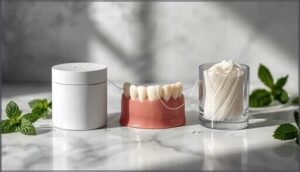
Your choice between waxed dental floss and unwaxed floss really comes down to fit and feel. Waxed dental floss glides smoothly through tight contacts thanks to its wax coating—beeswax or synthetic—making it ideal if you’ve got crowded teeth or braces.
Unwaxed floss, whether silk floss or nylon floss, feels thinner and can slip into narrow gaps, though it’s more prone to shredding against rough edges.
Eco-Friendly and Biodegradable Options

If sustainability matters to you, biodegradable materials like silk, bamboo fiber, and corn-based PLA offer a smart swap from conventional nylon that lingers in landfills for decades.
These sustainable products pair with natural coatings—candelilla or beeswax—and eco-friendly packaging, often recyclable or compostable.
Refillable systems cut down on single-use plastic, while ecofriendly materials guarantee your sustainable flossing routine actually breaks down naturally.
Floss Picks and Specialty Flosses

Floss picks bring convenience with built-in grips and disposable designs—perfect for purses, cars, or quick cleanups. Clinical trials show floss picks removed 31% of plaque compared to 27% for string floss, proving their interdental cleaning power.
Orthodontic floss, like super floss with its stiff threader and spongy middle, handles braces and bridges effectively. Specialty floss materials and varied flossing techniques expand your options for customized interdental care.
Top 7 Best Dental Floss Products
You’ve got plenty of options regarding dental floss, but not all products are created equal. Some excel at maneuvering tight spaces, while others shine for braces or sensitive gums, and a few stand out for their commitment to sustainability.
Here are seven top-rated floss products that balance effectiveness, safety, and environmental responsibility.
1. Cocofloss Woven Dental Floss Set
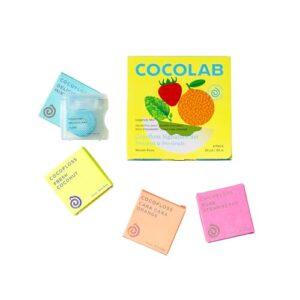
If you want serious plaque removal without harsh chemicals, Cocofloss delivers. This dentist-designed floss packs over 500 interwoven fibers into each strand, creating a textured weave that grabs 40% more plaque than standard picks.
Made from roughly 85% recycled water bottles and coated with coconut oil instead of sketchy PFAS, it’s tested by third-party labs to verify safety.
You’ll find four flavors—Mint, Coconut, Orange, and Strawberry—and each 33-yard spool lasts for daily flossing for about two months, making eco-friendly dental hygiene surprisingly convenient.
Best For: People who want effective plaque removal with eco-friendly materials and are willing to pay a bit more for textured floss that’s third-party tested and free from PFAS.
- Removes about 40% more plaque than standard floss picks thanks to 500 interwoven fibers that create a textured, net-like surface
- Made from roughly 85% recycled plastic bottles and coated with coconut oil instead of PFAS, with third-party lab testing to verify safety
- Comes in four flavors and includes refillable dispensers with compostable packaging, making it a solid choice for sustainable daily dental care
- More expensive than traditional floss, and some customers report the flavor can be very mild or almost nonexistent
- May shred or break if you have really tight contacts between teeth, which can be frustrating during use
- Can sell out quickly due to limited availability, so you might have trouble finding it when you need a refill
2. Oral B Healthy Gums Dental Floss
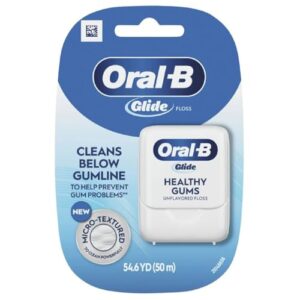
When tight contacts make flossing feel like a battle, Oral-B Glide Healthy Gums turns the tables. This PTFE-coated floss slides between crowded teeth without shredding, and its micro-textured surface removes plaque below the gumline where inflammation starts.
Clinical trials show that brushing plus flossing cuts gingival bleeding by roughly 17–35% over twelve weeks. However, recent studies linked PTFE floss to higher blood levels of PFAS chemicals, so if you’re concerned about long-term exposure, you’ll want to weigh convenience against emerging safety data before adding this to your oral hygiene routine.
Best For: People with tight teeth who struggle with regular floss shredding or getting stuck, and who want effective plaque removal below the gumline.
- Slides smoothly between tight contacts without shredding, making flossing less frustrating for crowded teeth
- Micro-textured surface effectively removes plaque below the gumline where gum disease starts
- Clinical studies show it reduces gingival bleeding by 17–35% when used consistently over 12 weeks
- Contains PTFE, which has been linked to higher blood levels of PFAS chemicals in users
- Some customers report recent formulation changes have made it rougher and less smooth than before
- Unflavored formula may not appeal to those who prefer minty fresh floss
3. Natural Silk Dental Floss Pack
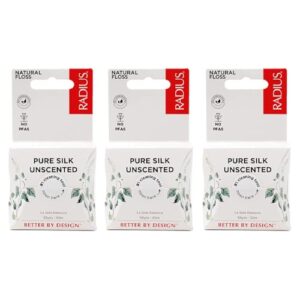
If you’re ready to break up with toxic chemicals and plastic waste, natural silk dental floss packs deliver gentle cleaning without compromise. Made from biodegradable mulberry silk and coated with beeswax or plant-based wax instead of PFAS-laden synthetics, these eco-friendly dental products come in refillable glass jars that eliminate hundreds of plastic containers over time.
The slightly textured fibers grip plaque effectively between teeth, and when you’re done, both the floss and cardboard packaging compost within six months—proving that silk floss benefits extend far beyond your mouth.
Best For: People who want effective plaque removal without PFAS chemicals or plastic waste, especially those with sensitive gums looking for a truly biodegradable floss option.
- Breaks down completely in about six months when composted, unlike nylon floss that fragments into microplastics and lingers for decades
- Refillable glass containers eliminate hundreds of plastic dispensers over time—cutting down the 700 million floss containers Americans toss each year
- PFAS-free natural wax coating avoids the fluorinated chemicals found in PTFE floss that show up in users’ bloodstreams
- Breaks more easily than synthetic floss, especially between tight teeth, and some batches have inconsistent strength due to quality control issues
- Costs more upfront than drugstore floss—usually around $8-10 per jar—since it’s made in smaller batches with specialized packaging
- Not suitable for vegans since it’s made from silkworms, though some brands offer plant-based alternatives like bamboo or corn fiber
4. Oral B Super Floss For Braces
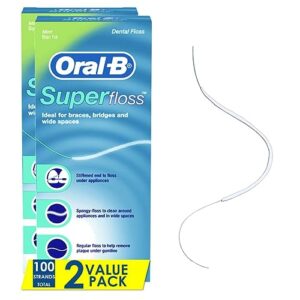
Wires, brackets, and permanent retainers turn ordinary flossing into a puzzle—but Oral-B Super Floss solves it with a three-part design that gives you total control. The stiffened end threads under your dental appliances without wrestling separate floss threaders, the spongy middle hugs brackets and wide gaps to lift away trapped food, and the regular segment sweeps plaque from your gumline.
A randomized trial on orthodontic patients showed Super Floss reduced plaque scores by 77% immediately after use, proving that smart braces flossing tips deliver real results for interdental cleaning and oral hygiene.
Best For: Anyone with braces, bridges, permanent retainers, or wide gaps between teeth who needs a floss that threads easily under appliances and cleans around brackets without breaking or fraying.
- Three-part design handles every challenge—stiffened end slides under wires, spongy middle grabs food around brackets, regular floss cleans your gumline
- Clinical trial showed 77% plaque reduction right after flossing, matching the performance of water flossers in most areas
- Pre-cut strands save you from measuring and eliminate the hassle of separate floss threaders
- Some users find the spongy section too thick to fit between tighter teeth, forcing them to use multiple strands per session
- Durability complaints pop up frequently—strands can shred or snap on sharp bracket edges before you finish cleaning
- Higher cost per use than regular floss, and occasional quality-control issues mean you might get a defective box
5. Advanced Dental Floss Picks
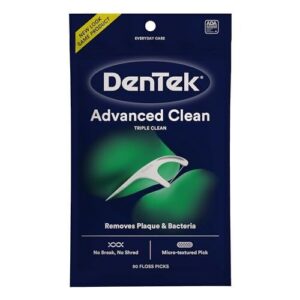
If you’re tired of wrestling with string floss, DenTek Enhanced Clean floss picks give you one-handed control and serious plaque-fighting power. With over 200 micro-textured strands woven into each pick, these tools scrape away 19.4% of plaque in clinical trials—outperforming standard string floss by 29%.
The reinforced design won’t snap mid-clean (backed by a no-break guarantee), and the built-in tongue scraper addresses bad breath at its source. You’ll floss faster, reach molars easier, and actually stick with your routine.
Best For: People who want quick, effective plaque removal without the hassle of traditional string floss—especially if you’re flossing on the go or have trouble with manual dexterity.
- Removes nearly 30% more plaque than regular string floss thanks to 200 micro-textured strands that actually scrub between teeth.
- Won’t break or shred mid-use, backed by a money-back guarantee so you’re not left with frayed plastic in your mouth.
- Built-in tongue scraper and fluoride-infused floss tackle bad breath and cavity prevention in one tool.
- Some users with sensitive gums find the thin floss uncomfortable or too aggressive between tight contacts.
- A few reviewers report the floss occasionally frays after multiple passes, despite the no-break claim.
- May not reach as deep into gum pockets as proper string floss technique with a longer strand.
6. Eco Friendly Dental Floss Picks
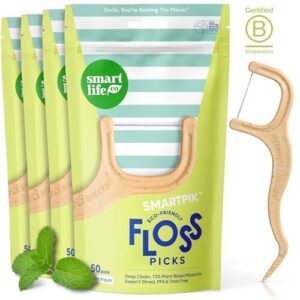
SmartLifeco floss picks prove you don’t have to choose between convenience and conscience. Made from wheat straw and plant-based PLA, these biodegradable picks break down naturally while their candelilla wax coating glides through tight contacts without PFAS or synthetic chemicals.
The textured pick end scrapes away debris, and the ergonomic handle makes daily flossing easy.
At $15.99 for 200 counts, you’re investing in sustainable flossing that protects both your gums and the planet—no guilt, just clean teeth.
Best For: Eco-conscious flossers who want the convenience of picks without the plastic waste, especially those with tight gaps or sensitive gums.
- Made from biodegradable wheat straw and plant-based PLA that breaks down naturally instead of sitting in landfills forever
- PFAS-free candelilla wax coating glides smoothly through tight spaces without harsh chemicals
- Textured pick end and ergonomic handle make it easy to remove debris and stimulate gums
- Costs more than regular plastic floss picks at $15.99 for 200
- Mint flavor is subtle and some users barely notice it
- Still single-use, so you’ll go through them quickly with daily flossing
7. Fun Kids Dental Floss Picks
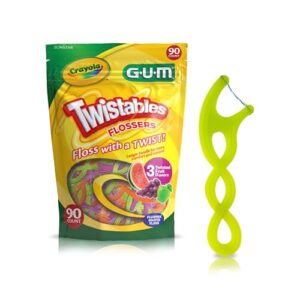
DenTek Kids Fun Flossers turn oral hygiene tips into flossing games with their Crayola Twistables design—the first child dental care floss picks to earn ADA acceptance. Their twisted grips fit small hands perfectly, while wild fruit flavors and bright colors make pediatric dentistry feel like play, not work.
Clinical trials show kids using fun flossing tools remove 47% more plaque than string floss, and they’re faster at it too. At under $10 for 90 counts, you’re investing in kids’ oral health without the daily battle—supervision recommended under age 10.
Best For: Parents who want to make flossing easier and more appealing for kids ages 3-10, especially those struggling to get their children into a consistent oral hygiene routine.
- First kids’ floss picks to receive ADA acceptance, with clinical evidence showing they remove plaque effectively and help prevent gingivitis
- Fun fruit flavors (watermelon, grape, apple) and bright Crayola-inspired colors turn flossing into an enjoyable activity rather than a chore
- Twisted handle design fits small hands comfortably and makes it easier for kids to maneuver between teeth, with 90-count packs offering great value
- Requires adult supervision for children under 10, so it’s not completely hands-off for parents
- Some users report the floss can fray or break with rough use, and the thickness may be too much for kids with very tight spacing
- Contains artificial dyes and sweeteners, which may be a concern for parents avoiding additives in their children’s products
How to Choose The Right Dental Floss

Not all dental floss works the same way for every mouth. Your best choice depends on how your teeth are spaced, whether your gums are sensitive, and what dental work you have.
Here’s what you need to keep in mind when picking floss that actually works for you.
Floss for Tight Contacts Vs. Wide Gaps
Your teeth are unique, so the dental floss you choose should match your spacing. For tight contacts, reach for smooth PTFE options like OralB Glide or waxed nylon floss—these slide between crowded teeth without shredding. For wider gaps, dental tape or expanding floss captures more plaque by covering broader surfaces.
Floss picks work well for quick interdental care, though traditional weaving techniques offer enhanced gap cleaning and plaque removal control.
Sensitive Gums and All-Natural Options
Comfort transforms flossing from a dreaded chore into a sustainable habit. If you experience gum sensitivity or bleeding, choose silk or woven floss with natural coatings like candelilla or beeswax—they’re biodegradable and gentler than nonstick coating options.
Studies show consistent, gentle flossing reduces inflammation by up to 25% within months, making eco-friendly alternatives effective for gingivitis prevention without harsh chemicals.
Considerations for Braces, Bridges, and Kids
Fixed appliances trap plaque around brackets and under wires, increasing inflammation within weeks if you skip interdental cleaning. Super floss—with its stiff threader end and spongy middle—cuts plaque by over 75% in one use, making orthodontic flossing simpler for kids and adults alike.
For bridges, thread beneath pontics daily to prevent decay on anchor teeth and maintain long-term dental health.
Understanding Floss Ingredients and Safety
Not all floss is created equal—some brands hide chemicals you wouldn’t want near your gums. About one-third of tested products showed detectable fluorine, signaling potential PFAS exposure, and users of certain fluorinated brands had higher serum PFOA levels. When shopping, watch for:
- PFAS and PTFE (Teflon) coatings linked to health concerns
- Petroleum-based polymers that introduce microplastic exposure
- Antimicrobial additives like triclosan, now restricted in many products
- Natural coatings like beeswax or silk for safer biodegradable options
Eco-Friendly and Safe Flossing Practices

You probably don’t think much about what’s in your floss, but some products contain chemicals linked to serious health concerns, while others contribute to mountains of plastic waste.
The good news is that safer, more sustainable options exist once you know what to look for. Here’s how to protect your health and the planet without compromising your oral care routine.
Avoiding Harmful Chemicals Like PFAS
You deserve to know what you’re putting in your mouth. Some “glide” flosses contain PTFE, a fluorinated polymer linked to PFAS—chemicals associated with cancer, hormone disruption, and immune system concerns. Studies show floss users can have higher PFAS blood levels. Your safest move? Choose PFAS-free floss made from silk or nylon, skip products with “ultra-slip” claims, and prioritize chemical-free alternatives.
| Red Flags to Avoid | Safer Alternatives |
|---|---|
| PTFE or “Teflon fiber” listings | Silk, cotton, or plain nylon floss |
| “Glide” or “ultra-slip” marketing | Wax-coated natural fibers |
| “Compare to Oral-B Glide” labels | Certified PFAS-free or eco-friendly alternatives |
Benefits of Biodegradable and Refillable Floss
Switching to biodegradable materials and refillable systems gives you real control over your environmental impact. Silk or plant-based floss breaks down in weeks instead of persisting for centuries, while refillable glass or metal containers slash plastic waste by up to 94% compared to disposable dispensers.
- Reduced landfill burden: Biodegradable dental floss decomposes in 60–90 days versus hundreds of years for nylon
- Lower carbon footprint: Recycled-content floss cuts CO₂ emissions by 32% and energy use by 64%
- Sustainable packaging: Refillable systems eliminate repeated plastic housing waste
- Growing availability: Eco friendly options now capture rising market share as demand for sustainable dental care options accelerates
Reducing Plastic Waste in Oral Care
Your daily oral care routine generates roughly 85 grams of plastic waste per year from toothbrushes and toothpaste alone—and traditional plastic floss adds to that burden.
Choosing biodegradable materials over nylon, opting for refillable systems with sustainable packaging, and skipping single-use floss picks can slash your environmental impact of dental floss by up to 80%, turning eco-friendly dental products into a practical win for your gums and the planet.
Making Informed, Sustainable Choices
Beyond slashing waste, you can take control by reading labels and asking hard questions about what goes in your mouth. Look for biodegradable options with sustainable packaging, natural ingredients, and green certifications that prove their claims. Chemical-free alternatives exist—prioritize eco-friendly dental products free of PFAS and synthetic coatings to protect both your health and the environment.
- Seek floss clearly disclosing eco-friendly materials like silk or PLA corn fiber
- Choose refillable systems that eliminate hundreds of disposable plastic containers yearly
- Avoid “glide” coatings and unspecified waxes linked to toxic chemicals in dental products
- Support brands transparent about dental floss safety concerns and environmental impact of dental floss
Frequently Asked Questions (FAQs)
What is the best dental floss?
Your gums need gentle care between teeth—that’s where interdental cleaning shines. Cocofloss leads with its thick, woven texture that hygienists love, while Oral-B Glide excels for tight contacts.
How to get a long piece of dental floss?
You can grab longer floss segments by purchasing refillable floss systems or bulk spools—professional 160-meter refills and 50-meter eco-friendly options give you continuous floss supply without constantly running out.
What is the best dental floss for Overachievers?
If you’re the type who won’t settle for anything less than flawless oral health, consider combining woven floss like Cocofloss with interdental brushes.
Clinical trials show brushes reduce plaque indices more than string floss alone.
Is a dental floss better than no dental floss?
Yes—flossing removes plaque your toothbrush can’t reach between teeth. Daily use reduces gum inflammation and lowers cavity risk in tight contacts, especially when supervised, supporting healthier gums and overall dental hygiene.
What is the best floss recommended by dentists?
Dentists consistently recommend Oral-B Glide for its smooth texture and minimal shredding.
Waxed string floss from brands like Reach and Cocofloss also earn professional endorsements for effective plaque removal and durability.
Which dental flosser is best?
The best dental flosser depends on your needs—PTFE glide types suit tight contacts, textured woven options trap plaque effectively, and floss picks offer convenience with equivalent plaque removal when used correctly.
What is the healthiest floss to use?
The healthiest dental floss uses natural materials like silk or beeswax-coated nylon, avoiding PFAS chemicals found in PTFE-based products that may affect your overall health through direct gum contact and absorption.
What is the ADA recommended dental floss?
The ADA Seal of Acceptance marks floss that meets rigorous safety and effectiveness criteria.
Oral-B Glide Pro-Health, Tom’s of Maine, and several DenTek picks carry this stamp, signaling proven plaque removal and gum protection.
Which string floss is best?
Your dental needs and user preferences matter most when choosing string floss. Tight contacts call for waxed options like Oral-B Complete Satin Floss, while wider gaps benefit from textured varieties like Cocofloss with thicker weaving.
Is it better to get waxed or unwaxed dental floss?
Ironically, most people believe waxed dental floss outperforms unwaxed—but clinical trials show both remove plaque equally well.
Your choice depends on personal preference: waxed glides smoothly through tight contacts, while unwaxed fits narrower spaces.
Conclusion
Think of floss as the eraser that clears what brushing can’t reach—without it, the picture of your oral health stays incomplete. Choosing the best dental floss means matching texture, spacing, and values to your unique needs, whether that’s waxed glide for tight contacts or biodegradable silk for conscious living.
You’ve got the knowledge to turn two minutes a day into a lasting shield against cavities, inflammation, and waste. Now make it count.