This site is supported by our readers. We may earn a commission, at no cost to you, if you purchase through links. This content is for general informational and educational purposes only and is not a substitute for professional medical, dermatological, or nutritional advice.
Your skin produces oil around the clock, whether you fight it or not. Sebaceous glands don’t clock out, and once that oil layer creeps past 0.1mm, acne-causing bacteria treat your pores like an open buffet. Stripping skin dry only backfires: dehydrated skin can push sebum output up by 25% within a day, trading one problem for a worse one.
That’s the paradox behind the best skincare routine for oily acne-prone skin — control oil without triggering a rebound, treat breakouts without wrecking your barrier. Get the balance right, and clearer skin follows.
Table Of Contents
- Key Takeaways
- Why Oily Acne-Prone Skin Breaks Out
- Best Ingredients for Oil and Acne
- Morning Routine for Oily Acne-Prone Skin
- Night Routine for Oily Acne-Prone Skin
- Introduce Actives Without Damaging Your Barrier
- Top 9 Oily Acne-Prone Skin Products
- 1. Ceramide Peptide Face Moisturizer Liquid
- 2. acne treatment skin care kit
- 3. PanOxyl 10% Benzoyl Peroxide Acne Foaming Wash
- 4. Neutrogena Ultra Gentle Daily Cleanser
- 5. SkinMedica AHA BHA Exfoliating Wash
- 6. Natural Oil Control Facial Toner
- 7. Paula’s Choice 2% BHA Exfoliant
- 8. CeraVe Resurfacing Retinol Serum
- 9. ISDIN Eryfotona Actinica Mineral Sunscreen SPF 50
- Prevent Breakouts, Marks, and Rebound Oil
- When to See a Dermatologist
- Frequently Asked Questions (FAQs)
- What is the 4 2 4 rule in skincare?
- What to use for oily and acne-prone skin?
- How do Koreans clear acne?
- What is the best skincare product for acne oily skin?
- How to fix acne prone oily skin?
- What is best for oily skin with acne?
- What is the order of skincare routine for oily skin?
- What should I avoid if I have oily acne-prone skin?
- How do you skin cycle for oily acne-prone skin?
- How can hormonal changes affect oily skin?
- Conclusion
Key Takeaways
- Stripping your skin dry backfires—dehydration can spike oil production by 25% in just a day, so gentle, hydrating cleansing beats harsh scrubbing every time.
- A handful of proven ingredients do the real work: salicylic acid unclogs pores, benzoyl peroxide kills acne bacteria, niacinamide balances oil, adapalene speeds cell turnover, and azelaic acid fades dark marks.
- Introduce new actives one at a time and never stack irritating treatments like adapalene and benzoyl peroxide on the same night, since your barrier needs time to adjust.
- Daily broad-spectrum sunscreen isn’t optional—it protects your barrier, prevents dark marks from worsening, and is essential when using retinoids or exfoliants that increase sun sensitivity.
Why Oily Acne-Prone Skin Breaks Out
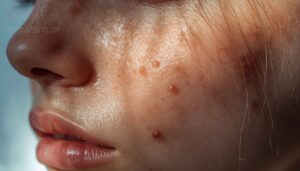
Breakouts rarely come from one bad habit or one wrong product. Your skin reacts to a mix of internal and external triggers working together, often at the same time. Here’s what’s really driving those blemishes, one factor at a time.
From hormonal shifts to hidden product irritants, understanding these common acne triggers and prevention strategies can help you address breakouts at the source.
Excess Sebum and Clogged Pores
Your skin’s sebaceous glands are working overtime, and that oil slick isn’t random. Sebum is a cocktail of triglycerides, wax esters, and squalene, feeding C. acnes bacteria that thrive once sebum thickness passes 0.1mm.
Add shed skin cells, and pores clog into microcomedones. Result?
- Visible congestion
- Blackheads
- Inflammatory breakouts
Left unchecked, oily acne-prone skin spirals fast.
Hormonal and Genetic Triggers
Blame biology first. Androgen receptor sensitivity dictates how much oil your glands pump out, and DHT binding those receptors only cranks it higher.
Genetics load the gun: sebocyte gene SNPs, family history risk, and IGF-1 pathway activity all raise your odds. Add menstrual cycle hormones, cortisol, and diet, and hormonal acne makes perfect sense.
Dehydration and Rebound Oiliness
Here’s a paradox worth knowing: dehydrated skin often produces more oil, not less. Below 30% water content, sebum output can jump 25% in 24 hours.
Post-cleansing rebound peaks around 4 hours, worse in dry, low-humidity air.
- Humectants restore water fast
- Ceramides limit rebound under 10%
- Low humidity triples water loss
Barrier repair starts here.
Damaged Skin Barrier Effects
Over-cleansing chips away at your barrier, and the fallout is measurable: transepidermal water loss climbs up to 40% higher, hitting 0.6g/cm²/hour.
Nerve endings sit exposed, so actives sting—68% feel it immediately.
Bacterial defense drops too, letting acne-causing organisms thrive.
Barrier lipid replenishment matters here. Ceramide-rich, noncomedogenic formulas cut recovery time by 30%, restoring function within a day.
Stress and Lifestyle Factors
When life gets hectic, your skin keeps score. Rising cortisol boosts oil output and inflammation, triggering stress-induced breakouts.
Poor sleep and high-glycemic comfort foods compound the problem, while skipped workouts and smoking or drinking slow recovery further.
Protect your gains: prioritize sleep, move daily, and manage stress before it takes over your complexion.
Best Ingredients for Oil and Acne
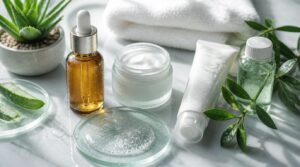
Once you understand why your skin breaks out, the next step is knowing what actually fixes it. Not every ingredient on a shelf earns its spot, but a handful have real evidence behind them for oil control and acne. Here are the five worth knowing.
Salicylic Acid Clears Pores
Salicylic acid is the workhorse for oily, acne-prone skin. It’s oil soluble, so it slips past sebum straight into the pore lining, dissolving keratin plugs within days.
Three benefits stand out:
- Unclogs pores without scrubbing
- Regulates sebum over time
- Calms redness fast
Stick to 0.5–2% for safe chemical exfoliation.
Benzoyl Peroxide Targets Acne
Where salicylic acid unclogs, benzoyl peroxide kills bacteria outright. It shifts pores toward oxygen, starving C. acnes, which thrives anaerobically.
| Effect | Result (2 weeks, 10%) |
|---|---|
| Bacterial count | Drops ~98% |
| Free fatty acids | Drops ~50% |
This follicle-clearing action makes it essential for oily, acne-prone skin—non-comedogenic formulas keep exfoliation gentle. Benzoyl peroxide promotes keratinocyte turnover by breaking down desmosomal attachments, reducing follicular hyperkeratosis keratolytic effects on skin.
Niacinamide Balances Excess Oil
Think of niacinamide as skin’s mediator, calming oil glands instead of stripping them. It helps sebum regulation by signaling skin to retain moisture, so glands stop overcompensating.
Barrier hydration improves, inflammation eases, and pores look tighter as oil balances. Pair it with an oilfree, noncomedogenic, lightweight gel moisturizer, and oily skin stays calm, hydrated, and shine-controlled without feeling greasy or reactive.
Adapalene Normalizes Cell Turnover
Retinoids don’t just treat acne, they retrain your skin’s cell renewal process.
Adapalene speeds keratinocyte shedding inside follicles, unclogging pores before microcomedones form.
- Normalizes follicular differentiation
- Prevents keratin buildup
- Helps with acne prevention long-term
- Pairs well with niacinamide, salicylic acid
Use nightly with an oilfree, noncomedogenic moisturizer to protect cell turnover gains and ease follicle unclogging without over-drying skin.
Azelaic Acid Fades Acne Marks
Those stubborn dark spots left behind after a breakout? Azelaic acid targets them directly.
It inhibits tyrosinase, curbing melanin overproduction to fade postinflammatory hyperpigmentation, often 30% lighter after 12 weeks. It calms redness too, easing rosacea-prone skin.
Layer it under niacinamide for enhanced oil control, or pair with salicylic acid and ceramides to protect your barrier while brightening.
Morning Routine for Oily Acne-Prone Skin
Mornings set the tone for how your skin behaves all day long. Get this routine right, and you’re controlling oil production before it even starts. Here’s exactly what your skin needs, step by step.
Combination skin especially benefits from a targeted approach — this morning skin care routine for combination skin breaks down exactly which steps to focus where.
Start with vitamin C on clean, dry skin, then give it a minute before following this simple guide to layering hyaluronic acid and vitamin C serum for the hydration boost your skin craves.
Cleanse Without Stripping Skin

When your face feels tight after washing, that’s your barrier crying for help, not a sign of "clean."
A tight, squeaky feeling after washing isn’t clean skin—it’s your barrier crying out for help
Reach for a gel-based cleanser with mild surfactants (cocamidopropyl betaine, decyl glucoside) and pH between 5.5–6.5.
- Use lukewarm water
- Splash gently, don’t scrub
- Look for "oil-free, non-comedogenic"
- Pat dry with a soft towel
Apply Targeted Acne Treatment
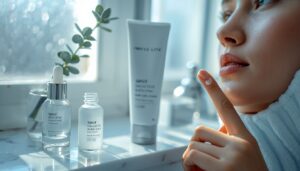
Once skin is clean, treat the actual problem, not just the oil.
Salicylic acid works well in the morning: pea-size amount, T-zone focus, once daily. If breakouts are active, swap in benzoyl peroxide as a spot treatment on pimples only, avoiding adapalene at the same time. Watch for redness or peeling. That’s your cue to scale back, not push through.
Add Lightweight Hydrating Serum
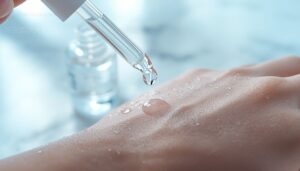
Give oily skin a minute to calm down, then layer on hydration. Oil-free serums with hyaluronic acid and glycerin absorb in about 30 seconds, pulling water into skin without clogging pores.
These humectants hold moisture for hours, which actually curbs rebound oiliness. Applied right after cleansing, absorption improves noticeably, setting up your barrier before moisturizer locks everything in.
Use Non-comedogenic Moisturizer
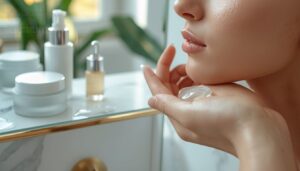
Once serum sinks in, seal it with a non-comedogenic moisturizer—oil-free, gel or lotion texture, never a heavy cream.
Look for barrier-supportive ingredients like ceramides alongside humectants such as glycerin or hyaluronic acid. Hydration without greasiness is the goal.
Apply a thin, even layer. That’s it—no need to overdo it before sunscreen.
Finish With Broad-spectrum Sunscreen

Skipping sunscreen undoes everything you just did. Broad-spectrum SPF 30+ protects against UVA and UVB rays; look for oil-free, non-comedogenic, mattifying formulas.
- Mineral (zinc oxide) or chemical filters both work
- Apply a nickel-sized amount, don’t skimp
- Reapply every two hours outdoors
- Daily SPF prevents dark marks from worsening
Night Routine for Oily Acne-Prone Skin

Nighttime is when your skin does its real repair work, so your routine needs to support that job, not fight it. Your priorities shift here: clearing the day’s buildup, treating with purpose, and locking in moisture before you sleep. Here’s exactly how to structure those five steps.
Remove Makeup and Sunscreen
Sunscreen doesn’t just wipe off. Double cleansing solves this: start with an oil cleanser, massaged one minute, to dissolve SPF and waterproof mascara.
| Method | Best For | Time |
|---|---|---|
| Oil cleanser | Sunscreen, mascara | 60 sec |
| Micellar water | Light makeup | 10-15 sec |
| Foaming cleanser | Residue finish | 45 sec |
Follow with micellar water on stubborn spots before your gentle foaming cleanser.
Gently Cleanse Away Buildup
Once oil dissolves, buildup still lingers. That’s why step two matters: a gentle foaming cleanser with pH-balanced formula (5.5) finishes the job without stripping.
- Use a gel-based cleanser, oilfree and noncomedogenic
- Massage 30 seconds
- Rinse with lukewarm water
- Follow with post cleanse hydration
Enzyme cleansers digest dead cells gently—suitable nightly. Micellar water benefits stubborn spots. Double cleansing method removes 95% of residue versus 60% alone.
Apply Retinoid or Exfoliant
This is where real change happens—but only one active at a time.
Retinoid nights: apply adapalene to dry skin, 10–15 minutes post-cleanse. Start 2–3x weekly.
Exfoliant nights: alternate with Paula’s Choice 2% BHA, or salicylic acid, 1–2x weekly max.
Never stack both same night. Niacinamide-zinc serums pair safely with either, calming irritation while regulating oil.
Morning sunscreen isn’t optional—retinoids and exfoliants increase photosensitivity a lot.
Soothe Skin With Hydration
Actives leave skin thirsty. Reach for a calming humectant-rich serum—hyaluronic acid binds up to 1,000 times its weight in water, hydrating within minutes.
Three quick options:
- Damp-skin HA serum (surface hydration in 15 minutes)
- Hydrating mist for instant cooling relief
- Glycerin-boosted formula for extra water-binding
This oil-free hydration step helps skin barrier repair without clogging pores.
Seal With Barrier-supporting Moisturizer
Last step, and it matters most: lock everything in with a barrier-supporting moisturizer. Look for ceramides NP and AP, 5% niacinamide, and hyaluronic acid—this trio rebuilds your lipid matrix while staying noncomedogenic.
Pea-sized amount, upward circles, pH around 5.5. Give it a minute to absorb before bed. That’s real moisture retention, not just a greasy finish.
Introduce Actives Without Damaging Your Barrier

More active ingredients isn’t always better; your barrier keeps score. Rushing this step is how good routines backfire into redness and peeling. Here’s how to build tolerance the right way.
Start One Active Slowly
Patience wins here. Pick one active — niacinamide or adapalene — start low, and go slow.
- Pea-sized adapalene dabbed nightly
- Skin calm, no redness or peel
- Tolerance building week by week
Patch test first, on your forearm, 48 hours. Then jawline, 24 hours. Apply every other night. Monitor skin response daily; adjust based on tolerance before adding anything else.
Avoid Combining Irritating Treatments
Once tolerance builds, resist stacking actives too fast. Ingredient compatibility matters: pairing adapalene with benzoyl peroxide same-night invites peeling and stinging.
Rotate instead. Try adapalene one night, niacinamide the next. This protects your barrier while still treating oily, acne-prone skin. Retinoid irritation management means giving skin recovery time — not layering everything at once.
Exfoliate Only When Needed
Rotation covers actives, but exfoliation needs its own rules. Cap sessions at twice weekly, dropping to once during flare-ups.
Run a barrier health check first: dab exfoliant on your jawline, wait ten minutes. Stinging means wait.
- Alternate-day BHA only when calm
- Once weekly in humid months
- Every ten days come winter
- Skip if shine returns within a day
Recognize Over-exfoliation Warning Signs
That jawline test only tells you so much. Your skin can still cross the line days later.
Watch for redness that lingers past a few hours, tight or stinging skin, flaky dry patches, or a sudden microcomedone outbreak on the forehead. Rebound oiliness and rising product sensitivity count too. Barrier lipids take time to recover, so catching these signs early prevents real damage.
Pause Actives During Irritation
When skin protests, listen. Stop the active immediately—stinging within minutes means salicylic acid needs a 24-hour break; flushing past 30 minutes signals niacinamide overload.
- Track erythema each morning and evening
- Note new whiteheads near adapalene zones
- Blot midday oil for rebound signs
- Log comfort on a 1-10 scale
- Resume only after 48 smooth hours
Top 9 Oily Acne-Prone Skin Products
Knowing the right ingredients only helps if you can find them in a bottle. You don’t need a 10-step routine or a drawer full of guesswork. Here are nine products worth putting on your shelf.
1. Ceramide Peptide Face Moisturizer Liquid
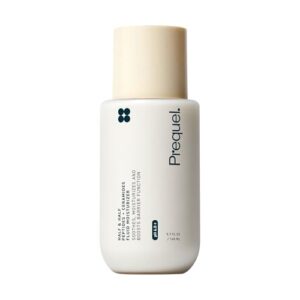
Oily skin still needs hydration, and this liquid moisturizer proves it won’t clog pores while doing so. With 1% dermo-mimetic ceramide NP in an olive-derived lipid matrix, it rebuilds your barrier without heaviness.
The lightweight emulsion carries peptides and amino acids, fragrance-free and pH-stabilized. It layers cleanly under sunscreen or makeup, no pilling.
One caution: the runny texture demands careful dispensing, and very dry winter skin may need extra layering underneath.
| Best For | People with oily, combination, or sensitive skin who want lightweight hydration and barrier support without a heavy or greasy feel. |
|---|---|
| Skin Type | All skin types |
| Fragrance | Fragrance-free |
| Format | Liquid emulsion |
| Weight | 7.83 oz |
| Non-Comedogenic | Yes |
| Model Number | N/A |
| Additional Features |
|
- Contains 1% dermo-mimetic ceramide NP in an olive-derived lipid matrix to support the skin barrier
- Fragrance-free and pH-stabilized formula suitable for all skin types, including sensitive skin
- Layers well under sunscreen and makeup without pilling
- Runny texture may require careful dispensing to avoid overuse
- Some users report lid buildup that needs frequent wiping
- May not offer enough hydration on its own for very dry skin during winter
2. acne treatment skin care kit
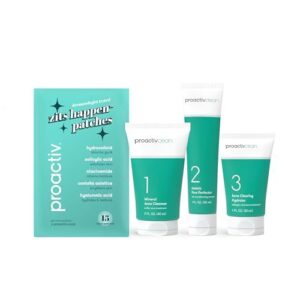
When one product feels like too much decision-making, a complete kit simplifies things. This 3-step system pairs a mineral acne cleanser with an azelaic pore perfector and hydrating acne clearer, plus hydrocolloid patches for active blemishes.
Sulfur, salicylic acid, and bakuchiol work together for gentle clearing, while hyaluronic acid and chamomile keep irritation low. Expect visible changes within 1–2 weeks, provided you stick with the twice-daily routine consistently.
| Best For | Adults and teens with sensitive skin dealing with mild to moderate or hormonal breakouts who want a simple, all-in-one routine. |
|---|---|
| Skin Type | Sensitive skin |
| Fragrance | Fragrance-free |
| Format | 3-step kit |
| Weight | 8.47 oz |
| Non-Comedogenic | Yes |
| Model Number | N/A |
| Additional Features |
|
- Complete 3-step system with hydrocolloid patches takes the guesswork out of building a routine
- Gentle, skin-friendly ingredients like hyaluronic acid and chamomile help soothe irritation while sulfur, salicylic acid, and bakuchiol target blemishes
- Free from parabens, phthalates, sulfates, and 100 other restricted ingredients, with visible results often seen in 1–2 weeks
- Requires strict twice-daily use, and results can fade quickly if you fall off the routine
- Small product sizes may feel pricey compared to the cost
- Not strong enough on its own for severe or cystic acne, and active ingredients may cause tingling for very reactive skin
3. PanOxyl 10% Benzoyl Peroxide Acne Foaming Wash
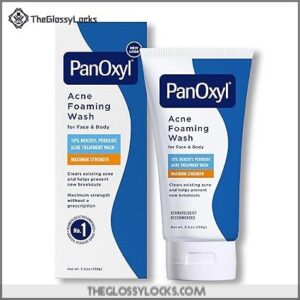
For stubborn body acne, maximum-strength 10% benzoyl peroxide does the heavy lifting. This foaming wash claims to kill 99% of acne-causing bacteria in just 15 seconds, tackling chest, back, and facial breakouts alike.
It’s non-comedogenic and unscented, formulated with glycerin to offset dryness. Start with once-daily use, working up to 2–3 times as tolerated.
One caution: benzoyl peroxide bleaches fabric. Use white towels, and never combine it with other actives without your dermatologist’s guidance.
| Best For | People with stubborn, oily, or acne-prone skin dealing with breakouts on the face, chest, or back who need a maximum-strength treatment option. |
|---|---|
| Skin Type | Oily/acne-prone |
| Fragrance | Unscented |
| Format | Gel treatment |
| Weight | 5.5 oz |
| Non-Comedogenic | Yes |
| Model Number | F19003 |
| Additional Features |
|
- Highest OTC benzoyl peroxide concentration (10%) for tackling tough acne
- Formulated with glycerin to help offset the drying effects of benzoyl peroxide
- Non-comedogenic and unscented, making it suitable for daily use on multiple areas
- Not ideal for those with sensitive, dry, or only mildly acne-prone skin
- Can bleach towels, clothing, and other fabrics
- Risk of dryness, irritation, or skin barrier damage if overused
4. Neutrogena Ultra Gentle Daily Cleanser
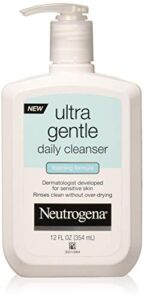
Not every step needs an active ingredient — sometimes your skin just needs a break. This fragrance-free cleanser uses mild surfactants like cocamidopropyl betaine and lauryl glucoside instead of harsh sulfates, so it won’t strip your barrier while treating acne elsewhere.
Glycerin helps maintain hydration during washing, making it ideal for pairing with benzoyl peroxide or retinoids. It’s non-comedogenic and available in foaming or non-foaming formulas. Think of it as your routine’s neutral ground.
| Best For | People with sensitive or acne-prone skin who want a gentle, fragrance-free cleanser that won’t strip their skin while they use other targeted treatments like benzoyl peroxide or retinoids. |
|---|---|
| Skin Type | Oily/acne-prone |
| Fragrance | Fragrance-free |
| Format | Liquid cleanser |
| Weight | 14.89 oz |
| Non-Comedogenic | Yes |
| Model Number | 402222 |
| Additional Features |
|
- Hypoallergenic, fragrance-free formula that’s gentle enough for daily use on sensitive skin
- Uses mild surfactants and glycerin to cleanse without disrupting your skin barrier or causing dryness
- Safe to layer with other skincare products, including chemical exfoliants and moisturizers
- Contains no acne-fighting ingredients like salicylic acid or benzoyl peroxide, so it won’t treat breakouts on its own
- Needs to be lathered in hands before applying, which adds an extra step to your routine
- Some users have reported leaking or damaged bottles when purchasing multi-packs
5. SkinMedica AHA BHA Exfoliating Wash
Want exfoliation and hydration in one step? This wash combines lactic and glycolic acids with salicylic acid, so it lifts dead cells while unclogging pores.
Jojoba spheres add gentle physical polish without micro-tearing skin. Bilberry and licorice extracts brighten tone over time.
It’s suited for daily or near-daily use, depending on tolerance. Expect smoother texture within weeks. Pair it with a non-comedogenic moisturizer and sunscreen, since chemical exfoliants increase sun sensitivity.
| Best For | People who want a single wash that exfoliates and hydrates, especially those dealing with dullness, clogged pores, or rough texture. |
|---|---|
| Skin Type | All skin types |
| Fragrance | Contains essential oils |
| Format | Liquid exfoliant |
| Weight | N/A |
| Non-Comedogenic | Not specified |
| Model Number | 94945 |
| Additional Features |
|
- Combines AHA and BHA acids to lift dead skin cells and clear pores in one step
- Contains panthenol and jojoba oil to help condition and hydrate skin during exfoliation
- Botanical extracts help brighten and even out skin tone over time
- Citric acid and essential oils like lavender and orange peel may irritate sensitive skin
- Chemical exfoliants increase sun sensitivity, so daily sunscreen becomes essential
- Not ideal for those new to acids, since tolerance needs to be built up gradually
6. Natural Oil Control Facial Toner
After exfoliating, your skin needs a step that controls shine without stripping what you just balanced. This toner uses 2% salicylic acid, 5% niacinamide, and zinc PCA to cut sebum and tighten the look of pores.
Silica microparticles absorb oil for hours, while panthenol and centella asiatica calm any redness left behind. pH-balanced at 5.5, it preps skin for serums without disrupting your barrier.
| Best For | This toner is best for anyone with oily or sensitive skin who wants a gentle, alcohol-free way to control shine without dryness or irritation. |
|---|---|
| Skin Type | Sensitive/oily skin |
| Fragrance | Alcohol-free/unscented |
| Format | Liquid cleanser |
| Weight | 5 oz |
| Non-Comedogenic | Not specified |
| Model Number | N/A |
| Additional Features |
|
- Alcohol-free and gentle enough for sensitive or allergy-prone skin
- Controls excess oil without triggering more oil production or dryness
- Balances skin’s pH to prep it for moisturizer and other products
- Some customers received bottles with an oily residue
- A few units arrived without a tamper-evident seal
- Packaging quality can vary between batches or sellers
7. Paula’s Choice 2% BHA Exfoliant
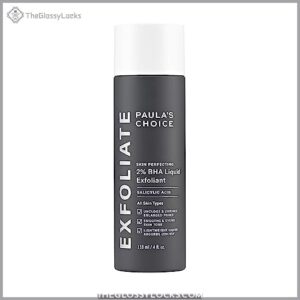
Once your toner sets, this leave-on liquid does the deeper work. Its 2% salicylic acid penetrates oily pore linings to clear buildup that causes blackheads and enlarged pores.
The water-based formula, fragrance-free and non-comedogenic, won’t clog what you’re trying to unclog. Buffered to a skin-friendly pH, it’s gentle enough for nightly use.
Camellia oleifera extract adds antioxidant calm. Expect smoother texture and fewer breakouts with consistent use—dropper application keeps dosing precise.
| Best For | Anyone dealing with clogged pores, rough texture, or dullness who wants a gentle, science-backed exfoliant they can use every day. |
|---|---|
| Skin Type | All skin types |
| Fragrance | Fragrance-free |
| Format | Leave-on liquid |
| Weight | N/A |
| Non-Comedogenic | Not specified |
| Model Number | 22010 |
| Additional Features |
|
- Unclogs pores and visibly reduces blackheads and enlarged pores
- Smooths texture while softening fine lines and brightening tone
- Fragrance-free, paraben-free formula suitable for all skin types
- Leave-on format needs consistent, ongoing use to see results
- Formulated only for the face and neck, not full-body use
- Liquid consistency may feel less familiar than a traditional toner or cream
8. CeraVe Resurfacing Retinol Serum
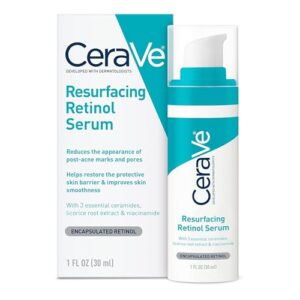
After exfoliation, your skin needs resurfacing help, and that’s where retinol comes in. This serum pairs encapsulated retinol with three ceramides and niacinamide, targeting post-acne marks and rough texture without stripping your barrier.
Expect some initial dryness or peeling as your skin adjusts. That’s normal.
Apply nightly after cleansing, before moisturizer. Licorice root extract calms redness while pores appear refined over time. Daytime sunscreen isn’t optional here; retinol increases sun sensitivity, so protection matters.
| Best For | This serum is best for those with acne-prone, oily, or sensitive skin who want to fade post-acne marks and smooth out texture as part of their nighttime routine. |
|---|---|
| Skin Type | Acne-prone/oily |
| Fragrance | Unscented |
| Format | Cream |
| Weight | 1.06 oz |
| Non-Comedogenic | Not specified |
| Model Number | B07VWSN95S |
| Additional Features |
|
- Encapsulated retinol targets post-acne marks and rough texture while being gentler on skin
- Ceramides and niacinamide help support the skin barrier and calm redness
- Licorice root extract brightens uneven tone and minimizes the look of pores
- Can cause dryness, redness, or peeling when you first start using it
- May trigger a temporary purge phase with more breakouts before things improve
- Requires diligent daytime sunscreen use due to increased sun sensitivity
9. ISDIN Eryfotona Actinica Mineral Sunscreen SPF 50
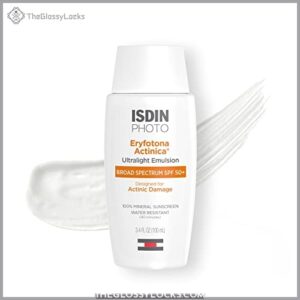
Retinol demands sun protection, and this mineral sunscreen delivers it. 11% zinc oxide gives broad-spectrum SPF 50+ coverage without irritating reactive skin.
The patented DNA Repairsomes technology works after sun exposure, targeting existing damage while shielding against new harm. Vitamin E adds antioxidant backup.
Texture matters for acne-prone faces: this emulsion absorbs fast, wears well under makeup, resists water up to 40 minutes. Some tones notice a white cast. Shake well before each application.
| Best For | People using retinol or managing sun damage who want a mineral-only sunscreen gentle enough for sensitive, acne-prone skin. |
|---|---|
| Skin Type | Sensitive skin |
| Fragrance | Light scent |
| Format | Emulsion |
| Weight | 2.65 oz |
| Non-Comedogenic | Not specified |
| Model Number | N/A |
| Additional Features |
|
- 11% zinc oxide delivers broad-spectrum SPF 50 without irritating reactive skin
- DNA Repairsomes technology helps target existing sun damage while preventing new harm
- Lightweight, fast-absorbing formula that works well under makeup and resists water for up to 40 minutes
- Higher price point than many competing sunscreens
- Can leave a white cast on some skin tones
- Requires shaking before each use, and has a noticeable light scent
Prevent Breakouts, Marks, and Rebound Oil
Great products only get you so far. What you do in between matters just as much, sometimes more. Here are five habits that keep breakouts, dark marks, and greasy rebound oil from undoing your progress.
Never Pop Active Pimples
That satisfying pop? It costs you more than it gives. Popping ruptures the follicular wall, spreading bacteria and pushing it deeper, raising nearby breakout risk by roughly 30%.
Never pop active pimples—squeezing damages collagen, fueling hypertrophic scars and hyperpigmentation lasting months. Inflammation spikes, healing slows by days. Use spot treatment instead, and let skin cycling routines handle stubborn inflammatory acne safely.
Avoid Sleeping in Makeup
Rarely does one habit sabotage skin faster than falling asleep with a full face on. Makeup residue traps oil and bacteria overnight, spiking inflammation and blocking barrier repair.
Non-comedogenic doesn’t mean harmless—fine particles still lodge in pores. Always remove makeup before bed; morning cleansing alone clears only 40% of overnight buildup, leaving pores congested and actives fighting an uphill battle.
Cleanse Promptly After Exercise
Sweat left on skin ferments fast. Cleanse within 15 to 30 minutes post-workout, before salts crystallize and clog pores.
Use lukewarm water, around 98°F—hot water spikes oil production, cold water traps debris in constricted pores.
Skip harsh exfoliants here. A gel-based cleanser lifts sweat gently, then follow immediately with an oil-free, non-comedogenic moisturizer to protect your barrier and prevent rebound shine.
Choose Non-comedogenic Formulas
Non-comedogenic" isn’t marketing fluff—it’s a tested claim, backed by 28-day trials on acne-prone skin.
Check labels for:
- No coconut or mineral oil
- Silicone-based, fast-evaporating carriers
- Oil-free, gel-based textures
- "Alcohol-free" alongside non-comedogenic
Choosing right cuts breakouts meaningfully—users switching saw 41% fewer pimples in 30 days. Your lightweight moisturizer and sunscreen deserve equal scrutiny.
Protect Dark Marks From Sunlight
Post-inflammatory marks fade slower when UV keeps re-triggering pigment. Wear broad-spectrum SPF 30 daily; EltaMD UV Clear SPF 46 pairs niacinamide with zinc for calming, non-comedogenic coverage.
| Step | Product Type | Benefit |
|---|---|---|
| AM | Tinted mineral SPF | Blocks visible light |
| Midday | Reapply q2h | Maintains protection |
| Night | Azelaic acid | Fades marks |
Reapply every two hours outdoors.
When to See a Dermatologist
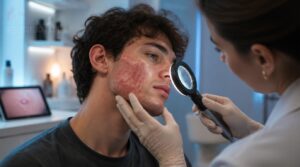
A solid routine controls most oily, acne-prone skin, but not every case. Some signs mean it’s time to bring in a professional instead of pushing through on your own. Here’s when that visit to the dermatologist becomes worth it.
Persistent Acne Despite Treatment
Twelve weeks of consistent adapalene, niacinamide-zinc, and gentle cleansing—yet lesions persist? That’s your cue.
Hormonal treatment resistance, genetic factors, or stubborn sebum overproduction may be overriding topicals. Skin cycling and barrier repair matter, but some oily acne-prone skin needs prescription-strength intervention.
Don’t switch products endlessly. See a dermatologist for oral options or hormonal therapy individualized to what’s actually driving your breakouts.
Painful Cysts or Nodules
Painful cysts or nodules signal deeper inflammation—these aren’t typical pimples. When you feel a firm, tender lump under the skin, especially if swelling or redness spreads, it’s time for medical care.
Dermatologists offer intralesional corticosteroid injections, oral medications, or procedures to relieve pain, reduce inflammation, and prevent scars. Don’t try to treat these aggressively at home.
Worsening Scars and Discoloration
Cysts heal, but the marks they leave can linger. If dark spots or raised scars persist past 12-24 months, don’t wait it out.
- Discoloration treatment options: hydroquinone 4%, azelaic acid, vitamin C
- Scar texture improvement: adapalene, microneedling
- Sun protection strategies: daily SPF 30+ prevents recurrence
A dermatologist can accelerate fading and prevent permanent pigmentation.
Severe Dryness or Irritation
Fixing pigment is one thing—your skin acting raw is another. If cleansing leaves burning, scaling, or redness covering over 5% of your face, stop all actives immediately.
Switch to fragrance-free, alcohol-free formulas and a barrier-repair moisturizer with ceramides. Persistent tightness or cracking near the nose and mouth means your barrier’s compromised—see a dermatologist rather than pushing through it.
Expected Acne Treatment Timelines
Patience matters as much as product choice. Niacinamide eases oil in 1-2 weeks; adapalene needs 4-8 weeks for turnover, peaking near 12. Full courses run 12 weeks (moderate) to 6 months (severe), with maintenance after.
Stress, irregular use, or skipping chemical exfoliation safety rules extends timelines—if you’re following topical retinoids correctly without progress, see your dermatologist.
Frequently Asked Questions (FAQs)
What is the 4 2 4 rule in skincare?
No, it’s not a math formula for glowing skin. It’s a Korean cleansing method: 4 minutes oil massage, 2 minutes water-based cleansing, 4 minutes rinsing—deep pore cleansing built for oily, acne-prone skin.
What to use for oily and acne-prone skin?
For oily acne-prone skin, use a salicylic acid Cleanser, niacinamide Serum, adapalene, oil-free Toner, non-comedogenic gel Moisturizer, and broad-spectrum Sunscreen.
This combo controls oil, unclogs pores, and delivers oil-free hydration without irritation.
How do Koreans clear acne?
Double cleanse, hydrate, repeat: Koreans pair oil-based cleansers with gentle water-based ones, follow with niacinamide serums, sheet masks, and hydrocolloid acne patches overnight—layering hydration and treatment rather than stripping skin, while diet stays low-glycemic and hydrating.
What is the best skincare product for acne oily skin?
No single winner exists. Look for a salicylic acid cleanser or benzoyl peroxide wash, paired with a niacinamide serum, oilfree moisturizer, and broad-spectrum SPF 30+ sunscreen. Consistency across your Cleanser, Toner, Serum, Moisturizer, and Sunscreen routine matters more than any one product.
How to fix acne prone oily skin?
Think of it as rebuilding a fortress wall, brick by brick. Cleansing, treating, and balancing with salicylic acid, niacinamide, and benzoyl peroxide, then moisturizing with ceramides and an oil-free moisturizer, restores order and calm to reactive skin.
What is best for oily skin with acne?
Pair a salicylic acid cleanser like CeraVe SA with a niacinamide treatment to control oil. Follow with lightweight moisturizer and broad-spectrum SPF 30. Paula’s Choice BHA Liquid Exfoliant works on clogged pores twice weekly.
What is the order of skincare routine for oily skin?
Sarah kept applying SPF before her treatment serum, wondering why breakouts persisted. The fix: Cleansing first step, toner after cleanse, treatment before moisturizer, moisturizer before SPF—always noncomedogenic.
Night routine adjustment swaps SPF for exfoliation or retinoid, sealing with barrier-repairing moisturizer.
What should I avoid if I have oily acne-prone skin?
Skip harsh cleansers, heavy moisturizers, and comedogenic face oils. Ditch rough scrubs and irritating actives layered together.
Choose oil-free, noncomedogenic, alcohol-free formulas instead—your barrier stays calmer, breakouts stay controlled, and pore-clogging products stop sabotaging your progress.
How do you skin cycle for oily acne-prone skin?
Rotate four nights: exfoliation (salicylic acid), retinoid application, then two recovery nights with barrier support moisturizing. This shorter cycle suits oily skin’s natural sebum, letting cell turnover happen without over-stripping or triggering rebound oiliness.
How can hormonal changes affect oily skin?
Androgen sensitivity drives sebum production shifts—puberty, ovulation, and stress hormone cortisol spikes can boost oil by 25%. Menstrual cycle oiliness peaks pre-period, while hormone therapy effects (like oral contraceptives) often calm stress-induced breakouts and hormonal acne triggers.
Conclusion
Clear skin comes from restraint, not aggression. Oily, acne-prone skin doesn’t need punishment—it needs patience and precision.
The best skincare routine for oily acne prone skin works because it respects your barrier while targeting excess sebum, layer by layer, day by day. Skip a step, and breakouts return. Follow the plan, and your skin recalibrates itself.
Consistency, not intensity, wins this fight. Trust the process. Your clearest skin is closer than it feels.