This site is supported by our readers. We may earn a commission, at no cost to you, if you purchase through links. This content is for general informational and educational purposes only and is not a substitute for professional medical, dermatological, or nutritional advice.

Layer these two serums wrong and you’ll waste both. Vitamin C and hyaluronic acid can fade dark spots, plump fine lines, and lock in moisture, but only when you apply them in the right order.
Get the order backwards and your skin barrier pays for it. Apply hyaluronic acid before vitamin C and you’ll seal out the very ingredient meant to brighten your skin.
Knowing how to use hyaluronic acid and vitamin C serum together turns two good products into a routine that works with your skin, not against it. Grab your serums. Here’s exactly how to layer them, step by step.
Table Of Contents
- Key Takeaways
- Why Vitamin C and Hyaluronic Acid Pair Well
- How to Use Hyaluronic Acid and Vitamin C
- Morning Routine for Vitamin C and HA
- Evening Routine With Hyaluronic Acid
- Adjusting The Routine for Your Skin Type
- Mistakes to Avoid When Layering Serums
- Results, Storage, and Safety Tips
- Frequently Asked Questions (FAQs)
- Should I apply hyaluronic acid before or after vitamin C?
- Which two serums cannot be used together?
- What are the benefits of vitamin C for skin?
- Do hyaluronic acid and vitamin C work together?
- What is hyaluronic acid & vitamin C?
- Which goes first vitamin C or hyaluronic acid?
- Should I use hyaluronic acid in the morning or night?
- Should vitamin C be applied to damp or dry skin?
- Can I use vitamin C and retinol together safely?
- Does hyaluronic acid cause skin irritation or allergies?
- Conclusion
Key Takeaways
- Always apply vitamin C first on clean, dry skin, then wait 30-60 seconds before layering hyaluronic acid onto damp skin to lock in hydration.
- Never apply hyaluronic acid to dry skin, since it pulls moisture from deeper layers instead of drawing it in from the air.
- Seal your routine with SPF 30+ every morning, since skipping sunscreen undoes vitamin C’s brightening and protective work.
- Give the routine time to work: hydration builds within weeks, but brightening and firmness benefits take 8-12 weeks of consistent use to fully show.
Why Vitamin C and Hyaluronic Acid Pair Well

Vitamin C and hyaluronic acid aren’t just a trendy combo—they actually work better together than apart. Each one covers a gap the other leaves open. Here’s what makes this pairing worth adding to your routine.
Vitamin C tackles brightening and antioxidant defense, while hyaluronic acid’s anti-aging benefits handle the deep hydration your skin needs to stay plump and resilient.
Vitamin C Brightening Benefits
Think of Vitamin C serum as your skin’s morning defense squad. It works through melanin inhibition, slowing pigment production so dark spots fade and skin tone brightening happens over time.
It also delivers antioxidant protection against UV and pollution while sparking collagen stimulation. A clinical study even found that improvement in hyperpigmentation was reported by 73% of participants using topical vitamin C. Apply Vitamin C first, in the morning, for real results.
Hyaluronic Acid Hydration Benefits
Once Vitamin C has done its brightening work, your skin needs water. That’s where Hyaluronic Acid serum steps in.
It binds up to 1,000 times its weight in water for a serious water retention boost. Apply on slightly damp skin and follow with Hyaluronic Acid to lock moisture in place, keeping skin plump and supporting your barrier all day.
Antioxidant and Humectant Synergy
Here’s why this pairing works on a deeper level. Vitamin C brings free radical protection, while Hyaluronic Acid brings moisture retention boost. Together they support oxidative stress prevention and hydration barrier teamwork.
This is Vitamin C and Hyaluronic Acid working together: antioxidant protection meets humectant properties. Apply on slightly damp skin, then seal with moisturizer to lock everything in.
Barrier Support and Plumping Effects
Here’s what really seals the deal: plumping happens on a timeline. HA molecular weights matter here, larger ones sit on skin surface, smaller ones sink deeper to strengthen the moisture barrier.
Within minutes you’ll see smoother skin. Over weeks, collagen synthesis support kicks in, improving skin elasticity and cutting fine lines by up to 28%.
Using Both Serums Together
Two serums, one job: full hydration and repair. Vitamin C and Hyaluronic Acid together cover different needs, so skin gets protection and moisture in one routine.
Apply Vitamin C first, wait 30-60 seconds for absorption, then press HA into damp skin (don’t rub). Use Vitamin C mornings only, HA morning and night. This order prevents pilling and keeps your barrier strong.
How to Use Hyaluronic Acid and Vitamin C
Order matters more than you’d think when layering these two serums. Get the sequence right and you lock in every benefit. Here’s exactly how to apply them, step by step.
Cleanse and Dry Your Skin

Clean skin is your canvas. Use a gentle, pH-balanced cleanser and lukewarm water (98-105°F), massaging for 30 seconds.
Pat dry with a soft towel, don’t rub. Leave skin slightly damp, this helps your serums absorb better in the next step.
Apply Vitamin C Serum First

Grab your vitamin C serum now, skin’s still slightly damp from cleansing.
Dispense 2-3 drops onto fingertips. Press into skin rather than rubbing, working outward from the center of your face.
This step always comes first in your routine. Vitamin C needs direct contact with skin to work its magic before anything else gets layered on top.
Wait 30–60 Seconds

Patience pays off here. Give vitamin C 30–60 seconds to fully absorb before layering anything on top.
Oily skin? 30 seconds usually does it. Dry skin needs the full minute to soak into a thirstier barrier.
| Skin Type | Wait Time |
|---|---|
| Oily | 30 sec |
| Combo | 30–45 sec |
| Dry | 60 sec |
| Sensitive | 45–60 sec |
Apply HA to Damp Skin

Timing matters now. Skin should feel cool and slightly slick, not wet, not dry.
Dispense HA and pat gently into the skin, working outward. No rubbing, that just pushes product around instead of into it.
Applying HA on damp skin traps a surface hydration film right where you need it. Skip this window and skin loses its grip on moisture.
Seal With Moisturizer
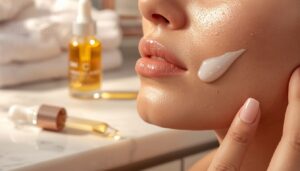
Don’t skip this step, it’s the lock on the door.
Moisturizer traps that HA layer and slows transepidermal water loss, giving you real barrier function support. Occlusive ingredients seal moisture in, while emollients smooth rough patches.
The result? A stronger moisture barrier and a noticeable skin plumping effect that lasts through the day.
Morning Routine for Vitamin C and HA

Mornings set the tone for how your skin controls the day ahead. Getting your Vitamin C and HA routine right means paying attention to order, timing, and amount. Here’s exactly how to layer them for the best results.
If you’re navigating those hormonal changes and a thinner lipid barrier that come with age, a good starting point is building a skin care routine tailored for your 30s before diving into the specifics of layering actives.
If you’re also working actives like exfoliants into your routine, it’s worth knowing that salicylic acid pairs well with hyaluronic acid and won’t disrupt the hydration you’re building.
Use Two to Three Drops
More drops isn’t better here. Use 2-3 drops of vitamin C serum for full face coverage, that’s your sweet spot.
Cleanse gently first, then measure your product. This Drop Quantity Guide keeps results consistent without waste or pilling. Skin Type Adjustment matters too: oily skin starts with 2, drier or mature skin can use 3.
Apply Vitamin C Once Daily
Once a day is the rule for vitamin C, and morning is when it earns its keep.
Your skin faces UV rays and pollution all day, so applying in the AM lets vitamin C work as your antioxidant shield.
New to it? Start every other day, then build up as tolerated. Always follow with SPF 30+, no exceptions.
Layer Hyaluronic Acid Afterward
Once your vitamin C sinks in, mist your skin or splash a bit of water so it’s damp, not dripping.
Press hyaluronic acid serum in with your palms. Don’t rub.
Apply hyaluronic acid morning and night for best hydration. On damp skin, it grabs water fast and helps seal in moisture before your next step.
Finish With SPF 30+ Sunscreen
Once hyaluronic acid sets, sunscreen locks the routine in.
Choose broad-spectrum SPF 30+, and apply a nickel-sized amount, roughly a shot glass for full body coverage. Wait 15-30 minutes before sun exposure.
Reapply every two hours if you’re outdoors. Sweating or swimming? Grab water-resistant formulas.
- Broad-spectrum, SPF 30+
- Nickel-sized amount for face
- Wait 15-30 minutes
- Reapply every 2 hours
Prevent Pilling Between Layers
Pilling happens when layers don’t play nice. Apply Vitamin C First, then Wait 30–60 Seconds for full absorption.
Skin should feel slightly damp, never dry, when you Apply HA to Damp Skin. Use a Light Tapping Motion instead of rubbing.
Seal With Moisturizer Promptly. Skip Using too much product or Mixing Vitamin C with strong actives, both disrupt proper active ingredient layering.
Evening Routine With Hyaluronic Acid

Your evenings need a different game plan than your mornings. No Vitamin C at night, but HA still plays a starring role. Here’s how to build your nighttime layers the right way.
Cleanse Without Over-drying Skin
Your evening cleanse sets the stage for everything after it. Skip hot water: use lukewarm water only, so your moisture barrier stays intact. Massage a pH-balanced, glycerin-based cleanser in gentle circles for 30-60 seconds, then pat dry. Skin should feel clean, not tight. Leave it damp, ready for Hyaluronic Acid serum and Vitamin C serum next.
Use HA After Nighttime Actives
Retinol and other night actives go on first. Then pause.
Wait 30-60 seconds for absorption before reaching for your Hyaluronic Acid serum. This gap lets the active settle, helps skin barrier recovery, and helps prevent pilling layers.
Why the order matters:
- HA after retinol seals in moisture
- Damp application boosts hydration
- Fewer mix-ups between products
- Smoother texture, no balling
- Better overnight results
Follow With Nighttime Moisturizer
Sealing in serums? That’s your moisturizer’s job.
Once your Hyaluronic Acid serum settles into damp skin, lock everything in with a nighttime moisturizer. Rich formulas with ceramides rebuild your barrier while you sleep, cutting overnight water loss by up to 20%.
Massage in upward circles. Give it 1-3 minutes to set before bed.
Avoid Irritating Active Combinations
Not all actives play nice together, and your evening routine is where mistakes happen most.
Skip these pairings:
- Retinol and Vitamin C
- AHAs and Vitamin C
- Benzoyl Peroxide and Vitamin C
- Niacinamide and Vitamin C (use separately)
- Peptides layered same session
Sensitive skin? Start with lower-strength Vitamin C and avoid AHAs or BHAs entirely.
Adjusting The Routine for Your Skin Type

No two faces are exactly alike, and your routine shouldn’t be either. Skin type changes the game a little—what feels perfect on dry skin might overwhelm oily or sensitive skin. Here’s how to fine-tune your layering based on what you’re working with.
Dry and Dehydrated Skin
Tight, flaky skin? You need extra hydration.
Do the pinch test on your cheek. Slow bounce-back means dehydration.
Layer a hydrating toner before Vitamin C. Press HA into damp skin, don’t rub. Choose a rich moisturizer with ceramides to seal in moisture and rebuild your barrier. This combo targets both dryness and dehydration, restoring bounce and stopping water loss for good.
Oily and Acne-prone Skin
Dry skin needs richness. Oily and acne-prone skin needs the opposite.
Cleanse gently with a foamy, pH-balanced wash, twice daily max. Skip the scrub.
Choose lightweight gel-based serums for both Vitamin C and HA. Wait 30-60 seconds before layering. Never apply HA to dry skin, it backfires.
Finish with an oil-free moisturizer and non-comedogenic SPF. This keeps sebum balanced without clogging pores.
Sensitive or Reactive Skin
Oily skin needs oil control. Sensitive skin needs peace.
Patch test every new serum first. Apply a dime-sized amount behind your ear, wait 24 hours.
Start with lower-strength Vitamin C, once daily. Skip fragrance products entirely. Never apply HA to dry skin.
Reduce frequency if stinging happens. Use a barrier repair cream nightly, and monitor reactions closely all week long.
Mature Skin and Fine Lines
Skin needs different care after 40. Thinning skin and fine lines call for consistent hydration plus antioxidants.
- Sun-etched crow’s feet softening with each use
- Cheeks regaining a subtle bounce
- Tone evening out patch by patch
- Skin catching light instead of shadows
Vitamin C helps collagen production and skin firmness solutions. Hyaluronic acid delivers hydration for aging skin, plumping fine lines and wrinkles while boosting elasticity.
Seasonal Humidity Adjustments
Your routine shouldn’t stay frozen year-round. Air changes, and your skin’s needs shift with it.
Summer: humidity feeds hyaluronic acid straight from the air. Apply on damp skin, 2-3 drops, twice daily.
Winter: dry air pulls moisture out. Seal HA with a rich, occlusive moisturizer fast, within 1-2 minutes, to lock hydration in before it escapes.
Mistakes to Avoid When Layering Serums

Even a great routine can fall short with one small slip-up. Small errors in order, amount, or timing quietly cancel out your results. Here are the five mistakes to watch for.
Reversing The Serum Order
Order matters more than you’d think. Vitamin C goes first on dry skin, then hyaluronic acid on damp skin.
- Reversed order weakens absorption
- Barrier support drops
- Antioxidant protection fades
- Hydration doesn’t lock in
Flip it and both actives underperform. Water-based HA needs to sit before oil-based vitamin C, not after.
Applying HA to Dry Skin
Bone-dry skin sabotages hyaluronic acid fast. Never apply HA to completely dry skin, it pulls moisture from deeper layers instead of the air.
| Skin State | HA Effect | Result |
|---|---|---|
| Damp | Draws in water | +134% hydration |
| Dry | Pulls from skin | Tightness |
| Humidified room | Steady binding | Longer-lasting |
Mist first, pat, then apply generously for dry skin types.
Using Too Much Product
More isn’t better here. Piling on serum just triggers Overuse Consequences: Moisture Loss, pH Imbalance, and Skin Irritation.
Stick to 2-3 drops per serum. Wait 30-60 seconds for absorption before layering. Skipping this step wastes Product and can lower skin pH below 4.5, breaking down your barrier instead of building your glow.
Skipping Daily Sunscreen
Vitamin C works hard for your skin, but only if sunscreen backs it up. Skip it, and you invite cumulative UV damage, higher sunburn risk, and faster premature aging.
- Dark spots deepen instead of fading
- Fine lines form sooner
- Skin cancer risk climbs
- Your morning serum’s work gets undone
Use Vitamin C in the morning, then seal with SPF 30+. Reapplication matters too.
Combining Irritating Actives Together
Mixing too many active ingredients invites trouble your skin doesn’t need.
| Combo | What Happens |
|---|---|
| Retinol + Vitamin C | pH conflicts cancel benefits |
| Vitamin C + AHAs | Barrier damage, stinging |
| Retinol + BHA | Over-exfoliation, dryness |
Alternate actives on different nights instead. Your skincare routine stays effective without the irritation.
Results, Storage, and Safety Tips

You’ve got the steps down. Now let’s talk about what happens after. Here’s what to expect, how to store your Vitamin C, and how to tell if your skin’s happy or not.
Expected Hydration Timeline
Patience pays off with this duo. Skin hydration builds in stages, not overnight.
- Week 1: initial hydration boost
- Week 2: smoother texture
- Week 4: plump appearance
- Week 6: hydration stabilizes
- 8-12 weeks: maximum benefits, with lasting moisture retention even after cleansing
Stick with your routine daily. Results compound over time, so don’t quit at week two.
Brightening and Firmness Timeline
Hydration moves fast. Brightening and firmness take longer, since collagen and pigment changes work on a slower clock.
| Week | Change |
|---|---|
| 1 | Radiance appears |
| 3-4 | Tone evens out |
| 8 | Fine lines soften |
| 12 | Elasticity improves |
Month 3 brings full transformation, your reward for sticking with daily Vitamin C and hyaluronic acid.
Patch Testing New Serums
Before that three-month glow-up, test new serums first.
Dab a pea-sized amount on your inner forearm or behind the ear (facial products need facial-adjacent skin). Leave it uncovered for the 48-hour observation window.
Watch for redness or itching. Sensitive skin benefits from gradual introduction, building skin tolerance before daily use. Small patch area, big payoff: safer free radical protection ahead.
Recognizing Irritation and Overuse
Redness or itching within 30 minutes? Normal adjustment, usually gone in 2-3 days.
Past 72 hours means true irritation. Watch for hives, hot skin, or peeling: signs of barrier damage.
Sensitive skin? Start with lower-strength Vitamin C. Never apply HA to dry skin. Skipping sunscreen undoes Vitamin C’s work.
Recovery averages 5-7 days with reduced frequency and gentle care.
Storing Vitamin C Correctly
Good skin recovers. Good Vitamin C doesn’t, once it’s oxidized.
Skin can bounce back from irritation, but oxidized Vitamin C is gone for good
Store Vitamin C in a cool dark place: 8-12°C, away from bathroom heat and windowside light. Use airtight packaging with tight caps or pumps, not droppers. Cap immediately after each use. Tilt bottles to keep product off the opening.
Turned yellow or orange? Toss it. That’s oxidation, not aging.
Frequently Asked Questions (FAQs)
Should I apply hyaluronic acid before or after vitamin C?
Vitamin C goes first, always. Apply it to clean, dry skin and let it absorb for 30-60 seconds. Follow with hyaluronic acid on damp skin. This order lets vitamin C treat while HA locks in moisture.
Which two serums cannot be used together?
Oil and water don’t mix, and neither do retinol combinations with certain acids. Avoid pairing retinol with glycolic acid or vitamin C due to pH incompatibility and over-exfoliation risks, which cause dryness and skin barrier damage.
What are the benefits of vitamin C for skin?
This antioxidant powerhouse works by blocking melanin production for real skin brightening effects and fading dark spots. It also boosts collagen synthesis, firms fine lines, and delivers antioxidant protection against UV and pollution damage while improving overall texture.
Do hyaluronic acid and vitamin C work together?
Definitely, perfect pair. Yes, they work together perfectly. Vitamin C brings antioxidant protection and brightening, hyaluronic acid delivers deep hydration. This pairing helps your skincare routine by tackling dullness and dryness at the same time.
What is hyaluronic acid & vitamin C?
Two skincare all-stars, one job each. Hyaluronic acid is a natural humectant that pulls water into skin for hydration. Vitamin C works as an antioxidant, protecting against free radicals while brightening tone and supporting your skin’s moisture barrier.
Which goes first vitamin C or hyaluronic acid?
Funny how skincare order mirrors life: prep before payoff. Vitamin C goes first, on clean dry skin. Wait 30-60 seconds for absorption, then layer hyaluronic acid onto slightly damp skin for maximum hydration efficiency.
Should I use hyaluronic acid in the morning or night?
Both, honestly. HA works morning or night since it’s applied to damp skin either way. Mornings give a hydration boost before Vitamin C and sunscreen. Nights lock in moisture. Routine timing flexibility means you choose based on your skin’s needs.
Should vitamin C be applied to damp or dry skin?
Dry skin wins here. Apply vitamin C to clean, dry skin first. Damp skin dilutes the serum and weakens contact, so wait 30-60 seconds before layering hyaluronic acid for proper absorption.
Can I use vitamin C and retinol together safely?
Mixing them is like tossing two power tools in one hand. Separate application timing keeps skin calm: Vitamin C morning protection under sunscreen, gradual retinol introduction at night. Monitor skin tolerance closely as you build up.
Does hyaluronic acid cause skin irritation or allergies?
Rarely. True allergy exists but is uncommon. Most reactions are irritation, not allergy, often from added fragrances or extreme pH. Patch test new products, introduce gradually, and watch sensitive skin for redness or stinging within 24-48 hours.
Conclusion
Good things come to those who layer in order. Once you know how to use hyaluronic acid and vitamin C serum, your routine stops fighting your skin and starts working with it.
Apply vitamin C first, wait, then seal in moisture with HA. That’s the whole formula.
Skin doesn’t need more products. It needs the right order, the right timing, and consistency.
Master this sequence and brighter, plumper skin isn’t luck. It’s routine, built well.