This site is supported by our readers. We may earn a commission, at no cost to you, if you purchase through links. This content is for general informational and educational purposes only and is not a substitute for professional medical, dermatological, or nutritional advice.

Most skincare labels read like a warning label—layer the wrong things, and you’ll wake up with an angry, flaking face. So when salicylic acid and hyaluronic acid both land in your routine, the instinct is to wonder if one cancels out the other. It doesn’t.
These two ingredients are actually a well-matched pair—one digs deep into pores to clear out congestion, while the other floods your skin with moisture to keep things calm.
Understanding how they work together changes how you build your whole acne-care routine.
Table Of Contents
- Key Takeaways
- Yes, You Can Use Them Together
- How Salicylic Acid Clears Pores
- How Hyaluronic Acid Hydrates Skin
- Why This Pair Works Well
- Correct Layering Order
- Morning and Night Routine Examples
- Mistakes and Irritation Warning Signs
- Frequently Asked Questions (FAQs)
- Should I use salicylic acid before or after hyaluronic acid?
- What should I never mix with hyaluronic acid?
- What should you not mix with salicylic acid?
- What is the best combination with salicylic acid?
- What not to mix with salicylic acid?
- What should I not mix hyaluronic acid with?
- Should I use salicylic acid in the morning or night?
- Do hyaluronic acid and salicylic acid work together?
- What are the benefits of hyaluronic acid?
- How do I use salicylic acid & hyaluronic acid?
- Conclusion
Key Takeaways
- Salicylic acid and hyaluronic acid work well together because one clears clogged pores while the other keeps your skin hydrated and calm.
- Always apply salicylic acid first on clean, dry skin, wait about 30–60 seconds, then layer hyaluronic acid on slightly damp skin before sealing with moisturizer.
- If your skin is sensitive, start with salicylic acid just once or twice a week and watch for redness, peeling, or burning — those are signs to ease off.
- Don’t stack other actives like retinol, vitamin C, or glycolic acid in the same routine, as too many exfoliants at once can damage your skin barrier.
Yes, You Can Use Them Together
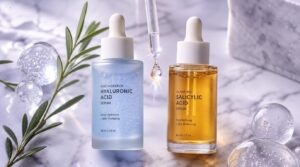
Good news — these two ingredients actually get along really well. Most people can use them together without any issues, and for acne-prone skin, they can be a genuinely great team.
If you’re also wondering whether your hydration routine could be working against you, this guide on moisturizers that cause breakouts and clogged pores helps you figure out what’s actually behind the problem.
Here’s what you need to know before you start.
Safe for Most Skin Types
Most people can use salicylic acid and hyaluronic acid together without issue. This pairing has broad skin compatibility because each ingredient balances the other. Salicylic acid exfoliates gently when used as directed, while hyaluronic acid’s noncomedogenic formula keeps the skin barrier hydrated.
Together, they maintain balanced pH levels, support irritation mitigation, and offer universal tolerability. These combined effects create a low irritation risk duo for nearly every skin type.
Best for Acne-prone Skin
If your skin breaks out often, this combination is genuinely one of the best pairings you can use. Salicylic acid clears congestion deep in pores, while hyaluronic acid manages skin barrier repair without adding grease. It’s oil‑soluble BHA action helps clear clogged pores from the inside.
For acne-prone skin, pairing these with niacinamide oil control, zinc sebum regulation, or lightweight gel formulas and non-comedogenic moisturizers makes product layering both effective and comfortable.
Hydration Balances Exfoliation
Exfoliation can leave your skin feeling tight — that’s where hyaluronic acid quietly earns its place. Think of it as Exfoliation Recovery built into your routine. Proper Hydration Timing matters here:
- Salicylic acid exfoliates and clears
- Hyaluronic acid restores water retention
- Serum Synergy keeps your skin barrier repair intact
- Moisture Lock seals everything in
Together, they simply work.
Start Slowly if Sensitive
If your skin is sensitive, take it easy at first. Start with salicylic acid once or twice a week — that gradual frequency gives your skin time to adjust. Always patch test on your inner arm before going full-face. Use minimal application, watch for redness or tightness, and adjust the frequency as needed.
Hyaluronic acid’s hydration properties act as a natural irritation buffer throughout.
How Salicylic Acid Clears Pores

Salicylic acid isn’t like most exfoliants — it actually works its way inside your pores, not just across the surface. That’s what makes it so effective at tackling the stuff that causes breakouts in the first place.
Here’s exactly what it does once it gets in there.
Oil-soluble BHA Exfoliant
Salicylic acid is an oil-soluble BHA — and that matters more than you’d think. Unlike water-based chemical exfoliants, its oil-soluble nature allows it to reach deeper into pores, where sebum and buildup actually live. This penetration depth sets it apart.
OTC concentrations usually range 0.5–2%, offering formulation stability that suits daily layering skincare routines without the harshness of clinical peels.
Unclogs Blackheads and Whiteheads
Blackheads and whiteheads form when oil and dead cells get trapped inside a pore — and that’s exactly where salicylic acid goes to work. Its pore penetration ability allows comedones dissolution by breaking down the keratin process inside the follicle.
This BHA beta hydroxy acid exfoliant loosens the buildup that cleansers can’t reach, targeting debris deep within pores. By disrupting the keratinization process, it directly addresses the root cause of comedone formation.
With consistent exfoliation frequency, salicylic acid helps unclog pores, preventing new blackheads and whiteheads from developing while maintaining clearer skin.
Helps Reduce Excess Oil
Salicylic acid may help if your skin often stays shiny, no matter what you try. It reaches the sebaceous glands inside your pores, aiding natural sebum regulation over time. This results in less surface oil, a more mattifying finish, and fewer clogged pores throughout the day.
Pair it with lightweight hyaluronic acid, and you achieve real oil control without stripping your skin dry.
Smooths Rough Skin Texture
Rough, uneven texture is often just dead skin that hasn’t shed evenly. Salicylic acid manages this by lifting built-up cells and smoothing surface congestion — a process where exfoliation timing really matters.
For best results, pair your salicylic acid routine with a solid dry skin care regimen — especially since over-exfoliating without rehydrating can leave skin more uneven than before.
Pair it with hyaluronic acid’s hydration and moisture retention, and you get real texture lightening without dryness. Together, they support surface uniformity, elasticity boost, and genuinely smoother skin texture over time.
Calms Inflamed Breakouts
Angry, red breakouts are more than just a cosmetic problem — they actually hurt. Salicylic acid’s soothing anti-inflammatory properties work beneath the surface to calm swelling and reduce redness around inflamed lesions. Think of it as gentle spot calming from the inside out.
Pair it with hyaluronic acid’s soothing properties, and your skin gets real relief. Together, they reduce acne while supporting barrier repair.
How Hyaluronic Acid Hydrates Skin

Hyaluronic acid is your skin’s best friend for staying hydrated.
It works differently from most moisturizing ingredients — think of it less as a cream and more as a sponge that pulls water right into your skin.
Here’s what makes it such a reliable hydrator.
Powerful Water-binding Humectant
Think of hyaluronic acid as your skin’s personal water reservoir. Its humectant binding capacity is exceptional — it draws moisture deep into the skin and holds it there. The moisture retention mechanism depends on molecular weight impact: lighter molecules reach deeper layers, while heavier ones protect the surface. Together, they create real hydration synergy potential.
Hyaluronic acid acts like a personal water reservoir, pulling moisture deep into skin and holding it there all day
- Pulls water into the epidermis
- Holds moisture against daily dehydration
- Aids steady dermal hydration all day
Plumps Fine Lines
When your skin is well-hydrated, fine lines have nowhere to hide — and hyaluronic acid knows exactly how to fill them in. It acts like plumping polymers beneath the surface, delivering an elasticity boost that makes skin look softer and fuller.
| Fine Line Metric | What Improves | Why It Matters |
|---|---|---|
| Line Length | Visibly shorter | Smoother overall appearance |
| Line Area | Reduced coverage | Less shadow on skin |
| Line Count | Fewer visible lines | Plumper-looking skin |
| Skin Elasticity | Noticeably firmer | Promotes collagen stimulation |
Paired with salicylic acid and peptide synergy from your routine, hyaluronic acid helps your skin feel genuinely refreshed.
Supports Skin Barrier Comfort
Hydration does more than soften fine lines — it actively strengthens your skin barrier. Hyaluronic acid works as a moisturizing agent that draws water into the epidermis, aiding in moisture loss prevention.
This NMF synergy reinforces your barrier’s natural defenses. Its barrier-friendly pH ensures compatibility with salicylic acid, supporting lipid barrier repair without disruption — so your skin remains comfortable during exfoliation.
Non-comedogenic Hydration
One worry people have is whether adding more products will clog their pores. Good news — hyaluronic acid won’t do that. It’s non-comedogenic by nature, which means it hydrates without blocking anything. Look for these pore-friendly moisturizer formats:
- Lightweight gel base serums
- Humectant-only formulas
- Minimized occlusives with silicone barrier film
- Low comedogenic potential hydrating serum options
Your oil-soluble BHA works harder when paired with the right hyaluronic acid.
Works for All Skin Types
Unlike salicylic acid, hyaluronic acid plays well with virtually every skin type — dry, oily, combination, even reactive. Its universal pH compatibility and barrier-friendly formulation mean it won’t tip your skin off balance.
When you layer them together, the gentle ingredient balance keeps things calm. Choose fragrance-free options for a non-irritating delivery that nourishes your skin barrier without compromise.
Why This Pair Works Well
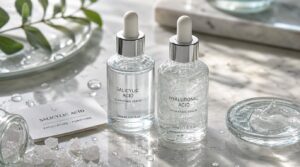
These two ingredients don’t just coexist — they actually bring out the best in each other. One clears the way while the other keeps your skin comfortable and balanced.
Here’s exactly why they work so well together.
Salicylic Acid Targets Congestion
Salicylic acid is your secret weapon against clogged pores. As an oil-soluble BHA, it slips deep into follicles, triggering follicular debris dissolution and keratinocyte cohesion reduction — breaking apart the buildup before it becomes a breakout.
Its microcongestion mechanism also targets sebum production control and inflammatory pathway modulation, so deep-cleansing exfoliation doesn’t just unclog pores; it calms the trouble brewing underneath.
Hyaluronic Acid Prevents Dryness
That’s where hyaluronic acid steps in as your skin’s rescue net. While salicylic acid clears pores, it can leave dryness behind. Hyaluronic acid—a powerful humectant—pulls moisture back in and holds it there.
Think of it as three jobs working at once:
- Moisture Retention across the skin surface
- Dermal Hydration Boost that improves elasticity enhancement
- Dehydration Prevention that keeps skin comfortable
The result? humectant comfort without a greasy feel.
Better Comfort During Exfoliation
Exfoliation doesn’t have to feel harsh. When you pair salicylic acid with hyaluronic acid’s soothing properties, your skin stays more comfortable throughout the process. Hyaluronic acid restores skin hydration fast, while salicylic acid’s anti-inflammatory action calms redness.
After a gentle pause, applying a fragrance-free formula reduces added sting. This step minimizes irritation and enhances tolerance for sensitive skin types.
Always patch test first, and keep an immediate moisturizer nearby — or a cool compress if needed. These precautions ensure safety and provide quick relief for any unexpected reactions.
Balanced Acne-care Routine
Think of a balanced acne treatment regimen like a team effort — salicylic acid handles clearing, while hyaluronic acid ensures skin hydration.
Your product layering order matters significantly. Prioritize texture when selecting products, as this guides your choices effectively.
Maintain an acne diary to track progress, noting dietary impacts and lifestyle influences. This helps identify what works and what doesn’t.
Always patch test new products to avoid adverse reactions, ensuring safety as you refine your routine.
Smoother, Healthier-looking Skin
Together, salicylic acid and hyaluronic acid deliver more than clear pores — they work toward genuinely healthier skin. Salicylic acid reduces hyperpigmentation and refines pore appearance by speeding cell turnover. Hyaluronic acid strengthens the barrier and enhances radiance through deep hydration.
Your layered skincare routine also offers real antiaging benefits. Skin barrier repair ensures smoother, plumper skin and a more even skin tone overall.
Correct Layering Order
Getting the order right makes a real difference with these two ingredients. Think of it like building a sandwich — what goes on first matters.
Here’s exactly how to layer them for the best results.
Start with a lightweight vitamin C serum, let it fully absorb, then follow with hyaluronic acid to lock in hydration, and if you’re unsure about timing or ratios, this guide on layering hyaluronic acid and vitamin C serum walks through the order step by step.
Start with a bromelain-based enzyme exfoliant to gently loosen dull, dead skin cells, then follow with hydrating layers that lock in moisture—this step-by-step bromelain skincare routine guide breaks down the ideal order for sensitive skin.
Cleanse Skin First

Before anything else, your skin needs a clean slate. Use a gentle cleanser — such as an SA Smoothing Cleanser with Ceramides or a Power Wash Cleanser — with a lukewarm rinse and soft massage technique to lift away oil and debris. Pat dry with a clean towel.
This pre-active prep step ensures residue removal, allowing your actives to work effectively.
Apply Salicylic Acid First
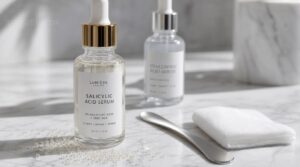
Once your skin is clean and dry, reach for your salicylic acid. Dry skin is a prerequisite here — applying this chemical exfoliant to damp skin dilutes its effect. Use a thin, even coat, and keep it away from the eye area.
- Improves absorption into pores
- Targets oil and congestion directly
- Sets the stage for hyaluronic acid
- Maximizes your order of application
Wait Briefly Before Layering
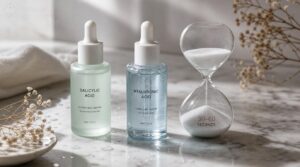
After applying salicylic acid, give it a 30–60 second absorption pause before moving on.
This simple timing consistency step prevents pilling, facilitates formula integration, and acts as a skin comfort buffer — especially important with acid pairing guidelines in mind.
| What Happens | Why It Matters |
|---|---|
| Products absorb fully | Reduces pilling risk |
| Layers stay separate | Improves formula integration |
| Actives settle evenly | Facilitates skin comfort buffer |
| Routine stays consistent | Reinforces timing consistency |
Apply Hyaluronic Acid Next

Once that brief layering interval passes, your skin is ready for hyaluronic acid. Apply a few drops — serum quantity matters here, less is more — to skin that’s still slightly damp. Then use a gentle patting technique with your fingertips; avoid rubbing, especially after salicylic acid.
This damp skin application helps hyaluronic acid pull moisture into where it’s needed most.
Seal With Moisturizer
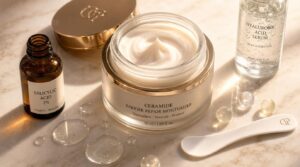
Now seal everything in with a moisturizer. Think of it as the final lock on your routine — it creates an occlusive barrier that holds the hyaluronic acid’s humectant’s lock in place, while emollient softening ingredients smooth the surface.
For lipid reinforcement and skin barrier repair after salicylic acid, choose a ceramide-rich formula.
Hydration after exfoliation matters more than people realize.
Morning and Night Routine Examples

Knowing what order to layer your products is one thing — but seeing it in action makes it much easier to stick with. A few simple routine examples can help you figure out what actually fits your skin and schedule.
Here’s what that might look like throughout the week.
Beginner Weekly Routine
Think of your first week as a test drive, not a full commitment. Start slow and build from there.
- Monday/Wednesday/Friday nights: Cleanse, apply salicylic acid, wait 1–2 minutes, then layer hyaluronic acid and moisturizer.
- Other nights: Skip the salicylic acid — rest days matter for recovery.
- Every morning: Cleanser, hyaluronic acid, sunscreen.
- Week two: Patch test for reactions before increasing exfoliation frequency.
Oily Skin Routine
Oily skin needs a no-nonsense routine. Morning: foaming cleanser, hyaluronic acid serum, oil-free moisturizer, then lightweight sunscreen — non-negotiable.
Evenings, swap in salicylic acid after cleansing for oil control; allow it to absorb, then layer hyaluronic acid to maintain balance.
For acne-prone skin, incorporate a clay mask once weekly to target deeper congestion.
A mattifying primer works effectively before makeup application.
Sensitive Skin Routine
Sensitive skin requires patience. Stick to a gentle cleansing method — using lukewarm water and avoiding scrubbing — followed by applying hyaluronic acid to damp skin.
Use salicylic acid once weekly to manage active ingredient frequency and skin sensitivity. Always follow with a barrier support moisturizer and incorporate fragrance-free formulas throughout your daily skincare routine.
In the morning, add sunscreen protection after applying your moisturizer, and do this consistently every day.
Daily Hydration Steps
Hydration isn’t just about what you put on your skin — it starts from within. Morning water intake sets the tone for the day, and electrolyte replenishment keeps your body balanced, especially after exercise. Water-rich foods like cucumber and watermelon also contribute to internal hydration.
Build your skincare regimen around the same mindset:
- Apply hyaluronic acid to damp skin right after cleansing.
- Use hydration tracking apps or a marked bottle to stay consistent.
- Set sip habit reminders throughout the day to support what your hydrating serums and salicylic acid routine are doing externally.
Sunscreen for Morning Use
Sunscreen is the last step in your morning skincare routine — and it’s non-negotiable, especially when using salicylic acid. Choose a broad spectrum SPF 30 or higher for solid UV protection.
Apply a nickel-sized amount to your face and neck. If using a chemical formula, allow a 15–20 minute waiting time before heading outdoors.
Reapplication is crucial — reapply every two hours when outdoors to maintain protection.
For product picks and application tips tailored to tinted brows, the best sunscreens for microbladed eyebrows can help you stay protected without risking unwanted color changes.
Mistakes and Irritation Warning Signs
Even the best routine can backfire if you push it too hard. A few common slip-ups can tip the balance from clear, healthy skin to irritated, angry skin pretty quickly.
Here’s what to watch out for.
Overusing Salicylic Acid
More isn’t always better with salicylic acid. Using it too often triggers burning, stinging, redness, and peeling, while risking real barrier damage. Over-exfoliation strips your dermal barrier faster than it can recover, leaving skin raw and vulnerable.
Sun sensitivity changes too, increasing the likelihood of UV damage.
Start slow, protect your skin, and respect its limits to avoid these risks.
Skipping Moisturizer Afterward
Skipping moisturizer after salicylic acid is a mistake your skin will feel fast. Without it, you risk a barrier TEWL spike — water escapes quicker, leaving dry skin tight and uncomfortable.
Heightened redness risk follows, and persistent flaking issues can appear within hours.
Moisturizer aids skin barrier repair and locks in your hyaluronic acid, preventing prolonged irritation and diminished skin comfort.
Mixing Too Many Actives
Once you’ve nailed moisturizer, watch what else you’re layering. Adding retinol, vitamin C, or glycolic acid alongside salicylic acid and hyaluronic acid creates cumulative irritation — your skin simply can’t handle that many active ingredient interactions at once. Barrier overload is real. To avoid over-exfoliation and conflicting pairings, keep it simple:
- Use salicylic acid on its own exfoliation nights
- Rotate other actives on separate days
- Track results weekly to spot frequency management issues early
Redness, Peeling, Burning
Your skin speaks up when it’s had enough. Redness, peeling, and burning are classic irritant reaction signs — your barrier waving a white flag. Over-exfoliation with salicylic acid triggers this dehydration cycle fast.
Watch for allergic dermatitis indicators too: spreading rash, swelling, or itching beyond the application area.
Infection warning signs like warmth, crusting, or fever need a doctor.
Barrier recovery tips start with stopping the culprit.
When to Reduce Frequency
Once you spot those warning signs, it’s time to pull back. Drop salicylic acid to once or twice a week and let hyaluronic acid do the heavy lifting on hydration.
A stinging reaction, persistent redness, or excessive flaking are clear dryness alerts — your irritation threshold is telling you something. Ease your exfoliation schedule, and your skin will thank you.
Frequently Asked Questions (FAQs)
Should I use salicylic acid before or after hyaluronic acid?
Always use salicylic acid first. It is the golden rule of serum application — apply the thinner, active layer before hyaluronic acid to respect the texture sequence.
This approach ensures the absorption window remains open, maximizing the effectiveness of both ingredients.
What should I never mix with hyaluronic acid?
Avoid stacking retinoids irritate-prone skin, vitamin C acidity, benzoyl peroxide drying effects, strong AHAs, or physical exfoliants with hyaluronic acid in one routine. Over exfoliation triggers skin irritation fast.
What should you not mix with salicylic acid?
Don’t stack salicylic acid with retinol, benzoyl peroxide, AHA exfoliants like glycolic acid, or vitamin C. Layering these risks over-exfoliation and skin irritation. Use them on alternate days instead.
What is the best combination with salicylic acid?
Hyaluronic acid is your best match. Niacinamide synergy soothes irritation, zinc support balances oil, and retinoid pairing refines texture. Use benzoyl peroxide combo cautiously, on alternate days.
What not to mix with salicylic acid?
Don’t pair salicylic acid with retinol, benzoyl peroxide, high-strength vitamin C, or alpha hydroxy acids like glycolic acid.
These combinations can cause dryness, redness, and irritation — especially concentrated AHA blends or retinoid products.
What should I not mix hyaluronic acid with?
Most ingredients play nicely with hyaluronic acid, but a few can cause trouble.
Retinoid incompatibility, AHA irritation, vitamin C pH clashes, benzoyl peroxide drying effects, and enzyme degradation can all undermine its hydrating benefits.
Should I use salicylic acid in the morning or night?
Both times work, but night wins on points. Evening recovery lets salicylic acid do its job without UV sensitivity concerns. Skip the sunscreen debate entirely — just cleanse, apply, and sleep.
Do hyaluronic acid and salicylic acid work together?
Yes, they work beautifully together. Salicylic acid, an oil-soluble BHA, clears pores while hyaluronic acid, a topical humectant, restores moisture. Clinical evidence validates this pairing for balanced, clearer skin.
What are the benefits of hyaluronic acid?
Hyaluronic acid locks in moisture, reduces skin tightness, and gives you plumper-looking skin.
It enhances skin elasticity, aids dermal barrier repair.
It improves product absorption, and even accelerates wound healing.
All without clogging pores.
How do I use salicylic acid & hyaluronic acid?
Start with salicylic acid on clean, dry skin, wait a minute, then apply hyaluronic acid to damp skin. That order of application keeps the exfoliation working while locking in moisture.
Conclusion
Funny how the ingredient meant to dry out your breakouts works best when paired with one that drenches your skin in moisture. That’s the quiet logic behind using salicylic acid with hyaluronic acid together—they don’t fight each other; they cover what the other can’t.
One clears the path, the other keeps your barrier from falling apart along the way. Stick with the routine, give your skin time to adjust, and let the results speak.