This site is supported by our readers. We may earn a commission, at no cost to you, if you purchase through links. This content is for general informational and educational purposes only and is not a substitute for professional medical, dermatological, or nutritional advice.

Your T-zone shines by noon, but your cheeks still feel tight and flaky. Sound familiar? Combination skin plays by two rulebooks at once, and most makeup advice only speaks one language.
That mismatch is why foundation cracks along your cheekbones while your nose looks like a glazed donut. Your skin isn’t confused, it’s just asking for a zone-by-zone approach instead of a one-size-fits-all routine.
Get the prep right, and everything after, primer, foundation, powder, falls into place. These combination skin makeup tips will show you how to balance both zones so your look stays fresh from morning coffee to evening plans.
Table Of Contents
- Key Takeaways
- Prep Combination Skin Before Makeup
- Prime Oily and Dry Zones Separately
- Choose and Apply Base Makeup
- Apply Color and Set Strategically
- Make Combination Skin Makeup Last
- Frequently Asked Questions (FAQs)
- Can you apply makeup on Combination Skin?
- What are the ways to get a fair skin?
- How do I choose a skin care routine for Combination Skin?
- How do you manage Combination Skin?
- How to make makeup look good on combination skin?
- What type of makeup is best for combination skin?
- How do you prepare combination skin before makeup?
- What is a good routine for combination skin?
- How can I prevent foundation oxidation on my skin?
- Are fixing sprays beneficial for combination skin makeup?
- Conclusion
Key Takeaways
- Treat your T-zone and cheeks as two different skin types by using a mattifying primer on oily areas and a hydrating primer on dry patches, so neither zone fights your makeup.
- Prep matters most, so cleanse with a pH-balanced formula, exfoliate with AHAs and BHAs a few nights a week, and let each skincare layer fully absorb before moving on.
- Apply foundation, blush, and powder zone by zone, building coverage from the center of your face outward with a damp sponge for a natural, balanced finish.
- Keep your look fresh all day by blotting oil instead of wiping it, powdering only where shine appears, and locking everything in with a setting spray suited to each zone.
Prep Combination Skin Before Makeup
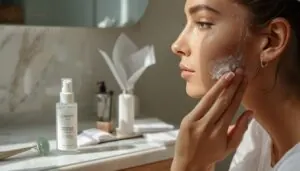
Combination skin plays by its own rules, with oil and dryness fighting for control on the same face. Getting your makeup to behave starts long before you pick up a foundation brush, because your skin needs the right prep to cooperate. Here’s exactly how to set the stage, step by step.
The fix lies in zonal hydration, and pairing a fragrance-free cleanser with a ceramide-rich overnight hydration mask helps calm oily zones while nourishing drier patches as you sleep.
Gentle PH-Balanced Cleansing
Since combination skin swings between oily and dry, your cleanser needs to respect the acid mantle, not strip it. Look for gentle, pH-balanced formulas (around 5.5) with amino-acid or glucoside surfactants.
- Protects your microbiome
- Preserves barrier lipids
- Prevents tightness
- Reduces breakouts
- Keeps skin glowing
Rinse with lukewarm water. No squeaky, tight feelings allowed, gorgeous skin starts here.
Strategic AHA and BHA Exfoliation
Clean skin loves a little polish. Alternate glycolic or lactic acid two to three nights weekly for surface smoothing, then use salicylic acid on your oily T-zone to clear congested pores. If acids feel too intense some nights, comparing enzyme exfoliation versus chemical peel benefits can help you find a gentler alternative that still smooths skin.
AHAs work top-down, BHAs work oil-soluble and deep. That combo balances combination skin beautifully, don’t overdo it, though, your barrier still needs protecting. Understanding the difference between chemical exfoliation with hydroxy acids can help you fine-tune how often to use each acid without over-exfoliating.
Lightweight Serum and Moisturizer
Once your pores are clear, feed them. Pat on a hydrating serum with hyaluronic acid, wait 30 seconds, then follow with a gel moisturizer.
Gel textures absorb fast, layer without pilling, and hydrate dry cheeks without greasing your T-zone. Stick to oilfree and noncomedogenic picks for targeted hydration that balances beautifully.
Sunscreen That Layers Smoothly
Your gel moisturizer needs a partner, and that’s sunscreen. Pick a lightweight sunscreen texture with a non-greasy finish, mineral or chemical.
Tinted mineral sunscreen blends beautifully on combination skin, skipping white cast while staying water-resistant for smooth layering. Choose fragrance-free, oilfree, and noncomedogenic formulas so your hydration barrier stays intact underneath makeup.
Letting Skincare Fully Absorb
Patience pays off here, and it’s the step most people rush. Apply skincare while skin is still slightly damp, since that best absorption window lasts about 60 seconds. Waiting longer weakens absorption efficiency. Feeling "dry" just means surface evaporation, not real uptake. Give each layer a full minute before your lightweight hydrating primer, keeping skin balance intact and layering without pilling.
Prime Oily and Dry Zones Separately
Priming isn’t a one-size-fits-all step, especially when your skin has two different personalities to manage. Your T-zone and your cheeks need different kinds of help, so treating them the same will only work against you. Here’s how to give each zone exactly what it needs.
Mattifying Primer for T-Zone
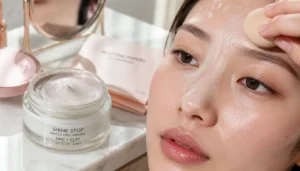
Shine by noon? That’s your T-zone signaling for help. A mattifying primer uses oil absorption technology, often zinc clay, to soak up sebum for hours without clogging pores.
Pair it with a gentle weekly exfoliation routine for smoother skin so your primer glides on evenly instead of clinging to flaky patches.
- Controls shine up to 8 hours
- Smooths texture via silicones
- Non-comedogenic formula protects pores
- Prevents pilling under foundation
Choose non-comedogenic combination skin formulas for reliable oil control technology.
Hydrating Primer for Dry Cheeks
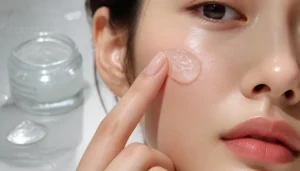
Now flip to your cheeks, where tightness or flaking calls for a completely different approach.
A hydrating primer with hyaluronic acid and glycerin plumps dry skin instantly, while lightweight squalane seals in moisture. Choose cream or gel textures for better slip, applying a pea-sized amount after serums. Skip heavy silicones here, as they can worsen dryness on combination skin.
Non-Comedogenic Primer Formulas

Clogged pores ruin even the best primer job. Always check labels for non-comedogenic ingredients, since your T-zone already fights excess sebum.
Water-based primer options offer oil-free primer benefits for breathable wear, while silicone-based primers blur pores without blocking them.
Give any noncomedogenic primer its full absorption time, roughly a minute, before layering foundation over your skin prep routine.
Preventing Pilling and Product Buildup
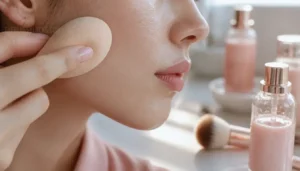
Ever notice little balls of product rolling off your skin? That’s pilling, and it happens when layers can’t bond. Stick to a water-based skin prep routine before primer, and keep products minimal.
Pilling happens when layers can’t bond, so stick to water-based products and keep your routine minimal
Give each layer real absorption time. Rushing causes buildup, so noncomedogenic, oilfree formulas layer smoother with less residue.
Allowing Primer to Set

Patience pays off here. Give your mattifying primer or hydrating primer a full 30 to 60 seconds before foundation, since silicone formulas need that window to form a temporary film and bond properly.
Tap gently with clean fingertips rather than rubbing, this speeds even drying and helps product layering without disturbing your skin underneath.
Choose and Apply Base Makeup

Once your primer is set, it’s time to build a base that actually works with your skin instead of against it. Combination skin can be tricky, because what looks perfect on your cheeks might slip right off your T-zone by noon. Here’s exactly how to choose and apply your foundation and concealer so both zones stay balanced.
Lightweight Combination Skin Foundation
Your foundation makes or breaks combination skin makeup, so choose wisely. Pick an oil-free, non-comedogenic formula with fine pigments for buildable coverage. Water or glycerin bases comfort dry cheeks while volatile silicones control T-zone shine.
- Match shade in natural light
- Build coverage gradually, center-out
- Check ingredient labels for silicones
- Test on jawline, not hand
- Prioritize lightweight, long-wearing formulas
Satin Versus Matte Finishes
Once shade and formula are sorted, finish is your next big call.
Satin reflects light softly, around 20-40%, giving cheeks a healthy glow while taming that oily T-zone shine matte can’t fake.
Matte hides texture better, but on combination skin, satin resists moisture nicely, wipes clean easily, and won’t leave you looking flat or greasy by noon.
Zone-Specific Foundation Application
With finish decided, applying foundation actually starts with your damp sponge. Press, don’t drag, building sheer buildable coverage from the center outward.
- Bounce sponge lightly over the T-zone
- Pat cheeks for hydrating cream mix
- Use synthetic brush for jawline edges
- Mix neck to avoid visible lines
This zone layering creates natural oil-dry balance, keeping skin gorgeous everywhere.
Concealer for Different Areas
Once your foundation settles, concealer needs its own zone-specific technique. Under eyes call for a creamy, hydrating concealer in a triangle shape, brightening without creasing.
For redness or blemishes, match your skin tone exactly and pat on with a fingertip, building buildable coverage. Sharpen brows and soften smile lines with light, targeted concealer application, don’t worry about flawlessness here.
Seamless Sponge and Brush Blending
Grab a damp sponge, not soaking wet, and bounce it lightly across foundation for a dewy finish. Use the pointed tip under eyes and around your nose, then rounded edges for cheeks and forehead.
For sharper foundation zoning, try a dual-sided sponge with a flat edge along your jawline. Finish edges with a blending brush, and clean tools weekly to keep application smooth.
Apply Color and Set Strategically

Once your base is perfect, it’s time to add life back into your skin. Color products can either work with your combination skin or fight against it, depending on where and how you place them. Here’s exactly how to apply each one for a fresh, balanced finish.
Cream Blush for Dry Cheeks
Dry cheeks crave moisture, and hydrating cream blush formulas deliver it. Glycerin and hyaluronic acid pull moisture in, while jojoba oil and shea butter ease blending on dry patches, so color glides instead of dragging.
Warm a dot between fingertips, then pat onto cheek apples for that natural flush finish. This targeted hydration keeps skin type compatibility in check, giving you long-wearing blush that won’t cling to flakiness.
Bronzer Without Extra Shine
Since your T-zone already runs oily, bronzer needs to add warmth, not extra shine. Skip shimmer formulas entirely and reach for matte bronzer with oil-absorbing additives.
Apply with a fluffy brush, tapping off excess first:
- Cheekbones
- Forehead edges
- Nose bridge
- Chin
Match your shade to your jawline in natural light, avoiding anything orange or grey. Mix upward for smooth, non-shimmer color that lasts.
Flattering Highlighter Placement
Highlighter can lift your whole face, but only if you skip the T-zone. Use the cheekbone glow technique on tops of cheeks, add brow bone illumination, a subtle nose bridge highlight, and a temple light sweep.
| Zone | Placement | Shade Tip |
|---|---|---|
| Cheekbones | sweep upward | Match skin tone |
| Brow bone | Thin stripe | Champagne, cool skin |
| Cupid’s bow | Soft dab | One shade lighter |
Selective T-Zone Powdering
Powder placement should follow shine, not habit. Press translucent powder only where oil actually shows, using a small fluffy brush from forehead center outward.
Silica-based formulas absorb quickly without dulling your glow. Tap off excess first, this simple mistake fix prevents cakey buildup. Keep blotting papers handy for touch-ups without disturbing dry cheeks.
Setting Spray as Final Step
Think of setting spray as your makeup’s insurance policy. Shake well, then mist in an X then T pattern, 6-8 inches away, and let it dry without touching.
- Oily zones: mattifying, oil-control formula
- Dry cheeks: hydrating setting spray
- Sensitive skin: fragrance-free formula
- All-day wear: film-forming polymers for longevity
This zone-specific approach locks in smooth, longwearing makeup, gorgeous from morning through touch-ups.
Make Combination Skin Makeup Last

Getting your makeup on right is only half the job, as combination skin has a way of testing your work by midday. The good news is a few smart habits keep you looking fresh without a full redo. Here’s what you need to know to make it last.
Blotting Without Removing Makeup
Grab a blotting sheet, not a tissue full of pressure. Press and lift over your T-zone, holding two to three seconds before lifting straight up.
Translucent papers or microfiber cloths absorb oil best without dragging color. Use a fresh sheet each time, checking coverage afterward.
This keeps shine control simple while blotting without removing makeup underneath.
Midday T-Zone Touch-Ups
Once blotting takes care of the oil, powder finishes the job. Press translucent powder into the T-zone only, lightly, to extend wear four to six hours.
- Reapply powder no more than twice
- Time touch-ups when shine first appears
- Use setting spray for a quick refresh
- Keep motions light to avoid disturbing base
- Choose non-comedogenic, talc-free formulas
Preventing Caking and Patchiness
Caking usually starts before foundation ever touches your skin, from skipping layering time. Apply each product in thin, buildable coats, letting every layer set 30 seconds first.
Keep tools clean weekly since oil buildup on sponges creates patchy texture. Choose satin, lightweight foundation formulas, and mix edges seamlessly outward for even coverage that won’t crack or settle into fine lines.
Seasonal Makeup Routine Adjustments
Even your best routine needs seasonal adjustments. In summer, switch to lightweight, oil-free formulas for real summer oil control, and bump up sunscreen with sweat-resistant texture.
Come winter, richer moisturizers and denser powders fight dryness, that’s winter hydration at work. Spring calls for gentle exfoliation and hydration prep; autumn means barrier repair with ceramides, since combination skin shifts with the weather.
Common Combination Skin Mistakes
Small habits sabotage combination skin fast. Harsh cleansing effects strip your dry cheeks while triggering more oil in your T-zone, and skipping sunscreen reapplication invites midday shine.
Exfoliation imbalance roughens your nose, while primer layering errors cause sliding foundation. Fix your hydration balance with zone-specific moisturizer, avoid moisturizer misapplication, and you’ll master genuine oil control technology.
Frequently Asked Questions (FAQs)
Can you apply makeup on Combination Skin?
Yes, you absolutely can. Balance is the secret: oil-free, noncomedogenic products, a mattifying primer on your T-zone, hydrating primer on cheeks, and lightweight foundation applied zone by zone for a perfect finish.
What are the ways to get a fair skin?
Slow and steady wins the race": brighten skin with niacinamide, gentle exfoliation, and daily SPF. Add kojic acid or arbutin, pair with hydration and rest, and professional treatments speed results safely.
How do I choose a skin care routine for Combination Skin?
Pick a pH-balanced cleanser, then layer a niacinamide serum for oily T-zone control. Use a lightweight, oil-free moisturizer there, richer cream on cheeks, exfoliate 2-3 times weekly, and finish with compatible sunscreen daily.
How do you manage Combination Skin?
Managing this skin type is really a balancing act, oily T-zone, dry cheeks. Cleanse gently, moisturize with lightweight, oil-free products, use zone-based primers, then apply buildable foundation with a damp sponge for even, smooth coverage.
How to make makeup look good on combination skin?
Beautiful results come from zone specific primer application, mattifying on your T-zone, hydrating on cheeks. Mix liquid foundation with a damp sponge, then set only oily areas with translucent powder for lasting foundation finish balance.
What type of makeup is best for combination skin?
Your face is a seesaw, tip it too far either way and you’ll fight shine or flakes all day. Go with lightweight, buildable semi-matte foundation, hydrating concealer, and gel primer for balanced, long-wearing results.
How do you prepare combination skin before makeup?
Start with gentle cleansing and exfoliating to clear dead skin, then layer a lightweight, oil-free moisturizer and sunscreen. Let everything absorb fully before priming, mattifying your T-zone and hydrating cheeks for a balanced complexion.
What is a good routine for combination skin?
Peace, not piece, is the goal: treat your face as one team, not separate battles. Gentle cleanse, lightweight oil free moisturizer, then mattifying primer only on your oily T-zone keeps shine controlled and dry cheeks comfortable.
How can I prevent foundation oxidation on my skin?
Oxidation happens when your skin’s oils meet foundation pigments. Cleanse to proper pH balance, use an oil-free base with antioxidant primer, then set with translucent setting powder for true-to-shade, longwear makeup that resists color shift.
Are fixing sprays beneficial for combination skin makeup?
Reapplying every 4 to 6 hours keeps oil at bay. Yes, fixing sprays work wonders, blending hydrating and mattifying formulas to control T-zone shine, protect dry cheeks, and extend makeup longevity through humidity and long workdays alike.
Conclusion
Beauty, like Rome, isn’t built in a single swipe of foundation. These combination skin makeup tips finally give both zones what they’ve craved: control without compromise. Mattify the T-zone, hydrate the cheeks, and mix where they meet.
Don’t worry about chasing flawlessness, chase balance instead. That’s the real secret to a smooth finish.
Master this rhythm, and every morning becomes muscle memory, not guesswork. Your skin has two stories. Now you know how to tell both beautifully.