This site is supported by our readers. We may earn a commission, at no cost to you, if you purchase through links.

Your scalp remembers every tug and twist. One too many tight ponytails, and suddenly, those fragile hairs around your temples thin out—fast. So when someone swears that braids will “make your hair grow long and strong,” you can’t blame anyone for hoping it’s true.
Here’s what really happens: Braids create a cushion against daily wear and tear, letting your hair rest and rebound. They keep strands out of harm’s way, away from pillowcase friction and sticky fingers, but they don’t speed up growth itself. Want results? The secret’s in the technique, not the myth.
Table Of Contents
- Key Takeaways
- Do Braids Help Your Hair Grow?
- How Hair Grows: The Science Explained
- Braids as Protective Hairstyles
- Common Myths About Braids and Growth
- Benefits of Braiding for Hair Health
- Risks of Braiding for Hair Growth
- Best Braiding Practices for Growth
- Maintaining Braids for Healthy Growth
- Additional Tips for Promoting Hair Growth
- Frequently Asked Questions (FAQs)
- Conclusion
Key Takeaways
- Braids won’t make your hair grow faster, but they do help you keep more length by shielding your hair from daily damage.
- How you braid matters—looser, well-chosen styles protect strands and scalp, while tight braids can cause breakage and even hair loss.
- Maintaining scalp health with good hygiene, moisture, and regular gentle massages is essential for supporting natural hair growth underneath braids.
- The benefits of braiding come from reduced friction, less breakage, and smart care routines, not from the braids themselves changing how your hair grows.
Do Braids Help Your Hair Grow?
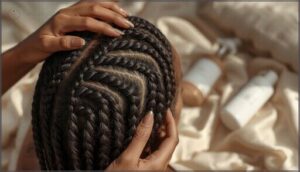
Curiosity about braids and hair growth is nothing new—everyone seems to have an opinion. Here’s the truth: braids don’t magically speed up your hair’s growth patterns, but they’re a smart tool for protecting what you have.
Think of braids as a security system for your strands; they minimize daily handling, reduce breakage, and improve braid durability, especially when chosen to match your unique hair texture. If you’re tired of friction from pillowcases or the wear and tear from constant styling, braiding can truly help.
The key? Picking braid techniques that suit your lifestyle and scalp conditions. While braids won’t change the number of follicles or your genetics, using them alongside other hair growth tips can boost healthy length retention.
How Hair Grows: The Science Explained

Understanding how hair grows can be confusing, especially with so much conflicting advice out there. Let’s clear things up by breaking down the real science behind your hair’s journey.
Here’s what actually shapes how your hair grows, from root to tip.
Hair Growth Phases
Think of hair growth as a relay race through distinct stages. Your hair follicles move from the vigorous Anagen Phase—the main period for growth—into the short Catagen Phase, then onto the Telogen Phase, where strands rest.
These Growth Cycles mean not all hair grows at once, and Scalp Health is vital for keeping each phase on track and thriving.
Role of Genetics and Nutrition
Your growth patterns aren’t random—genetic influence sets the pace, thickness, and even texture of your hair follicles. But genes aren’t the full story. If your diet skimps on protein or iron, nutrient deficiency quietly slows down hair growth.
For healthier hair, focus on steady hair nutrition—what you feed your follicles shows up in scalp health and hair vitality.
Scalp Health and Blood Flow
When your scalp’s in good shape, your follicles have a fighting chance. Blood flow makes all the difference here—think of it as your personal delivery service, bringing oxygen and nutrients where they’re needed most.
Scalp massage can boost blood circulation, giving hair follicles a lift in nutrient uptake. That’s why scalp health and strong blood flow support hair growth underneath the braids.
Braids as Protective Hairstyles

Regarding growing and preserving your hair, how you protect it matters. Braids offer more than a stylish look—they create a shield against common sources of damage.
Here’s what happens when you use braids as a protective style.
Reduced Manipulation and Breakage
Wearing braids is like putting armor on your strands—protective styling means less daily fussing and far fewer broken hairs. With minimal handling and gentle styling, you sidestep the friction and rough manipulation that feed hair breakage.
This breakage prevention keeps hair flexible and strong, making braids a smart move for anyone seeking hair damage prevention and lasting length.
Moisture Retention in Braided Hair
Braid hydration isn’t just a trend—it’s science-backed hair care. Well-placed moisture barriers from protective styling trap scalp humidity, giving braids the edge over loose hair.
Your braid techniques matter, too: low porosity strands, for example, hold onto moisture longer. By weaving braids with the right products, you create an oasis of moisture retention, fueling real hair growth.
Protection From Environmental Damage
Under a blazing sun or amidst city smog, you need more than luck to safeguard your strands. Protective Styling acts as an environmental shield, weaving hair into a natural barrier. Here’s how it helps:
- Reduces UV exposure and pollution effects.
- Minimizes moisture loss and breakage.
- Limits outside friction—delivering real, science-backed hair protection.
Common Myths About Braids and Growth

If you’ve heard braids can make your hair grow faster, you’re not alone. There’s a lot of mixed advice floating around, and it can be tough to sort fact from fiction. Let’s untangle the most common myths together.
Debunking Braids Make Hair Grow Faster
Forget the old myth—braids don’t magically speed up hair growth. Your hair’s growth rate is built into your DNA, tied to Hair Follicle Health and Growth Rate Factors that braiding simply can’t rewrite.
Gentle braids help prevent Hair Breakage and shelter strands, but tight weaves bring Braid Tension Risks, not supercharged growth.
Understanding Length Retention Vs. Growth
Think of true hair growth as the engine—steady, mostly under the hood—while length retention is how far your hair can travel before breaking down. Growth patterns are written by your DNA, but length retention is molded by your care.
True hair growth runs beneath the surface, but how much length you keep depends on how well you care for your hair
Braids help hair retention by reducing hair breakage, not by hacking follicle health or hair texture at the root.
Benefits of Braiding for Hair Health

Braiding does more than just keep your hair neat. It offers real benefits that support healthier strands and a stronger scalp.
Here’s what you can expect when you braid with care.
Minimizing Friction and Split Ends
Ever felt like your hair just can’t catch a break from those rough pillowcases or relentless tangles? Tightly-woven or softly-styled braids act as a barrier, slashing daily hair friction and helping you dodge split ends. With gentle handling and smart hair care, you’ll see fewer tangles and breakage, keeping your hair follicles—and your length—safe.
- Less nightly friction, less risk of split ends
- Locks in moisture for soft styling
- Gentle handling means fewer broken strands
- Markedly reduced tangles during daily routines
- Soft shield against rough fabrics and surfaces
Supporting Scalp Circulation
A smooth scalp isn’t just about appearances; it’s where hair health starts. A gentle scalp massage, paired with loose braids, boosts blood flow straight to the hair follicles. Consistent scalp care—like using circulation techniques and mindful stimulation—also fosters vascular health and brings essential nutrients right to your roots. That’s how protective styling and skin-deep resilience work hand-in-hand.
Understanding the role of literature reviews is pivotal for evaluating the scientific evidence behind hair growth techniques.
| Circulation Technique | Boosts Blood Flow? | Affects Scalp Health? |
|---|---|---|
| Scalp Massage | Yes | Relaxation, less tension |
| Loose Braids | Moderate | Minimizes scalp irritation |
| Firm Handling | No | Strain, possible damage |
Enhancing Moisture With Oils
Building on scalp stimulation, true hair nourishment starts with moisture. Oil blends aren’t just a beauty routine; they act as a moisture lock, sealing hydration into each braid and reducing dryness day and night.
This boosts hair health benefits, as proper hair care with the right oil benefits hair growth, controls frizz, and keeps scalp treatment gentle yet effective.
Risks of Braiding for Hair Growth
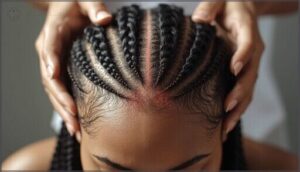
While braids can give your hair a strong foundation, they’re not without their pitfalls. Certain styling habits can put your scalp and strands under stress. Here’s what you need to watch out for next.
Traction Alopecia and Tight Braids
Relentless Braid Tension can quietly sabotage your efforts at healthy Hair Growth. Traction Alopecia—hair loss from pulling—often emerges with tight Braids or heavy weaving. Watch for:
- Hair Thinning near your hairline
- Scalp Irritation or tenderness
- Persistent breakage at Braid Removal
- Small bumps signaling Traction Damage
Protective Hairstyles should shield, not stress, your follicles. Understanding the importance of research focus planning is essential for addressing hair growth effectively.
Scalp Irritation and Infections
Left unchecked, scalp irritation often rides shotgun with braids—especially tight ones. Think itchiness, redness, and the unwelcome surprise of Scalp Infections.
Poor Braid Hygiene, heavy buildup, and constant tension tax your Hair Follicle health. Infection Prevention starts with clean, moisturized roots.
Regular scalp care—gentle massages, cleansing, and choosing tension-free braids—keeps Scalp Health and Braids working in your favor.
Damage From Heavy Extensions
For all the promise of protective hairstyles, heavy extensions bring their own set of risks. Adding extra weight can tip the scales, turning braids from Hair Loss Prevention to Hair Strain. Here’s what to look out for:
- Extension Risk of Traction Alopecia
- Increased Braid Tension leads to Scalp Damage
- Fiber Breakage from synthetic weaves
- More Hair Breakage and less Hair Damage Prevention
Best Braiding Practices for Growth
Getting braids is only part of the story regarding hair growth. What you do before and during the braiding process matters just as much.
Here’s what to keep in mind for healthy results.
Pre-Braiding Hair Preparation
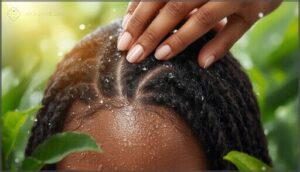
Ever tried building a house on shaky ground? That’s why pre-styling for braids matters. Start with thorough Hair Detangling and gentle Scalp Exfoliation—your foundation against breakage. Lock in Moisture Balance for lasting Hair Growth and top-tier Scalp Health. A strong Braid Foundation isn’t luck; it’s science-backed Hair Care and Maintenance.
| What You Avoid | What You Gain |
|---|---|
| Breakage risk | Hair strength |
| Tangles and snags | Smooth weaving |
| Dry scalp woes | Lasting moisture |
| Irritation, flaking | Healthy comfort |
Choosing The Right Braid Style
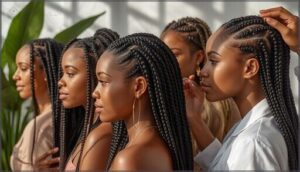
Choosing a braid isn’t just about looks—it’s a science-backed move for hair health. Think about Braid Tension and how your Hair Texture interacts with Braid Materials. For ideal Hair Growth, go for Protective Braids and smart Styling Options.
Here are must-checks:
- Match braid size to your texture.
- Favor knotless or twists for scalp comfort.
- Choose quality materials for scalp care.
Avoiding Excessive Tension
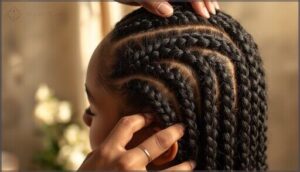
Too much tension is the enemy in your braid journey—think gentle styling, not a tug-of-war. Tension management starts with the right braid technique and a keen respect for scalp sensitivity.
When you pull hard, you risk hair breakage and even traction alopecia. Let protective braids support your hair follicles, not strain them, for the healthiest hair growth possible.
Maintaining Braids for Healthy Growth

Taking care of your braids is just as important as putting them in. The right maintenance keeps your hair protected and healthy underneath.
Here’s what you’ll want to focus on for the best results.
Regular Cleansing and Moisturizing
Scalp health and moisture balance aren’t optional—they’re your foundation for hair growth. Gentle cleansing with a pH-balanced shampoo keeps buildup in check, while hydrating routines customized to hair porosity protect hair moisture and resilience.
Smart product selection—think sulfate-free cleansers and leave-ins—aids stronger, healthier braids. Consistent hair care and mindful hair maintenance set the stage for real, lasting growth.
Nighttime Protection Tips
Think of nighttime as your secret weapon for hair preservation—don’t let friction rob you of growth. Sleep protection starts with a satin or silk pillowcase, slashing friction and breakage.
Try these for true moisture retention and scalp comfort:
- Wear a satin bonnet or scarf for friction reduction.
- Tie braids loosely with soft fabric.
- Apply a lightweight sealant at bedtime.
When to Remove or Refresh Braids
Don’t let hair recovery take a back seat—proper braid removal is where real hair maintenance tips matter. Most braids need redoing or gentle removal every 6–8 weeks to dodge avoidable hair breakage and tension issues.
Scalp monitoring is your north star: notice discomfort, tension, or itching? Prioritize refresh timing to prevent traction alopecia and keep your hair growth momentum.
Additional Tips for Promoting Hair Growth
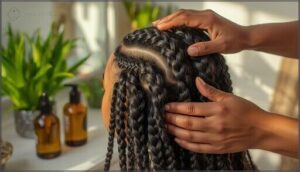
If you’re looking to give your hair its best shot at healthy growth, there’s more you can do beyond just braiding. The right strategies can make a real difference, from everyday habits to the professionals you trust.
Here are a few proven ways you can support stronger, fuller hair.
Scalp Massages and Blood Flow
With the right touch, Blood Flow Stimulation through scalp massages becomes your secret weapon for Hair Growth. Try these steps:
- Use gentle Scalp Massage Techniques three times weekly.
- Warm Massage Oil Benefits your scalp pre-routine.
- Overlay for 5–10 minutes to spark Increased Oxygenation.
- Vary pressure for healthy Vascular Response.
Scalp Health and Care starts here, fueling your Hair Care Routine.
Nutrition and Hydration
After all, even the best scalp massage means little without a strong foundation. Hair Nutrition is built on what you eat and drink—think Dietary Fiber, key Hair Minerals, and steady Water Intake.
Balanced Hydration Levels and a varied Hair Nutrition and Diet keep your Hair Growth on track, making your Hair Care Routine work smarter, not harder.
Finding an Experienced Braider
Choosing the right braider shapes your hair’s future as much as what’s on your plate. Watch for these four signals:
- Solid braider credentials and ongoing training
- Spot-on salon hygiene and visible cleaning routines
- Rave client reviews and transparent feedback
- A stylist portfolio showing mastery of braiding techniques and safe, tailored styles
That’s how braids and hair styling boost growth without risk.
Frequently Asked Questions (FAQs)
How long should you keep braids in?
Ever wonder why stylists stick to six or eight weeks? Braid Duration matters—keeping braids longer risks hair tension, breakage, and poor scalp care.
Refresh box braids or remove extensions every 6–8 weeks for healthy hair growth, length retention, and extension safety.
Can you swim or exercise with braids safely?
You can swim or exercise with braids safely by focusing on Braid Safety and Hair Tension. Opt for looser, protective styles and practice Exercise Precautions to reduce Hair Breakage.
Prioritize Scalp Care to maintain healthy Hair Growth.
Does hair type affect braid effectiveness for growth?
It’s ironic—hair type doesn’t change biology, but it decides how well braids work for you.
Hair Texture, Braid Tension, and Scalp Sensitivity shape how much length you keep, not the speed of hair growth.
Are certain braid materials better for hair health?
Braid material safety matters for hair health. Lightweight, breathable materials and non-metallic threads cut irritation, while silk scarves protect more than cotton at night.
Synthetic fibers often sap moisture, but natural fibers can increase breakage.
Choose wisely for protective hairstyles.
How can you treat itchy scalp while wearing braids?
Like an unexpected itch in your favorite sweater, scalp irritation with braids is common.
For reliable itch relief methods, focus on braid hygiene, gentle products, oil therapies, and regular scalp massages—these soothe, protect growth, and maintain scalp health.
Conclusion
Think of braids as a trusted shield—protecting, not speeding, your natural hair journey. If you’re wondering, “do braids help your hair grow,” know that growth springs from a healthy scalp and smart care, not a hidden shortcut woven into each plait.
Gentle hands, loose tension, and mindful maintenance help you keep what you’ve earned. With the right method, your hair gets a break—and sometimes, that’s exactly what you need for true progress.