This site is supported by our readers. We may earn a commission, at no cost to you, if you purchase through links. This content is for general informational and educational purposes only and is not a substitute for professional medical, dermatological, or nutritional advice.
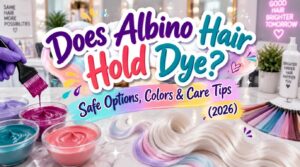
Yes, albino hair holds dye, and it often shows color more truthfully than any other hair type. With no melanin underneath, a violet swatch looks like violet, not a muddy cousin of it.
That blank canvas cuts both ways. Your hair is porous and your scalp is sensitive, so a harsh formula can damage strands fast. Color also moves in and out of the shaft more quickly than you’d expect.
You get vivid, accurate color when you pick the right dye, a gentle developer, and a test plan you trust. Here’s how to choose each one with confidence.
Table Of Contents
- Key Takeaways
- Can Albino Hair Hold Dye?
- Choosing The Right Hair Dye for Albino Hair
- Tips for Dyeing Albino Hair Safely
- How Do Different Colors Look on Albino Hair?
- Maintaining Color in Albino Hair
- Frequently Asked Questions (FAQs)
- Does hair dye stick to albino hair?
- Is albinism due to inbreeding?
- What color hair do most albinos have?
- What should people with albinism avoid?
- Does albino hair grow differently after being dyed?
- Can dyed albino hair be safely bleached later?
- How often can albino hair be safely recolored?
- Does dyeing albino hair affect eyebrows and eyelashes?
- Can dye damage a sensitive albino scalp permanently?
- Conclusion
Key Takeaways
- Albino hair holds dye well and shows true, vivid color because it has no natural pigment, but it’s porous and your scalp is sensitive, so color absorbs fast and harsh formulas can cause damage quickly.
- You’ll get the safest results by starting with semi-permanent or ammonia-free color, using a low developer (10 volume for bleached hair, 20 for virgin hair), and skipping bleach and 40 volume unless a colorist says it’s needed.
- You should always do a patch test behind your ear about 48 hours ahead and a strand test with your exact dye and developer, since allergic reactions can show up fast and the strand test previews your final shade.
- You can keep your color vivid by waiting six to eight weeks between permanent dye jobs, using sulfate-free products, limiting heat, and deep conditioning monthly, and by seeing a salon colorist for any lightening.
Can Albino Hair Hold Dye?

Why does dye behave so differently on albino hair? The lack of melanin leaves your strands with no natural pigment to grip, so color retention suffers even when the first result looks stunning. Research shows that melanosome count in hair determines how much visible light is absorbed and converted to heat, which explains why pigment-free strands behave so differently from pigmented ones.
Hair porosity matters too, since it controls how fast dye moves in and out. Your scalp pH levels and risk of allergic reactions deserve careful attention first.
Before coloring your whole head, a step-by-step hair dye strand test at home shows how your strands react and flags allergies early.
Choosing The Right Hair Dye for Albino Hair

Picking the right dye for albino hair is easier when you know your options! Your strands soak up color fast, so the formula you choose matters more than you might think. Here’s what to weigh before you pick up a box.
Semi-Permanent And Temporary Dyes
Coloring albino hair with semipermanent dyes or temporary dyes gives you control without commitment. Hair porosity varies, so run a strand test first.
- Pick pastel or vivid shades for true color.
- Expect temporary dyes to rinse out fast.
- Choose gentle formulas for sensitive scalp care.
- Reapply semipermanent dyes every few weeks.
Start light, then adjust slowly. You’re always in control.
Demi-Permanent Color Options
Ready for more staying power? Demipermanent dyes deposit color without lightening, so albino hair avoids harsh damage. Good hair porosity management keeps results even, and a professional color consultation helps you pick a shade.
Since demipermanent color works best on well-conditioned strands, pairing it with the best hair products for fine, thin hair can keep your new shade looking soft and full.
| Moment | What You Get | Feeling |
|---|---|---|
| Day one | Vivid color | Thrilled |
| Week three | Slight fading | Motivated |
| Week six | Fresh touch-up | Confident |
Use sulfatefree shampoo for color longevity.
Permanent Dye Considerations
Permanent color gives you the longest-lasting change, but albino hair needs a gentler plan. Choose an ammonia-free permanent dye to protect your sensitive scalp. Skip bleaching albino hair unless a colorist says it’s needed, since it’s already light.
Hair strand porosity runs high, so color grabs fast but fades sooner. Book a professional colorist consultation and use pH-balanced hair care.
Choosing Developer Strength
Picking the right developer matters. Developer is hydrogen peroxide in a cream base, and it opens the cuticle so color can settle in.
Once developer is mixed with dye, it starts working right away, so it helps to know how long hair dye lasts after it’s mixed before you start.
For albino hair, stick with a low developer volume: 10 for previously bleached strands, 20 volume for virgin hair. Skip 40. Ammonia in hair dye already lifts, so extra strength damages. Unsure? Book a professional colorist consultation.
Patch And Strand Tests
Skipping a patch test and strand test is the quickest way to regret a dye job, so you’ll want both. Do the patch test 48 hours ahead, with skin barrier protection like petroleum jelly nearby.
- Patch test: Dab dye behind your ear and watch for scalp irritation risk.
- Strand test: Check color and timing.
- Color vibrancy maintenance: Note how it dries.
Tips for Dyeing Albino Hair Safely

Dyeing albino hair safely comes down to a few smart habits, and you’re about to get them! Your hair takes color fast, so a little prep keeps you in control. Here are the two key steps to know before you start.
Patch Tests and Strand Tests
Think of a patch test as your safety check and a strand test as your color preview. They do different jobs.
Dab the patch test mixture behind your ear and wait the full time on the label, often 48 hours. Skip the dye if you see redness, itching, or swelling.
Then run a strand test with the exact dye and developer, dry it, and check natural light results.
At-Home Dyeing Vs. Salon Coloring
A box costs $8-20, but a salon visit runs $75-150. Cheaper isn’t always safer, though. Albino hair needs professional assistance when you’re lightening.
Still want to go home? Follow these at-home dyeing tips:
- Do a strand test first
- Check your hair porosity
- Apply barrier cream
- Watch the clock
- Skip dramatic changes
Mistakes often cost more to fix than the original service.
How Do Different Colors Look on Albino Hair?
Ever wonder why a dye swatch looks tame on the box but explosive on your head? Albino hair has no natural pigment to compete with, so color vibrancy jumps to another level.
Albino hair has no natural pigment to compete with, so every dye shows up far bolder than it ever looks on the box
Neon hues like electric blue, hot pink, and violet show up almost exactly as bright as the jar. Pastel shades need a lighter touch. Dilute your dye with conditioner, or you’ll end up with saturated candy color instead of soft cotton candy.
Warm shades like red and orange stay true to the swatch. Cool tones can drift warmer, so tone platinum blonde first if you want ash or silver.
Here’s what you can expect:
- Color that finally looks as bold as you pictured it
- Reds that glow instead of turning muddy
- Pastels that feel dreamy, not harsh
- A shade that’s unmistakably yours
Maintaining Color in Albino Hair

Your color’s lifespan comes down to daily habits. For real hair color longevity, protect what you’ve paid for.
- Switch to sulfate-free hair care, since harsh cleansers speed up color fading.
- Cut back on heat styling, or use a protectant.
- Add a UV-protective leave-in conditioner for color retention.
Finish with monthly deep conditioning treatments, and you’ll keep that shade beautifully vivid.
Frequently Asked Questions (FAQs)
Does hair dye stick to albino hair?
Albino hair is a blank canvas, and yes, dye sticks to it. Hair dye adhesion works fine because color deposits onto the strand itself. Expect fast results, though, and do a hair strand test first.
Is albinism due to inbreeding?
Roughly 1 in 17,000 people worldwide has albinism, and most families have no close ties.
Inbreeding doesn’t cause it. Albino people inherit two recessive gene copies, causing melanin deficiency. Close relatives only raise your odds.
What color hair do most albinos have?
About 1 in 17,000 people have albinism, and most have white or platinum blonde hair from a lack of melanin.
You’ll see silver tones or yellow hues, which affect hair color absorption. Professional assistance helps.
What should people with albinism avoid?
Skip bleach, box dyes, and strong developers. Your scalp sensitivity and hair fragility make harsh formulas risky, so skip any dye you haven’t patch-tested first, since allergic reactions can show up fast.
Does albino hair grow differently after being dyed?
Dye is paint on a fence, not new soil.
Your hair shaft structure takes color, but cuticle layer openness, hair follicle sensitivity, hair recovery between dyes and hair hydration techniques shape only breakage, not growth.
Can dyed albino hair be safely bleached later?
Bleaching dyed albino hair is a bit like sanding a thin board. There’s little to lift, so you risk hair breakage, color fading, and scalp sensitivity. Do a strand test, deep conditioning, and see a professional colorist.
How often can albino hair be safely recolored?
Fading hits fast. How often can albino hair be safely recolored? Wait six to eight weeks after permanent dye, four to six after semi-permanent. Get professional assistance for color fading prevention and scalp irritation avoidance.
Does dyeing albino hair affect eyebrows and eyelashes?
Think of your brows and lashes as tiny paintbrushes that never ask to join the party. Dyeing albino hair rarely changes them, but stray dye can irritate thin eyelid skin, so protect the area and consider professional assistance.
Can dye damage a sensitive albino scalp permanently?
Rarely, but it can happen. With albinism, scalp sensitivity runs higher, so PPD or ammonia can cause burns or allergic reactions. Choose gentle hair dye formulation options, use ammonia-free dyes, and patch test first.
Conclusion
Worried that dye will wreck hair that’s already delicate? It won’t, if you go gentle. So, does albino hair hold dye? Yes, and beautifully, as long as you start with semi-permanent color, a low-volume developer, and a strand test before anything touches your whole head.
Add depth only after your hair proves it can handle it, and protect that color with cool water and sulfate-free care. Your canvas is bare, so you’re firmly in charge.