This site is supported by our readers. We may earn a commission, at no cost to you, if you purchase through links. This content is for general informational and educational purposes only and is not a substitute for professional medical, dermatological, or nutritional advice.
Your skin’s surface runs slightly acidic, hovering around a pH of 5.5, and most conventional cleansers treat that like an obstacle to scrub away. That mismatch leaves your barrier compromised before your day even starts.
Effective natural skin cleansers work with your skin’s chemistry instead of against it. Raw honey delivers antibacterial action through enzymatic hydrogen peroxide without stripping a single lipid. Jojoba oil dissolves SPF and makeup through genuine emulsification, not brute detergency. These aren’t marketing claims; they’re mechanisms.
The ten options ahead cover every skin type, with the science to help you choose confidently.
Table Of Contents
- Key Takeaways
- 10 Effective Natural Skin Cleansers
- Match Cleansers to Your Skin Type
- Choose Gentle, Barrier-Safe Ingredients
- Use Natural Cleansers for Best Results
- Prepare and Store DIY Cleansers Safely
- Frequently Asked Questions (FAQs)
- What is the best natural cleanser for my skin?
- What is the best natural cleanser?
- What is the healthiest thing to wash your face with?
- What is the best homemade face cleanser?
- What is the best natural cleanser for the face?
- Which is the best face wash with no harmful chemicals?
- What is a natural alternative to face wash?
- Can natural cleansers expire or go bad?
- How often should I replace homemade cleansers?
- Are natural cleansers safe during pregnancy?
- Conclusion
Key Takeaways
- Your skin sits at a pH of 5.5, and most conventional cleansers disrupt that balance on contact, so switching to a pH-matched natural cleanser is the single most protective change you can make for your barrier.
- Ingredients like raw honey and jojoba oil earn their place through measurable chemistry—enzymatic antibacterial action and true emulsification—not just branding, so understanding the mechanism helps you choose with confidence.
- The right natural cleanser depends entirely on your skin type: gel or clay for oily skin, jojoba or colloidal oat for dry or sensitive skin, and none of these is a one-size solution.
- DIY formulas carry real safety risks—no preservatives means water-based versions can harbor microbial growth within weeks, so proper storage, clean utensils, and regular replacement aren’t optional.
10 Effective Natural Skin Cleansers
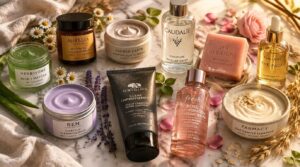
Finding the right natural cleanser starts with knowing what your skin actually needs.
Exploring a curated list of facial cleansers free from sulfates and parabens can help you match gentler formulas to your skin’s specific sensitivities.
These ten options cover everything from barrier-safe gel cleansers to oil-based balms, so there’s a fit for every skin type and concern.
Each one brings something specific to the table, whether you’re dealing with acne, dryness, or sensitivity.
Gentle Daily Gel Cleanser
Your skin barrier thrives when your gentle face wash stays within pH 5.0–6.5. A gel base cleanses without stripping oils, and it’s a solid option for every skin type.
Look for these in a non toxic face wash:
- Fragrance-free formula for sensitive skin
- Glycerin to prevent dryness
- Mild surfactants like cocamidopropyl betaine
Natural face cleansers built this way simply work.
Raw Honey Cleanser
If gel formulas feel too light, a raw honey cleanser adds something useful. Honey’s pH of 3.2 to 4.5 actively helps your moisture barrier while its glucose oxidase produces hydrogen peroxide, clearing bacteria without harsh ingredients.
As a natural humectant for skin, honey draws moisture in while leaving the skin’s natural lipids intact, unlike conventional surfactant-based cleansers.
Mix raw, unpasteurized honey with distilled water for a DIY natural face cleanser. It’s one of the natural skin cleansers suited to sensitive skin.
Colloidal Oat Cleanser
Honey targets bacteria. A colloidal oat cleanser protects your skin barrier differently.
Together, they complement each other well, as explored in this affordable natural skincare remedies guide covering how kitchen staples can address both blemishes and sensitivity.
Ground oat deposits lipids and proteins onto your stratum corneum, helping skin retain moisture post-rinse. Among the gentler natural skin cleansers for sensitive skin, it fits any gentle cleansing routine.
- Rinse with lukewarm water
- Use mild surfactants
- Skip high-foaming cleansers
- Massage gently, no scrubbing
Jojoba Oil Cleanser
Oat soothes; jojoba cleans differently. Jojoba oil is a liquid wax ester, closer to your sebum than most plant oils, so it dissolves makeup and sunscreen without stripping.
| Step | Why It Matters |
|---|---|
| Massage onto dry skin | Lifts oil-based debris |
| Add water, emulsify | Turns oil rinseable |
| Rinse thoroughly | Prevents residue |
This oil cleansing method suits most skin type needs; choose a non toxic face wash formula. Among natural skin cleansers, jojoba earns its spot.
Green Tea Cleanser
Using green tea extract gives your cleanser real antioxidant protection via EGCG, a catechin that neutralizes free radicals on contact.
Three reasons it belongs in natural face cleansers:
- Helps calmer skin by reducing oxidative stress
- Suits sensitive skin without aggressive surfactants
- Encourages gentle exfoliation when paired with mild actives
The formula’s surfactant mix ultimately determines tolerability, not the extract alone.
Tea Tree Gel Cleanser
Combine tea tree oil with gentle surfactants and you’ve got a natural face wash for acne-prone skin.
| Ingredient | Benefit |
|---|---|
| Tea tree oil | Antimicrobial via terpinen-4-ol |
| Gentle surfactants | Removes dirt, preserves barrier |
| Aloe vera | Calms post-wash redness |
| Glycerin | Locks in moisture |
Keep concentration low. Too much tea tree oil irritates. A stable gel cleanser with antioxidants preserves potency for daily use.
Clay and Charcoal Cleanser
Clay-based formulas have been used medicinally for thousands of years. Kaolin and bentonite bind surface oils through adsorption, and activated charcoal adds extra pulling power that makes both options well-suited for oily skin. Research into skin barrier integrity and the effects of cleansing products confirms that even gentle clay-based formulas can disrupt the barrier if overused.
The real limitation: pore cleansing feels thorough, but sebum production resumes the moment you rinse. Use these two or three times weekly to avoid stripping your barrier.
Lactic Acid Cleanser
Think of lactic acid as a quiet dissolving agent, loosening dead surface cells as you rinse. A lactic acid facial cleanser delivers gentle exfoliation even in brief contact, making it one of the smartest natural face cleansers for dull, uneven skin.
Lower concentrations protect your skin barrier best. Don’t layer other acids on the same days, regardless of skin type.
Natural Cleansing Balm
Oil dissolves oil, and that’s exactly why cleansing balms work so well. These natural face cleansers melt onto dry skin, lifting sebum and heavy makeup pigment without stripping your skin barrier. Add water, and they emulsify into a milky rinse.
Cleansing balms melt into skin, dissolving makeup and sebum before emulsifying clean with water
For sensitive skin, always choose an unscented, fragrance-free formula; botanical extracts and essential oils can irritate more than they help.
Chickpea Flour Cleanser
Chickpea flour is one of the most practical nontoxic face wash options in your kitchen. Mixed with water, its starches and proteins lift oil mechanically, giving gentle exfoliation without stripping your barrier.
For sensitive skin, that’s a smart pick over harsher DIY face cleansers. Keep your paste thin for easy rinsing, and patch test since legume proteins can cause reactions.
Match Cleansers to Your Skin Type
Now that you’ve seen what each natural cleanser can do, matching the right one to your skin type is where the real difference shows.
- Oily skin benefits from gel or clay-based cleansers that cut through sebum effectively without leaving a greasy film.
- Dry skin needs formulas that clean without stripping, so jojoba oil or colloidal oat options are a good match.
- Sensitive skin does best with fragrance-free, low-surfactant options, like a gentle daily gel or a colloidal oat cleanser.
- Combination skin often does well with a gel on oilier zones and something milder on drier patches.
Your skin type can also shift with seasons, stress, or hormones, so reassessing every few months keeps your routine right where it needs to be.
Choose Gentle, Barrier-Safe Ingredients
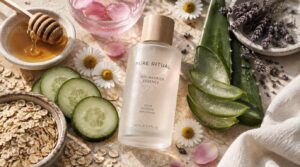
Once you’ve narrowed down your cleanser type, the ingredients inside the formula matter just as much as the product category itself.
Your skin barrier is a protective layer, and the right ingredients work with it rather than against it. Look for these markers when reading a label:
- Sulfate-free surfactants like coco-glucoside clean effectively without the stripping effect of harsher detergents
- Humectants such as glycerin or panthenol help your skin retain moisture after every wash
- Fragrance-free, low-irritant preservative systems reduce cumulative stress that leaves skin reactive and sensitized
A solid gentle face wash or non toxic face wash also keeps pH balance in mind. Formulas close to the skin’s natural acidity protect sensitive skin and help maintain the skin barrier long-term.
Use Natural Cleansers for Best Results
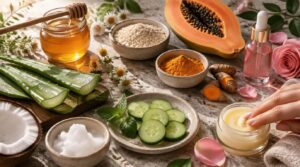
Choosing the right formula is half the job. How you use your natural face cleansers determines the rest.
Massage with your fingertips in gentle circular motions for 20 to 30 seconds, long enough to dissolve buildup without friction. If you’re using an oil or balm, work it into dry skin for 30 to 60 seconds so the plant oils can bind with makeup, sunscreen, and sebum before you add water to emulsify.
Keep the water lukewarm, around 98 to 105°F. Hot water melts your skin’s natural lipids, undoing the good your gentle face wash just did. Cool water protects the barrier but struggles with heavy sunscreen.
Cleanse twice daily if your skin tolerates it, or stick to evenings when your barrier feels compromised. Whatever your skin type, pat dry, then apply your next products while skin is still damp.
Prepare and Store DIY Cleansers Safely
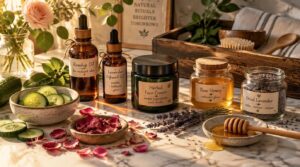
Getting application right matters, but what happens between uses matters just as much. Homemade skincare carries no natural preservatives, so storage decisions directly affect how long your formula stays safe.
Glass or food-grade plastic containers are your best choice; reactive metals can alter safe ingredients. Keep oil-based cleansers in opaque, tightly sealed bottles to slow oxidation. Water-containing formulas are more vulnerable to microbial growth, so refrigerate them and aim for a shelf life of two to four weeks.
Always use clean, dry utensils when dispensing product. Label each batch with the date and ingredients. Discard anything that smells off, looks cloudy, or shows visible changes.
Before committing to a new formula, patch test on your inner arm for 48 hours.
Frequently Asked Questions (FAQs)
What is the best natural cleanser for my skin?
There isn’t one right answer. The best natural face cleansers depend entirely on your skin type. Oily skin does well with a gel; dry, sensitive, or combination skin benefits more from honey or jojoba oil.
What is the best natural cleanser?
Like water finding its level, the best natural face cleansers always align with your skin type. Sensitive skin thrives with colloidal oat, while oily skin does well with a gentle gel formula using natural ingredients.
What is the healthiest thing to wash your face with?
The premise deserves scrutiny. Mild, pH-balanced cleansers with natural ingredients protect your skin barrier best. For oily skin, dry skin, or sensitive skin, gentle natural face washes with minimal actives are the most reliable choice.
What is the best homemade face cleanser?
Raw honey warmed between your palms melts onto skin like a soft morning ritual. For most sensitive skin types, it’s likely the best homemade face cleanser because it cleanses gently without stripping your natural barrier.
What is the best natural cleanser for the face?
Think of your skin as a filter: the best natural face cleansers match what it’s currently processing. Gentle surfactant-based formulas suit most types, while honey works for dry skin and tea tree targets oily skin.
Which is the best face wash with no harmful chemicals?
Studies show sulfates strip your skin’s acid mantle fast. The best natural face cleansers use coco-glucoside, stay near pH 5, and skip synthetic fragrances, parabens, and SLS. That’s your ideal chemical free face wash standard.
What is a natural alternative to face wash?
Ironically, the most effective natural face cleansers often aren’t sold in any store.
Honey, oat, clay, and jojoba oil are natural ingredients that make a great non toxic face wash for sensitive or dry skin.
Can natural cleansers expire or go bad?
Yes, they absolutely can, and it matters. Natural face cleansers often lack the validated preservative systems commercial products use, so oils oxidize, botanicals ferment, and water-containing formulas invite microbial growth much faster than you’d expect.
How often should I replace homemade cleansers?
One patient kept her homemade honey cleanser for several months. Smell alone won’t always reveal contamination. Shelf life varies: replace water-based natural cleansers every one to two weeks; oil-only formulas can last up to four.
Are natural cleansers safe during pregnancy?
Not all of them.
Natural doesn’t mean safe during pregnancy. Colloidal oatmeal and green tea cleansers are your safest bets, but avoid all essential oils, including tea tree, which can disrupt hormones and trigger contractions.
Conclusion
The less your cleanser does, the more your skin can. Effective natural skin cleansers work precisely because they don’t overreach: they remove what doesn’t belong while leaving your acid mantle and barrier fully intact.
Honey reads your exact pH. Jojoba mimics your sebum. Each option here earns its place through mechanism, not marketing. Pick one that fits your skin type, stay consistent, and let the chemistry quietly do what decades of harsh detergents never could.