This site is supported by our readers. We may earn a commission, at no cost to you, if you purchase through links.

Your hair follicles respond to botanical compounds in ways that can measurably increase growth rates, often matching the results of conventional treatments without the chemical trade-offs. Essential oils for faster growth work by targeting the biological mechanisms that regulate hair density, length retention, and follicle health.
Rosemary oil inhibits DHT, the hormone responsible for pattern hair loss, while peppermint oil dilates blood vessels to flood your scalp with oxygen-rich blood. The concentration matters, though—too little won’t activate your follicles, and too much can irritate sensitive skin.
Understanding which oils match your hair type and how to blend them properly transforms a simple routine into a targeted intervention that tackles your specific growth challenges.
Table Of Contents
Key Takeaways
- Rosemary and peppermint essential oils deliver clinical-grade results by blocking DHT hormone activity and increasing scalp blood flow, often matching minoxidil’s effectiveness after consistent six-month use when properly diluted to 2-3% concentration in carrier oils.
- Your hair type determines which essential oils will work best—tea tree and jojoba regulate excess sebum for oily scalps, while lavender and argan oils penetrate deeply to repair damaged strands and improve moisture retention in dry hair.
- Scalp massage techniques amplify essential oil effectiveness by boosting blood circulation up to 25%, with optimal results occurring when you apply circular fingertip motions for 5-10 minutes daily across different scalp regions.
- Visible hair growth improvements require patience and consistency, typically emerging after 8-12 weeks of regular application, with fuller regrowth becoming apparent around the six-month mark when you maintain proper dilution ratios and application schedules.
Best Essential Oils for Faster Growth
Regarding encouraging faster hair growth, not all essential oils work the same way. Some increase blood flow to your scalp, while others tackle the underlying issues that slow down growth in the first place.
Here are five standout oils that have earned their reputation for supporting healthier, faster-growing hair.
Rosemary Essential Oil
Among essential oils for hair growth, rosemary oil (Rosmarinus officinalis) stands out with clinical efficacy matching minoxidil after six months. Animal studies reveal it promotes hair follicles through DHT inhibition, enhancing microcapillary perfusion.
Rosemary oil matches minoxidil’s hair growth results after six months by inhibiting DHT and boosting scalp blood flow
You’ll appreciate its dual action: stimulating growth while reducing scalp itching common with conventional treatments. This makes rosemary oil a compelling natural alternative for hair growth promotion.
To best realize these benefits, consider using it with jojoba carrier oil.
Peppermint Essential Oil
Peppermint oil brings a cooling sensation alongside impressive growth potential. Murine studies show it outpaced minoxidil in hair coverage after four weeks, with menthol concentration around 42% driving follicle activation.
Human trials using 17% peppermint in coconut oil demonstrated increased hair density and reduced scalp itching. Application parameters matter—dilute to 3–17% in carrier oils.
The safety profile looks favorable short-term, though undiluted use risks irritation. To avoid this, always consider dilution with carrier oils.
Lavender Essential Oil
Lavender oil offers more than a calming scent—it deepens follicles and promotes anagen, the growth phase. A double-blind trial showed 44% improvement in alopecia patients using a blend with lavender, and mouse models confirmed increased dermal thickness with fewer mast cells signaling prolonged growth.
Dilute to 3–5% in carrier oils, but watch for endocrine effects with repeated use, especially in children.
Cedarwood Essential Oil
Cedarwood oil targets scalp inflammation while stimulating hair follicles, a winning combination for alopecia treatment. That same trial using lavender also included cedarwood in the blend—44% of participants saw regrowth versus 15% with carrier oils alone.
Its antimicrobial action combats dandruff at the root, creating healthier ground for hair thickness. Blend it at 1–2% in jojoba or grapeseed; its safety profile remains solid when properly diluted.
Tea Tree Essential Oil
When dandruff or fungal issues plague your scalp, tea tree oil’s antimicrobial properties clear the path for growth. Studies show 5% tea tree oil shampoo reduced dandruff severity by 41%, unblocking follicles that otherwise stall hair development.
Even better? Combined with minoxidil, participants saw 79% photographic improvement versus minoxidil alone—that’s minoxidil synergy boosting alopecia benefits while supporting overall scalp health through essential oils’ antifungal action.
How Essential Oils Promote Hair Growth
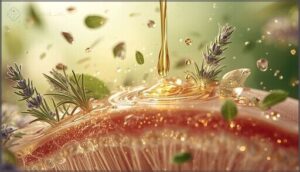
You might wonder how a few drops of oil can actually make a difference in your hair growth journey. The truth is, essential oils work through multiple pathways in your scalp and hair follicles, creating conditions that support healthier, stronger growth.
Let’s look at the key mechanisms that make these botanical extracts so effective.
Stimulating Hair Follicles
Think of your hair follicles as tiny engines that need a spark to fire up. Essential oils can flip the switch by activating the dermal papilla, the command center that tells follicles to enter the anagen phase.
Rosemary oil, for example, boosts cellular metabolism while preventing follicle miniaturization—that gradual shrinking that slows hair growth. This follicle stimulation creates the foundation for stronger, faster-growing strands.
Improving Scalp Circulation
Beyond follicle activation, essential oils facilitate faster hair growth by improving blood flow to your scalp. Peppermint oil’s vasodilatory effects open blood vessels, delivering more oxygen and nutrients to each follicle.
When you combine rosemary oil with massage techniques using carrier oils, you improve systemic circulation while reducing inflammation—two factors that create ideal conditions for vigorous growth and stronger strands.
Reducing Dandruff and Scalp Issues
A flaky scalp can sabotage your growth goals by clogging follicles and triggering inflammation. Tea tree oil addresses this head-on—studies show a 5% tea tree oil shampoo reduced dandruff severity by 41% over four weeks, thanks to its antifungal activity against Malassezia yeast.
Peppermint oil also eases seborrheic symptoms by curbing excess sebum and redness.
However, clinical considerations matter: lavender and rosemary oils show evidence gaps for dandruff treatment despite their popularity.
Strengthening Hair Strands
Weak strands snap before they can reach their potential. Rosemary-castor oil blends improved hair thickness by 66% over 90 days, while specialized oil formulations increased tensile strength beyond what coconut oil alone achieves.
Essential oils like rosehip and geranium work by penetrating the shaft, improving elasticity and preventing breakage. The result? Thicker, more resilient hair with enhanced shine and fewer split-ends disrupting your hair growth journey.
How to Use Essential Oils for Faster Growth
Knowing which essential oils work best is only half the equation—the real magic happens when you know how to use them properly. The application method you choose can make a significant difference in how well these oils penetrate your scalp and nourish your hair follicles.
Here are four practical ways to incorporate essential oils into your hair care routine for maximum growth benefits.
Diluting Essential Oils With Carrier Oils

Essential oils pack potency, so diluting them with a carrier oil protects your scalp while delivering their benefits. You’ll want to follow proper dilution ratios to avoid irritation and improve results.
Here’s your practical approach to safe carrier oil usage:
- Start with 2% dilution—6 drops of essential oil per ounce of carrier oil for most hair applications
- Choose wisely—coconut oil for dry scalps, jojoba for oily, argan for shine
- Test first—apply a small amount to your inner arm before full scalp use
Scalp Massage Techniques

Once you’ve prepared your oil blend, the real magic happens through proper topical application. Using circular motions with your fingertips from forehead to crown boosts blood circulation by up to 25%, while kneading techniques and pressure points at temples activate follicle stimulation.
Here’s what works:
| Technique | Duration & Frequency |
|---|---|
| Circular fingertip motions | 5-10 minutes daily |
| Kneading and pinching | 6 minutes per session |
| Pressure point holds | 1-2 seconds per area |
| Full routine coverage | 11-20 minutes twice daily |
| Device-assisted massage | 4 minutes at 170 rpm |
Target different scalp regions with gentle pressure to boost blood flow and hair growth stimulation. Device efficacy studies show that consistent massage duration matters more than intensity for scalp health improvements.
DIY Hair Growth Oil Blends

Combining rosemary with lavender in a 2–3% total essential oil concentration—about 6–9 drops per 10 ml of carrier oil—creates a powerful growth formula.
Here are four proven custom blend recipes:
- Rosemary-peppermint revival: 3 drops rosemary, 3 drops peppermint in 10 ml argan oil
- Lavender-cedarwood soother: 4 drops lavender, 2 drops cedarwood in jojoba base
- Multi-oil aromatherapy: thyme, rosemary, lavender, and cedarwood in grapeseed carrier
- Tea tree dandruff fighter: 9 drops tea tree at 3% dilution in lightweight castor oil
Always patch test your DIY recipes for blend safety testing before full application.
Adding Essential Oils to Shampoo or Conditioner
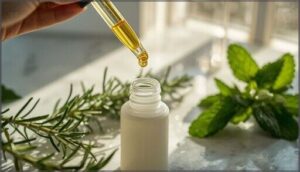
If blending oils feels too hands-on, you can add rosemary or peppermint directly to your existing shampoo. Use about 5 drops per ounce—that’s a safe 2% dilution ratio for rinse-off products.
This mixing method respects scalp sensitivity and product safety while fitting into your hair care routine. Store your enriched shampoo in a cool, dark place, and you’ll enjoy the benefits of essential oil applications without extra steps.
Choosing The Right Essential Oil for Your Hair Type
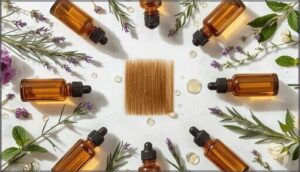
Your hair type plays a bigger role than you might think when selecting the right essential oil. What works beautifully for oily hair can weigh down dry strands, and vice versa.
Here’s how to match your hair’s specific needs with the oils that will serve you best.
Oily or Greasy Hair
When your scalp produces too much sebum, finding the right essential oils becomes key to balancing scalp oils without stripping away natural protection. Here are five oils that help with preventing oily hair while supporting hair growth:
- Tea tree oil — reduces sebum excess by 41% with antifungal properties
- Rosemary oil — balances oil production comparably to minoxidil
- Jojoba oil — mimics natural scalp lipids to regulate greasiness
- Grapeseed oil — delivers lightweight moisture without residue
- Cedarwood oil — controls overactive oil glands in alopecia blends
Dry or Damaged Hair
When hair breakage and split ends take over, essential oils with deep moisture retention become your most reliable allies. Lavender oil increases follicle depth by 99.8%, while argan oil delivers vitamin E to combat protein loss in damaged strands.
Coconut oil improves elasticity by 184%, and almond oil supplies omega-9 fatty acids for cuticle repair. Avocado oil enhances hydration with biotin, addressing hair dryness effectively.
Curly or Thick Hair
For curl definition and moisture retention, you’ll need essential oils that penetrate dense hair strands without leaving residue.
Pumpkin seed oil reduces hair loss by 40%, while rosemary oil boosts hair thickness through cellular generation.
Argan oil hydrates curls rapidly, and jojoba oil strengthens roots with 98% monounsaturated fats.
Blackseed oil combats dryness, improving scalp health and frizz control.
Normal Hair
You don’t need complicated formulas when your hair’s already in good shape. Thyme essential oil in carrier blends yields 44% alopecia regrowth, maintaining scalp equilibrium and sebum balance.
Grapeseed oil enhances gloss across unprocessed strands, while safflower seed oil minimizes color retention shifts.
Rosehip oil improves strength, and clary sage oil prevents deviations from normal—supporting overall hair health without overdoing it.
Frequently Asked Questions (FAQs)
How long until I see hair growth results?
You won’t see visible changes overnight. Realistic expectations point to 8 to 12 weeks for initial improvements, with fuller regrowth emerging around six months when you maintain consistent application and support hair follicle health.
Can essential oils cause hair loss or thinning?
Yes, when used incorrectly. Allergic reactions or skin irritation from undiluted essential oils can inflame your scalp, triggering temporary hair loss.
Always dilute properly, patch-test first, and watch for redness or itching.
Are essential oils safe during pregnancy or breastfeeding?
Essential oil safety during pregnancy and breastfeeding requires extra caution. Limited research exists, so professional guidance is critical.
Use minimal oil dilutions—under 1%, avoid oral use, and watch for allergic reactions or side effects in this vulnerable period.
Whats the best frequency for essential oil treatments?
Like tuning a musical instrument, finding your ideal application schedule depends on individual tolerance levels and scalp sensitivity matters.
Most people see treatment duration impact with two-to-three weekly sessions, preventing build-up while supporting hair growth without daily application risks.
Can I use essential oils on color-treated hair?
You can use essential oils on color-treated hair, but choose oils carefully. Safflower minimizes color fading, while others may alter appearance.
Patch-test first to avoid scalp sensitivity or allergy risks, especially on recently dyed, compromised skin.
Conclusion
The irony? We’ve spent decades engineering synthetic compounds to accelerate hair growth, only to circle back to the same botanical extracts our ancestors trusted.
Your scalp doesn’t need a laboratory revolution—it needs precisely diluted essential oils for faster growth, applied consistently with carrier oils that match your follicle biology.
The ritual matters as much as the ingredients. Mix your blends carefully, massage them in deliberately, and let molecular simplicity do what chemistry couldn’t quite perfect.
- https://www.biochemjournal.com/archives/2024/vol8issue3/PartH/8-3-106-804.pdf
- https://pmc.ncbi.nlm.nih.gov/articles/PMC10880381/
- https://www.sciencedirect.com/science/article/abs/pii/S0304423818306095
- https://www.frontiersin.org/journals/plant-science/articles/10.3389/fpls.2024.1397489/full
- https://www.tandfonline.com/doi/full/10.1080/09064710.2020.1833974