This site is supported by our readers. We may earn a commission, at no cost to you, if you purchase through links. This content is for general informational and educational purposes only and is not a substitute for professional medical, dermatological, or nutritional advice.

Somewhere between the third failed spot treatment and a mirror moment you’d rather forget, most of us discover that not all breakouts respond the same way.
Some drying out. Some need soothing. Some need you to stop touching your face and actually treat the barrier you’ve been quietly destroying with harsh actives.
Face masks for acne can genuinely change your skin—but only when you match the right ingredients to what your skin is actually doing. Sulfur, salicylic acid, clay, niacinamide—each one has a job, and knowing the difference separates a mask that works from one that just smells medicinal.
Table Of Contents
- Key Takeaways
- Best Face Masks for Acne
- 1. Sunday Riley Acne Spot Mask
- 2. Vitamin C Brightening Biocellulose Mask
- 3. Calamine Pore Purging Mask
- 4. Proactiv Amazonian Clay Mask
- 5. Neutrogena Hydro Boost Hydrogel Mask
- 6. Youth To The People Purifying Clay Mask
- 7. Aztec Secret Healing Clay Mask
- 8. Peter Thomas Roth Sulfur Acne Mask
- 9. Dermalogica Sebum Clearing Acne Mask
- 10. Paula’s Choice Radiance Night Mask
- Acne Mask Ingredients That Work
- Choose by Acne Type
- How to Use Acne Masks
- Buying Tips for Acne Masks
- Frequently Asked Questions (FAQs)
- Do face masks help reduce acne?
- How to get rid of acne prone skin?
- Do clay masks actually help acne?
- Which Korean face mask is good for acne?
- What type of face mask is best for acne?
- Is it OK to use face masks with acne?
- What face masks don t irritate acne?
- Are clay masks good for acne?
- Can diet changes help reduce maskne?
- Are there specific fabrics to avoid?
- Conclusion
Key Takeaways
- Matching your mask to your specific breakout type—clay for oily pores, sulfur for inflamed cysts, salicylic acid for blackheads—makes a bigger difference than just grabbing whatever’s trending.
- Ingredients aren’t interchangeable: niacinamide calms redness, benzoyl peroxide kills bacteria, and clay absorbs excess oil, so knowing what your skin actually needs saves you from wasting money on the wrong fix.
- Over-applying or leaving masks on too long backfires—stripped skin ramps up oil production and wrecks your barrier, so sticking to the recommended time and always moisturizing after is non‑negotiable.
- "Non-comedogenic" on the label doesn’t mean much since it’s not regulated, so flip the bottle, check the actual ingredients, and always patch test for 48–72 hours before going all in.
Best Face Masks for Acne
Breakouts are annoying, but the right mask can seriously help calm things down. There’s no one-size-fits-all here, since your skin has its own personality. So let’s check out ten masks worth keeping in your routine.
If you’re not sure where to start, this roundup of gentle acne treatment products for sensitive skin can help you narrow it down without the guesswork.
1. Sunday Riley Acne Spot Mask
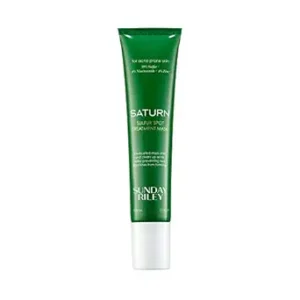
If you’ve ever had a cystic pimple that just won’t quit, this one’s for you. Sunday Riley’s spot mask packs 10% sulfur plus niacinamide and zinc PCA, drying out angry breakouts fast while calming redness.
Just dab it on clean skin, let it dry completely, then rinse.
Use it 2-3 times a week, or overnight for stubborn spots.
Heads up: sulfur has a smell, and it can over-dry skin nearby, so follow with a light moisturizer.
| Best For | Anyone dealing with stubborn cystic or hormonal breakouts who wants a targeted, fast-acting treatment to shrink and calm individual spots. |
|---|---|
| Mask Format | Spot targeted mask |
| Key Active | Sulfur |
| Primary Benefit | Spot reduction |
| Usage Frequency | Nightly or as needed |
| Application Type | Leave-on spot treatment |
| Skin Type | Acne-prone |
| Additional Features |
|
- Tackles deep, angry pimples fast — sulfur and zinc PCA go straight to work on swelling and redness
- Flexible use: spot-treat as needed, a few times a week, or leave it on overnight
- Free from sulfates, gluten, soy, and phthalates, so it’s a cleaner formula overall
- Sulfur has a noticeable smell that some people find pretty off-putting
- Can dry out the skin around the spot, so you’ll want to follow up with a moisturizer
- Sensitive skin types should patch test first — it can sometimes make breakouts worse
2. Vitamin C Brightening Biocellulose Mask
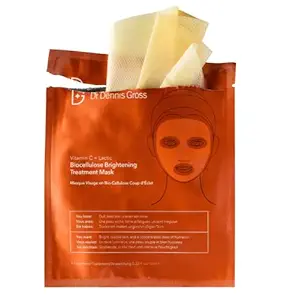
Sulfur sorted your breakouts — now let’s talk glow. The Dr. Dennis Gross Vitamin C Brightening Biocellulose Mask is a different beast entirely.
It’s packed with L-Ascorbic Acid, lactic acid, and niacinamide, targeting dullness, uneven tone, and post-acne marks all at once. The biocellulose sheet hugs your face like a second skin, pushing actives deeper for real results.
Leave it on for 15 minutes, massage in the leftover serum, and you’re done. Use it 1–2 times weekly — your skin will thank you.
| Best For | Anyone dealing with dullness, uneven skin tone, or post-acne marks who wants a quick, visible glow boost — especially before events or as a weekly skin reset. |
|---|---|
| Mask Format | Biocellulose sheet mask |
| Key Active | Vitamin C + Niacinamide |
| Primary Benefit | Brightening and hydration |
| Usage Frequency | 1–2x per week |
| Application Type | Sheet, leave-on |
| Skin Type | Dry and dull |
| Additional Features |
|
- The biocellulose sheet conforms closely to your face, so the vitamin C, lactic acid, and niacinamide actually sink in instead of just sitting on the surface.
- You get a noticeable radiance boost after a single use — it’s a solid pick when you need your skin to look good fast.
- Vegan, cruelty-free, and free of parabens, sulfates, and phthalates — clean formula with no sketchy stuff.
- At $12 a mask, single-use treatments add up quickly if you’re using it regularly.
- The active acids can irritate sensitive or reactive skin, so it’s not a slam dunk for everyone.
- You get the most out of it when paired with a Dr. Dennis Gross LED device — an extra investment not everyone wants to make.
3. Calamine Pore Purging Mask
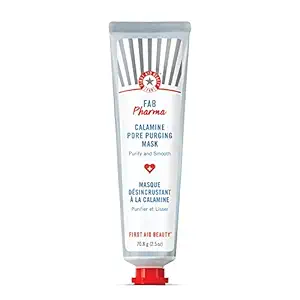
Brightening done, now let’s purge those pores. The First Aid Beauty Calamine Pore Purging Mask leans on calamine, kaolin, and bentonite clays to soak up oil and unclog congestion. Salicylic acid joins in to dislodge hardened sebum, while tea tree oil keeps things calm on sensitive skin.
Use it 2–3 times weekly. Apply a thin layer, let it harden, then peel or rinse off. Pores look tighter, skin feels "baby soft" and deeply purified afterward.
| Best For | This mask is best for anyone dealing with clogged pores, blackheads, or whiteheads who wants a deep-clean treatment a couple times a week. |
|---|---|
| Mask Format | Clay wash-off mask |
| Key Active | Salicylic acid + Calamine clay |
| Primary Benefit | Pore cleansing |
| Usage Frequency | 2–3x per week |
| Application Type | Apply then rinse off |
| Skin Type | Oily and acne-prone |
| Additional Features |
|
- Calamine, kaolin, and bentonite clays work together to soak up excess oil and pull out gunk from pores.
- Salicylic acid helps break down hardened sebum, so blackheads and whiteheads lift away more easily.
- Skin feels smoother and noticeably calmer once the mask is rinsed off.
- Can be drying or irritating if you have sensitive or dry skin, so shorter wear time is a good idea.
- Works best with a clean (and sometimes pre-exfoliated) face, so it’s not a quick grab-and-go step.
- The 2.5 oz size goes fast if you’re using it regularly, which might feel pricey over time.
4. Proactiv Amazonian Clay Mask
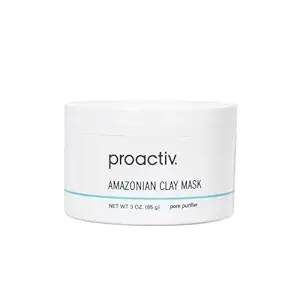
If the First Aid Beauty mask deep‑cleaned your pores, the Proactiv Amazonian Clay Mask takes oil control a step further.
It blends bentonite, kaolin, and Amazonian clays with shea butter, avocado oil, and cucumber oil — so it absorbs excess sebum without leaving your skin feeling stripped.
Great for oily or combination skin, use it 1–2 times per week, leave it on 5–10 minutes, and always follow with a light moisturizer.
| Best For | Teens dealing with acne, adults with oily or combination skin, and anyone who wants a solid deep-cleaning reset a couple times a week. |
|---|---|
| Mask Format | Clay jar mask |
| Key Active | Bentonite + Kaolin + Amazonian clay |
| Primary Benefit | Deep cleansing and moisturizing |
| Usage Frequency | 2x per week |
| Application Type | Apply then rinse off |
| Skin Type | All skin types |
| Additional Features |
|
- Pulls out dirt, oil, and clogged-pore buildup without completely drying your skin out — thanks to shea butter and avocado oil doing their thing
- Works for a wide range of skin types and ages, so it’s a solid pick for mixed households
- Packs vitamins and antioxidants that leave skin feeling softer and smoother after each use
- The thick texture means you don’t need much per use, but the jar can look half-empty pretty fast — which feels a little misleading for $34
- If your skin runs dry or sensitive, you’ll definitely want to layer on extra moisture after — clay can feel tight
- At just 3 oz, frequent users or families sharing it might burn through it quicker than expected
5. Neutrogena Hydro Boost Hydrogel Mask
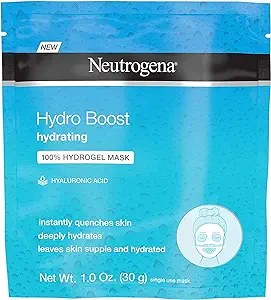
Not every acne mask needs to fight bacteria — sometimes your skin just needs a drink of water. The Neutrogena Hydro Boost Hydrogel Mask delivers exactly that.
It’s a great pick if you’re navigating acne-prone or sensitive skin care routines, where hydration without irritation is the whole game.
Its hydrolyzed hyaluronic acid sinks in fast, temporarily plumping fine lines and restoring that smooth, dewy feel.
Apply it post-cleanse for 15–30 minutes, then massage the leftover serum into your skin. Non-comedogenic and alcohol-free, it won’t clog pores — perfect if breakouts leave your skin dry and irritated.
| Best For | Anyone with dry or dehydrated skin — especially if breakouts have left your face feeling stripped and irritated. |
|---|---|
| Mask Format | Hydrogel sheet mask |
| Key Active | Hyaluronic acid |
| Primary Benefit | Deep hydration |
| Usage Frequency | As needed |
| Application Type | Sheet, leave-on |
| Skin Type | All skin types |
| Additional Features |
|
- The hydrogel sheet holds way more essence than a regular paper mask, so your skin actually drinks it in
- Hyaluronic acid plumps and smooths fast — great to use before makeup or a big event
- Non-comedogenic and alcohol-free, so it won’t trigger breakouts or sting sensitive skin
- Single-use only, so the cost adds up if you’re masking regularly
- The hydration boost is real, but it can fade within a few hours
- The sheet gets slippery, which makes getting it perfectly placed a little tricky
6. Youth To The People Purifying Clay Mask
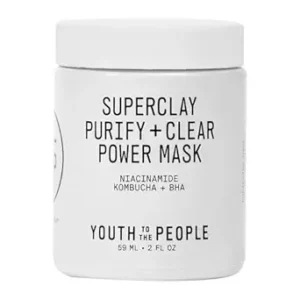
The Youth To The People Purifying Clay Mask is basically the overachiever of clay masks — it doesn’t just soak up oil, it brings niacinamide, salicylic acid, and kombucha extract along for the ride.
The triple clay blend (French green, kaolin, bentonite) draws out impurities without leaving your skin feeling tight or stripped.
It spreads on creamy, not crusty, which is a win.
Vegan, fragrance-free, and Leaping Bunny certified — your skin and your conscience can both relax.
| Best For | People with oily, acne-prone, or combination skin who want a deep clean without the tight, dried-out aftermath. |
|---|---|
| Mask Format | Clay cream mask |
| Key Active | BHA + Niacinamide |
| Primary Benefit | Oil control and brightening |
| Usage Frequency | As needed (10–25 min) |
| Application Type | Apply then rinse off |
| Skin Type | Oily, acne-prone, sensitive |
| Additional Features |
|
- The BHA, niacinamide, and kombucha combo actually targets breakouts and pores — not just surface-level stuff
- Creamy texture goes on smooth and won’t crack like old-school clay masks
- Vegan, Leaping Bunny certified, and free of a long list of sketchy ingredients
- Very sensitive skin might feel a little sting or tightness
- The container is small, so the price-per-use adds up fast
- You’ll need to block out 10–25 minutes for it to do its thing
7. Aztec Secret Healing Clay Mask
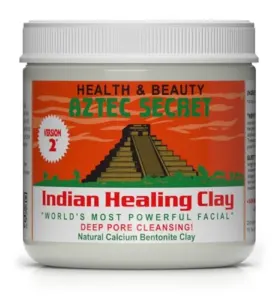
Aztec Secret Healing Clay Mask is the OG of acne masks — pure calcium bentonite clay, nothing else. Mix it with apple cider vinegar and it fizzes a little, which honestly feels like it means business.
It deep-cleans pores, absorbs excess oil, and leaves skin visibly smoother.
At $14.95 for 1.17 lb, it’s incredibly affordable. Just don’t leave it on too long — 5–10 minutes max — and moisturize right after, because this stuff is powerful.
| Best For | Anyone dealing with oily skin, clogged pores, or stubborn breakouts who wants a simple, no-fuss clay mask that actually works without spending a lot. |
|---|---|
| Mask Format | Clay powder mask |
| Key Active | Calcium bentonite clay |
| Primary Benefit | Detox and deep cleansing |
| Usage Frequency | As needed (5–10 min) |
| Application Type | Mix and rinse off |
| Skin Type | All skin types |
| Additional Features |
|
- Pure, single-ingredient formula — no fillers, no mystery additives
- Works for way more than just your face: hair masks, foot soaks, bug bites, body wraps
- Hard to beat the value at under $15 for over a pound of product
- Can be really drying, so sensitive skin types need to keep an eye on the clock
- Mixing and rinsing it off is genuinely messy — budget some cleanup time
- Metal utensils are a no-go, which is easy to forget mid-routine
8. Peter Thomas Roth Sulfur Acne Mask
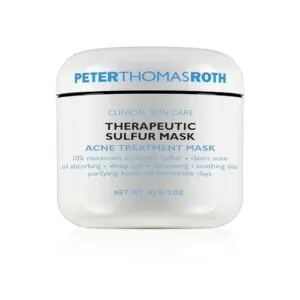
If you’ve ever had a stubborn whitehead that just won’t quit, Peter Thomas Roth Sulfur Acne Mask might be your new best friend. It packs 10% sulfur alongside kaolin and bentonite clays, so it’s attacking excess oil and bacteria at the same time. Aloe vera keeps it from feeling brutal on your skin.
Apply it for 5–10 minutes, two to three times a week. The smell is real — fair warning — but the results are worth it.
| Best For | Anyone dealing with stubborn acne, blackheads, or cystic breakouts who wants a heavy-hitter mask that tackles oil and bacteria fast. |
|---|---|
| Mask Format | Clay tube mask |
| Key Active | 10% Sulfur + Kaolin + Bentonite |
| Primary Benefit | Blemish drying |
| Usage Frequency | 2–3x per week |
| Application Type | Apply then rinse off |
| Skin Type | Oily and acne-prone |
| Additional Features |
|
- 10% sulfur plus dual clays hit excess oil and clogged pores hard
- Aloe vera keeps the experience from feeling too harsh on your skin
- Works on face, chest, and back — wherever breakouts pop up
- The sulfur smell is strong and pretty hard to ignore
- Can sting or dry out sensitive or broken skin
- Not safe for open wounds, so you’ll need to moisturize after every use
9. Dermalogica Sebum Clearing Acne Mask
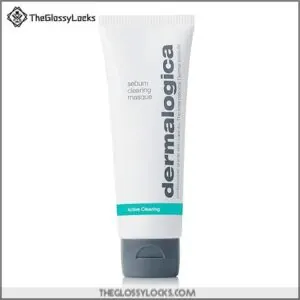
Oily skin finally met its match. The Dermalogica Sebum Clearing Mask pairs salicylic acid with kaolin and bentonite clays to pull excess oil and clear congested pores — fast. Niacinamide calms redness while bisabolol soothes any irritation mid-treatment. Leave it on for 10 minutes, up to three times a week.
It’s cruelty-free, paraben-free, and doubles as a spot treatment. The price runs higher than drugstore picks, but the formula earns it.
| Best For | Anyone with oily, acne-prone skin who wants a fast-working treatment that clears pores and calms irritation at the same time. |
|---|---|
| Mask Format | Clay cream mask |
| Key Active | Salicylic acid + Niacinamide |
| Primary Benefit | Oil control and soothing |
| Usage Frequency | Up to 3x per week |
| Application Type | Apply then rinse off |
| Skin Type | Oily, acne-prone, sensitive |
| Additional Features |
|
- Salicylic acid and clay work together to pull out excess oil and clear congested pores quickly
- Niacinamide and bisabolol help soothe redness and irritation while the mask does its thing
- Cruelty-free, paraben-free, and versatile enough to use as a spot treatment
- Pricier than most drugstore masks, which might be hard to justify for some budgets
- Using it too often can dry out or irritate sensitive skin
- Not a replacement for prescription acne treatments if your breakouts are more serious
10. Paula’s Choice Radiance Night Mask
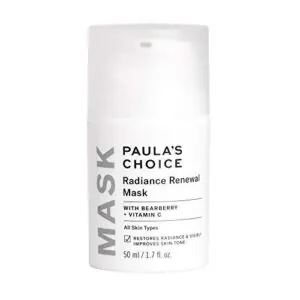
Sleep your way to better skin — seriously. The Paula’s Choice Radiance Night Mask works while you rest, delivering niacinamide and arbutin overnight to brighten uneven tone and calm redness. Glycerin locks in moisture so you wake up plumped, not patchy.
Apply a small amount after cleansing — a little goes a long way, and over-applying feels heavy. Skip strong exfoliants that same night. Fragrance-free and all skin-type friendly, it’s a gentle but effective closer to any evening routine.
| Best For | Anyone who wants to wake up with brighter, more hydrated skin without dealing with fragrance or harsh ingredients. |
|---|---|
| Mask Format | Overnight leave-on mask |
| Key Active | Niacinamide + Arbutin |
| Primary Benefit | Overnight brightening |
| Usage Frequency | Weekly or more |
| Application Type | Leave-on overnight |
| Skin Type | All skin types |
| Additional Features |
|
- Niacinamide and arbutin work together overnight to fade dark spots and even out skin tone
- Fragrance-free and gentle enough for all skin types, including sensitive skin
- Sustainable packaging is a nice bonus for the eco-conscious crowd
- Very dry or sensitive skin might notice a tight or tingly feeling after application
- Dark spot results can be slow if you’re not using other brightening products alongside it
- Easy to over-apply — too much and it sits heavy on the skin
Acne Mask Ingredients That Work
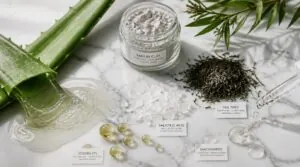
Not all acne masks are built the same — what’s actually in them makes all the difference. Some ingredients unclog, some kill bacteria, and some just calm everything down. Here’s what to look for on the label.
Salicylic Acid for Pores
Salicylic acid is your pore’s best friend — and there’s a real reason for that. It’s oil-soluble, meaning it can actually slip into your pores rather than just sitting on the surface.
Once inside, it dissolves the keratin plugs clogging things up and gently loosens dead skin cells. That’s why it works so well in clay masks for blackheads and congested skin.
It also helps by reducing redness and swelling.
Benzoyl Peroxide for Bacteria
While salicylic acid clears pores, benzoyl peroxide goes after bacteria directly.
Quick facts:
- Kills C. acnes via oxidation, no resistance risk
- Higher % = faster contact time, more irritation
- Lower % still works, gentler
- Great antibacterial blemish treatment
- Use short-contact for acne-prone skin
Sulfur for Inflamed Pimples
Got a red, angry pimple that just won’t quit? Sulfur’s your friend here. It’s got mild antimicrobial action against acne bacteria, plus real keratolytic power—loosening dead skin so pores breathe easier.
Bonus: it calms swelling fast. Sulfur masks (usually 3-10%) bring down inflammation gently. Smell’s a bit funky, sure. To dodge dryness, don’t overdo it—your skin will thank you.
Clay for Excess Oil
Clay masks work by adsorbing excess sebum onto their mineral surfaces — basically, oil clings to the clay, then rinses away.
Kaolin is gentler, great for sensitive-acne skin. Bentonite actually swells with water, pulling more oil and impurities deep from pores.
Don’t leave either on for too long, though — over-drying triggers rebound oil production, which is the last thing you want.
Over-drying clay masks backfires — stripped skin fights back with even more oil
Niacinamide for Redness
If your skin flares red after a breakout, niacinamide‘s basically your chill pill. At 4-5% concentration, it calms inflammatory signaling, boosts barrier lipid support, and even helps with UV erythema.
It’s great alongside acne actives, easing redness without extra dryness. Just patch test first, since too much can trigger irritation instead of soothing it.
Choose by Acne Type
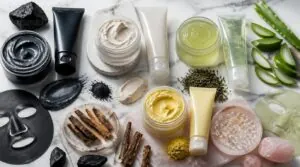
Not all acne is the same, so your mask shouldn’t be either. What works for blackheads probably won’t touch a deep hormonal breakout, and that’s totally normal. Here’s how to match your skin’s specific struggle with the right pick.
Blackheads and Clogged Pores
Those tiny black dots? That’s sebum accumulation plus keratin plug formation in open comedones—pores stuck open, exposed to air until they darken. Dirt, sweat, and makeup act as environmental pore blockers, making microcomedone visibility worse.
For real blackhead removal and pore cleansing, pick the best face masks for acne with salicylic acid or clay mask benefits—both dissolve gunk.
Whiteheads and Active Breakouts
Whiteheads form when oil and dead cells block pores—closed comedones that can flip into active breakouts fast.
For these inflammatory lesions, reach for best face masks for acne with salicylic acid or gentle clay mask:
- Unclogs blocked pores
- Calms active breakouts
- Maintains barrier-safe care
- Prevents breakout scarring
- Eases inflamed bumps
Skip picking—it raises scarring risk, stresses skin barrier.
Hormonal Jawline Acne
Ever notice breakouts hugging your jawline right before your period? That’s androgen oil surges at work, often tied to menstrual cycle patterns, cortisol stress links, or PCOS skin connection.
These deep, inflammatory lesion types need hormonal acne management—best face masks for acne with sulfur or salicylic acid help, but stubborn acne-prone skin may need a dermatologist’s acne treatment plan.
Post-acne Dark Spots
Those lingering brown patches after a pimple heals? That’s post-inflammatory hyperpigmentation — your melanocytes overreacting to inflammation by flooding the area with extra melanin. UV exposure makes it worse, deepening existing marks fast.
Look for masks with vitamin C or niacinamide to brighten and calm. Consistent use, plus daily sunscreen, is honestly the real key factor for acne scar fading.
Sensitive Acne-prone Skin
Sensitive acne-prone skin is basically walking a tightrope — oily on top, fragile underneath. Barrier restoration comes first. Reach for a gentle, non-comedogenic hydrating mask with niacinamide or allantoin to calm redness without triggering a flare.
- Avoid layering multiple actives at once
- Skip fragranced formulas — they’re a common irritation trigger
- Watch out for mechanical friction from tight mask fabrics
- Introduce new products slowly, once every few weeks
How to Use Acne Masks
Getting the most out of your acne mask comes down to a few simple habits that most people skip. Done right, these steps can mean the difference between a mask that actually works and one that just sits on your face. Here’s what to do, from the moment you wash up to the final step after you rinse off.
Cleanse Before Applying
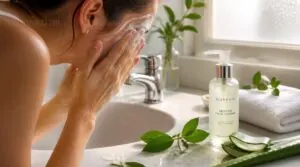
Before you even open that mask, cleanse your face first. Residual sunscreen, makeup, or moisturizer creates a thin film that stops active ingredients from actually reaching your skin.
Your best face masks for acne can’t do much sitting on top of old product buildup. Use a gentle facial cleanser matched to your skin type, rinse thoroughly, and pat dry — don’t rub.
Use Thin Even Layers
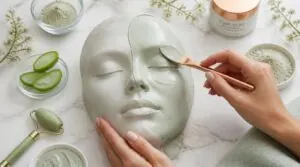
Once your skin is clean and dry, grab a spatula or your fingertips and spread a thin, even layer — not a thick glob. With clay masks and acne treatments, less genuinely works better. A thin coat dries uniformly, which means fewer tight, cracked patches and way less residue to scrub off.
Start from the center and spread outward with light, flat pressure.
Follow Product Timing

The timer on the bottle isn’t a suggestion — it’s there for a reason. Most best face masks for acne need just 5–15 minutes, and pushing past that won’t boost results; it’ll just irritate your barrier.
Stick to the recommended time, keep your weekly skincare routine consistent, and always patch test first, before committing to full-face use.
Moisturize After Rinsing

Once you rinse off your mask, don’t let your face air-dry. Pat skin lightly, then apply moisturizer within two minutes while it’s still damp — this locks in hydration and reinforces your skin barrier.
Humectants like hyaluronic acid pull water in, while occlusives seal it, preventing transepidermal water loss. This postmask care keeps hydrating skincare working and protects your skin barrier.
Avoid Overusing Actives
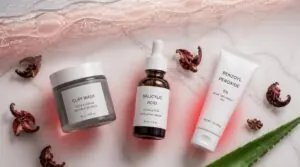
Because more isn’t always better, don’t stack salicylic acid, benzoyl peroxide, and clay together—piling on active ingredients raises skin irritation and barrier damage risks.
Overdoing chemical exfoliation can trigger rebound oil production.
Give your skin a few weeks for skin adaptation, manage your chemical load, and remember: the best face masks for acne really work best with patience, not pile‑ons.
Buying Tips for Acne Masks
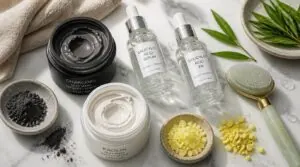
Okay, so you’ve seen the picks, you know the ingredients, now comes the fun part. Picking the right mask isn’t about grabbing whatever’s trending or has the cutest packaging. Here’s what actually matters before you click "add to cart.
Match Your Skin Type
Trust me, grabbing any of the best face masks for acne won’t help if it fights your skin type instead of working with it.
Start with a quick sebum level assessment—oily zones need oil control, dry patches need hydration versus oil balance.
Factor in pore size, sensitivity trigger identification, and breakout stage timing to fit your acne-prone skin’s skincare routine perfectly.
Check Non-comedogenic Claims
Non-comedogenic" sounds reassuring, but it’s not a regulated term — brands self-report it, and no standardized pore-clogging test is legally required. So the label alone won’t protect your acne-prone skin.
Flip the bottle. Watch for isopropyl myristate or heavy lanolin — classic pore-clogging culprits hiding behind clean branding. Patch-test any new pick for 48–72 hours before committing fully.
Compare Active Ingredient Strength
Two masks can share the same active — say, salicylic acid — but deliver completely different results based on percent concentration. A 0.5% BHA barely skims the surface; a 2% digs into pores.
- Compare AHA vs BHA percentages, not just names
- Check if sulfur is 5% or 10% — big difference for inflamed spots
- Note whether glycolic acid appears alongside salicylic acid for multi-active synergy
- Factor in contact time — a lower-percent leave-on often outperforms a high-percent rinse-off
Consider Fragrance-free Formulas
Fragrance is sneaky — it hides in "natural" botanical extracts and essential oils, and acne-prone skin hates it. Even a beautifully clean formula can trigger redness if it carries scent.
Look for fragrance-free labels that specifically exclude masking agents, too, not just perfume. Barrier-loving ingredients like ceramides, niacinamide, and panthenol signal a formula that’s genuinely safe for sensitive, reactive skin.
Balance Price and Results
Spending more doesn’t always mean clearer skin. The best face masks for acne tend to hit their stride in the $12–$25 range — think of a salicylic‑acid or clay mask with proven concentrations.
Most people see real improvement in 6–12 weeks of consistent use.
Bundles and auto-replenish subscriptions can cut costs by up to 30%, stretching your skincare routine further.
Frequently Asked Questions (FAQs)
Do face masks help reduce acne?
Think of your skin as a sponge — the right mask pulls out oil, clears pores, and calms redness before breakouts spiral. Yes, they genuinely help acne-prone skin.
How to get rid of acne prone skin?
Acne-prone skin needs a consistent, integrated routine. Watch your diet, manage stress, prioritize sleep, and support your skin’s microbiome. Targeted ingredients like salicylic acid and clay masks make a real difference when layered into daily acne treatment.
Do clay masks actually help acne?
Short answer? Yes — with limits. Kaolin and bentonite pull sebum from pores, easing congestion and reducing shine. But overdoing it triggers rebound oil production. Use smart, not often.
Which Korean face mask is good for acne?
Korean sheet masks are a solid pick for acne-prone skin. Try COSRX Blemish Mask — it’s loaded with centella asiatica to calm breakouts fast and keeps things simple, fragrance-free, and genuinely effective.
What type of face mask is best for acne?
Not all masks pull equal weight. For acne-prone skin, a clay mask with salicylic acid wins — it clears clogged pores through exfoliation, while gel formats hydrate without clogging. Match it to your breakout pattern.
Is it OK to use face masks with acne?
Yes—when chosen wisely. For acne-prone skin, the right mask can calm breakouts without barrier disruption. Skip active lesions, keep things clean, avoid trapping humidity, and you’ve got a solid anti-acne treatment that helps, not hurts.
What face masks don t irritate acne?
Like a shield that fits just right, fragrance-free, noncomedogenic masks with gentle actives won’t fight your skin. Look for hydrogel or soothing formulas that balance hydration and pore-clearing without wrecking your barrier.
Are clay masks good for acne?
Clay masks tackle oily, acne-prone skin by soaking up sebum and helping with pore decongestion.
Kaolin’s gentler, bentonite digs deeper for breakouts. Just don’t let it dry too long, or it’ll trigger irritation even faster.
Can diet changes help reduce maskne?
Dietary decisions genuinely shape your skin. High glycemic foods and dairy can spike hormones and inflammation, while omega-3s and fiber calm breakouts from within, quietly strengthening your skin barrier against maskne triggers.
Are there specific fabrics to avoid?
Absolutely. Synthetic heat-trapping fabrics like polyester and nylon lock in moisture and heat, while tight elastic blends and abrasive textures cause friction — all of which can worsen breakouts on acne-prone skin.
Conclusion
Your skin isn’t a problem to fix—it’s a puzzle that finally starts making sense once you stop throwing random products at it.
The right face masks for acne work best when you match the ingredient to what your skin is actually doing.
Clay draws out oil, sulfur calms inflammation, salicylic acid clears the path deep down.
Pick based on what’s happening right now, not what worked for someone else. That’s how real results happen.
- https://www.instagram.com/sofiepavitt/
- https://claude.ai/chat/312ab5ff-4391-431e-99c3-9aa796417510
- https://cna.st/affiliate-link/2VASdQonq3VuM9e7wCgudMYoZWFHmrJ6VTFWP8HwW8MS68YdCqSEH9E6MmYYEPpreNhTXUpLWHTg433NvEMzWuvQJFUUdvnRj2gga1UytUZ5SJFh8ocfAtnp6jBm1kgMEtKMTbjQBeo7CvGbDE4ZUWTGcHUjs7xRUxKzdGZZ9SUpsZjhT5LTSy8nPsP9RYjaHbTogVH8ths4UE5MZardDnKM8tjCZinJnGb7pyKBg94z47y3DC3VkFipqfeZLYnz29DwJ79mc1o7aQo8KBfpQvJPmQ6u4BBzjmufftXYLMaHbjQHurMyKENSD8wvaLjnJ5kMrWuMD4zujgzqa9cAjHsBsZiTDe8vp9Vke6BAtHujeHRaAft9vGaAieJFYqFrAmjXUU1YKXizH6EH1U