This site is supported by our readers. We may earn a commission, at no cost to you, if you purchase through links. This content is for general informational and educational purposes only and is not a substitute for professional medical, dermatological, or nutritional advice.
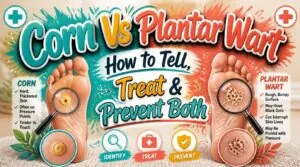
That small, painful bump on the bottom of your foot might seem straightforward, but a corn and a plantar wart can look almost identical—and treating one like the other wastes weeks of effort.
A corn forms when your skin hardens against repeated pressure, a built-in defense your body creates. A plantar wart comes from HPV, a virus that slips through the tiniest skin crack and quietly takes hold.
Getting the diagnosis wrong matters more than most people realize—wrong treatment means the problem lingers, or spreads. Knowing exactly what you’re dealing with changes everything about how you fix it.
Table Of Contents
- Key Takeaways
- What Are Corns on Your Feet?
- What Are Plantar Warts?
- Corn Vs Plantar Wart: Key Visual Differences
- Causes, Contagion, and Risk Factors Compared
- Treatment Options for Corns and Plantar Warts
- Preventing Corns and Plantar Warts on Your Feet
- Frequently Asked Questions (FAQs)
- Will wart remover also remove corns?
- Which is more painful, plantar wart or corn?
- How do I tell if I have a corn or plantar wart?
- Can I use corn remover on a plantar wart?
- What is the squeeze test for plantar warts?
- How do you remove a plantar corn?
- Can corns and plantar warts recur?
- Are corns and plantar warts painful?
- How long do plantar warts last?
- Are plantar warts contagious?
- Conclusion
Key Takeaways
- Black pinpoints inside a bump mean you’re dealing with a plantar wart, not a corn — corns never have them.
- Corns come from pressure and friction, so they hurt when pressed directly; warts come from HPV and hurt most when squeezed from the sides.
- Both respond to salicylic acid, but only warts need antiviral strategies like cryotherapy or immune-based treatments to fully clear.
- Wearing footwear in shared wet areas and choosing properly fitting shoes are your two most reliable ways to prevent both conditions from coming back.
What Are Corns on Your Feet?
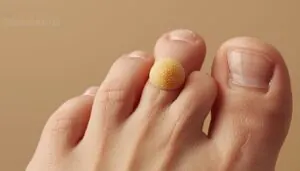
Corns are your skin’s way of protecting itself — they build up when too much pressure or friction hits the same spot over and over. They’re not dangerous, but they can make every step uncomfortable. Here’s what you need to know about them.
Common Causes of Corns
Most corns don’t appear out of nowhere — they build up slowly in response to repeated friction or pressure. Tight shoes are a common trigger, especially styles with narrow toe boxes that push against your toes. Ill-fitting footwear, barefoot walking, and repetitive walking on hard surfaces all concentrate pressure on small skin areas, gradually hardening them into a callus or corn.
Untreated corns increase the risk of infection.
Types of Corns Explained
Not every foot corn is the same. There are three main types, each with its own feel and behavior:
- Hard corns — dense, small bumps from bone-on-skin pressure
- Soft corns — whitish, rubbery lesions between the toes, worsened by moisture
- Seed corns — tiny clusters on the sole, often linked to dry skin
- Callus — broader, diffuse thickening, less defined than a corn
Where Corns Typically Form
Knowing which type of corn you have matters — but so does knowing where it lives on your foot. Location often tells you exactly what’s driving it.
Hard corns tend to settle on the tops and sides of toes, especially where shoes press against bony knuckles. Soft corns favor the interdigital web spaces — that moist, tight gap between your toes, most often the fourth. And seed corns cluster on the sole of the foot, often where dry skin and daily friction overlap.
Symptoms and Pain Patterns
Location tells you where the corn is — pain tells you what it’s doing to your foot.
Knowing both helps you treat the root cause — often with something like salicylic acid, which breaks down thickened skin at the source.
Corn pain is pressure-driven. Press straight down on that thickened skin, and you’ll feel it immediately. Walk longer, and it builds. Rest, and it eases. That predictable pattern is the hallmark of hyperkeratosis under load — your body’s defense gone too far.
What Are Plantar Warts?
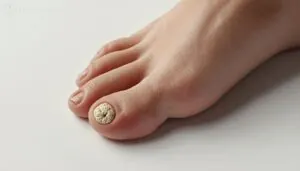
Plantar warts are small growths that form on the soles of your feet, caused by a strain of the human papillomavirus. They’re more common than most people realize, and they behave quite differently from corns. Here’s what you need to know about them.
How HPV Causes Plantar Warts
Plantar warts don’t just appear out of nowhere — they start with human papillomavirus (HPV) slipping into your skin through a tiny cut or abrasion. This is called basal cell infection, where HPV reaches the deepest skin layer and triggers abnormal cell growth.
Constant walking creates pressure-induced growth, pushing the wart inward. Over time, chronic viral presence keeps the infection active, sometimes for years.
Types of Plantar Warts
Not all plantar warts behave the same way. There are a few distinct types worth knowing:
- Solitary warts appear alone and grow inward — an endophytic growth pattern that makes them feel like a pebble underfoot.
- Mosaic warts form in clusters, covering a broader patch of skin.
- Myrmecia warts, linked to HPV type 1, grow deeply and cause sharp, pressing pain.
Where Plantar Warts Appear
These skin lesions tend to show up exactly where your foot takes the most abuse. Weight-bearing zones like the heel and the ball of the foot are the most common targets — that constant downward pressure creates the perfect entry point for HPV. The undersides of your toes and forefoot impact areas also see frequent cases.
Mosaic cluster patterns can spread across a wider patch when multiple warts merge.
Symptoms and Discomfort Signs
Pain from a plantar wart doesn’t behave the way most foot pain does. Instead of hurting most when pressed directly from above, side-to-side pressure is what really triggers it. Walking can feel like there’s a small pebble lodged underfoot.
Those tiny black pinpoints you might spot are blood vessels — a telltale sign you’re not dealing with a corn.
Corn Vs Plantar Wart: Key Visual Differences
Telling a corn apart from a plantar wart isn’t always obvious — they’re both small, they both hurt, and they both show up on the bottom of your foot. But if you look closely, there are real differences you can spot without a medical degree. Here’s what to check.
Texture and Surface Appearance
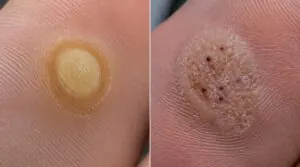
Touch the surface and you’ll notice the difference right away. Corns feel firm and even — a dense plug of keratin that builds up from constant pressure. Warts feel rougher and uneven, almost gritty, with raised bumps scattered across the lesion.
| Feature | Corn | Plantar Wart |
|---|---|---|
| Surface texture | Smooth, uniform | Rough, irregular |
| Black dots/pinpoints | Absent | Common |
| Edge definition | Clear, tight border | Irregular, spreading |
Black dots are your biggest clue. Those tiny pinpoints are thrombosed blood vessels — something corns simply don’t have. Warts also show dry flaky skin and uneven surface sheen, while corns appear more matte and consistent across the thickened patch.
Skin Line Disruption Vs Preservation

Here’s a test most people never think to try: run your finger across the bumpy area and look closely at the lines in your skin. Those tiny ridges — your epidermal ridge continuity — tell you a lot.
| What You See | Corn | Plantar Wart |
|---|---|---|
| Skin lines visible | Yes, intact | Disrupted or broken |
| Surface pattern | Follows natural ridges | Interrupted by growth |
| Cause of change | Pressure-induced thickening | Viral growth disruption |
| Callus core structure | Present, uniform | Absent |
| Fingerprint-like pattern | Preserved | Distorted |
Corns are just thickened, compressed skin — the ridges stay intact underneath. Plantar warts grow through the skin from within, breaking those lines apart. That disruption is the virus at work, not pressure.
Corns thicken the skin while keeping its ridges intact; plantar warts break those lines from within
Black Pinpoints and Other Markers
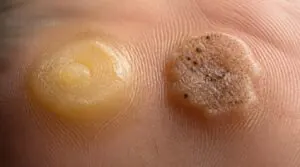
One of the most reliable signs you’re looking at a plantar wart rather than a corn is the presence of black dots on the surface. These aren’t dirt or pigment — they’re thrombosed capillaries, tiny blood vessels that have clotted under pressure. Corns never show them.
| Marker | Corn | Plantar Wart |
|---|---|---|
| Black pinpoints | Absent | Often present |
| Surface bleed points | None | Thrombosed capillaries visible |
| Vascular core | No | Yes, centrally located |
| Speckle pattern | Uniform thickening | Clustered dark dots |
| Keratin cap | Smooth, dense | Rough, flecked surface |
The dots tend to cluster near the wart’s center, where the vascular core sits. As keratin builds up over time, they can become harder to spot — but pressing around the area usually triggers tenderness, a sign the living tissue underneath is under strain.
Color and Shape Comparisons
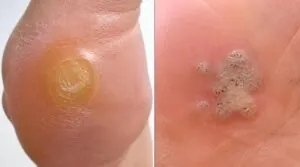
Color tells a lot at a glance. Corns tend to show a yellowish or light brown tone — uniform across the thickened patch. Plantar warts lean flesh colored to gray, often mottled rather than consistent.
| Feature | Corn | Plantar Wart |
|---|---|---|
| Color | Yellow or tan | Flesh-colored or gray |
| Shape | Circular, defined | Irregular, clustered |
Causes, Contagion, and Risk Factors Compared
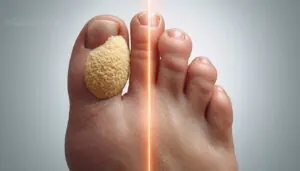
Knowing why something shows up on your foot matters just as much as knowing what it looks like. Corns and plantar warts have completely different causes, and that gap changes everything about how you handle them. Here’s a closer look at what’s actually behind each one.
Friction and Pressure Vs Viral Infection
Corns and plantar warts may look similar, but they start very differently. A corn forms because of repeated friction and pressure — your shoe rubs the same spot on your toe day after day, and your skin responds by thickening. That’s just your skin protecting itself through pressure-induced callus formation, no infection involved.
Plantar warts work differently. Human papillomavirus needs a way in, and it finds one through tiny skin breaks caused by mechanical stress or moisture. Sweaty feet soften your skin barrier mechanics, making micro-abrasions more likely — and that’s exactly when the virus can slip through.
Who is Most at Risk
Not everyone faces the same level of risk. People with diabetes need to be especially careful — reduced nerve sensation means a corn or wart can quietly worsen before you even notice the pain. Weakened immune systems, whether from HIV, organ transplant medication, or other conditions, make it harder for your body to fight HPV.
Older adults, those with eczema or compromised skin, and anyone who regularly walks barefoot in shared locker rooms or pool areas also face a higher chance of developing one or both.
How Warts Spread to Others
Plantar warts are a contagious skin condition, and they spread more easily than most people expect. The human papillomavirus enters your skin through tiny barrier breaks — a small cut, a scrape, or even cracked dry skin.
Warm, damp environments like pool decks and locker rooms make indirect contact a real risk. You can also spread warts to yourself through autoinoculation — touching one wart, then another spot.
Why Corns Are Not Contagious
Unlike a plantar wart, a corn has no virus behind it — just your body doing its job. It’s a pressure-induced callus, your skin’s natural response to repeated friction. That biomechanical defense mechanism means there’s nothing infectious to pass on.
- No virus, no spread
- Caused by pressure, not a pathogen
- Touching a corn transfers nothing
- Removing friction stops growth
- Your skin, your stress, your corn
Treatment Options for Corns and Plantar Warts
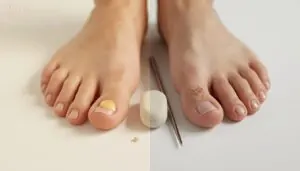
Once you know what you’re dealing with, the next step is figuring out how to get rid of it. Corns and plantar warts each respond to different treatments, so the right approach depends on which one you have. Here’s what your options look like.
Over-the-Counter Salicylic Acid Products
One product can actually help with both conditions — salicylic acid. It works by softening and breaking down thickened or infected skin, making it a go-to over-the-counter wart removal product and corn treatment alike.
| Feature | Corns | Plantar Warts |
|---|---|---|
| Recommended strength | 17–40% | 17–40% |
| Best product form | Medicated pads | Liquid solution or gel |
| Application tip | Apply directly to corn | Soak foot first |
You’ll find salicylic acid topical treatments as gels, creams, liquids, or pre-soaked pads. Strengths for skin conditions like corns and warts usually run higher than acne formulas. Stop use and call your doctor if you notice severe burning or peeling.
Cryotherapy and Professional Procedures
When salicylic acid isn’t cutting it, a podiatrist can step in with something stronger.
Cryotherapy using liquid nitrogen is one of the most effective professional treatments for plantar warts — it freezes the infected tissue, cutting off the wart’s blood supply. Corn tissue, by contrast, is usually shaved away with sterile instruments rather than frozen.
Home Remedies and Self-Care Tips
Not every corn or plantar wart needs a clinic visit to start feeling better.
Warm foot soaks for 10–15 minutes soften thickened skin, making it easier to gently buff away dead layers with a pumice stone. Stop if you feel any sharp pain. Follow up with a urea-based moisturizer to keep corn skin hydrated and crack-free.
Donut-shaped pressure pads take weight off the sore spot throughout the day.
When to See a Podiatrist
Home care can only take you so far. If you’re dealing with persistent pain while walking, or the spot isn’t improving after a few weeks of self-treatment, it’s time to book a podiatric care appointment.
See a podiatrist promptly if you notice any of these:
- Persistent pain makes standing or walking difficult
- Infection signs appear — redness, warmth, swelling, or drainage
- Rapid growth or shape changes in the lesion
- You have diabetes risk factors or poor circulation
- Failed home care after consistent over-the-counter treatment
Plantar warts and stubborn corns don’t always respond to self-care. A medical consultation ensures you get the right diagnosis — and the right fix.
Advanced Treatments for Stubborn Warts
When over-the-counter options and basic in-office care aren’t enough, there are stronger tools available. SWIFT microwave therapy stimulates your immune system to recognize and fight the wart virus from within. Intralesional immunotherapy — such as Candida antigen injections — works similarly, triggering a localized antiviral response directly at the site.
For deeper or recurring warts, laser ablation, photodynamic therapy, or combination therapy protocols can target what simpler treatments miss.
Preventing Corns and Plantar Warts on Your Feet
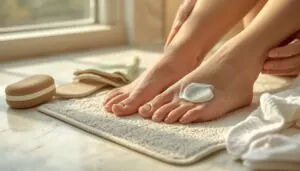
Prevention is simpler than most people think, and a few steady habits go a long way. Whether you’re trying to dodge a wart or stop a corn from coming back, the fix usually starts with everyday choices. Here’s what actually has a real impact.
Choosing The Right Footwear
Wearing the wrong shoes is one of the easiest ways to develop corns.
Toe box width matters most — your toes need room to move freely without rubbing. Look for breathable materials like mesh or soft leather to reduce trapped moisture. A firm heel stability cup keeps your foot properly aligned, while solid traction grip prevents awkward weight shifts that create friction hotspots.
If you’re comparing options for the jobsite, this roundup of the best work boots for men matches each pair to specific hazards like wet floors, heavy loads, and long shifts.
Reducing Friction With Pads and Orthotics
Good footwear gets you started, but friction doesn’t stop at the shoe — it happens inside it too. Cushioned corn pads placed over pressure hotspots absorb the rubbing before your skin reacts. For a more targeted fix, metatarsal pad positioning matters: placing a dome just 5 mm distal to the metatarsal heads can cut peak forefoot pressure by roughly 17%.
Custom orthotics take this further. They use multiple material layers — combining softer foams with firmer bases — to redistribute load away from vulnerable spots. A PTFE patch at the heel counter reduces friction even when your feet get sweaty, which standard padding can’t always manage.
Avoiding HPV in Public Spaces
Pads and orthotics protect you inside your shoes — but the real HPV risk starts the moment you step onto a shared floor. Plantar warts thrive in warm, wet environments, so public wet areas deserve your full attention.
Here’s what actually helps:
- Wear flip-flops or water shoes in communal showers, pool decks, and gym locker rooms
- Use a personal barrier mat if you shower at a gym — don’t trust the drain area
- Dry your feet thoroughly after any public wet area; moisture makes skin more vulnerable
- Wash your hands before touching your feet — HPV can transfer from surfaces via your fingers
- Cover active warts with waterproof dressings before entering shared spaces
HPV residue can linger on surfaces for up to seven hours, so even a quick barefoot moment carries real risk. Footwear protection is your simplest, most reliable line of defense.
Daily Foot Hygiene and Skin Care
Daily foot care doesn’t have to be complicated — but skipping even small steps can leave your feet wide open to both corns and plantar warts.
Daily Foot Washing with mild soap and warm water removes buildup that feeds skin problems. Dry completely afterward, especially between toe drying, since trapped moisture breaks down skin fast and invites infection.
Frequently Asked Questions (FAQs)
Will wart remover also remove corns?
Sometimes, yes. Most over-the-counter wart removal products contain salicylic acid, which breaks down hardened skin. That means they can soften a corn too — but results aren’t guaranteed, and it may take weeks.
Which is more painful, plantar wart or corn?
Pain hits differently depending on the cause. Corns tend to hurt more for most people — that sharp, pressing ache with every step. Plantar warts cause discomfort too, but mainly when squeezed from the sides.
How do I tell if I have a corn or plantar wart?
Look closely at the bump. Does it have black pinpoints inside? Squeeze the sides — is that where it hurts most? If yes to both, you’re likely dealing with a plantar wart.
Can I use corn remover on a plantar wart?
Sometimes, yes — but read the label first. Some corn removers also list plantar warts as an approved use. Both conditions respond to salicylic acid, making certain over-the-counter products effective for either.
What is the squeeze test for plantar warts?
The squeeze test is simple: pinch the lesion from both sides using your thumb and index finger. Pain with side-to-side pressure strongly suggests a plantar wart rather than a corn or callus.
How do you remove a plantar corn?
Soak your foot in warm water for 10–15 minutes, then gently file with a pumice stone. Apply salicylic acid daily. See a podiatrist for safe professional debridement if it persists.
Can corns and plantar warts recur?
Yes, both can come back. Corns return when pressure continues. Warts return if HPV lingers in the skin after treatment.
Are corns and plantar warts painful?
Both can hurt, but in different ways. Corns respond to direct pressure, while plantar warts hurt when squeezed sideways. Walking aggravates both, though wart pain often feels like stepping on a small pebble.
How long do plantar warts last?
Patience is a virtue — and plantar warts test it. Most resolve naturally within 1–2 years, but adults often wait longer. Your immune system drives healing. Untreated, some warts persist for years.
Are plantar warts contagious?
Plantar warts are contagious. HPV spreads through direct skin contact or contaminated surfaces. They remain infectious until the lesion fully heals. Wearing flip-flops in public and keeping feet dry reduces your risk.
Conclusion
A stitch in time saves nine, and your feet are absolutely no exception to that rule. Understanding the corn vs plantar wart distinction means you stop guessing and start treating the actual problem correctly.
One forms from repeated pressure; the other slips in silently through a virus. Both are fully manageable when you catch them early and handle them with proper care.
You’ve got the knowledge now—don’t wait for pain to decide for you.