This site is supported by our readers. We may earn a commission, at no cost to you, if you purchase through links. This content is for general informational and educational purposes only and is not a substitute for professional medical, dermatological, or nutritional advice.
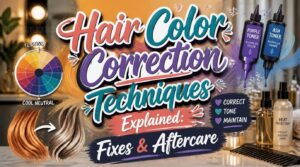
You’ve seen it happen at the sink: a box dye promises "ash blonde" and delivers swampy green instead. Or last summer’s bleach job faded into brassy orange by week three. These aren’t random mishaps, they’re chemistry gone sideways, and they’re fixable.
Every strand holds pigment layers you can’t see until lightener strips things back or color starts fading unevenly. That’s where hair color correction techniques come in, using the color wheel and precise timing to cancel out what’s wrong and rebuild what’s right.
You’ll learn exactly which neutralizers tackle which tones, how long real correction takes, and which products keep results locked in.
Table Of Contents
- Key Takeaways
- Hair Color Correction Fundamentals Explained
- Temporary, Semi-Permanent, and Permanent Corrections
- Top 6 Products for Color-Corrected Hair
- Techniques for Common Hair Color Problems
- Hair Color Correction Aftercare and Maintenance
- Frequently Asked Questions (FAQs)
- What are the common mistakes to avoid in color correction?
- How do I tell what color of corrector should I use?
- What is the first rule of color correction?
- Which hair color technique is less damaging?
- How does hair color correction work?
- What are the types of color correction?
- How many sessions does color correction take?
- How long does color correction take?
- Can damaged hair undergo color correction?
- How much does professional color correction cost?
- Conclusion
Key Takeaways
- The color wheel is your roadmap for fixing brassy tones: violet cancels yellow, blue tames orange, and red neutralizes green.
- Always run a strand test and check hair porosity before applying any correction formula, since this determines timing and prevents damage.
- Correction methods range from temporary color-depositing shampoos to permanent removal, so you’ll choose based on how long you want results to last and how severe the problem is.
- Aftercare makes or breaks your results: sulfate-free washing, weekly deep conditioning masks, and heat/UV protection keep corrected color locked in for weeks longer.
Hair Color Correction Fundamentals Explained
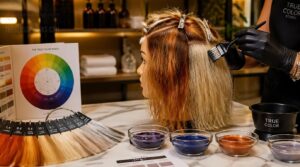
Fixing off-tones starts with understanding why they happen in the first place. You’ll need a handle on color theory, pigment behavior, and your hair’s current condition before picking up any product. Here’s what actually goes into a solid correction plan.
Not sure where your undertones actually fall? Taking a personalized hair colour quiz can help pinpoint the right shades before you start correcting anything.
What Hair Color Correction Does
Think of color correction as a reset button for your hair. You’ll neutralize brassy or uneven tones, lift unwanted pigment, and deposit new color in a controlled sequence, all while protecting hair integrity.
It’s a full color correction process, blending strand testing, timing, and porosity checks to stabilize results and prevent future fading before your stylist even reaches for the color wheel.
Depending on the severity of the issue, correction may take anywhere from a few hours to multiple sessions over weeks, so patience is part of the process.
Color Wheel Neutralization Basics
The color wheel isn’t just theory, it’s your roadmap. Opposite hues cancel each other out, so violet neutralizes yellow and blue tames orange.
Three pairs you’ll rely on constantly:
- Yellow-violet for brassy blondes
- Blue-orange for warm mid-tones
- Green-red for olive casts
Saturation matters too. Too much pigment, and you’ll overcorrect fast.
Underlying Pigments and Brassiness
Every strand hides a base shade waiting to surface. Lighten it, and warm or cool undertones rise, dictating your correction plan.
| Undertone | Neutralizer |
|---|---|
| Copper/gold | Blue-violet |
| Jade/olive | Red pigment |
| Orange | Blue-based tone |
Depth matters, too. Darker natural hair often reveals more stubborn pigment exposure once lightened.
Hair Porosity and Damage Assessment
Undertones tell you what you’re fighting, but hair porosity tells you how hard you can fight.
Undertones reveal what you’re fighting, but hair porosity determines how hard you can fight it
Try the float test: drop a clean strand in water. Sinks fast, you’ve got high porosity. Floats, it’s low. Mid-range sinking means balanced moisture exchange. Warm water speeds things up.
Check elasticity too, stretched strands reveal damage before you ever pick up a bottle.
Strand Testing and Professional Evaluation
Before any formula touches your hair, professional colorists run a strand test on a small section, usually 1 to 2 cm, timing development closely.
They’ll check porosity, scalp sensitivity, and document everything, product mix, timing, expected results.
This professional evaluation isn’t optional. It’s what separates a controlled color correction process from a guessing game that damages your hair.
Temporary, Semi-Permanent, and Permanent Corrections
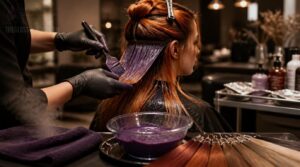
Not every color problem needs the same fix. You’ll pick your method based on how long you want it to last and how much correction you actually need. Here are the five approaches you’ll run into most, from quick and temporary to fully permanent.
Temporary Color-Depositing Correction
Think of it as a rinse-out reset button. Color depositing shampoos and toning conditioners coat the shaft with pigment, no lifting involved, fading in 1-3 washes.
- Purple/blue formulas neutralize brassiness
- Best on porous, previously lightened hair
- Leave on 3-10 minutes
You’re color glazing, not recoloring. Perfect for quick at-home color correction between salon visits.
Semi-Permanent Toners and Glosses
When rinse-out formulas fade too fast, you’ll want more staying power.
Semi-permanent toners and glosses deposit pigment into porous strands, lasting 4-8 weeks. Toning and glossing for color correction neutralizes brass with violet or blue pigments while sealing the cuticle for shine.
High porosity hair grabs color faster, so check hair condition first. Schedule refreshers every 4-6 weeks.
Permanent Color Removal and Recoloring
Sometimes gentle toning won’t cut it, and you need a full reset. Permanent color removal uses reducing agents to break dye bonds and lift pigment from the cortex, with processing running 10-30 minutes based on porosity.
After removal, you’ll rebuild with a chosen base shade, clarify residue, tone for warmth, then confirm the final shade in natural light.
Pre-Pigmentation Before Darkening Blonde Hair
Going blonde to brown without a warm-up step? You’ll get flat, muddy color fast.
Pre-pigmentation rebuilds lost warmth first, using a copper undertone one level lighter than your target. This warm pigment rebuild stops the dreaded green cast.
- Match undertone to target shade
- Apply evenly, strand test for accuracy
- Rinse before darkening
Skip it, and you’re fighting color theory itself.
Balayage and Foil Line Correction
Two roads lead to corrected color: balayage blending or foil placement. Balayage works in open air, giving soft gradients with no harsh regrowth line.
Foil highlighting traps heat, lifting color faster with crisp, precise lines. You’ll choose foil for targeted brass removal and toning accuracy, balayage for low-maintenance color gradient upkeep between salon visits.
Top 6 Products for Color-Corrected Hair
Correcting your color is only half the job. You’ll need the right products to keep results looking fresh and your strands healthy. Here are six worth adding to your routine.
1. Redken All Soft Leave In Treatment
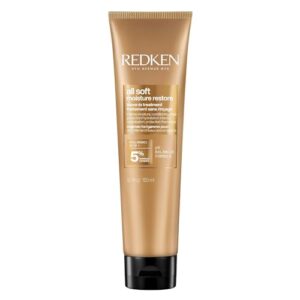
Color-corrected hair needs moisture it can actually hold onto, and that’s exactly what this leave-in delivers. Hyaluronic acid pulls hydration into each strand while argan oil smooths the cuticle, giving you up to 72 hours of softness and shine.
You’ll also get heat protection up to 450°F, so your color stays locked in through blowouts and flat-ironing. Apply it to damp hair after washing, focus on mid-lengths and ends, and avoid the roots if your hair runs fine. Pair it with the full All Soft system for noticeably smoother, better-hydrated results.
| Best For | Color-treated hair that needs extra moisture, shine, and heat protection, especially for those with fine to medium hair looking to reduce frizz and detangling issues. |
|---|---|
| Color-Safe | Yes |
| Format | Leave-In Treatment |
| Sulfate-Free | Not Specified |
| Key Ingredient | Argan Oil |
| Best For | Fine To Medium Hair |
| Paraben-Free | Not Specified |
| Additional Features |
|
- Hyaluronic Acid and Argan Oil combine to deeply hydrate and soften hair
- Offers heat protection up to 450°F, shielding hair during blowouts and flat-ironing
- Delivers up to 72 hours of shine and smooth texture after application
- May not offer enough hold or moisture for very thick or coarse hair types
- Overuse can cause buildup or a greasy feel, particularly on fine or thin hair
- The scent may not appeal to everyone, though it fades once hair is dry
2. Kitsch Purple Conditioner Bar For Blondes
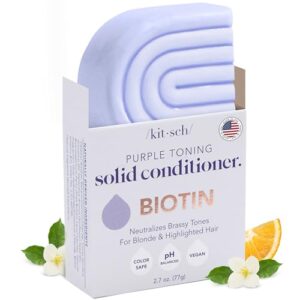
If your leave-in is managing moisture, this bar controls tone. Kitsch’s purple conditioner bar uses violet pigment to cancel out yellow and brassy undertones, the same color-theory trick colorists use in the chair.
Wet the bar, rub it directly onto mid-lengths and ends, and leave it for 1 to 3 minutes. You’ll get cooler, brighter blonde without a drop of liquid, plus coconut oil and shea butter for softness. One bar replaces two bottles, which makes it a smart pick for travel.
| Best For | Blondes, grays, and colour-treated hair that need tone correction and low-waste travel-friendly haircare. |
|---|---|
| Color-Safe | Yes |
| Format | Conditioner Bar |
| Sulfate-Free | Yes |
| Key Ingredient | Violet Pigment |
| Best For | Blondes And Grays |
| Paraben-Free | Yes |
| Additional Features |
|
- Neutralizes brassy, yellow tones while adding biotin for stronger, shinier strands
- Solid bar format skips liquid restrictions, making it easy to pack for trips
- Clean, pH-balanced formula free from parabens, sulfates, silicones, and phthalates
- Strong lavender and smoky scent that isn’t for everyone
- Bar can crumble or break apart with regular use or storage
- Needs to be kept dry, or it can soften and degrade too soon
3. L’Oreal Hyaluron Plump Hydrating Shampoo
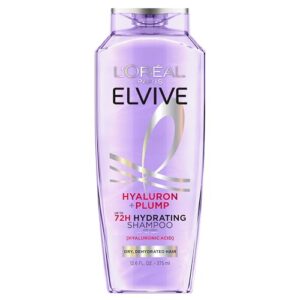
Toning controls brassiness, but bleached hair still needs moisture back. That’s where this shampoo comes in.
Formulated with a Hyaluronic Care Complex, it delivers up to 72 hours of hydration without weighing strands down. You’ll notice softer, bouncier hair after just one wash, especially on color-treated or dehydrated lengths.
It’s paraben-free and works best as part of the 4-step Elvive routine, including Wonder Water and Replumping Serum. Massage into wet hair, rinse, and follow with conditioner. On its own, very damaged hair may need more than this shampoo provides.
| Best For | Anyone with dry, dehydrated, or color-treated hair looking for a lightweight daily shampoo that hydrates without weighing strands down. |
|---|---|
| Color-Safe | Yes |
| Format | Shampoo |
| Sulfate-Free | Yes |
| Key Ingredient | Hyaluronic Care Complex |
| Best For | Dry, Color-Treated Hair |
| Paraben-Free | Yes |
| Additional Features |
|
- Delivers up to 72 hours of moisture thanks to the Hyaluronic Care Complex, leaving hair soft and bouncy
- Paraben-free formula that’s gentle enough for daily use on all hair types, including wavy and curly textures
- Pleasant berry, cherry blossom, vanilla, and sandalwood scent that fades quickly without leaving residue
- Some users need to use more product than expected to work up a good lather
- Very dry or damaged hair may not get enough hydration from the shampoo alone
- Best results require pairing with the conditioner and Replumping Serum, so it works best as part of the full routine rather than on its own
4. MONDAY Clarify Shampoo Oily Hair
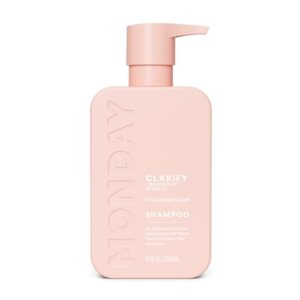
Hydration experiences dryness, but what about the opposite problem? Oily roots and product buildup need a different approach entirely.
MONDAY’s Clarify Shampoo uses grapefruit extract to strip excess sebum without stripping color. You’ll notice less slick, flatter-looking roots within a wash or two, since it cuts through buildup that dulls both shine and color vibrancy.
Coconut oil keeps the formula from feeling harsh. It’s sulfate and paraben-free, pH balanced, and gentle enough for color-treated strands.
Stick to 1-2 washes weekly. Any more, and you’re risking scalp tightness instead of that clean, refreshed feel.
| Best For | People with oily, buildup-prone hair who want a gentle clarifying shampoo that won’t fade or dull color-treated strands. |
|---|---|
| Color-Safe | Yes |
| Format | Shampoo |
| Sulfate-Free | Yes |
| Key Ingredient | Grapefruit Extract |
| Best For | Oily, Buildup-Prone Hair |
| Paraben-Free | Yes |
| Additional Features |
|
- Cuts through excess oil and product buildup using grapefruit extract, leaving hair feeling refreshed
- Formulated with coconut oil to offset harshness, plus a sulfate-free, paraben-free, pH-balanced base that’s safe for color-treated hair
- Cruelty-free (Leaping Bunny approved) and packaged in a recyclable bottle
- Not meant for daily use, since frequent washing can lead to dryness or scalp tightness
- May not fully cut through very heavy product buildup for some users
- The pump can be finicky to dispense from, and the 12-ounce size feels pricier than expected
5. Pureology Strength Cure Shampoo Conditioner Set
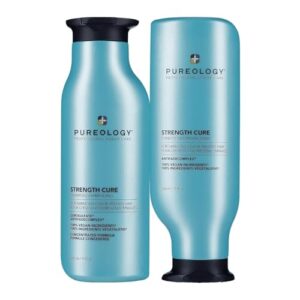
Damage and color loss don’t have to be a package deal. Pureology’s Strength Cure duo grips both with Keravis complex and antioxidant-rich astaxanthin, working to fortify strands while its AntiFade Complex locks in color.
Sulfate-free and vegan, this set skips parabens and harsh salts that strip pigment during washing. You’ll notice smoother texture and less breakage with consistent use.
At $76 for two 9-ounce bottles, it’s an investment. But for normal to thick, color-treated hair craving real repair, it delivers where budget shampoos fall short.
| Best For | People with normal to thick, color-treated or chemically damaged hair who want a sulfate-free system to reduce breakage and protect against fading. |
|---|---|
| Color-Safe | Yes |
| Format | Shampoo & Conditioner Set |
| Sulfate-Free | Yes |
| Key Ingredient | Keravis Complex |
| Best For | Normal To Thick Hair |
| Paraben-Free | Yes |
| Additional Features |
|
- Restores up to 99% of hair’s original strength and cuts breakage by up to 56%
- Color-safe formula helps prevent fading while boosting shine and manageability
- Free of sulfates, parabens, and phthalates, with a vegan conditioner that seals split ends
- At $76, it’s pricier than many other shampoo and conditioner sets
- Not designed to address scalp issues like dandruff or psoriasis
- Some users find they need to rotate products over time as hair adjusts to the formula
6. Biolage Strength Recovery Shampoo Conditioner Set
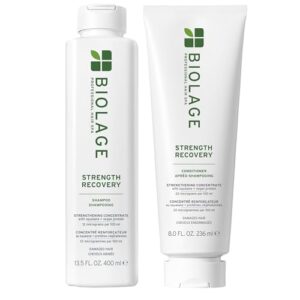
Breakage after color correction usually comes down to weak protein bonds, and this duo targets exactly that. You’ll see hair get 3X stronger with 3X less breakage after just one wash, thanks to vegan olive squalane and fortifying proteins working at the strand level.
The conditioner delivers 3X more moisture immediately, restoring softness without weighing hair down.
Works across textures and color treatments, though it’s pricier and pairs best with the matching Strength Repairing Spray for full results.
| Best For | Anyone with color-treated, damaged, or breakage-prone hair looking to rebuild strength and add moisture back into their routine. |
|---|---|
| Color-Safe | Yes |
| Format | Shampoo & Conditioner Set |
| Sulfate-Free | Not Specified |
| Key Ingredient | Olive Squalane |
| Best For | All Hair Textures |
| Paraben-Free | Not Specified |
| Additional Features |
|
- Makes hair 3X stronger with 3X less breakage after just one wash
- Delivers 3X more moisture instantly, leaving hair soft without feeling weighed down
- Works well across all hair textures, including color-treated hair
- Costs more than many competing hair care brands
- Best results require pairing it with the separate Strength Repairing Spray
- Updated 2025 packaging looks different from earlier versions, which may confuse repeat buyers
Techniques for Common Hair Color Problems
Every color problem has a fix, and most fixes follow a predictable formula. You’ll want the right technique for your specific issue, whether it’s brassiness, patchy bleach, or a toner gone too cool. Here’s how to tackle five of the most common color complaints, one by one.
Correcting Yellow, Orange, Green Tones
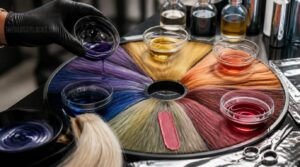
The color wheel is your cheat sheet here. Yellow needs violet toners, orange needs blue, green needs red or pink.
For toning for yellow brassiness, apply purple shampoo weekly. Neutralizing orange tones? Blue shampoos work best on lighter blondes. Correcting green cast means reaching for red or pink neutralizers to counteract copper buildup from chlorine or minerals.
Fading Overly Dark Hair Color

Went too dark? You’ll fade it gradually, not all at once. Clarifying shampoo lifts pigment with each wash, while a diluted vinegar rinse speeds the process safely.
For faster results, a deep-cleansing shampoo three times weekly fades tone within two to three weeks. Skip bleach for fading alone, it risks breakage. Follow every wash with conditioner to protect porosity.
Softening Overly Ashy Toner
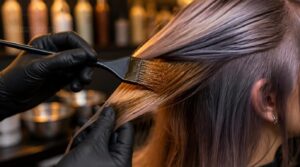
Too much violet leaves hair flat and cool, almost silvery-dull. You’ll fix it with warm amber pigments, blended lightly to restore shine without muddying tone.
Ask your colorist for a graduated toning sequence, small warmth additions over multiple sessions. Time it after any cooling step, and always strand test first.
Porosity matters here too, damaged ends absorb warmth unevenly.
Repairing Patchy or Spotty Bleach
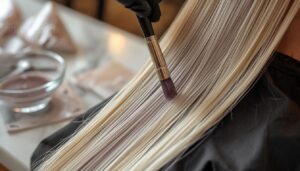
Banding happens when saturation varies across sections, leaving lighter and darker zones mostly midshaft to ends.
Fix it right:
- Run a porosity test first
- Pre-pigment patches to equalize absorption
- Re-bleach only patchy zones, 0.5-1cm sections
- Match toner to residual brass or green
- Space touch-ups every 3-6 weeks
This preserves hair integrity while correcting uneven tone.
Lightening Dark Hair Safely
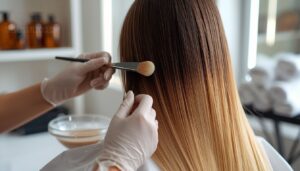
Once patches are even, going darker to lighter demands its own careful plan. Start with a porosity assessment and strand test for timing. Apply protective barrier cream at your scalp, choose a controlled lightener, and monitor lift closely.
| Step | Purpose |
|---|---|
| Strand test | Sets timing |
| Barrier cream | Protects scalp |
| Toner | Balances brass |
Hair Color Correction Aftercare and Maintenance
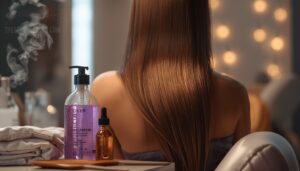
Getting your color corrected is only half the job. What you do afterward decides whether it lasts or fades fast. Here’s exactly how to protect your investment, step by step.
Sulfate-Free Washing and Conditioning
Once correction work is done, your washing routine decides whether it lasts. Sulfate-free shampoos cleanse gently while preserving pigment, locking color in for up to 8 weeks.
They keep your scalp pH balanced near 5.5, protect moisture, and shield against fading:
- Softer color, longer
- Hydrated, resilient strands
- Fewer touch-ups needed
Pair with weekly deep conditioning masks for real recovery.
Purple Shampoo Without Over-Toning
Yellow tones don’t stand a chance against violet pigment, but overdo it and you’ll land in ashy-purple territory.
| Hair Type | Frequency | Leave-On Time |
|---|---|---|
| Light blonde | 1-2x/week | 1-2 min |
| Dark blonde | 1x/week | 3-5 min |
Strand test first. Follow with sulfate-free conditioner to protect integrity and keep tones neutralized without stripping moisture.
Weekly Masks for Chemical Damage
Purple shampoo targets tone, but your strands still need repair. That’s where weekly masks come in.
- Protein masks fill gaps, rebuild the cortex
- Moisture masks use glycerin, avocado oils
- Apply on damp hair, 5-15 minutes
- Weekly use, results show in 2-4 weeks
- Rinse cool to seal the cuticle
You’ll notice stronger, smoother strands fast.
Heat and UV Color Protection
Under a blow dryer or the sun, your color’s most at risk. Heat protectant creams shield strands up to 450°F before styling.
Outdoors, UV protective sprays block photons before they fade pigment. Reapply after swimming or sweating.
Together, these thermal styling barriers and UV hair protection preserve hair integrity, keeping color fading prevention consistent all season.
Mistakes That Cause Fading or Damage
Even careful correction work unravels fast if daily habits work against it. Heat styling damage and UV exposure quietly undo salon results within weeks.
Watch for these:
- Hot water washing opens cuticles
- Harsh chemical mixing (clarifying near new color)
- Inadequate saturation during application
Frequent washing fade adds up too. Build hair care routines for color treated hair around gentle, infrequent cleansing for real color correction maintenance.
Frequently Asked Questions (FAQs)
What are the common mistakes to avoid in color correction?
You’ll want to avoid over correction, ignoring skin tone consistency, and skipping strand tests. Poor calibration and white balance errors also skew results, which is why professional colorists rely on scopes, gray cards, and gradual increments during the color correction process.
How do I tell what color of corrector should I use?
Grab the color wheel: it’s your cheat sheet. Match the complementary tone to what you see. Yellow brass needs violet, orange needs blue. Strand testing confirms it before you commit fully.
What is the first rule of color correction?
Set your white balance to neutral first, using strand testing and neutral reference points before any hue shift. This early verification prevents downstream tone problems, keeps color adjustments consistent, and protects hair integrity throughout your correction process.
Which hair color technique is less damaging?
Surface-level deposit techniques like at-home toning and low-volume peroxide beat bleaching for gentle results. They skip color lifting entirely, using strand testing only and protective additives to fade brassiness safely, no glazing or professional colorists required.
How does hair color correction work?
You’re rebalancing pigment, not erasing history. Oxidation dye opens the cuticle, deposits color into the cortex, and complementary shades on the color wheel neutralize brass. Strand testing first protects porosity and hair integrity before any lifting or toning begins.
If you’re tempted to go the plant-based route instead, this guide to using henna on natural hair explains how it interacts differently with the cuticle.
What are the types of color correction?
You’ll work with four main types of color correction: tonal fixes unwanted hues using color theory, lightening removes darkness, darkening adds depth, and complete stripping starts fresh for dramatic changes.
How many sessions does color correction take?
Don’t expect a one-and-done fix. Damaged or dark hair usually needs two to four sessions, spaced weeks apart for recovery time, since porosity and strand test results dictate safe lifting speed each visit.
How long does color correction take?
Plan on 2 to 6 hours for a single-session fix, plus a 15-45 minute consult beforehand. Multi-visit corrections for badly damaged hair often total 6-12 hours, with follow-ups running 30-60 minutes each.
Can damaged hair undergo color correction?
Picture straw trying to hold a paint job, brittle strands, patchy uptake, uneven fade. Yes, damaged hair can undergo correction.
Damage repair first matters most: bond building treatments, sectional correction, and thorough hair porosity assessment protect integrity before any dye touches your strands.
How much does professional color correction cost?
Minor fixes run $100-$300, moderate work lands between $300-$700, and major corrections can top $1,200. Most salons charge $60-$150 hourly, so your hair color consultation determines the real cost.
Understanding the full range of hair painting and highlighting techniques helps you anticipate how complex your correction may be—and why costs vary so widely.
Conclusion
Funny how the same color wheel that ruins a box dye job is the exact tool that fixes it. That’s hair color correction techniques explained in one strand: cancel the tone, rebuild the pigment, protect what’s left.
You’ll strip green with red, calm brass with blue-violet, and lock results with sulfate-free care. Correction isn’t luck. It’s chemistry you now control, one formula, one strand test, one confident choice at a time.