This site is supported by our readers. We may earn a commission, at no cost to you, if you purchase through links. This content is for general informational and educational purposes only and is not a substitute for professional medical, dermatological, or nutritional advice.
Curly hair and color have a complicated relationship. The same spirals that make your hair look effortlessly stunning also make it more porous, more thirsty, and more particular about how it reacts to chemical processing.
Color that looks gorgeous on straight hair can leave curls dry, frizzy, and stripped of their natural bounce—which is why hair coloring for curly hair deserves its own playbook entirely.
The good news? When you match the right shades, techniques, and aftercare to your curl pattern, the results are nothing short of significant. Here’s everything you need to get it right.
Table Of Contents
- Key Takeaways
- Choosing Curly Hair Colors
- Color Techniques and Considerations
- Curly Hair Color Care
- Curl Health and Color Selection
- Maintaining Vibrant Curly Hair Color
- Frequently Asked Questions (FAQs)
- What hair color is best for curly hair?
- Can you dye your hair when it’s curly?
- Is coloring good for curly hair?
- How to choose a hair color for curly hair?
- How do you color curly hair?
- How do you dye curly hair?
- What is the best hair color for women with curly hair?
- What color highlights go with curly hair?
- What is the best hair color for curly hair?
- Can you use hair dye on curly hair?
- Conclusion
Key Takeaways
- Matching hair color to your curl pattern skin tone, and porosityosity is secret to vibrant, flattering results.
- Sulfate-free shampoos, weekly deep conditioning, and UV protection are musts for keeping colored curls healthy and bright.
- Ammonia-free dyes and smart coloring techniques help protect your curl shape and prevent dryness or breakage.
- Regular trims, root touch-ups, and protective styles keep your color fresh and your curls strong between appointments.
Choosing Curly Hair Colors
Picking the right color for your curls is honestly one of the most exciting parts of the whole process.
Once you’ve nailed the perfect shade, make sure you’re also avoiding common hair gel mistakes that can ruin curly hair — because great color deserves great styling.
The good news? There are so many directions you can go, depending on your vibe, your skin tone, and how much upkeep you’re actually up for.
Here are some of the best curly hair color ideas to get you inspired.
Blonde and Brown Shades
Curly hair is basically a color playground — and blonde and brown shades are where the magic starts. Warm blonde highlights like honey blonde make your curls glow with golden depth, while a cool brown balayage adds smooth, easy dimension. Want that caramel brown glow? The pintura technique places color exactly where your curls shine most.
- Honey blonde — sunny warmth that enhances curl definition beautifully
- Espresso brown — rich, dark intensity that smooths frizzy texture
- Mushroom brown — cool, ashy depth for multi-dimensional curls
- Caramel brown — golden warmth mimicking natural sun‑kissed color
- Bronde — the perfect blonde‑brown blend for low‑commitment color
For hair color maintenance, espresso brown care means weekly deep conditioning, while honey blonde maintenance calls for toner touch‑ups to keep brassiness away. Color protection starts with sulfate‑free shampoo — always.
skin tone analysis helps determine the most flattering shades for your curls.
Red, Copper, and Burgundy Hues
Ready to turn up the heat? Red, copper, and burgundy hues bring serious red vibrancy to curly hair — and they look stunning in motion.
Copper undertones mix gold, orange, and red for that lit-from-within glow, while burgundy depth layers cool purple-brown tones for rich sophistication.
| Shade | Best For |
|---|---|
| Copper Tones | Warm skin matching |
| Burgundy | Cool or deep undertones |
| Auburn Red | Olive to medium skin |
| Ruby Red | Bold, high-contrast curls |
Fade-resistant care — think sulfate-free shampoo and color-safe conditioners — keeps these hair color ideas glowing longer. regular copper maintenance is essential to keep the vibrant hue lasting.
Unique, Bold, and Pastel Colors
Why stop at warm tones when your curls can wear a full sunset?
Bold colors and pastels are having a major moment in curly hair color trends.
Try these vibrant options:
- Pastel lavender highlights for soft, curl-defining glow
- Mint green dip-dye on lightened ends for playful contrast
- Electric blue balayage for smooth, dimensional color
- Neon purple ombre fading beautifully through bouncy ends
Color-depositing shampoos keep these vibrant tones fresh between appointments.
For deeper guidance on which formulas actually work, product reviews for color-treated hair can help you find the right match for your specific shade.
Color Techniques and Considerations
Picking a color is just the beginning — how you apply it makes all the difference for curls.
The right technique can improve your curl pattern, add dimension, and keep your hair looking intentional instead of overdone.
Here’s what to know before you sit in that salon chair.
Dimensional and Metallic Colors
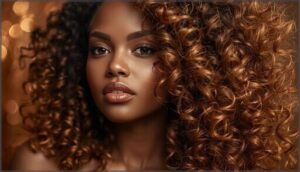
Want your curls to literally shimmer? Dimensional color and metallic shades are your answer.
Color melting blends three or four complementary tones from roots to ends — no harsh lines, just pure movement.
Babylights add ultra-fine, sun-kissed strands that feel effortlessly natural. Foilyage goes bolder, lifting caramel and honey shades for rich curl enhancement.
Just remember: UV protection is non‑negotiable for color maintenance. These metallic shades reflect light beautifully, making every curl pop.
Balayage and Highlighting Techniques
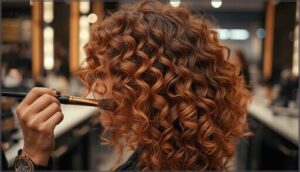
Getting the technique right is honestly half the battle with curly color.
Balayage uses freehand painting to sweep lightener in soft V-shapes — no foils, no harsh lines. Foilyage hybrid goes bolder for brighter caramel highlights. Pintura adaptation traces each individual ringlet for gorgeous definition. Wet balayage process keeps coils damp for precision.
Smart sectioning strategies — like diagonal slices or triangular sections — guarantee even saturation every time.
- Freehand painting mimics natural sun-kissed movement
- Foilyage lifts honey and caramel highlights dramatically
- Pintura traces ringlets for eye-catching curl definition
- Wet balayage controls color on tight coils precisely
- Strategic sectioning guarantees balanced, smooth saturation
Color Placement and Curl Definition
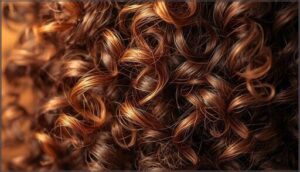
Placing color with intention is what separates a good result from a great one. Face framing brightens your features without touching the whole head, while a root shadow keeps depth at the scalp for natural dimension. Multi tonal placement — mixing lighter and darker tones — makes every curl pop.
| Placement Style | Best For |
|---|---|
| Face Framing | Brightening features |
| Root Shadow | Natural grow-out |
| Surface vs Interior | Curl definition |
| Sectioning Patterns | Even saturation |
Think of it as curl enhancement techniques meet contouring — strategic, not random.
Curly Hair Color Care
Getting the color is only half the battle — keeping it looking fresh is where the real work begins.
Colored curls need a little extra TLC to stay vibrant and healthy.
Here’s what your routine should include.
Gentle, Color-Safe Shampoos
Your shampoo is either color’s best friend or its worst enemy. Sulfate-free formulas skip the harsh detergents that strip dye and dry out curls — using gentler cleansers that protect color without sacrificing clean. pH balanced cleansing keeps your cuticle sealed, so color stays richer longer.
Look for UV protective shampoos with moisturizing polymers for extra color protection and curl preservation. If you have low porosity hair, gentle formulas are especially your friend.
Weekly Hair Masks and Leave-in Conditioners
Color‑treated curls are thirsty — and a weekly mask is basically their water bowl. Deep conditioning once a week (or two to three times if your curls are heavily colored) keeps the moisture‑protein balance in check, so your hair stays flexible instead of snapping. Look for shea butter, glycerin, or bond‑repair treatments like Olaplex for real curl preservation and hair health.
Here’s what to prioritize:
- Apply masks to soaking‑wet hair in sections for even coverage
- Leave on 10–20 minutes so ingredients actually penetrate
- Choose porosity‑specific masks — high porosity curls need protein more often
- Follow with a leave‑in for frizz control all day
- Alternate moisture and protein masks to avoid stiffness
Protecting Color From Fading
Think of your color like a cashmere sweater — it needs gentle handling.
Washing just once or twice a week seriously slows fading, since water alone causes up to 80% of color loss.
On off days, dry shampoo use keeps roots fresh without a rinse.
UV protection in your leave‑in guards against sun damage, and smart heat management plus chlorine shielding round out your fade‑resistant, long‑lasting color maintenance routine.
Curl Health and Color Selection
Before you pick a color, it helps to know what your curls can actually handle.
Things like porosity, elasticity, and the strength of your strands all play a role in how color turns out — and how healthy your hair stays after. Here’s what to check before you commit to a shade.
Hair Porosity and Color Absorption
Your curls don’t absorb color randomly — porosity is the reason behind it all. Porosity testing (try the float test: a strand that sinks fast means high porosity) tells you exactly what you’re working with before you commit to a formula.
- Low-porosity hair needs heat pre‑treatment to open the cuticle
- Low-porosity strategies include protein primer benefits — primers boost absorption by ~30%
- High-porosity fixes start with a bond‑repairing treatment like Olaplex
- Moisturizing and nourishing after coloring slows pigment loss
- Color‑treated hair and curly hair care thrive with regular deep conditioning for hair health maintenance
Elasticity and Hair Strength
Porosity tells you how color gets in — elasticity tells you if your hair can handle it. Healthy strands stretch up to 50% when wet and snap right back. That’s tensile strength doing its job.
Porosity tells color how to enter, but elasticity decides if your hair survives the journey
After coloring, though, protein breakdown can leave curls limp and snappy. Here’s how to keep curl resilience strong:
- Do the wet stretch test weekly for elasticity testing
- Alternate moisturizing and nourishing treatments every few weeks
- Add protein balance treatments every 4–6 weeks to restore strength
Minimizing Damage With Ammonia-Free Dyes
Stretching your curls for elasticity? Let’s talk about keeping them strong during coloring.
Ammonia‑Free dyes—especially Low Alkalinity Formulas—are your secret weapon. They limit Cuticle Swelling Control, so your curl pattern stays intact and soft. Plus, Moisture Retention Boost means less dryness after coloring. For Scalp Sensitivity Relief, these formulas skip harsh fumes and itching.
Always check for Ingredient Transparency Checks before picking a hair dye. Here’s a quick cheat sheet:
| AmmoniaFree Perks | Curly Hair Care Wins |
|---|---|
| Low Alkalinity Formulas | Hair Health |
| Cuticle Swelling Control | Color Maintenance |
| Moisture Retention Boost | Curl Pattern Protection |
| Scalp Sensitivity Relief | Less Breakage |
| Ingredient Transparency | Vibrant, healthy curls |
Maintaining Vibrant Curly Hair Color
Getting the color is only half the battle — keeping it looking fresh is where the real magic happens.
Curly hair needs a little extra love to hold onto color and stay healthy between appointments.
Here’s what actually works.
Regular Trims and Root Touch-Ups
Keeping your color looking chef’s kiss fresh comes down to non‑negotiables: trim frequency and root timing. Skip either one, and your hard‑earned color starts looking tired fast. For solid hair color maintenance and curl preservation strategies, here’s your go‑to hair care routine:
- Trim every 6–8 weeks for split end prevention and growth retention
- Touch up roots every 4–6 weeks to avoid harsh regrowth lines
- Use a root melt or smudge for a softer, natural grow‑out
- Combine scheduling — book trims and root services together every 8 weeks
- Deep condition right after color appointments to restore bounce and strength
Combined scheduling saves time and keeps your curly hair care game consistent.
Using Color-Safe Products and Tools
You’ve got your trims sorted—now let’s talk gear. Swap harsh cleansers for Sulfate-Free Shampoos and Silicone-Free Conditioners that protect your color and keep curls bouncy. For styling, grab Heat-Resistant Tools and always use UV Protective Sprays.
Color-treated Hair Care means washing less, clarifying only once a week, and sleeping on silk. These Color Protection Methods make Hair Color Maintenance feel easy, so your Curly Hair Styling stays vibrant and healthy, wash after wash.
Protective Styles for Color Preservation
Color Treatment doesn’t stop at the bottle — how you style your curls matters just as much.
Low-manipulation braids, mini twists, and loose updos protect dyed strands from sun, friction, and breakage.
Build these into your Color Maintenance Routines:
- Sleep with a nighttime pineapple on a silk pillowcase.
- Secure styles with satin scrunchies, not elastic bands.
- Try micro braids tension for even color distribution.
Your curls will thank you.
Frequently Asked Questions (FAQs)
What hair color is best for curly hair?
best hair color for curly hair depends on your undertone matching and porosity-friendly shades.
Warm caramel and honey tones flatter golden skin, while cool ash or burgundy suits pink undertones beautifully.
Can you dye your hair when it’s curly?
Yes, like finding the perfect curl cream, it just takes the right approach. Curly hair can absolutely be dyed — choose wisely, and your curls will thank you.
Is coloring good for curly hair?
Coloring curly hair can absolutely work in your favor — as long as you treat it right. Ammonia-free dyes, protein-moisture balance, and color-safe care keep your curls healthy, vibrant, and thriving.
How to choose a hair color for curly hair?
Your skin tone, hair porosity, and natural undertones all shape which shades will actually flatter your curls.
Matching color to those three things first makes every other decision — technique, placement, budget — so much easier.
How do you color curly hair?
Start with a porosity test — drop a curl strand in water for two to four minutes.
High porosity sinks fast; low porosity floats. That tells you everything about how your curls will grab color.
How do you dye curly hair?
Dyeing curly hair takes a little prep and patience.
A quick porosity test, smart sectioning strategy, and the right developer volume make all the difference for even, vibrant results without compromising your curl pattern.
What is the best hair color for women with curly hair?
Warm, glowing, gorgeous — curly hair color really can be all three.
Honey blonde highlights, caramel balayage, and copper tones are low-maintenance shades that add dimension and make every curl pattern absolutely pop.
What color highlights go with curly hair?
Honey blonde and caramel highlights are crowd favorites for curly hair — they add warmth and dimension without harsh contrast.
Curl-friendly balayage and face framing highlights work beautifully, following your natural curl pattern for a smooth, sun-kissed finish.
What is the best hair color for curly hair?
There’s no single "best" hair color — it depends on your skin tone, curl pattern, and lifestyle. Warm caramel, honey, and copper shades tend to flatter most curly hair beautifully.
Can you use hair dye on curly hair?
Yes, you can use hair dye on curly hair! Semi-permanent options are gentler and skip harsh ammonia.
Just know that color shock is real — deep condition after every session to keep curls bouncy.
Conclusion
Funny how hair that demands the most care rewards you the most beautifully. Curls don’t forgive shortcuts—they celebrate every good decision you make for them.
Mastering hair coloring for curly hair isn’t about following a rigid formula; it’s about learning your curls’ language and speaking it fluently.
Choose wisely, condition fiercely, and protect what you’ve built.
Your spirals are worth every extra step—and honestly, so are you.