This site is supported by our readers. We may earn a commission, at no cost to you, if you purchase through links. This content is for general informational and educational purposes only and is not a substitute for professional medical, dermatological, or nutritional advice.
You wet it down, comb it flat, and by the time you grab your keys, that stubborn tuft is standing straight up again. Sound familiar? A cowlick isn’t dirt on your comb technique — it’s a follicle that grows at its own angle, and no amount of gel can talk it out of that habit.
Here’s the good news: you don’t need to fight your hair every morning. Once you understand why that swirl forms and which direction it grows, you can cut, dry, and style around it instead of against it. That’s the real secret behind learning how to get rid of a cowlick — working with your hair’s blueprint, not against it.
Table Of Contents
- Key Takeaways
- What Causes a Cowlick?
- Is a Cowlick Permanent?
- Best Haircuts for Managing Cowlicks
- How to Tame a Cowlick With Heat Styling
- Daily Habits to Keep Cowlicks Tamed
- Frequently Asked Questions (FAQs)
- How do I permanently get rid of a cowlick?
- Can you train a cowlick to lay flat?
- What causes a cowlick in your hair?
- How rare is a front cowlick?
- How do you get rid of a cowlick?
- How do you tame a cowlick?
- How do I get rid of a cowlick in my hair?
- Can you delete a cowlick?
- Can a cowlick be corrected?
- What product gets rid of cowlicks?
- Conclusion
Key Takeaways
- Your cowlick is genetic, not a hygiene or technique issue—your follicle angle got locked in before you were born, so no comb or gel can permanently change it.
- You can’t erase a cowlick, but you can manage it by cutting, drying, and styling with the direction of the whorl instead of fighting against it.
- The right haircut makes the biggest difference, so tell your stylist exactly where your cowlick sits (crown, hairline, or nape) so they can layer and angle around it.
- Daily habits like blow-drying with a cool shot, sleeping on silk, and brushing in your hair’s natural direction train your cowlick to lay flatter over time.
What Causes a Cowlick?
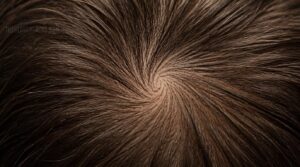
Ever wonder why that one section of hair just won’t lay flat? Cowlicks aren’t random, they come down to how your hair grows right at the root. Let’s break down exactly what’s behind that stubborn swirl.
If you’re currently navigating that in-between phase, these transition hairstyles for growing out short hair can help tame those cowlicks while your hair finds its new shape.
Genetics and Hair Growth Patterns
Blame your parents, not your blow dryer. That swirl at your crown comes from hair follicle development set before you were even born, when follicle angle gets locked in for good.
Your cowlick isn’t your blow dryer’s fault—it’s a follicle angle locked in before you were even born
Here’s what’s actually shaping that pattern:
- Growth-cycle genes controlling how long hair stays active
- Keratin gene influence on shaft shape and texture
- Androgen receptor genes affecting density over time
Genetic hair whorls vary by population too, which explains why some heads fight harder than others. Your hair growth pattern isn’t random. It’s inherited, follicle by follicle.
The androgen receptor gene on the X chromosome plays a key role in hair follicle sensitivity and development. androgen receptor gene
Common Cowlick Locations on Scalp
That follicle blueprint doesn’t just set direction, it sets location too.
Most cowlicks show up at the crown, affecting roughly 42% of adults. Others form along the forehead or temporal areas near your sideburns, at the nape, or up top at the vertex. Each spot creates its own hair whorl pattern, which is why two heads rarely style the same way.
Hair Type and Texture Influence
Location explains where a cowlick sits, but hair type decides how much trouble it gives you.
Fine hair lifts easily and forms visible whorls fast. Coarse hair resists thanks to added weight. Wavy hair often hides a cowlick within its layers, while curly strands conceal it entirely. Porosity matters too:
- Fine, low-density strands
- Coarse, weighty texture
- Curly, high-porosity coils
Know your texture before choosing a fix.
Hair Whorl Direction Explained
Texture sets the stage, but the whorl calls the shots. This is where hair growth direction actually starts, right at the follicle.
Understanding your whorl pattern makes it easier to work with your hair instead of against it, and this guide to styling different hair textures breaks down exactly how.
Most people have a clockwise whorl, spiraling right and lying flatter that way. Fewer have counterclockwise growth, which lifts when brushed against it. Scalp curvature at the crown shapes this spiral, so styling with the whorl (not against it) always wins.
Is a Cowlick Permanent?
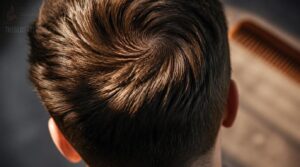
So, is that cowlick here to stay? Short answer: yes, but that doesn’t mean you’re stuck fighting it forever. Here’s what’s actually going on with permanence, and where the real limits are.
Why Cowlicks Can’t Be Eliminated
Wish you could shave it away for good? You can’t—the hair whorl comes from follicle direction fixed deep in scalp structure, set by genetic hair pattern before birth.
Cutting only removes hair temporarily:
- Hair regrows same direction
- Follicles stay unchanged
- Scalp structure unchangeable
- Styling only temporary
- Wet hair manipulation resets nothing long-term
Cowlick Vs Balding Differences
A swirl and a bald patch might look similar at a glance, but they’re nothing alike.
| Feature | Cowlick | Balding |
|---|---|---|
| Scalp Visibility | Limited to swirl center | Spreads across patch |
| Hair Density | Unchanged | Decreases over time |
| Progression | Stable, lifelong | Worsens gradually |
Growth pattern stays fixed with a cowlick. Hair thinning that expands signals balding, not whorl direction.
Medical and Surgical Option Limits
Thinking cosmetic surgery will fix your whorl for good? Think again. Hair transplants max out at 80% of natural density, and cowlick angling cuts graft survival by 10%. Scalp pigmentation fades within 12-18 months. Laser therapy caps at 24 sessions before returns fizzle. Minoxidil tops out at 5% over-the-counter. Surgical scar tissue can permanently shift growth direction anyway.
Best Haircuts for Managing Cowlicks
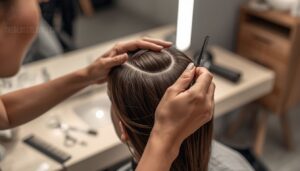
The right haircut can make a cowlick work for you instead of against you. Some cuts fight the swirl, and others just let it do its thing quietly. Here’s what to ask for, depending on where your cowlick sits.
Ideal Hair Lengths and Layering
Length matters more than most people think. Keep top hair to 2 to 4 inches so it drapes over the whorl, and hairline growth at 1.5 to 3 inches so it won’t lift.
Cut layers inward toward the scalp at a 45-degree angle. This redirects growth away from the swirl. Add texture with thinning shears for natural movement, and trim every 6 to 8 weeks to maintain control.
Haircuts for Crown Cowlicks
A crown cowlick calls for a cut that works with the swirl, not against it.
- Crown volume technique: cut 1-2 inches longer for lift
- Textured crown layers: point-cut to break the pattern
- Undercut crown solution: reduces bulk underneath
- Side-swept crown layers: directs hair away from center
Even a pixie cut can hide a stubborn hair whorl with the right haircut.
Haircuts for Hairline Cowlicks
A stubborn hairline cowlick can wreck a perfect part, but the right cut fixes that fast. Try a Layered Hairline Cut with thirty-degree layers to redirect growth, or a Side Swept Fringe angled at forty-five degrees for full coverage.
The Textured Bangs Technique breaks up the swirl with razor cuts, while an Asymmetrical Cowlick Solution or Scalp Contouring Method blends things beautifully.
Haircuts for Nape Cowlicks
Bangs and fringes handle hairline swirls, but nape cowlicks need a different game plan entirely.
Ask your barber for nape length adjustment—a little extra weight tames the lift. Request taper blending instead of sharp lines, plus light texturizing for lift control. Layered nape styling with good weight distribution keeps the whorl flat, no flipping.
Consulting a Professional Stylist
Nape cowlicks tricky? A professional hairstylist takes the guesswork out. Expect a real consultation: describing location and history, photos from three angles, even a caliper measurement of the swirl’s diameter.
Stylists use magnifying lamps and talcum powder to map growth direction, then build a custom styling plan with layering, product recommendations, and a follow-up appointment to track progress.
How to Tame a Cowlick With Heat Styling
Heat and the right tools can talk that stubborn swirl into behaving. It won’t happen by accident, though—you need a real technique, not just a quick blast of hot air. Here’s exactly how to get it done, step by step.
Start with a warm water rinse to soften the hair, then work a pea-sized dab of product root-to-tip using tips from this gentle beard balm guide for sensitive, gray beards.
Blow-Drying Technique Step-by-Step

Ready to fight that swirl head-on? Start with sectioning hair into 1-inch squares. Point your blow dryer’s concentrator nozzle at the roots, brushing opposite the cowlick’s growth pattern.
Rotate the round brush clockwise, matching dryer direction for tension. Use medium heat, pause two seconds per section, then finish with a cool shot before applying styling product.
Choosing The Right Round Brush

That technique only works if your tool is right for the job. Match your round brush to your hair type:
- Small barrels (1 inch) for tight, controlled curls
- Medium barrels (1.5-2") for balanced smoothing
- Large barrels (2"+) for root lift
- Boar bristles for shine
- Heat-resistant to 450°F with a cool-touch handle
Setting Hair With a Cool Shot
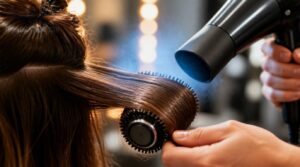
Once you’ve brushed a section straight, hit the cool shot button for 5-10 seconds while holding brush position. Cold air seals the cuticle, locking in smoothness and taming flyaways.
| Step | Action | Result |
|---|---|---|
| 1 | Brush section | Shape formed |
| 2 | Cool shot | Style locks |
| 3 | Release | Volume holds |
Cool roots last for lasting lift.
Flat Iron Smoothing Method
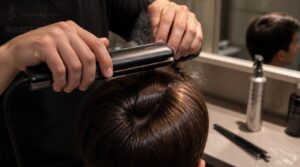
When a blow dryer just won’t cut it, grab your flat iron. Choose plate size based on the cowlick’s spread—1.5 inches for pinpoint control.
Set temperature to 250°F for fine hair, 300°F for coarse. Section the whorl, apply heat protectant, and glide in the direction of natural hair fall, curving clockwise or counterclockwise to match the whorl.
Daily Habits to Keep Cowlicks Tamed

Taming your cowlick once isn’t the end of the job. Your daily habits decide whether that hard work sticks or unravels overnight. Here’s what to keep up with.
Protecting Hair Style While Sleeping
All that styling work can vanish in one bad night’s sleep. Protect it: swap your cotton pillowcase for satin or silk to cut friction, and never sleep on wet hair.
- Wake up frizz-free instead of fighting it
- Skip the morning re-styling scramble
- Protect your ends from breakage
- Avoid tight styles that strain your hairline
- Keep that smooth, trained shape longer
Loose braids and bonnets work wonders too.
Retraining Hair Growth Over Time
Here’s the good news: hair follicles can actually learn new habits. Stick with your routine, and each wash trains hair to fall the way you want.
Brush in your desired growth direction every morning and night. Over weeks, this natural pattern reinforcement relaxes the swirl, so a quick blast of the dryer becomes all you need to keep it tamed.
Frequently Asked Questions (FAQs)
How do I permanently get rid of a cowlick?
Truth is, you can’t. Genetic follicle direction is permanent, short of surgical follicle relocation. Realistic goals: hair training, weight management, and daily styling commitment paired with acceptance—not erasing your hair growth pattern for good.
Can you train a cowlick to lay flat?
Yes, you can train a cowlick to lay flat with consistent brushing, anti-frizz serum, and heat protectant. The follicle direction stays fixed, but daily styling, nightly scalp massage, and a silk pillowcase keep it tamed.
What causes a cowlick in your hair?
Mostly it’s genetic predisposition—your hair follicle angle and whorl direction get set early on. Scalp muscle tension, hormonal shifts during puberty, and old injuries can also reshape hair growth pattern and direction over time.
How rare is a front cowlick?
You’re less "one in a million" than you think. Studies show frontal cowlick prevalence anywhere from under 2% to over 64%, depending on region and how researchers define a hairline whorl.
How do you get rid of a cowlick?
That swirl is just your follicles doing their job. You can’t erase a cowlick, but the right haircut, heat styling tools, and proper hair products give you real, lasting control over how it lays.
How do you tame a cowlick?
Funny thing about a cowlick: fighting it head-on never works. Taming it means cooperating, not battling. Section damp hair, work strong-hold mousse into the swirl, then guide heat styling tools against the grain until it lies flat.
How do I get rid of a cowlick in my hair?
Truth is, you can’t erase a cowlick — the follicle angle is set for life. What you can do is outsmart it: hair growth training, heat protectant spray, smart layering, and a silk pillowcase keep it tamed daily.
Can you delete a cowlick?
No, you can’t delete a cowlick. Genetics set your follicle pattern for good. Hair growth training and daily hair manipulation only manage the swirl. Skip scalp micropigmentation myths; smart haircuts, styling products, and acceptance strategies are your real tools.
Can a cowlick be corrected?
Short of surgery, nothing corrects a cowlick’s angle permanently. Surgical follicle removal or hair transplant redirection exist but stay pricey and risky.
Smarter fix: a skilled professional hairstylist using strategic haircut work, hair products, and long-term hair training.
What product gets rid of cowlicks?
No single product tames it alone. Match formula to texture: lightweight gel or mousse for fine hair, water pomade or matte paste for thick strands, then lock everything down with a high hold spray.
Conclusion
A cowlick is like a river current — fight it and you’ll always swim upstream. Once you know which way that swirl grows, cutting, drying, and styling stop being battles and become simple daily habits.
Learning how to get rid of a cowlick really means learning to read your hair’s natural blueprint. Get the right cut, dry it correctly, protect it at night. Your hair isn’t stubborn. It’s just following its own grain.