This site is supported by our readers. We may earn a commission, at no cost to you, if you purchase through links. This content is for general informational and educational purposes only and is not a substitute for professional medical, dermatological, or nutritional advice.

Acne on the cheeks and chin isn’t random—it follows patterns tied to hormones, habits, and what touches your face each night. The lower third of your face sits in a hormonal crossfire: sebaceous glands there respond more aggressively to androgens, which is why breakouts tend to cluster along the jawline before a menstrual cycle or during prolonged stress.
Add a pillowcase that hasn’t been washed in a week, a habit of resting your chin on your hand, and a diet leaning toward refined carbs, and you’ve built the perfect environment for persistent, inflamed spots.
The good news is that most of these triggers are controllable, and several evidence-based natural remedies can meaningfully reduce both breakouts and the inflammation that makes them worse.
Table Of Contents
- Key Takeaways
- Why Cheek and Chin Acne Happens
- Natural Remedies That Work
- Daily Habits That Prevent Breakouts
- Top 5 Products for Acne-Prone Skin
- Frequently Asked Questions (FAQs)
- How to clear cheek acne naturally?
- How do you treat chin and cheek acne?
- What naturally kills acne?
- What can I drink to clear acne?
- What kills acne quickly?
- How to get rid of chin acne for good?
- How do I get rid of hormonal chin acne?
- How do you get rid of acne on your skin?
- What causes chin acne?
- How do you get rid of Chin Zits?
- Conclusion
Key Takeaways
- Cheek and chin acne is largely hormonal — androgens overstimulate oil glands along the lower face, which is why breakouts cluster at the jaw before your period or during high-stress periods.
- Daily habits like touching your face, sleeping on an unwashed pillowcase, and eating refined carbs quietly fuel breakouts more than most people realize — fixing these is often more effective than adding new products.
- Tea tree oil (diluted to 2.5–5%), aloe vera, green tea, and raw honey all have real clinical backing for reducing acne bacteria and inflammation, but consistent use and a patch test first are non‑negotiable.
- If benzoyl peroxide, salicylic acid, and habit changes haven’t moved the needle after several months — or you’re dealing with painful cystic lesions — that’s your cue to see a dermatologist for prescription options like spironolactone or clascoterone.
Why Cheek and Chin Acne Happens

Cheek and chin acne rarely shows up without a reason. Your skin in that area is especially reactive to hormones, habits, and what you eat.
If those deep, painful cysts along your jaw sound familiar, exploring affordable hormonal acne treatments can help you figure out what’s actually driving the breakouts.
Here’s what’s actually driving those breakouts.
Hormonal Shifts and Jawline Breakouts
If breakouts land along the jaw like clockwork each month, hormones are likely driving the pattern. During the luteal phase flare — the week before your period — progesterone rises and estrogen drops, tipping your androgen‑estrogen balance toward more oil and deeper inflammation.
PCOS-related acne follows the same route, as does elevated cortisol from chronic stress.
Hormonal contraception effects vary widely by person.
Increased oil production is driven by elevated androgens stimulate the sebaceous glands.
Excess Oil and Clogged Pores
Hormones set the stage, but excess sebum keeps the curtain up. Your sebaceous glands produce oil constantly — and when they overproduce, that oil mixes with dead skin cells, creating a sticky plug inside the pore.
Here’s what happens step by step:
- Sebum regulation fails, flooding pores with oil
- Dead skin slows pore exfoliation, trapping debris
- Plugs oxidize or deepen, forming blackheads or whiteheads
- Bacteria thrive, triggering inflammation
A nonsoap cleanser and oilfree moisturizer with noncomedogenic formulas keep this cycle from starting.
Touching Your Face and Pillowcase Buildup
Oil doesn’t just come from inside your skin. Every time you rest your chin on your hand or absentmindedly touch your cheeks, you’re transferring bacteria and debris straight onto vulnerable pores.
A solid Hand Hygiene Routine before applying any product matters more than most people realize.
Your pillowcase compounds this — Pillowcase Fabric Choice affects Friction Inflammation overnight, especially synthetic materials that trap heat and oils.
Hair Product Management keeps pomades and conditioners from migrating to your jaw while you sleep.
Diet, Stress, and Sleep-related Flare-ups
What you eat, how you sleep, and how stressed you feel all feed directly into your skin’s behavior. High-glycemic foods spike insulin and IGF-1, triggering oilier skin and clogged pores. Chronic stress floods your body with cortisol, worsening inflammation. Poor sleep amplifies both effects.
Your diet, stress levels, and sleep quality speak directly to your skin — and it listens
- Swap refined carbs for Low-Glycemic Snacks like nuts or berries
- Start a Morning Hydration Routine before coffee
- Add Probiotic-Rich Foods like yogurt or kefir to support gut-skin balance
- Practice Cortisol Reduction Techniques — even 10 minutes of deep breathing helps
- Set an Evening Screen Curfew to protect sleep quality and hormone rhythms
Natural Remedies That Work
Your kitchen and bathroom cabinet might already hold some of your best allies against cheek and chin breakouts. Several natural options have real research behind them — not just anecdotal buzz.
Here’s what’s actually worth trying.
Diluted Tea Tree Oil for Inflamed Spots

Tea tree oil is one of the most studied essential oils for skin inflammation — but dilution guidance matters. Mix 2–3 drops into a carrier oil like jojoba for proper carrier selection, reaching a 2.5–5% concentration.
After patting your skin dry, follow up with a gentle, non-stripping cleanser for oily and large-pored skin to keep your routine balanced without disrupting the oil’s benefits.
Use a cotton swab for precise spot application on inflamed lesions only. Before starting, do an allergy check — patch test for 24–48 hours.
These natural home remedies for acne work best with consistent, careful irritation monitoring.
Aloe Vera to Calm Redness
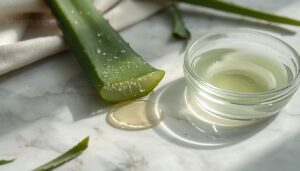
When skin is flushed and tender, aloe vera gel acts fast. Its humectant properties pull moisture in, while the cooling sensation immediately calms surface skin inflammation.
Applied as a fragrance-free formula after cleansing, it helps barrier repair without clogging pores. Gentle application — no rubbing — keeps cheek and chin redness from worsening. Among natural home remedies for acne, its anti-inflammatory effect is genuinely well-supported.
Green Tea for Oil Control

Green tea earns its place in any skincare routine for acne-prone skin. A 3% emulsion delivers EGCG lipid modulation — basically slowing the sebum signals that let oil and dead skin cells combine and clog pores. The water-in-oil base keeps active contact consistent during cooling application.
For natural home remedies for acne, green tea’s oil control is one of the better-supported options available.
Honey Masks for Soothing Support

Honey might be the gentlest multitasker in your natural home remedies for acne toolkit. Raw honey benefits go beyond sweetness — its antimicrobial compounds target acne-causing bacteria without stripping your skin barrier function. Manuka antimicrobial activity is especially well-documented, making higher-grade varieties worth considering for DIY skin masks and steam treatments.
- Apply raw or manuka honey to clean skin as your honey hydration technique
- Follow the mask timing guide: 10–15 minutes maximum, then rinse thoroughly
- Try additive pairings like aloe vera to boost anti-inflammatory calming effects
- Patch test first — some botanicals increase sensitivity risk
- Honey masks are anti-inflammatory support, not standalone acne cures
Jojoba Oil to Balance Dryness

Jojoba oil works differently from most natural home remedies for acne — it’s technically a liquid wax, not an oil, which means it mimics your skin’s own sebum almost perfectly.
This Sebum-Mimicking Moisturizer quality lets it lay down a Lightweight Film that helps Barrier Repair without blocking pores.
Its Antioxidant Boost from vitamin E and its Non-Comedogenic Finish make it genuinely noncomedogenic.
Apply 5–6 drops after your gentle cleanser to restore skin barrier function.
Patch Testing Before First Use
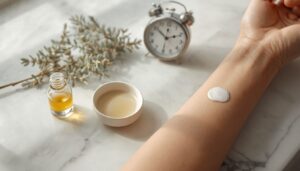
Before applying any natural remedies to your cheeks or chin, run a patch test — skipping this step is one of the most common mistakes people make with essential oils and concentrated natural remedies.
- Application Area: Apply a small amount to your inner arm or behind the ear.
- Product Concentration: Use the same dilution you’d apply to your face.
- Testing Duration: Leave it undisturbed for 48–96 hours, watching for redness, itching, or swelling.
- Reaction Monitoring: Stop immediately if burning or swelling develops; dermatologist consultation helps clarify recurring skin irritation or cross contamination between products.
Daily Habits That Prevent Breakouts

What you do every day matters more than you might think. Small, consistent habits can either keep your skin clear or quietly trigger the next round of breakouts.
Here’s where to start.
Wash Your Face Twice Daily With a Gentle Cleanser
Washing your face twice daily sounds simple — but doing it right makes all the difference. Use lukewarm water to avoid stripping your skin, and apply a non‑comedogenic formula with the light lather technique: gentle circles, short contact time, then rinse clean. Pat dry gently.
Non‑soap versus harsh soaps isn’t a small distinction — it’s skin barrier protection strategies in action.
| Step | What to Do | Why It Helps |
|---|---|---|
| Cleanse | Wash your skin with oil‑free skin care gently | Removes oil without clogging pores |
| Rinse | Use lukewarm water thoroughly | Prevents dryness and irritation |
| Dry | Pat dry gently with a clean towel | Protects the skin barrier |
Change Pillowcases and Clean Face Coverings
Your cleanser only does half the job if your pillowcase is working against you. Pillowcase wash frequency matters — aim for once weekly, or more often if you sweat heavily or use pomades. Use fragrance‑free, gentle detergent, and skip fabric softener.
- Dry pillowcases fully before reuse
- Choose a drying method that prevents dampness buildup
- Practice face mask hygiene by washing coverings after each use
- Apply a rotating pillow strategy: flip nightly between washes
- Use a fresh clean washcloth each morning as a temporary barrier
Stop Picking, Squeezing, and Resting Your Chin on Hands
Your pillowcase is cleaner now — but what about your hands? Resting your chin on your palms transfers oils, bacteria, and daily grime directly onto skin you’re trying to clear. That contact causes microtrauma, inflames existing spots, and feeds new ones.
| Habit | What Happens | Better Alternative |
|---|---|---|
| Chin resting | Oil and bacteria transfer | Keep hands on desk |
| Squeezing pimples | Ruptures pore walls, risks scarring | Apply spot gel instead |
| Unconscious face touching | Clogs follicles, disrupts skin barrier | Use fidget tool or stress ball |
Hand Habit Awareness matters because pick‑free skin heals faster. Replace the urge with noncomedogenic skincare practices — dab a gentle cleanser or oil‑free skin care product on trouble spots instead of your fingers.
Eat Low-glycemic Meals and Drink Enough Water
What you eat shows up on your skin. A low glycemic diet keeps insulin steady, which dials down oil production and inflammation.
Build a balanced plate with fiber-rich carbs like lentils or brown rice, add protein pairing to slow sugar spikes, and sip water before meals — pre-meal hydration helps blood sugar control. Low-glycemic snacks and dietary influence on skin health are real levers worth pulling.
Sleep Well, Exercise Regularly, and Manage Stress
Your skin reads your lifestyle like a report card. Stress spikes androgens, disrupts sleep, and fuels breakouts — but you can push back with three consistent habits:
- Aim for 7–9 hours with a Consistent Bedtime and Morning Sunlight Exposure to regulate cortisol.
- Log 150 minutes of Moderate Cardio Sessions plus Strength Training Balance weekly.
- Practice Mindful Breathing Practices daily to blunt stress‑induced acne triggers.
Know When Persistent Acne Needs a Dermatologist
Sometimes home care hits a wall — and that’s your signal to call in a dermatologist. Treatment Failure Signs include breakouts that won’t budge after months of benzoyl peroxide or salicylic acid.
Painful Cystic Lesions, Worsening Scarring, or Psychological Distress are non‑negotiable reasons to seek professional dermatological interventions.
Prescription Necessity is real: cystic acne often demands prescription medication that over‑the‑counter products simply can’t deliver.
Top 5 Products for Acne-Prone Skin
Natural remedies work best when paired with the right products. The five options below are gentle enough for sensitive skin but effective enough to actually make a difference.
Each one earns its spot for a specific reason—here’s what to know.
1. Cetaphil Hydrating Gentle Face Wash
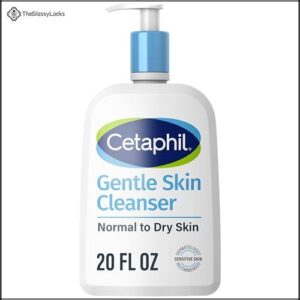
If skin feels tight after cleansing, your cleanser might be doing too much damage. Cetaphil’s Hydrating Gentle Face Wash skips sulfates, soap, and fragrance entirely — a smart choice when your barrier is already stressed from breakouts.
It blends glycerin, niacinamide (B3), and panthenol (B5) to clean without stripping, and clinical testing shows it maintains up to 48 hours of hydration even when rinsed off.
Non-comedogenic and dermatologist-recommended, it works well during retinoid or acne treatment routines.
| Best For | People with dry, sensitive, or barrier-compromised skin — especially those using retinoids or acne treatments who need a cleanser that won’t make things worse. |
|---|---|
| Skin Type | Dry/Normal/Sensitive |
| Fragrance-Free | Yes |
| Non-Comedogenic | Yes |
| Acne Fighting | No |
| Sun Sensitivity | No |
| Price Range | Premium |
| Additional Features |
|
- Packed with glycerin, niacinamide, and panthenol to actively hydrate while it cleans — not just "less drying," but genuinely moisturizing.
- Fragrance-free, sulfate-free, and non-comedogenic, so it’s safe even around the eyes and on reactive skin.
- Clinical testing backs up 48 hours of hydration, and the big 20 oz pump bottle makes it easy to stick with long-term.
- Won’t cut through heavy makeup, SPF, or oil-based products on its own — you’ll likely need a separate oil cleanser or a washcloth.
- Skips the foamy lather, which can feel like it’s not doing much if you’re used to traditional cleansers.
- Not a great fit for oily or acne-prone skin that needs a deeper, more thorough clean.
2. CeraVe Daily Moisturizing Lotion
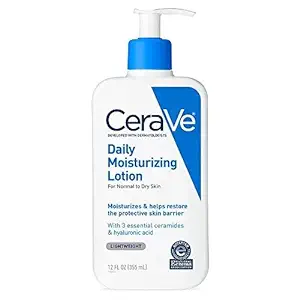
Moisturizing acne-prone skin feels like a contradiction — but skipping it makes breakouts worse. CeraVe Daily Moisturizing Lotion solves that problem cleanly.
Its three ceramides (1, 3, and 6-II) rebuild your barrier while hyaluronic acid pulls moisture in for 24 hours straight.
It’s fragrance-free, oil-free, and non-comedogenic, so it won’t clog the pores you’re working so hard to clear.
At $14.97 for 12 oz, it’s a reliable daily layer before sunscreen — dermatologist-developed and gentle enough for sensitive skin.
| Best For | Anyone with dry, sensitive, or eczema-prone skin who wants a lightweight, no-fuss daily moisturizer that won’t clog pores. |
|---|---|
| Skin Type | Dry/Sensitive/Eczema-Prone |
| Fragrance-Free | Yes |
| Non-Comedogenic | Yes |
| Acne Fighting | No |
| Sun Sensitivity | No |
| Price Range | Mid-Range |
| Additional Features |
|
- Three ceramides plus hyaluronic acid work together to restore your skin barrier and keep it hydrated all day
- Fragrance-free, oil-free, and non-comedogenic — gentle enough for sensitive skin and kids too
- Absorbs fast without feeling greasy, so it layers well under makeup or sunscreen
- Some people notice a faint fishy smell right after applying, though it fades quickly
- No SPF, so you’ll still need a separate sunscreen for daytime use
- At $14.97 for 12 oz, it’s pricier per ounce than store-brand options — especially if the whole family’s using it
3. Neutrogena Rapid Clear Acne Spot Gel
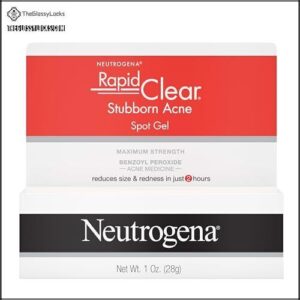
When a stubborn pimple appears overnight, you need something that works fast.
Neutrogena Rapid Clear Spot Gel delivers exactly that — 10% benzoyl peroxide, the highest non-prescription concentration available, applied directly to the spot. It penetrates the pore, kills acne-causing bacteria, and visibly reduces redness within 2 hours.
At $9.68 for a 1 oz tube, it’s an affordable addition to your routine. Apply it 1–3 times daily after cleansing, but protect surrounding skin — this strength can cause dryness and peeling.
| Best For | Anyone with oily or acne-prone skin who needs a fast, targeted fix for occasional stubborn breakouts without a prescription. |
|---|---|
| Skin Type | Oily/Acne-Prone |
| Fragrance-Free | No |
| Non-Comedogenic | Yes |
| Acne Fighting | Yes |
| Sun Sensitivity | Yes |
| Price Range | Budget |
| Additional Features |
|
- Highest OTC benzoyl peroxide strength (10%) — works visibly within about 2 hours
- Cheap and easy to find at under $10 for a full tube
- Spot-apply only where you need it, so the rest of your face stays unbothered
- Can cause dryness, peeling, and irritation — especially if you overdo it
- Will bleach your pillowcases and towels if you’re not careful
- Leaves a white residue that’s pretty obvious under makeup
4. The Ordinary Salicylic Acid Serum
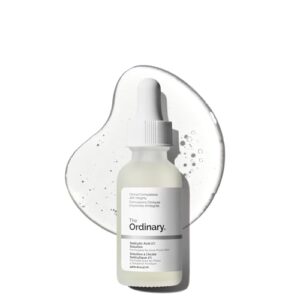
Think of this as your daily reset button for congested pores.
The Ordinary Salicylic Acid 2% Solution works differently from spot treatments — instead of targeting one pimple, it sweeps across your whole face as a leave-on serum.
Salicylic acid is oil-soluble, so it slips inside pores to dissolve the buildup that causes blackheads and breakouts.
Apply a few drops after cleansing and don’t rinse.
Because it increases sun sensitivity, pair it with sunscreen every morning.
| Best For | Anyone dealing with oily skin, blackheads, or recurring breakouts who wants a simple leave-on treatment that works across the whole face — not just on individual spots. |
|---|---|
| Skin Type | Acne-Prone/Oily |
| Fragrance-Free | No |
| Non-Comedogenic | Yes |
| Acne Fighting | Yes |
| Sun Sensitivity | Yes |
| Price Range | Budget |
| Additional Features |
|
- Gets deep into pores (oil-soluble formula) to clear out the gunk that causes blackheads and acne
- Lightweight serum that layers easily under your moisturizer and SPF — no extra steps needed
- Works for both teens and adults dealing with acne-prone skin
- Can cause dryness or irritation if you go too hard with it, especially on sensitive skin
- You’ll need to wear sunscreen every day — it makes your skin more sensitive to the sun
- Not great as a standalone fix for very reactive or compromised skin without patch testing first
5. Daolyo Hydrocolloid Acne Patches
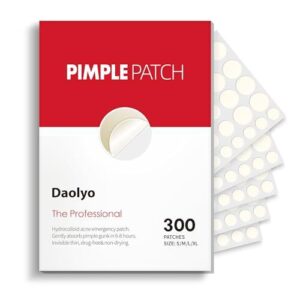
While that serum works across your whole face, sometimes you need something more targeted — that’s where Daolyo Hydrocolloid Acne Patches come in.
Press one onto a whitehead overnight, and the hydrocolloid material pulls out fluid while salicylic acid, tea tree oil, and calendula oil calm inflammation directly at the source.
Each box includes 300 patches in four sizes (8–14 mm), so you’re covered for every blemish.
At $7.56, that’s real value for recurring breakouts.
| Best For | Anyone dealing with frequent surface-level breakouts who wants a simple, affordable overnight fix that works while they sleep. |
|---|---|
| Skin Type | All/Acne-Prone |
| Fragrance-Free | No |
| Non-Comedogenic | Yes |
| Acne Fighting | Yes |
| Sun Sensitivity | No |
| Price Range | Budget |
| Additional Features |
|
- 300 patches in four sizes means you’re set for a long time — great value at $7.56
- The salicylic acid and tea tree oil combo does more than a plain hydrocolloid patch
- Ultra-thin design hides easily under makeup, so you can wear them during the day too
- Won’t do much for deep, cystic acne — these are really built for whiteheads only
- Adhesion can be hit or miss on oily or sweaty skin
- Some users find the patches slip off overnight, so results aren’t guaranteed
Frequently Asked Questions (FAQs)
How to clear cheek acne naturally?
Clearing cheek acne naturally starts with consistency.
Use a gentle, sulfate-free cleanser twice daily, apply diluted tea tree oil on active spots, and swap your pillowcase weekly to cut down bacterial buildup.
How do you treat chin and cheek acne?
Treating chin and cheek acne means tackling it from multiple angles — cleansing twice daily, avoiding face-touching, and using targeted ingredients like salicylic acid or diluted tea tree oil to calm active spots.
What naturally kills acne?
A few natural ingredients genuinely fight acne bacteria. Tea tree oil, aloe vera, and green tea all have antimicrobial or anti-inflammatory properties backed by real evidence — not just tradition.
What can I drink to clear acne?
Stick to water, plain green tea, and spearmint tea. Green tea’s catechins help control oil, while spearmint may ease hormonal breakouts.
Skip sugary drinks — they spike insulin and can trigger flare-ups.
What kills acne quickly?
Benzoyl peroxide kills surface bacteria within 24 to 72 hours. Ice shrinks swelling fast. Hydrocolloid patches absorb drainage overnight. For clogged pores, salicylic acid clears buildup in three to seven days.
How to get rid of chin acne for good?
Getting rid of chin acne for good means tackling the root cause — usually hormones, clogged pores, or daily habits.
Consistent cleansing, smart diet choices, and the right topical treatments make a lasting difference.
How do I get rid of hormonal chin acne?
Hormonal chin acne often follows your cycle like clockwork.
Target it with spironolactone, birth control, or clascoterone through your dermatologist, and support treatment with a low-glycemic diet and consistent stress management.
How do you get rid of acne on your skin?
Clearing acne takes consistency. Wash your face twice daily, avoid touching your skin, and use non-comedogenic products.
Natural remedies like tea tree oil and aloe vera can help calm active spots.
What causes chin acne?
Chin acne usually comes down to hormones.
Androgens ramp up oil production in your sebaceous glands, which clog pores along the jaw — often flaring before your period or during high-stress weeks.
How do you get rid of Chin Zits?
Treat chin zits by keeping the area clean, avoiding touching your face, and using targeted spot treatments like diluted tea tree oil or benzoyl peroxide.
Consistent daily habits clear most breakouts within weeks.
Conclusion
Think of your skin as a whiteboard someone keeps writing on without ever erasing. Switching your pillowcase, adjusting your diet, and applying tea tree oil are how you finally pick up the eraser.
Learning how to get rid of acne on cheeks and chin naturally isn’t about one standout product—it’s about removing what repeatedly triggers breakouts. Stay consistent with the habits outlined here, and clearer skin follows naturally.