This site is supported by our readers. We may earn a commission, at no cost to you, if you purchase through links. This content is for general informational and educational purposes only and is not a substitute for professional medical, dermatological, or nutritional advice.

That cluster of small, skin-colored bumps across your chin isn’t dirt, and scrubbing harder won’t clear it. Whiteheads form when sebum, dead skin cells, and bacteria get trapped under a thin layer of skin, creating a closed comedone that sits stubbornly on the surface for weeks.
Unlike blackheads, they never oxidize or turn dark, which means picking only pushes debris deeper and risks scarring.
The good news: learning how to get rid of whiteheads naturally at home doesn’t require a cabinet full of products. With the right cleansing routine, targeted botanical treatments, and a few consistent daily habits, you can calm existing breakouts and stop new ones from forming.
Table Of Contents
- Key Takeaways
- What Causes Whiteheads to Form?
- How to Get Rid of Whiteheads Naturally at Home
- Best Natural Remedies for Whiteheads
- Gentle Exfoliation for Clogged Pores
- Daily Skincare Habits to Prevent Whiteheads
- Frequently Asked Questions (FAQs)
- How do Koreans get rid of whiteheads?
- How can I shrink whiteheads overnight?
- What is the quickest way to get rid of a whitehead?
- How to remove whiteheads in 5 minutes?
- Can I squeeze whiteheads out?
- Which home remedy is best for whiteheads?
- How can I remove whiteheads naturally?
- What will dissolve whiteheads?
- How can I get rid of a Whitehead overnight?
- Why do I keep getting whiteheads?
- Conclusion
Key Takeaways
- Whiteheads form when sebum, dead skin cells, and bacteria get trapped under a closed layer of skin, and since they never oxidize like blackheads, picking only pushes debris deeper and risks scarring.
- A natural at-home routine of gentle cleansing, brief steaming, targeted spot treatments like diluted tea tree oil, and oil-free moisturizing can calm existing whiteheads and prevent new ones.
- Chemical exfoliants like salicylic acid (BHA) penetrate pores more effectively than physical scrubs, but exfoliation should be limited to 2-3 times weekly to avoid damaging the skin barrier.
- Daily habits—including choosing non-comedogenic products, using mineral sunscreen, staying hydrated, and washing pillowcases weekly—are essential for preventing whiteheads from recurring, with visible results typically taking four to six weeks.
What Causes Whiteheads to Form?
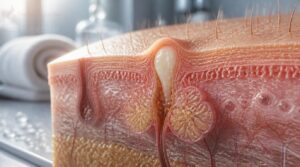
Whiteheads don’t just show up overnight; they form when several things happen beneath your skin’s surface at once. Understanding those triggers gives you real control instead of guesswork, so you can target the root cause rather than just the symptom. Here’s what’s actually going on under there.
From clogged pores to excess oil production, these everyday acne triggers reveal why whiteheads keep coming back no matter how often you wash your face.
Excess Oil Production
Excess sebum production starts the whole cascade—your sebaceous glands go into overdrive, often thanks to androgen influence or genetic predispositions you can’t control. Stress raises cortisol, humid weather adds moisture, and high-glycemic diets can pile on more oil. This oily substance acts as a natural skin moisturizer to help protect against environmental damage.
The fix isn’t eliminating oil entirely; it’s sebum control. Balanced, non-stripping products help regulate excess oil without triggering your skin to overcompensate.
Dead Skin Buildup
Oil isn’t the only culprit—your skin’s natural exfoliation process matters too.
Keratinocyte shedding rates slow with barrier dryness, UV-driven flaking, or friction from towels and pillowcases, leaving dead skin cells stuck in place. Low environmental moisture worsens this.
That buildup mixes with sebum, clogging pores and forming whiteheads, which is exactly why gentle exfoliation helps you get rid of whiteheads naturally at home.
Hormonal Skin Changes
Your hormones run the show more than skincare products ever will. Androgen sebum shifts during puberty or cycle changes spike oil output—especially before your period, when rising progesterone pore clogging thickens sebum.
- Puberty androgen surges
- Pre-period progesterone spikes
- Pregnancy hormone shifts
- Hormonal inflammation triggers
- Cycle-timed flare-ups
This is why hormonal acne often follows a predictable, monthly rhythm.
Stress and Poor Sleep
Cycles aren’t just hormonal—your nervous system plays a role too. Stress spikes cortisol, driving stress-induced oil production and skin inflammation, while nervous system arousal fragments sleep.
| Stress Effect | Skin Impact | Result |
|---|---|---|
| Elevated cortisol | Increased sebum | Clogged pores |
| Sleep fragmentation | Reduced repair | Slower healing |
| Nervous arousal | Delayed sleep onset | Chronic inflammation |
| Insomnia cycle | Ongoing stress | Recurring whiteheads |
| Poor sleep quality | Weakened skin barrier | Breakout flare-ups |
Comedogenic Beauty Products
Ever wonder why your "non-comedogenic" foundation still leaves you breaking out? Labeling accuracy varies wildly, since ingredient concentration and formulation interactions determine actual clogging risk more than marketing claims do.
- Fatty-acid esters in foundations
- Heavy silicones trapping sebum
- Cocoa butter in concealers
- Fragrance-laden setting sprays
- Coconut oil-based primers
These comedogenic ingredients quietly block pores, fueling whiteheads even when packaging promises otherwise.
Switching to products built around a non-comedogenic skincare ingredients list can help you sidestep these pore-clogging culprits before breakouts even start.
How to Get Rid of Whiteheads Naturally at Home
Now that you know what’s causing those stubborn bumps, it’s time to fix them without harsh chemicals or expensive treatments.
Clearing whiteheads naturally comes down to a simple routine you can build in five clear steps, each targeting the process at a different stage.
Here’s exactly how to work through it, from your first cleanse to the moisturizer you finish with.
Cleanse Gently First

Every good skincare routine for whiteheads starts at the sink, not the medicine cabinet. Pick a fragrance-free, non-comedogenic cleanser and massage it in circular motions for 30-60 seconds using lukewarm water.
| Step | Technique | Why It Matters |
|---|---|---|
| Wash | Fingertips, circles | Lifts oil gently |
| Rinse | Lukewarm water | Prevents stripping |
| Dry | Pat, don’t rub | Reduces irritation |
Steam to Loosen Pores

Warm steam turns clogged pores pliable, softening trapped sebum so it releases more easily during cleansing. Hold your face 8-10 inches from the steam for just 5-10 minutes—longer risks irritation or dryness.
Pores can’t truly open, but heat loosens debris beautifully. Stop if skin stings or reddens. Follow with gentle patting, never scrubbing, to avoid undoing your progress.
Apply Natural Spot Treatments
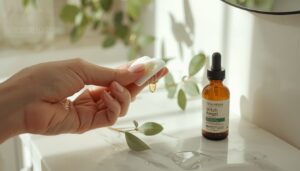
Once steamed, target blemishes directly instead of treating your whole face. Dab diluted tea tree oil or alcohol-free witch hazel onto each whitehead with a cotton pad, never rubbing.
- Patch test 24 hours before full use
- Dilute tea tree oil to avoid irritation
- Dab—don’t smear—onto active spots only
- Stop if redness or burning increases
Apple cider vinegar works similarly for gentle antibacterial support.
Moisturize Without Clogging Pores
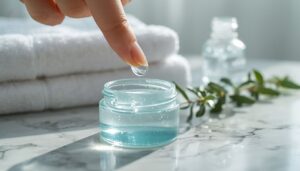
Skip the heavy creams—your acne-prone skin needs water, not oil. Look for noncomedogenic formulas with humectants like glycerin, which pull hydration into skin without clogging pores.
Squalane absorbs quickly, offering slip without residue. Apply a dime-sized amount to damp skin so it spreads thin, supporting your skin barrier without triggering new whiteheads through heavy emollient buildup.
Avoid Picking Whiteheads

Your fingers aren’t sterile tools—they carry dirt, oil, and bacteria that worsen clogged pores instantly.
Nail pressure damages surrounding tissue, often rupturing the whitehead beneath the skin surface instead of clearing it.
Fingernail pressure often ruptures a whitehead beneath the skin instead of clearing it, damaging surrounding tissue
This creates open wounds where infection spreads, prolonging irritation and inflammation.
Worse, picking risks permanent scarring and dark marks.
Let natural remedies work gradually instead; patience protects your skin’s long-term texture and clarity.
Best Natural Remedies for Whiteheads

Once you understand what’s clogging your pores, the next step is choosing ingredients that actually help clear them.
Your kitchen and bathroom cabinet likely already hold a few effective options, each working through a different mechanism to fight bacteria or calm irritation.
Here are five natural remedies worth trying, starting with one of the most researched: tea tree oil.
Diluted Tea Tree Oil
Dabbing this essential oil straight onto skin invites trouble, so dilution is non-negotiable. Mix 1% to 3% tea tree oil with jojoba or coconut oil, then patch-test on your forearm for 24 hours before use.
- Use spot treatment only, targeting individual whiteheads
- Store diluted mixes away from heat and light
- Watch for redness signaling too-strong a ratio
Its antibacterial power fights P. acnes effectively when handled carefully.
Raw Honey Mask
If tea tree oil feels too intense for your skin, raw honey offers a gentler route. Its natural humectant properties pull moisture into skin while active enzymes provide mild exfoliation.
Honey’s antibacterial benefits come from low water content and acidic pH, creating conditions hostile to bacteria. Apply a thin layer for 15-20 minutes, then rinse with warm water for hydrated, calmer-looking skin.
Aloe Vera Gel
Where honey soothes with enzymes, aloe vera gel calms with sheer hydration—its raw pulp runs about 98.5% water, making it a moisture powerhouse rather than an oily fix.
- Acemannan aids wound healing
- Minerals like zinc and calcium nourish skin
- Polysaccharides lock in lasting hydration
Apply a thin layer directly onto whiteheads; let this natural skincare staple work quietly while you sleep.
Green Tea Toner
Aloe calms with hydration, while green tea works differently—its catechin antioxidants, especially EGCG, absorb into skin and calm redness around active whiteheads.
Steep leaves in hot water, cool completely, then apply with a cotton pad.
Check the pH stays skin-friendly (around 5.5); overly acidic DIY batches can irritate. Use once or twice daily after cleansing, before moisturizer.
Turmeric Spot Paste
That golden spice in your kitchen doubles as a spot treatment powerhouse: curcumin fights inflammation and bacteria directly.
Mix turmeric powder with water to bind, then add:
- Coconut oil for smooth spreading
- Honey for skin conditioning
- A touch of rose water for gentle dilution
Apply thinly to clean skin, leave 10-15 minutes, rinse. Expect temporary yellow staining—normal, and it fades within hours.
For best results, pair this mask with a healthy scalp routine, since turmeric’s proven scalp benefits for dandruff and inflammation matter more than any unproven hair growth claims.
Gentle Exfoliation for Clogged Pores
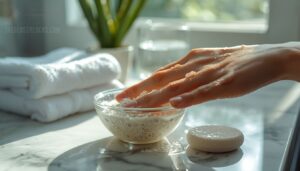
Once you know what’s causing your whiteheads, the next job is clearing out what’s already clogging your pores. Exfoliation helps, but your approach matters just as much as your consistency, since the wrong method can irritate skin instead of clearing it. Here’s what actually works, and how to pick the right one for your skin type.
Chemical Vs Physical Exfoliation
Which one actually reaches into a clogged pore? Chemical exfoliation, especially a BHA, penetrates deeper than any scrub because it’s oil-soluble.
| Type | Penetration | Barrier Risk |
|---|---|---|
| AHA | Surface | Low-moderate |
| BHA | Pore-level | Low |
| Physical scrub | Topmost layer | Higher if over-pressured |
Scrub pressure matters, too much friction damages your skin barrier fast.
Clay Masks for Oil
Pull excess sebum straight out of clogged pores with a clay mask, no scrubbing required. Bentonite draws out more oil, while kaolin suits sensitive, whitehead-prone skin more gently.
Apply a thin layer, let it dry 5-15 minutes only, avoiding skin tightness and irritation. Rinse with lukewarm water. Look for additives like glycerin or aloe to offset dryness while still targeting oil control.
Oatmeal Scrub for Sensitivity
Oats aren’t just breakfast—they’re one of the gentlest exfoliants you can put on whitehead-prone skin. Colloidal oatmeal‘s fine, smooth texture minimizes micro-scratches while avenanthramide D calms irritation and helps your skin barrier.
- Mix finely ground oats with water into a soft paste
- Massage in circular motions for 30-60 seconds
- Rinse with lukewarm water
- Patch test first to rule out sensitivity
Salicylic Acid Benefits
Salicylic acid is the best option when oatmeal alone isn’t cutting it. This beta hydroxy acid slips into pores to dissolve trapped sebum, delivering pore decongestion and sebum regulation simultaneously.
| Benefit | Mechanism |
|---|---|
| Texture smoothing | Removes surface buildup |
| Inflammation reduction | Calms redness around whiteheads |
Used consistently, it exfoliates clogged pores while supporting preventative maintenance against future breakouts.
Exfoliation Frequency Limits
More isn’t better here. Cap exfoliation at 2 to 3 times weekly for oily or acne-prone skin, dialing back to once weekly for dry or sensitive types.
Watch for redness, tightness, or flaking—classic over-exfoliation warning signs signaling your skin barrier needs recovery time.
Skip sessions after sunburn or irritation, and reassess monthly, since seasonal shifts often mean adjusting frequency to protect against whiteheads and lasting skin irritation.
Daily Skincare Habits to Prevent Whiteheads
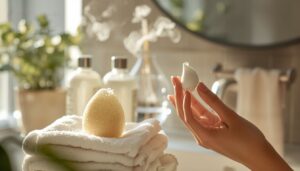
Treating whiteheads is only half the job, since your daily habits decide whether new ones keep showing up. Small, consistent choices in your routine can either calm your pores or quietly feed the problem again. Here are five habits worth building into your everyday skincare.
Non-comedogenic Product Choices
Every label on your shelf makes promises, but decoding labels matters more than trusting marketing claims. "Noncomedogenic" means a product is formulated to avoid clogged pores, though it doesn’t guarantee zero breakouts for everyone.
Focus on ingredient safety: look for niacinamide, glycerin, or dimethicone. This applies across cleansers, serums, and makeup compatibility alike—filtering by this label simplifies choosing gentler formulas that won’t undo your natural home remedies for whiteheads.
Lightweight Oil-free Moisturizer
Skipping moisturizer entirely backfires—dehydrated skin overproduces oil, worsening clogged pores. Choose gel textures with humectant hydration like hyaluronic acid or glycerin, which pull water into skin without heaviness.
Look for ceramides supporting your barrier, plus lightweight squalane for emollient softness minus grease. Fragrance-free formulations reduce irritation risk, keeping natural home remedies for whiteheads effective rather than counteracted by clogged, reactive pores.
Mineral Sunscreen Protection
Once your barrier’s hydrated, protect it. Zinc oxide covers UVA and UVB rays, while titanium dioxide adds extra UVB strength—together they’re photostable filters that won’t break down in sunlight.
- Zinc oxide: broad-spectrum shield
- Titanium dioxide: sunburn defense
- Iron oxides: reduce white cast, even tone
- Reapply for consistent acne prevention
Skip chemical filters that irritate acne-prone skin; mineral formulas support natural remedies working underneath.
Hydration and Skin Diet
Sunscreen protects from outside, but clear skin starts inside, too. Drink water consistently, eat water-rich foods like watermelon and cucumber, and monitor hydration using pale-yellow urine as your gauge.
| Nutrient | Food Source | Skin Benefit |
|---|---|---|
| Omega-3s | Fatty fish | Reduces inflammation |
| Vitamin C | Berries | Helps build collagen |
| Zinc | Legumes | Aids repair |
| Fiber | Whole grains | Feeds gut-skin connection |
Watch glycemic index impact—sugary foods spike insulin, worsening breakouts.
Clean Pillowcases and Tools
Rarely do patients realize your pillowcase touches your face for hours nightly, redepositing oil and bacteria into freshly cleansed pores.
- Wash weekly in hot water to eliminate residue
- Choose hypoallergenic, fragrance-free detergent
- Rotate multiple pillowcases to avoid buildup
- Air-dry or tumble-dry low to protect fibers
- Sanitize makeup brushes and phone screens regularly
Clean fabric complements every skincare effort—pore cleansing only works if surfaces stay bacteria-free.
Frequently Asked Questions (FAQs)
How do Koreans get rid of whiteheads?
Not glamorous serums, but disciplined basics: Koreans favor double cleansing—oil-based cleansing followed by water-based rinsing—paired with targeted spot care using tea tree, gentle exfoliation, and gel-cream hydration to keep pores clear without stripping skin.
How can I shrink whiteheads overnight?
Cleanse gently, then try a hydrocolloid patch to draw out fluid, or ice for 5-10 minutes to calm swelling. Dab 2% salicylic acid or diluted tea tree oil as a targeted spot treatment before bed.
What is the quickest way to get rid of a whitehead?
Slow and steady doesn’t win this race — a warm compress for 15 minutes softens buildup fast, then salicylic acid or benzoyl peroxide penetrates clogged pores overnight, clearing whiteheads without the scarring risk that squeezing invites.
How to remove whiteheads in 5 minutes?
Five minutes won’t clear a whitehead completely, but a quick routine helps: cleanse gently, apply warm steam for two minutes to soften the plug, then dab diluted tea tree oil on the spot for fast, natural soothing without irritation.
Can I squeeze whiteheads out?
That urge to squeeze is tempting, but resist it: forcing whiteheads risks scarring and pushes bacteria deeper, worsening breakouts. Instead, try gentle extraction with a comedone extractor after steaming, or let natural remedies work over time.
Which home remedy is best for whiteheads?
Salicylic acid and clay masks stand out as the most reliable natural remedies, dissolving pore-clogging debris within weeks.
Honey’s wound-healing enzymes and tea tree oil’s antibacterial punch make strong runner-ups, especially when picking causes lingering irritation or scarring.
How can I remove whiteheads naturally?
Start with gentle pore cleansing, then use steam to loosen debris before applying tea tree oil or another natural antiseptic spot treatment.
Follow with mild exfoliation two to three times weekly, pore-friendly hydration, and consistent habits that prevent irritation and future breakouts.
What will dissolve whiteheads?
Break down the plug, clear the pore, calm the skin: that’s the job.
BHA pore penetration from salicylic acid dissolves keratin buildup deep inside, while alpha hydroxy acid AHA lifts surface debris, and diluted tea tree oil finishes the job antibacterially.
How can I get rid of a Whitehead overnight?
Warm steam for five minutes softens the plug, then a thin layer of diluted tea tree oil disrupts bacteria overnight. Cleanse gently first, apply the spot treatment, and resist picking—your skin repairs best undisturbed while you sleep.
Why do I keep getting whiteheads?
The skin that protects you can also betray you: your sebum gland activity works overtime, mixing oil with dead cells and acne-causing bacteria. Add androgen hormone surges, cortisol, and genetics, and pore congestion becomes a recurring cycle, not a one-time flare.
Conclusion
Clear skin isn’t about a whitehead-and-shoulders miracle product; it’s about steady, boring consistency.
Learning how to get rid of whiteheads naturally at home works because gentle cleansing, honey masks, and light exfoliation address the actual mechanism, trapped sebum, not just the surface bump.
Give your routine four to six weeks before judging results. Your skin rebuilds slowly, and rushing it with harsh scrubs only invites more clogged pores. Patience, not instant results, is what finally clears the path.
Pairing that patience with consistent movement helps too, since regular exercise eases stress hormones and supports the kind of steady, whitehead-clearing skincare routine your face actually needs.