This site is supported by our readers. We may earn a commission, at no cost to you, if you purchase through links. This content is for general informational and educational purposes only and is not a substitute for professional medical, dermatological, or nutritional advice.
Run your fingers across your cheek in bright light and you’ll notice it: tiny bumps, faint scarring, patches that catch foundation the wrong way. That’s texture, and it changes faster than most patients expect once cell turnover slows and collagen starts its slow decline. Your skin isn’t broken, it’s just telling you something about barrier health, sun exposure, or years of skipped SPF.
Learning how to improve skin texture starts with understanding what’s actually happening beneath the surface, not just reaching for the nearest exfoliating scrub. Get the causes right, and the routine that follows makes a lot more sense.
Table Of Contents
- Key Takeaways
- What Causes Uneven Skin Texture?
- How to Improve Skin Texture Daily
- Exfoliate Without Damaging Your Skin
- Best Ingredients for Smoother Skin
- Top 5 Products for Smoother Texture
- Professional Treatments for Uneven Texture
- Frequently Asked Questions (FAQs)
- How to get Korean glass skin?
- How to improve skin texture in 7 days?
- Which serum is best for textured skin?
- What causes bad skin texture?
- Can skin texture be improved?
- How to get flawless skin texture?
- How can I fix my skin texture naturally?
- How do you fix skin textures?
- Why is my skin so badly textured?
- What is the role of diet in skin texture?
- Conclusion
Key Takeaways
- Uneven texture usually comes from a mix of causes—slower cell turnover, sun damage, dehydration, acne scarring, and even stress or poor sleep—so fixing it means addressing more than one thing at once.
- A simple daily routine (gentle cleansing, hydrating serums, a barrier-repairing moisturizer, and daily SPF 30) does more for your skin than any single "miracle" product ever will.
- Chemical exfoliants like AHAs, BHAs, and PHAs can smooth texture fast, but only if you match the acid to your skin type and stick to about once a week to avoid damaging your barrier.
- When at-home care stalls, dermatologist-guided options like chemical peels, microneedling, or laser resurfacing can go deeper, but lasting results still depend on keeping up SPF, hydration, and healthy habits afterward.
What Causes Uneven Skin Texture?
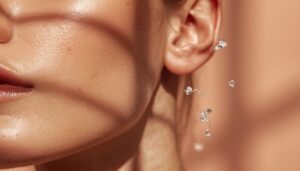
If your skin feels rougher than it used to, that texture change didn’t happen overnight, and it’s rarely caused by just one thing.
Daily habits like sun exposure, dehydration, and skipping SPF all chip away at your barrier over time, which is why why men should use facial moisturizer daily is such a simple fix worth building into your routine.
Your skin’s surface reflects everything from your daily habits to changes happening well below the surface, like collagen production slowing down.
Here are the five main culprits behind uneven texture, and why each one matters for how you treat it.
Dead Skin Cell Buildup
Buildup starts quietly: cells stop shedding on schedule, and dullness sets in. After 40, cell turnover slows to 40-60 days, versus 28 in your 20s. Left unaddressed, dead skin cell build-up can worsen due to factors like dehydration, harsh soaps, and prolonged sun exposure.
Fixes that work:
- Gentle chemical exfoliant weekly
- Nightly cleansing, no skipping
- Hydration to loosen dead cells
- Barrier repair with ceramides
- Consistent skin smoothing routine
Acne, Scars, and Enlarged Pores
Slow cell turnover is only half the story. Inflamed acne lesions damage deeper tissue, often leaving atrophic scars, ice pick, or boxcar types, once breakouts calm.
Oil buildup stretches follicle linings, worsening pore appearance. Post-acne marks, those darkened spots after healing, add unevenness too.
Consistent exfoliation, barrier repair, and treating active acne early are your best acne scar prevention tools.
Collagen Loss and Sun Damage
Acne aside, texture also shifts from the inside out.
Collagen depletion starts around 25, and UV exposure speeds it up through UV collagen degradation, disrupting the TGF beta pathway. Photoaging brings elastotic material buildup and deformed fibers. Daily sunscreen isn’t optional, it’s your main defense against this collagen remodeling damage.
Dehydration and Barrier Damage
Sun damage isn’t the only inside job. Your stratum corneum blocks water loss, and once that compromised skin barrier cracks, hydration escapes, leaving skin tight, dull, rough.
Hot water and harsh cleansers make it worse. Prioritize gentle cleansing, ceramide support, and hydrating serums for real barrier repair. Improved moisture retention often shows within one to two weeks.
Stress, Sleep, and Lifestyle Factors
Ever notice your skin looks worse after a rough week? Stress triggers inflammation and disrupts your skin barrier, while poor sleep regularity limits recovery. Late-night screens delay wind-down; comfort foods and skipped skincare follow.
Stress Skin Impact compounds fast. Simple fixes: consistent sleep timing, calmer evenings, regular activity. These small sleep recovery tips support hydration, repair, and smoother texture long-term.
How to Improve Skin Texture Daily
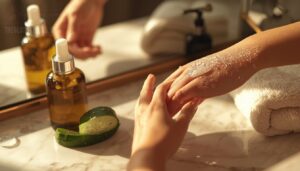
Your skin texture doesn’t turn around overnight, but your daily habits set the pace for how fast it improves. Think of your routine as the foundation everything else builds on, from exfoliation to professional treatments. Here’s what your day-to-day skincare should actually include.
Cleanse Gently Morning and Night
Your cleanser matters less than your technique. Use a gentle, nonmedicated cleanser with lukewarm water, morning and night, massaging lightly rather than scrubbing.
- Wash with lukewarm water
- Use light, circular motions
- Skip harsh scrubbing
- Pat skin dry, don’t rub
- Repeat consistently, twice daily
This protects your skin barrier, prevents excess dryness, and sets the stage for hydration. Consistency is key.
Layer Hydrating Serums Correctly
Once your face is clean, timing matters more than product count. Apply serums to damp skin, since water-binding ingredients like hyaluronic acid grab onto that surface moisture more effectively.
| Step | Technique |
|---|---|
| Order | Thinnest to thickest |
| Wait | Let each layer absorb |
| Amount | A few controlled drops |
Stick to one or two serums, layering niacinamide or peptides by consistency. Consistency is key.
Moisturize to Repair Your Barrier
A compromised skin barrier can’t hold onto hydration, no matter how many serums you’ve layered on. That’s where moisturizer locks things in.
Look for ceramide moisturizers with fatty acids, plus humectants like hyaluronic acid and occlusives that curb water loss. Niacinamide, peptides, and ceramides together support real skin barrier repair, ideally in a pH balanced formula that respects your acid mantle.
Introduce Retinol Gradually
Patience pays off with retinol. Start every other night for two weeks, using a pea-sized amount on dry skin after cleansing.
- Fewer breakouts
- Less flaking
- Steadier confidence
Increase gradually toward nightly use as tolerance builds, always following with moisturizer to protect sensitive skin and support cell turnover without compromising texture.
Apply SPF 30 Daily
Skip sunscreen and every retinol gain unravels fast. UV exposure accelerates collagen depletion, undoing your progress overnight.
Apply broad spectrum SPF 30 each morning, a nickel-sized amount, as your routine’s final step. Choose water resistant sunscreen if you sweat.
Reapply every two hours outdoors. This single habit protects skin barrier integrity better than any serum you’ll buy.
Exfoliate Without Damaging Your Skin
Exfoliation works wonders for texture, but only when you do it right. Too much scrubbing, or the wrong acid for your skin type, can backfire fast. Here’s what you need to know before you add it to your routine.
If mattifying is your goal but you’re worried about that tight, dry feeling, pairing your exfoliation routine with a hydrating setting spray like this Maybelline FaceStudio lasting fix setting spray review can help lock in moisture while keeping shine at bay.
If your skin feels tight or over-exfoliated, pairing acids with a hydrating powerhouse like hyaluronic acid’s anti-aging benefits can help replenish moisture and keep your barrier balanced.
Choose AHAs, BHAs, or PHAs
When picking a chemical exfoliant, think of AHAs, BHAs, and PHAs as three tools with different jobs.
AHAs work at the surface, sloughing off dead cells for smoother texture.
BHAs dive into pores, making them ideal for acne and oiliness.
PHAs offer gentle exfoliation for sensitive skin, delivering results without the sting.
Match Acids to Skin Type
Now, which acid actually belongs on your face? Match it to where the problem sits.
Oily, congested skin does best with salicylic acid, since it’s oil soluble and reaches inside pores.
Sensitive or dry skin fares better with lactic acid or poly hydroxy acid, gentler options that pair well with niacinamide, peptides, and ceramides.
Always patch test first, and wear broad spectrum SPF daily.
Start Exfoliating Once Weekly
Once you’ve matched acid to skin type, frequency is the next piece. Most people do well starting with one exfoliation session weekly, giving your barrier time to recover between treatments.
Watch how your skin responds over two to three weeks. Redness or tightness signals you’ve pushed too far, while smoother texture means you’re on track.
Hydrate After Every Exfoliation
Timing matters as much as the acid itself. Apply a hydrating serum while skin’s still slightly damp, within about a minute of patting dry, so humectants like hyaluronic acid bind moisture before it evaporates.
Follow with a ceramide-rich moisturizer to strengthen your skin barrier.
Ceramides are especially powerful when paired with other barrier-friendly actives — explore natural anti-aging skincare routines tailored to your skin type to see how they layer together.
If redness appears, layer in panthenol or centella for soothing, then finish with sunscreen.
Recognize Over-Exfoliation Signs
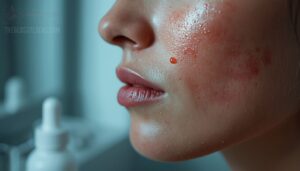
Your skin talks before it screams. Watch for redness that lingers, burning or tightness after cleansing, and unexpected peeling or breakouts that feel different from typical skin purging.
A shiny, waxy look signals real barrier damage, not glow. When sensitivity spikes despite consistent product layering, that’s your cue to pause exfoliation and let skin recover.
Best Ingredients for Smoother Skin
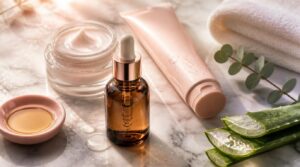
Once your exfoliation routine is dialed in, the next question is what you’re putting on your skin afterward. Not every ingredient earns its spot on your shelf, and some do far more heavy lifting than others for texture. Here are the five worth building your routine around.
Niacinamide for Barrier and Oil
Few ingredients pull double duty like niacinamide, which is why it earns a permanent spot in most routines. This vitamin B3 derivative offers real barrier strengthening effects while supporting sebum regulation properties for oily, texture-prone skin.
Its benefits:
- Oil control without over-drying
- Redness reduction for calmer tone
- Moisture retention despite low humidity
Used once or twice daily at 5% or less, niacinamide layers well with other actives.
Ceramides for Barrier Repair
Picture bricks and mortar: your skin cells are bricks, ceramides are the mortar holding everything watertight. When barrier lipids run low, that mortar crumbles, and moisture escapes.
| Ceramide Role | Skin Benefit |
|---|---|
| Barrier repair | Less water loss |
| Humectant pairing | Deeper hydration |
| Lamellar structure | Smoother texture |
Dermatologist recommended for sensitive skin care, ceramide moisturizers rebuild what daily stressors strip away.
Hyaluronic Acid for Plumpness
Think of it as a sponge for your skin: hyaluronic acid grabs water and holds it, delivering a real Hydration Boost with visible plumpness. Molecular Weight Benefits matter too, since blending sizes boosts surface hydration while smaller molecules reach deeper.
Apply this serum after cleansing, before your moisturizer. That Serum Layering Technique locks in the Surface Plumping Effect, and pairing with ceramides offers Barrier Support Pairing for lasting skin texture improvement.
Retinoids for Cell Turnover
No ingredient works harder for cell turnover than a retinoid. These vitamin A derivatives trigger retinoid receptor activation, boosting collagen synthesis and skin renewal.
Start with pea-sized amounts every other night, working up to nightly use over three to four weeks. Follow with moisturizing to offset dryness.
Deeper remodeling and antiaging gene expression benefits usually show after four to six weeks of consistent use.
Vitamin C and Peptides
Why do vitamin C and peptides get paired so often? Because vitamin C brings antioxidant protection and collagen stimulation, while peptides support firmness and texture smoothing.
Apply your vitamin C serum first, since low pH formulas need to absorb before layering. Peptides follow, often alongside niacinamide peptides and ceramides, rounding out your collagen boosting morning routine.
Top 5 Products for Smoother Texture
Knowing which ingredients work is one thing, finding them in a product you’ll actually stick with is another. You don’t need a ten-step routine to see results, just a few well-formulated products doing the right jobs. Here are five worth adding to your shelf.
1. Paula’s Choice 2% BHA Liquid Exfoliant
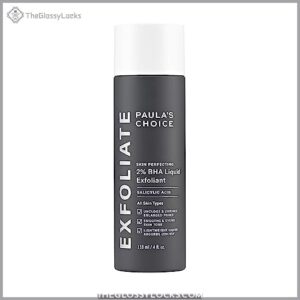
If your pores could talk, they’d probably ask for this one by name. Paula’s Choice 2% BHA Liquid Exfoliant uses salicylic acid to exfoliate inside the pore lining, not just the surface, which makes it especially effective for blackheads and rough, congested texture.
The water-based, fragrance-free formula suits nightly use, though starting every other night helps you gauge tolerance. Expect visible improvement in tone and texture with consistent use, just remember: daytime SPF isn’t optional while you’re using it.
| Best For | People dealing with blackheads, enlarged pores, and uneven texture who want a daily leave-on exfoliant that also helps with fine lines over time. |
|---|---|
| Exfoliation Type | Chemical (BHA) |
| Skin Texture Benefit | Improves texture and tone |
| Sensitivity Risk | Irritation, purging |
| Absorption | Leave-on formula |
| Daily Use | Yes |
| Sun Sensitivity | Increased, sunscreen required |
| Additional Features |
|
- Exfoliates inside the pore lining to target blackheads and congestion, not just surface skin
- Fragrance-free and paraben-free formula suitable for daily use
- Improves skin tone, texture, and fine lines with consistent use
- Can cause initial irritation or purging as skin adjusts
- Increases sun sensitivity, so daily sunscreen is a must
- Bottle’s dispensing design can be awkward to use
2. MARA Clear Skin Mineral Milk Serum
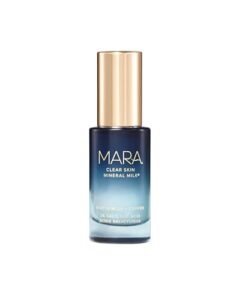
Not everyone tolerates daily BHA, and that’s where MARA Clear Skin Mineral Milk Serum earns its spot. It pairs 2% salicylic acid with niacinamide and a copper-zinc-magnesium complex, so pores clear while the barrier stays supported rather than stripped.
Mandelic acid softens the exfoliation further, making this a solid pick for sensitive or acne-prone skin that reacts to stronger acids. The milky texture absorbs fast, and glycerin plus jojoba oil keep hydration intact, addressing texture and oil balance simultaneously.
| Best For | This serum is best for those dealing with acne and post-blemish dark spots who want a lightweight, fast-absorbing treatment that also supports hydration and oil balance. |
|---|---|
| Exfoliation Type | Chemical (BHA) |
| Skin Texture Benefit | Improves texture and marks |
| Sensitivity Risk | Irritation, red bumps |
| Absorption | Quick, lightweight |
| Daily Use | Yes |
| Sun Sensitivity | Not specified |
| Additional Features |
|
- Contains 2% salicylic acid to help clear pores and reduce breakouts
- Formulated with niacinamide and copper to improve the look of dark spots
- Lightweight, milky texture that absorbs quickly without leaving a greasy feel
- May cause irritation or red bumps for those with sensitive or BHA-intolerant skin
- Some users report absorption can take longer than 5 minutes
- Higher price point that may not fit every budget
3. ELEMIS Dynamic Resurfacing Facial Pads
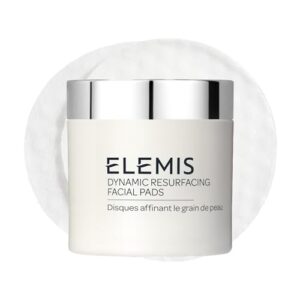
If acids feel too aggressive, ELEMIS Resurfacing Facial Pads offer a gentler route. Tri Enzyme Technology pairs papain and subtilisin with lactic acid, breaking up dead cells enzymatically while the textured pad adds light physical exfoliation.
A probiotic ferment complex helps the skin’s microbiome during this process, which matters if you’re prone to irritation. Use the textured side first, then finish with the smooth side. Some users report pads arriving underserved with solution, so check saturation before applying.
| Best For | Those with sensitive skin who want gentle, enzyme-based exfoliation to smooth texture and boost radiance without harsh acids. |
|---|---|
| Exfoliation Type | Physical (Pads) |
| Skin Texture Benefit | Smooths texture |
| Sensitivity Risk | Suitable for sensitive skin |
| Absorption | N/A |
| Daily Use | A few times weekly |
| Sun Sensitivity | Improves sun spots |
| Additional Features |
|
- Enzymatic exfoliation from Tri Enzyme Technology is gentler than traditional acids
- Probiotic ferment complex supports the skin’s microbiome, reducing irritation risk
- Leaves skin feeling smooth, hydrated, and soft, with visible improvement in texture and sun spots
- Pads sometimes arrive dry or insufficiently saturated with solution
- Pad size may feel small, making full-face application less convenient
- Some users feel the price doesn’t match the results they experienced
4. La Roche-Posay Hyalu B5 Serum
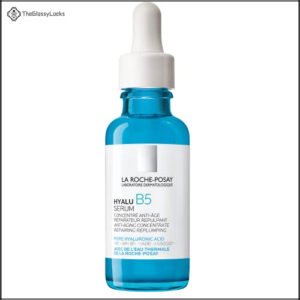
Once your barrier needs pure hydration rather than exfoliation, Hyalu B5 Serum fits the routine well. It uses two molecular weights of hyaluronic acid to hydrate both surface and deeper layers, plumping skin while easing fine lines.
Panthenol helps barrier repair and calms irritation, while madecassoside strengthens strength, useful after enzymatic or acid treatments. Apply 3-4 drops morning and night before moisturizer. Fragrance is present, so patch test if you’re reactive.
| Best For | Anyone with a dry or compromised skin barrier who wants a lightweight, fast-absorbing serum for pure hydration rather than exfoliation. |
|---|---|
| Exfoliation Type | None |
| Skin Texture Benefit | Indirect via hydration |
| Sensitivity Risk | Fragrance irritation |
| Absorption | Fast-absorbing |
| Daily Use | Twice daily |
| Sun Sensitivity | Not specified |
| Additional Features |
|
- Delivers deep hydration and plumps skin using hyaluronic acid, easing the look of fine lines
- Vitamin B5 supports barrier repair and soothes dry, sensitive, or irritated skin
- Lightweight, fast-absorbing texture that layers well under moisturizer and makeup
- Contains fragrance, which may irritate highly sensitive or reactive skin
- Small 1.06 fl oz bottle may need frequent repurchasing with twice-daily use
- Visible improvement in fine lines and wrinkles can take several weeks
5. Haruharu Centella 3% PHA Gentle Exfoliating Serum
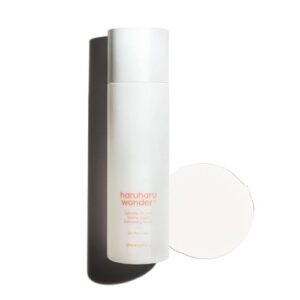
If your skin tends toward reactive, this serum is worth a look. Formulated with 3% gluconolactone, a PHA gentle enough for sensitive types, it exfoliates without the sting harsher acids can cause.
Centella asiatica and madecassoside calm redness, while orange water adds a light vitamin C boost for brightness. Apply up to three times weekly after cleansing. It’s vegan, fragrance-free, and layers well under moisturizer, making it a solid low-irritation entry point for anyone easing into chemical exfoliation for the first time.
| Best For | This serum is best for people with reactive or sensitive skin who want to start incorporating chemical exfoliation into their routine without harsh irritation. |
|---|---|
| Exfoliation Type | Chemical (PHA) |
| Skin Texture Benefit | Improves texture |
| Sensitivity Risk | Mild, limit to 2-3x weekly |
| Absorption | Fast-absorbing |
| Daily Use | 2-3 times weekly |
| Sun Sensitivity | Not specified |
| Additional Features |
|
- Gently exfoliates with 3% PHA while Centella Asiatica calms and soothes sensitive skin
- Lightweight, fast-absorbing formula that layers well under moisturizers
- Vegan, cruelty-free, and free from added fragrance or alcohol
- May be too strong for daily use on very sensitive skin, so it’s best limited to 2–3 times per week
- Some users see minimal visible improvement in acne scars or discoloration with short-term use
- The unscented formula may not appeal to those who prefer fragranced skincare products
Professional Treatments for Uneven Texture
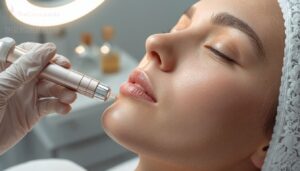
Sometimes your at-home routine can only take your skin so far, and that’s okay. If texture issues stick around despite consistent care, professional treatments can offer the deeper results you’re looking for. Here’s what a dermatologist might recommend, depending on what’s really going on with your skin.
See a Dermatologist for Diagnosis
When at-home routines stall, a dermatology consultation offers real answers, not guesswork.
- Persistent texture despite consistent care
- Moles changing size, shape, or color
- Rashes lasting beyond OTC treatment
- Sudden breakouts with scarring risk
- Concerns affecting daily confidence
A board-certified dermatologist examines your skin, reviews history, and checks lesions using ABCDE warning signs, guiding whether monitoring, treatment, or biopsy comes next.
Chemical Peels for Surface Texture
When at-home exfoliants stop moving the needle, a chemical peel goes deeper.
Peel depth selection (light, medium, or deep) determines recovery time and results. Acid types like AHA, BHA, or PHA target different concerns.
Post-peel care matters most: gentle cleansing, SPF, and skipping retinol for days. Combination treatments with laser resurfacing boost outcomes further.
Microneedling for Scars and Pores
Think of microneedling as controlled demolition your skin actually thanks you for. Thin needles puncture the dermis at a uniform depth, triggering collagen production that smooths acne scars and shrinks enlarged pores over several sessions:
- Numbing cream applied first
- Sterile needles create micro-injuries
- Healing cascade begins
- Collagen remodels tissue
- Texture improves gradually
Recovery beats lasers or peels.
Laser Resurfacing for Deeper Damage
When acids and needles aren’t enough, lasers go deeper. Ablative resurfacing removes epidermal and superficial dermal layers, boosting collagen production while treating scars, wrinkles, and sun damage. Fractional devices treat skin in precise zones rather than the entire surface, so healing is faster.
Given the controlled injury involved, always consult a dermatologist first. Expect eye protection, antiviral prophylaxis, and anesthesia options suited to your case.
Maintain Results With Healthy Habits
A laser can’t out-treat a bad habit. What happens after your procedure determines whether results last months or years.
A laser can’t out-treat a bad habit, so lasting results depend on what you do afterward
- Daily SPF 30+ to protect new collagen
- Gentle cleansing and consistent hydration to support your barrier
- Quality sleep and stress management, since both affect skin repair
Pair that with a stable skincare routine and balanced diet, and you’re building strength, not just chasing quick fixes.
Frequently Asked Questions (FAQs)
How to get Korean glass skin?
Like a rotary phone dialing patience into your day, glass skin takes steady effort: double cleansing, hydration layering, gentle barrier repair, and weekly gentle exfoliation with niacinamide and retinol keep skin dewy, smooth, and reflective over time.
How to improve skin texture in 7 days?
Seven days won’t erase deep texture, but you’ll see quick results with a gentle exfoliation, niacinamide serum for hydration boost, and lightweight moisturizer for barrier repair. Skip retinol or a chemical peel this week, save those for your consistent routine ahead.
Which serum is best for textured skin?
If a thousand serums promised miracles, only one earns dermatologist trust: niacinamide paired with hyaluronic hydration. It calms barrier stress, evens skin texture, and preps skin for retinol smoothing, no chemical peel required.
What causes bad skin texture?
Uneven skin texture usually traces back to dead skin cells, acne or enlarged pores, and collagen depletion. Hormonal fluctuations, genetic predisposition, environmental stressors, pollution exposure, and certain medication side effects all pile on, compounding roughness over time.
Can skin texture be improved?
Yes, with consistency. Combining gentle exfoliation, hydration, moisturizer, and daily SPF helps dead skin cell removal and collagen stimulation. Add better sleep, stress management, and diet, and your skin texture visibly smooths within weeks, not overnight.
How to get flawless skin texture?
Is perfect skin even the goal, or just balanced, healthy-looking skin? Focus on skin hydration balance, gentle exfoliate habits, daily sunscreen, and a nighttime repair ritual with moisturizer, and texture steadily improves.
How can I fix my skin texture naturally?
Start with gentle exfoliation using natural enzymes (papaya, oats), then layer a natural oil like squalane or jojoba to hydrate.
Consistent sleep, hydration, and a fragrance-free moisturizer support barrier repair naturally, easing rough patches without harsh chemicals.
How do you fix skin textures?
Fixing skin texture means combining consistent habits: gentle exfoliation once weekly, a nightly retinoid treatment, barrier-repairing moisturizers, and daily SPF.
For deeper concerns, chemical peels or professional skin rejuvenation treatments speed results your routine alone can’t fully deliver.
Why is my skin so badly textured?
Think of skin as a map of everything it’s been through.
Uneven skin texture often traces back to genetic skin texture, hormonal imbalances, dead skin cells, keratosis pilaris, nutritional deficiencies, medication side effects, or environmental pollutants clogging pores and roughening the surface.
What is the role of diet in skin texture?
Your plate matters as much as your products. Water balance, low glycemic load, omega-3s, and antioxidant foods support hydration and barrier repair, while micronutrients like zinc and vitamin C fuel collagen and steady, smoother skin texture over time.
Conclusion
Skin is a slow-turning wheel, not a light switch you flip overnight. Give it consistency, and it rewards you fairly and honestly.
Learning how to improve skin texture isn’t about chasing one miracle product. It’s about layering small, deliberate habits: gentle cleansing, steady hydration, patient exfoliation, and daily sun protection.
Some mornings bring visible progress. Others, patience is the real treatment. Stay consistent, and smoother, healthier skin stops being a hope and becomes simply expected.