This site is supported by our readers. We may earn a commission, at no cost to you, if you purchase through links. This content is for general informational and educational purposes only and is not a substitute for professional medical, dermatological, or nutritional advice.

Your scalp grows hair every single day. About 0.35 millimeters of it, whether you notice or not. So why does your length seem frozen in place?
Here’s the part most people miss: growing natural hair isn’t a growth problem, it’s a retention problem. Breakage eats away at the ends faster than the follicles can replace them, and twelve months of progress quietly snaps away in a few careless weeks. Twelve inches of new growth takes a minimum of two years to produce. That timeline doesn’t budge, but what you keep from it absolutely can.
Learning how to grow natural hair means working with your follicles, not against them. Moisture, gentle handling, and a little patience do the heavy lifting. Let’s start where the hair actually grows.
Table Of Contents
- Key Takeaways
- Grow Natural Hair by Retaining Length
- Measure Growth Every Three Months
- Cleanse Your Scalp on Schedule
- Condition for Moisture and Strength
- Detangle Without Breaking Your Hair
- Protect Your Ends Between Washes
- Trim Damage Without Sacrificing Progress
- Eat Nutrients Supporting Healthy Hair Growth
- Evaluate Oils, Remedies, and Supplements
- Investigate Stalled Growth or Hair Loss
- Frequently Asked Questions (FAQs)
- How do I make my natural hair grow faster?
- What helps grow hair naturally?
- How to make 4c hair grow?
- What are the 10 secrets to growing long and fast black hair?
- What Are the Best Natural Hair Growth Products?
- Is Hair Growth Affected by Stress?
- Is There a Way to Stimulate Hair Follicles for Faster Growth?
- How long does it take to see hair growth results?
- Can stress permanently damage hair follicles?
- Should I wash natural hair daily or weekly?
- Conclusion
Key Takeaways
- Growing natural hair is mostly a retention problem, not a growth problem—your scalp produces about half an inch monthly, but breakage at the ends can erase that progress as fast as it appears.
- Track real progress by measuring stretched hair every three months from fixed reference points, and tell the difference between shedding (white bulb at the root) and breakage (short pieces with no bulb).
- Gentle habits protect your length: sulfate-free cleansing every 7–10 days, deep conditioning matched to your porosity, detangling ends-to-roots in sections, low-tension styles, satin pillowcases, and trims only when damage appears.
- Skip the hype—biotin and megadose vitamins rarely help healthy people and can interfere with lab tests or cause toxicity—while nutrition (protein, iron, zinc, omega-3s) and early dermatologist visits for inflammation, hormonal shifts, or traction alopecia address the real root causes.
Grow Natural Hair by Retaining Length

Natural hair growth and length retention are not the same thing. Your hair could be growing steadily while breakage quietly erases every inch you gain. What follows breaks down the key factors behind real, measurable progress.
To see how your strands are actually stacking up, try estimating your personal growth rate with a hair growth calculator before assuming any group average applies to you.
Your hair may be growing steadily while breakage quietly erases every inch you gain
Growth Versus Retained Length
Even if your follicles are working, breakage cancels that progress. Hair growth and length retention aren’t the same thing.
- Growth happens at the root
- Breakage happens at the ends
- What stays on your head is your net length gain
Without breakage prevention, your hair basically runs in place. Moisture balance and protective styling keep what grows actually visible over time. Understanding hair growth vs length retention can help you address hair fall from multiple root causes using a combination of science-backed approaches.
Average Monthly Growth Rate
Your scalp produces about 0.35 millimeters daily. That’s roughly half an inch per month. A hair growth calculator puts 12 inches at two full years minimum.
Growth rates also vary by ethnicity: African hair averages 0.8 centimeters monthly, while Caucasian hair hits 1.3.
Knowing your baseline matters, but length retention is what turns raw growth into visible progress.
Hair Growth Cycle Phases
That monthly growth happens inside a four-phase hair growth cycle: anagen, catagen, telogen, and exogen.
Anagen is active production, lasting 2 to 7 years. About 85% to 90% of your follicles are in anagen right now. Catagen is brief regression. Telogen is rest; roughly 9% of follicles sit here. Exogen is release. Each follicle runs its own timeline.
Genetics and Terminal Length
Your hair growth cycle sets the pace. Genetics and terminal length set the ceiling. Heritability studies estimate this at 70 to 80 percent inherited. Your anagen phase duration comes mostly from your parents.
Three things your DNA directly controls:
- Anagen phase length, setting your maximum potential
- Individual follicle growth rate
- Resistance to premature shedding
Length retention is your real lever.
Realistic Growth Timelines
So what does realistic actually look like? Roughly 1 cm per month, about 3 cm per quarter on any hair growth calculator. Shrinkage makes that feel invisible.
Length retention closes the gap between root growth and what you see. Track your hair growth rate measurement every three months. Your hair growth phases keep running. Your habits decide what stays.
Measure Growth Every Three Months

Three months is the minimum useful interval for measuring hair growth accurately. Anything shorter and measurement error swamps real progress. Here’s how to track it right.
Use Stretched Hair Measurements
Shrinkage can swallow inches. Without stretched measurements, you’re guessing whether length retention is real or just wishful thinking.
Dry, detangled hair only. Measure the longest strand per section with the same gentle tension each time.
- No yanking; consistent, soft traction only
- Use a soft tape or rigid ruler
- Log results in a hair growth calculator
Account for Natural Shrinkage
What you see in the mirror isn’t the full story. Type 4 hair shrinks 50–75% of its stretched length. That’s not damage; it’s healthy hair elasticity.
Your hair porosity controls how fast shrinkage occurs. High porosity loses moisture quickly; low porosity shrinks more gradually. Account for this when reading measurements. Low manipulation styling and protective styling reduce daily distortion.
Mark Consistent Reference Points
Measurements drift when your starting point shifts. Anchor to fixed anatomical landmarks every time.
- Nape of the neck for back sections
- Crown for top length
- Left and right sides tracked separately
These markers reveal exactly when you’ve crossed shoulder length, hit midback length, or finally reached waist length. Consistency turns guesswork into real data.
Take Comparable Progress Photos
Photos lie when conditions change. Lock in consistent lighting and camera position each session.
Natural window light reveals true hair density without harsh shadows distorting the overall image. Stand at the same distance every time. Shoot at the same time of day.
A tripod keeps your framing exact. Your hair growth progress won’t show clearly if your setup keeps shifting.
Track Breakage and Shedding
Not every fallen strand tells the same story. A white bulb at the root means shedding. No bulb means breakage.
Losing 50-100 hairs daily is normal. Check shorter pieces on your pillowcase or clothes. Those signal breakage, not shedding.
Lay fallen strands on a white towel. Count. Examine. Weekly tracking reveals whether your hair follicle health is stable or declining.
Cleanse Your Scalp on Schedule

A clean scalp is the foundation everything else builds on. Skipping or improvising your cleansing routine costs you more length than most people realize. These five practices will help you get it right.
Choose a Gentle Shampoo
The right shampoo protects your strands from the start. A sulfate-free shampoo relies on mild surfactants like cocamidopropyl betaine, which clean without stripping your scalp’s natural oils, a key factor in hair breakage prevention.
Choose a gentle alcohol-free shampoo with a pH between 4.5 and 5.5. That range seals the cuticle and helps healthy scalp circulation.
Set Your Washing Frequency
Now that you’ve picked the right shampoo, washing frequency determines how well it works for you.
Type 3 and 4 hair does best every 7-10 days. Type 4C can stretch to two or three weeks. Your hair washing frequency should also account for activity level. Heavy sweating cuts that window to every 4-5 days.
Remove Buildup Thoroughly
Washing on schedule only works if buildup actually clears.
Clarifying shampoo used once a week cuts through product residue, hard water minerals, and accumulated oils. For color-treated hair, a sulfate-free shampoo offers effective buildup removal without stripping moisture.
Exfoliating your scalp with a scrub or chemical exfoliant like salicylic acid dislodges what gentle cleansing alone can’t lift. Follow with conditioner.
Massage Your Scalp Daily
Once buildup clears, your scalp is ready. Daily scalp massage takes four minutes. A 2016 study found four minutes daily over 24 weeks increased hair thickness by stimulating dermal papilla cells.
Use your fingertips in small circles across all areas. Consistency matters more than duration. Massage also lowers cortisol, the stress hormone directly tied to accelerated hair shedding.
Avoid Scratching With Nails
When your scalp itches, nails feel like the obvious answer. They aren’t. Scratching with nails breaks the skin barrier, triggers the itch-scratch cycle, and sets back scalp health maintenance.
Keep nails trimmed short and filed smooth. Press gently with fingertip pads instead. An emollient applied in downward strokes helps with dryness without risking hair breakage or disrupting hair moisture retention.
Condition for Moisture and Strength

Conditioning is where moisture and strength meet. What your hair absorbs and locks in determines how much length you actually keep between wash days. These five steps map out exactly what your routine needs.
Identify Your Hair Porosity
Your hair’s behavior in water tells you everything. Hair cuticle damage opens the shaft, causing high porosity. Tight cuticles resist moisture, signaling low.
The float test is your fastest answer:
- Place a clean strand in room-temperature water.
- Watch for 2–4 minutes without touching it.
- Sinks quickly = high porosity; floats = low; middle = medium.
Know your level before reaching for products.
Deep Condition When Needed
A deep conditioning session isn’t a treat. It’s a repair mechanism your strands depend on.
Frequency determines results. Dry or damaged hair needs a hair mask 1-2 times per week. Fine hair controls deep conditioning every 10-14 days. Apply your hair growth conditioner to clean, damp hair. Cap it, add heat. Rinse cool to seal the cuticle shut.
Balance Moisture and Protein
Too much of either will break you. Protein moisture balance is measurable, not a vibe.
Limp, overstretched strands mean moisture overload. Brittle, snap-prone strands signal protein excess. Both are hair breakage causes. Check these:
- Hydrolyzed keratin hidden in "moisturizing" labels
- Elasticity loss after deep conditioning sessions
- Brittle texture despite cuticle protection steps
- Weakened hair tensile strength when wet
Seal Moisture Into Strands
Water escapes fast. Sealing traps it. Apply oil right after your leave-in conditioner while strands are still damp. This LOC method sequence locks in hair hydration and helps protein moisture balance for 2 to 4 days.
| Oil / Butter | Porosity Match |
|---|---|
| Castor oil | High porosity |
| Jojoba oil | Low porosity |
| Coconut oil | All textures |
| Olive oil | Medium/coily |
| Shea butter | Very high porosity |
Prevent Heavy Product Buildup
Buildup is quiet but destructive. Your natural hair products accumulate layer by layer, faster than your scalp clears them.
Switch to a sulfate-free shampoo and use a clarifying rinse once monthly to reset. Apply your leave-in conditioner in pea-sized amounts. Protective styling limits daily product contact. Gentle combing distributes natural oils without concentrating residue at the roots, where clogging begins.
Detangle Without Breaking Your Hair
Detangling is where a lot of length gets lost, not at the sink or in the style. How you move through your hair matters as much as what you put on it. These five habits will cut breakage and make the process faster.
Work in Manageable Sections

Divide your hair into 4 to 8 sections before you touch a comb. Smaller sections let your wide tooth comb work through each cluster without forcing knots. That’s where breakage hides.
Finger combing each section first loosens the worst tangles before you begin gentle combing. Working section by section limits manipulation and ensures every strand gets equal care and moisture.
Apply Products With Slip

Once your sections are set, slip is what keeps detangling from turning into a battle. Products with good slip coat each strand, letting your fingers and tools glide through without snagging.
Apply your conditioner or detangler to damp, not soaking hair. Wet hair dilutes product too quickly. Test slip by pressing two strands together. They should slide apart without effort.
Detangle Ends to Roots
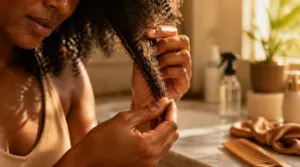
Slip sets you up. Now the direction you move matters.
Never work root to ends. A wide-tooth comb forced downward compresses knots, multiplying breakage along the shaft. Instead, work in small upward increments, freeing each tangle before moving higher toward the scalp.
This single habit protects fragile strands and preserves the length your hair growth cycle works hard to produce.
Choose Gentle Detangling Tools

Direction is only half the formula. Your tools carry equal weight.
- Start with a wide-tooth comb for major knots
- Apply leave-in conditioner before reaching for any tool
- Follow with a boar bristle brush to smooth
- Run fingers along teeth to check for rough seams
- Avoid fine-tooth combs on fragile, wet hair
Flexible bristles bend through resistance instead of breaking strands.
Reduce Unnecessary Manipulation

Touch less. Every detangling session carries real risk.
| Style Type | Manipulation Level | Detangle Frequency |
|---|---|---|
| Protective styling | Low | Every 2 weeks |
| Wash-and-go | Medium | Weekly |
| Daily restyling | High | Daily |
A wide-tooth comb paired with a gentle alcohol-free shampoo on wash day keeps your routine minimal. Daily scalp massages stimulate growth without disturbing strands. To reduce manipulation is to protect progress.
Protect Your Ends Between Washes

Your ends are the oldest part of your hair and the first to show damage. What you do between wash days is what separates real length retention from a frustrating plateau. A few targeted habits keep those ends intact until your next cleanse.
Choose Low-tension Protective Styles
Low-tension protective styles protect your strands without pulling. Use this five-point check before committing to any style:
- No tightness within 24 hours of install
- Edges stay naturally shaped, not flattened forward
- A finger slides under key sections easily
- Smooth elastics secure your ends without snagging
- Zero scalp soreness or burning during wear
That limits breakage and helps steady hair growth.
Moisturize Hair Beneath Styles
A protective style is only as effective as what you do between install days. Moisturize hair beneath styles using a light leave-in conditioner on damp sections. Small amounts prevent buildup.
Add a scalp massage a few times each week to keep circulation moving without disturbing protective styling. Sleep on a satin pillowcase to reduce overnight friction on your ends. When you’re ready to stretch styles or refresh your look, pairing these habits with proper flat iron techniques for your hair type helps minimize heat damage while still getting a sleek result.
Avoid Overly Tight Hairstyles
Tight styles create constant tension on your follicles, and that causes hairline recession and traction alopecia before you even notice thinning. Your scalp shouldn’t feel any pulling after installation.
If a style hurts going in, it’s already too tight. Choose protective styling with comfortable, loose tension at the roots. That one adjustment keeps your hairline intact long-term.
Protect Hair While Sleeping
Eight hours of sleep is also eight hours of friction against your strands. Switch to a silk or satin pillowcase; it cuts fabric resistance a lot. A loose braid or scrunchie keeps your hair from tangling as you toss.
Detangle before bed with a wide-tooth comb, starting at your ends. Never sleep on wet hair. Damp strands stretch and snap easily.
Minimize Heat and Friction
Heat does more damage than friction ever will. Every added pass weakens the protein structure a lot.
- Cap heat styling to once per week, maximum
- Apply leave-in conditioner before any protective styling session
- Detangle with a wide tooth comb to reduce friction
- Use a gentle alcohol-free shampoo to prevent buildup and scalp irritation
Less heat means more retention. Simple math.
Trim Damage Without Sacrificing Progress

Trimming is a precision move, not a setback. Done right, it removes the damage dragging your length retention down without costing you real progress. These five practices show you exactly how and when to cut.
Check Ends for Splitting
Your ends tell the whole story. Check them every 4–6 weeks and after removing a protective style.
Dry, detangled hair reveals split ends; wet strands hide them. Pinch a section, slide two fingers toward the tips, and watch for the Y-shaped fork. That’s breakage weakening hair shaft strength, not shedding.
A drop of leave-in conditioner makes splits easier to spot.
Trim Based on Damage
Once you’ve spotted splits, act proportionally. Minor damage needs only 1/only 1/8 to 1/4 inch** removed. Severe breakage may require up to an inch.
The search-and-destroy method targets individual split ends without cutting healthy length. Protective hairstyles reduce mechanical damage, meaning less trimming overall.
Even a gentle alcohol-free shampoo routine limits the dryness that accelerates split ends in the first place.
Avoid Rigid Trimming Schedules
Calendars don’t know your hair condition. Damage-based assessment outperforms fixed schedules every time. Trim only when you observe:
- Splits visible after stretching sections
- Rough ends tangling despite gentle alcohol-free shampoo
- Breakage exceeding normal daily hair shedding
- Frizzy tips resisting added moisture
- Thinning ends from nutritional deficiencies or damage
Protective hairstyles extend intervals. Better scalp blood circulation helps growth between trims.
Use Sharp Hair Shears
Dull blades defeat the purpose. Once you’ve spotted damage, sharp hair shears matter more than technique. Blunt edges crush and snag strands instead of slicing cleanly, causing frayed, splitting ends that undo your progress.
| Sharp Shears | Dull Shears |
|---|---|
| Clean, precise cuts | Crushed, jagged cuts |
| Split end prevention | New splits and frays |
| Smooth sectioning | Snagged, torn strands |
| Less breakage | Increased breakage |
| Length retention | Setback for hair growth |
Choose 5 to 6 inch shears for controlled detail work.
Dust Damaged Ends Carefully
Dusting trims only the split tips, cutting just above each split so damage can’t travel up the shaft. Clippings resemble fine dust, so your length stays intact.
Divide hair into sections based on thickness. Twist curly or wavy sections horizontally to expose splits; pull straight hair between fingers. Work systematically, snipping only visibly damaged strands.
Pair with your wide tooth comb, leave-in conditioner, and sharp shears for split end prevention without setbacks.
Eat Nutrients Supporting Healthy Hair Growth

Your hair is built from what you eat, and protein is the raw material for every strand. No product can compensate for a diet missing the nutrients your follicles need. Here’s how to feed your growth from the inside out.
Meet Daily Protein Needs
Your hair is built from protein. Every strand depends on amino acids from your diet. Aim for about 50 grams daily on a 2,000-calorie reference diet.
Get it from a proteinrich diet: eggs, fish, beans, lentils, poultry. Whole foods beat powders, which the FDA doesn’t regulate like medications.
Consistent intake helps nutrient delivery to follicles and steady growth.
Prioritize Iron and Zinc
Because follicles are fast-growing tissue, they feel nutrient gaps early. Iron deficiency hair loss is common, especially with heavy periods or low red meat intake. Zinc deficiency shows up as slow growth and shedding.
Boost absorption at meals:
- Pair plant iron with vitamin C
- Add meat, an absorption enhancer
- Skip coffee and tea with meals
- Space calcium and iron apart
- Separate zinc and iron supplements by 4 hours
Nutritional deficiencies hair signs demand attention first.
Include Omega-3-rich Foods
Omega-3 fatty acids hair benefits start at the root. These fats support normal cell function, and your scalp is no exception. Your body can’t make them from scratch, so a healthy diet must supply them.
| Source | Type | Examples |
|---|---|---|
| Fatty fish | EPA and DHA | Salmon, sardines, mackerel |
| Seeds and nuts | ALA | Ground flaxseed, chia, walnuts |
| Fortified foods | Varies | Eggs, yogurt, soy milk |
Rotate sources weekly. Check labels. Before hair growth oils or hair growth supplements, choose nutrient-rich food first.
Avoid Excessive Vitamin Intake
More isn’t better. Fat-soluble vitamins A, D, E, and K accumulate in your tissues instead of flushing out, so megadose hair growth vitamins can build toward toxicity.
Excess vitamin E interferes with blood clotting; excess vitamin A triggers shedding. Stack multiple products and you exceed safe limits fast.
Fix nutritional deficiencies with food first, and keep vitamin supplementation at or below the daily value.
Hydrate for Hair Resilience
Water makes up roughly 25% of each strand’s weight. Drink enough daily and you support follicle function from the inside out.
Dehydration leaves strands brittle and prone to split ends, no matter how much oil you apply. Hydration adds water to the cortex; moisture seals it in. Pair your water intake with a leave-in conditioner and gentle alcoholfree shampoo for resilient, elastic hair.
Evaluate Oils, Remedies, and Supplements

The natural hair community swears by oils, remedies, and supplements, and some of that buzz actually holds up. But hype travels faster than evidence, and your money and patience deserve better than guesswork. Here’s how to separate the remedies worth trying from the ones to skip.
Rosemary Oil Research
Why has rosemary oil earned so much attention? Research gives clues. A 1% rosemary herbal lotion showed significant hair growth promoting activity in mice, compared against 2% minoxidil. That’s promising, not proof.
Rosemary oil contains α-pinene, 1,8-cineole, and camphor. Composition varies by batch and source, which affects results. Dilute essential oils for hair with a carrier oil first. Patch-test before applying to your scalp.
Onion Juice Limitations
Onion juice circulates widely among natural hair remedies, but evidence stays narrow. One small study showed regrowth in patchy alopecia areata cases. Results vary, and other hair-loss uses lack support.
Sulfur compounds can trigger scalp inflammation, burning, and redness. Patch-test first; a clear arm doesn’t guarantee a calm scalp. Use fresh juice, watch for reactions, and stop if irritation develops.
Biotin Deficiency Versus Hype
Biotin supplements dominate hair aisles, but the science stays modest. Biotin works as a cofactor for carboxylase enzymes in fatty acid and glucose metabolism. Deficiency is rare, and reviews find limited evidence for healthy people. Extra biotin won’t accelerate the hair growth cycle beyond your normal rate.
True deficiency does exist. Watch for these signs:
- Hair loss with dermatitis
- Brittle, splitting nails
- Conjunctivitis
- Lethargy or depression
- Raw egg white consumption
Normal plasma biotin runs about 400 to 1,200 ng/L; deficiency sits below 200 ng/L. Among women reporting hair loss, one discussion found many below 400 ng/L. Testing suits at-risk people, since frank deficiency is uncommon.
High doses carry a real catch: biotin interferes with lab immunoassays. Thyroid panels and troponin results can read falsely. Tell your clinician before bloodwork. Skip megadoses; correct deficiency instead of chasing hype.
Patch-test Essential Oils
Skip the hype, but don’t skip caution. Essential oils power many hair growth serums and masks, yet they can trigger allergic contact dermatitis. Never apply them undiluted.
Mix 1 drop of oil with 12 drops of carrier oil. Apply to your inner forearm or inner elbow, cover with a plain bandage, and keep it dry. Wait 24 to 48 hours. If irritation starts, remove the bandage, wash with mild soap, and discontinue that oil.
Avoid Megadose Supplements
More is not better. Megadose supplements push vitamin A and other fat-soluble vitamins into toxic territory because they accumulate in your body. High intakes can cause nerve damage or kidney failure, derailing hair growth routines entirely.
Watch for these stacking traps:
- Multivitamins plus biotin pills
- Fortified cereals with added vitamins
- Powders overlapping your pills
- Labels listing different vitamin forms
The FDA doesn’t approve supplements before sale. Look for NSF or USP certification. Correct deficiencies, don’t chase megadoses.
Investigate Stalled Growth or Hair Loss

Sometimes hair isn’t growing slower, it’s breaking faster, and the two look identical from a distance. A length plateau usually means breakage is matching your growth rate, not that your follicles quit. Before you panic, run through the five checks below to find the real culprit.
Separate Shedding From Breakage
Not every hair in your brush means trouble. Shedding is natural; breakage isn’t. Shed strands carry a small white bulb at the root because they exit the follicle. Broken pieces snap mid-shaft and lack that bulb.
Check your ends under bright light. Full-length hairs signal normal cycle shedding. Short, brittle fragments signal breakage needing more moisture.
Review Hormones and Medications
When shedding spikes without a clear cause, look inward. Hormones travel through your blood and regulate hair cycles, so shifts from postpartum changes, thyroid disorders, or menopause often trigger hormonal hair loss. Review your medications too. Birth control, hormone replacements, and some blood pressure drugs alter hormonal hair balance.
Androgenetic alopecia involves DHT sensitivity; DHT blocking treatments and minoxidil alternatives exist. Bring your medication list to a dermatologist.
Watch for Scalp Inflammation
Your scalp sets the tone for everything growing from it. Persistent itching, redness, burning, or greasy yellow flakes signal inflammatory scalp conditions like seborrheic dermatitis. Scaling that returns days after washing isn’t normal dryness. Untreated inflammation can, rarely, cause scarring and permanent loss.
Gentle cleansing helps sebum regulation; daily massage encourages follicle stimulation. Patch-test essential oils, never scratch with nails, and see a dermatologist if symptoms persist.
Recognize Traction Alopecia
Your edges can vanish one tight style at a time. Traction alopecia is hair loss caused by sustained pulling, and natural hair is especially vulnerable. Catch it early:
- Thinning along hairlines or temples
- Small bumps, pustules, or redness around follicles
- Broken hairs in tension zones
- Yellowish casts encircling hair shafts
Early stages remain non-scarring and reversible. Loosen tension immediately, because prolonged pulling eventually causes permanent follicular dropout.
Consult a Dermatologist Early
When home care stalls, a dermatologist is your next power move. These doctors diagnose hair, skin, and nail disorders.
Bring your timeline, current medicines, and product list. A blood test can reveal deficiencies behind slowed hair growth.
Sudden patchy loss, persistent scalp inflammation, or unexplained breakage warrants prompt evaluation. Don’t wait out a mystery. Early diagnosis prevents months spent chasing moisture when the cause is medical.
Frequently Asked Questions (FAQs)
How do I make my natural hair grow faster?
How do I make my natural hair grow faster? Biology caps hair growth at roughly half an inch monthly. Focus on retaining length instead: reduce breakage, support your scalp, and protect strands.
What helps grow hair naturally?
What helps grow hair naturally? A clean scalp, consistent moisture, gentle detangling, protected ends, and steady nutrition. Follicles flourish when buildup, breakage, and tension drop. Retain length; hair growth follows.
How to make 4c hair grow?
How to make 4C hair grow? Focus on retention, not speed. 4C hair grows about half an inch monthly. Deep condition, seal moisture into ends, detangle gently, and protect ends with low-tension styles.
What are the 10 secrets to growing long and fast black hair?
What are the 10 secrets to growing long and fast black hair? Retain length by preventing breakage, cleanse regularly, deep condition, balance protein and moisture, detangle gently, protect ends nightly, trim damage, nourish your body, track progress, and stay consistent.
What Are the Best Natural Hair Growth Products?
What are the best natural hair growth products? Think of your scalp as fertile soil: rosemary oil, aloe vera, and gentle scalp serums lead the list, but consistency and realistic expectations grow the harvest.
Is Hair Growth Affected by Stress?
Yes, stress affects hair growth. Chronic stress keeps follicle stem cells resting, delaying regeneration. Elevated stress levels push follicles into telogen, causing shedding months later. Manage stress through relaxation exercises, sleep, and nutrition.
Is There a Way to Stimulate Hair Follicles for Faster Growth?
Yes, but modestly. Hair follicle stimulation through massaging your scalp, scalp exfoliation, or a hair growth tonic can boost circulation and thickness. Skip the biotin supplement unless deficient. Consistency matters most.
How long does it take to see hair growth results?
How long until you see hair growth results? Expect fine new hairs at 2–3 months, visible density by month four, and full results at 6 months. Measure every three months, since growth happens beneath the scalp first.
Can stress permanently damage hair follicles?
Can stress permanently damage hair follicles? Rarely. Telogen effluvium from stress-induced alopecia pushes follicles into shedding, not destruction. Distinguish hair shedding vs breakage, try scalp massage and oxidative stress reduction. Most follicles recover.
Should I wash natural hair daily or weekly?
Should I wash natural hair daily or weekly? Weekly suits most natural hair textures. Daily washing strips oils, reduces moisture retention, and hinders hair growth. Choose sulfatefree shampoo, follow with leavein conditioner, and cleanse whenever buildup appears.
Conclusion
A seed doesn’t need you to shout at it. It needs steady water, good soil, and time. Your hair works the same way.
When you learn how to grow natural hair, you’re really learning to protect what your body already produces. Moisture it. Handle it gently. Guard those ends like savings.
Two years from now, you’ll look back at photos and see proof that patience, not miracle products, grew every inch you kept.
- https://www.hairobicsallnatural.com/hair-blog/the-best-scalp-care-routine-for-natural-hair-growth
- https://auraheadspanj.com/blog/scalp-detox-101-how-deep-scalp-cleansing-promotes-hair-growth-wellness
- https://www.clinikally.com/blogs/news/the-importance-of-scalp-care-what-experts-recommend-for-healthy-hair