This site is supported by our readers. We may earn a commission, at no cost to you, if you purchase through links.
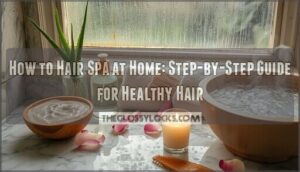
Salon hair spa treatments can cost anywhere from $50 to $150 per session, and they often require appointments weeks in advance. What many people don’t realize is that the same deep conditioning, scalp rejuvenation, and hair strengthening benefits are completely achievable in your own bathroom with simple ingredients you might already have.
A hair spa at home isn’t just about saving money—it’s about taking control of your hair’s health with natural oils, targeted masks, and gentle techniques that work with your schedule. The process transforms dull, stressed hair into soft, nourished strands while giving your scalp the attention it rarely gets in daily routines.
With the right approach and a few basic tools, you can create a spa-quality experience that fits your specific hair needs.
Table Of Contents
Key Takeaways
- You can replicate salon-quality hair spa results at home using natural oils like coconut, argan, and olive oil, which strengthen strands, reduce breakage by up to 41.8%, and cost a fraction of the $50-$150 salon price.
- The treatment sequence matters: start with a 5-minute scalp massage using warm oil, follow with 15-20 minutes of hot towel steaming to open cuticles, then apply masks tailored to your hair type for maximum absorption and repair.
- Most hair types benefit from treatments every 2-4 weeks, with dry or damaged hair needing bi-weekly sessions and oily scalps responding best to every-other-week treatments to avoid buildup or over-processing.
- Protecting your results requires skipping heat styling for 48 hours post-treatment, using a wide-tooth comb to reduce breakage by 43%, and sleeping on silk pillowcases to maintain smoothness and cut frizz by 27%.
What is a Hair Spa at Home?
A hair spa at home is more than just washing your hair—it’s a full treatment that cleanses, nourishes, and repairs from roots to ends. Think of it as giving your scalp and strands the care they deserve without the salon price tag.
Let’s look at what makes this treatment so effective and who can benefit most from adding it to their routine.
Key Benefits of At-Home Hair Spa
Your at-home hair spa delivers real rewards: stronger, shinier hair with up to 35% fewer split ends. Regular scalp massages boost blood flow, supporting healthier growth and reducing dandruff by 22%. You’ll also feel the stress melt away—scalp massage lowers cortisol and lifts your mood.
At-home hair spa strengthens strands, cuts split ends by 35%, boosts growth, reduces dandruff, and melts stress away
Best of all, you customize every treatment to match your hair’s needs, all while saving time and money. This beauty treatment is designed to rejuvenate and hydrate.
How Hair Spa Improves Scalp and Hair Health
Hair spa works by boosting circulation to your scalp through massage, delivering nutrients straight to your hair follicles. This buildup reduction clears away oils and debris, while deep conditioning fosters thickness gains and improves shaft condition.
You’ll notice stronger, shinier strands as damage repair takes effect. Plus, the stress relief from scalp massage creates the perfect environment for healthy hair and scalp health to flourish naturally.
Regular treatments help to improve moisture retention.
Who Should Try a Hair Spa at Home
This treatment isn’t just for problem hair—it’s for anyone wanting better hair health. That said, certain scalp conditions respond especially well:
- Hair fall and thinning – Scalp massage stimulates follicles and strengthens roots
- Oily scalp – Bi-weekly sessions help balance sebum production
- Dry hair or flakiness – Monthly treatments restore moisture
- Hair damage from chemicals – Repairs structure and prevents breakage
- All hair types – Preventive care maintains circulation and vitality
Essential Ingredients and Tools for Hair Spa
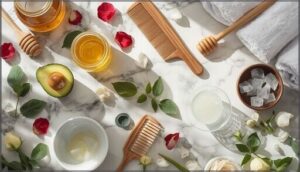
You don’t need fancy equipment or expensive products to give yourself a salon-quality hair spa at home. The right combination of natural ingredients and simple tools can transform your hair care routine from basic to life-changing.
Let’s look at what you’ll need to gather before you begin your at-home treatment.
Natural Oils and Their Benefits
Think of natural oils as powerful nutrients that breathe life into tired strands. Coconut oil reduces breakage by 41.8%, while argan oil boosts hair growth and strength. Olive oil nourishes follicles, jojoba oil balances sebum, and almond oil encourages density.
These simple, natural ingredients transform your hair spa at home into a rejuvenating ritual that restores hair health from root to tip.
DIY Vs. Store-Bought Hair Masks
While DIY hair spa treatments offer cost savings and customization with natural ingredients like honey and avocado, store-bought masks deliver deeper repair through sophisticated formulations.
Studies show commercial products reduce breakage by 32% after three sessions, thanks to higher ingredient quality and application safety.
Homemade hair masks nourish beautifully for maintenance, but professional-grade options address intensive damage more effectively—a key efficacy difference worth considering.
Necessary Tools and Preparation Steps
Before you begin your home hair spa routine, gather a few essentials: a sulfate-free shampoo, wide-tooth comb, sectioning clips, and microfiber towel. Tool sterilization matters—clean your comb and clips after each use to prevent scalp irritation.
Prepare your space with warm towels ready and proper product storage nearby. This simple setup ensures smooth application and maximizes your hair care tips using natural ingredients effectively.
Step-by-Step Guide to Hair Spa at Home
Now that you’ve gathered your ingredients and tools, it’s time to walk through the actual process. A proper hair spa routine follows a natural sequence that builds on each step.
Let’s break down the key techniques you’ll use to transform your hair from roots to ends.
Scalp Massage and Oiling Techniques
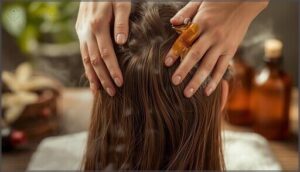
Your scalp massage sets the foundation for everything that follows. Warm 1 to 2 tablespoons of coconut or olive oil, then use your fingertips to apply gentle, circular pressure across your entire scalp for at least 5 minutes.
This circulation boost delivers nutrients to hair follicles and improves product absorption. Studies show regular scalp massage techniques can increase hair thickness and support alopecia improvement over time.
Steaming or Hot Towel Application
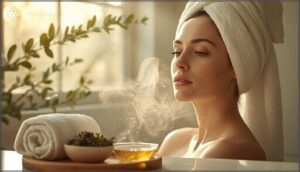
After massaging oil into your scalp, steaming opens your hair cuticles to boost product absorption by up to 40%. This step also helps with scalp detox by unclogging pores and improving circulation.
- Soak a clean towel in hot water (warm enough to hold comfortably, around 60°C).
- Wring out excess water and wrap the towel snugly around your oiled hair.
- Leave it on for 15 to 20 minutes to get the most steam benefits without structural impact.
Shampooing and Conditioning
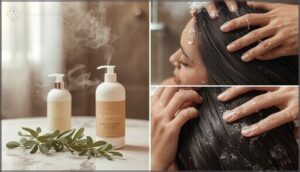
After steaming, proper shampooing removes oil buildup and gets hair ready for conditioning. Sulfate-free shampoos work best during hair spa at home, gently cleansing without stripping natural moisture. Focus on your scalp—massaging for two minutes helps lower scalp sebum levels while boosting circulation. Rinse thoroughly, then apply conditioner from mid-length to ends.
Conditioner ingredients like ceramides and proteins support moisture retention and repair, so leave it on for three minutes before rinsing with cool water.
Applying and Rinsing Hair Masks
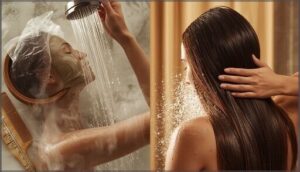
Hair masks work their magic on clean, damp hair. After conditioning, gently towel-dry and apply your chosen mask from mid-length to ends, where damage hides. Here’s how to get the best results:
- Section and distribute using fingers, then a wide-tooth comb
- Wrap with plastic and apply gentle heat for 10-15 minutes
- Rinse thoroughly with lukewarm water, finishing cool to seal cuticles
Proper rinsing prevents buildup that weighs hair down.
DIY Hair Spa Masks for Every Hair Type
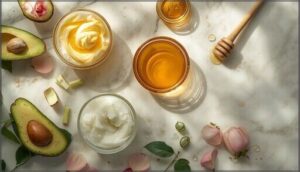
Your hair type determines what it needs most—whether that’s moisture, balance, or repair. The right mask can make all the difference in how your hair looks and feels after treatment.
Here’s how to create effective spa masks designed for dry, oily, and damaged hair, plus some nutrient-packed recipes that work for everyone.
Hair Spa Mask for Dry Hair
When your strands feel parched and brittle, a hair spa mask for dry hair can bring them back to life. Argan oil, coconut oil, and olive oil work wonders—coconut oil alone restores up to 50% more moisture. Honey masks add softness you can feel.
Choosing DIY vs store-bought depends on your budget and time, but both deliver real hydration for your hair spa at home.
Hair Spa Mask for Oily Scalp
If your scalp feels greasy by midday, you’re not alone—and a hair spa mask for oily hair can help. Lemon juice and yogurt DIY recipes balance sebum control beautifully, cutting excess oil by up to 30% when used twice weekly.
Apply the mask mainly to your scalp, leave it for 20 minutes, then rinse thoroughly. This application frequency keeps oiliness in check without overdoing it.
Hair Spa Mask for Damaged Hair
When your strands feel brittle and lifeless, a hair spa mask for damaged hair can work wonders. Banana, olive oil, and honey DIY blends rebuild structure beautifully—clinical insights show a 32% reduction in hair breakage after three monthly sessions.
Apply this mask 2-3 times weekly, focusing on mid-lengths to ends. Protein-rich ingredients restore strength and shine faster than you’d expect.
Nourishing and Protein-Rich Mask Recipes
Protein is the building block your hair craves. Whisk together one egg yolk, a tablespoon of honey, and almond oil for a DIY protein boost that nearly doubles hair strength.
Mash avocado with mayonnaise, or blend banana with olive oil and egg for homemade recipes that deliver real results.
Apply weekly to see healthier strands without stiffness—natural oils balance moisture beautifully.
Tips for Best Results and Aftercare
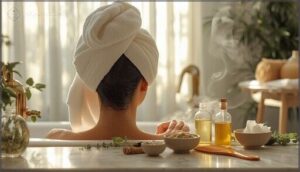
You’ve put in the work to create your at-home hair spa, and now it’s time to make sure those results last.
A few simple habits can help you protect your freshly treated hair and keep it looking its best between sessions.
Let’s cover how often to schedule your treatments, what to do after you rinse, and the common slip-ups that can undo all your hard work.
How Often to Do Hair Spa at Home
Finding the right rhythm for your hair spa at home depends on your hair type and lifestyle factors. Most people see great hair spa benefits with treatments every 2 to 4 weeks.
Dry or damaged strands thrive on bi-weekly sessions, while oily scalps do well every 2 weeks. Age considerations matter too—mature scalps need monthly hydration.
Watch for over-treatment risks like buildup, and adjust your hair care routine seasonally.
Post-Treatment Hair Care Tips
Once you’ve finished your hair spa treatment, protecting that work becomes your next priority. A few smart adjustments to your hair care routine can extend those spa benefits and keep your scalp health at its best.
- Avoid heat styling for at least 48 hours to prevent moisture loss and strand dehydration
- Switch to gentle combing with a wide-tooth comb to reduce breakage by nearly 43%
- Use a silk pillowcase during sleep to preserve smoothness and cut morning frizz by 27%
- Schedule routine trimming within two weeks to stop split ends from traveling up the hair shaft
These hair spa aftercare steps work together to maintain healthy hair and prolong your conditioning results for weeks.
Common Mistakes to Avoid
Even when your hair spa at home feels right, certain missteps can quietly undermine results. Product misuse—like heavy masks on already oily scalps—triggers more greasiness, while scalp neglect and skipped steaming reduce nourishment absorption.
Heat damage from styling tools on damp strands, mechanical stress from aggressive brushing, and over-treatment that leads to limp hair are common hair spa disadvantages. Improve your hair care routine to avoid these pitfalls.
Frequently Asked Questions (FAQs)
Can I do hair spa on colored hair?
Yes, you can do a hair spa treatment on colored hair. Just wait 48–72 hours after hair coloring to let color molecules stabilize. This prevents color fading and helps restore hydration balance post-treatment.
How long should I leave the mask on?
Most hair spa masks work best when left on for 5 to 10 minutes. For damaged hair, extend mask leave-on time to 20 minutes. Fine hair needs just 3 to 5 minutes to avoid heaviness.
What water temperature is best for rinsing?
Here’s the golden rule: rinse with lukewarm water around 100°F to cleanse effectively without stripping moisture.
Finish with a cold rinse between 65-75°F to seal cuticles and boost shine beautifully.
Should I trim hair before or after treatment?
Most stylists recommend trimming after your hair spa treatment. This timing lets you see your hair’s true texture once it’s hydrated, making it easier to spot and remove split ends for smoother, healthier results.
Can hair spa help with hair loss problems?
When paired with consistent scalp massage, hair spa treatments can reduce shedding by boosting circulation to hair follicles and lowering stress.
Most people notice stabilized hair fall after several monthly sessions.
Conclusion
Like tending a garden, caring for your hair rewards patience and consistency. Learning how to hair spa at home puts professional-level nourishment within reach, transforming your routine into a ritual of restoration.
Your bathroom becomes your sanctuary, your ingredients become your tools, and your commitment becomes the catalyst for lasting change.
The softer strands, the healthier scalp, the confidence that follows—these aren’t luxuries reserved for salon chairs. They’re yours to create, one treatment at a time.
- https://skinkraft.com/blogs/articles/hair-spa
- https://market.us/report/conditioning-hair-treatments-market/
- https://www.kapilssalon.com/hair-spa-vs-regular-hair-conditioning-whats-best-for-you/
- https://welcometosoul.com/hair-spa-marketing-gimmick-or-does-it-actually-work-for-conditioning-your-hair/
- https://thesageheadspa.com/blog/head-spas-hair-growth-does-it-really-work/