
This site is supported by our readers. We may earn a commission, at no cost to you, if you purchase through links.

Your scalp sheds about 500,000 skin cells every day, and when those cells clump together as visible flakes, dehydration has already disrupted the delicate moisture barrier protecting your hair follicles. Most people reach for dandruff shampoo first, but dry scalp and dandruff require completely different approaches—one needs hydration, the other needs treatment for yeast overgrowth.
The tightness you feel after washing, the persistent itch that won’t quit, and those white flakes dusting your shoulders all signal that your scalp is crying out for moisture it can’t generate on its own. Restoring that hydration requires understanding what stripped it away in the first place and implementing targeted techniques that rebuild your scalp’s natural protective function.
Table Of Contents
- Key Takeaways
- What Causes a Dry Scalp?
- How to Identify a Dehydrated Scalp
- Choosing The Right Scalp Hydration Products
- Effective Scalp Hydration Techniques
- Natural Remedies to Hydrate The Scalp
- Daily Habits to Maintain Scalp Moisture
- When to Seek Professional Scalp Care
- Frequently Asked Questions (FAQs)
- Conclusion
Key Takeaways
- Dry scalp results from moisture barrier disruption caused by over-washing with sulfate shampoos, product buildup, dehydration, cold weather, or underlying conditions like eczema and psoriasis—each requiring different treatment approaches than typical dandruff.
- Effective scalp hydration depends on choosing sulfate-free cleansers with humectants like glycerin, applying penetrating oils such as coconut or jojoba, and performing regular scalp massage to boost circulation and nutrient delivery to follicles.
- Daily habits like limiting hot showers to under five minutes with lukewarm water, drinking 2.7-3.7 liters of water daily, and protecting your scalp from UV damage preserve natural oils and prevent moisture loss more effectively than topical treatments alone.
- Persistent itching beyond four weeks, pus-filled bumps, oozing sores, or thick greasy yellow scales signal underlying infections or chronic conditions requiring prescription-strength treatments from a dermatologist rather than over-the-counter solutions.
What Causes a Dry Scalp?
A dry scalp doesn’t happen out of nowhere—it’s usually your body’s response to something that’s throwing off your skin’s natural balance. Sometimes it’s what you’re doing to your hair, and other times it’s something you can’t control, like the weather or an underlying skin condition.
If you’ve noticed your hair staying wet for hours, it might be compounding the issue by trapping moisture against your scalp.
Let’s break down the most common culprits so you can figure out what’s affecting your scalp.
If you’re noticing thinning or slow regrowth in certain spots, understanding how to restore dormant hair follicles can help you target the root cause more effectively.
Over-Washing and Harsh Shampoos
Frequently washing your hair with sulfate shampoos strips away natural oils, leaving your scalp dehydrated and vulnerable. These harsh detergents disrupt the scalp’s protective barrier, triggering scalp irritation, flaking, and paradoxically causing your scalp to overproduce oil to compensate.
Switching to a gentle scalp-cleansing routine helps reset your follicle health without triggering that rebound oil cycle.
Switching to gentle cleansing alternatives and limiting wash frequency helps preserve moisture, reduces hair damage, and allows your scalp to restore its natural balance. It’s important to be aware of the potential risks associated with harsh shampoo ingredients when considering your scalp health.
Product Buildup From Styling Products
Styling products containing silicones and heavy polymers leave behind product residue that forms a waxy film on your scalp, blocking moisture absorption and causing scalp irritation. This buildup traps oils and dead skin, preventing hair hydration and creating a barrier that even moisturizing products can’t penetrate.
Regular buildup removal through gentle cleansing with clarifying shampoos and scalp exfoliation restores your scalp’s ability to absorb the moisture it needs. For more details on addressing product buildup removal steps, consult expert hair care sources.
Dehydration and Not Drinking Enough Water
Your body needs adequate water intake to maintain scalp moisture from within, supporting hair hydration and overall skin health. When you’re dehydrated, your scalp can’t hold onto moisture effectively, leading to visible dehydration signs like flaking and tightness.
Proper hydration also helps prevent conditions like receding hairlines, which can worsen when scalp circulation and moisture levels drop.
Here’s how inadequate hydration affects your scalp:
- Reduced skin elasticity makes your scalp feel tight and uncomfortable
- Thicker outer skin layers cause more noticeable, persistent flakes
- Disrupted electrolyte balance weakens your scalp’s protective barrier
- Slower cell turnover delays healing of minor scalp irritations
- Concentrated oils and reduced moisture worsen itching
Following basic hydration tips—drinking 2.7 to 3.7 liters daily depending on your activity level—helps moisturize your scalp naturally. Your body can’t deliver nutrients to hair follicles or maintain proper electrolyte balance without sufficient fluids, making water intake a foundation for scalp health alongside topical moisturizing treatments.
Environmental Factors (Cold, Dry Weather)
Cold stress from winter weather strips moisture from your scalp faster than your body can replace it. Dry air lowers humidity on your scalp surface, increasing water loss and triggering itchiness and flaking.
| Weather Factor | Impact on Scalp |
|---|---|
| Low humidity | Depletes scalp barrier moisture |
| Cold outdoor air | Causes tightness and irritation |
| Indoor heating | Creates dry microclimate |
Weather protection helps maintain scalp health and hydration year-round.
Skin Conditions (Eczema, Psoriasis, Seborrheic Dermatitis)
Chronic inflammation from underlying skin conditions drives scalp dryness beyond what environmental factors alone can cause. Your scalp may harbor eczema, psoriasis, or seborrheic dermatitis, each presenting distinct patterns that require targeted treatment approaches.
These conditions disrupt normal scalp function through different mechanisms:
- Eczema treatment focuses on restoring barrier defects that cause dry itchy patches
- Psoriasis causes thick silvery-scaled plaques from overactive immune cells and cytokines
- Dermatitis symptoms include greasy yellow scales linked to Malassezia yeast overgrowth
- Skin inflammation varies by condition with psoriasis affecting nails in 50 percent of cases
- Scalp lesions differ in appearance from eczema’s lichenification to seborrheic dermatitis’s oily scales
Understanding your specific scalp condition helps you choose effective treatments that address the underlying issue rather than just surface dryness.
How to Identify a Dehydrated Scalp
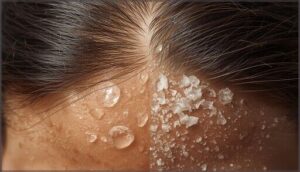
You can’t fix a problem you can’t identify, and scalp dehydration shows up in ways you mightn’t expect. Recognizing the warning signs early gives you control over your treatment approach before minor dryness becomes a chronic issue.
Here’s what to watch for and how to distinguish a truly dehydrated scalp from other conditions that mimic similar symptoms.
If your scalp feels tight and flaky but your hair still develops that unpleasant wet dog smell, you’re likely dealing with dehydration rather than a cleansing issue.
Common Signs and Symptoms
Your scalp signals dehydration through several distinct markers. Persistent itching with dry flakes scattered across your hair and shoulders often indicates a dry scalp rather than typical dandruff. You might notice scalp tightness after washing, red irritation around follicles, or increased hair thinning from brittle strands.
| Symptom | What You’ll Notice |
|---|---|
| Itchy Scalp | Persistent urge to scratch, worse at night |
| Flaky Scalp | White flakes on shoulders and hair roots |
| Scalp Tightness | Stretched, uncomfortable feeling post-wash |
| Red Irritation | Tender patches with increased sensitivity |
These scalp conditions respond well to targeted hydration strategies focused on itch relief and moisture restoration.
Difference Between Dry and Oily Scalp
Distinguishing between dry scalp and oily scalp types shapes your hydration strategy. Dry scalp produces fine white flakes that feel crumbly, with tight skin and no visible shine, reflecting poor scalp moisture and disrupted scalp pH balance.
Oily scalp shows greasy yellow flakes from excess oils and sebum overproduction, with hair lying flat at roots within a day of washing—requiring different oil regulation approaches for ideal scalp health.
When to Suspect Underlying Skin Conditions
When does simple dryness cross into skin disease territory? If your itching persists beyond four weeks despite moisturizers, suspect underlying scalp conditions like psoriasis or eczzema.
Red patches spreading across your hairline, thick silvery scales, or oozing lesions signal chronic dandruff-related disorders requiring medical attention.
Flare-up triggers that worsen redness symptoms or create unusual scalp lesions warrant professional evaluation to protect your skin health.
Choosing The Right Scalp Hydration Products
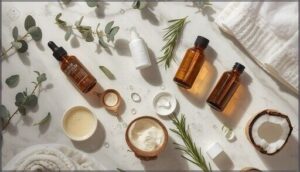
Choosing the right products for your scalp requires understanding what your scalp actually needs versus what marketing promises deliver. You’ll want to distinguish between formulas that cleanse versus those that hydrate, and know which active ingredients genuinely restore moisture balance.
Let’s break down the key product categories and ingredients that make a real difference for scalp hydration.
Moisturizing Vs. Clarifying Shampoos
Shampoo types target different scalp needs, and understanding the difference gives you control over your scalp health. Moisturizing formulas use gentle cleansing agents and humectants to scalp moisturize while addressing hair porosity, while clarifying options strip away product buildup and restore scalp balance—but they can dry you out if used daily.
- Moisturizing shampoos maintain hydration through ceramides and plant oils for regular use
- Clarifying formulas remove silicones and mineral deposits with stronger surfactants
- Alternate between types every 1 to 2 weeks for ideal results
- Daily clarifying use strips natural lipids and increases dryness
- Choose based on buildup level and your individual hair hydration methods
Sulfate-Free and Sensitive Formulas
You deserve products that cleanse without stripping your natural defenses. Sulfate shampoos use harsh detergents that compromise scalp health, while gentle cleansers like cocamidopropyl betaine and decyl glucoside—sulfate alternatives—effectively remove buildup without irritation.
Fragrance options and hypoallergenic products minimize allergen exposure for reactive scalps. Ceramide benefits include strengthened barrier function that helps scalp moisturize itself, reducing dry scalp symptoms while maintaining essential lipids during every wash.
Hydrating Conditioners and Scalp Serums
After choosing the right cleanser, you’ll want targeted hydrating conditioner and serum formulations that lock moisture directly into your scalp.
Conditioners with shea butter and glycerin seal the cuticle without weighing down fine hair, while scalp serum benefits include concentrated hyaluronic acid and panthenol that absorb quickly when massaged into parted sections.
These hair moisturizing and hydration tools work together to restore barrier function and combat dryness effectively.
Ingredients to Look for and Avoid
Now that you’ve identified effective products, understanding which ingredients deliver results helps you break free from trial-and-error shopping.
Look for natural moisturizers like glycerin and hyaluronic acid with humectant properties that attract water to your scalp, plus ceramides for barrier repair.
Avoid sulfates in sensitive formulas—they strip natural oils your scalp needs for lasting hydration and moisture retention.
Effective Scalp Hydration Techniques
Choosing the right products is only half the battle—how you apply them matters just as much.
Your scalp needs consistent, intentional care to absorb moisture effectively and maintain long-term hydration.
These four techniques will help you enhance absorption, restore balance, and give your scalp the support it needs to thrive.
Proper Washing and Rinsing Methods
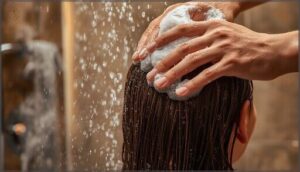
Your hair care routine begins with water temperature—lukewarm to warm prevents stripping natural oils while hot water accelerates dryness.
During gentle shampooing, use your fingertips in circular motions for a scalp massage that boosts circulation without causing microtears. Focus cleansing on your roots where oil accumulates, then rinse thoroughly until no residue remains.
Finish by hair patting with a soft towel to protect scalp health and care.
Scalp Exfoliation for Better Absorption
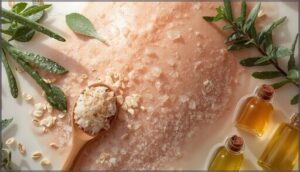
After proper cleansing, scalp exfoliation clears the path for deeper hydration by removing dead skin cells and product residue that block follicle stimulation and moisture penetration. Gentle cleansing with a physical scrub or chemical exfoliant once or twice weekly helps your scalp absorb serums and oils more effectively.
- Use fine-grained scrubs to manually exfoliate without damaging sensitive skin
- Apply salicylic acid treatments to dissolve trapped debris and excess oil
- Combine with scalp massage to boost circulation and nutrient delivery
- Always follow with a hydrating conditioner to restore moisture after exfoliation
Using Oils and Leave-in Treatments

After exfoliation, targeted oils and leave-in products deliver lasting hydration. Penetrating oils like coconut help reduce moisture loss, while sealing oils such as jojoba lock in existing hydration.
Apply lightweight formulas to mid-lengths and ends, or massage heavier options into your scalp for intensive treatment. Layer a hydrating leave-in conditioner with your chosen oil using techniques like LOC to enhance moisture retention and improve overall scalp comfort.
Scalp Massages to Boost Circulation

Regular scalp massage benefits extend beyond relaxation—gentle circular motions with your fingertips improve blood flow to follicles, delivering more oxygen and nutrients. Practice these circulation techniques for five to ten minutes daily, covering your entire scalp from hairline to crown.
Scalp massage tools can provide consistent scalp stimulation when fingers tire. This scalp health and care routine promotes moisture retention and complements your scalp moisturizing techniques for ideal hair and scalp health.
Natural Remedies to Hydrate The Scalp

Natural ingredients can deliver powerful hydration without the additives found in commercial products.
You don’t need a prescription or expensive treatments to restore moisture to your scalp.
Here are the most effective natural remedies backed by dermatological evidence.
Coconut, Argan, and Almond Oils
Coconut, argan, and almond oils deliver targeted scalp health and care through distinct oil compositions that address dryness at the cellular level. Coconut oil’s lauric acid forms a protective barrier to lock in moisture, while argan oil’s tocopherols soothe irritation without residue.
Almond oil’s oleic acid softens rough patches and restores your scalp’s natural lipid layer, making these natural remedies essential for hair moisturizing and hydration when paired with gentle scalp massage.
Aloe Vera and Green Tea Applications
You can utilize powerful aloe vera benefits and green tea extracts as herbal treatments that deliver scalp hydration tips backed by science.
Aloe’s humectant properties attract moisture deep into your scalp tissue, while green tea’s polyphenols reduce inflammation and support scalp health through antioxidant action.
These natural remedies for hair moisturizing and hydration work together to create lasting scalp care without harsh chemicals.
Apple Cider Vinegar Rinses
Diluted apple cider vinegar delivers powerful ACV benefits through gentle scalp clarifying that restores your pH balance without stripping moisture.
This vinegar therapy helps seal the hair cuticle while removing product buildup, making it an effective natural remedy for scalp conditions like dry scalp. Mix one part ACV with three parts water, apply to your scalp, massage briefly, then rinse thoroughly for ideal scalp care.
Home Treatment Tips for Different Hair Types
Your hair type solutions depend on understanding moisture balance and choosing the right natural oils for your scalp exfoliation routine. Fine hair needs non-greasy oils applied directly to your scalp to avoid weighing down strands, while curly hair responds better to thicker emollients when your ends feel dry.
Oily scalps benefit from lightweight, water-based moisturizers in your hair care routine to prevent buildup that worsens dry scalp conditions.
Daily Habits to Maintain Scalp Moisture
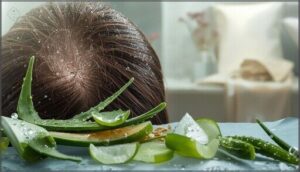
Your scalp doesn’t exist in a vacuum—it reacts to everything you do throughout the day.
The best hydration strategy means nothing if your daily routine actively works against it.
Even the best hydration strategy fails if your daily habits actively undermine it
Here’s how to adjust your everyday habits so your scalp can actually hold onto the moisture you’re giving it.
Limiting Heat Styling and Hot Showers
Surprisingly, your daily shower temperature can sabotage scalp health more than any product you use. Hot water above 104°F strips protective oils and accelerates moisture loss, leaving your scalp tight and flaky.
Switch to lukewarm rinses under five minutes to preserve natural hydration. For heat styling, maintain at least six inches distance, use a diffuser on medium settings, and schedule thermal damage recovery days between sessions for ideal scalp cooling and moisture locking.
Drinking More Water and Healthy Nutrition
Beyond topical treatments, internal hydration forms the foundation of scalp health. Your body’s water composition—50 to 60 percent of total weight—directly affects skin moisture and hair growth cycles.
Target 2.7 to 3.7 liters daily from all fluids to maintain ideal fluid balance. Boost scalp hydration with these nutrition tips:
- Eat water-rich fruits like watermelon and oranges for vitamin C
- Include cucumber and celery for minerals and fiber
- Choose omega-rich foods supporting skin health
- Replace sugary drinks with plain water for better hair moisturizing
Protecting Scalp From Environmental Stress
External aggressors attack scalp health just as forcefully as internal dehydration. UV protection starts with SPF 30 scalp sunscreen or wide-brim hats during peak hours.
Combat air pollution by cleansing daily with antioxidant-rich formulas containing vitamin E. Climate control matters year-round—humidify indoor spaces in winter and choose breathable headwear in summer.
Humidity management means adjusting your scalp exfoliation and treatment routine seasonally to maintain proper moisture balance and skin health.
Avoiding Product Overuse and Build-Up
Even with exceptional protection, layering too many hair care products sabotages moisture balance. Product buildup clogs follicles and blocks scalp treatment absorption, creating a greasy film that mimics dryness.
Maintain ideal scalp care through:
- Weekly clarifying routines using gentle cleansing formulas
- Strategic scalp exfoliation every 1-2 weeks to clear residue
- Product application focused on hair lengths, not roots
- Thorough rinsing for 60 seconds to prevent accumulation
Smart moisturizing means less truly becomes more.
When to Seek Professional Scalp Care

You can handle most dry scalp issues at home, but sometimes your scalp needs more than a good oil treatment and a gentler shampoo.
Knowing when to reach out to a dermatologist can save you weeks of frustration and prevent a minor issue from becoming a chronic problem.
Here’s when it’s time to get professional help instead of waiting it out.
Persistent Dryness and Itching
If your dry scalp and itchy flakes persist after several weeks of consistent hydration efforts, it’s time to consult a dermatologist.
Persistent scalp irritation, stubborn dry patches, or dandruff that won’t respond to standard scalp soothers and moisture lock techniques may signal an underlying condition requiring prescription treatments. You shouldn’t struggle indefinitely—professional scalp care can identify the root cause and restore your hair moisturizing and hydration routine effectively.
Signs of Infection or Severe Flaking
Certain warning signs demand immediate professional attention, as they may indicate infection rather than simple dry scalp. If you notice any of these bacterial symptoms or infection signs, contact your dermatologist:
- Pus-filled bumps or pustules developing at hair follicle bases, especially with yellow or white tips
- Oozing sores or scalp lesions that crust over with yellowish or brown scabs
- Severe flaking causes like thick, greasy yellow scales accompanied by intense redness and swelling
- Ring-shaped patches with raised edges and hair loss, suggesting fungal infections
- Persistent burning, tenderness, or worsening itchy scalp despite treatment efforts
These scalp conditions require prescription intervention to prevent complications.
Managing Chronic Scalp Conditions
Persistence often signals a deeper scalp condition management issue requiring ongoing care. Chronic inflammation from psoriasis or seborrheic dermatitis disrupts your scalp ecosystem balance, making hair loss prevention and consistent moisturizing critical.
Your dermatologist can prescribe targeted dermatological treatments—topical steroids, antifungal agents, or immunomodulators—that address both dry scalp and dandruff while restoring long-term scalp care routines. Regular follow-ups guarantee your scalp treatment plan adapts as symptoms evolve.
Dermatologist-Recommended Treatments
When standard routines fall short, prescription-strength options restore your scalp barrier. Your dermatologist may recommend:
- Topical corticosteroid treatments for inflammatory dryness like eczema or seborrheic dermatitis
- Medicated shampoos with prescription-strength antifungals or zinc pyrithione for dandruff treatment
- Hydrating serums containing hyaluronic acid or urea for moisture retention
- Topical ointments with calcineurin inhibitors when scalp creams with steroids aren’t suitable
These dermatology insights transform stubborn scalp conditions and treatments into manageable routines.
Frequently Asked Questions (FAQs)
How can I increase moisture in my scalp?
You can increase scalp moisture by using hydrating shampoos with humectants like glycerin, applying nourishing hair oils such as jojoba or argan.
Performing regular scalp massage to boost circulation, and gentle scalp exfoliation weekly.
How to tell if your scalp is dehydrated?
Your scalp feels tight, itchy, or irritated even after washing. You’ll notice flaking that looks waxy or uneven rather than powdery, and oils worsen the discomfort instead of relieving it.
Can diet affect scalp hydration and health?
What you eat can either starve or feed your scalp health, nutrient balance, hydration foods, omega rich sources, mineral intake, and scalp microbiome support directly influence hair growth, and your overall hair care routine effectiveness.
How often should I wash my hair?
Your wash frequency depends on hair type and scalp care needs—oily hair usually benefits from every one to two days, while dry or curly textures thrive with weekly shampooing to support hair growth and maintain scalp pH balance.
Do scalp treatments work for all hair types?
Yes, scalp treatments work across all hair types when properly matched to your needs.
Product ingredient analysis and hair type considerations matter—lightweight serums suit fine hair, while richer oils benefit thick textures needing intense scalp care.
Can stress cause scalp dryness and flaking?
Your mind might feel separate from your skin, but stress hormones like cortisol actually weaken your scalp’s moisture barrier, triggering inflammation and flaking—making dry scalp conditions worse through measurable biochemical pathways.
Should I use different products in summer?
Hot weather increases sweat and oil buildup on your scalp, so switching to lighter, clarifying shampoos and adding scalp sunscreen helps maintain hydration.
Humidity control products and seasonal formulas prevent irritation while protecting from UV damage.
Conclusion
What’s the real cost of ignoring your scalp’s distress signals—brittle hair, constant irritation, and a moisture barrier that can’t rebuild itself?
Learning how to hydrate scalp effectively isn’t about adding more products; it’s about understanding what your scalp actually needs and eliminating what’s stripping its natural defenses.
The techniques you’ve discovered here give you control over your scalp health, turning persistent dryness into a condition you can actively manage and reverse.
- https://fousheesalonspa.com/salon-team/gretchen-friese/
- https://www.ncbi.nlm.nih.gov/pmc/articles/PMC6369642/
- https://www.aad.org/public/diseases/eczema/childhood/child-have/difference-psoriasis
- https://lovebeautyandplanet.in/blogs/hair/shampoo-damaging-hair
- https://luxe-cosmetics.com/blogs/news/is-shampoo-bad-for-your-hair