This site is supported by our readers. We may earn a commission, at no cost to you, if you purchase through links. This content is for general informational and educational purposes only and is not a substitute for professional medical, dermatological, or nutritional advice.
That $40 face cream in your bathroom probably costs about $2 to make. The rest pays for packaging, marketing, and a fancy label promising miracles.
Here’s the good news: you don’t need a lab to make something that actually works. With a few carrier oils, the right dilution ratios, and some basic hygiene habits, you can whip up skin care that rivals what’s sitting on store shelves, minus the mystery ingredients you can’t pronounce.
Learning how to make natural skin care products at home isn’t just budget-friendly, it puts you in control of every single ingredient that touches your skin. Ready to turn your kitchen counter into a mini spa day? Let’s get your workspace and ingredients sorted first.
Table Of Contents
- Key Takeaways
- Essential Ingredients for Natural Skin Care Recipes
- How to Set Up a Safe DIY Skin Care Workspace
- Top 5 Products for Homemade Skin Care
- Customizing Homemade Skin Care for Your Skin Type
- Frequently Asked Questions (FAQs)
- What is the 4 2 4 rule in skincare?
- How to get Korean glass skin at home?
- Which is the best homemade skin care?
- What are the best natural ingredients for skin care?
- How can I make homemade skin care at home?
- How do I create my own skin care product?
- What is the best homemade skincare recipe?
- How can I start making natural skincare products?
- Is making homemade skin care recipes worth it?
- How do you make DIY skincare products?
- Conclusion
Key Takeaways
- Picking the right carrier oil matters most, since it’s the base your whole recipe relies on, like jojoba for balance or shea butter for dry skin.
- Safety comes first: dilute essential oils properly (2-3% for body, 0.5-1% for face), patch test everything, and keep your workspace clean with sanitized tools.
- Natural preservatives like vitamin E and rosemary extract only work in oil-based formulas, so check shelf life before making big batches.
- The best homemade skincare isn’t one-size-fits-all, it’s about matching ingredients like clay, aloe, or oatmeal to your specific skin type.
Essential Ingredients for Natural Skin Care Recipes
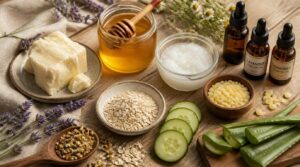
Before you mix anything, you need to know what you’re working with. Every great homemade skin care recipe starts with a handful of key ingredients, each one doing its own job for your skin. Let’s break down the essentials you’ll want in your kit.
Once you’ve got your ingredients lined up, this guide on how to combine skin care ingredients safely will help you figure out the right order and pairings for the best results.
Carrier Oils and Their Skin Benefits
Before adding a single herb, pick your oil wisely, since it’s the base everything else relies on. Jojoba oil mimics your skin’s own sebum, absorbing fast without greasy residue. Grapeseed oil stays light for oily, acne-prone skin. Avocado and olive oil run richer, better for dry patches. Coconut oil feels heavier, great for body blends, less ideal on your face. These plant-based oils provide essential fatty acids that nourish and protect the skin’s natural barrier.
Choosing the right oil matters most, since it’s the base every skin care recipe relies on
Essential Oils and Safe Dilution
Once your carrier oil is picked, essential oils add the scent and skin perks. But safe dilution matters most. Adult skin tolerates 2-3% (12-18 drops per ounce), while faces need just 0.5-1%.
- Lavender: 2% max
- Tea tree: 2% max
- Lemon: 2% max, avoid sun
- Cinnamon bark: 0.5% max
Always patch test first.
Natural Butters and Waxes
Once your oils are diluted, your recipe needs body.
Shea butter melts into skin fast, packing vitamins A and E.
Cocoa butter brings firmness and a protective barrier.
Beeswax thickens balms and locks in moisture, while jojoba oil and coconut oil round out texture.
Unrefined butters stay fresh 12-24 months if stored cool and dark, so run a quick shelf life check before big batches.
Skin-Loving Botanicals and Extracts
Once your butters set up, botanicals give your formula its personality.
Calendula extract calms redness and feels soothing on sensitive skin. Aloe vera gel hydrates while doubling as a gentle skin-conditioning base. Green tea extract brings antioxidants that help defend against daily damage.
Tea tree oil, used at low dilution, targets blemish-prone spots. Turmeric adds warmth and brightening in small, careful amounts.
Together, these botanical extract benefits turn simple carrier oils into real homemade beauty products, backed by nature and good sense.
How to Set Up a Safe DIY Skin Care Workspace
Great skin care starts with a clean, careful setup, not just good ingredients. Your workspace matters just as much as your recipe, from the tools you use to how you store the finished product. Let’s walk through the five key steps that keep your DIY creations safe and effective.
Hygiene Practices and Protective Gear

Clean hands make clean products. Wash up before you start, wear gloves for messy steps, and skip touching your face while mixing.
If you’re targeting dark spots, pairing good hygiene with the right mix of ingredients matters too—this guide to skin care ingredients for hyperpigmentation and dark spots breaks down what actually works without causing irritation.
Splash risk? Add eye protection. Long sleeves, secured cuffs, and hair covered keep contamination out.
Remove gloves carefully, then wash hands again. Good PPE fit matters, gaps let germs sneak through your clean workspace.
Cleaning and Disinfecting Tools
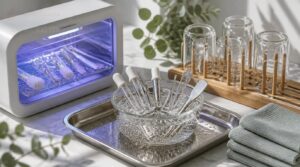
That leftover spatula gunk? It can wreck a whole batch before it even touches your skin.
Sanitizing solutions matter: 70% isopropyl alcohol kills 99.9% of bacteria in 30 seconds. Try UV light sterilization for chemical-free backup, or reusable wipe preparation with silver-ion cloths.
- Brush cleaning methods — nylon brushes for bottles
- Drying rack usage — air-dry 24 hours
- Store tools in a truly clean workspace
Natural Preservatives and Shelf Life
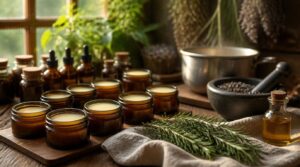
Wondering why your homemade cream turned rancid in weeks? Natural preservatives like vitamin E and rosemary extract work, but only in oil-based formulas.
| Preservative | Best For | Shelf Life |
|---|---|---|
| Vitamin E | Oils, balms | 6-12 months |
| Rosemary extract | Anhydrous blends | Up to 2 years |
| Synthetic (phenoxyethanol) | Water-based | 12-18 months |
Glycerin and honey won’t cut it. Broad-spectrum protection needs real testing, not wishful thinking.
Measuring and Balancing PH Levels
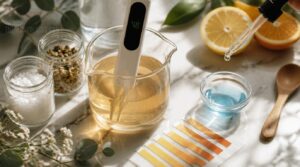
Your skin loves acidity, so your formula should too. Test with pH strips for quick checks, or grab a digital meter for precision within 0.01 pH, calibrated weekly with buffer solutions.
Toners target pH 5-5.5. Creams sit at 4.5-6. Use citric acid to lower pH, or baking soda’s cousin, sodium bicarbonate—skip that one, it’s too gritty. This keeps sodium benzoate and potassium sorbate working hard for you.
Safe Storage and Packaging Tips
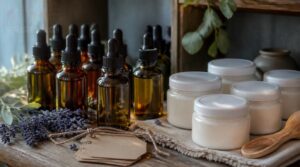
All that careful mixing deserves a container that won’t let it go to waste. Store oils in dark glass to block light, lotions in HDPE plastic for airtight, leakproof durability.
Always label with mix dates. Keep everything cool and dry, away from steamy bathrooms.
Good storage stretches shelf life, cuts waste, and keeps your DIY savings intact.
Top 5 Products for Homemade Skin Care
You don’t need a cabinet full of supplies to get started, just a few trusted staples. Having the right base ingredients on hand makes every recipe easier and more reliable. Here are five products worth keeping in your DIY stash.
1. Aztec Secret Indian Healing Clay Mask
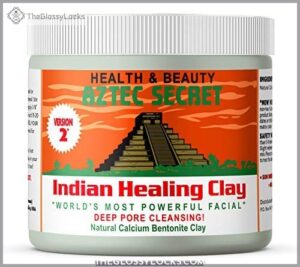
This clay basically works like a magnet for gunk. Aztec Secret is pure calcium bentonite clay from Death Valley, packed with over 50 minerals and that negative charge that pulls oil and bacteria right out of your pores.
Mix equal parts clay with apple cider vinegar in a glass or plastic bowl (never metal), spread it on, and let it dry 5–10 minutes for sensitive skin or up to 20 for normal skin.
Wash it off, moisturize, and you’re good.
| Best For | Anyone wanting an affordable, natural way to deep-clean pores, calm skin irritation, or refresh hair and skin using a simple clay treatment at home. |
|---|---|
| Natural Ingredients | 100% Calcium Bentonite Clay |
| Patch Test Recommended | Yes |
| Skin Use | Face, Hair, Body |
| External Use Only | Yes |
| Best For | Deep Pore Cleansing |
| Storage Requirement | Keep Dry, Sealed |
| Additional Features |
|
- Made from 100% natural calcium bentonite clay with no added chemicals
- Versatile enough for facial masks, hair treatments, body wraps, foot soaks, and clay baths
- Packaged securely with a shrink wrap and tamper-proof sticker to keep it fresh
- Can cause excessive dryness or redness if left on too long, especially on sensitive skin
- Requires a patch test before facial use, which adds an extra step
- For external use only, so it’s not suited for any internal or ingestible applications
2. Seven Minerals Organic Aloe Vera Gel
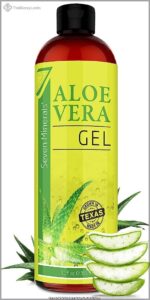
After that clay mask, your skin wants a truce, not another battle. That’s where Seven Minerals Organic Aloe Vera Gel comes in.
This one’s NSF/ANSI 305 certified organic, with 98.7% organic ingredients made from freshly cut aloe leaves, not the powdered stuff some brands water down. It’s grown right in Southern Texas, so you’re getting freshness without the shipping delays that can degrade quality.
Instead of xanthan gum or carbomer, it uses a natural agar thickener, giving you a clear, thin gel that soaks in fast with zero sticky residue. That makes it perfect for layering under makeup or mixing into your own moisturizers.
Beyond soothing sunburn, it works on minor cuts, rashes, and shaving irritation too. Just keep it refrigerated after opening, and patch test first if your skin’s sensitive. Simple, clean, and genuinely useful.
| Best For | Anyone with sensitive, sunburned, or irritated skin who wants a clean, fast-absorbing gel without sticky residue or synthetic thickeners. |
|---|---|
| Natural Ingredients | 98.7% Organic Aloe |
| Patch Test Recommended | Yes |
| Skin Use | Face and Body |
| External Use Only | Yes |
| Best For | Sensitive Irritated Skin |
| Storage Requirement | Refrigerate After Opening |
| Additional Features |
|
- Made from freshly cut aloe leaves for higher purity, not diluted powder
- Absorbs quickly with no sticky residue, thanks to the natural agar thickener
- NSF/ANSI 305 certified organic with 98.7% organic ingredients
- Requires refrigeration after opening to stay fresh
- Not suitable for deep wounds, severe burns, or infected skin
- Texture and color may vary slightly between batches
3. UpNature Tea Tree Essential Oil
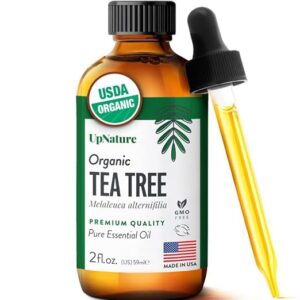
Breakouts calling for backup? Reach for tea tree oil next.
UpNature’s version is steam-distilled from Melaleuca leaves, 100% pure, and packaged in amber glass with a dropper cap for easy dispensing.
Never apply it straight, though. Dilute with a carrier oil like jojoba first, then mix into your aloe gel or cleanser for spot treatments. Patch test always.
It’s for external use only, but a few drops go a long way toward calmer, clearer-looking skin.
| Best For | Anyone dealing with occasional breakouts who wants a natural, DIY-friendly spot treatment they can customize with their own carrier oils and skincare products. |
|---|---|
| Natural Ingredients | 100% Pure Tea Tree Oil |
| Patch Test Recommended | Yes |
| Skin Use | Spot Treatment |
| External Use Only | Yes |
| Best For | Occasional Breakouts |
| Storage Requirement | Store in Amber Glass |
| Additional Features |
|
- 100% pure, steam-distilled tea tree oil with no fillers or additives
- Amber glass bottle with dropper cap protects potency and makes dosing easy
- Versatile enough to mix into shampoo, carrier oils, or DIY beauty blends
- Must be diluted before use, so it’s not a grab-and-go solution
- Requires a patch test first, adding an extra step before you can use it
- Not suitable for internal use or undiluted application, limiting how it can be used
4. Shea Organics Colloidal Oatmeal Powder
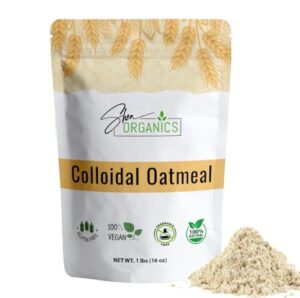
After all that spot-treating, your skin might just want a break. That’s where Shea Organics Colloidal Oatmeal Powder comes in — 100% pure milled oats, no fillers or fragrance added.
This fine, food-grade powder dissolves easily into warm baths or mixes into a soothing paste with honey or yogurt. It’s gentle enough for eczema-prone skin and babies alike.
Store it in a sealed, dry container, since humidity causes clumping. A little sprinkle goes a long way toward calmer, comfortable skin.
| Best For | Anyone dealing with dry, itchy, or sensitive skin who wants a gentle, natural addition to their bath or skincare routine. |
|---|---|
| Natural Ingredients | 100% Pure Oats |
| Patch Test Recommended | Not Specified |
| Skin Use | Bath and Skin |
| External Use Only | Yes |
| Best For | Dry Itchy Skin |
| Storage Requirement | Sealed Dry Container |
| Additional Features |
|
- Made from 100% pure, natural oats with no additives or fillers
- Finely milled for easy mixing into baths, pastes, or DIY soap bases
- Packaged in a resealable bag to help maintain freshness
- Not meant for eating, even though it’s food-grade quality
- Can clump if it’s exposed to humidity or not stored properly
- Results may vary depending on your skin type and how consistently you use it
5. Pura D’or Organic Vitamin E Oil
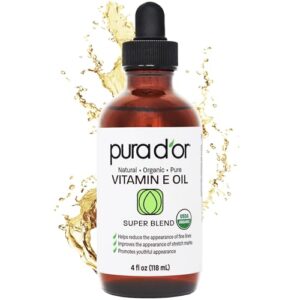
Once your oat soak dries down, your skin still wants a little extra love. That’s where Pura D’or Organic Vitamin E Oil steps in, blending seven USDA organic oils — argan, jojoba, rosehip, apricot, almond, avocado, and sunflower — into one lightweight formula.
Each bottle delivers 70,000 IU of Vitamin E, absorbing fast with zero greasy residue. Use it on your face, hair ends, or cuticles.
Patch test first. Store away from sunlight, and the amber glass keeps it stable.
| Best For | Anyone with dry skin on their face, body, or hands who wants a lightweight, fast-absorbing oil that layers well under makeup or moisturizer without feeling greasy. |
|---|---|
| Natural Ingredients | USDA Organic Oil Blend |
| Patch Test Recommended | Not Specified |
| Skin Use | Face, Body, Hair |
| External Use Only | Yes |
| Best For | Overall Hydration |
| Storage Requirement | Store in Amber Glass |
| Additional Features |
|
- Blends seven USDA organic oils into one multi-purpose formula for face, body, hair ends, and cuticles
- Delivers a strong 70,000 IU dose of Vitamin E per bottle
- Absorbs quickly with no greasy residue, making it easy to layer under other products
- May not offer enough occlusion for very dry or compromised skin barriers
- Natural plant oil scent may still be noticeable to those who prefer unscented products
- Amber glass bottle can break if dropped
Customizing Homemade Skin Care for Your Skin Type
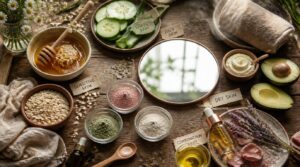
No two faces are exactly alike, and your skincare shouldn’t be either. Once you know your skin type and its quirks, picking the right ingredients gets a lot easier. Here’s how to match your recipes to what your skin actually needs.
Formulas for Dry, Oily, or Sensitive Skin
Your skin type calls the shots on your formula. Dry skin wants rich emollients like shea butter or jojoba oil to seal in moisture. Oily skin balances better with lightweight squalane, no heavy residue. Sensitive skin craves soothing, fragrance-free ingredients like allantoin or bisabolol.
That’s DIY skincare done right, all-natural and made just for you.
Ingredients for Acne and Blemish Concerns
When blemishes strike, reach for tea tree oil: diluted to about 3%, it fights acne bacteria fast.
- Tea tree oil (antibacterial)
- Bentonite clay (draws out oil)
- Zinc oxide (calms pores)
- Niacinamide (regulates sebum)
- Aloe vera (soothes redness)
Always patch-test tea tree oil first. Frankincense, geranium, and lavender oil add gentle, calming support too.
Ingredients for Anti-Aging and Brightening
Turning back the clock takes patience, but the right actives make a real difference. A vitamin C serum with tetrahexyldecyl ascorbate (3-5%) brightens gently, while niacinamide (4-5%) firms and evens tone.
Start retinol low, around 0.05-0.1%, and build up. Pair alpha arbutin (1-2%) with vitamin E for antioxidant support.
Combining actives boosts results without irritating skin.
Adjusting Recipes for Seasonal Skin Needs
Weather changes your skin’s needs, so your routine should shift too. Switch to lighter lotions in humidity, richer creams when wind hits.
- Add carrier oils for wind barrier protection
- Lighten up in heat, cleanse after sweat
- Reduce actives during strong sun exposure
- Keep your pH balanced toner year-round
- Patch test seasonal swaps before committing
Use natural preservatives so moisturizing treatments stay fresh longer.
Frequently Asked Questions (FAQs)
What is the 4 2 4 rule in skincare?
This Korean ritual splits cleansing into timed phases: four minutes oil massage, two minutes water cleanser, then four minutes rinsing (warm to cool). Each step builds pH balance and nourishment, giving your DIY skincare routine that spa-day glow.
How to get Korean glass skin at home?
Layer it in: double cleansing, fermented essence, then a hydrating sheet mask. Add honey or oat masks, finish with antioxidant moisturizer and daily sunscreen. Consistency, not fancy products, builds that dewy, plumped glow.
Which is the best homemade skin care?
Honestly, there’s no single winner. The best homemade skin care matches your skin type: clay masks for oily skin, aloe gel for sensitive skin, oatmeal for dry, irritated skin. Customizing DIY skincare beats any one-size-fits-all recipe.
What are the best natural ingredients for skin care?
Your best bets are jojoba oil for balance, shea butter and natural butters for richness, rosehip oil for antioxidants, and green tea for soothing. Pair them with gentle essential oils and carrier oils to round out any DIY mixture.
How can I make homemade skin care at home?
A crowded bathroom cabinet, yet nothing that actually fits your skin. Beginner recipes fix that. Grab kitchen staples, follow a simple step-by-step guide, and build a Facial Wash, Facial Scrub, or Facial Mask using natural ingredients you trust.
How do I create my own skin care product?
Start by knowing your skin type, then move into ingredient sourcing and recipe formulation. Prep your tools, test pH and patch-test for safety, then package right. That’s the real path from DIY skincare to homemade skin care that actually works.
What is the best homemade skincare recipe?
A gentle oat and honey mask wins for most skin types. Mix ground oats, honey, and plain yogurt into a paste, apply 10 minutes, then rinse. Simple, soothing, effective homemade skincare you’ll want on repeat.
How can I start making natural skincare products?
You don’t need a lab coat, just a clean workspace and one easy project. Pick a clay mask or aloe gel, gather basic tools, label your batch, and enjoy your first homemade skincare win.
Is making homemade skin care recipes worth it?
More control, more savings, more skin-friendly results, yes, it’s worth it. Homemade skincare gives real cost benefits and ingredient control, plus less waste. The only trade-off? A little time investment while you learn the basics.
How do you make DIY skincare products?
Picture it like cooking: pick your goal, choose skin-friendly ingredients, prep your tools, and follow simple mixing techniques.
With sanitized equipment, right batch sizing, and clear labeling basics, homemade natural skin care recipes come together easily, even for total beginners.
Conclusion
Picture your bathroom shelf, glass jars catching morning light, each one holding something you actually understand. That’s the real reward here.
Once you know how to make natural skin care products at home, you stop guessing and start trusting your own hands. Your skin gets honest ingredients. Your wallet gets a break too.
Keep your tools clean, your ratios precise, and your curiosity alive. This isn’t a one-time project, it’s a skill you’ll keep using, batch after glowing batch.