This site is supported by our readers. We may earn a commission, at no cost to you, if you purchase through links. This content is for general informational and educational purposes only and is not a substitute for professional medical, dermatological, or nutritional advice.

Your skin starts losing collagen at a rate of about 1% each year after your mid-20s. That decline doesn’t announce itself. Then one morning you catch your reflection at an unflattering angle and wonder when those lines around your eyes moved in.
As skin thins and loses its glow, a best bronzer for mature skin that melts in without settling into lines can restore warmth without emphasizing texture.
Genetics load the gun, but daily habits pull the trigger. Sun exposure alone drives up to 80% of visible skin aging, which means most wrinkles aren’t inevitable, they’re accumulated.
Just as sun damage builds up silently over years, nutrient gaps show up gradually too, which is why some people turn to black sesame seeds for gray hair prevention as part of a proactive daily routine.
The good news: how to prevent wrinkles and fine lines comes down to a handful of consistent, evidence-backed habits. Get those right, and you’re working with your skin’s biology instead of against it.
Table Of Contents
- Key Takeaways
- Prevent Wrinkles With Daily Sun Protection
- Use Retinoids to Support Collagen
- Hydrate and Strengthen Your Skin Barrier
- Add Antioxidants and Skin-Healthy Nutrition
- Change Habits That Accelerate Wrinkles
- Prevent Expression and Sleep Wrinkles
- Frequently Asked Questions (FAQs)
- Why am I wrinkling so fast?
- What vitamin deficiency causes fine lines?
- Can you reverse fine lines and wrinkles?
- How to reduce wrinkles and fine lines naturally?
- How to prevent wrinkles & fine lines?
- What causes wrinkles & fine lines?
- Does aging affect the appearance of fine lines & wrinkles?
- How to prevent premature wrinkles?
- How can I reduce fine lines?
- How to maintain a healthy skin & prevent fine lines?
- Conclusion
Key Takeaways
- Sun exposure causes up to 80% of visible skin aging, so daily broad-spectrum SPF 30, reapplied every two hours, is your single most powerful defense against wrinkles.
- Retinoids (prescription tretinoin or over-the-counter retinol) are the most proven way to rebuild collagen, but you need to start slow and apply them at night to avoid irritation and sun breakdown.
- A strong skin barrier—built with ceramides, hyaluronic acid, and occlusives—keeps existing lines plumped and prevents new ones from forming as easily.
- Everyday habits like quitting smoking, sleeping on your back, managing stress, and eating antioxidant-rich foods work alongside your skincare routine to slow collagen breakdown from the inside out.
Prevent Wrinkles With Daily Sun Protection
Sun exposure causes most visible aging, and it’s the one factor you can control every single day. Prevention doesn’t require anything complicated or expensive, just a few consistent habits done correctly. Here’s what actually works, starting with the product you should never skip.
A good daily sunscreen habit pairs well with other protective routines — like understanding the difference between corns and plantar warts so foot discomfort never sidelines your outdoor walks.
Broad-spectrum sunscreen paired with a few targeted actives forms the backbone of most effective anti-aging routines for women.
Apply Broad-Spectrum SPF 30

If wrinkles worry you, start here: broad-spectrum SPF spectrum sunscreen, 30 sunscreen, every single day. SPF 30 blocks about 97% of UVB rays, but broad-spectrum labeling is what catches deeper-penetrating UVA rays too—the main driver of photoaging. Sunburn fades; UVA damage accumulates quietly for years.
Apply it to your face and neck daily, rain or shine, indoors or out. That’s dermatologist-recommended, non-negotiable protection. Even on cloudy days, up to 80% of UV rays penetrate cloud cover, making daily protection essential.
Daily sun protection practices should include consistent sunscreen use regardless of weather.
Reapply Sunscreen Every Two Hours

One coat isn’t enough. Sunscreen breaks down under UV exposure and sweat, so reapply every two hours—sooner if you’re sweating, swimming, or the UV index climbs past 6.
- Use about 1 ounce (a shot glass) for face, neck, and body
- Reapply immediately after swimming or towel-drying
- Shorten intervals to 90 minutes in high UV index
- Set a phone alarm as your reminder
Wear Hats and Sunglasses

Alarms only cover exposed skin—your eyes and scalp need their own shield. Choose a hat with a 3-inch brim minimum, blocking up to 50% of facial UV.
| Feature | Look For | Why |
|---|---|---|
| Brim | 3-4 inches | Blocks 50-60% UV |
| Lenses | UV400 rated | Filters 100% UVA/UVB |
| Frame | Wrap-around | Blocks side UV |
Polarized lenses cut glare too.
Choose UV-Protective Clothing

Your shirt does more than sunscreen alone. Fabric with a UPF 50+ rating blocks 98% of UV rays, protecting collagen synthesis and slowing photoaging.
- Choose tight weave fabrics like twill
- Pick darker colors for higher absorption
- Wear loose fit for full coverage
- Follow care guidelines to preserve UPF
Wash cold, skip bleach, and your protection stays intact wash after wash.
Avoid Peak Sun Exposure

Between 10 AM and 4 PM, UV rays hit hardest, with solar noon delivering peak intensity. Check your local UV index: above 6, seek shade.
Snow, water, and sand reflect UV onto skin, so shade alone won’t fully protect you.
| Surface | UV Reflected | Risk Level |
|---|---|---|
| Snow | 80% | Extreme |
| Water | 25% | Moderate |
| Sand | 15% | Low-Moderate |
Use Retinoids to Support Collagen
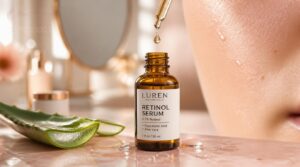
If sunscreen protects your skin, retinoids rebuild it from within. This vitamin A derivative is the closest thing dermatology has to a proven wrinkle fighter. Here’s what you need to know before adding one to your routine.
Retinol Versus Prescription Tretinoin
Not all retinoids work the same. Tretinoin binds directly to receptors within hours; retinol needs weeks to convert. That’s why tretinoin needs a prescription while retinol sits on drugstore shelves.
If you’re patient enough to wait out retinol’s slower timeline, pairing it with the right formula matters just as much—this guide to best skincare products for men breaks down which options actually deliver results.
- Faster collagen gains
- Higher irritation risk
- Real insurance savings
Tretinoin often costs less with coverage; retinol runs $10–50 out-of-pocket, unlimited by prescription.
Start With Low Strength
Patience beats potency here. Patch test first: dab retinoid on your forearm, wait 24 hours, then jawline, 24 more.
Start 0.025% retinol, three nights weekly. Buffer with ceramide moisturizer 10 minutes prior—cuts stinging a lot.
| Week | Action |
|---|---|
| 1–2 | 0.025%, 3x/week |
| 3–4 | Every other night |
| 5+ | 0.05% if tolerated |
| Ongoing | Track redness daily |
Track redness each morning; reduce frequency if irritation persists.
Apply Retinoids at Night
Sunlight breaks down retinoids, so nighttime application is non-negotiable. Cleanse, wait 5–10 minutes until skin is dry, then apply a pea-sized dose to your whole face.
Give it 5–10 minutes to absorb before your next step. This timing protects potency and helps steady collagen production and cell turnover while you sleep.
Reduce Dryness and Irritation
Peeling and redness? Common at first. Use a pH balanced cleanser, skip scrubs, and follow with a humectant moisturizer containing hyaluronic acid or glycerin to hydrate.
Layer on ceramide repair or niacinamide barrier serums to rebuild skin barrier function. Aloe vera soothes flare-ups fast. These steps protect moisture retention without slowing your results.
Expect Gradual Visible Results
Real change takes weeks, not days. At 0.3% retinol, expect fine line softening around ten weeks. Tretinoin users see results faster, often by six to eight weeks.
Track progress with monthly photos in the same light. Consistency yields results: cumulative cell turnover climbs 30% higher than baseline by week twelve, with collagen gains building steadily for months after.
Hydrate and Strengthen Your Skin Barrier

A dry, damaged skin barrier makes every fine line look deeper than it is. Getting your skin’s moisture levels right takes more than just slapping on any lotion. Here’s what actually works to hydrate and protect your skin barrier.
Moisturize With Ceramides
Think of ceramides as the mortar between bricks in your skin’s barrier — without them, moisture escapes and wrinkles deepen. Look for 0.5% to 2% ceramide NP in your moisturizer; that range restores barrier function best.
Pair it with cholesterol and fatty acids for natural balance. Sensitive skin? Fragrance-free ceramide creams cut redness by 30% within two weeks.
Plump Lines With Hyaluronic Acid
Once ceramides lock the barrier down, hyaluronic acid fills what’s left. Its molecules hold 1,000 times their weight in water, plumping lines from within.
Hyaluronic acid molecules hold a thousand times their weight in water, plumping fine lines from within
- Apply HA serum to damp skin for best absorption
- Low molecular weight formulas penetrate deeper layers
- Pair with peptides to boost collagen production
Result: firmer, more elastic skin within weeks.
Seal Moisture With Occlusives
Hyaluronic acid needs a lid to stay put. That’s where occlusives come in—petrolatum, dimethicone, or squalane, sealing water in for up to 8 hours.
Dry skin? Go heavier. Oily skin? Try lightweight silicones. Apply 5-10 minutes after your serum, layering last at night. Occlusives also protect retinoids and vitamin C from breaking down, supporting real skin barrier repair while you sleep.
Avoid Harsh Over-Exfoliation
Sealing in moisture won’t help if you’re scrubbing away your barrier faster than it can rebuild. Limit exfoliation to three times weekly max, always leaving a recovery day. Watch for redness lasting over two hours or unusual tingling—early signs you’ve gone too far.
- Enzymatic exfoliants (gentle, fruit-derived)
- Low-concentration AHAs (0.5–2%)
- pH-balanced formulas (4.0–5.5)
- Smooth jojoba bead scrubs
- Lactic acid (pH 3.6–4.5)
Use a Bedroom Humidifier
Winter heating can drop indoor humidity below 20%, pulling moisture straight from your skin overnight. A bedroom humidifier set to 40–60% helps with dermal hydration and barrier lipid replenishment while you sleep.
| Type | Best For |
|---|---|
| Cool mist | Small rooms, quiet |
| Evaporative | Larger spaces |
Place it 3 feet from your headboard, clean weekly with vinegar solution, and choose one with auto shutoff.
Add Antioxidants and Skin-Healthy Nutrition

Sun protection and retinoids handle a lot of the work, but your skin also needs help fighting damage from the inside out. Free radicals from pollution and UV exposure break down collagen daily, and antioxidants are your best defense against them. Here’s what to add to your routine and your plate.
Apply Topical Vitamin C
Think of vitamin C as your skin’s morning bodyguard, neutralizing free radicals before they damage collagen.
- Choose a stable vitamin C serum (L-ascorbic acid, properly packaged)
- Match strength to your tolerance
- Apply to clean, dry skin
- Pair with sunscreen each morning
- Watch for irritation
This antioxidant helps with UV protection and skin elasticity, but it complements sunscreen; it doesn’t replace it.
Strengthen Skin With Niacinamide
A true multitasker, niacinamide earns its spot in your routine by working on several fronts at once.
It boosts ceramide synthesis, supporting barrier repair, while calming sebum regulation and shrinking visible pores. It also fades hyperpigmentation and encourages collagen boosting for better skin elasticity.
Look for 5% concentration daily. Within weeks, your skin barrier feels stronger and texture noticeably smoother.
Combine Vitamins C and E
Why choose one antioxidant when they work better as a team? Vitamin C serum application goes on clean, dry skin each morning; follow with vitamin E topical layering in your moisturizer.
Vitamin C targets water-soluble damage, vitamin E controls fat-soluble oxidation. Together, they boost antioxidant product stability and photoprotection—true combination serum benefits worth building into your daily antioxidant routine.
Eat Antioxidant-Rich Foods
Your plate is a skincare tool. A colorful, antioxidant-rich diet works from the inside out, complementing your vitamin C serum.
- Berries (blueberries, strawberries)
- Dark leafy greens (kale, spinach)
- Nuts, seeds, and legumes
- Pomegranates, green tea, and colorful vegetables
Eating this rainbow mix delivers carotenoids and flavonoids that fight free radicals daily.
Maintain Healthy Daily Hydration
Water is skin food. Aim for daily water goals of roughly 9–13 cups, timed with meals and workouts, plus water-rich foods like cucumber and watermelon.
| Source | Amount | Benefit |
|---|---|---|
| Water | 2.7–3.7L | Hydration |
| Cucumber | 150ml/100g | Elasticity |
| Coconut water | 250mg K+ | Electrolyte balance |
Consistent hydration boosts skin cell turnover and elasticity within two weeks.
Change Habits That Accelerate Wrinkles

Skincare products only go so far if daily habits work against you. Certain behaviors quietly speed up collagen breakdown and skin aging from the inside out. Here’s what to change first.
Quit Smoking
Smoking accelerates wrinkles by breaking down collagen and starving skin of oxygen. Quitting brings quick payoffs: circulation improves within weeks, breathing eases within months. Cravings peak early but fade within two to four weeks.
- Call 1-800-QUIT-NOW for free counseling
- Try nicotine patches, gum, or lozenges
- Ask about cessation medications
- Pair NRT with counseling for best odds
Support doubles your success rate.
Prioritize Consistent Quality Sleep
Quitting cigarettes protects your collagen; good sleep rebuilds it. Aim for 7-9 hours with consistent sleep timing night to night. Dim lights an hour before bed to support circadian rhythm stabilization, and skip late scrolling.
Finish your nighttime skincare routine early, then sleep on your back to prevent sleep wrinkles from pillow pressure and facial muscle tension.
Manage Stress and Muscle Tension
Good sleep resets your skin, but stress undoes it fast — tension shows up as repeated facial expressions etched into lines.
Try:
- Box breathing (4-4-4-4) for five minutes
- Progressive muscle relaxation to release jaw and shoulder tension
- 10 minutes of mindful meditation daily
- Evening stress journaling to ease facial muscle tension
Even a single session lowers cortisol and softens facial muscle contractions.
Exercise for Healthy Circulation
Calming your mind helps, but movement matters just as much. Aerobic exercise — brisk walking, cycling, swimming — boosts circulation and oxygen delivery to skin cells.
Walking activates calf muscles, pumping blood upward against gravity. Regular activity improves blood vessel flexibility, aiding nutrient delivery. Aim for 150 weekly minutes, varying intensity, to support lasting skin elasticity.
Limit Pollution Exposure
Under a haze of city soot, your skin ages faster than you’d think. Fine particulate matter and nitrogen dioxide break down collagen just like UV rays do.
Run an air purifier indoors, wear a mask on high-pollution days, choose low VOC paints and cleaners, and route walks through green space instead of traffic corridors.
Prevent Expression and Sleep Wrinkles

Your face moves and rests in patterns you rarely notice, but your skin does. Small habits like squinting or a favorite sleep position can quietly deepen lines over time. Here’s what to watch for, and how to protect the areas most at risk.
Avoid Repeated Squinting
Every squint etches a line. Repeated facial expressions like squinting create expression lines that deepen into permanent forehead wrinkles over time.
Try the 20-20-20 rule: look 20 feet away for 20 seconds every 20 minutes. Keep lighting at 300 lux, use anti-glare screens, and update your prescription. Correct corrective lens usage and regular breaks cut squint episodes by a lot.
Sleep on Your Back
Your pillow position matters as much as your skincare routine. Back sleeping keeps your face off the fabric entirely, preventing the compression that creates sleep wrinkles.
This posture helps maintain natural spinal alignment, keeping your neck neutral and your skin unwrinkled by morning. Pair it with proper pillow height support and a silk pillowcase to reduce friction further while you rest.
Reduce Overnight Facial Pressure
Gravity works against you at night. Head elevation of 6-10 degrees on a wedge pillow cuts facial swelling nearly 15%, improving lymphatic drainage.
Try:
- Wedge or memory foam incline
- Extra pillow height support
- Firm sleep surface support
- Silk pillowcase pairing
Combined with a facial roller or gua sha, you’re targeting sleep wrinkles from multiple angles, not just one.
Protect Crow’s Feet Areas
Crow’s feet form fastest, since eyelid skin has almost no oil glands. Use broad-spectrum SPF daily, UV400 sunglasses, and eye cream with peptides or niacinamide.
| Habit | Effect |
|---|---|
| SPF daily | Blocks UV aging |
| Sunglasses | Cuts squinting |
| Facial yoga | Tones muscles |
| Silk pillowcase | Less friction |
| Stress relief | Eases tension |
Consult a Dermatologist Early
Waiting for wrinkles to show wastes precious time. A dermatologist spots micro wrinkles early, then builds suited treatment using retinoids and antioxidants.
- Baseline photos track skin elasticity
- Follow-ups every 4-6 weeks
- Prescription-strength collagen support
- Progress monitoring with real data
- Professional education on layering products
Early, dermatologist-recommended antiaging skincare beats damage control every time.
Frequently Asked Questions (FAQs)
Why am I wrinkling so fast?
Think of your skin as a garden left unweeded: genetic predisposition, hormonal changes, chronic dehydration, poor sleep quality, environmental toxins, sun exposure, and repeated facial expressions all compound, accelerating skin aging faster than genetics alone would dictate.
What vitamin deficiency causes fine lines?
Several deficiencies show up as fine lines: Vitamin A Deficiency, Vitamin C Deficiency, Vitamin E Deficiency, Vitamin B3 Deficiency, and Vitamin D Deficiency.
Correcting them with retinoids, an antioxidant-rich diet, niacinamide benefits, vitamin D, and broad-spectrum SPF restores collagen and barrier strength.
Can you reverse fine lines and wrinkles?
Yes, to a real degree. Retinoids boost collagen production while hyaluronic acid plumps existing lines.
Add vitamin C, niacinamide, and daily broad-spectrum SPF, and you’ll see genuine improvement—though deep wrinkles usually need professional treatment for full reversal.
How to reduce wrinkles and fine lines naturally?
Natural" skincare isn’t magic in a jar. It’s broadspectrum SPF, an antioxidant-rich diet, hydration, and quitting smoking—paired with facial massage, natural oils, aloe vera, green tea compresses, and stress relief for genuinely resilient, youthful skin.
How to prevent wrinkles & fine lines?
Protect collagen and elastin daily: broad-spectrum SPF, night retinoids, and a ceramide moisturizer build your foundation.
Add vitamin C serum, an antioxidant-rich diet, steady hydration, and silk pillowcase sleep to guard skin barrier strength long-term.
What causes wrinkles & fine lines?
Five forces fuel facial aging: UV radiation breaks down collagen fibers, dehydration flattens plumpness, oxidative stress from free radicals damages cell membranes, and repeated facial expressions carve permanent grooves through collagen breakdown and elastin degradation.
Does aging affect the appearance of fine lines & wrinkles?
Absolutely — skin thinning, collagen loss, and elastin decline all deepen lines over time. Dryness increases, elasticity drops, and years of UV radiation plus repeated facial expressions turn fine lines into lasting wrinkles.
How to prevent premature wrinkles?
Daily SPF, retinoids, and steady hydration form your foundation.
Cut sun exposure, quit smoking, and add antioxidants like vitamin C for real protection.
Good sleep habits and consistent skincare routines keep collagen strong, delaying fine lines before they start.
How can I reduce fine lines?
Combine consistent SPF use with nightly retinoids to boost collagen. Layer in hydration barrier strategies, ceramides, hyaluronic acid, plus an antioxidant nutrition plan and better sleep habit adjustments — together they visibly soften fine lines over time.
How to maintain a healthy skin & prevent fine lines?
Protect your skin daily with sunscreen and antioxidants, apply nightly retinoids, sleep on your back for 7-9 hours, manage stress, eat healthy fats, and stay hydrated—small consistent habits build lasting skin strength.
Conclusion
Picture your skin a decade from now—still supple, still catching light instead of shadow. That’s not luck; it’s built daily, one sunscreen layer, one retinoid night at a time.
Small choices compound quietly, reshaping your future face. Mastering how to prevent wrinkles and fine lines means consistency, not flawlessness. Your skin remembers every habit you give it.
Start today, stay patient, and let time work with you. That’s the real, quiet mastery you’re building here.