This site is supported by our readers. We may earn a commission, at no cost to you, if you purchase through links. This content is for general informational and educational purposes only and is not a substitute for professional medical, dermatological, or nutritional advice.

Cartridge razors cost the average man over $200 a year—and deliver a shave that, for many, still ends in redness, ingrown hairs, and that raw, sandpapered feeling. Safety razors solve most of that, but walk into any shaving forum and you’ll find enough debate about blade gap, comb geometry, and handle balance to make a beginner’s head spin.
The good news: selecting the right safety razor doesn’t require an engineering degree. It requires knowing three things about yourself—your skin, your beard, and your grip—then matching those to a razor built for exactly that combination.
Table Of Contents
- Key Takeaways
- How to Select a Safety Razor
- Safety Razor Types Explained
- Choose The Right Razor Head
- Compare Handle, Weight, and Grip
- Top 5 Safety Razors to Consider
- Blades, Cost, and Maintenance
- Frequently Asked Questions (FAQs)
- How to choose the first safety razor?
- How to pick a safety razor blade?
- Is there a difference between cheap and expensive safety razors?
- What is the best safety razor for a beginner?
- What is the difference between butterfly and 3 piece safety razors?
- Is there a difference in safety razors?
- Can women use safety razors effectively?
- How often should razor blades be replaced?
- What shaving cream works best with safety razors?
- Are safety razors allowed in carry-on luggage?
- Conclusion
Key Takeaways
- Your skin sensitivity, beard coarseness, and hand grip should drive your razor choice more than brand reputation or price tag.
- A closed-comb razor with mild blade exposure is the smartest starting point for beginners — it teaches good technique without punishing small mistakes.
- Safety razors cost under $20 a year in blades versus $200-plus for cartridges, and the break-even point often hits within just two to three months.
- Blade brand matters as much as the razor itself — start with a sampler pack to find what your skin actually likes before committing to a bulk buy.
How to Select a Safety Razor
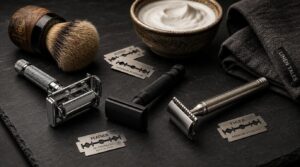
Picking the right safety razor isn’t about finding the "best" one—it’s about finding the right one for you. A few key factors will steer that decision more than anything else.
If you’re just starting out, this guide to safety razors for beginners breaks down exactly what to look for without the overwhelming jargon.
Here’s what to weigh before you buy.
Match The Razor to Your Shaving Experience Level
Where you’re in your shaving journey matters more than most people realize. Beginners benefit most from a closed-comb razor with low blade aggressiveness and user skill level in mind — the learning curve for wet shaving is real.
- Beginner Aggression Level: Closed-comb, mild exposure
- Intermediate Blade Choice: Open-comb or medium gap
- Pro Adjustable Settings: Dial-in aggressiveness per session
- Light-weight Daily Razor / Compact Travel Design: Ideal for quick, controlled routines
Understanding blade sharpness impacts shave quality helps you select the appropriate blade count.
Choose Based on Skin Sensitivity and Irritation Risk
Skin sensitivity changes everything about which razor you reach for.
If you’re prone to razor burn or redness, mild, forgiving razor paired with fragrance-free products and an alcohol-free shave formula dramatically lowers your irritation risk.
Low-pressure technique matters just as much — letting the blade glide rather than pressing reduces friction.
Finish with barrier-repair aftercare to keep skin calm between shaves.
Consider Beard Thickness and Hair Coarseness
Your beard’s hair shaft diameter and follicle density shape which razor actually works for you. Genetic factors and hormonal influence determine whether your hair grows thick and wiry or fine and sparse.
Coarser hair needs blade aggressiveness and an adjustable blade gap to cut cleanly. Conditioning oils help soften that stiffness before you shave, making blade selection for new shavers noticeably easier.
Decide Whether You Want a Mild, Medium, or Aggressive Shave
Once you understand hair volume and texture, blade aggressiveness becomes the next decision.
A mild razor suits daily shavers with low irritation tolerance — fewer nicks, gentler contact.
Medium works for most beard types with balanced shaving cadence and pressure control.
An aggressive shave delivers speed for coarse hair but demands precise shave pressure.
Match your comfort threshold first, then adjust for closeness.
Prioritize Comfort, Control, and Ease of Blade Changes
Three things tend to make or break a daily shave: weight and balance, handle grip, and how fast you can swap a blade.
A butterfly mechanism with a quick-release latch cuts blade change speed to under 30 seconds.
Look for vibration damping in the head, a clear blade seating indicator, and an ergonomic head angle that keeps your wrist relaxed across every pass.
Safety Razor Types Explained
Safety razors aren’t one-size-fits-all — the way a razor is built affects how you load blades, how it feels in your hand, and how much control you have over your shave. differences between each type makes it easier to pick something that actually fits your routine.
Here’s a breakdown of the main designs you’ll come across.
One-piece Butterfly Safety Razors

The butterfly safety razor might be the most satisfying tool in wet shaving — twist the handle, the cap pops open, drop in a blade, twist it shut. Done. The Cap Twisting Mechanism manages Integrated Blade Alignment automatically, so there’s no fiddling. Most feature a durable Zinc Alloy Body with chrome plating. Watch for Soap Residue Build-up around the hinge — rinse and dry thoroughly. The built-in Blade Disposal Chamber makes used blade removal genuinely hands-free.
Here’s why this design wins for newcomers:
- Speed — blade changes take seconds, not minutes
- Confidence — the butterfly mechanism eliminates misalignment anxiety entirely
- Simplicity — one piece means fewer parts to lose or cross-thread
Two-piece Screw-together Safety Razors
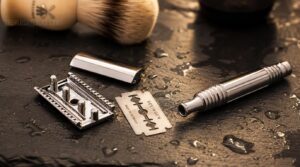
Where the butterfly design prioritizes speed, the two-piece screw-together trades speed for a more deliberate, tactile experience.
You unscrew the head counterclockwise, seat your blade for precise Baseplate Alignment, then thread it back with light Assembly Torque — no stripped threads, no rattle.
Thread Compatibility is standardized across most brands, and the design naturally limits Micro-adjustment Tolerance, delivering consistent blade exposure every time.
Three-piece Safety Razors
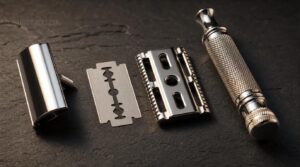
If you want most control over your razor, a three-piece design delivers exactly that. The Threaded Head Design separates into cap, blade, and handle — Three-Piece Disassembly at its simplest.
Cap Clamping Mechanism seats the blade precisely, while Interchangeable Comb Plates let you swap between mild and aggressive setups.
Tight Plate Thread Tolerances mean consistent blade gap and blade exposure every time.
Double-edge Safety Razors
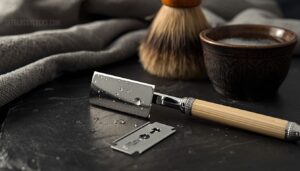
A double edge safety razor is the preferred option for good reason — one blade, two usable edges, and a cost per shave that drops below $0.20. Blade sharpness varies by brand, but blade compatibility is nearly universal.
Solid razor ergonomics and grip material keep your shaving technique consistent, while maintenance tools stay minimal.
Blade recycling is simple too — just save the used edges.
Single-edge and Injector-style Razors
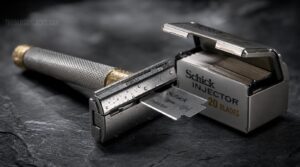
Single-edge injector razors work differently than you might expect. Instead of unscrewing a head, you slide a fresh blade in via the Injector Magazine Design — no fingertip contact with the sharp edge. The slim head maneuverability lets you navigate tight spots cleanly.
Key advantages worth knowing:
- Reduced blade chatter gives each pass a controlled, precise feel
- Slim Head Maneuverability suits detailed work around the nose and jaw
- Rust-Resistant Metals like brass or stainless steel keep the head durable long-term
The Parker Adjustable Injector uses standard injector-compatible blades, making blade exchange affordable and straightforward.
Adjustable Versus Fixed Safety Razors
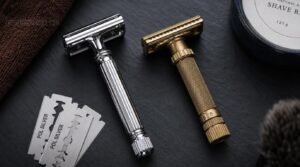
Fixed razors lock you into one blade exposure level — reliable, simple, fewer parts to wear out.
Adjustable safety razor designs let you dial in blade exposure calibration across a range of aggressiveness settings, which matters when your beard grows unevenly or when your skin sensitivity shifts.
The durability of that adjustment mechanism depends heavily on build quality, so stainless steel or brass models hold up far better long-term.
Choose The Right Razor Head
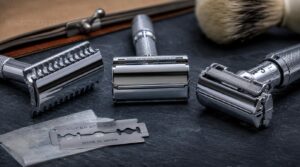
The razor head is where the real shaving decisions happen. It controls how aggressively the blade meets your skin, which makes it one of the most important things to get right.
Here’s what you need to know about each head type before you buy.
Closed-comb Razors for Beginners and Sensitive Skin
A closed-comb razor is your safest starting point. That protective bar delivers mild comb protection — buffering the blade from direct skin contact, which dramatically cuts razor burn risk.
Here’s what makes it beginner-friendly:
- Soft lather glide reduces tugging on sensitive skin
- Balanced weight feel encourages light, consistent pressure
- Easy blade swap with two- or three-piece builds
- Controlled blade exposure minimizes weepers
- Works perfectly for daily sensitive skin safety routines
Open-comb Razors for Thicker or Longer Facial Hair
If closed-comb is the gentle entry point, an open-comb razor is what you reach for when your beard means business. Those exposed teeth aren’t just aggressive for show — they handle lather delivery, hair clearance, and clog prevention in ways a closed-comb simply can’t match on thick growth.
| Open-Comb Benefit | Why It Matters |
|---|---|
| Lather Delivery | Keeps cream flowing around dense whiskers |
| Hair Clearance | Teeth guide coarse strands toward the blade cleanly |
| Clog Prevention | Open gaps shed buildup mid-stroke |
| Reduced Drag | Fewer passes needed over heavy growth |
| Blade Angle Consistency | Maintains steady contact even through thick patches |
Hair coarseness impact on razor choice is real here — blade aggressiveness and shave closeness both increase with an open-comb head. Pair it with a long handle and the right razor weight’s impact becomes obvious: steadier strokes, less effort.
Straight-bar Heads for Predictable Daily Shaving
When you want a no-drama daily shave, the straight bar head is your reliable go-to. The bar holds your blade at a consistent blade angle, giving you steady exposure and predictable glide stroke after stroke.
Weight distribution stays balanced, pressure stays even, and cleaning is genuinely easy.
Corrosion-resistant materials keep shave consistency and shave comfort locked in long-term.
Slant-bar Heads for Coarse Beard Growth
If your beard runs thick and wiry, a slant head changes everything.
Its diagonal cutting edge slices through coarse hair with a natural slicing action efficiency, that straight bars simply can’t match — resulting in reduced hair tugging and fewer strokes per pass.
Use a light grip technique, let weight distribution do the work, and you’ll notice even wear maintenance keeps the head performing consistently longer.
Blade Gap, Blade Exposure, and Razor Aggressiveness
Three numbers quietly control every shave: gap measurement, blade exposure, and guard span.
The blade gap — that tiny space between blade edge and safety bar — directly drives aggressiveness scaling. Wider gap, more bite.
Blade exposure control works alongside it: positive exposure feels sharper, negative feels gentler.
Adjustable blade gap mechanisms, like the Rockwell 6S plates, let you fine-tune blade angle and razor aggressiveness levels as your technique develops.
Why Mild Razors Are Usually Best for Beginners
If you’re just starting out, a mild razor is your best teacher. It rewards patience and good form without punishing small mistakes.
A mild razor teaches patience and good form without punishing small mistakes
- Gentle Skin Interaction keeps friction low, reducing razor burn
- Low Pressure Shave discourages the urge to scrape
- Predictable Angle Control builds muscle memory faster
- Reduced Nicks Risk boosts confidence during the learning curve
- Simple Blade Maintenance keeps upkeep stress-free
Compare Handle, Weight, and Grip
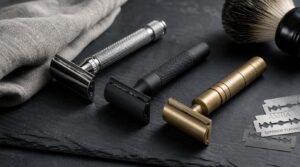
The blade and head matter, but the handle is what connects you to the razor—and getting it wrong makes everything harder.
How a razor fits your hand affects pressure, control, and whether you walk away with a clean shave or a nick.
Here’s what to look at before you buy.
Short Handles for Tighter Control
Short grips — usually under 80 mm — put your hand closer to the blade, which sharpens feedback sensitivity dramatically. You feel every angle shift and pressure change in real time.
That compact ergonomics profile improves blade angle control around tricky spots like the jawline and upper lip. Less wrist leverage means tighter, more deliberate strokes — exactly the pressure modulation beginners need to build confidence.
Long Handles for Larger Hands
If your hands feel cramped on a standard 80 mm grip, a long handle safety razor changes everything. Extended Reach Design models — generally 90 to 100 mm — give larger hands a natural, relaxed hold without squeezing.
The Ergonomic Contour and Weight Distribution Shift toward the tail improves blade guidance around the jaw and neck.
Knurled brass or stainless steel grips with Adjustable Grip Length even work with gloves, keeping Glove Compatibility practical for winter grooming routines.
Lightweight Razors Versus Heavier Razors
Weight is one of those things that sneaks up on you.
Lightweight razors (under 60 g) demand careful blade alignment sensitivity — even small micro-movements shift the cutting angle.
Heavier models (70–110 g) use inertia benefits to glide steadily over stubble, reducing user fatigue mid-shave. The blade exposure effect also feels more pronounced on heavyweight safety razors, so beginners often find heavier, well-balanced designs more forgiving.
Why Balance Affects Shaving Pressure
Balance is really where razor ergonomics and grip come together. When head-handle equilibrium is off, you unconsciously compensate by pressing harder — and that’s where irritation starts.
A well-balanced razor distributes shave pressure evenly across the blade edge, giving you blade chatter reduction and smoother strokes.
Good weight and balance also improve feedback sensitivity, so you feel exactly what the blade is doing.
Knurled and Textured Grips for Wet Hands
Once balance is sorted, grip becomes your next concern — and in wet shaving, texture isn’t just cosmetic.
Diamond knurling creates dozens of tiny contact points that actually hold against soapy, damp fingers.
Rubber grip inserts add softness without sacrificing slip resistance.
Proper texture depth balance — roughly 0.2 to 0.5 mm — keeps razor ergonomics and grip design working together, delivering grip fatigue reduction without irritating your palm.
Brass, Stainless Steel, Aluminum, and Other Materials
Material choices in safety razor construction shape how a razor feels and lasts.
Brass offers natural antimicrobial properties — helpful in a damp bathroom — plus warm aesthetics and easy machining.
Stainless steel adds rigidity and surface finish options like brushed or polished textures.
Aluminum’s impressive strength-to-weight ratio and anodizing benefits keep things light and rust-free.
Titanium takes both further, with enhanced heat dissipation and lifetime durability.
Top 5 Safety Razors to Consider
With so many options out there, narrowing it down to a starting point makes the decision a lot easier. These five razors cover different budgets, skill levels, and shaving styles — so there’s likely a good match for where you’re right now.
Here’s a closer look at each one.
1. WEISHI Butterfly Open Safety Razor
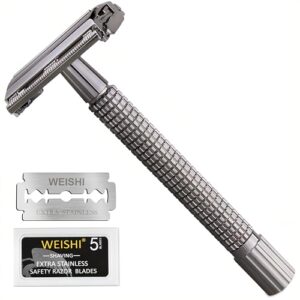
The WEISHI Butterfly Open is a smart starting point if you’re new to safety razors. Its twist-to-open head means blade changes take seconds — no disassembly, no fumbling.
The 4.3-inch handle weighs about 74 grams, which gives you a steady, controlled grip without feeling like you’re holding a brick.
It works with any standard double-edge blade, so you’re never locked into expensive proprietary refills.
For the price, it’s hard to beat as a first razor.
| Best For | Anyone just getting into safety razors who wants an easy, no-fuss blade-change experience without spending a lot upfront. |
|---|---|
| Head Type | Butterfly open |
| Blade Compatibility | Standard DE |
| Handle Material | All-metal |
| Weight | 2.54 oz (74g) |
| Blades Included | 5 stainless DE |
| Reusable Design | Yes |
| Additional Features |
|
- The butterfly twist-to-open head makes swapping blades dead simple — no taking anything apart.
- Works with any standard DE blade, so you’re not stuck paying for overpriced proprietary refills.
- The weighted all-metal handle gives you a solid, controlled grip that naturally reduces how hard you press down.
- There’s a learning curve — getting the angle and pressure right takes practice, and beginners might nick themselves early on.
- The shave quality is partly up to the blade you use, so cheap blades can hold it back.
- Long-term durability is decent but not bulletproof — the hinge can wear out after years of daily wet use.
2. Feather Double Edge Safety Razor
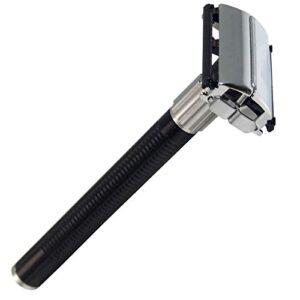
If you want a razor that takes sharpness seriously, the Feather Double Edge Safety Razor is worth a close look. At $20.95, it’s genuinely affordable, and the butterfly head makes blade swaps clean and simple — no loose parts, no awkward fumbling.
It weighs just 34 grams, so control comes from your hand, not the razor’s mass. The 4.05-inch handle suits most grips.
Two Hi-Stainless blades are included, but budget for more — you’ll go through them.
| Best For | Anyone new to traditional wet shaving who wants a low-cost, easy-to-use safety razor without committing to a heavy all-metal setup. |
|---|---|
| Head Type | Butterfly open |
| Blade Compatibility | Standard DE |
| Handle Material | Plastic |
| Weight | 34g (0.14 oz) |
| Blades Included | 2 stainless DE |
| Reusable Design | Yes |
| Additional Features |
|
- Butterfly head makes blade changes quick and safe — no touching the sharp edge
- Super affordable at $20.95, and replacement blades run about $0.35 each
- Light 34g weight gives you good control, especially during longer shaves
- Plastic build feels a bit cheap and might not hold up as well over time
- Takes some technique to get a truly close shave — angle and pressure matter
- Only two blades in the box, so you’ll need to stock up pretty quickly
3. Baili Butterfly Open Safety Razor
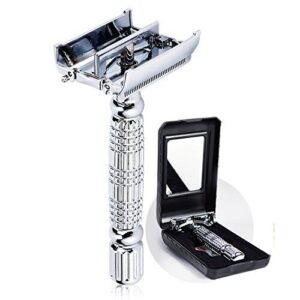
The Baili Butterfly Open Safety Razor punches above its price. You get a zinc-alloy chrome-finished handle at 94 mm — slightly longer than average — which gives you solid reach across the jaw and neck.
The butterfly twist-to-open head makes blade changes genuinely painless, especially when you’re still getting comfortable with the process.
At 70 grams, it’s light enough to feel controlled but substantial enough to reduce hand pressure.
The included platinum blade is serviceable, but upgrading to a quality DE blade makes a noticeable difference.
| Best For | Anyone just getting into double-edge shaving who wants a forgiving, easy-to-load razor without spending a lot. |
|---|---|
| Head Type | Butterfly open |
| Blade Compatibility | Standard DE |
| Handle Material | Zinc-alloy metal |
| Weight | 2.47 oz (70g) |
| Blades Included | 1 platinum DE |
| Reusable Design | Yes |
| Additional Features |
|
- The butterfly open head makes swapping blades quick and easy — no fumbling with loose parts.
- Zinc-alloy build feels solid and balanced in hand, which helps you let the razor do the work.
- Works for way more than just your face — legs, underarms, bikini line, all fair game.
- The included platinum blade is pretty mediocre — you’ll want to grab better blades right away.
- No way to adjust blade gap, so it’s a bit one-size-fits-all if you have coarser or finer hair.
- The handle runs a little short, which can feel awkward when shaving larger areas like legs.
4. Merkur Mk34c Double Edge Razor Heavy Duty Short Handle

The Merkur MK34C has earned its reputation as the go-to beginner razor — and it’s not hard to see why. Its brass, chrome-plated body weighs just 59 grams, striking a balance that lets the razor do the work without dragging across your face.
The closed-comb head keeps blade exposure forgiving, so nicks stay rare.
That short 3-inch handle might feel compact at first, but it gives you precise, instinctive control — especially useful when edging around sideburns or a goatee.
| Best For | Beginners ready to ditch cartridge razors and experienced shavers who want a reliable, precise daily driver. |
|---|---|
| Head Type | Closed comb |
| Blade Compatibility | Standard DE |
| Handle Material | Brass |
| Weight | 2.08 oz (59g) |
| Blades Included | None |
| Reusable Design | Yes |
| Additional Features |
|
- The closed-comb head is forgiving — great for learning proper angle and pressure without constant nicks
- Replacement blades cost next to nothing, so it pays for itself fast
- That short brass handle gives you real control for detail work like goatees and sideburns
- There’s a learning curve — wet shaving takes a little practice before it clicks
- The short handle won’t feel right if you have larger hands or like more grip leverage
- Upfront cost adds up once you factor in a brush, soap, and stand
5. Edwin Jagger Classic Double Edge Razor
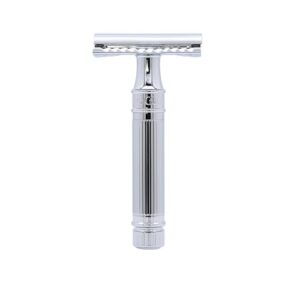
The Edwin Jagger DE89 sits in a sweet spot that’s hard to argue with. Its three-piece brass body, chrome-plated for corrosion resistance, delivers a mild-to-medium shave that won’t punish you for an off angle. The closed-comb head keeps irritation low, making it a smart pick for sensitive skin.
At around $40 with blades included, it undercuts the Merkur on price while matching it on build quality.
The knurled handle grips well — even with wet hands.
| Best For | Anyone new to double-edge razors or those with sensitive skin who want a close, clean shave without breaking the bank. |
|---|---|
| Head Type | Screw-top |
| Blade Compatibility | Standard DE |
| Handle Material | Solid brass |
| Weight | ~68g total |
| Blades Included | Derby DE blades |
| Reusable Design | Yes |
| Additional Features |
|
- Solid brass body with chrome plating feels premium and built to last
- Works great for all body areas thanks to the long, weighted handle that helps you hold the right angle
- Way cheaper long-term than cartridge razors — blades cost next to nothing
- The smooth handle can get slippery when wet, so you’ll want to be careful
- Screw-top blade changes take a little more effort than twist-open designs
- Metal parts can rust if you don’t dry the razor off after each use
Blades, Cost, and Maintenance
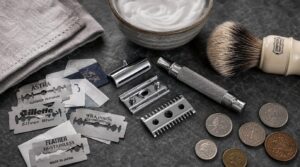
Picking the right razor is only half the equation — the blade you put in it matters just as much. Between brand differences, blade costs, and keeping your razor in good shape, there’s more to think about than most people expect.
Here’s what you need to know before your next shave.
How Double-edge Blade Brands Differ
double edge blade brands are created equal — and the differences go deeper than price.
Steel composition affects edge retention, while blade thickness influences both blade aggressiveness and longevity metrics.
Edge angle, usually 15–18 degrees, shapes how the blade bites into your beard.
Blade coating — PTFE, platinum, or chromium — directly impacts sharpness, comfort, and durability.
Market pricing reflects these trade-offs honestly.
Why Beginners Should Try Blade Sampler Packs
Think of a blade sampler pack as a low-stakes testing ground. Instead of committing to 100 blades of one brand, you get budget-friendly testing across five to ten blades with different coatings and aggressiveness levels.
That blade variety shortens your learning curve dramatically — you’ll identify what reduces irritation and what doesn’t within a few weeks.
Convenient storage and clear labeling make blade sampling genuinely beginner-friendly.
Blade Sharpness, Coating, and Skin Comfort
Once you’ve sampled a few brands, you’ll notice sharpness and coating matter just as much as the razor itself. Edge geometry — the angle and grind of the blade — determines how cleanly it cuts without tugging.
Ceramic and platinum blade coating types reduce friction management issues substantially. For dermal sensitivity or razor burn prevention, prioritize coated blades with consistent blade metallurgy over raw sharpness alone.
How Often to Replace Safety Razor Blades
Blade lifespan ties directly to shaving frequency and skin sensitivity. Most people get five to seven shaves per blade before dullness sets in — daily shavers closer to five, every-other-day shavers up to ten.
Sensitive skin? Swap sooner, around four to six shaves.
Hard water accelerates corrosion, shortening your replacement interval by a shave or two. Tugging or redness means replace it now.
Safety Razor Cost Versus Cartridge Razor Cost
Replacing blades more often actually saves you money — that’s where the cost per shave analysis gets interesting.
A safety razor handle runs $25 to $60 upfront, but blades cost roughly $0.15 to $0.40 each. Cartridge blades? Closer to $1 to $2 per cartridge.
Your annual blade spend stays under $20 with safety razors. The break-even timeline is often just two to three months.
Cleaning, Drying, and Storing Your Razor
Saving money on blades only pays off if your razor actually lasts. Moisture management is the real secret — rinse with warm water after every shave, then pat dry completely.
Rust prevention starts with ventilated storage, like a razor stand rather than a closed cabinet.
Occasional blade sanitation with an alcohol wipe helps, and a drop of light oil on moving parts keeps everything smooth.
Travel Rules for Safety Razors and Loose Blades
Traveling with your safety razor doesn’t have to be stressful — but knowing the rules upfront saves you a headache at the checkpoint.
- Remove blades before carry-on; grips alone pass TSA regulations without issue
- Follow Carry‑on Blade Rules: loose blades go in checked luggage only
- Use a Blade Guard Standards-approved cover for Checked Luggage Packing
- Declare blades at international borders per International Customs Declarations requirements
- Follow Security Inspection Tips: pack razors in clear bags for faster screening
Frequently Asked Questions (FAQs)
How to choose the first safety razor?
Start simple. For beginners, a mild closed-comb, two-piece razor with a short handle gives you control while your shave angle training develops naturally — without fighting an overly aggressive blade gap.
How to pick a safety razor blade?
Pick blades based on your razor’s aggressiveness, your skin type, and your budget.
Stainless steel offers solid corrosion resistance; coated blades add smoothness.
At roughly $10 each, double edge blades are hard to beat.
Is there a difference between cheap and expensive safety razors?
Yes — mostly in build quality, not shave performance. Expensive razors offer precision machining, coating durability, and material longevity.
budget options still shave well. The real long-term savings come from blades, not the razor’s price tag.
What is the best safety razor for a beginner?
Merkur 34C is your safest bet — closed-comb, forgiving blade edge angle, brass material durability, and beginner-friendly.
Its butterfly mechanism keeps blade changes simple.
Most user review insights crown it the best safety razor overall.
What is the difference between butterfly and 3 piece safety razors?
Butterfly razors open with a simple twist, making blade exchange fast and beginner-friendly.
Three-piece razors use screw disassembly for better alignment accuracy, cleaning ease, and long-term stability — though they take a little more effort.
Is there a difference in safety razors?
Oh sure, they’re all just "a blade on a stick" — except they’re not. Head style, blade metallurgy, handle balance, and adjustability create wildly different shaving experiences from razor to razor.
Can women use safety razors effectively?
Absolutely — women find safety razors work beautifully, especially given hormonal skin changes that affect sensitivity.
The single blade reduces irritation, and proper shaving angle technique around curves makes body hair texture far easier to manage.
How often should razor blades be replaced?
Replace your blade every 3 to 7 shaves.
Dullness cues, like tugging or razor burn, are your real guide — coarse hair dulls blades faster, so trust your skin feedback over a fixed shave count.
What shaving cream works best with safety razors?
A rich cushioning lather works best — think thick creams with glycerin or plant-based oils.
They protect sensitive skin, improve blade glide, and pair well with a brush for proper wet shaving technique.
Are safety razors allowed in carry-on luggage?
Yes — with one catch.
TSA Blade Policies allow the razor handle in carry-on, but blades must go in checked baggage.
For Carry-On Safety, pack blades separately and always verify International Travel Restrictions before flying.
Conclusion
Like finding the right tool after years of using the wrong one, learning how to select a safety razor changes more than your morning routine—it changes your relationship with shaving entirely. Match the razor to your skin, your beard, and your grip, and every pass of the blade starts feeling deliberate rather than desperate.
The redness fades. The cost drops.
What’s left is a clean, confident shave you actually look forward to.