This site is supported by our readers. We may earn a commission, at no cost to you, if you purchase through links. This content is for general informational and educational purposes only and is not a substitute for professional medical, dermatological, or nutritional advice.
Most people spend years buying the wrong products before realizing that skincare results come down to a handful of ingredients doing the real work. Not trends, not price tags—ingredients.
The skin’s aging process follows predictable biological patterns, and science has identified specific compounds that interrupt those patterns in measurable ways.
Retinoids rebuild collagen where it’s thinning. Vitamin C neutralizes the free radicals breaking it down. Hyaluronic acid pulls moisture into layers most creams never reach.
Knowing which effective anti-aging skin ingredients actually deliver—and why—changes the way you shop, layer, and build a routine that holds up long-term.
Table Of Contents
- Key Takeaways
- Best Effective Anti-Aging Skin Ingredients
- Retinoids for Cell Turnover and Collagen Support
- Vitamin C for Brightening and Antioxidant Protection
- Hyaluronic Acid for Hydration and Plumping
- Peptides for Firmness and Skin Resilience
- Niacinamide for Barrier Repair and Uneven Tone
- Ceramides for Moisture Retention and Barrier Strength
- Sunscreen as The Most Important Anti-aging Essential
- How Each Ingredient Fights Aging
- Retinoids Reduce Fine Lines, Wrinkles, and Texture
- Vitamin C Helps Fade Dark Spots and Discoloration
- Hyaluronic Acid Softens Dryness-related Fine Lines
- Peptides Support Collagen and Elastin Appearance
- Niacinamide Reduces Redness, Pores, and Dullness
- Ceramides Protect Aging Skin From Moisture Loss
- Antioxidants Defend Against UV and Pollution Damage
- Top 10 Anti-Aging Skincare Products
- 1. La Roche Posay Pure Retinol Serum
- 2. CeraVe Resurfacing Retinol Serum
- 3. TruSkin Vitamin C Anti Aging Serum
- 4. Medicube Triple Collagen Hydrating Firming Cream
- 5. COSRX Hyaluronic Acid Serum
- 6. Peter Thomas Roth Peptide Wrinkle Serum
- 7. Glow Recipe Guava Vitamin C Serum
- 8. Youth To The People Vitamin C Brightening Serum
- 9. Neutrogena Hydro Boost Hyaluronic Serum
- 10. Skinfix Triple Lipid Peptide Face Cream
- Building an Anti-Aging Skincare Routine
- Combining Ingredients Safely and Effectively
- Introduce One Active Ingredient at a Time
- Pair Vitamin C With Sunscreen for Daytime Protection
- Use Retinoids With Moisturizer to Reduce Irritation
- Combine Peptides With Niacinamide for Barrier Support
- Apply Hyaluronic Acid on Damp Skin
- Avoid Over-exfoliating Mature or Sensitive Skin
- Adjust Ingredient Strength Based on Skin Tolerance
- Frequently Asked Questions (FAQs)
- What is the most powerful anti-aging ingredient?
- What is the one anti-aging ingredient that actually works?
- What are the key ingredients in anti-aging skin care?
- What are the best anti-aging ingredients for the skin in 2024?
- What are the best anti-aging ingredients?
- What is the best anti aging serum?
- What are the best skincare products for aging skin?
- Does anti-aging skin care stop aging?
- What ingredient is best for anti-aging?
- What are the 4 skin ingredients proven to work?
- Conclusion
Key Takeaways
- most clinically proven anti-aging ingredient you can use, rebuilding collagen and accelerating cell turnover in ways no other single compound can match.
- Your routine works best when you layer ingredients strategically—vitamin C in the morning for antioxidant defense, retinoids at night for repair, and hyaluronic acid on damp skin to lock in hydration before moisturizer.
- Daily broad-spectrum SPF isn’t optional; UV damage breaks down collagen faster than any serum can rebuild it, making sunscreen your highest-return investment in long-term skin health.
- Introducing one active ingredient at a time, building tolerance gradually, and pairing complementary ingredients like peptides with niacinamide gives your skin the best chance to respond without irritation.
Best Effective Anti-Aging Skin Ingredients
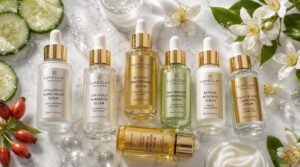
Not all skincare ingredients are created equal, and a few have the clinical evidence to back up their claims. Your skin’s ability to stay firm, bright, and hydrated depends on what you’re actually putting on it.
Choosing a formula with proven actives makes all the difference, which is why the best body lotions for men tend to lead with ingredients like hyaluronic acid and niacinamide.
Here are the seven ingredients worth your attention.
Retinoids for Cell Turnover and Collagen Support
Retinoids are among the most proven effective anti-aging skin care ingredients available. Retinol works through retinoid conversion steps — moving from retinol to retinoic acid — triggering gene activation pathways that boost collagen production and accelerate cell turnover.
MMP inhibition slows collagen breakdown, visibly reducing fine lines over time.
For tolerability, gradual introduction matters: follow a retinoid dose escalation approach, starting two nights per week.
The accelerated skin cell turnover effect also improves texture and tone.
Vitamin C for Brightening and Antioxidant Protection
While retinoids rebuild from within, Vitamin C works on what the world throws at your skin — UV rays, pollution, daily oxidative stress. As a Vitamin C antioxidant benefit in skincare, L-ascorbic acid neutralizes free radicals before they degrade collagen or deepen hyperpigmentation.
Synergistic antioxidants like vitamin E enhance this effect.
Three things worth knowing:
- Ideal pH (below 3.5) determines how well it absorbs
- Stability challenges mean packaging solutions — opaque, airtight bottles — matter
- Delivery vehicles affect how deeply actives penetrate
Hyaluronic Acid for Hydration and Plumping
If Vitamin C shields your skin from daily damage, hyaluronic acid replenishes what that damage depletes — moisture. As a humectant, it pulls water into your skin through a powerful Water Retention Mechanism, holding up to 1,000 times its weight.
| HA Property | What It Does |
|---|---|
| Molecular Weight Stratification | Targets hydration at different skin depths |
| Crosslinked Hyaluronic Mesh | Locks surface moisture longer |
| Serum Concentration Effects | Higher levels = deeper plumping |
| Nighttime Hydration Boost | Repairs barrier while you sleep |
Apply your hyaluronic acid serum on damp skin for antiaging skin care that actually sticks.
Peptides for Firmness and Skin Resilience
Once your skin is well‑hydrated, peptides give it something more structural — firmness.
Think of them as tiny messengers that tell your skin to rebuild.
Key types worth knowing:
- Matrix Remodeling Peptides — target collagen production
- Copper Peptide Benefits — support elasticity and resilience
- Barrier Strength Peptides — reduce fragility over time
- Multi‑Peptide Blends — cover more ground with one formula
Peptide delivery systems and peptide technology in skincare products have made consistent skin firmness genuinely achievable.
Niacinamide for Barrier Repair and Uneven Tone
Niacinamide quietly does a lot of heavy lifting. It helps epidermal lipid balance, which means your skin barrier stays intact and reactive flare-ups calm down.
It also works on melanin pathway regulation, gradually fading acne scars and skin discoloration without irritation.
With built-in photoprotection synergy and cellular turnover support, niacinamide for barrier repair and evening skin tone is one of the smartest multitaskers in your routine.
Ceramides for Moisture Retention and Barrier Strength
Think of ceramides as the mortar between your skin’s bricks — without them, moisture slips out and irritants slip in. These lipids are central to lipid layer restoration and TEWL reduction, helping your barrier hold water longer.
Ceramide species selection matters because different types work synergistically for true barrier lipid synergy. Pseudo-ceramide integration offers a smart alternative, supporting skin barrier repair and long-term moisture retention as essential antiaging skin care ingredients.
Sunscreen as The Most Important Anti-aging Essential
Of every ingredient in your routine, daily SPF does the heaviest lifting. UVA shielding prevents the collagen breakdown that no serum can fully reverse, while broad-spectrum sunscreen blocks both burning and aging rays simultaneously.
- SPF reapplication every two hours keeps UV protection consistent and effective.
- Mineral sunscreen benefits include photostability formulas ideal for sensitive skin protection.
- SPF 30 minimum guards against cumulative sun exposure damage daily.
Since sunscreen only prevents further damage rather than reversing it, understanding how sunscreen protects against premature skin aging can help you build more realistic, long-term skincare habits.
How Each Ingredient Fights Aging
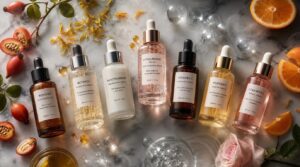
Knowing an ingredient’s name is one thing — knowing what it actually does to your skin is another. Each of the seven actives in this list targets aging through a different pathway, whether that’s rebuilding collagen, locking in moisture, or neutralizing environmental damage.
Here’s how they each work.
Retinoids Reduce Fine Lines, Wrinkles, and Texture
Retinoids are widely considered the most clinically validated ingredient for improving fine lines, wrinkles, and uneven skin texture. Retinol works by accelerating cell turnover and supporting collagen production deep in the dermis — and with proper concentration titration and irritation management strategies, most skin types can tolerate it.
Use it at night for maximum nighttime absorption boost, and always maintain retinoid-sunscreen compatibility with daily SPF.
Delivery vehicle innovation has made newer formulas far gentler, too.
Vitamin C Helps Fade Dark Spots and Discoloration
Vitamin C works by interrupting the pigment pathway modulation that drives dark spots in the first place. It inhibits tyrosinase, the enzyme that triggers melanin production, making it genuinely effective for hyperpigmentation and melasma discoloration.
Its antioxidant benefits in skincare extend beyond brightening — it also shields collagen.
Dose-dependent efficacy matters here, so choose a stable vitamin C formula between 10–20% for reliable results.
Hyaluronic Acid Softens Dryness-related Fine Lines
Dehydration is one of the sneakiest drivers of visible aging — and hyaluronic acid targets it directly. Through its Plumping Mechanism, it delivers a Surface Hydration Boost that visibly softens fine lines caused by dry skin.
Hyaluronic acid fights visible aging at its sneakiest source — dehydration — plumping fine lines from within
Daily Hyaluronic Routine works across Molecular Weight Layers to support:
- Deep moisture retention
- Skin hydration at multiple depths
- Moisture Barrier Enhancement
- Reduced appearance of dryness-driven fine lines
Peptides Support Collagen and Elastin Appearance
Think of peptides as your skin’s internal messaging system — Signal Peptide Mechanisms prompt fibroblasts to ramp up collagen production before elastin degradation takes hold.
Copper Peptide Remodeling enhances structural renewal, while Collagen Fragment Boost and Elastin Support Peptides keep skin elasticity improvement on track.
With modern Peptide Delivery Systems, peptide technology in skincare products reaches where it counts.
Niacinamide Reduces Redness, Pores, and Dullness
Where peptides build structure from within, niacinamide works on the surface — calming visible redness through Redness Soothing Pathways and Inflammation Modulation Benefits that quiets reactive skin over time. It enhances Pore Appearance Diminution, improves skin barrier function, and delivers a real Dullness Brightening Effect.
At 10%, like in Niacinamide Lotion 10, it promotes Skin Tone Uniformity and meaningful skin texture improvement — making it one of the most adaptable antiaging skin care ingredients available.
Ceramides Protect Aging Skin From Moisture Loss
While niacinamide calms the surface, ceramides work deeper — reinforcing the Lipid Matrix Reinforcement that holds your skin’s barrier together. As one of the most underrated antiaging skin ingredients, ceramides support TEWL Reduction Mechanisms by limiting moisture escape through the stratum corneum.
Glucosylceramide Benefits include improved Barrier Lipid Synergy alongside cholesterol and fatty acids.
Modern Ceramide Delivery Systems make dry skin treatment more effective, helping protect the skin barrier consistently.
- Bind moisture within the skin’s lipid layer
- Reduce transepidermal water loss over weeks
- Work synergistically with cholesterol and fatty acids
- Support barrier repair in aging or reactive skin
Antioxidants Defend Against UV and Pollution Damage
Ceramides shore up your barrier from within, but what protects your skin from the outside? That’s where antioxidants step in.
UV rays and airborne pollution generate free radicals that trigger oxidative stress, accelerating photoaging faster than almost any other environmental factor.
Through ROS Scavenging and Metal Chelation, antioxidants interrupt that damage cycle — offering real Lipid Protection and acting as a reliable Pollution Shield when used in Photostable Formulations daily.
Top 10 Anti-Aging Skincare Products
Knowing which ingredients work is one thing — finding products that actually deliver them well is another. The good news is there are solid options across every category, whether you’re focused on retinoids, vitamin C, hyaluronic acid, or peptides.
Here are ten worth considering.
1. La Roche Posay Pure Retinol Serum
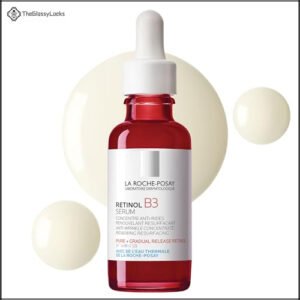
La Roche-Posay Pure Retinol Serum is a solid starting point if you’re new to retinol but still want real results. It delivers 0.3% pure retinol alongside 5% niacinamide — a pairing that helps your skin adapt while reinforcing the moisture barrier.
The lightweight texture absorbs cleanly, so layering it under your moisturizer feels easy.
Use it a few nights a week, build up gradually, and you’ll start noticing smoother texture and fewer fine lines within weeks.
| Best For | Retinol beginners, sensitive or acne-prone skin types, and anyone looking to tackle fine lines, uneven texture, or dullness without overwhelming their skin. |
|---|---|
| Price | $44.99 |
| Volume | 1.0 fl oz |
| Skin Type | All/Sensitive |
| Key Active | Retinol 0.3% |
| Fragrance-Free | Yes |
| Texture | Lightweight Serum |
| Additional Features |
|
- The 0.3% retinol 5% niacinamide combo gives you real anti-aging results while keeping irritation in check
- Lightweight and non-greasy, so it layers well under moisturizer without any fuss
- Dermatologist-tested and gentle enough for reactive skin — a rare find at this strength
- At $44.99 for 1 oz, it’s pricier than a lot of comparable retinol serums on the market
- Results take weeks of consistent use — don’t expect overnight changes
- Some users find the benefits level off after a few months, meaning you may need to rotate in stronger actives over time
2. CeraVe Resurfacing Retinol Serum
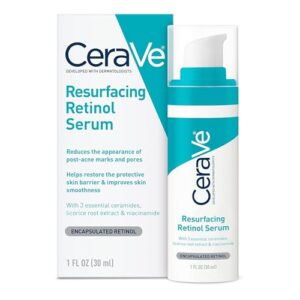
CeraVe Resurfacing Retinol Serum does something most retinol products don’t — it protects your barrier while it resurfaces. Encapsulated retinol releases gradually, so you get the cell turnover benefits without the harshness that usually comes with it.
Three ceramides (1, 3, and 6-II) work alongside niacinamide to keep your skin calm and supported through the process.
At under $19 for a targeted serum, it’s a smart, dermatologist-approved pick for tackling post-acne marks, uneven texture, and visible pores consistently.
| Best For | Anyone dealing with post-acne marks, uneven skin tone, or enlarged pores who wants retinol results without wrecking their skin barrier. |
|---|---|
| Price | $18.68 |
| Volume | 1.06 oz |
| Skin Type | All/Acne-Prone |
| Key Active | Encapsulated Retinol |
| Fragrance-Free | Yes |
| Texture | Fast-Absorbing Serum |
| Additional Features |
|
- Encapsulated retinol releases slowly, so you get the resurfacing benefits with way less irritation than typical retinol products
- Three ceramides plus niacinamide keep your barrier healthy and calm throughout the process
- At under $19, it punches well above its price point for a targeted retinol serum
- The 1 oz bottle goes fast, so you’ll be restocking more often than you’d like
- Results take weeks or months of consistent use — not a quick fix
- Sensitive skin types may still experience dryness or mild irritation, especially when starting out
3. TruSkin Vitamin C Anti Aging Serum
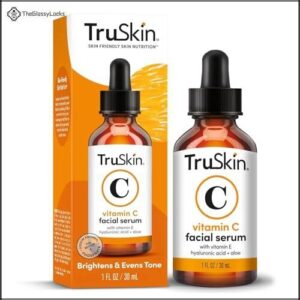
TruSkin’s Vitamin C serum brings a lot to the table for under $15. It uses a stabilized vitamin C form — Sodium Ascorbyl Phosphate — which holds up better than pure L-ascorbic acid and causes less irritation, making it a genuinely practical option for sensitive skin.
Hyaluronic acid, vitamin E, and aloe vera round out the formula, keeping hydration balanced while antioxidants do their work.
Don’t expect overnight results, but consistent use usually shows real brightness improvements within four weeks.
| Best For | Anyone on a budget who wants a gentle, daily vitamin C serum — especially those with sensitive or reactive skin who can’t tolerate stronger formulas. |
|---|---|
| Price | $14.99 |
| Volume | 1 fl oz |
| Skin Type | All/Sensitive |
| Key Active | Vitamin C (SAP) |
| Fragrance-Free | Yes |
| Texture | Water-Based Serum |
| Additional Features |
|
- Stabilized vitamin C (Sodium Ascorbyl Phosphate) is less irritating and more shelf-stable than pure L-ascorbic acid
- Packed with hydrating ingredients — hyaluronic acid, aloe vera, and vitamin E — so it pulls double duty
- Clean formula with no fragrance, parabens, or dyes, and it plays nicely with other actives like niacinamide
- Results are gradual — think weeks, not days, before you notice a real difference
- The dropper bottle exposes the formula to air over time, which can speed up oxidation
- Thin texture means you might need more product per use to get even coverage
4. Medicube Triple Collagen Hydrating Firming Cream
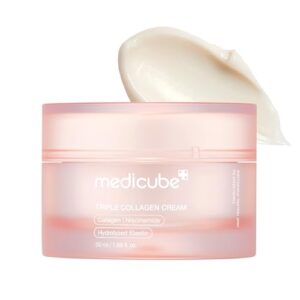
Triple Collagen Hydrating Firming Cream packs a lot into a small jar. Its triple collagen complex works alongside hyaluronic acid, hydrolyzed elastin, and shea butter to address both hydration and structural support at once.
Niacinamide rounds out the formula, helping with uneven tone and barrier repair — two things that matter more as skin matures. At $19.90, it’s approachable without cutting corners.
Some users notice a noticeable scent, but the lightweight, quickly absorbed texture makes it easy to layer under sunscreen daily.
| Best For | Anyone with mature, normal-to-dry, or sensitive skin who wants solid hydration and firming benefits without spending a lot. |
|---|---|
| Price | $19.90 |
| Volume | 1.69 oz |
| Skin Type | Mature/Sensitive |
| Key Active | Collagen Complex |
| Fragrance-Free | No |
| Texture | Lightweight Cream |
| Additional Features |
|
- Triple collagen complex plus hyaluronic acid and elastin work together to actually support skin structure, not just sit on top of it
- Lightweight texture absorbs fast, so it layers well under makeup or sunscreen without feeling heavy
- At $19.90, it punches well above its price point for the ingredient list you’re getting
- The scent is noticeable — if you’re fragrance-sensitive, that’s worth knowing upfront
- The 1.69 oz jar goes quickly if you’re using it twice a day, so budget for regular repurchases
- That "visible results in 2 weeks" claim may take longer for some people, especially when it comes to firming and texture
5. COSRX Hyaluronic Acid Serum
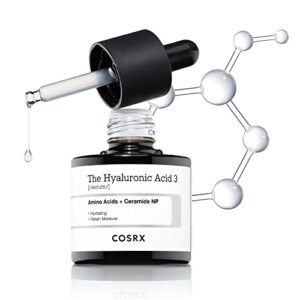
If hydration is the foundation of every anti-aging routine, COSRX’s Hyaluronic Acid Serum earns its place as a daily essential.
It delivers 3% sodium hyaluronic acid in a lightweight, fast-absorbing formula that draws moisture into the skin without heaviness or residue.
Ceramides and glycerin reinforce that barrier, so the hydration actually stays.
Apply it on damp skin before your moisturizer, and your fine lines look softer within weeks — consistently, not magically.
$20.99 for 20ml, it’s an easy commitment.
| Best For | Anyone who wants a simple, effective daily hydrator — especially if you’re starting to notice fine lines or dealing with dry, dull skin. |
|---|---|
| Price | $20.99 |
| Volume | 0.67 fl oz |
| Skin Type | All/Sensitive |
| Key Active | Hyaluronic Acid 3% |
| Fragrance-Free | Yes |
| Texture | Gel Serum |
| Additional Features |
|
- 3% hyaluronic acid is a solid concentration that actually plumps skin and softens fine lines with consistent use
- Plays well with everything — layers cleanly under moisturizer, sunscreen, or makeup with zero residue
- Clean formula (no fragrance, parabens, or sulfates) makes it a safe pick for sensitive skin types
- The 20ml bottle is tiny — regular users will burn through it fast and restock often
- The gel texture can feel thick and hard to spread unless your skin is already damp
- Despite being hypoallergenic, reactive skin types should still patch test before committing
6. Peter Thomas Roth Peptide Wrinkle Serum
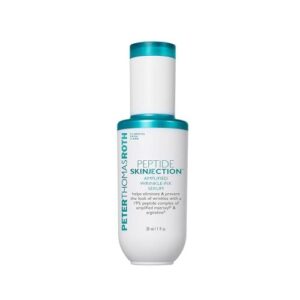
Peptides are where anti-aging science gets serious — and Peter Thomas Roth’s Peptide Wrinkle Serum delivers a strong lineup. It combines Matrixyl and Argireline actives, targeting both collagen production and muscle-derived expression lines simultaneously.
Sodium hyaluronate and squalane keep it hydrating without heaviness.
Clinical testing showed a statistically significant reduction in wrinkle depth after eight weeks of twice-daily use.
At $55.25 for 3.7 oz, it’s a real investment — one that rewards consistency over shortcuts.
| Best For | Anyone serious about tackling expression lines and fine lines who’s willing to commit to a consistent daily routine. |
|---|---|
| Price | $55.25 |
| Volume | 3.7 oz |
| Skin Type | All Types |
| Key Active | Peptides |
| Fragrance-Free | Not Stated |
| Texture | Lightweight Serum |
| Additional Features |
|
- Matrixyl and Argireline work as a team — one builds collagen, the other relaxes muscle-driven wrinkles
- Lightweight and hydrating, so it plays nice with most skin types without feeling heavy or greasy
- Clinical testing backs up the wrinkle-reducing claims after eight weeks of regular use
- Pump dispenser has a known defect issue — some bottles arrive missing or misaligned, which is frustrating at this price
- Results vary quite a bit from person to person, so it’s not a guaranteed win for everyone
- At $55.25, it’s a real commitment, especially if your skin takes its time responding
7. Glow Recipe Guava Vitamin C Serum
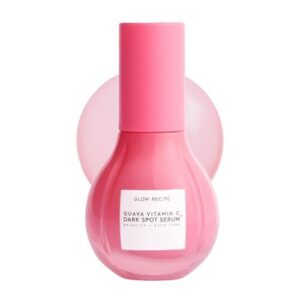
If peptides are about rebuilding from within, vitamin C is about protecting what’s already there — and Glow Recipe’s Guava Vitamin C Serum does that with a smart, layered approach. It blends five forms of vitamin C alongside tranexamic acid, ferulic acid, and guava extract, giving you brightening, antioxidant defense, and tone-evening in one lightweight gel.
At $45 for 30 ml, it’s a considered buy.
For sensitive skin, three to four times weekly works well.
| Best For | Anyone dealing with dark spots, uneven skin tone, or dullness who wants a lightweight, multi-tasking vitamin C serum — especially those who prefer clean, vegan formulas. |
|---|---|
| Price | $45.00 |
| Volume | 30 ml |
| Skin Type | All/Sensitive |
| Key Active | 5-Form Vitamin C |
| Fragrance-Free | No |
| Texture | Serum-Gel |
| Additional Features |
|
- Five forms of vitamin C plus tranexamic acid and ferulic acid make for a seriously stacked brightening lineup.
- The serum-gel texture absorbs fast and doesn’t leave that sticky, greasy feeling behind.
- Clean formula — no parabens, sulfates, mineral oil, or synthetic dyes — so you know what you’re putting on your skin.
- At $45 for 30 ml, it’s pricier than a lot of drugstore vitamin C options.
- Has a light fruity fragrance, which can be a dealbreaker for anyone with fragrance sensitivities.
- Results aren’t guaranteed — some users see a real difference, others not so much.
8. Youth To The People Vitamin C Brightening Serum
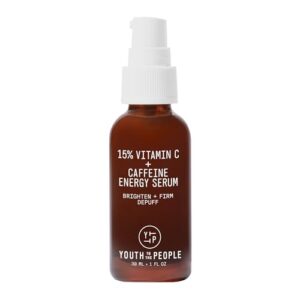
Youth To The People takes a similar brightening-first philosophy and pushes it further with a 15% L-ascorbic acid concentration — one of the more potent over-the-counter options available. Caffeine joins the formula to reduce puffiness, which makes it a strong morning pick if your face often looks tired.
It’s vegan, Leaping Bunny certified, and skips parabens, sulfates, and mineral oil entirely.
The fast-absorbing finish layers cleanly under moisturizer or makeup, making it practical for daily use.
| Best For | Anyone who wants a potent, clean Vitamin C serum that brightens skin and tackles morning puffiness — especially great for combination skin types who wear makeup daily. |
|---|---|
| Price | Varies |
| Volume | 1 fl oz |
| Skin Type | Combination |
| Key Active | L-Ascorbic Acid 15% |
| Fragrance-Free | Not Stated |
| Texture | Fast-Absorbing Serum |
| Additional Features |
|
- 15% L-ascorbic acid is one of the stronger OTC concentrations, so you’re getting real brightening power
- Caffeine helps deflate puffiness fast, which is a nice bonus for tired-looking mornings
- Vegan, Leaping Bunny certified, and free of a long list of sketchy ingredients
- It’s pricier than most Vitamin C serums, which can be hard to justify as a daily staple
- Goes out of stock often, so stocking up when you find it is a good idea
- Sensitive skin types should be cautious — some users report redness, especially near the eye area
9. Neutrogena Hydro Boost Hyaluronic Serum
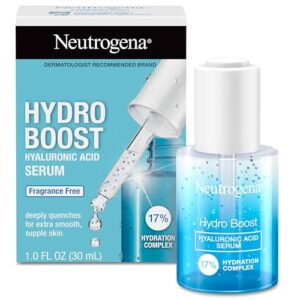
Not every effective serum needs a luxury price tag. The Neutrogena Hydro Boost Hyaluronic Serum delivers serious hydration for around $14 — and it earns that reputation.
Built around sodium hyaluronate, a smaller form of hyaluronic acid that penetrates the surface more effectively, it draws moisture into the skin and holds it there.
The lightweight water-gel texture absorbs quickly, layers cleanly under moisturizer or makeup, and won’t clog pores.
It’s fragrance-free and hypoallergenic, making it a reliable daily option for sensitive or dry skin.
| Best For | Anyone with dry, sensitive, or combination skin who wants a simple, affordable daily hydration boost without any fuss. |
|---|---|
| Price | $14.38 |
| Volume | 1 fl oz |
| Skin Type | All/Sensitive |
| Key Active | Hyaluronic Acid |
| Fragrance-Free | Yes |
| Texture | Water-Gel |
| Additional Features |
|
- Lightweight water-gel formula absorbs fast and layers well under moisturizer or makeup — no pilling, no greasy feel.
- Fragrance-free and hypoallergenic, so even reactive skin types can use it morning and night without worry.
- At around $14, it punches well above its price point for a clean, effective hyaluronic acid serum.
- The 1 oz bottle is on the small side — if you use it twice a day, you’ll be restocking pretty often.
- It’s a serum, not a moisturizer, so you’ll always need to follow it up with something to seal in that hydration.
- Results build gradually — don’t expect an overnight transformation; it takes a few weeks of consistent use to really notice the difference. If you’re not sure where to start, a gentle body exfoliator for dry skin with lactic acid or ceramides makes those first few weeks much easier on your skin.
10. Skinfix Triple Lipid Peptide Face Cream
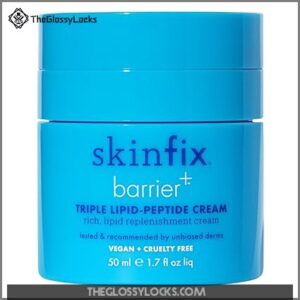
If you’re ready to step up from a serum to something more substantial, the Skinfix Triple Lipid Peptide Face Cream is worth your attention. At $54, it combines a Triple Lipid Complex and peptides to reinforce your skin barrier while delivering deep hydration through hyaluronic acid and glycerin.
Clinical results show a 26% boost in glow and 29% improvement in smoothness after four weeks.
It’s fragrance-free, non-comedogenic, and layers well under SPF — a reliable finish for dry or sensitive skin.
| Best For | Dry, sensitive, or barrier-compromised skin that needs serious hydration without fragrance or harsh ingredients. |
|---|---|
| Price | $54.00 |
| Volume | 1.7 oz |
| Skin Type | Dry/Sensitive |
| Key Active | Lipid-Peptide Complex |
| Fragrance-Free | Yes |
| Texture | Rich Cream |
| Additional Features |
|
- The Triple Lipid Complex and peptides work together to genuinely strengthen your skin barrier — not just sit on top of it.
- Clinically backed results: real improvements in glow, smoothness, and firmness after four weeks.
- Free from fragrance, parabens, silicones, and a long list of other irritants — great for sensitive skin.
- The rich texture can feel heavy if you have oily or combination skin, and may clog pores for acne-prone users.
- Some users have reported pump issues and occasional product separation — quality control isn’t perfectly consistent.
- Phenethyl alcohol is in the formula, which can irritate people who are highly sensitive to fragrance-like ingredients.
Building an Anti-Aging Skincare Routine
Knowing which ingredients work is only half the equation — how you use them together is where the real results happen. A well-structured routine keeps actives from competing with each other and gives your skin a consistent environment to repair and renew.
Here’s how to build one that actually holds up over time.
Start With a Gentle Barrier-friendly Cleanser
Think of your cleanser as the foundation everything else is built on. A gentle cleanser with pH-balanced formulas and mild surfactant systems won’t strip your skin’s natural oils the way sulfates can.
Look for:
- Low-foam textures with hydrating humectants like glycerin or hyaluronic acid
- Ceramides that reinforce skin barrier protection strategies
- Rinse residue control so nothing interferes with your actives
Apply Vitamin C in The Morning
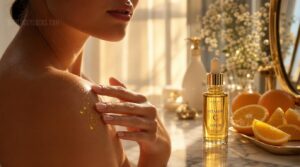
Once you’ve cleansed, reach for your vitamin C serum. Morning is the right moment — your skin is primed, and the antioxidant shield timing aligns perfectly with daytime UV and pollution exposure.
Use a serum patting technique to press it gently into the skin, letting it absorb before sunscreen. targets hyperpigmentation, helps collagen, and delivers real vitamin C antioxidant benefits in skincare.
Layer Hyaluronic Acid Before Moisturizer
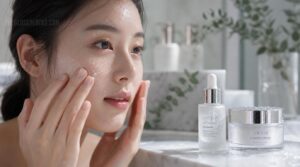
After vitamin C is absorbed, hyaluronic acid is your next step — and the order matters. As a skin humectant, it pulls water into the skin using water‑binding mechanics, temporarily plumping fine lines. Apply it to slightly damp skin for best results.
- Layer before moisturizer for proper layering sequence timing
- Let it absorb briefly to improve pre‑moisturizer hydration
- Seal immediately with moisturizer occlusion to lock moisture in
Use Retinoids at Night Gradually
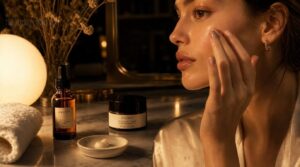
Retinoids are cell turnover boosters — but how you introduce them matters. Follow the dry skin rule: cleanse, wait, then apply a pea-sized dose to avoid irritation.
Start with a starter frequency of once or twice weekly, gradually building toward nightly layering order. Avoid sensitive zones like the corners of your eyes and mouth. Seal with moisturizer.
Add Peptides and Niacinamide for Support

Peptides and niacinamide are the quiet workhorses of any solid anti-aging routine.
Together, they deliver a real Barrier Boost Synergy — peptides trigger Collagen Signaling Enhancement by telling your fibroblasts to produce more collagen and elastin, while niacinamide at 10% improves skin elasticity and provides a Redness Calm Effect.
Layer both after your serum, using smart Layering Timing Guidance, for noticeable Pore Refinement Technique results over time.
Seal Hydration With Ceramides or Rich Moisturizer
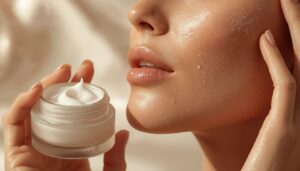
Think of your moisturizer as the final lock on everything you’ve layered beneath it. Ceramide Lipid Reinforcement rebuilds the skin barrier by replenishing the lipids your stratum corneum naturally loses with age.
Apply a ceramide moisturizer after hyaluronic acid — that Layered Hydration Technique traps water before it evaporates. Rich Moisturizer Occlusion works especially well for very dry skin, combining humectant properties with Lipid Barrier Sealing for lasting comfort.
Finish Every Morning With Broad-spectrum SPF
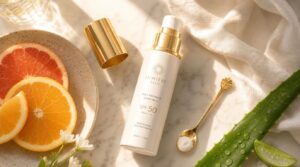
Once your moisturizer is on, sunscreen is the one step you can’t skip. A broad spectrum sunscreen with SPF 30 or higher shields against both UVA and UVB radiation — the real drivers of photoaging.
Apply a proper dosage, about a teaspoon for face and neck, as your final morning layering order step.
Non-greasy formulas make daily photoprotection simple.
Combining Ingredients Safely and Effectively
Knowing which ingredients work is only half the equation — knowing how to use them together without causing irritation is where the real results happen. Some combinations strengthen each other, while others need careful timing or buffering to avoid conflict.
Here’s how to layer your actives safely and get the most out of every step.
Introduce One Active Ingredient at a Time
When layering skincare products correctly, patience is your most powerful tool. Rushing multiple active ingredients at once is the fastest way to overwhelm your skin.
Instead, introduce one active at a time using this approach:
- Patch Test a new product on your jawline first
- Start at Low Frequency — twice weekly
- Keep a Simple Stack: cleanser, active, moisturizer
- Practice Time Separation and Tolerance Adjustment as you scale up
Pair Vitamin C With Sunscreen for Daytime Protection
Once you’ve settled into introducing actives one at a time, the vitamin C and sunscreen pairing is where your morning routine clicks into place. Apply your vitamin C serum first — pH compatibility matters here, so let it absorb before layering sunscreen on top. This sequencing creates photostability synergy, with topical antioxidants neutralizing free radicals while your SPF blocks photoaging due to UV exposure.
Don’t skip reapplication midday.
Use Retinoids With Moisturizer to Reduce Irritation
Retinoids are where most people stumble — not because they don’t work, but because irritation and dryness push them to quit too soon.
The buffering technique helps: apply a pre-application moisturizer first, or blend a low-dose retinoid directly into your moisturizer. You can also follow with a post-application moisturizer to lock in hydration.
If you’re curious how sodium chloride interacts with your skin barrier in the first place, this breakdown of how sea salt affects acne-prone skin explains why buffering matters so much before layering in actives.
Gradual frequency increase, paired with hyaluronic acid, keeps your skin barrier intact.
Combine Peptides With Niacinamide for Barrier Support
Peptides and niacinamide are two antiaging ingredients that genuinely complement each other. Their Peptide‑Niacinamide Synergy works through different Barrier Repair Mechanisms — niacinamide tightens the skin barrier and cuts water loss, while peptides signal your skin to rebuild collagen and elastin.
Together, they support barrier repair without competing. Use them both in your Morning Evening Use routine, layered in order of thinnest to thickest.
Apply Hyaluronic Acid on Damp Skin
Timing your application matters more than most people realize. Hyaluronic acid works as a skin humectant — it pulls moisture toward itself — so applying it on damp skin gives it something to actually bind to.
After cleansing, pat until lightly dewy, then press three to four drops evenly across your face. Follow immediately with moisturizer to seal hydration in, especially if your environment runs dry.
Avoid Over-exfoliating Mature or Sensitive Skin
Even a well-intentioned mature skin routine can backfire when exfoliation frequency gets out of hand. Mature or sensitive skin needs longer healing intervals between sessions — once weekly is often enough.
Watch for texture monitoring cues like stinging, flaking, or tightness, which signal a compromised barrier. Dial back over-exfoliating acids immediately, and reach for soothing agents like ceramides while your skin recovers.
Adjust Ingredient Strength Based on Skin Tolerance
Think of your skin’s tolerance like a dial, not a switch. Start with patch testing any new active, then build gradual frequency — two nights a week before daily use. Use the buffering technique with moisturizer to soften potency. Irritation monitoring guides everything:
- Reduce strength at first sting
- Space applications further apart
- Buffer stronger actives between moisturizer layers
- Pause, don’t quit, when skin signals overload
Frequently Asked Questions (FAQs)
What is the most powerful anti-aging ingredient?
If there’s one ingredient with the most clinical efficacy behind it, retinol wins. It drives collagen production, accelerates cell turnover, and remains incomparable in formulation delivery and long-term results.
What is the one anti-aging ingredient that actually works?
Retinol leads the pack.
As a retinoid, it delivers science backed collagen synthesis, real‑world results across skin types, and a clear dose‑response — making it the industry standard for mature skin.
What are the key ingredients in anti-aging skin care?
The real MVPs of anti‑aging ingredients are retinol, vitamin C, hyaluronic acid, and peptides — plus rising stars like Bakuchiol Alternative, Resveratrol Extract, Coenzyme Q10, Alpha Lipoic Acid, and Green Tea Polyphenols.
What are the best anti-aging ingredients for the skin in 2024?
The proof is in the pudding: retinol, vitamin C, hyaluronic acid, peptides, Bakuchiol Alternative, Resveratrol Antioxidant, Coenzyme Q10 Boost, Squalane Moisturizer, Green Tea Polyphenols, and other antiaging ingredients consistently top the list.
What are the best anti-aging ingredients?
The best antiaging ingredients are retinol, vitamin C, hyaluronic acid, and peptides.
Each targets aging differently — from nighttime repair and environmental defense to deep hydration and collagen support — works best when layered thoughtfully.
What is the best anti aging serum?
No single serum wins for everyone — the best one matches your skin’s needs.
For budget-friendly fading of mild spots and acne marks, this Good Molecules discoloration serum review breaks down whether it’s worth adding to your routine.
Look for proven actives, smart delivery systems, and stable formulation types, like CeraVe Resurfacing Retinol Serum or TruSkin Vitamin C Facial Serum.
What are the best skincare products for aging skin?
Choosing the right products comes down to ingredient compatibility, clinical study insights, and how well packaging stability holds up over time.
User reviews and price performance matter too, but ingredients always lead.
Does anti-aging skin care stop aging?
No, anti-aging skincare can’t stop the intrinsic aging clock — that’s a myth. It mainly targets extrinsic aging from sun and pollution, improving how skin looks, not reversing biology.
What ingredient is best for anti-aging?
Everyone wants one magic ingredient. There isn’t one.
But retinol leads in efficacy evidence, vitamin C brightens, hyaluronic acid plumps — synergistic blends beat any solo antiaging ingredient for long-term, skin-type-matched results.
What are the 4 skin ingredients proven to work?
The four proven heavy-hitters are retinol, vitamin C, hyaluronic acid, and peptides.
Clinical evidence backs each one — and when delivery systems and formulation pH are optimized, user compliance and cost-benefit results speak for themselves.
Conclusion
Think of your skin as a living archive—it records every sun-soaked afternoon, every restless night, every skip in your routine. The right, effective anti-aging skin ingredients don’t erase that history, but they do shape what’s written next.
Retinoids, vitamin C, peptides, ceramides—each one works with your skin’s biology, not against it.
Commit to these ingredients consistently, and what you’ll see in the mirror six months from now will speak for itself.