This site is supported by our readers. We may earn a commission, at no cost to you, if you purchase through links. This content is for general informational and educational purposes only and is not a substitute for professional medical, dermatological, or nutritional advice.

Most home beard mistakes happen before the trimmer touches your face: a rushed neckline, a cheek line cut too low, or guards chosen by guesswork. Ten minutes later, one side sits higher than the other, and fixing it means taking off more length than planned.
Learning how to shape beard at home starts with controlled restraint. Clean, dry hair shows its true length; a comb reveals thin spots; longer guards leave room to correct your course. Your face shape then tells you where to keep weight and where to remove it.
Build clean lines without sacrificing growth or facial symmetry.
Table Of Contents
Key Takeaways
- Prepare on a clean, fully dry beard, comb it outward to reveal its true shape, inspect patchy areas, and begin with the longest guard so you can remove length gradually.
- Match the beard’s weight to your face: add chin length for round or square faces, keep jaw-level fullness for heart shapes, control wide jaws on triangle faces, and build side width rather than chin length on long faces.
- Build symmetry by trimming cheeks before the chin, using small guard changes, alternating sides often, and checking your face straight on and from both profiles after every pass.
- Define natural-looking edges with a shallow U-shaped neckline about two fingers above the Adam’s apple, a cheek line that follows your natural growth, and weekly touch-ups to keep the shape clean.
How to Shape Your Beard at Home

Shaping your beard at home starts with a controlled setup, not the trimmer. Prepare properly so you can see your natural growth pattern and avoid taking off too much. Follow these steps before you make the first pass.
For a complete routine, follow this beard maintenance trimming guide tailored to your length and face shape.
Gather Essential Beard-Shaping Tools
Start with a beard trimmer with adjustable guards, sharp stainless-steel blades, and enough battery life to work untethered. Keep a clear mirror at eye level so you can check both sides without twisting.
Use a wide-tooth beard comb for detangling, finer teeth for detail work, and sharp scissors for stray hairs. A boar-bristle brush directs growth. Keep a shaping template nearby for controlled lines. Introduce a boar-bristle brush around one month of growth to help exfoliate the skin beneath your beard.
Wash and Dry Completely
Wash with beard shampoo, then use light beard conditioning if needed. Rinse with warm water, working beneath the jaw and mustache line.
- Rinse Thoroughness Check
- Water runs clear
- No slippery film
- Pat with microfiber
- Keep pressure light
Let it air dry 10 to 20 minutes. Finish beard drying with a downward, low-heat blowout until fully dry.
Comb Hairs Outward Evenly
With your beard fully dry, use a fine-tooth comb to guide facial hair away from your face. Work from the cheek toward the jaw, lifting each section slightly as you comb.
Keep steady, light pressure so the hairs spread evenly without creating gaps or raised spots. Repeat across both sides before beard trimming. This grooming step exposes the true outline for cleaner beard shaping.
Check Growth and Patchiness
With hairs combed outward, inspect beard thickness zones. Use this patch visibility test:
- Compare cheeks, mustache, chin, and connections.
- Brush outward, then downward; note exposed skin.
- Check left-right hair growth symmetry.
A stubble density check completes your growth pattern review. Beard growth patterns guide patchy beard solutions, beard density improvement, beard thickness management, and how to shape beard at home.
Start With a Longer Guard
Since you can always remove more, fit the longest adjustable guard first. This helps thin cheeks, helps bald patch prevention, and lets you judge face shape before beard line definition.
| Guard move | Purpose |
|---|---|
| Long | Preserve length |
| Same pass | Symmetry |
| Shorter | Reduce gradually |
Use overlapping beard trimming techniques, keeping one angle. Recheck symmetry each side. This beard shaping progression controls length.
For more balance, follow these round-face beard shaping tips to keep the chin elongated and sides neatly tapered.
Choose a Beard Shape for Your Face

Your beard shape should work with your natural facial proportions, not fight them. A few simple measurements will show where to add length, remove bulk, or keep the outline tight. Use the guide below to match your beard to your face shape.
For additional inspiration on structured, deliberate styling, exploring Japanese beard styles known for their clean lines and precise shaping can show how intentional edges elevate the overall look.
Shape your beard to complement your natural facial proportions, adding length or reducing bulk where balance calls for it
Measure Forehead, Jaw, and Length
Use a flexible tape and record each reading in one unit:
- Forehead width: widest hairline-to-hairline span
- Jaw width: ear base to chin, then double it
- Face length: hairline center to chin tip
- Cheekbone width: widest cheek-to-cheek span
Measure twice and average; retake any result differing by over 3 mm. Calculate length ÷ cheekbones and jaw ÷ cheekbones. These ratios guide face shape, jawline definition, cheek line shaping, beard neckline shaping, and beard length adjustment.
Oval and Square Beard Shapes
Keep an oval face balanced with even fullness through the sides and chin. Smooth along your natural jaw taper, avoid carving hard corners, and keep the cheek line aligned just below natural growth. This beard style lets you maintain proportion without forcing extra chin length.
For a square face, create chin focus. Keep sides shorter, build controlled length at the chin, and sharpen cheek edges for stronger jawline definition.
Round and Heart Beard Shapes
For a round face, build vertical length. Trim the sides one guard shorter than the chin, then leave 10–15 mm more at the lower beard to sharpen the jaw without adding width. Keep cheekline symmetry clean and avoid heavy stubble.
With a heart face, create jaw-level fullness. Leave controlled bulk through the chin and jaw, but don’t taper it into a point. A fuller, squared outline balances a wider forehead.
Triangle and Diamond Beard Shapes
A wider jaw needs control, not extra bulk. For triangle face beard styling, trim cheek sides 3–6 mm shorter than the chin. Focus chin fullness, but choose stubble or a minimal beard if your lower face looks heavy.
For diamond face beard balancing, extend fullness slightly at the cheekbones. This cheekbone balancing improves facial symmetry. Trim loose sides and maintain measured chin length.
Oblong and Rectangular Beard Shapes
A long face needs side-to-side balance. Measure face length from hairline to chin; if it exceeds width by about 1.5 times, avoid a pointed, chin-heavy beard.
Hold chin length to 6–12 mm, build controlled sideburn and cheek coverage, and use cheek line trimming to support beard width balance. For a rectangular width strategy, define the jawline without tapering downward. Trim cheeks first, then reduce length gradually.
Trim Beard Length and Build Symmetry

With your outline established, trim in a controlled order to keep both sides even. Work slowly and remove less hair than you think you need, since you can always take more off. Use the following steps to set the length, smooth transitions, and check your symmetry as you go.
Trim Cheeks Before Chin
Start on the cheeks, where cheek line symmetry sets the frame for everything below.
- Find a jawline reference point near each ear.
- Pull your cheek upward using the skin taut technique.
- Mark a straight guide toward the mustache, then trim above it.
- Use mirror verification method to compare both sides.
This cheek line trimming gives cleaner jawline definition and better trimming direction control.
Reduce Length Gradually
With both cheek lines set, reduce bulk in small guard steps. Begin one guard longer than your target, trim with the grain, then comb outward and inspect under bright front lighting.
Lower one guard at a time only where hair still sits heavy. Use light, overlapping passes to mix sections, not a hard line. Stop, let the beard settle, and reassess before trimming again.
Keep Chin Length Balanced
After reducing bulk, leave the chin slightly longer than the cheeks. This helps proportional chin shaping and keeps the lower face from looking cut off.
Use a mirror balance routine: compare both sides from the center line, keeping differences within 1–2 mm. Check beard jawline balance, then alternate trimming steps between chin and jaw. Good beard length control creates chin length symmetry and stronger beard proportion balancing.
Blend Sideburns Into Hair
Keep the chin balanced, then build a hair fade change through the sideburns. Leave them near mid-ear, using a No. 3 guard first and a No. 2 below it toward the beard.
Use a 45-degree comb angle midway up the sideburn. Trim only hairs extending past the comb, working toward the ear to soften temples. This beard tapering helps jawline definition and facial feature balancing.
Compare Both Sides Frequently
After each pass, use this symmetry check method before trimming more. Face the mirror straight on, then turn left and right. This mirror feedback technique exposes uneven beard symmetry, cheek line, and jawline definition.
- Check sideburn height
- Make a side-by-side comparison
- Remove one millimeter only
That gradual trimming balance helps with control, beard shaping, facial hair maintenance, and muscle memory building.
Define Neckline, Cheek Line, and Mustache
Once the overall length is even, define the lines that give your beard its structure. Work slowly here, since the neckline, cheek line, and mustache set the final silhouette. Use these steps to place each edge cleanly and keep the shape balanced.
Find Your Neckline Starting Point

Stand upright, face the mirror, and hold your head level. Find your Adam’s apple, then place two fingers horizontally above it. Mark the top of the upper finger, usually 1 to 1.5 inches above the Adams apple, as your center point.
Check it sits below the jawline. Then locate jawline side anchors just behind each earlobe, away from the cheek line and sideburns area.
Create a Shallow U Shape

From your Neckline Starting Point, guide the trimmer outward and upward toward each ear, following a Gentle U Curve.
- Mirror your Natural Jaw Contour
- Use short Trimmer Guard Settings
- Work from center outward
- Pause for a Symmetry Check Technique
- Leave room for beard taper
This neckline grooming helps jawline definition across any face shape. Don’t cut high or form a deep scoop; it can disrupt cheek line trimming.
Follow Your Natural Cheek Line

Start with natural growth assessment: map cheek line from your sideburns toward the mouth, using cheekbones as height cue. Growth pattern evaluation drives style adaptation guidance; whether sparse hair needs strays removed or dense hair needs light taper.
| Trimmer technique | Beard shaping techniques | Goal |
|---|---|---|
| Comb | Compare sides | Cheek line symmetry |
| Short taps | Precision | Natural edge |
They protect natural jawline balance.
Clean Edges With Precision Trimmer
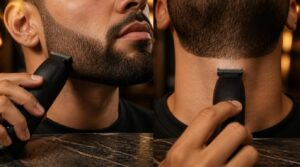
Use a precision trimmer on clean, fully dry hair, then make short, light taps along the cheek and neckline. Follow the line you already mapped; don’t carve a new one.
Keep the blade sharp and hold it flat, moving slowly from one side toward center. Use a longer guard comb near fuller areas. Brush out clipped hair, clean the blade, and recheck both sides.
Balance Mustache and Chin Hair

Keep mustache length balance close to your chin hair proportion. If your chin is 12 mm, trim the mustache to about 8 to 10 mm, then remove hair touching the upper lip.
Comb both areas straight down and compare them in the mirror. A fuller mustache can support a longer chin, but a heavy chin with a short upper lip weakens lower facial symmetry. Check beard symmetry after jawline definition and cheek line trimming.
Finish and Maintain Your Beard Shape

Your main shaping work is done, but the finish determines whether the beard looks intentional. Take a few minutes to tidy up the edges, settle the hair, and protect the shape you created. Use the following steps to keep everything clean between full trims.
Remove Strays With Scissors
Snip only hairs that break the outline. In bright light, comb the beard outward, then hold skin taut with your free hand.
Grip sharp, fine-point scissors between thumb and ring finger, making tiny cuts along the cheek line, jawline definition, and while shaping the sideburns. Re-comb to check alignment.
Clean and oil scissors regularly so each cut stays precise.
Shave Below The Neckline
With strays removed, shave the clean shaven zone below your beard neckline to lock in the boundary definition.
- Prep skin with warm water and cleanser.
- Mark one to two fingers above the Adam’s apple. This simple measurement is the foundation of a clean, intentional neckline—explore the full technique in this step-by-step beard neckline cutting guide to get it right every time.
- Follow a shallow U under the jawline and neck area.
- Shave with the grain, following the underside contour.
- Check both sides for balanced beard jawline definition.
Regular neckline maintenance prevents an overgrown look.
Brush Beard Into Place
After shaving, make dryness before brushing your rule for beard brushing. Bristles give bristle contact technique. Build brush direction control with slow, deliberate strokes.
| Area | Direction | Result |
|---|---|---|
| Neck | Up | Volume |
| Cheeks | Down | Smooth |
| Chin | Down | Align |
| Mustache | Outward | Define |
Finish brush and comb styling. Beard styling tools support beard styling techniques, beard care routine, and facial hair products.
Apply Beard Oil Lightly
Once the beard is brushed into position, use beard oil for controlled beard moisturizing, not shine. Start small with a few drops in your palms, then rub hands and fingers together.
- Apply to a clean, slightly damp beard.
- Massage from skin to tips.
- Adjust as needed.
Light application helps avoid greasiness. Use beard oil within your beard care routine and beard styling techniques, not as heavy beard products.
Schedule Regular Shape Touch-Ups
Set a weekly touch-up day to keep control of your outline. Check the neckline every 1–2 weeks, and trim cheek-line hairs when they rise above your natural line. For beard maintenance, use scissors weekly on split ends.
Match regular touchups to your beard shape for face type and beard styling for face shape. Beard trimming tutorial offers professional trim benefits.
Frequently Asked Questions (FAQs)
What is the 3-month beard rule and how does it work?
Like a hedge settling into its natural outline, the 3-month beard rule delays major grooming for 90 days. Growth reveals patchy phases; train hairs, then assess shaping readiness, face shape, trimming, styling, and touchups.
How should a beard look under the chin?
Keep a neckline U shape, following your natural jaw curve from jawline to two fingers above Adam’s apple. Maintain chin coverage balance and under-chin symmetry, avoid bald chin, then match cheek line beard edge cleanup.
Can I shape my beard?
You can shape your beard with a trimmer, comb, and patience. Start long, follow your face shape, trim cheek lines carefully, mix sideburns, and remove small amounts. Controlled technique builds confidence and prevents uneven cuts.
Is it better to trim a beard up or down?
Trim down with the grain to preserve beard volume and suit most face shapes. Trim up only to reduce bulk or create stubble. Use steady strokes, then define cheek line and jawline edges with a precision trimmer.
How do I choose a beard for my face shape?
By medieval standards, measure first: use a face-measurements guide for forehead-proportion, cheekbone-width, jawline-width, and length. Beard-style matching balances face shape: longer chins slim round faces; shorter beards soften angular jawlines. Follow your cheek-line trimming technique.
Conclusion
You don’t need expensive tools or perfect genetics to create a beard that looks intentional. When you know how to shape beard at home, careful guard changes, natural lines, and frequent mirror checks do more than aggressive trimming ever will. Leave room to adjust; hair can always come off, but it takes time to return. Treat a touch-up like carpentry: remove only what weakens the shape, and let the rest carry its weight with purpose.