This site is supported by our readers. We may earn a commission, at no cost to you, if you purchase through links. This content is for general informational and educational purposes only and is not a substitute for professional medical, dermatological, or nutritional advice.

Most guys treat their beard like their scalp. They grab whatever shampoo is in the shower, scrub hard, and call it clean. That’s where the itch, flaking, and brittle hair come from.
Facial skin runs at a lower pH than scalp skin, and standard shampoo strips the oils that keep your skin and hair healthy. Beard hair is coarser, the skin beneath it more sensitive, and the wrong routine causes real damage over time.
Knowing how to use beard wash correctly, at the right frequency and with the right technique, keeps your beard clean without wrecking the skin underneath.
Table Of Contents
- Key Takeaways
- How Do You Use Beard Wash?
- How Often Should You Wash?
- Why Choose Beard Wash Over Shampoo?
- How Should You Dry Your Beard?
- How Do You Moisturize After Washing?
- Which Beard Washing Mistakes Cause Problems?
- Frequently Asked Questions (FAQs)
- How to properly use beard wash?
- Do I use beard wash in the shower?
- Should I use beard wash before or after face wash?
- When should I start using beard wash?
- Does beard wash work on short stubble?
- Can beard wash cause hair loss or thinning?
- Should I wash my beard before trimming?
- Does water temperature affect beard wash effectiveness?
- Can I share beard wash with family members?
- Can beard wash help reduce beard itch?
- Conclusion
Key Takeaways
- Use beard wash, not regular shampoo, because facial skin’s lower pH (4.5–5.5) and coarser beard hair get damaged by alkaline, sulfate-heavy formulas that strip natural oils.
- Follow the four-step technique: wet with lukewarm water for 30 seconds, apply a coin-sized amount, massage the skin underneath with your fingertips for 30–60 seconds, then rinse until no foam remains.
- Wash only two to three times a week, adjusting based on skin type, sweat, beard length, and product use—the dry, squeaky feel afterward signals overwashing.
- After washing, pat dry with a towel, comb with a wide-tooth comb while damp, and replenish moisture with beard oil on the skin (plus balm for longer beards) to prevent itch and flaking.
How Do You Use Beard Wash?
Using beard wash correctly comes down to four steps. Each one matters, from water temperature to the final rinse. Get them right and your beard stays clean without losing moisture.
Pairing these steps with the right washing frequency is key — beard grooming tips for dry beard care explain how often to wash without stripping natural oils.
Wet With Lukewarm Water

Before any lather, run lukewarm water over your beard for about 30 seconds. Don’t rush it. Wet from the skin outward so the roots soak first, then work down to the tips.
Hit these spots every time:
- Both cheeks and the chin pad
- The underside along your jawline
- The neck where hair density changes
Saturated hair rinses clean. Dry patches hold soap.
Apply The Right Amount
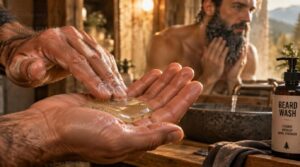
Now apply a coin-size amount of beard wash to your palm. Add a little water first, then rub your hands together to gauge the lather density. Creams and gels spread differently, so adjust per pump. Cover the roots, not just the tips. Patchy beard? Add small doses until every zone is saturated. Too much product means more residue to rinse out.
If you want a formula that lathers well without stripping natural oils, a quality men’s beard wash cleanser makes a noticeable difference in softness and manageability.
Massage Skin and Hair

Once the lather covers every zone, use your fingertips to skin. Work in short circles at the base of each hair, not the hair itself.
- Mustache and cheeks first
- Chin next
- Jawline after
- Neck last
Spend 30 to 60 seconds total. Target the skin underneath, where buildup lives. Feel stinging? Stop. Gentle cleansing beats scrubbing every time.
If redness or irritation appears, scale back frequency and revisit your full vitamin C and hyaluronic acid layering routine to make sure each step is landing on properly prepped skin.
Rinse Out All Lather

Once you’ve finished massaging, get lukewarm water running through your beard. Use your fingers to comb through dense areas so trapped product residue lifts out. Keep rinsing until the water runs clear. Any leftover beard wash can leave hair feeling coated and stiff after it dries.
Check under the jaw and neckline. That’s where suds pool. No foam, you’re done.
How Often Should You Wash?

For most beard types, two to three times a week is enough. Washing more than that strips your natural oils and dries out the skin underneath. Replenishing those oils with a quality beard oil or moisturizer between washes keeps both the hair and skin underneath hydrated and comfortable.
Your wash frequency depends on four factors:
- Skin type: oily skin needs more frequent cleaning; dry or sensitive skin needs less to stay comfortable.
- Activity level: heavy sweat sessions call for a rinse or a full wash the same day.
- Beard length: longer, denser hair traps product residue and needs more regular attention.
- Products used: waxes and pomades build up fast and push you toward washing more often.
That dry, squeaky feel after washing is your signal you’ve gone too far. Overwashing pulls moisture from the skin beneath your beard, leaving it tight and prone to irritation.
Start at twice a week and then adjust up or down from there, based on how your beard looks and feels.
Why Choose Beard Wash Over Shampoo?

Since facial skin pH sits between 4.5 and 5.5, regular shampoo is working against your beard from the start. Most shampoos run alkaline, at pH 7 to 9, and that disrupts your skin’s acid mantle, stripping the moisture it depends on.
Regular shampoo’s alkaline pH silently disrupts your skin’s acid mantle, stripping the moisture your beard depends on
Sulfates in standard shampoos also attack your beard’s natural oils, leaving strands dry and brittle. Beard hair is coarser and thicker than scalp hair, and it needs conditioning agents, not a formula built for your head.
A dedicated face and beard wash uses sulfate-free cleansers, matches your skin’s pH, and includes botanicals that soothe irritation and reduce flaking. Understanding the difference between beard wash and shampoo helps explain why specialized formulas include hydrating agents like aloe vera, argan oil, and shea butter to address the unique needs of coarser facial hair.
Here’s what sets beard wash apart:
- Facial skin pH is matched, preventing dryness and irritation
- Sulfate-free formula keeps your natural oils fully intact
- Gentler cleansers suit the coarser texture of beard hair
- Botanical ingredients calm both itchiness and beardruff
- Closed cuticles absorb conditioning products more effectively
How Should You Dry Your Beard?

Treating your wet beard like a dish rag undoes everything you just did. After washing, pat dry with a clean towel, pressing gently to pull out water without roughing up the hair cuticle or irritating skin.
Leave it slightly damp. That residual moisture keeps strands pliable, cuts static, and makes combing easier.
Here’s the right sequence:
- Pat, never rub, using a clean, dry towel
- Comb through with a wide-tooth comb while still damp to align strands and prevent knots
- Air-dry the beard fully before adding product
- Use a blow dryer on low heat only if you’re short on time
- Keep the dryer moving to avoid concentrating heat in one spot
Fully air-dried hair holds shape better and retains more natural moisture than heat-dried hair. If you use a dryer, keep it on the lowest setting and hold it at least six inches from your face.
How Do You Moisturize After Washing?

Washing strips moisture, so what you do next determines how your beard looks and feels. The right products applied in the right order lock in hydration and keep the skin underneath healthy. Each one has a specific purpose.
Conditioner for Beard Softness
Conditioner drives beard softness and manageability. Rinse the wash completely, then work a small amount of beard conditioner through. Let it sit one minute, rinse until there’s no slip. Lukewarm water protects moisture retention. Blot dry, comb damp.
| Step | Action | Payoff |
|---|---|---|
| Apply | Small amount, mid-lengths | Even coating |
| Wait | One minute | Deeper absorption |
| Rinse | No slip left | No buildup |
| Dry | Blot, comb damp | Lasting softness |
Skip it and you invite the classic beard washing mistakes.
Oil for Skin Hydration
Beard oil targets the skin, not just the hair. After beard wash strips away sebum, your skin needs replenishment fast.
Pat your beard damp, then dispense a few drops into your palm and work the oil into the skin beneath your beard first. That’s where natural oils rebuild skin barrier health. A nourishing beard oil for skin works best massaged in while pores are open and the skin is still slightly warm.
A lightweight formula suits most skin types without buildup.
Balm for Longer Beards
Once your beard length reaches chin level, oil alone won’t cut it. Work a pea-sized amount of beard balm into damp hair after washing, starting at the roots and moving to the ends. For longer beards, a quality men’s beard balm gives you that extra hold and moisture that oil simply can’t deliver on its own.
The waxes and butters lock in beard softness and control flyaways. Balm also takes care of postwash hydration while supporting beard conditioning beneath. Skip layering heavy oil on top.
Which Beard Washing Mistakes Cause Problems?

Getting your post-wash routine right matters, but it won’t fix the beard problems that start during the wash itself. Beard washing mistakes are the main cause of itch, flakes, and breakage.
Here are the five that cause the most damage:
- Water that’s too hot strips oils and irritates skin.
- Incomplete rinsing leaves residue that causes tightness and itch flakes.
- Washing too frequently over-strips your skin barrier before it has time to recover.
- Scrubbing too aggressively inflames follicles and increases hair breakage.
- Ignoring the skin underneath lets dead skin cells and sebum accumulate at the root.
Product buildup removal depends on using the right amount of wash and rinsing every strand thoroughly. Too much product and you’re fighting surfactant residue. Too little and you miss the oil and debris trapped near your skin. Either way, beard problems compound and become much harder to fix over time.
Frequently Asked Questions (FAQs)
How to properly use beard wash?
Start by wetting your beard with lukewarm water. Lather a small amount of beard wash in your hands, work it all the way through to your skin and hair, then rinse until no foam remains.
Do I use beard wash in the shower?
You can use it at the sink, but the shower’s better for it.
Lukewarm water opens the pores and softens the hair. Wet your beard first, apply beard wash, massage it in, and rinse clean.
Should I use beard wash before or after face wash?
It seems like a minor call, but the order does matter here. Do your face wash first. That keeps beard wash residue from drifting onto skin you’ve already cleaned. Then follow with your beard wash.
When should I start using beard wash?
Your beard itches after two weeks of growth and plain rinsing isn’t helping. That’s your sign. Switch to a dedicated beard wash when you notice itchiness, visible flaking, or stubborn oily buildup rinsing can’t fix.
Does beard wash work on short stubble?
It works well on short stubble. Hair length doesn’t block the lather from reaching your skin and follicles, so the cleanser does its job. A gentler formula matters more since your skin is directly exposed.
Can beard wash cause hair loss or thinning?
Harsh formulas can. But it’s temporary shedding, not permanent thinning.
A sulfate-heavy wash strips your natural oils and irritates follicles. Damaged hair cuticles and inflamed skin increase fallout.
Switch products if burning or flaking starts.
Should I wash my beard before trimming?
Counterintuitive as it sounds, washing your beard right before trimming works against you. Wet hair swells and sits differently, changing the apparent length. Wash, dry fully, then trim to get a consistent, accurate final cut.
Does water temperature affect beard wash effectiveness?
Lukewarm water gives the best results. It wets every hair evenly and lets your beard wash disperse through the full length. Hot water strips surfactants fast. Cold water reduces lather and leaves unclean patches behind.
Can I share beard wash with family members?
Want one bottle for the whole house? You can share, but keep it safe. Don’t touch the nozzle to your face. Dispense into clean hands. Skip sharing if anyone has broken skin or irritation.
Can beard wash help reduce beard itch?
Picture flaky skin trapped under a thick beard, itching all day. Beard wash clears that buildup. It removes sweat and oil from the skin underneath, so gentle cleansing agents calm irritation instead of causing it. That’s preventing beard itch at the source.
Conclusion
Take a guy who scrubs with head shampoo three times a week. His beard itches, flakes, and feels like wire.
Switch him to proper beard wash twice a week, lukewarm water, oil after, and the problem disappears in ten days. That’s the difference technique makes.
Once you know how to use beard wash correctly, the rest of your routine falls into place. Clean skin, soft hair, no guesswork. Keep it simple and stay consistent.