This site is supported by our readers. We may earn a commission, at no cost to you, if you purchase through links. This content is for general informational and educational purposes only and is not a substitute for professional medical, dermatological, or nutritional advice.

You spent hours in the chair and a small fortune on bundles. One bad wash can undo all of it. Scrub too hard, and your tracks matt into knots that no comb can save.
Most weave damage doesn’t come from wear. It comes from rough handling, harsh shampoo, and wet hair left to dry slowly against your scalp. The good news is that the fix is gentle, simple, and easy to repeat at home.
Once you know how to wash human hair weave the right way, your install stays soft, shiny, and fresh for weeks. Here’s exactly what to do, one step at a time.
Table Of Contents
Key Takeaways
- Wash your weave gently by detangling it dry first, then pressing diluted sulfate-free shampoo into your scalp and tracks and smoothing the lather in one direction, since scrubbing is what causes matting.
- Put conditioner on your mid-lengths and ends only, keeping it off the roots and tracks so the wefts don’t loosen, then rinse until the water runs clear.
- Blot with a microfiber towel instead of rubbing, and dry your roots and tracks completely, because damp hair left against your scalp can warp the base, cause odor, and lead to scalp problems.
- Wash every 7 to 10 days (and never go past two weeks), moisturize your scalp with a lightweight oil, and plan to keep the install in for six to eight weeks to avoid buildup and shedding.
How Do You Wash a Sew-in Weave?
Washing a sew-in is easier than it looks, and you don’t need to be a pro to do it right. You’ll follow three simple steps, and each one protects your tracks and your natural hair underneath. Here’s how to get through them with confidence.
Prepare and Detangle Before Washing

You’ll save yourself a lot of trouble by handling tangles before any water touches your hair. Make sure your weave is completely dry, then work in small sections. Start with your fingers to loosen the big knots. Applying a leave-in conditioner afterward can help retain moisture and keep strands from knotting up again.
Next, use a wide-tooth comb and start at the tips, moving up toward the roots. Hold the wefts steady as you go, so you don’t pull on your natural hair.
Once your wig is tangle-free, a simple routine like the one in this guide to caring for human hair wigs will help keep it smooth between wears.
Cleanse The Scalp and Wefts

With your tangles handled, mix one part sulfate-free shampoo with three parts warm water in an applicator bottle. The dilution lets it reach the braids under your wefts and rinse out clean.
Squeeze it along your scalp and tracks. Press with your fingertips in small circles, then smooth the lather down in one direction only. Skip the scrubbing so your hair won’t mat.
Condition and Rinse Thoroughly

Rinse the shampoo out first, then apply moisturizing conditioner to your mid-lengths and ends only. Keep it off the roots and tracks so your wefts won’t loosen. Comb it through with a wide-tooth comb, and leave it on for 5 to 15 minutes.
For a deeper look at keeping hair soft between washes, see these tips for retaining moisture in hair.
Rinse with lukewarm water until it runs clear, then finish with a cold water rinse to seal the cuticles.
Washing Human Hair Weave Before Installation
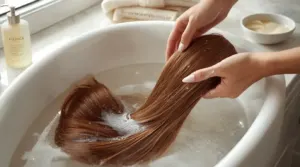
New bundles aren’t ready to wear straight out of the bag. Before you start your weave installation prep, wash human hair weave bundles to remove dust, manufacturing residue, and any storage smell.
Fill a basin with warm water first, then submerge the bundles so they wet evenly. Skip hot water, since it strips moisture and causes tangles.
Work a sulfate-free shampoo through each bundle in downward strokes, from the weft to the ends. Swish gently. Don’t rub or twist, or you’ll cause shedding. Rinse until the water runs clear.
Finish with a conditioner soak treatment. Apply from mid-lengths to ends, avoiding the weft, and leave it on 10 to 30 minutes. Rinse with cool water afterward to seal the cuticle.
Drying Human Hair Weave Completely
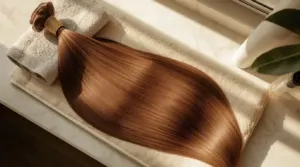
Blot your weave with a microfiber towel first. Squeeze and press gently, and don’t rub, because rubbing roughs up the cuticle and causes breakage. Getting the extra water out now also cuts your drying time.
Dry the cap and root area before the lengths. Moisture trapped near the tracks can warp the base and loosen knots. If your weave is open-wefted, point the airflow between the tracks so the inside dries completely.
Air dry flat on a towel overnight, or use a hooded dryer on low. If you reach for a blow dryer with diffuser, apply heat protectant, keep it 6 inches away, and keep it moving. Finish with a cool blast.
Check the crown and nape last. Thick spots can take 12 to 24 hours to dry fully.
Moisturizing Your Weave and Scalp After Washing
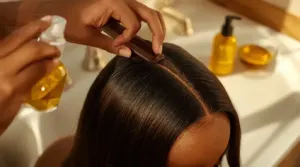
After your weave is fully dry, moisture is what keeps it soft and your scalp comfortable. Start with a lightweight oil like jojoba or grapeseed. Use a nozzle bottle to section your hair and massage it into your scalp bit by bit. Skip heavy greases, since they clog pores and make the weave look oily.
Here’s what a good routine gives you:
- Relief from the itch that makes you scratch.
- Confidence when your hair swings, soft and shiny.
- Peace of mind that your natural hair is protected.
- Pride in a weave that still looks fresh.
- Comfort knowing your scalp health is cared for.
Spray a leave-in conditioner between the wefts every two to three days to support hair moisture retention.
How Often Should You Wash Your Weave?

Wondering if you’re washing too often or not enough? Your hair washing frequency depends on how you live, not a rigid calendar.
Let your own routine, not a fixed schedule, decide when your weave needs washing, because how you live sets the rhythm
Most people do well washing every 7 to 10 days. Sweat often, swim, or use lots of product? Wash sooner. Keep your weave washing frequency at least once every two weeks, since waiting longer invites dandruff and scalp trouble.
Wash when you notice:
- An itch you can’t stop thinking about
- Roots that look greasy and heavy
- A smell that makes you self-conscious
- Sticky, dull hair that’s lost its glow
- Worry every time someone stands close
Let these signs shape your weave maintenance routine. Rinse your scalp between sessions, and wash weave extensions around week three or four.
Frequently Asked Questions (FAQs)
How can you stop a weave from smelling?
Most weave smells come from trapped moisture. For weave odor prevention, dry everything after weave scalp cleansing, store extensions in cool, dry places, and adjust weave washing frequency to every 7 days if you sweat.
How do I bring my weave back to life?
Detangle dry hair first, working from the ends upward with a wide-tooth comb. Then clarify using sulfate-free shampoo in lukewarm water to lift buildup.
Finish with a deep conditioner for 15 minutes, then air-dry flat.
Can you swim or exercise with a weave?
Chlorine and saltwater can wreck a weave in a single afternoon, but you don’t have to give up swimming or workouts. Wet your hair with clean water first, braid it loosely, then rinse right after.
Does dry shampoo work on human hair weave?
Wondering if you can skip a wash? Yes, dry shampoo works on human hair weave. Spray your roots only, from 6 to 10 inches away. Use it for one or two days before washing.
How long are you supposed to leave your weave in?
Plan to keep your weave in for six to eight weeks. Book a tightening around week three or four, and you can stretch wear to ten weeks. Past three months, matting, buildup, and shedding become real risks.
Do hair weaves damage your hair?
They can, but only when tension or neglect gets involved. Tight installs, heavy extensions, and long wear without breaks strain your follicles and cause breakage. Keep it loose, wash gently, and take breaks, and your hair stays healthy.
Conclusion
Picture two women with the same bundles. One scrubs hard and air-dries lazily. The other detangles first, rinses well, and dries fully. Six weeks later, only one still has soft, swingy hair.
Knowing how to wash human hair weave gently makes that difference. Go slowly, press instead of rub, and never leave damp tracks against your scalp.
Your install isn’t fragile. It just needs patience. Give it that, and it’ll stay fresh for many weeks.