This site is supported by our readers. We may earn a commission, at no cost to you, if you purchase through links. This content is for general informational and educational purposes only and is not a substitute for professional medical, dermatological, or nutritional advice.
Your scalp starts prickling twenty minutes after your colorist rinses out the dye, and by the time you get home, you’re scratching like you’ve got a mosquito bite that won’t quit. Sound familiar?
An itchy scalp after dyeing hair hits nearly one in five people who color regularly, and the causes range from harmless dryness to a real allergic reaction that needs attention. The tricky part is telling them apart. Get that right, and you’ll know exactly when to reach for aloe vera and when to call your doctor.
Table Of Contents
- Key Takeaways
- Why Your Scalp Itches After Dyeing
- Irritation, Allergy, or Chemical Burn?
- How to Stop Itchy Scalp After Dyeing
- Safe Home Remedies and OTC Treatments
- How to Prevent Itching From Hair Dye
- Frequently Asked Questions (FAQs)
- How do you stop your scalp from itching after dying it?
- How long does itchy scalp from hair dye last?
- Why is my hair dye making me itchy?
- How do you treat scalp after hair dye?
- Why does my scalp itch after hair dye?
- Can hair dye cause itching?
- How can I prevent my scalp from itching after hair dye?
- What if my hair is itchy after coloring?
- Can hair dye irritate your scalp?
- Why is my scalp swollen after a hair dye appointment?
- Conclusion
Key Takeaways
- An itchy scalp after hair dye is usually caused by dryness and irritation, a chemical burn, or an allergy to ingredients like PPD, and telling the difference matters because allergies and burns need faster medical attention.
- Mild irritation often improves within 24 to 48 hours if you rinse well, wash with a gentle fragrance-free shampoo, use a cool compress, apply aloe or a moisturizer, and avoid scratching, heat, and more coloring.
- Warning signs like a rash spreading beyond the scalp, blisters, oozing, severe pain, swelling, or any trouble breathing mean it’s not a routine reaction and you should get urgent medical help.
- The best way to prevent this next time is to patch test dye 48 hours ahead, never color an already irritated scalp, read ingredient lists carefully instead of trusting “PPD-free” claims, and tell your colorist about any past reactions.
Why Your Scalp Itches After Dyeing
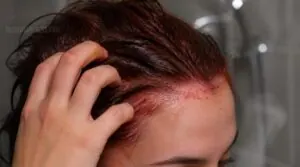
If your scalp starts itching after you color your hair, there’s usually a clear reason behind it. Sometimes it’s an ingredient in the dye, and sometimes it’s your scalp reacting to the whole coloring process. Here are the most common causes to look at first.
If washing seems to make the itching worse or your color fades faster than expected, switching to a sulfate-free shampoo and conditioner can help soothe your scalp while keeping your color vibrant longer.
PPD and PTD Allergies
Watch for PPD allergy first, because PPD is the main hair dye allergen and a common cause of allergic contact dermatitis after coloring. If you’re sensitive to it, PTD sensitivity can follow through PPD cross-reactivity.
That’s why allergic patch testing matters: it helps with sensitizer identification, dye chemical screening, and choosing a safer, sometimes hypoallergenic dye for future coloring decisions.
The positive patch test prevalence of PPD allergy varies globally, with higher rates in certain regions. positive patch test prevalence is an important concept from the provided knowledge, reflecting epidemiological data on sensitization rates across North America, Europe, and Asia.
Resorcinol and Preservative Reactions
PPD isn’t the only troublemaker. Resorcinol, capped at 2.5% in oxidative dyes, drives coupling reactions that trigger allergic contact dermatitis on sensitized scalps.
Preservatives like Methylchloroisothiazolinone (MCI) add another layer of risk, causing sensitization with repeated exposure.
That’s why patch testing 48 hours out still matters, and why fragrance-free products help you avoid stacking irritants during recovery.
Chemical Irritation and Scalp Burns
Beyond allergy, some dyes simply burn. Highlighting mixes with persulfates and hydrogen peroxide can carry acidic pH, and higher persulfate concentrations raise chemical burn risk fast.
Watch for redness that deepens, tenderness, or blistering, these signal real tissue damage, not routine irritation from an inflammatory response like standard PPD sensitivity.
Dryness and Skin Barrier Damage
Not every itch means allergy. Ammonia pushes scalp pH to 8.5-9.5, stripping natural lipids and causing that tight, "squeaky clean" feeling within 15 minutes.
Hydrogen peroxide oxidizes those lipids further, weakening your skin barrier repair process and inviting Malassezia yeast to thrive. Moisturizing scalp skin with a gentle shampoo and emollient cream afterward helps natural oil replenishment and microbiome recovery.
Pre-Existing Scalp Conditions
Think of your scalp as a memory keeper. If you’ve battled scalp eczema, scalp psoriasis, or seborrheic dermatitis before, that history sets your skin up for a stronger reaction.
- Atopic scalp history lowers your irritation threshold
- Active eczema flare triggers get worse with dye exposure
- Psoriasis sensitivity means plaques feel inflammation faster
- Contact dermatitis history predicts hair dye allergy risk
- Baseline redness masks true itchy scalp causes
Irritation, Allergy, or Chemical Burn?
Not all post-dye reactions are the same, and knowing which one you’re dealing with changes what you should do next. Some symptoms clear up on their own, while others signal something your body needs help handling right away. Here’s how to tell the difference, symptom by symptom.
For instance, mild scalp tingling after a henna dye job often settles down on its own, especially if you followed a gentle approach like mixing henna with lemon juice for unbleached hair.
Itching, Redness, and Tenderness
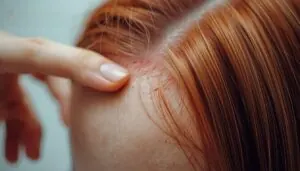
A little tingling after dye day is common, but how do you know if it’s just mild irritation? Watch itch intensity: mild scratchiness often fades in hours.
Redness and tenderness that linger, though, signal true inflammation. Scratching only worsens things, breaking skin and inviting infection.
If soreness spreads beyond the dye line, your scalp’s asking for help, not scratching.
Delayed Allergic Reaction Symptoms
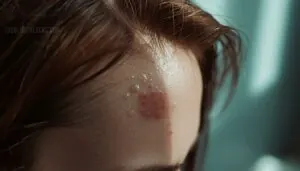
Why does itching sometimes wait days to show up? Your immune system clocks the allergen fast, but symptoms lag 24-72 hours, peaking days 3-7.
- Delayed onset: itching starts a day or two post-dye
- Blisters: clear fluid, appearing on thin skin first
- Discoloration: hyperpigmented patches lasting weeks
- Spreading eczema: new patches beyond the scalp
This delayed reaction to paraphenylenediamine warrants an allergy specialist’s input.
Rash Beyond The Scalp
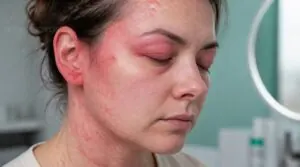
Here’s something surprising: your scalp may barely itch while your face flares up. That’s because facial skin reacts faster than scalp skin.
Watch for eyelid swelling, ear tenderness near sideburns, neck redness, or patches spreading toward your chest. This signals true allergic contact dermatitis, not simple irritation, and it needs an allergist’s evaluation, not just soothing cream.
Blisters, Oozing, and Severe Pain
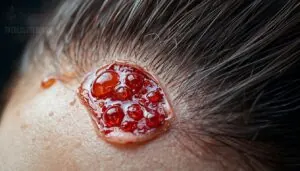
Fluid-filled blisters signal true contact dermatitis, not simple irritation, usually appearing 24–72 hours after dyeing.
Watch for:
- Clear or yellowish oozing fluid
- Burning or throbbing pain peaking at 48–72 hours
- Crusting or spreading redness
Don’t pop blisters. Apply hydrocortisone, take an antihistamine, and seek urgent medical help if oozing turns yellow, pain worsens, or fever develops.
Swelling or Breathing Difficulty

This is the reaction that turns an itchy scalp into a 911 call. Angioedema signs include eyelid, lip, or tongue swelling within minutes to hours.
Eyelid, lip, or tongue swelling within minutes can turn an itchy scalp into a medical emergency
| Symptom | Action |
|---|---|
| Facial swelling | Call ER |
| Throat tightness | Epinephrine, urgent medical help |
| Stridor, breathing difficulty | Airway obstruction risk |
Never wait it out. This allergic reaction demands immediate emergency response.
How to Stop Itchy Scalp After Dyeing
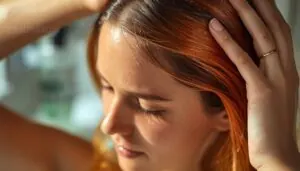
Once you know what’s causing the itch, the next move is calming it down fast. The good news: most cases respond well to simple, at-home care within the first day or two. Here’s exactly what to do, in order, starting the moment you notice that itch.
Rinse Away Leftover Dye
Before anything else, rinse your scalp with cool water right after processing, since leftover dye left sitting only feeds irritation.
Work section by section, hairline to nape, and watch the runoff: keep rinsing until water runs clear, not colored.
Towel or pillowcase picking up color later? That’s your sign residue’s still there.
Use Fragrance-Free Gentle Shampoo
Once you’ve rinsed, reach for a fragrance-free, gentle shampoo. Paraben and sulfate free formulas clean without stripping oils, and pH-balanced options (4.5-5.5) match your scalp’s natural barrier.
- Sulfate-free cleansing skips harsh foam that traps residue
- Fragrance-free products cut common allergens
- Color-protecting ingredients like aloe soothe while defending vibrancy
Check labels for transparent ingredient safety before buying.
Apply a Cool Compress
After gentle shampooing, place a cool compress on the itchy scalp to calm hair dye related scalp irritation fast. Use a damp washcloth soaked in cold water, or ice sealed in a bag and wrapped with a barrier cloth for skin soothing.
Follow compress timing intervals: apply 15 to 20 minutes, then wait 45 minutes before reapplying or re-soaking again.
Avoid Scratching, Heat, and Recoloring
After the cooling compress, protect your scalp by changing what you do next. Avoid scratching, because nails and rubbing break inflamed skin and can invite infection.
Skip hot showers, blow-dryers, and flat irons, since heat increases irritation and dryness.
Don’t try recoloring until your scalp feels fully normal, or you may trigger a stronger reaction. That helps longterm prevention, too.
Protect Blistered or Broken Skin
If skin has blistered or split, treat it like a small wound, not just itch. Use barrier protection:
- Do a cool water rinse, then pat dry.
- Apply aloe vera gel or petroleum jelly plus barrier cream.
- Cover loosely with a nonstick dressing, keep it clean, and watch for pus, spreading redness, or worsening pain to lower infection risk while healing steadily.
Safe Home Remedies and OTC Treatments
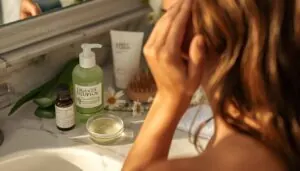
Once you’ve calmed the initial irritation, the right products can speed up healing and keep your scalp comfortable. Not every remedy works for every skin type, so it helps to know what’s safe and what to watch for. Here’s what actually helps, and when it’s time to call in backup.
Alcohol-Free Aloe Vera Gel
Nature’s own scalp medicine sits in your fridge. Apply alcohol-free aloe vera gel directly for immediate itch relief, its natural sterols and 99% water content calm inflammation while boosting scalp hydration.
For extra soothing power, keep it chilled. Refrigerated gel use enhances the cooling effect, easing burning skin after hair dye faster than room-temperature gel.
Fragrance-Free Emollients and Moisturizers
Once the aloe soaks in, seal in that moisture with a fragrance-free emollient cream. Vaseline or Aquaphor work well, forming a protective layer that helps ceramide barrier repair.
Look for products with humectant mix benefits, pH balanced formulas, and sensitive skin ingredients like plant lipid complexes. These calm irritation while your scalp barrier rebuilds itself.
Coconut or Argan Oil Precautions
Reaching for oil too soon can backfire. Wait 72 hours before any oil touches freshly dyed hair, and 14 days after bleaching.
- Argan oil absorbs fast, safe sooner, won’t fade color
- Coconut oil needs a full 48–72 hours to avoid lifting dye
- Use just a teaspoon, avoid greasy buildup
- Patch test first, since coconut allergies trigger dermatitis
- Watch for redness signaling allergic reaction, not just PPD
Hydrocortisone and Antihistamine Guidance
Sometimes oils just aren’t enough, and that’s okay. Apply 1% hydrocortisone once or twice daily for up to two weeks. Add oral antihistamines like loratadine for daytime relief or diphenhydramine at night. Combining both is safe and often more effective. Skip broken skin, and taper off once itching fades.
When to Seek Medical Care
Some reactions need more than a topical treatment. Get help fast for swelling or breathing issues, blistering, oozing, fever, or a spreading rash beyond your scalp.
Symptoms not improving within 48 hours? See a dermatologist. They may prescribe a corticosteroid shampoo, stronger oral antihistamines, or refer you to an allergy specialist for patch testing.
How to Prevent Itching From Hair Dye
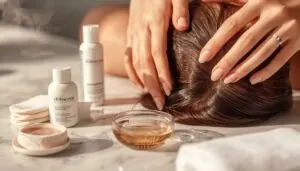
An itchy scalp doesn’t have to be part of your dyeing routine every time. With a few smart habits, you can catch problems before they start and dye your hair with a lot less worry. Here’s what actually helps keep your scalp calm and irritation-free.
Patch Test 48 Hours Before
Think of a patch test as insurance, not paperwork. Apply diluted dye behind your ear or inner elbow, then wait a full 48 hours before your color session. Don’t peek early. Reactions often build over 48 to 96 hours, so redness or itching at the site signals trouble. See a rash? Choose PPD-free formulas or ask an allergy specialist first.
Once opened, that dye starts losing punch faster than you’d think, so it’s worth checking how long opened hair dye stays safe to use before your next patch test.
Never Dye an Irritated Scalp
A clean patch test result doesn’t mean your scalp is ready today. If it’s red, tender, or already flaking from a past reaction, wait until it fully heals before recoloring.
Damaged skin lets dye penetrate deeper, worsening hair dye sensitivity. Stick to fragrance-free cleansing during recovery, and skip recoloring until irritation is completely gone.
Read Beyond PPD-Free Claims
PPD-free" on the label doesn’t mean allergen-free. Most brands swap PPD for PTDS, and roughly half of PPD-allergic users react to it too.
Watch for hidden sensitizers like resorcinol or aminophenols buried near the ingredient list’s end.
- Check for third-party certification, not just marketing claims
- Scan full ingredient disclosure, including botanical additives
- Ask your dermatologist about patch testing protocol for suspect ingredients
Tell Your Colorist About Reactions
Your colorist can’t protect you from a reaction they don’t know about. Give them your full history: which brand caused itching, how long after application, and any spreading rash.
Bring the box if you still have it. Ingredient names matter more than brand loyalty, since PPD hides under different labels. Ask about a patch testing protocol before your next appointment, not after symptoms start.
Consider Non-Oxidative Color Options
If PPD keeps flaring your scalp, skip oxidative dye altogether. Henna indigo blends use natural pigment sources like lawsone and indigotin for real color, no chemical burn risk.
Look for PPD free, ammonia-free, semi-permanent direct dyes instead. Benefits:
- Chemical free formula, no allergens
- Scalp soothing relief with every wash
- Long lasting color for weeks
Pair with fragrance-free shampoo for lasting comfort.
Frequently Asked Questions (FAQs)
How do you stop your scalp from itching after dying it?
Rinse thoroughly with cool water first, then use a gentle shampoo. Follow with a cool compress and soothing agents like aloe. Avoid scratching, and seek care if redness spreads or worsens.
If the irritation came from a DIY treatment gone wrong, you might want to review a gentler approach, like this egg mask recipe for hair growth and thickness that uses just three ingredients and takes only minutes to make.
How long does itchy scalp from hair dye last?
Duration depends on the cause. Mild irritation eases within 24 to 48 hours, but true allergic reactions can persist several days to a week. Timeline and recovery vary, so watch symptoms closely for proper relief and prevention.
Why is my hair dye making me itchy?
Your itch likely traces back to an allergic reaction or chemical irritants, especially paraphenylenediamine. Preservative sensitivity, skin barrier damage, or a pre-existing condition can heighten your skin’s sensitivity, making ingredient avoidance and a soothing corticosteroid shampoo worth discussing with your dermatologist.
How do you treat scalp after hair dye?
Start with lukewarm water and fragrance-free cleansing, then add a cool compress and aloe vera or coconut oil. Use hydrocortisone cream or antihistamines for lingering irritation, and moisturize daily to support healing.
Why does my scalp itch after hair dye?
Think of your scalp as a fence guarding a garden: PPD, ammonia, and other dye chemicals breach it, sparking contact dermatitis. Redness, swelling, and burning follow, especially if skin sensitivity or a damaged barrier lets irritants sink in deeper.
Can hair dye cause itching?
Yes, hair dye can cause itching when PPD and other dye chemicals irritate your scalp or trigger allergy symptoms on skin. This reaction, often irritant contact dermatitis, gets worse with pre-existing conditions and dry scalp.
If scalp psoriasis contributes to recurring flares, explore natural remedies for scalp psoriasis alongside professional guidance.
How can I prevent my scalp from itching after hair dye?
Like laying down a drop cloth before painting, patch test early 48 hours ahead, choose PPD-free dye, use fragrance-free barrier care, follow timing exactly, skip coloring irritated skin, then wash with sulfate-free shampoo and moisturize.
What if my hair is itchy after coloring?
Rinse promptly with cool water and a gentle shampoo, then apply aloe vera or coconut oil to calm irritation. Avoid scratching. Try antihistamine relief if needed, and get medical help for swelling, blistering, or pain.
Can hair dye irritate your scalp?
Hair dye can trigger scalp irritation through Chemical Exposure from PPD, ammonia, peroxide, or fragrance, causing itchy scalp, scalp inflammation, and Allergic Reactions, even after use. Poor Barrier Protection and product safety raise Scalp Sensitivity.
Why is my scalp swollen after a hair dye appointment?
Sudden scalp swelling means inflammation from PPD allergy, resorcinol irritation, or chemical burn, especially with eczema or psoriasis.
Reactions can be delayed, with redness or rash. Ask about topical corticosteroid shampoo and see a dermatologist.
Conclusion
An ounce of prevention is worth a pound of cure: treat scalp irritation early, because mild itching can stay mild, but allergy and burns can escalate fast.
If you develop itchy scalp after dyeing hair, rinse gently, cool the skin, and stop all coloring until symptoms settle.
Watch for spreading rash, swelling, blisters, or pain.
Your scalp usually tells the truth, listen early, and you’ll avoid a much bigger problem than you expected at first.