This site is supported by our readers. We may earn a commission, at no cost to you, if you purchase through links. This content is for general informational and educational purposes only and is not a substitute for professional medical, dermatological, or nutritional advice.

That small bump near your new piercing can mean two very different things. One fades in a matter of weeks with basic care. The other keeps growing, sometimes for years, and won’t shrink on its own.
Distinguishing a keloid vs piercing bump matters because the treatment paths split fast. Darker skin tones face up to 20 times higher keloid risk, and cartilage sites heal slower, raising the stakes further.
Knowing what you’re looking at early saves you months of guesswork, and points you toward the right fix from day one.
Table Of Contents
- Key Takeaways
- Piercing Bump Vs Keloid: Quick Differences
- When Each Bump Appears
- Common Piercing Bump Types
- Keloid Risk Factors After Piercing
- Treatment Options for Each Type
- Preventing Bumps and Keloids
- Frequently Asked Questions (FAQs)
- How long does a piercing bump turn into a keloid?
- Do keloids eventually go away?
- How do I know if I have a keloid or piercing bump?
- How long does it take for a piercing bump to turn into a keloid?
- How do you flatten a piercing bump?
- Are piercing keloids hard or soft?
- How to tell if it’s a keloid or piercing bump?
- Do piercing keloids go away?
- How do I get rid of a piercing bump?
- Should you take your piercing out if you get a keloid?
- Conclusion
Key Takeaways
- Piercing bumps stay small, soft, and localized, appearing within 7-21 days and fading within weeks to months, while keloids are firm, rubbery, and expand beyond the original wound over 3-12 months or longer without treatment.
- Darker skin tones face 15-20 times higher keloid risk, and cartilage piercings heal slower due to limited blood supply, making both factors important for assessing risk before piercing.
- Preventive choices—like using a sterile needle instead of a piercing gun, selecting implant-grade titanium jewelry, and reducing friction—significantly lower the odds of developing bumps or keloids.
- Treatment differs by type: irritation bumps respond to saline rinses and jewelry changes, while true keloids typically require corticosteroid injections (effective in 50-80% of cases) or other dermatologist-administered therapies.
Piercing Bump Vs Keloid: Quick Differences
That new bump near your piercing can bring up a lot of questions, and that’s completely normal. The good news is your skin usually gives clear signals about what you’re dealing with. Here’s what to look for, one difference at a time.
Appearance and Shape
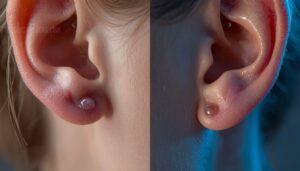
Once a bump forms, its outline tells you a lot. A piercing bump stays flat or slightly raised, pink or red, with a defined edge. A keloid becomes a raised scar with edges spreading beyond the piercing.
Picking at the bump only feeds the problem, raising scarring risk by 80%, so if irritation shows up near facial hair, this guide to treating ingrown hairs in the beard area can help you handle it without making things worse.
| Feature | Piercing Bump | Keloid |
|---|---|---|
| Edge shape | Defined, contained | Extends outward |
| Texture | Soft and doughy | Hard and rubbery |
| Surface | Smooth | Thick, continuous |
Size and Spread
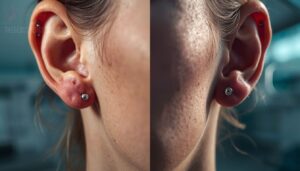
Size and spread matter just as much as shape. A piercing bump usually stays a few millimeters wide, right around the jewelry. Keloids show border expansion, growing past the original wound margins.
| Type | Diameter Changes | Spatial Distribution |
|---|---|---|
| Piercing bump | Small, stable | Confined to site |
| Hypertrophic scar | Raised, contained | Stays within margins |
| Keloid | Enlarges over time | Spreads outward |
Texture and Firmness
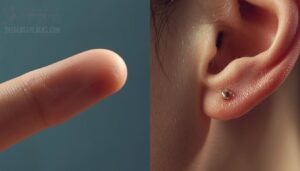
Gently pressing a bump tells you a lot. A soft movable bump shifts under light touch and feels cushiony—classic irritation. A keloid feels like a firm, rubbery plate, its collagen packed dense and unmoving.
| Trait | Piercing Bump | Keloid |
|---|---|---|
| Feel | Soft, giving | Rubbery, firm |
| Edges | Uneven | Well-defined |
| Uniformity | Mixed texture | Consistent throughout |
Color Changes
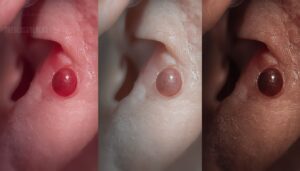
Color tells its own story. A fresh piercing bump often starts bright red, fading to pink as inflammation settles and blood oxygenation normalizes.
Keloids follow a different path—darkening over months into a brownish hue, especially in deeper skin tones, where pigment deposition lingers after healing.
Yellow or pale-green tones suggest infection, not scarring, and warrant closer attention.
Pain and Itchiness
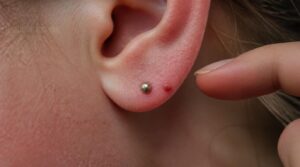
Pain and itch share overlapping sensory pathways in your skin, which explains why piercing bumps often feel both uncomfortable and itchy at once. Scratching brings quick relief but triggers a feedback loop that worsens irritation through peripheral sensitization.
| Feature | Piercing Bump | Keloid |
|---|---|---|
| Pain | Mild, localized | Often persistent |
| Itch | Common early on | Variable, sometimes intense |
When Each Bump Appears
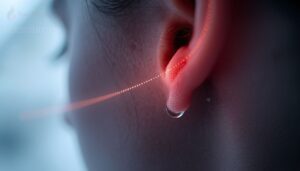
Timing tells you a lot about what’s going on with a piercing bump. A lump that shows up right away behaves very differently from one that takes months to form. Here’s how the timeline breaks down.
If irritation appears within days, gentle care similar to safe ingrown hair extraction and shaving techniques can help prevent the bump from worsening.
First Few Weeks
Those first few weeks after a piercing tell you a lot. Most bumps show up fast—within 7 to 21 days—as part of normal postpiercing inflammation.
Watch for:
- Mild redness around the hole
- A small, flat or slightly raised bump
- Occasional itchiness
- Tenderness when touched
- No spreading beyond the piercing tract
This is typical early healing, not a keloid. Keep it clean, avoid irritation, and let it settle.
Three Months or Later
By the three-month mark, things start looking different. Bumps that stick around now show persistent scar texture—firmer, with stabilizing contours and long-term discoloration replacing early redness.
| Feature | Three Months+ |
|---|---|
| Texture | Firm, rubbery |
| Color | Darker, patchy |
Late-stage itching often signals hypertrophic scar or keloid activity, not simple irritation. This helps clarify piercing bump vs keloid confusion during treatment comparison discussions.
Growth Over Time
Watching a bump change shape over weeks tells you more than any single glance. Growth patterns matter:
- Irritation bumps plateau early, staying small.
- Hypertrophic scars thicken during 3 to 12 months.
- Keloids extend beyond the original site.
- Keloid bumps may stop growing eventually, though it takes years.
Piercing bumps can last 12 to 24 months, but their healing timeline trends downward, unlike a keloid’s steady climb.
Shrinking Versus Spreading
Which direction is the bump moving—inward or outward? That’s your clearest clue.
Shrinking bumps soften and retreat toward the jewelry, softening as swelling fades. Spreading tissue feels rubbery, pushing past the original wound margin.
This border movement separates piercing bump vs keloid outcomes: hypertrophic scar tissue plateaus, while true keloid overgrowth of fibrous tissue keeps advancing outward, months after irritation subsides.
Common Piercing Bump Types
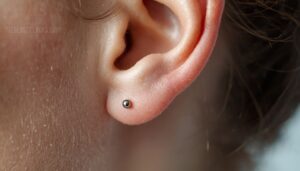
Not every bump around a piercing means the same thing. Some are minor and pass quickly, while others need closer attention. Here’s a look at the most common types you might notice.
Irritation Bumps
Irritation bumps are the most common piercing bump you’ll run into, and they’re almost always caused by friction, jewelry pressure, or contact irritants like harsh soaps.
You might notice milky discharge, crusting, or warmth around the site. The good news? These bumps usually shrink once you remove the irritation source, unlike a hypertrophic scar or keloid.
Keloids are formed by excessive scar tissue that grows beyond the original wound.
Hypertrophic Scars
Hypertrophic scars sit a step up from simple irritation bumps. They’re raised, firm, and caused by excessive collagen deposition where the dermis was injured. Redness comes from increased vascularity during active healing.
Unlike keloids, they stay within the wound’s original borders. Most thicken for up to six months, then fade over one to two years as scar maturation progresses.
Granulomas
Some bumps form when your immune system builds a tiny wall around a stubborn irritant. Macrophages cluster tightly, fuse into giant cells, and CD4 T-cells help coordinate the response.
Signs include:
- Firm, dome-shaped bump
- Slow growth over weeks
- Persistent, not painful
- Doesn’t resolve with basic care
This is granulomatous inflammation, distinct from a simple irritation bump.
Infection-related Swelling
Infection-related swelling feels different from a granuloma. Blood flow rises, fluid leaks into tissue, and the area turns puffy, warm, and red.
Watch for:
- Pus drainage (yellow, white, or green)
- Skin that looks shiny or crusted
- Fever or swollen lymph nodes
- Sharp pain, not just itching
Prompt wound care and infection control prevent piercing infection from spreading.
True Keloid Scars
True keloid scars go a step further than any bump. They’re fibroproliferative, meaning abnormal fibroblast activity keeps producing dense, hyalinized collagen bundles that build past the wound’s edges.
A true keloid keeps growing because abnormal fibroblasts never stop building collagen past the wound’s edges
Unlike hypertrophic scars, keloids show persistent scar enlargement, growing firm, rubbery, and darker over months or years. Some people carry a genetic keloid predisposition, and severe cases may need surgical excision alongside other treatments.
Keloid Risk Factors After Piercing
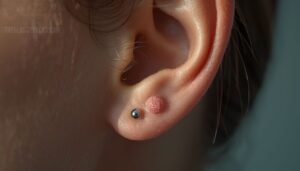
Not everyone who gets a piercing faces the same odds of developing a keloid. Some factors are written into your biology, while others come down to choices like piercing location. Here’s what actually raises your risk.
Family History
Your family tree can predict your piercing outcome. If parents or siblings developed keloids, your genetic susceptibility to keloids rises sharply—this hereditary scarring tendency often skips generations but rarely skips families entirely.
That’s why dermatologists ask about multigenerational health records before piercing. Ancestral skin traits matter here. A quick kinship risk assessment, checking both maternal and paternal sides, helps predict piercing bump vs keloid outcomes before you commit to that new piercing.
Previous Keloid Scars
Once your skin has formed a keloid, it remembers. That old scar site carries a scar re-triggering risk, meaning new trauma nearby can reawaken abnormal scar tissue formation.
This matters beyond genetic susceptibility to keloids or family history alone. Chronic itch symptoms often return first. Recurrence prevention usually requires multi-modality therapy—injections, cryotherapy, or laser—since surgery alone carries high regrowth odds after skipping the typical injury latency period.
Darker Skin Tones
When your piercing site holds more melanin, keloid risk climbs 15 to 20 times higher than lighter skin. Post-inflammatory hyperpigmentation often follows, darkening the area even without true scar tissue formation. Pigment shifts and UV exposure can deepen this contrast further.
That’s why watching color changes closely, alongside texture, matters just as much as tracking size.
Cartilage Piercings
Cartilage sits with a limited blood supply, slowing healing and giving irritation bumps more time to form.
Poor jewelry fit, snagging, or sleeping on the piercing adds repeated mechanical friction, raising risk for both irritation bumps and true keloid scars.
| Factor | Cartilage | Earlobe |
|---|---|---|
| Blood flow | Low | High |
| Healing time | Months | Weeks |
| Bump risk | Higher | Lower |
Teen and Young Adult Risk
Ages 10 to 24 carry extra risk, and decision-making habits play a big role. Impulsive decision making and short-term reward seeking mean aftercare steps get skipped.
Peer pressure influence, like changing jewelry early to fit in, adds trauma during healing. These adolescent risk patterns raise chances of both irritation bumps and true keloid scars forming.
Treatment Options for Each Type
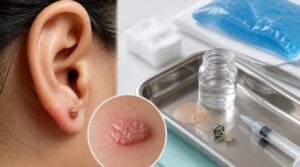
Not every bump needs the same care, and matching treatment to the right type makes healing easier. Some options work best for simple irritation, while others target more stubborn scarring like keloids. Here’s a closer look at what actually helps.
Sterile Saline Rinses
Salt water, done right, is the quiet workhorse of piercing aftercare.
A sterile saline rinse—0.9% sodium chloride—matches your body’s own fluid concentration, so it cleans without stinging or drying skin out.
- Isotonic balance protects healing cells
- Mechanical flushing clears crust and debris
- Helps microbe control without harsh chemicals
- Skip antiseptics like alcohol or peroxide
- Rinse gently, twice daily
Warm Compresses
Once rinses handle debris, warmth can ease lingering soreness. A warm saltwater compress—saline on a clean cloth—delivers moist heat that transfers deeper than dry heat, dilating vessels and relaxing tissue around a stubborn piercing bump.
Apply for 15 to 20 minutes, using heat that feels comfortable, never hot. This helps wound healing and eases discomfort, though it won’t shrink an established keloid.
Jewelry Material Changes
Sometimes the bump isn’t about aftercare at all—it’s the metal. Nickel sensitivity can turn a healing piercing into an ongoing battle, so switching matters.
- Implant-grade titanium (biocompatible, low-allergy)
- Avoid cheap coated jewelry—coating wear exposes irritants
- Steel varies; check for nickel content
- Smooth surface finish cuts friction
- Lighter jewelry reduces pull and micro-trauma
Silicone Gel Sheets
Silicone gel sheets work well once jewelry issues are ruled out. Made from cross-linked polydimethylsiloxane, they create an occlusive barrier that locks in moisture, easing itching and discomfort. Their flexible, conformable structure hugs the piercing site closely.
Regular use can improve scar color, height, and texture over time—useful for hypertrophic bumps and early keloid activity alike, supporting broader scar prevention efforts.
Dermatologist Keloid Treatments
When silicone alone isn’t cutting it, dermatologic treatment steps up a notch. Corticosteroid injections (like triamcinolone) remain first-line, working in 50-80% of cases. Resistant keloids may need combination therapy—steroids plus 5-fluorouracil.
Other tools include laser treatment for vascular disruption, cryotherapy, surgical excision, or radiotherapy to prevent recurrence. Bleomycin and verapamil offer alternative injection options too.
Preventing Bumps and Keloids
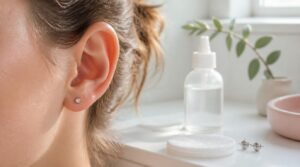
An ounce of prevention really does go a long way with piercings. A few smart choices before and after getting pierced can lower your risk of both bumps and keloids. Here’s what to keep in mind.
Choose Needle Piercing
Needle technique matters more than most people realize for preventing complications. A professional piercer using a sterile, individually sealed needle with tri-bevel design creates a cleaner channel, reducing tearing and trauma.
Proper needle gauge matching to your jewelry promotes smoother healing. Ask about needle material safety and cannula needle usage before booking—these details lower your risk for both bumps and keloid scars.
Avoid Piercing Guns
That convenience-store piercing gun does more harm than good. Spring-driven impact causes blunt force trauma rather than a clean puncture, bruising tissue and slowing healing.
Fixed jewelry post length can’t accommodate swelling, trapping pressure inside the wound. Worse, cartridge contamination and sterilization failure risks mean reused components may harbor microbes—raising your odds of both infection and stubborn bumps.
Use Titanium Jewelry
Not every metal belongs against healing skin. Implant-grade titanium stands out as a biocompatible, hypoallergenic option that rarely triggers metal allergy reactions common with nickel-containing alloys.
Its oxide layer provides strong corrosion resistance, limiting irritation from sweat and moisture. Anodized finishes add color without compromising durability. Choosing titanium jewelry promotes smoother healing—an easy way to reduce the odds of tipping the piercing bump vs keloid scale toward complications.
Reduce Friction and Trauma
Every rub, tug, or snag counts as skin trauma to healing tissue.
- Choose smooth jewelry surface finishes over rough or hinged designs
- Keep hair, collars, and straps from pressing on the site
- Rinse sweat promptly and pick soft, loose fabric choices
Minimizing sleep movement matters too. Gentle cleaning methods, done without scrubbing, round out prevention and lower your odds on the piercing bump vs keloid scale.
Follow Aftercare Instructions
Think of aftercare as your daily insurance policy against complications.
Rinse with sterile saline solution two to three times daily, then pat dry with clean disposable paper. Wash hands before touching jewelry, and don’t rotate or remove it early. Watch for normal symptoms like mild redness or itching versus warning signs. See your piercer if anything seems off—early guidance prevents repeated trauma and helps proper healing.
Frequently Asked Questions (FAQs)
How long does a piercing bump turn into a keloid?
A bump doesn’t "turn into" a keloid — they’re separate processes. Delayed scar onset generally starts 3-12 months post-piercing, driven by collagen overproduction, while irritation bumps appear within weeks and usually fade with normal skin healing.
Do keloids eventually go away?
Rarely fully, rarely fast, rarely on their own. Spontaneous regression is uncommon; most keloids show long-term persistence without care.
Natural fading is largely a myth—collagen overproduction keeps building. Treatment necessity remains key, though recurrence stays possible even after successful scar management.
How do I know if I have a keloid or piercing bump?
Check timing onset, texture, and spread. Pink or red lumps appearing within weeks, staying soft and localized, suggest a piercing bump.
A rubbery texture, darker color, and boundaries expanding months later point toward a keloid needing clinical diagnosis.
How long does it take for a piercing bump to turn into a keloid?
Keloids don’t spring from bumps overnight—about 3 to 12 months usually pass first. Skin healing moves through inflammation, then tissue remodeling, where delayed scar onset occurs. Watch for gradual, persistent growth beyond the original site; that’s your timeline change sign something’s changed.
How do you flatten a piercing bump?
Try a saline soak twice daily, apply a warm compress for 10 minutes, and reduce jewelry friction. If it persists past 12 months or resembles a keloid, ask your dermatologist about steroid injections, laser treatment, or cryotherapy.
Are piercing keloids hard or soft?
Firm, not soft. Excess collagen from heightened fibroblast activity creates dense tissue hypertrophy, giving keloids a rubbery sensation on compression testing.
Piercing bumps stay pliable and squishy by comparison—press gently, and you’ll feel the difference in tissue density right away.
How to tell if it’s a keloid or piercing bump?
Think of it as reading your skin’s own timeline: onset timing, skin boundary assessment, and texture comparison reveal the truth. A piercing bump stays put and softens; a keloid spreads, darkens, and firms—warranting clinical diagnosis if growth continues.
Do piercing keloids go away?
Not usually. Excess collagen keeps building, so spontaneous resolution is unlikely—unlike a simple piercing bump.
Genuine keloids need steroid injection therapy or other scar remodeling treatments, plus long-term management, since persistent growth patterns rarely reverse without medical intervention.
How do I get rid of a piercing bump?
Slow and steady wins the race, and that’s true here too.
Even the toughest, wiriest strands need patience, which is why a platinum-coated blade built for shaving coarse hair smoothly makes such a difference over time.
Saline soaks twice daily, warm compresses, and switching to hypoallergenic jewelry ease most bumps within weeks. Watch for infection warning signs like spreading redness or discharge—those need prompt medical attention, not home care.
Should you take your piercing out if you get a keloid?
Not automatically. Medical consultation first, since jewelry removal risks affecting healing timeline without guaranteeing shrinkage.
Removal may follow exam, but keloid regrowth remains possible even after piercing channel closure, so surgical excision carries its own recurrence rate.
Conclusion
Think of your skin like an old-school telegraph line: it sends signals, and you just need to read them right.
A keloid vs piercing bump isn’t a mystery once you know the signs—soft, fading swelling settles on its own, while firm, spreading tissue needs a dermatologist’s help.
Watch your piercing closely during the first three months. Early attention protects your skin, saves you time, and keeps small irritations from becoming lasting scars you didn’t choose.