This site is supported by our readers. We may earn a commission, at no cost to you, if you purchase through links. This content is for general informational and educational purposes only and is not a substitute for professional medical, dermatological, or nutritional advice.
Low porosity hair doesn’t lack moisture because you’re using the wrong products. It lacks moisture because tightly sealed cuticles physically block ingredients from reaching the cortex, no matter how rich the formula is.
That’s why most deep conditioners leave low porosity strands feeling coated rather than hydrated. The product sits on the surface, the cuticle never opens, and the moisture never gets in.
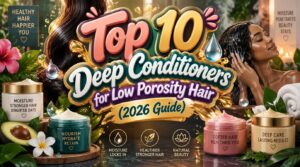
Choosing the right low porosity hair deep conditioners changes that equation. This guide covers the top 10 formulas built around lightweight humectants and penetrating oils that actually slip past the cuticle and deliver results.
Table Of Contents
- Key Takeaways
- What Makes a Deep Conditioner Good for Low Porosity Hair?
- Top 10 Deep Conditioners for Low Porosity Hair
- 1. As I Am Hydration Elation
- 2. Alikay Naturals Avocado Moisture Hair Mask
- 3. Carols Daughter Almond Milk Mask
- 4. Curl Junkie Argan Olive Hair Conditioner
- 5. Giovanni Eco Chic Hydrating Conditioner
- 6. Jessicurl Deep Conditioning Treatment Citrus Lavender
- 7. Kinky Curly Knot Today Conditioner
- 8. Mielle Babassu Mint Deep Conditioner Protein
- 9. Silk Protein Ultra Moisturizing Conditioner
- 10. Mielle Mongongo Oil Hydrating Conditioner
- How to Choose a Low Porosity Hair Deep Conditioner
- How to Deep Condition Low Porosity Hair With Heat or Steam
- How Often to Deep Condition and Prevent Product Buildup
- Frequently Asked Questions (FAQs)
- What is the best deep conditioner for low porosity hair?
- How to deep conditioning low porosity hair?
- Which conditioner is best for low porosity hair?
- Which race has high porosity hair?
- Can I deep condition overnight safely?
- What water temperature works best for rinsing?
- Should I shampoo before or after conditioning?
- How do I know if Im overconditioning?
- Can hard water affect deep conditioning results?
- How do you test your hairs porosity?
- Conclusion
Key Takeaways
- Your low porosity hair doesn’t absorb moisture because tightly sealed cuticles physically block ingredients from getting in, not because you’re using the wrong amount of product.
- Lightweight humectants like glycerin and penetrating oils (argan, avocado, grapeseedible) work where heavy butters and silicones fail, because their smaller molecules can actually slip past the cuticle.
- Heat is the non-negotiable step: warming your hair with a steam cap or hooded dryer for 20–30 minutes temporarily opens the cuticle so your conditioner reaches the cortex instead of sitting on the surface.
- Deep condition once a week at most, clarify every two to four weeks, and rinse thoroughly every session — because buildup on already-resistant cuticles compounds the moisture problem you’re trying to solve.
What Makes a Deep Conditioner Good for Low Porosity Hair?
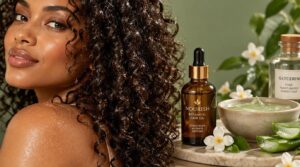
Because low porosity hair has tightly sealed cuticles, moisture struggles to get in. Standard conditioners often sit on the surface without fully penetrating, leaving your hair looking shiny but feeling dry underneath.
Understanding why low porosity hair resists moisture—and how to work with it can help you choose techniques that actually get hydration past those tightly sealed cuticles.
A good deep conditioner for low porosity hair works around this by relying on lightweight hydrating ingredients like glycerin and penetrating oils rather than heavy butters or silicones. These lighter ingredients can slip through the cuticle instead of coating it. Options like the Camille Rose Curl Love Moisture Milk offer the kind of glycerin-rich lightweight formula that draws in water without the heavy residue.
Moisture retention improves when you pair the right formula with heat. Heat temporarily opens the cuticle, letting ingredients absorb properly. After rinsing, cuticle sealing closes everything back in, locking that hydration where it belongs. That sequence is what separates a truly effective product from a greasy, weighty one.
Top 10 Deep Conditioners for Low Porosity Hair
These ten deep conditioners are specifically suited for low porosity hair, prioritizing lightweight humectants, penetrating oils, and protein-free formulas.
Each pick avoids heavy butters and coating silicones that block moisture from reaching the cortex.
Work through the list to find the right match for your texture and sensitivity level.
1. As I Am Hydration Elation
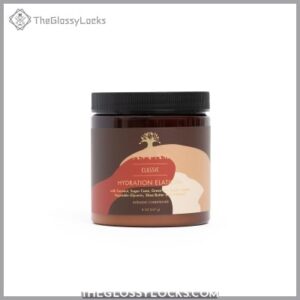
Because low porosity hair fights moisture absorption at every stage, you need a protein-free deep conditioner with lightweight hydrating ingredients that won’t pile onto closed cuticles. As I Am Hydration Elation fits that profile well. Its glycerin and coconut oil base draws water into the strand while staying light enough to rinse clean.
Apply it to freshly washed hair, cover with a plastic cap, and leave it on for 15 to 30 minutes. A hooded dryer or heat cap really boosts moisture retention by helping ingredients penetrate rather than coat.
Here’s what consistent use can do for you:
- Noticeably softer, more manageable hair after just two weeks
- Reduced mid-strand breakage as hydration steadily improves
- A clean, weightless finish that won’t flatten fine or medium strands
| Hair Type | Damaged, dry, brittle hair |
|---|---|
| Key Ingredients | Avocado, coconut, olive oil, vitamins B/C/E |
| Leave-on Time | 30 min (20 with heat) |
| Heat Needed | Yes, improves absorption |
| Protein Content | N/A |
| Hair State | Wet, sectioned hair |
| Additional Features |
|
2. Alikay Naturals Avocado Moisture Hair Mask
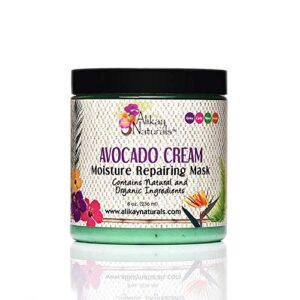
If you want something that goes a step further on repair and elasticity, the Alikay Naturals Avocado Moisture Hair Mask is worth trying. It combines avocado oil, olive oil, and coconut oil with beta-carotene and vitamins B, C, and E, giving your strands nutrients alongside moisture.
Apply it to wet, sectioned hair, cover with a plastic cap, and leave it on for 30 minutes. With heat, 20 minutes is enough to improve absorption noticeably.
One thing to watch: the green pigment can stain nails and occasionally tint hair. Rinse thoroughly. At $34.01 for 8 ounces, it’s a solid investment if buildup isn’t an issue.
| Best For | Anyone with damaged, dry, or brittle hair who wants a nutrient-rich treatment to restore moisture, improve elasticity, and support length retention. |
|---|---|
| Hair Type | Low porosity, curly (1c–4c) |
| Key Ingredients | Sweet almond oil, aloe, shea butter, proteins |
| Leave-on Time | 5–15 minutes |
| Heat Needed | N/A |
| Protein Content | Contains protein |
| Hair State | Damp hair |
| Additional Features |
|
- Packed with nourishing oils (avocado, coconut, olive) plus vitamins B, C, and E to repair and strengthen hair from the inside out.
- Works for all hair types and genders, making it a versatile addition to any hair care routine.
- Functions as a pre-poo treatment to boost softness and curl definition before washing.
- The green pigment can stain nails and may temporarily tint hair, so thorough rinsing is essential.
- Some users find it leaves an oily residue that’s hard to rinse out completely.
- Product consistency isn’t always reliable, with reports of varying color, texture, and occasional foreign particles.
3. Carols Daughter Almond Milk Mask
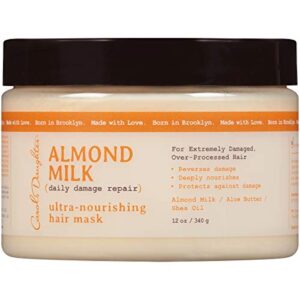
If the Alikay mask feels too heavy on your strands, Carol’s Daughter Almond Milk Mask takes a lighter approach. Almond milk as its base keeps the formula non-greasy and well suited for low porosity hair.
It contains Sweet Almond Oil, Aloe, Shea Butter, and proteins, with no parabens, petroleum, or mineral oil. Apply it to damp hair, not soaking wet, and leave it on for 5 to 15 minutes. Fragrance feedback is mixed, so patch test if your scalp’s sensitive.
| Best For | Those with low porosity or damaged curly hair (types 1c–4c) who want a lightweight, non-greasy deep conditioning treatment. |
|---|---|
| Hair Type | Fine wavy, 2B/2C curls |
| Key Ingredients | Argan, olive, jojoba, virgin coconut oil |
| Leave-on Time | 15–20 minutes |
| Heat Needed | Yes, indirect heat |
| Protein Content | N/A |
| Hair State | Damp hair |
| Additional Features |
|
- Free from parabens, petroleum, and mineral oil, making it a cleaner option for ingredient-conscious users
- Creates a protective layer that helps repair and guard against future damage
- Works well for fine or low porosity hair that heavier masks tend to weigh down
- Fragrance is hit or miss, so those with sensitive scalps may want to patch test first
- Primarily formulated for curly or damaged hair, limiting its appeal to other hair types
- Price-to-value perception varies, meaning some buyers may find it hard to justify the cost
4. Curl Junkie Argan Olive Hair Conditioner
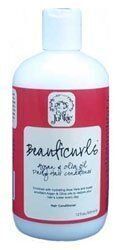
A daily conditioner that doubles as a deep conditioning treatment, Curl Junkie’s Argan and Olive Oil formula earns its place on this list. It blends aloe vera, argan, olive, jojoba, and virgin coconut oils with behentrimonium methosulfate for detangling slip, all in a lightweight texture that won’t block absorption on low porosity strands.
For low porosity hair especially, pairing this conditioner with the Max Hydration Method’s five-step routine can dramatically boost moisture absorption and curl definition.
Apply it to damp hair, cover with a cap, and add indirect heat for 15 to 20 minutes. Then rinse it completely. Don’t add extra oils on top. The formula already balances moisture and lubrication, so adding more risks surface buildup that blocks absorption.
It performs best on fine wavy and 2B/2C curls without weighing them down.
| Best For | Fine wavy and 2B/2C curl types, especially those following the Curly Girl Method who want a lightweight daily conditioner that also works as a quick deep treatment. |
|---|---|
| Hair Type | Normal to dry, color-treated, damaged |
| Key Ingredients | Aloe vera, rosemary, glycerin, botanicals |
| Leave-on Time | 15–20 minutes |
| Heat Needed | Yes, gentle heat |
| Protein Content | N/A |
| Hair State | N/A |
| Additional Features |
|
- Blends five nourishing oils (aloe vera, argan, olive, jojoba, and virgin coconut) with a detangling agent for smooth, easy combing
- Lightweight enough for fine or wavy hair without weighing curls down or blocking moisture absorption
- Doubles as a deep conditioning treatment with heat, making it versatile for different routine needs
- Some users notice the consistency is thinner than expected, which may affect how it spreads and performs
- At least one user with 3a/b curls reported noticeable hair loss during use
- Tangle-removal results can vary depending on which shampoo was used beforehand
5. Giovanni Eco Chic Hydrating Conditioner
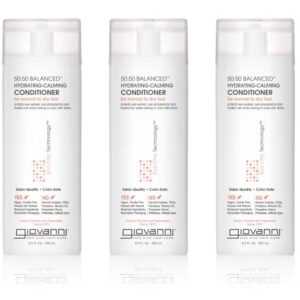
If you’re dealing with stubborn low porosity strands, the Giovanni Eco Chic Hydrating Conditioner keeps things refreshingly light. Its humectant-based formula draws moisture into the hair shaft without leaving filmy residue or buildup behind.
What makes it work is the smart combination of aloe vera, rosemary, and penetrating botanical extracts alongside glycerin. These ingredients pull moisture into the cuticle rather than sealing it at the surface. There are no heavy silicones to block absorption, so your hair actually takes in what you’re applying.
Apply it with gentle heat for 15–20 minutes to boost penetration. It’s vegan-friendly, Leaping Bunny Certified, and a clean, practical option at $32.55.
| Best For | People with normal to dry, color-treated, or damaged hair who want a hydrating daily conditioner that supports moisture without heavy buildup. |
|---|---|
| Hair Type | Low-porosity, dry, high-porosity curly |
| Key Ingredients | Avocado oil, shea butter, cocoa butter |
| Leave-on Time | 30–60 minutes |
| Heat Needed | Yes, heat cap |
| Protein Content | Protein-free |
| Hair State | Damp, clean hair |
| Additional Features |
|
- Formulated with aloe vera, rosemary, and botanical extracts that draw moisture into the hair shaft rather than sitting on the surface
- Vegan-friendly and Leaping Bunny Certified, making it a solid choice for ethically minded shoppers
- Reasonably priced at $32.55 for a product targeting damaged and over-processed hair
- Not suitable for oily or fine hair types that need something lighter and more volumizing
- Contains sulfates and parabens, which may be a dealbreaker for those following a clean-ingredient routine
- Packaging is recyclable but not biodegradable, so it falls short for buyers prioritizing full eco-friendliness
6. Jessicurl Deep Conditioning Treatment Citrus Lavender
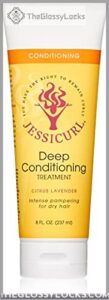
Picture your curls drinking in moisture like dry earth soaking up rain. That’s what this treatment aims to deliver.
Jessicurl’s formula skips protein entirely, making it smart for low-porosity strands that go stiff from protein overload. It draws on avocado oil, shea butter, and cocoa butter to soften without further blocking the cuticle.
Apply it to your damp, clean hair and leave it on for 30 to 60 minutes under a heat cap. That warmth helps lift the cuticle just enough to let moisture in. Users report better curl clumping and less frizz.
Clarify regularly to prevent product buildup.
| Best For | People with low-porosity, dry, or high-porosity curly hair who need deep moisture without protein buildup. |
|---|---|
| Hair Type | Curly, kinky, low porosity |
| Key Ingredients | Slippery elm, marshmallow root |
| Leave-on Time | N/A |
| Heat Needed | N/A |
| Protein Content | Protein-free |
| Hair State | Soaking wet hair |
| Additional Features |
|
- Protein-free formula prevents stiffness in low-porosity hair while delivering deep hydration from avocado oil, shea butter, and cocoa butter
- Versatile enough to use as a deep conditioner, cowash, or leave-in mask
- Free of sulfates, silicones, and gluten, and safe for color-treated hair
- Thick, creamy texture can make it hard to dispense from the pump
- Detangling performance is inconsistent compared to standard conditioners
- May not improve curl definition for all hair types
7. Kinky Curly Knot Today Conditioner
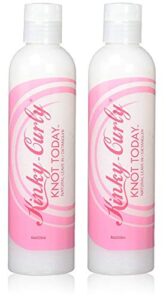
Think of knots giving way under cool running water, curls releasing one by one with barely any resistance. That’s what Kinky Curly Knot Today delivers. Its oil-free botanical formula relies on slippery elm and marshmallow root to create serious slip without weighing your strands down, which makes it a strong choice for low porosity hair that builds up easily.
It’s vegan, protein-free, and silicone-free, so you’re not adding anything that could block moisture uptake or stiffen your curls. Apply it generously through soaking wet hair, working section by section. That extra water helps the slip agents do their job and lets you detangle with far less breakage.
| Best For | People with curly or kinky hair — especially low porosity hair — who want effective detangling and moisture without buildup, grease, or stiffness. |
|---|---|
| Hair Type | Low porosity, natural hair |
| Key Ingredients | Babassu oil, mint, plant amino acids |
| Leave-on Time | 15–20 minutes |
| Heat Needed | Yes, gentle heat |
| Protein Content | Contains amino acids |
| Hair State | Damp, towel-dried |
| Additional Features |
|
- The oil-free botanical formula (slippery elm and marshmallow root) creates genuine slip, making detangling much easier with less breakage.
- Free from protein, silicone, and oils, so it won’t block moisture or leave curls crunchy or weighed down.
- Works well for a wide range of curl types and is vegan-friendly.
- At $33.74 for 8 ounces, the price feels steep — especially for a product you need to apply generously each wash.
- Some customers feel the quantity doesn’t justify the cost, making it hard to use freely without worrying about running out.
- Ranked 289 in its category, suggesting there are higher-rated alternatives worth comparing before committing.
8. Mielle Babassu Mint Deep Conditioner Protein
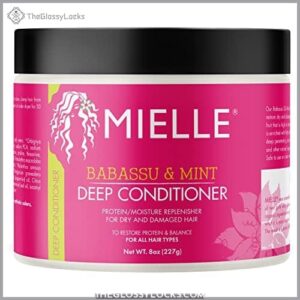
Babassu oil is lighter than coconut oil, which makes it a smart pick for low porosity hair that struggles with absorption. Mielle’s formula pairs it with plant-based amino acids that gently strengthen hair fibers without the stiffness you’d get from a heavy protein treatment.
The mint and peppermint fractions deliver a cooling scalp sensation while modestly boosting circulation. It’s a satisfying bonus that doesn’t overclaim.
Apply it to damp, towel-dried hair. Cover with a processing cap and leave it on for 15 to 20 minutes with gentle heat. Mielle recommends using it every 4 to 6 weeks to prevent protein buildup over time. Rinse thoroughly; the thin, conditioner-like consistency means residue clears quickly. Patch-test first if you’re sensitive to menthol.
| Best For | People with low porosity or natural hair who need a gentle protein treatment to repair damage from protective styles and improve curl definition without heavy buildup. |
|---|---|
| Hair Type | Curly, dry, damaged hair |
| Key Ingredients | Silk proteins, shea butter, jojoba, argan oil |
| Leave-on Time | N/A |
| Heat Needed | Yes, warm water |
| Protein Content | Contains silk proteins |
| Hair State | N/A |
| Additional Features |
|
- Restores protein balance and strengthens hair fibers without leaving strands stiff or weighed down
- Babassu oil absorbs easily, making it well-suited for hair that resists heavier oils like coconut
- Mint and peppermint ingredients deliver a refreshing scalp sensation and modest circulation boost
- Thin consistency may feel underwhelming to those expecting a richer, more intensive treatment
- The strong mint fragrance lingers and can be off-putting for scent-sensitive users
- Does not address scalp conditions or hair fall, so it won’t help beyond strand-level repair
9. Silk Protein Ultra Moisturizing Conditioner
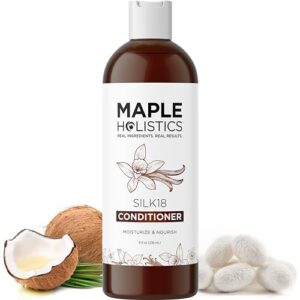
Silk proteins work differently from most conditioning agents. Their small-molecule peptides, ranging between 300 and 5,000 Da, are light enough to slip past tightly sealed cuticles without piling on top and causing buildup.
The Silk 18 by Maple Holistics pairs that silk action with shea butter, jojoba, and argan oil to smooth and hydrate without heavy coating. It’s sulfate-free and paraben-free, and the vanilla scent makes the whole process feel less like a chore.
Apply with warm water. Heat opens cuticles just enough for the formula to penetrate and do its job. Keep your amount moderate since too much shea butter will weigh your strands down. Expect softer, more manageable curls within one or two washes.
| Best For | People with curly, dry, or damaged hair who want a sulfate-free, deeply moisturizing conditioner that softens and defines without harsh chemicals. |
|---|
- Combines silk proteins with shea butter, jojoba, and argan oil to deliver real moisture and frizz control
- Free of sulfates and parabens, making it gentle enough for all hair types including co-wash routines
- Works on multiple concerns at once — from chlorine-damaged hair to lackluster curls — leaving strands softer and more manageable
- Using too much can weigh hair down, so finding the right amount takes some trial and error
- Won’t permanently alter your natural hair texture or curl pattern
- Doesn’t include a pump dispenser, which can make it awkward to use in the shower
10. Mielle Mongongo Oil Hydrating Conditioner
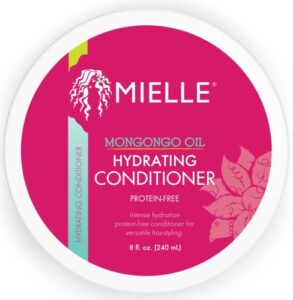
Mongongo oil brings something silk proteins don’t: photoprotection alongside hydration, which matters if your curls see regular sun exposure. Mielle’s protein-free formula pairs that oil with argan and sacha inchi, keeping molecular weight low enough for tight cuticles to accept without buildup.
The detangling slip is real from the first application. Behentrimonium methosulfate provides cationic conditioning that grips each strand without film-forming residue. At 8.5 ounces, the bottle lasts well if you apply it from mid-lengths to ends and rinse thoroughly, removing at least 75% of the product to avoid accumulation on tightly sealed strands.
One honest note: some users report oiliness within 18 hours of applying. Shorten your rinse intervals or add a monthly clarifying wash.
| Best For | People with low porosity, fine, or curl-type 3A–4C hair who need protein-free hydration and detangling, especially those whose strands see regular sun exposure. |
|---|
- Protein-free formula makes it safe for protein-sensitive hair without sacrificing moisture or slip
- Mongongo oil offers photoprotection alongside hydration, a rare combination for curl-focused conditioners
- Works as both a rinse-out and leave-in, giving flexibility for different styling routines
- Some users notice oily buildup within 18 hours, requiring more frequent washing or clarifying
- The thick consistency can be hard to distribute evenly through very dense or thick hair
- Availability has been inconsistent, with reports suggesting the product may be discontinued
How to Choose a Low Porosity Hair Deep Conditioner
Choosing the right deep conditioner for low porosity hair comes down to a few key formula qualities. Not every product marketed for moisture will actually work with your hair’s closed cuticle structure. Here’s what to look for before you buy.
Prioritize Lightweight Humectants
Because low porosity hair resists moisture absorption, you’ll need humectants small enough to slip past the cuticle. Lightweight humectants like glycerin and propylene glycol work best here. They attract water without weighing your hair strands down.
| Humectant | Why It Works |
|---|---|
| Glycerin | Small molecules aid cuticle penetration |
| Propylene glycol | Low buildup risk |
| Butylene glycol | Moderate moisture |
| Aloe vera | Balances hygroscopic hair |
Choose Penetrating Oils
Humectants pull moisture in, but you also need oils that actually absorb into the strand. Low molecular weight oils like grapeseed, safflower, and argan improve your product absorption rate without buildup.
For better cuticle penetration, look for lightweight hair oils with high linoleic or oleic content. Avocado and moringa both support moisture absorption into the cortex, especially with gentle heat.
Limit Proteins And Butters
Oils only work when the surrounding formula doesn’t block them. Avoid heavy oils and butters like shea or castor; they sit on the cuticle and seal moisture out.
Lightweight options like argan or jojoba penetrate more readily, especially for low-porosity strands where protein treatments and porosity interact in ways that directly shape how well your hair absorbs anything at all.
Hair protein sensitivity is common with low porosity hair.
- Skip wheat or keratin proteins
- Keep butter content below 2–3%
- Choose a proteinfree, lightweight formula
- Watch for stiffness as a sign of overload
Avoid Coating Silicones
Three common silicones dominate ingredient lists and block moisture retention in low porosity hair: dimethicone, cyclopentasiloxane, and amodimethicone. Each forms a film on the hair shaft that triggers product buildup over time. A siliconefree lightweight formula keeps your cuticle clear and open.
| Silicone | Type | Impact |
|---|---|---|
| Dimethicone | Film-forming | Blocks moisture |
| Cyclopentasiloxane | Volatile coating | Builds up quickly |
| Amodimethicone | Bonding agent | Stiffens strands |
Match Formula To Texture
Because low porosity hair resists moisture absorption, your formula’s molecular weight matters more than you’d think.
Water-based formulas with lightweight humectants like glycerin or propanediol penetrate the cuticle without sitting on top of it. Heavier creams and thick butters cause buildup fast.
Matching your deep conditioner’s consistency to your hair’s actual texture keeps things manageable and maintains lightweight moisture throughout.
Consider Heat Activation
Think of a tightly sealed envelope. Heat application works like steam on the flap, loosening it just enough for deep conditioners to slide through. A hair steamer or deep conditioning cap mimics that same gentle, penetrating warmth — giving cuticles just enough encouragement to open up.
For low porosity hair, thermal conditioning is worth building into your routine. Pre-warm your product first, cover with a cap, then apply gentle heat for 10-15 minutes. That’s your best window for moisture penetration to occur.
How to Deep Condition Low Porosity Hair With Heat or Steam
Picture steam slowly curling around your hair like a warm cloud settling in. That heat is doing real work. Low porosity hair has tightly packed cuticles that naturally resist water, so heat application during deep conditioning makes a measurable difference, helping your conditioner spread and actually contact the hair fiber.
Heat is the key that unlocks tightly sealed cuticles, letting deep conditioner truly reach low porosity hair
Here’s the method:
- Pre-wet your hair with warm water before applying product.
- Apply your deep conditioner from roots to ends, then cover with a plastic cap.
- Sit under a steam cap or hooded dryer for 20 to 30 minutes.
Steam conditioning keeps moisture surrounding each strand longer. Your hair porosity level determines how much time you need, but 20 minutes is a reliable, consistent baseline. Always rinse with warm water.
How Often to Deep Condition and Prevent Product Buildup
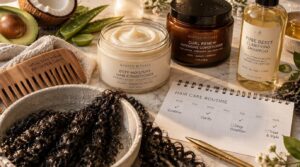
More isn’t always better with low porosity hair. Deep conditioning frequency matters as much as formula choice.
Weekly sessions suit most people, but biweekly is the safe ceiling. Push past it and you’re layering residue on hair that already resists moisture absorption, making the problem worse over time.
Here’s how to keep product buildup prevention on track: Starting with a clarifying shampoo for low porosity hair sets a clean baseline, making every step that follows more effective.
- Deep condition once weekly, adjusting down if hair feels heavy or coated.
- Clarify with a sulfate shampoo every two to four weeks to reset residue.
- Rinse thoroughly every session; incomplete rinsing is the biggest buildup driver.
- Use lighter amounts, applied mid-lengths to ends only.
- Skip consecutive rich masks if you co-wash more than you shampoo.
Clarify consistently, and your hair stays genuinely receptive.
Frequently Asked Questions (FAQs)
What is the best deep conditioner for low porosity hair?
As I Am Hydration Elation is your best pick. It’s a lightweight, silicone-free deep conditioner that uses glycerin to slip through tightly closed cuticles, delivering lasting moisture retention to low porosity hair without heavy buildup.
How to deep conditioning low porosity hair?
More product won’t fix it.
Your hair cuticle structure resists moisture absorption, so open cuticles first using steam or gentle heat. Apply a deep conditioning mask, cover with a cap, wait 20–30 minutes, then rinse.
Which conditioner is best for low porosity hair?
As I Am Hydration Elation is the top overall choice for low porosity hair. It’s water-rich with glycerin early in the formula, so it delivers lightweight moisture without ever coating your cuticles or causing buildup.
Which race has high porosity hair?
Like a stubborn rumor, this idea keeps circulating. No race consistently shows higher hair porosity. Your hair cuticles respond to chemical processing, heat, and environment, not ancestry. Hair porosity always varies individually, not by race.
Can I deep condition overnight safely?
It’s tempting, but overnight deep conditioning isn’t actually ideal for low porosity hair. Extended dwell time causes residue buildup and scalp irritation. 20 to 45 minutes with heat delivers better moisture retention without the risks.
What water temperature works best for rinsing?
Ironically, scalding hot water feels thorough but actually fights you. Lukewarm water, 95–100°F, rinses deep conditioners from low porosity hair most effectively. Follow with a cool rinse to smooth hair cuticles and seal in moisture.
Should I shampoo before or after conditioning?
Shampoo first. Low porosity hair is especially prone to product buildup, which blocks hair moisture absorption. A clarifying shampoo removes that residue and gives your deep conditioner a clean surface to actually penetrate your strands. To avoid stripping your hair, look for formulas that balance cleansing with conditioning ingredients, as detailed in this guide to clarifying low porosity hair safely.
How do I know if Im overconditioning?
What’s the clearest sign? If your strands feel mushy when wet but brittle when dry, or you notice greasy residue and worsening curl definition after each wash, product buildup from overconditioning is likely the cause.
Can hard water affect deep conditioning results?
Hard water doesn’t just affect taste. Calcium deposits coat your hair cuticles, blocking deep conditioners for low porosity hair from penetrating effectively. Use a chelating shampoo first to stay buildup free and restore moisture retention.
How do you test your hairs porosity?
Want a quick hair porosity test? Drop a clean strand into a glass of water and watch what happens. Low porosity hair floats longer because its tight cuticles resist moisture. High porosity sinks within minutes.
Conclusion
Think of your cuticle as a door that only opens with the right key. Without that key, even the most expensive formula just pools on the threshold.
The right low porosity hair deep conditioners work because they’re built for your biology, not against it. Lightweight humectants, penetrating oils, and heat work together to coax that door open and let moisture in where it counts.
Pick the right formula. Apply the right heat. Your hair will feel the difference.