This site is supported by our readers. We may earn a commission, at no cost to you, if you purchase through links. This content is for general informational and educational purposes only and is not a substitute for professional medical, dermatological, or nutritional advice.

Most people throw away the best part of the mango. That big seed in the center hides a kernel packed with rich, fatty butter that can transform dry, frizzy, breaking hair.
As a trichologist, I see the same complaints over and over: moisture that won’t stick, tangles that cause snapping, a scalp that feels tight and itchy. Mango butter helps with all three. It seals water into your strands, smooths rough cuticles, and calms your scalp, all from a single scoop of solid fat that melts the second it touches your hands.
Here’s what mango butter benefits for hair look like in practice, and how to make them work for your routine.
Table Of Contents
- Key Takeaways
- What is Mango Butter for Hair?
- 10 Mango Butter Benefits for Hair and Scalp
- How to Use Mango Butter in Your Hair Care Routine
- Is Mango Butter Good for Your Hair Type?
- Mango Butter Vs. Shea Butter for Hair
- Frequently Asked Questions (FAQs)
- Which is better for hair, mango butter or shea butter?
- Which butter is best for hair?
- Does mango butter help with wrinkles?
- Does mango butter need to be refrigerated?
- Can mango butter be used on color-treated hair?
- How long does mango butter last once opened?
- Is mango butter safe during pregnancy or breastfeeding?
- Can mango butter help with dandruff or scalp conditions?
- Does mango butter work well in humid climates?
- How long before mango butter shows noticeable results?
- Conclusion
Key Takeaways
- Mango butter locks moisture into your strands by forming a lipid-sealing film on each hair shaft, making it one of the most effective natural tools for tackling dryness, frizz, and breakage in a single step.
- Your hair type determines how you use it — curly and coily hair benefits from generous application as a deep conditioning treatment, while fine or oily hair needs just a small amount on lengths and ends to avoid buildup.
- Mango butter outperforms shea butter for fine to medium hair because its lighter, firmer texture delivers hydration without weighing strands down or clogging the scalp.
- Results come in two phases: you’ll feel immediate surface smoothness after the first use, but the deeper benefits — reduced breakage, lasting frizz control, and stronger elasticity — build consistently over two to four weeks.
What is Mango Butter for Hair?
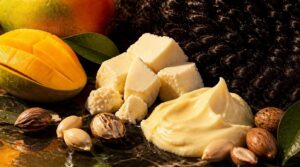
Extracted from the kernel inside mango seeds, mango butter is a plant-based fat that moisturizes hair by forming a protective lipid layer on each strand. Rich in fatty acids and antioxidants, it helps with hair repair and scalp health, making it a staple in natural hair care.
For deeper dives into application methods and product recommendations, check out this guide to using mango butter for hair.
Solid at room temperature, it softens on contact with your hands for easy application.
10 Mango Butter Benefits for Hair and Scalp
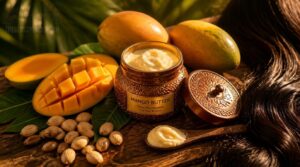
Mango butter does more than soften your hair — it works across multiple layers of hair health. The five benefits below cover everything from moisture retention and frizz control to scalp nourishment and breakage prevention. Understanding each one helps you use it with intention.
Deep Moisture And Softness
When mango butter moisturizes skin and hair, it does so by forming a lipid-sealing film on each strand, trapping moisture before it can evaporate.
This directly helps hair hydration and hair softening, giving your strands a pliable, conditioned feel. Apply it on damp hair for the best results.
Over time, it consistently improves hair manageability and aids hair elasticity restoration.
Frizz And Tangle Control
That sealing film also targets frizz directly. By coating each strand, mango butter limits cuticle exposure to ambient humidity, reducing the uneven swelling that causes surface roughness. Hair texture improvement becomes noticeable quickly.
- It lowers friction between strands for easier hair detangling
- Its lipid coat reduces static buildup, boosting hair manageability
- Consistent coverage helps hair softening and lasting frizz control
Strength And Breakage Prevention
That smoother surface does more than manage frizz. Hair breakage reduction happens when strands stay pliable under tension, and mango butter’s film preserves that pliability by limiting moisture loss.
For a deeper dive into moisture-locking treatments, this simple DIY hair mask for frizz shows how mango butter fits into an easy at-home routine.
| Benefit | How It Works |
|---|---|
| Hair strand strengthening | Keeps fibers flexible, not brittle |
| Split end prevention | Smooths rough cuticle edges |
| Hair elasticity improvement | Retains moisture under styling stress |
Environmental Damage Protection
Wind, UV rays, and airborne particles hit your hair daily, and the cuticle takes the brunt.
Mango butter creates a protective hair barrier that limits direct surface contact, while its antioxidant content helps counter free radical damage from UV exposure.
That combination of UV protection and broader hair environmental protection makes it a practical daily defense for your exposed lengths.
Scalp Comfort And Nourishment
When your scalp’s barrier breaks down, dryness and irritation follow fast. Mango butter’s lipid-rich texture helps scalp moisturization and soothing by coating the surface and slowing moisture loss. This helps quiet itch and discomfort without any harsh ingredients.
Think of it as hair follicle nourishment from the outside in, keeping your scalp surface conditioned and calm.
How to Use Mango Butter in Your Hair Care Routine
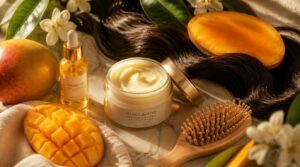
Mango butter works best when you use it at the right step in your routine. There are three straightforward ways to apply it, each targeting a different hair need. Here’s how to get the most from each method.
Pre-Shampoo Treatment
Apply mango butter to dry hair before washing. This prepoo treatment creates a protective layer that limits moisture loss when water hits your strands, supporting hair elasticity and reducing friction during detangling to cut down on hair breakage.
Warm it between your palms, work it from mid-lengths to ends, and let it sit for 20 to 30 minutes before shampooing.
Deep Conditioning Mask
A deep conditioning hair mask works best with time. Post-shampoo, coat your hair with mango butter, cover with a shower cap, and wait 20 minutes. It helps hair moisture retention and hair cuticle sealing from root to tip.
- Boosts hair elasticity for stronger, resilient strands
- Provides hair strand protection against friction damage
- Leaves hair noticeably soft after rinsing
Leave-in and Styling
Mango butter’s a reliable leave-in conditioner and hair styling product that also works in any hair mask recipe. Work through your damp strands for hair cuticle sealing.
| Step | How | Benefit |
|---|---|---|
| Moisturize | Damp, mid-lengths | Seals softness |
| Style | Emulsify, smooth on | Frizz control |
| Shine | Light coat, ends | Hair shine enhancement |
| Detangle | Section by section | Less breakage |
| Finish | Press dry ends | Cuticle sealed |
Is Mango Butter Good for Your Hair Type?
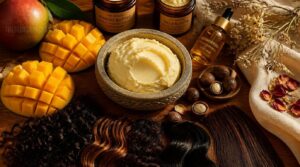
Mango butter works well for many hair types, but how you use it matters. Your hair’s texture and condition determine how much you need and how often to apply it. Here’s how it fits each common hair type.
Curly and Coily Hair
Curly and coily hair loses moisture faster than any other texture because sebum can’t easily travel down each coiled strand. Mango butter fills that gap.
Curly and coily hair loses moisture fast since sebum can’t travel down the coils, but mango butter seals that gap
It seals hydration into the shaft, smooths your cuticle for stronger curl definition, and aids scalp soothing between wash days. Use it as a deep conditioning treatment and your curls stay soft and more resilient. For best results, follow the hydrate first, seal after method by applying mango butter only after moisturizing damp hair with a water-based product.
Dry or Damaged Hair
If curly hair battles moisture loss, dry or damaged hair fights the same war, only harder. Use it as a hair repair treatment to restore softness and cut breakage.
It delivers:
- Moisturizing coverage across compromised strands
- Reduced friction for gentler detangling
- Hair nourishment that rebuilds your barrier
- Hair damage prevention by locking moisture in
Fine or Oily Hair
Fine or oily hair needs a lighter approach. Mango butter’s lightweight texture and noncomedogenic profile make it workable, but apply it only to your lengths and ends, never your scalp. A small amount delivers hair hydration and oil balance without buildup. Skip it on wash day and use it sparingly between washes.
Mango Butter Vs. Shea Butter for Hair
Once you know your hair type, choosing the right butter gets easier. Both mango butter and shea butter help hair moisturization, but they behave differently on the strand.
Mango butter has a lighter, firmer texture that distributes evenly without weighing hair down. Shea butter is creamier and denser, making it better for coily or very dry hair. If your scalp conditions involve excess oil or sensitivity, mango butter’s the smarter pick. A healthy scalp environment helps hair growth stimulation, and both butters help protect it.
| Mango Butter | Shea Butter |
|---|---|
| Light, firm texture | Dense, creamy texture |
| Best for fine to medium hair | Best for coily, dry hair |
| Lower buildup risk | Higher buildup risk |
| Suits most scalp types | Best for dry scalps |
Frequently Asked Questions (FAQs)
Which is better for hair, mango butter or shea butter?
Neither is universally better. Shea suits drier, coarser hair; mango butter works better for finer hair needing lightweight moisture without buildup. Your hair type decides the winner.
Which butter is best for hair?
Spoiler: there’s no universal winner. For hair repair and anti-inflammatory hair treatment, shea leads on deeply dry hair. For lightweight hair moisturizing, mango butter wins. Always match your butter to your density, not the trend.
Does mango butter help with wrinkles?
Mango butter’s antioxidants, vitamins A and E support skin hydration and barrier repair, but there’s no strong clinical evidence it reduces facial wrinkles directly.
Does mango butter need to be refrigerated?
It’s not usually necessary. Most mango butter is shelf-stable when stored in a cool, dark place, tightly sealed. Always follow your product’s label, since formulations vary.
Can mango butter be used on color-treated hair?
Can mango butter be used on color-treated hair? Yes. Your keratin shaft doesn’t change when you dye it, so fatty acids still lock in hair moisture without lifting color. Apply it sparingly to prevent buildup.
How long does mango butter last once opened?
Pure mango butter stays fresh for up to 24 months when stored correctly. But DIY hair masks with added ingredients usually last just 3 to 12 months, depending on preservatives and your specific storage method.
Is mango butter safe during pregnancy or breastfeeding?
It’s considered safe during pregnancy and breastfeeding when applied topically to skin. Since mango butter absorbs minimally through intact skin, systemic risk stays low. Do a patch test first and avoid applying near nipple areas.
Can mango butter help with dandruff or scalp conditions?
It depends on the cause. If your scalp flakes from dryness or irritation, mango butter’s moisturizing properties can soothe and reduce visible scaling effectively. For true fungal dandruff, you’ll still need a dedicated antifungal treatment.
Does mango butter work well in humid climates?
It can, but results vary. Apply it sparingly on damp hair to smooth cuticles and reduce frizziness without the heavy, coated feeling humid air can worsen.
How long before mango butter shows noticeable results?
You’ll notice immediate surface smoothness after your very first use. Mango butter forms a lightweight protective coat that cuts roughness fast. Deeper softening, frizz control, and reduced breakage usually build over two to four weeks.
Conclusion
Soft, strong, sealed strands don’t happen by accident. Mango butter benefits for hair are built on one simple truth: your hair needs fat to hold water, and this butter delivers both without weighing you down.
Start with a small amount. Melt a pea-sized scoop between your palms and press it into damp ends. Give it three weeks. You’ll feel the difference before you see it, and once you do, you won’t reach for anything else.