This site is supported by our readers. We may earn a commission, at no cost to you, if you purchase through links. This content is for general informational and educational purposes only and is not a substitute for professional medical, dermatological, or nutritional advice.
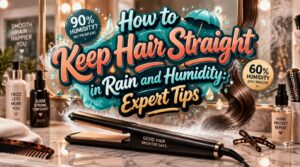
You spent forty minutes straightening your hair, and one walk to the car in drizzle undoes it all. That’s not bad luck. It’s chemistry. Your hair pulls moisture straight out of humid air, and that water breaks the bonds holding your sleek style in place.
Here’s the good news: you can outsmart it. The right wash routine, a sealed cuticle, and a few smart barriers make all the difference between frizz and glass-smooth strands.
Below, I’ll walk you through how to keep hair straight in rain and humidity, from blow-dry technique to overnight protection. You’ve got this!
Table Of Contents
- Key Takeaways
- Why Does Hair Curl in Rain and Humidity?
- How to Wash and Dry Hair for Humidity Resistance
- Best Anti-Humidity Products for Keeping Hair Straight
- How to Straighten Hair So It Stays Sleek
- How to Protect Straight Hair From Rain, Sweat, and Overnight Frizz
- Frequently Asked Questions (FAQs)
- What is the best way to prevent frizz in humid weather?
- How can I protect my hair from humidity-induced damage?
- What are the benefits of using a microfiber towel when drying my hair?
- What hairstyles are best for high humidity?
- Can your diet affect hairs frizz resistance?
- How long does straight hair last in humidity?
- Does hair type affect how quickly it frizzes?
- How do you fix frizz mid-day?
- How often can you safely heat-style hair?
- Conclusion
Key Takeaways
- Hair frizzes in humidity because keratin pulls moisture from the air, breaking the hydrogen bonds that hold your straight style and lifting the cuticle so strands swell unevenly.
- Your wash and dry routine sets the foundation: use smoothing products, rinse with lukewarm water, blot with a microfiber towel, blow-dry downward from the roots with a nozzle, and finish with a cool shot so hair is fully dry before styling.
- Layer silicone-based serums (with dimethicone or hydrolyzed keratin) and anti-humidity sprays to seal the cuticle, and flat-iron at the lowest effective temperature with heat protectant, letting each section cool fully to lock in the shape.
- Extend your style’s life with protective braids or buns in rain, blot (never rub) sweat and touch up with serum, and wrap hair overnight—ideally with a silk pillowcase—since above 60% humidity frizz can return in just two to four hours.
Why Does Hair Curl in Rain and Humidity?

Why does your perfectly straightened hair go wavy the moment you step outside? It all comes down to hygroscopicity of keratin, which means your hair naturally pulls moisture in the air into its structure.
Your hair’s porosity level determines just how quickly that moisture floods in — understanding your wavy hair texture and porosity can make all the difference in managing frizz on humid days.
When humidity rises, that absorbed water disrupts the hydrogen bonds inside each strand. They’re what keep your style locked in place after heat styling, and once moisture breaks them, your hair starts reverting toward its natural shape.
Your hair cuticle plays a big role here too. Heat straightening flattens those tiny outer scales. But in humid air, the cuticle quickly lifts, fibers separate, and straight hair curls in humidity because each section swells and bends unevenly. That uneven expansion is exactly what triggers all that frizz.
Heat flattens your cuticle, but humidity lifts it back—and that uneven swelling is exactly what creates frizz
How to Wash and Dry Hair for Humidity Resistance

Since humidity lifts the cuticle and breaks your style’s hold, your wash-day foundation matters more than you think.
Reach for a smoothing shampoo and conditioner with humidity-resistant ingredients to clear oil buildup that traps moisture near the shaft. Wash with lukewarm water since hot water forces the cuticle open, making strands absorb humidity faster. Rinse thoroughly, then blot with a microfiber towel instead of rubbing.
Here’s a simple drying order to try:
- Leave hair slightly damp before applying a cuticle-sealing product so it absorbs evenly.
- Begin blowdrying at the roots first and direct airflow downward with a nozzle.
- Finish with a cool shot to set your washed and conditioned hair flat.
Fully dry hair gives humidity nothing to work with!
Starting with a hydrating shampoo formulated for damaged hair helps lock in the moisture that keeps frizz from taking over on humid days.
Best Anti-Humidity Products for Keeping Hair Straight
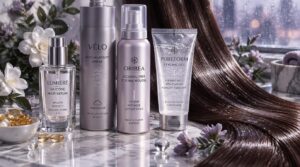
Now that your hair is clean and dry, layering the right products is what seals all of that effort in.
Start with a silicone-based serum. It coats each strand and creates a solid humidity barrier so moisture can’t lift your cuticle. Look for dimethicone or hydrolyzed keratin on the label, since both strengthen cuticle integrity under pressure.
Follow that with an anti humidity spray containing quaternary ammonium compounds. These help build a flexible film that gives you real humidity control without any crunch or stiffness.
- An alcohol-free mousse adds hold that stays brushable.
- A polyquaternium-11 gel delivers stronger frizz prevention for thick hair.
Choosing humidity resistant products with a pH near 4.5-5.5 keeps your cuticle sealed and smooth all day!
How to Straighten Hair So It Stays Sleek
Getting your hair sleek and straight is all about nailing the technique from start to finish. The right steps make a real difference in how long your style holds up against humidity. Here’s exactly what to do.
Blow-Dry for Smoothness
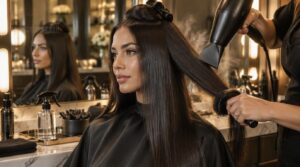
One rough-dry session can undo your straightening effort. Humidity sneaks into damp patches and triggers curl-back fast.
- Apply a heat protectant first, then section your hair so the dryer reaches every layer.
- Move continuously downward along each shaft to seal the cuticle.
- Use a concentrator nozzle for controlled, frizz-fighting airflow.
- Finish with a cool shot to lock your shape in!
Flat-Iron Without Heat Damage

Grab your flat iron and start low. Choose the lowest effective temperature that smooths your hair, usually 300–350°F for fine strands.
Always mist on a heat protectant spray first, and never iron soaking-wet hair, since trapped water steams and frizzes.
Use slow, single passes for gentle cuticle sealing. Smart flat iron styling is your best thermal damage prevention. You’ve got this!
Cool and Set Hair

After flat-ironing, cool and set hair before you move. Clip in small sections and let each one cool fully in your hand. This locks the smooth shape in place.
Then seal cuticles with a light antihumidity hairspray or finishing spray. Work fast, because the first minutes matter most.
You’ve got this, gorgeous!
How to Protect Straight Hair From Rain, Sweat, and Overnight Frizz

You’ve done all that work to get your hair sleek, so let’s keep it that way! Rain, sweat, and even your pillowcase can undo a perfect style fast. Below, you’ll find simple ways to shield your strands from moisture, manage sweat, and protect your hair overnight!
Rainy-Day Protective Styles
Rain is coming? Don’t panic, plan! Protective styles like braids, twists, or a sleek bun keep hair gathered and dry, so fewer strands soak up moisture and revert. Tuck your edges and part lines first, since that’s where water sneaks in. A hood or waterproof cap adds a bonus barrier. Layer on antihumidity hairspray for extra styling hold!
Control Sweat and Moisture
A client once left my chair pin-straight, then texted me an hour later: her gym session had undone everything. Sweat is sneaky!
Here’s your quick routine:
- Blot your scalp and hairline with a soft towel, never rub.
- Dab dry spots with a pea-size humidity-resistant styling serum.
- Air-dry with a fan before touching up.
Managing excess moisture keeps your sleek look intact. You’ve got this!
Wrap Hair Overnight
You did all that work, don’t undo it in your sleep! Let your hair cool completely first, then use your favorite wrapping method with smooth, even sections. Cover the ends well, since they frizz fastest. A silk pillowcase adds extra protection. If it’s muggy, tie it up in a bun under the wrap. You’ve got this, gorgeous!
Frequently Asked Questions (FAQs)
What is the best way to prevent frizz in humid weather?
The best way to prevent frizz in humid weather is pairing a silicone serum with shea butter oil. Together, they seal cuticles, boost frizz control, and keep rising humidity levels from stealing your sleek look.
How can I protect my hair from humidity-induced damage?
Picture tiny sponges lining each strand, soaking up air moisture throughout the day. That’s hygroscopic hair behavior in action. Seal the cuticle with a leave-in serum to build a solid moisture barrier against humidity-induced damage.
What are the benefits of using a microfiber towel when drying my hair?
Microfiber towels are a total lifesaver! They’re far more absorbent than terry cloth, so they support your hair moisture balance and protect the cuticle layer. Expect less frizz, fewer split ends, softer strands, and gentler drying for every hair texture!
What hairstyles are best for high humidity?
Funny, right? The most humidity-proof styles are the ones that stop fighting your texture. Try sleek low buns, braids, or tight ponytails. They keep strands aligned, limit frizz, and look polished all day!
Can your diet affect hairs frizz resistance?
Your diet builds stronger hair from within. Prioritize protein for keratin, omega-3s for moisture balance, and iron for oxygen delivery. These frizz prevention strategies strengthen strands against humidity’s hygroscopic nature. Eat well, and battle frizz successfully!
How long does straight hair last in humidity?
It depends on your hair and humidity levels.
Straight hair can last over twelve hours in dry air, but above 60 percent humidity, expect frizz within two to four hours.
High-porosity or chemically treated hair reverts even faster, often in one to two hours.
Silicone serums and anti-humidity sprays add hours of styling longevity!
Does hair type affect how quickly it frizzes?
Ever wonder why your friend’s hair stays sleek while yours puffs up fast? It’s all about hair porosity levels. Porous, damaged, or curly strands absorb moisture quicker, so humidity-induced swelling frizzes them sooner.
How do you fix frizz mid-day?
Frizz can multiply in minutes! Spot-treat only the frizziest sections with a lightweight serum. Skip water, smooth small pieces, and let the film set before battling frizz again. You’ve got this!
How often can you safely heat-style hair?
Last week a client came in with snapped strands from daily flat-ironing. Here’s the truth: healthy hair takes heat styling two to three times weekly, damaged hair once weekly, and fine hair every 10 to 14 days.
Always use heat protectant! Temperatures exceeding 350°F can cause irreversible protein breakdown, so it’s worth learning more about heat styling hair damage to keep your strands safe.
Conclusion
Funny, isn’t it? The weather spends all day trying to undo your hair, and you just need one solid routine to win.
Now you know how to keep hair straight in rain and humidity: wash smart, seal every cuticle, flat-iron with care, and wrap it up at night. Humidity doesn’t stand a chance against a plan.
Grab your anti-humidity products, trust your technique, and walk out that door with sleek, confident strands!