This site is supported by our readers. We may earn a commission, at no cost to you, if you purchase through links. This content is for general informational and educational purposes only and is not a substitute for professional medical, dermatological, or nutritional advice.

Skin redness rarely begins with a single bad product. Exhaust particles, a rushed cleanse, a stressful week, or a shift in estrogen can chip away at the barrier until ordinary moisturizer stings and your cheeks feel warm by noon.
The most useful response isn’t piling on stronger actives. It’s restoring the skin’s lipid seal while using ingredients that interrupt inflammatory signals, such as niacinamide, ceramides, colloidal oatmeal, and centella. The products to reduce skin inflammation do both, without fragrance or harsh surfactants that keep the cycle going. Seven formulas earn scrutiny, and a routine can calm redness at the source.
Table Of Contents
- Key Takeaways
- What Triggers Skin Inflammation Every Day?
- Anti-Inflammatory Ingredients That Calm Redness
- Top 7 Products to Reduce Skin Inflammation
- How to Choose Anti-Inflammatory Skin Products
- Skincare Routine to Soothe Inflamed Skin
- Frequently Asked Questions (FAQs)
- What reduces skin inflammation fast?
- How can I treat inflammation in my skin?
- What triggers skin inflammation?
- What brings down inflammation immediately?
- How to get rid of inflammation on skin fast?
- What’s the best anti-inflammatory for skin?
- What skincare products are good for inflammation?
- Can diet changes reduce skin inflammation naturally?
- How long before inflammation treatments show results?
- Which makeup products worsen inflammatory skin conditions?
- Conclusion
Key Takeaways
- Skin inflammation usually develops from overlapping triggers such as pollution, UV exposure, stress, hormonal shifts, harsh cleansing, fragrance, and a weakened moisture barrier.
- The most useful ingredients combine calming and barrier repair, especially niacinamide, ceramides, colloidal oatmeal, centella asiatica, panthenol, aloe vera, and glycerin.
- Choose fragrance-free, sulfate-free products and introduce one new formula at a time, since botanical extracts, essential oils, acids, and even otherwise gentle products can trigger reactive skin.
- Keep your routine simple: cleanse gently, apply calming treatments, moisturize while skin is damp, use broad-spectrum mineral SPF daily, and seek dermatologic care for persistent burning, swelling, crusting, or redness.
What Triggers Skin Inflammation Every Day?
Skin inflammation rarely has a single cause — it’s usually the result of several overlapping triggers working against your skin at once. Understanding what sets off that cycle of redness and irritation is the first step toward breaking it. Here are the most common culprits you’re likely encountering every day.
Even grooming choices matter, so consider whether trimming or waxing nose hair is safer for sensitive skin.
Skin inflammation often begins when everyday triggers overlap, fueling a cycle of redness and irritation
Environmental Factors and Pollution
Every time you step outside, fine particulate matter (PM2.5) slips through your skin barrier and triggers oxidative stress, setting off inflammatory responses deep in your cells. Traffic-related pollution can more than double your eczema risk. PAHs from exhaust deplete your skin’s antioxidants, while NO2 and VOCs disrupt ceramide production. Your daily commute may be doing more damage than you think.
In fact, research shows that PM2.5 and eczema risk is dose-dependent, with people in the highest pollution areas facing 158% greater odds of developing the condition.
Allergens and Skin Irritants
Pollution isn’t the only threat working against your skin. Fragrances, preservatives, and dyes in everyday cosmetics are among the most common triggers of contact dermatitis, an immune reaction that leaves skin red, itchy, and inflamed. Even products labeled "natural" can contain plant allergens. If your skin flares after trying something new, the ingredient list is usually where the answer hides.
Hormonal Changes and Stress
Your skin doesn’t just react to what touches it. Cortisol and skin barrier function are tightly linked, and when stress rises, cortisol suppresses barrier-forming proteins, increasing permeability and triggering stress-induced inflammation.
Hormonal fluctuation effects add another layer, as estrogen shifts across the menstrual cycle can heighten redness and skin sensitivity. Consistent sleep and exercise measurably lower your cutaneous cortisol load.
Genetics and Lifestyle Choices
Stress may start the flare, but Genetics and Lifestyle Choices often determine how long it lasts. FLG gene variants weaken barrier repair, making irritants penetrate more easily and fueling skin inflammation.
- Prioritize sleep quality and stress management.
- Support the gut-skin axis with fiber.
- Aim for omega-3 intake from fish.
- Keep sensitive skin care fragrance-free.
These habits support steady redness reduction.
Anti-Inflammatory Ingredients That Calm Redness
Not all calming ingredients work the same way, and knowing the difference helps you choose products that actually match what your skin needs. Some target redness directly, others focus on rebuilding your barrier so irritants can’t keep getting through. Here are the key anti-inflammatory ingredients worth understanding before you shop.
Niacinamide, Ceramides, and Aloe Vera
Three ingredients form the foundation of any serious anti-inflammatory skin care routine: niacinamide, ceramides, and aloe vera, each targeting a different link in the inflammation chain.
Niacinamide (vitamin B3) calms oxidative stress and reduces redness while strengthening the skin barrier. Ceramides restore intercellular lipids that lock moisture in and block irritants out. Aloe vera soothes on contact, easing irritation fast.
| Ingredient | Primary Benefit | Best Used In |
|---|---|---|
| Niacinamide | Redness reduction | Serums, moisturizers |
| Ceramides | Barrier repair | Creams, lotions |
| Aloe vera | Hydration and calming | Gels, after-sun products |
Centella Asiatica and Colloidal Oatmeal
When redness won’t settle, two ingredients reliably show up in effective routines: centella asiatica and colloidal oatmeal.
Explore our calming face mask guide for sensitive skin for soothing hydration options that support a compromised moisture barrier.
Centella, also called cica or gotu kola, contains triterpenes like madecassoside and asiaticoside that calm irritation and support skin barrier repair. Products commonly use it at 2.5% to 5%.
Colloidal oatmeal soothes through avenanthramides, blocking inflammatory pathways and reducing histamine release in reactive skin.
Green Tea Extract and Turmeric
Green tea extract works through EGCG, a catechin that reduces facial redness and capillary visibility at concentrations of 2.5% to 15%. Steam processing preserves these catechins, keeping them stable in topical formulas.
Turmeric’s active compound, curcumin, absorbs poorly without specialized delivery systems like nano-emulsions. Plain turmeric paste stains skin and offers little real anti-inflammatory penetration.
Allantoin and Barrier-Boosting Agents
Allantoin is a quiet workhorse in barrier-supportive cream formulas. It softens rough surface skin, calms irritation, and helps keratolytic skin renewal without disrupting your barrier.
Pair it with ceramide barrier repair and panthenol, and you’re reinforcing stratum corneum integrity at a structural level. Madecassoside targets localized redness, while colloidal oatmeal soothes reactivity. Together, these agents don’t just moisturize, they rebuild.
Top 7 Products to Reduce Skin Inflammation
Finding the right product for inflamed skin doesn’t have to feel like guesswork. Each of the seven options below was selected for its clinically relevant ingredients and its ability to address redness, barrier disruption, or both. Here’s what’s worth your attention.
1. TOSOWOONG Arbutin 7% Tranexamic Acid 4% Cream
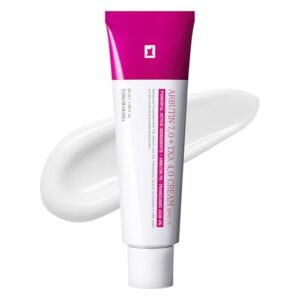
If post-inflammatory hyperpigmentation is your main concern, this cream pairs two well-studied brightening actives at clinically meaningful concentrations. Arbutin at 7% inhibits tyrosinase to slow melanin production, while tranexamic acid at 4% interrupts the signaling pathway that triggers excess pigment after inflammation. Glutathione adds a supporting brightening role.
The lightweight, fragrance-free formula also includes niacinamide, allantoin, and centella asiatica to calm irritation alongside the pigment work.
Expect gradual improvement over 8 to 12 weeks of consistent daily use.
| Best For | Anyone dealing with post-inflammatory hyperpigmentation, age spots, or uneven skin tone who wants a lightweight, fragrance-free daily brightening cream with clinically meaningful active concentrations. |
|---|---|
| Product Form | Cream |
| Net Weight | 50g (1.76 oz) |
| Key Ingredient | Arbutin 7% |
| Skin Types | All Skin Types |
| Primary Benefit | Brightening |
| Fragrance Status | Fragrance-Free |
| Additional Features |
|
- Combines two well-researched brightening actives — 7% Arbutin and 4% Tranexamic Acid — at concentrations that can genuinely make a difference in fading dark spots and discoloration.
- Lightweight, fragrance-free formula is gentle enough for sensitive skin and layers easily under sunscreen or makeup without feeling heavy or greasy.
- Versatile enough to use on the face and body, targeting commonly affected areas like forearms, neck, and décolletage.
- Results take time — most users will need 8 to 12 weeks of consistent use before seeing meaningful improvement, and some may not see results at all.
- Applying too much product can leave a sticky or tacky feeling on the skin, requiring careful dosing for a comfortable wear.
- Despite its gentle formulation, sensitive skin types should still patch test first, as individual reactions can vary.
2. SHVYOG Turmeric Vitamin C Clay Mask
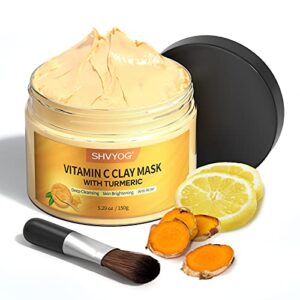
Clay masks rarely double as brightening treatments, but this one leans into that overlap. Kaolin clay draws out excess oil and refines pores without stripping moisture, while turmeric extract contributes mild anti-inflammatory support.
Plain turmeric absorbs poorly through skin, so the brightening work here falls more squarely on vitamin C, which targets uneven tone and environmental stress through antioxidant activity.
Apply a thin layer for 10 to 15 minutes, then rinse. Note that turmeric can temporarily stain skin or fabrics.
| Best For | Anyone with oily or combination skin who wants to tackle dull tone and dark spots without sacrificing hydration. |
|---|---|
| Product Form | Clay Mask |
| Net Weight | 150g (5.29 oz) |
| Key Ingredient | Vitamin C + Turmeric |
| Skin Types | All Skin Types |
| Primary Benefit | Brightening + Exfoliating |
| Fragrance Status | Not Specified |
| Additional Features |
|
- Kaolin clay absorbs excess oil and refines pores without leaving skin dry or tight
- Vitamin C and turmeric work together to brighten uneven skin tone and reduce the appearance of dark spots
- Comes with an applicator brush for easy, mess-free use
- Turmeric pigment can temporarily stain skin and fabrics, so careful application is a must
- Sensitive skin types may experience mild tingling or irritation during use
- Leaving it on too long or applying too thick can make it harder to rinse off cleanly
3. Blithe 6 Leaves Clear Essence Toner
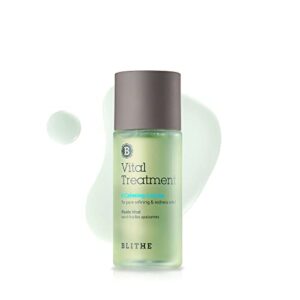
Where the clay mask offers a weekly reset, this toner earns its place in your daily routine.
Blithe’s 6 Leaves Clear Essence doubles as an essence, pairing six botanical leaf extracts with BHA and erythritol in a single lightweight step. The BHA gently unclogs pores and clears dead skin buildup, while erythritol delivers a cooling effect that soothes flushed or rosacea-prone skin. At pH 5.5, it matches your skin’s natural balance. Fragrance-free and sulfate-free, it absorbs quickly without any greasiness.
| Best For | Those with oily, pore-prone, or rosacea-sensitive skin who want a lightweight daily toner that controls sebum, soothes redness, and preps skin for the rest of their routine. |
|---|---|
| Product Form | Toner |
| Net Weight | 54ml (1.83 fl oz) |
| Key Ingredient | BHA + Erythritol |
| Skin Types | Oily, Sensitive |
| Primary Benefit | Pore + Redness Control |
| Fragrance Status | Fragrance-Free |
| Additional Features |
|
- The BHA erythritol combo tackles two problems at once — clearing clogged pores while calming irritation and flushing
- PH 5.5 formula works with your skin rather than against it, making it gentle enough for twice-daily use
- Free from fragrance, sulfates, silicones, parabens, and drying alcohols — a genuinely clean ingredient list
- Multiple botanical extracts mean sensitive skin types should patch test first, since reactions are possible
- At 54 ml, the bottle is on the small side, which can make it feel expensive for the amount you get
- The low-contrast label makes it tricky to read ingredient and usage info at a glance
4. IVOSKIN Cica Redness Relief Treatment Cream
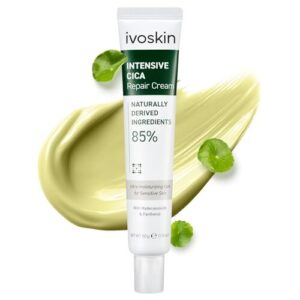
That toner preps your surface well. IVOSKIN’s Cica Redness Relief Treatment Cream then takes over with deeper barrier work.
Its Centella Asiatica and Madecassoside complex directly calms persistent redness, while Ceramides and Hyaluronic Acid restore what inflammation has worn down. A green-tinted formula provides instant visual neutralization, buying time while the actives work. At 85% naturally derived, it absorbs cleanly without residue.
One caveat: it contains fragrance, so patch-test first if your skin is highly reactive.
| Best For | Those with sensitive, redness-prone skin who want a treatment that addresses the root cause while instantly minimizing the look of redness. |
|---|---|
| Product Form | Cream |
| Net Weight | 50g (1.76 oz) |
| Key Ingredient | Centella Asiatica |
| Skin Types | Sensitive, Redness-Prone |
| Primary Benefit | Redness Relief |
| Fragrance Status | Contains Fragrance |
| Additional Features |
|
- Centella Asiatica and Madecassoside work together to calm persistent irritation and reduce redness over time
- Ceramides and Hyaluronic Acid help rebuild a weakened skin barrier for long-term resilience
- The green-tinted formula gives immediate visual relief while the active ingredients get to work
- Contains fragrance, which may trigger reactions in highly sensitive skin types
- Some users see little to no improvement in visible redness, especially with short-term use
- Mixed opinions on pricing, with some feeling the results don’t justify the cost
5. Eight Saints Anti Aging Night Cream
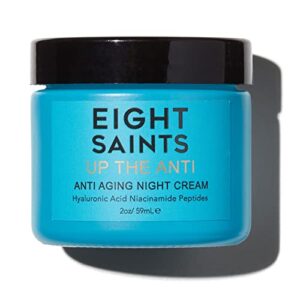
When nighttime rolls around, your skin naturally shifts into repair mode. Eight Saints Anti Aging Night Cream is built for that window, delivering niacinamide, peptides, and hyaluronic acid in a fragrance-free, cruelty-free formula suited to all skin types, sensitive included.
Niacinamide calms active redness while hyaluronic acid locks in overnight moisture. Peptides support structural repair with consistent use, though visible wrinkle results can vary between individuals. Keep it away from the immediate eye area if your skin is particularly reactive.
| Best For | Anyone looking for a clean, fragrance-free overnight moisturizer that works across all skin types, especially those with sensitive or dry skin wanting to tackle early signs of aging. |
|---|---|
| Product Form | Moisturizer |
| Net Weight | 2 oz |
| Key Ingredient | Peptides + Niacinamide |
| Skin Types | All Skin Types |
| Primary Benefit | Anti-Aging Hydration |
| Fragrance Status | Fragrance-Free |
| Additional Features |
|
- Combines three heavy-hitters — niacinamide, peptides, and hyaluronic acid — in a single overnight formula
- Fragrance-free and cruelty-free, making it a solid pick for reactive or sensitive skin
- Doubles as a face and neck moisturizer, so you’re getting more coverage from one product
- Wrinkle-reducing results aren’t guaranteed and can vary quite a bit from person to person
- Sensitive users need to be careful around the eye area
- At 2 ounces, the jar is on the smaller side for a daily-use night cream
6. Rejuvaskin Skin Recovery Cream
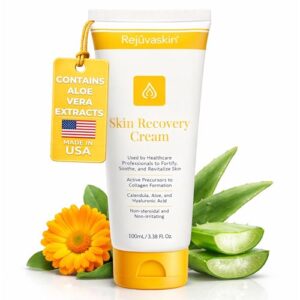
If your skin has faced something more serious than everyday stress, Rejuvaskin Skin Recovery Cream earns particular attention. Trusted by over 200 radiation centers and carrying the National Eczema Association Seal of Acceptance, it’s built for genuinely compromised skin.
Calendula and aloe vera calm surface redness, while bamboo extract helps collagen synthesis over roughly four weeks. Hyaluronic acid improves hydration within the first week. The non-greasy texture absorbs quickly, though some users report unexpected irritation, so patch test first.
| Best For | People recovering from radiation treatment or managing eczema and other sensitive skin conditions who need a clinically trusted, deeply hydrating moisturizer. |
|---|---|
| Product Form | Lotion |
| Net Weight | 100 mL |
| Key Ingredient | Hyaluronic Acid + Aloe |
| Skin Types | Dry, Sensitive, Eczema |
| Primary Benefit | Soothing + Barrier Repair |
| Fragrance Status | Not Specified |
| Additional Features |
|
- Backed by 200 radiation centers and the National Eczema Association, giving it real credibility for compromised skin
- Combines hyaluronic acid, aloe vera, and calendula to hydrate quickly and calm redness and irritation
- Supports long-term skin resilience through collagen synthesis with ingredients like bamboo extract
- Some users experience unexpected skin irritation, which is ironic given its soothing claims
- Priced higher than comparable moisturizers, which may be a sticking point for budget-conscious shoppers
- Effectiveness can vary depending on individual skin sensitivities, so results aren’t guaranteed for everyone
7. Dermalogica Stabilizing Repair Cream Sensitive Skin
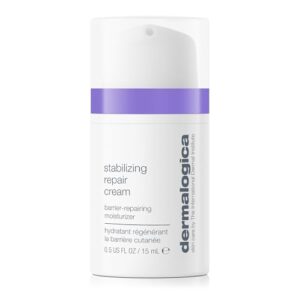
Barrier repair is where this cream earns its place. Its Resurrection Plant and Ceramide-Building Complex restores lipid structure within the stratum corneum, reducing transepidermal water loss with consistent use. Tasmania Lanceolata and Boerhavia Diffusa Root target visible redness on contact, making it practical for your rosacea or post-procedure sensitivity.
The balmy texture absorbs without heaviness. At 0.5 ounces, the price-to-volume ratio may give you pause, and very compromised barriers may need a heavier occlusive alongside it.
| Best For | Those with sensitive, reactive, or rosacea-prone skin who need a lightweight daily moisturizer that calms redness and strengthens the skin barrier, especially after procedures like chemical peels or microneedling. |
|---|---|
| Product Form | Balm-Cream |
| Net Weight | 14.2g (0.5 oz) |
| Key Ingredient | Resurrection Plant |
| Skin Types | All Skin Types |
| Primary Benefit | Barrier Repair |
| Fragrance Status | Fragrance-Free |
| Additional Features |
|
- Targets visible redness on contact with Tasmania Lanceolata and Boerhavia Diffusa Root, making it a solid pick for rosacea and post-procedure recovery
- The Ceramide-Building Complex helps rebuild the skin barrier and reduce moisture loss with regular use
- Balmy yet non-greasy texture works comfortably across skin types — dry, oily, or combination — morning and night
- At just 0.5 oz, the price-to-size ratio feels steep and may not justify the cost for some buyers
- Severely dry or compromised skin may need a heavier occlusive on top, as this cream alone may not provide enough sealing power
- Despite being formulated as fragrance-free, the mild neutral scent can still register for those with strong fragrance sensitivities
How to Choose Anti-Inflammatory Skin Products
Knowing which ingredients work is only half the battle — the other half is knowing how to actually shop for them. Not every product that claims to calm redness is formulated to do so effectively. Here’s what to look for before anything ends up in your cart.
Prioritize Barrier-Repair Ingredients
Look for formulas that rebuild the ceramide lipid matrix rather than just hydrating the surface. Ceramides, paired with niacinamide and madecassoside, address both barrier structure and active inflammation.
A product with humectant moisture-binding ingredients like glycerin draws water in, while occlusive ingredients lock it there.
Centella asiatica rounds this out by soothing deep inflammation while the barrier recovers.
Avoid Fragrance and Sulfates
Fragrance is one of the most common causes of allergic contact dermatitis, triggering redness and itching even in trace amounts. If your skin is already inflamed, that’s the last thing you need.
Sulfates like SLS strip your natural oils and raise transepidermal water loss, compounding dryness. Choose fragrance-free, sulfate-free formulas to protect your barrier and let calming ingredients do their job.
Match Texture to Skin Type
Texture matters. Choose lightweight for oily skin, creamy for dry skin, and a humectant for dehydrated skin. Barrier creams for sensitive skin can feel richer, so spot-apply where redness or flaking is worst.
Use a texture layering routine: gentle cleanser, fast-absorbing Centella asiatica cica serum, moisturizer or lotion for face, then sensitive-friendly SPF. This keeps antiinflammatory skin care comfortable, not greasy.
Look for Targeted Recovery Formulas
Choose targeted recovery formulas when redness comes with stinging, flaking, or tightness. These sensitive skin formulations do more than moisturize: they support skin barrier repair with ceramides, cholesterol, and fatty acids that rebuild the ceramide lipid matrix.
Niacinamide barrier support, panthenol healing benefits, and Centella asiatica repair help with soothing irritated skin through antiinflammatory and antioxidant action. Avoid fragrance, essential oils, and drying alcohol.
Skincare Routine to Soothe Inflamed Skin
When skin is inflamed, a simple routine usually works better than adding more active products. The goal is to reduce exposure to irritants while supporting the barrier that keeps moisture in and triggers out. Use the following steps in order to calm redness without overwhelming reactive skin.
Gentle Fragrance-Free Cleansing Step
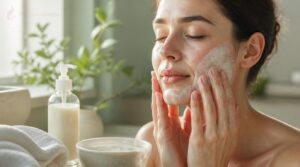
Start with a fragrance-free formulation to protect barrier function support and reduce avoidable irritation. Use lukewarm water, apply a fragrancefree wash to damp skin, then use a gentle lather technique for 20 to 30 seconds.
- Avoid scrubbing.
- Rinse until residue-free.
- Pat dry, don’t rub.
Cleanser pH balance helps skin soothe before your sensitivefriendly SPF and calming skincare routine.
Calming Toner and Serum Layering
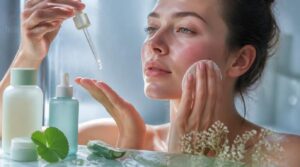
After patting skin dry, press in a Calming Toner and let it settle before treatment. Follow with a few drops of a Soothing Serum, using gentle upward presses.
| Your skin feels | Pairing | Reassurance |
|---|---|---|
| Hot, reactive | Cica + niacinamide | Less sting |
| Tight, flaky | Panthenol + aloe | Comfort returns |
Apply thinnest formulas first. Keep Anti-inflammatory Ingredients consistent, allowing absorption between layers.
Barrier-Supportive Moisturizer Application
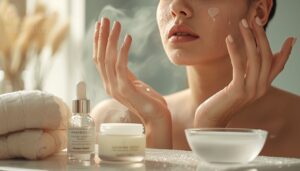
Seal your calming serum with a barrier supportive cream while skin is still slightly damp, ideally within two to three minutes of cleansing. Press, don’t rub, to protect fragile skin and improve skin hydration.
Use a richer nighttime formula for stress-related barrier repair. In polluted or dry settings, a pollution protection moisturizer helps with reducing redness and irritation while soothing sensitive skin.
Daily Mineral Sunscreen Protection
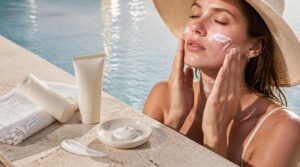
After moisturizer, mineral sunscreen protects skin barrier function from UV rays that fuel inflammation and redness. Use broad-spectrum SPF 50+ with zinc oxide; it suits sensitive skin better than chemical filters.
- Apply a nickel-sized amount to face, neck, ears.
- Reapply every two hours.
- Reapply after swimming or sweating.
- Expect white cast; test tinted formulas.
- Consistent daily use matters most when outdoors.
Frequently Asked Questions (FAQs)
What reduces skin inflammation fast?
When skin is on fire, use a cool compress for 5–10 minutes, then apply an antiinflammatory face serum with niacinamide, aloe vera, green tea extract, or colloidal oatmeal. Moisturize; avoid acids, retinoids, fragrance during flares.
How can I treat inflammation in my skin?
Use barrier repair techniques: avoid irritants, support skin barrier with niacinamide, colloidal oatmeal, and aloe vera, and add an antiinflammatory face serum.
Dietary omega-3 intake, Gut-skin axis, Stress reduction practices, and Natural anti-inflammatory botanicals help.
What triggers skin inflammation?
Think of your skin as a steadfast guard on constant watch. Stress, UV exposure, pollution, and allergens can all breach the skin barrier, triggering an inflammatory response that shows up as persistent redness and irritation.
What brings down inflammation immediately?
A cold compress cuts visible redness within minutes through vasoconstriction. Aloe vera gel, witch hazel, and colloidal oatmeal have calming effects that reduce inflammation on contact, while green tea extract delivers soothing relief for sensitive skin.
How to get rid of inflammation on skin fast?
A cool compress eases burning and redness within minutes. Follow with aloe vera gel for anti-inflammatory relief, then moisturize immediately. An oatmeal mask soothes irritated skin, and an antihistamine helps with allergic flares from the inside.
What’s the best anti-inflammatory for skin?
Like a well-constructed barrier that shields everything beneath it, the best anti-inflammatory for your skin combines niacinamide and ceramides, colloidal oatmeal, and aloe vera in a fragrance-free formula to calm skin inflammation and visible redness.
What skincare products are good for inflammation?
Inflamed skin responds best to a layered, anti-inflammatory approach. Anti-redness toners, soothing serums, barrier repair creams, calming masks, and mineral sunscreen all give your sensitive skin the multi-step protection and consistent redness relief it needs.
Can diet changes reduce skin inflammation naturally?
Ironically, your fork often matters as much as your serum. A whole foods diet rich in omega-3 fatty acids, low in added sugar, and supported by the gut-skin axis can meaningfully reduce skin inflammation naturally.
How long before inflammation treatments show results?
Onset of relief may occur within hours or days, but peak effectiveness often takes one to two weeks. Chronic redness and inflammation can require weeks or months, depending on treatment type, triggers, and barrier recovery.
Which makeup products worsen inflammatory skin conditions?
What makeup products keep inflammatory skin conditions active? Heavy foundations, comedogenic makeup ingredients, fragrance in cosmetics, and alcohol-based makeup can worsen skin inflammation and redness. Waterproof mascara risks friction and allergens, so choose soothing makeup.
Conclusion
Like the princess who felt the pea beneath twenty mattresses, inflamed skin notices every irritant. Treat that sensitivity as useful feedback, not a reason to chase harsher fixes.
Choose products to reduce skin inflammation that strengthen the barrier, introduce one formula at a time, and protect your progress with daily mineral sunscreen.
If burning, swelling, crusting, or persistent redness continues beyond several weeks, seek dermatologic care. Calm skin is built patiently, layer by layer, safely.