This site is supported by our readers. We may earn a commission, at no cost to you, if you purchase through links. This content is for general informational and educational purposes only and is not a substitute for professional medical, dermatological, or nutritional advice.
Your skin doesn’t lie. One day a new cleanser leaves your cheeks tight and red, and suddenly you’re side-eyeing every bottle in your bathroom. That redness isn’t random — it’s your skin barrier waving a white flag, often triggered by fragrance, harsh sulfates, or alcohol hiding in otherwise normal-looking formulas.
As a dermatologist, I see this play out weekly: someone swears off skincare entirely after one bad reaction, when the fix is choosing better-suited products to use for sensitive skin. The right lineup — gentle cleansers, barrier-repairing creams, mineral sunscreen — won’t only calm your face. It’ll teach you what your skin needs to thrive.
Table Of Contents
- Key Takeaways
- Top 10 Sensitive Skin Products
- 1. Hydrating HA Serum with Ceramides
- 2. Vanicream Sensitive Skin Moisturizer
- 3. Anthelios SPF 50 Blended Sunscreen
- 4. Hypochlorous Acid Breakout Spray
- 5. Toleriane Hydrating Gentle Face Cleanser
- 6. CeraVe Hydrating Cream Foam Cleanser
- 7. Dove Sensitive Soap Bar
- 8. Bioderma Sensibio Micellar Water
- 9. Cetaphil Hydrating Gentle Cleanser
- 10. Cardi B Green Tomato Pore Cleanser
- How We Chose Products
- Best Ingredients for Sensitive Skin
- Ingredients Sensitive Skin Should Avoid
- Sensitive Skin Morning Routine
- Sensitive Skin Night Routine
- Best Product Types to Buy
- Buying Tips for Sensitive Skin
- Frequently Asked Questions (FAQs)
- Is Kate Somerville good for sensitive skin?
- Is Clarins safe for sensitive skin?
- What can I use on very sensitive skin?
- What can I use for highly sensitive skin?
- Which things are good for sensitive skin?
- What are the 4 types of sensitive skin?
- What to avoid in skincare for sensitive skin?
- Can sensitive skin develop suddenly during adulthood?
- How long should patch testing last?
- Whats the difference between sensitive and allergic reactions?
- Conclusion
Key Takeaways
- Sensitive skin reactions usually trace back to checking ingredient lists that hide in everyday products rather than random bad luck, so checking ingredient lists matters more than chasing trendy labels.
- A barrier-focused routine built on gentle cleansers, ceramide-rich moisturizers, and mineral sunscreen (zinc oxide or titanium dioxide) calms reactive skin far more reliably than avoiding skincare altogether.
- Ceramides, hyaluronic acid, niacinamide, squalane, and aloe vera work together to rebuild and protect the skin barrier, while sulfates, drying alcohols, synthetic dyes, and strong exfoliating acids tend to break it down.
- Marketing terms like "hypoallergenic" and "noncomedogenic" aren’t backed by regulatory standards, so patch testing new products for 48–96 hours is the most reliable way to confirm they’re actually safe for your skin.
Top 10 Sensitive Skin Products
Finding the right products for sensitive skin doesn’t have to feel like a guessing game. Every pick on this list has been chosen with your skin barrier in mind — no harsh ingredients, no unnecessary risks. Here are ten dermatologist-approved options worth knowing about.
If you’re unsure where to start, these gentle skincare tips for sensitive skin can help you understand exactly what your skin barrier needs.
Each one also happens to be non-comedogenic, so if clogged pores are a concern, this roundup of non-comedogenic products for sensitive skin has you fully covered.
1. Hydrating HA Serum with Ceramides
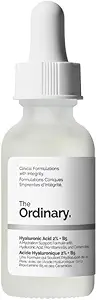
If your skin barrier is running on empty, this serum is where you start. The formula combines five hyaluronic acid weights to hydrate at multiple skin depths — surface through upper epidermis — while ceramides seal those gains by reinforcing your natural lipid layer.
Vitamin B5 keeps things calm and comfortable.
Apply it to damp skin right after cleansing; that small step makes a real difference in how much moisture actually stays put.
| Best For | Anyone with dry or sensitive skin who wants a straightforward, layered approach to hydration that works well alongside other actives in their routine. |
|---|---|
| Product Type | Hydrating Serum |
| Size | 1 oz |
| Key Ingredient | Hyaluronic Acid |
| Fragrance Free | Not Specified |
| Skin Type Focus | Dry & Sensitive |
| Price | Not Listed |
| Additional Features |
|
- Five forms of hyaluronic acid means hydration reaches multiple skin layers, not just the surface
- Ceramides reinforce the skin barrier, so moisture actually sticks around
- Plays nicely with actives like glycolic acid and peptides — no need to overhaul your routine
- Has to be applied to damp skin, which adds a step and makes timing matter
- Very dry skin types may still need a heavier moisturizer on top
- Sensitive skin should patch test first before going all in
2. Vanicream Sensitive Skin Moisturizer
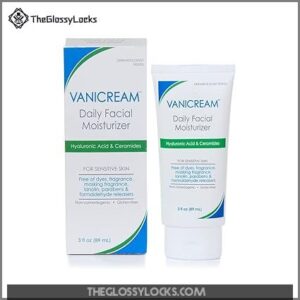
Once your serum has absorbed, you want to lock that hydration in — and Vanicream does exactly that without drama. It’s one of the cleanest formulas you’ll find: no fragrance, dyes, parabens, or lanolin, which makes it a genuine safe haven for reactive skin.
The texture is light but not watery. Five ceramide classes plus hyaluronic acid and squalane work together to strengthen your barrier and hold moisture in place without clogging pores — a rare combination at this price point.
| Best For | Anyone with sensitive, reactive, rosacea-prone, or dry skin who wants a clean, no-fuss daily moisturizer that layers well under makeup or alongside active treatments. |
|---|---|
| Product Type | Daily Moisturizer |
| Size | 3 fl oz |
| Key Ingredient | Ceramides |
| Fragrance Free | Yes |
| Skin Type Focus | Sensitive & Rosacea-Prone |
| Price | Not Listed |
| Additional Features |
|
- Completely free of fragrance, dyes, parabens, lanolin, and formaldehyde-releasers — one of the cleanest formulas on the market for reactive skin
- Five ceramide classes plus hyaluronic acid and squalane deliver real barrier support and lasting hydration without clogging pores
- Lightweight texture absorbs fast and sits comfortably under makeup or other skincare products
- No SPF, retinol, or anti-aging actives, so you’ll need separate products if those are priorities
- May not provide enough occlusion for very dry or eczema-prone skin that needs a heavier moisturizer
- Packaging can vary between shipments, which might throw off anyone used to a specific dispenser style
3. Anthelios SPF 50 Blended Sunscreen
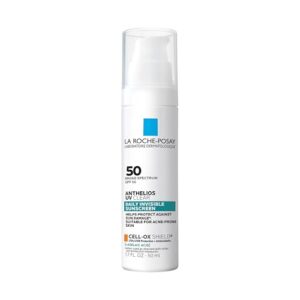
Sunscreen is where a lot of sensitive-skin routines fall apart — heavy textures, white cast, or ingredients that flare rosacea before lunch. Anthelios sidesteps most of those pitfalls. The SPF 50 broad-spectrum formula skips oxybenzone and octinoxate, blends invisibly, and includes 1.5% azelaic acid to quietly manage redness and acne in the background.
It dries quickly, sits well under makeup, and won’t clog pores. Just know it’s not a moisturizer — layer it over your barrier cream, not instead of it.
| Best For | People with acne-prone or rosacea-prone skin who want a lightweight, invisible daily sunscreen that won’t trigger flare-ups or clog pores. |
|---|---|
| Product Type | SPF 50 Sunscreen |
| Size | 3.7 oz |
| Key Ingredient | Azelaic Acid |
| Fragrance Free | Not Specified |
| Skin Type Focus | Acne & Rosacea-Prone |
| Price | $39.99 |
| Additional Features |
|
- SPF 50 broad-spectrum protection without oxybenzone or octinoxate, making it gentler on sensitive and reactive skin
- 1.5% azelaic acid quietly helps manage redness and breakouts while you’re just wearing sunscreen
- Dries quickly with no white cast, so it layers cleanly under makeup or holds up during workouts
- Can feel slightly greasy on very oily skin, especially in warm weather
- Needs reapplication after heavy sweating or swimming, which isn’t always convenient
- Doesn’t replace a moisturizer — you’ll need to layer it on top of a separate hydrating step
4. Hypochlorous Acid Breakout Spray
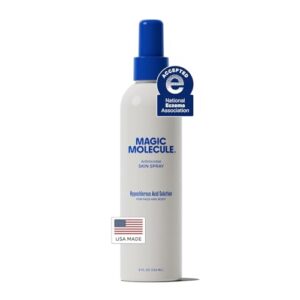
Once your sunscreen is locked in, breakouts can still sneak through — and that’s where hypochlorous acid spray earns its place.
HOCl disrupts bacteria on contact, calms localized redness, and does it all without alcohol, sulfates, or fragrance. It’s free of oil and parabens too. Spray it on after cleansing, let it air dry for 30 seconds, then layer your moisturizer on top. One heads-up: mild bleach-like odor catches some people off guard the first time.
| Best For | Anyone dealing with acne-prone or sensitive skin who wants a lightweight, fragrance-free spray that multitasks as a face wash, body wash, and hand sanitizer without irritating the skin. |
|---|---|
| Product Type | Multi-Use Spray |
| Size | 9.59 oz |
| Key Ingredient | Hypochlorous Acid |
| Fragrance Free | Yes |
| Skin Type Focus | All Skin Types |
| Price | $19.99 |
| Additional Features |
|
- Tackles breakouts and calms redness without alcohol, parabens, sulfates, or fragrance — gentle enough for all skin types
- Seriously versatile: works as a face and body wash, eyelid cleanser, and quick surface sanitizer for minor cuts and scrapes
- Fast and easy to use — just spray after cleansing, let it air dry, and go
- The mild bleach-like odor can be off-putting, especially the first few uses
- At $19.99, it’s pricier than most standard acne or eczema products on the market
- Not a replacement for medical treatment if you’re dealing with severe skin conditions or open wounds
5. Toleriane Hydrating Gentle Face Cleanser
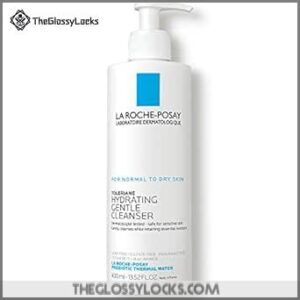
If your cleanser leaves your face feeling tight or squeaky, Toleriane Hydrating Gentle Face Cleanser is worth a try. Its cream-to-milky texture rinses away dirt without stripping your barrier — thanks to ceramide-3, niacinamide, and glycerin working together to maintain moisture while you wash.
It’s fragrance-free, paraben-free, and sulfate-free. The trade-off: no foam, so heavy makeup may need a separate remover first.
| Best For | People with dry or sensitive skin who want a gentle daily cleanser that hydrates and protects the skin barrier instead of stripping it. |
|---|---|
| Product Type | Cream Cleanser |
| Size | Not Listed |
| Key Ingredient | Niacinamide |
| Fragrance Free | Yes |
| Skin Type Focus | Normal-to-Dry Sensitive |
| Price | $14.98 |
| Additional Features |
|
- Restores and maintains your skin barrier with ceramide-3 and niacinamide — great for dry or sensitive skin
- Free from fragrances, parabens, and sulfates, making it a safe pick for reactive skin types
- Leaves skin feeling soft and comfortable after rinsing, not tight or squeaky
- No lather or foam, which can feel like it’s not doing much if you’re used to a sudsy wash
- Not strong enough to remove heavy makeup on its own — you’ll need a separate remover
- Too mild for oily or acne-prone skin that needs a more clarifying, deep-clean formula
6. CeraVe Hydrating Cream Foam Cleanser
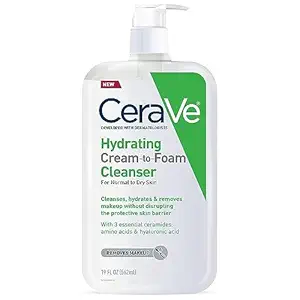
Where the previous cleanser skips the foam, this one delivers both worlds. CeraVe’s Hydrating Cream to Foam Cleanser starts as a cream, lathers into a gentle foam, and rinses clean — without stripping your barrier. Ceramides 1, 3, and 6-II plus hyaluronic acid keep moisture locked in while it works.
It’s fragrance-free, paraben-free, and noncomedogenic. At $18.96 for 19 oz, it’s also genuinely good value for sensitive skin.
| Best For | Anyone with normal to dry or sensitive skin who wants a gentle daily cleanser that removes makeup and sunscreen while keeping their moisture barrier intact. |
|---|---|
| Product Type | Foaming Cleanser |
| Size | 19 fl oz |
| Key Ingredient | Ceramides |
| Fragrance Free | Yes |
| Skin Type Focus | Normal-to-Dry Sensitive |
| Price | $18.96 |
| Additional Features |
|
- Starts as a cream and lathers into a satisfying foam, making it feel more like a traditional cleanser without the harshness
- Ceramides 1, 3, and 6-II plus hyaluronic acid actively support your skin barrier and hydration throughout the day
- Fragrance-free, paraben-free, and noncomedogenic — safe for even the most reactive skin types
- No exfoliating or acne-fighting ingredients, so it won’t do much for breakout-prone skin on its own
- The unscented formula can feel a bit flat for anyone who enjoys a little fragrance in their routine
- At 19 oz it sounds like a lot, but heavy users may burn through it faster than expected
7. Dove Sensitive Soap Bar
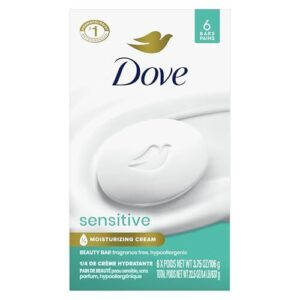
Soap bars get a bad reputation in sensitive skin circles, but Dove’s Sensitive Soap Bar earns its place here.
Its pH-balanced formula skips harsh detergents, making it a gentler option for those exploring skin-friendly alternatives to traditional acids like mandelic in their routine.
It’s fragrance-free, sulfate-free, and packed with ¼ moisturizing cream — so it cleans without that tight, stripped feeling afterward. Glycerin helps hold moisture at the surface while the pH stays close to your skin’s natural range.
Dermatologist-tested and hypoallergenic, it works on face, hands, and body. At roughly 3.75 oz per bar, it’s a budget-friendly, travel-easy option for reactive skin.
| Best For | Anyone with sensitive, reactive, or eczema-prone skin who wants a gentle, no-fuss daily cleanser for face, body, and hands. |
|---|---|
| Product Type | Bar Soap |
| Size | 3.75 oz (6-pack) |
| Key Ingredient | Moisturizing Cream |
| Fragrance Free | Yes |
| Skin Type Focus | Sensitive & Eczema-Prone |
| Price | Not Listed |
| Additional Features |
|
- Fragrance-free and hypoallergenic, making it one of the safer options for easily irritated or eczema-prone skin
- The ¼ moisturizing cream formula leaves skin feeling soft rather than dry and tight after washing
- Dermatologist-recommended and versatile enough to use head-to-toe, including on the face
- No scent at all, which can feel like a dealbreaker if you enjoy a fresh, fragrant wash
- Six bars per pack may not last long for households with heavy daily use
- Not designed for deep or heavy-duty cleansing — it’s purely a gentle everyday soap
8. Bioderma Sensibio Micellar Water
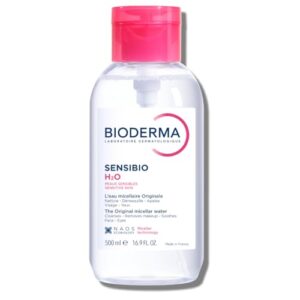
Micellar water might sound like a gimmick, but Bioderma’s Sensibio H2O is the real deal for sensitive skin. Tiny micelle clusters attract dirt and makeup like a magnet — no rubbing, no rinsing required.
The formula is fragrance-free and pH-balanced, ophthalmologist-tested, and gentle enough around the eyes. Cucumber extract adds a mild soothing effect, while glycerin keeps the skin from feeling stripped.
At 500 ml, it’s a generous size that earns its spot in a calm, no-fuss cleansing routine.
| Best For | Anyone with sensitive, easily irritated skin who wants a gentle, no-fuss way to remove makeup and sunscreen without water. |
|---|---|
| Product Type | Micellar Water |
| Size | 16.9 fl oz |
| Key Ingredient | Micellar Technology |
| Fragrance Free | Yes |
| Skin Type Focus | Sensitive Skin |
| Price | Not Listed |
| Additional Features |
|
- Fragrance-free and alcohol-free formula is genuinely kind to reactive or delicate skin
- No-rinse design makes it quick and convenient for nightly routines or travel
- PH-balanced micellar technology lifts away makeup and grime without stripping the skin
- The capsule cap tends to loosen over time and may need replacing fairly often
- Heavy-duty waterproof or pigmented makeup may require a second cleanse to fully remove
- Not the best standalone option for very oily skin or active breakouts — an extra mild cleanser helps
9. Cetaphil Hydrating Gentle Cleanser
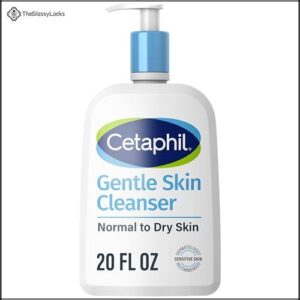
Cetaphil has been a quiet staple in dermatology clinics for decades — and this cleanser shows exactly why. The non-foaming, fragrance-free formula relies on glycerin, panthenol, and niacinamide to cleanse without dismantling your moisture barrier.
That niacinamide is worth mentioning. Even in a rinse-off product, it helps maintain barrier integrity with daily use.
Clinically tested on sensitive skin, it promises 48 hours of hydration even when wiped off. Dry to normal skin types, this one’s genuinely hard to argue with.
| Best For | Anyone with dry to normal sensitive skin who wants a no-fuss daily cleanser that cleans gently without irritating or drying out their skin. |
|---|---|
| Product Type | Cleansing Lotion |
| Size | 20 fl oz |
| Key Ingredient | Niacinamide |
| Fragrance Free | Yes |
| Skin Type Focus | Dry-to-Normal Sensitive |
| Price | Not Listed |
| Additional Features |
|
- Fragrance-free and non-foaming, making it genuinely gentle for reactive or sensitive skin
- Niacinamide and panthenol actively support your skin barrier rather than just passively avoiding damage
- Clinically tested to maintain 48 hours of hydration even when wiped off — a rare claim for a cleanser
- Won’t cut through heavy or waterproof makeup on its own, so you may need a separate makeup remover
- No actives for acne or anti-aging, so it’s purely a cleanser rather than a treatment
- May feel too mild for oily or acne-prone skin types that need a deeper cleanse
10. Cardi B Green Tomato Pore Cleanser
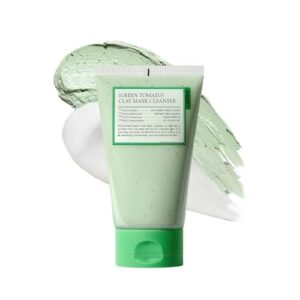
Not every sensitive-skin pick has to be minimalist beige. The Cardi B Green Tomato Pore Cleanser pulls double duty as a 2-minute mask and daily wash, using a 6-clay mix to draw out sebum and blackheads without leaving skin tight.
The star ingredient — 49% green tomato extract — brings Tomatidine and Vitamin C for mild brightening and firming. It’s fragrance-free and vegan. If tomato or latex allergies are a concern, patch test first.
| Best For | People with oily or blackhead-prone skin who want a fast, effective pore-clearing routine without fragrance or animal-derived ingredients. |
|---|---|
| Product Type | Clay Mask |
| Size | 4.23 oz |
| Key Ingredient | Green Tomato Extract |
| Fragrance Free | Yes |
| Skin Type Focus | Oily & Blackhead-Prone |
| Price | Not Listed |
| Additional Features |
|
- Works as both a 2-minute mask and daily cleanser, making it versatile for different skin needs
- The 6-clay blend plus green tomato extract tackles pores, blackheads, and dullness in one step
- Fragrance-free and vegan with eco-conscious FSC-certified packaging
- Not a replacement for professional extractions or prescription acne treatments if breakouts are severe
- Those with tomato or latex allergies should patch test before committing to daily use
- No scent at all, which may feel like a miss for people who enjoy an aromatic cleansing ritual
How We Chose Products

Picking the right product for sensitive skin isn’t just about reading labels — it takes real scrutiny. Every product on this list was evaluated against a strict set of criteria to make sure it’s genuinely safe for reactive skin. Here’s exactly what we looked for.
Fragrance-free Formulas
When a product smells like nothing, that’s actually a good sign. Fragrance-free formulas exclude all scent ingredients — including masking agents that can quietly trigger reactions — from their INCI lists. Look for:
- Neutral bases like glycerin and water
- Carefully pH-balanced preservatives
- No essential oils or synthetic fragrance
- Third-party scent verification on labels
Eliminating hidden fragrance compounds reduces the risk of contact dermatitis risk.
Your skin barrier doesn’t need perfume. It needs peace.
Your skin barrier doesn’t need perfume — it needs peace
Barrier-supporting Ingredients
Fragrance-free is the starting point — but what a product does for your skin matters just as much as what it leaves out. The real workhorses here are ceramides, niacinamide, and hyaluronic acid.
Ceramides rebuild your lipid matrix. Hyaluronic acid draws water into the stratum corneum. Niacinamide boosts ceramide synthesis from within.
Together, they don’t just hydrate — they actively restore your barrier.
Noncomedogenic Claims
The label "noncomedogenic" sounds reassuring — but there’s no legal standard behind it. In both the US and EU, brands self-certify using their own testing methods, with no regulatory oversight.
That’s why we went beyond the label, checking for lightweight, pore-compatible ingredients like ceramides and hyaluronic acid. Because on sensitive skin, what’s actually in the formula matters far more than what’s printed on the front.
Irritation Risk
Irritation risk shaped every choice we made. We checked for known skin triggers — sulfates, dyes, harsh alcohols, synthetic fragrance — and flagged anything with them, regardless of how the front label read.
- Fragrance-free formulas only
- No drying alcohols or sulfates
- Tested against eczema and rosacea skin
- Verified barrier-safe ingredients
Your history matters here. Eczema, rosacea, or reactive skin changes everything.
Skin Type Suitability
Sensitive skin doesn’t look the same on everyone.
Oily types need noncomedogenic, fragrance-free formulas that won’t trap sebum; dry skin craves barrier repair with ceramides and fatty acids to shore up the lipid matrix.
That’s why each product here was matched to specific moisture balance needs — not just labeled "for sensitive skin" and called a day.
Best Ingredients for Sensitive Skin
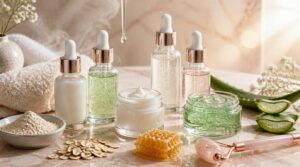
Not all ingredients are created equal for sensitive skin. Some actively help rebuild your barrier, calm redness, and hold moisture in — and those are the ones worth knowing by name. Here are the five your routine should revolve around.
Ceramides
Your skin barrier works like a brick wall — and ceramides are the mortar holding everything together. These lipid molecules make up a significant part of your stratum corneum, reducing transepidermal water loss and keeping irritants out.
If you have eczema or reactive skin, you may already be running low on them. That’s why dermatologists consistently recommend ceramide-rich moisturizers as a daily non-negotiable.
Hyaluronic Acid
Think of hyaluronic acid as a moisture magnet — it can hold up to 1,000 times its weight in water, drawing hydration into your skin without clogging pores.
What makes it safe for reactive skin is its gentle receptor signaling at the cellular level. Multi-layer hydration improves skin turgor and helps support barrier repair — no irritation, just calm, plump skin.
Niacinamide
Niacinamide is quietly one of the hardest-working ingredients in a sensitive skin routine. At 2–5%, it strengthens the barrier by boosting ceramide production, regulates sebum, and calms visible redness — all without photosensitivity risk.
- Boosts NAD+ cellular energy pathways
- Promotes filaggrin and involucrin synthesis
- Reduces transepidermal water loss
- Offers antioxidant skin defense
- Pairs beautifully with hyaluronic acid and ceramides
Squalane
Squalane is basically a skin-identical lipid — your barrier already speaks its language.
Derived from plants like olive and sugarcane, it fills gaps in the stratum corneum, cutting transepidermal water loss without heaviness. At 2–5%, it absorbs quickly, leaving no residue.
Stable, non-comedogenic, and remarkably well-tolerated, it’s one ingredient dermatologists rarely have to warn patients away from.
Aloe Vera
Aloe vera has been soothing irritated skin long before the clean beauty movement made it trendy. That staying power comes down to acemannan, a polysaccharide in the gel that calms inflammation and helps wound healing by stimulating collagen production. Its mucilage-like texture also helps retain moisture without heaviness — gentle enough for rosacea-prone skin.
At 3–5%, it’s a dermatologist-recommended option worth keeping in your routine.
Ingredients Sensitive Skin Should Avoid
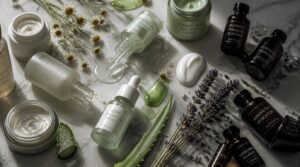
Knowing what to avoid is just as important as knowing what to reach for. Some ingredients are genuinely problematic for sensitive skin — not because they’re inherently bad, but because they can trigger irritation, strip your barrier, or cause flare-ups before you even realize what hit you. Here are the main ones to watch out for.
Understanding the difference matters too — for example, knowing how facial toners and astringents differ can help you choose the gentler option when your skin is already struggling.
Sulfates
Sulfates — specifically sodium lauryl sulfate (SLS) — are powerful cleansing agents that strip away dirt and oil, but they don’t stop there. They can pull your skin’s natural moisture barrier right along with it.
SLES is gentler, though still worth avoiding if you’re reactive. Look for sulfate-free cleansers with mild surfactants instead.
Drying Alcohols
Not all alcohols are equal. The ones to dodge — denatured alcohol, alcohol denat., ethanol — evaporate fast, which sounds appealing but actually strips moisture right out of your skin barrier, leaving it drier and more reactive.
Your skin can’t rebuild what keeps getting pulled away. Check the first five ingredients; if alcohol appears there, put it back.
Synthetic Dyes
Those dyes giving your favorite cleanser its pretty pink hue? They’re one of the sneakier skin irritants hiding in your routine.
Azo dyes — the most common synthetic colorants — can break down into compounds that trigger redness and reactions on sensitive skin. For a gentle formulation, the color should be the first thing removed.
Harsh Fragrance
Dyes aren’t the only hidden offender — fragrance is perhaps worse.
Fragrance allergens can trigger redness, hives, and itching, and the reaction can develop even to scents you’ve tolerated for years. Some compounds are phototoxic, amplifying sun damage on exposed skin. Scent can even spark migraines in sensitive individuals.
The safest call? Look for fragrance-free on the label — not just "unscented.
Strong Exfoliating Acids
Even gentle-sounding chemical exfoliants can wreck a reactive complexion. Glycolic acid, the smallest AHA, penetrates fast — too fast for sensitive skin.
Watch out for:
- Glycolic acid (4–10%) — causes stinging and redness
- Salicylic acid (BHA) — drying, pore-penetrating
- High-concentration alpha hydroxy acids
- Strong lactic acid formulas above 10%
- Any beta hydroxy acid without hydrating backup
Mandelic acid or PHAs are far gentler alternatives.
Sensitive Skin Morning Routine
Your morning routine doesn’t need to be complicated — for sensitive skin, it actually shouldn’t be. A few well-chosen steps can protect your barrier before the day even starts. Here’s what dermatologists recommend building your mornings around.
Gentle Face Wash
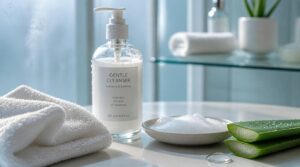
Your cleanser sets the tone for everything that follows. A mild, fragrance-free cleanser — one built on gentle surfactants like cocamidopropyl betaine — cleans without stripping your barrier. Look for a low pH around 5.0–5.5 to keep your skin’s natural acidity intact.
Ingredients like glycerin, aloe vera, or ceramides help retain moisture while you rinse. Lukewarm water, gentle pressure, 30 seconds. That’s all your skin needs.
Hydrating Serum

After cleansing, your skin is primed to absorb — so this is the moment hyaluronic acid earns its place. Apply your serum to slightly damp skin to improve humectant absorption; sodium hyaluronate’s smaller molecules penetrate deeper than standard HA.
Look for these in your formula:
- Niacinamide (2–5%) to calm redness and support barrier repair
- Panthenol for gentle soothing
- Squalane to seal moisture without heaviness
Lightweight Moisturizer
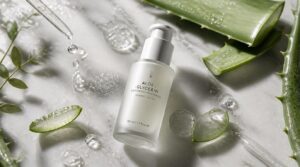
Think of your moisturizer as the seal on everything you’ve just applied. For sensitive skin, a lightweight lotion with sebum-mimicking esters absorbs within minutes — no grease, no residue.
Look for glycerin and hyaluronic acid to support aquaporin hydration, drawing water deeper into the epidermis.
In warmer months, swap your hydrating cream for a gel formula to keep comfort without compromising your moisture barrier.
Mineral Sunscreen
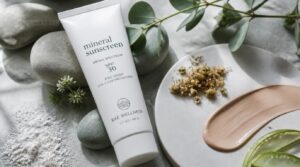
Sunscreen is non-negotiable — even for sensitive skin. Mineral broad-spectrum SPF 50 with zinc oxide and titanium dioxide sits on the skin’s surface rather than absorbing into it, making it far gentler than chemical alternatives.
For sensitive or eczema-prone skin, look for:
- Zinc oxide (≥ 20%) for broad UVA/UVB coverage
- Fragrance-free, dye-free formulas
- Tinted versions to minimize white cast
- Reef-friendly, non-micronized filters
Patch Testing
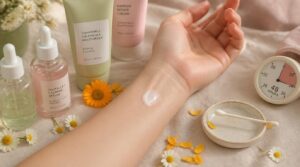
Before you introduce any new product into your morning routine, do a patch test first. Apply a small amount to the inner arm or behind the ear, leave it 48 hours, and watch for redness or swelling.
| Step | What to Check |
|---|---|
| Apply | Inner arm or neck |
| Wait | 48–96 hours |
| Assess | Redness, bumps, irritation |
Sensitive Skin Night Routine
Your nighttime routine is where real skin repair happens — this is when your barrier does most of its rebuilding work. Keeping it simple and gentle makes all the difference for sensitive skin. Here’s what dermatologists actually recommend layering on before bed.
For applying toner or micellar water without irritating your skin, these compressed cotton facial discs expand instantly and offer a soft, gentle touch perfect for sensitive nighttime routines.
Micellar Water Cleansing
Your night routine deserves a gentle, calm start. Micellar water uses tiny micelle clusters — mild surfactants that lift dirt and oil away without scrubbing. No rinsing required. Bioderma Sensibio H2O is a trusted go-to for sensitive skin, offering:
- Rinse-free cleansing that respects your skin’s pH balance
- Glycerin humectants to lock in moisture
- Fragrance-free formula — zero alcohol, zero irritation
Cream Cleanser
Once micellar water lifts surface grime, a cream cleanser goes deeper without stripping your barrier.
| What to Look For | Why It Matters |
|---|---|
| Cocamidopropyl betaine | Gentle surfactant, non-stripping |
| Glycerin or hyaluronic acid | Humectants that retain moisture |
| pH around 5.5 | Preserves your skin’s natural defense |
| Ceramides | Barrier-rebuilding support |
| Fragrance-free formula | Reduces irritation risk |
CeraVe Hydrating Cleanser and La Roche-Posay Toleriane are solid picks. Always rinse with lukewarm water — hot water causes thermal shock.
Calming Breakout Spray
After your cream cleanser, your skin is primed — and if breakouts are flaring, this is the moment for a calming HOCl spray.
Hypochlorous acid works by targeting acne-causing bacteria without disrupting your pH. It dries fast, leaves no sticky residue, and genuinely soothes redness on contact. Sensitive skin usually tolerates it well.
Mist it on, let it settle, then move on.
Barrier Repair Moisturizer
Your skin is ready to drink something in. A barrier repair moisturizer does the heavy lifting here — ceramides restore your lipid balance, while humectants like glycerin and hyaluronic acid pull moisture in and occlusives seal it there.
Look for a biomimetic formula with ceramides, cholesterol, and fatty acids. That trio mirrors what your stratum corneum actually needs.
Avoiding Overnight Irritants
What happens while you sleep matters more than you’d think.
Your curls settle into their natural shape overnight, which is why pairing a gentle pillow routine with the Wavy Girl Method’s heat styling tips can make your morning wave routine so much easier.
Wash pillowcases weekly — they collect allergens, oils, and residue that press against your face for hours.
Skip fabric softeners; their residues linger on fabric and can quietly inflame sensitive skin.
Keep your room cool, run a HEPA air purifier, and stick to fragrance-free night creams only.
Your barrier repair work shouldn’t be undone by your bedding.
Best Product Types to Buy
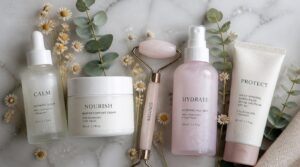
Not every product deserves a spot on your shelf — especially when your skin is quick to react. Knowing which product types to reach for can save you a lot of trial and error. Here are the five worth building your routine around.
Gentle Cleansers
Your cleanser sets the tone for everything that follows. A dermatologist-recommended gentle cleanser uses mild surfactants like decyl glucoside — no stripping, no stinging. Look for these three features:
- Low pH formula near 5.5 to protect your barrier
- Humectant like glycerin to hold moisture during rinsing
- Fragrance-free to reduce sensitization risk
Rinse with lukewarm water, and patch test anything new.
Hydrating Serums
Think of a hydrating serum as your skin’s drink of water before everything else layers on top. Hyaluronic acid pulls moisture deep into epidermal layers — smaller humectant molecules like sodium hyaluronate penetrate even deeper. Combine that with niacinamide for skin barrier repair. Look for pH-balanced, sustained-release formulas. A lightweight soothing serum sits easily under moisturizer, keeping layering serum textures smooth and non-greasy.
| Ingredient | Benefit |
|---|---|
| Hyaluronic Acid | Deep epidermal hydration |
| Niacinamide | Barrier repair + calm |
| Panthenol | Locks in moisture |
Barrier Creams
Think of these as your skin’s raincoat — they don’t add moisture so much as keep what’s already there from escaping. The difference between occlusive vs humectant matters here: occlusives like petrolatum or dimethicone form a physical seal, while ceramides support actual skin barrier repair.
- Petrolatum seal efficacy locks in moisture for hours
- Silicone barrier function resists sweat and washing
- Zinc oxide benefits include calming irritation
- Apply barrier creams sparingly, pea-sized, after cleansing
Mineral Sunscreens
Why fight your skin instead of shielding it? Mineral sunscreen relies on zinc oxide protection and titanium dioxide protection, physical filters that scatter UV rather than absorb it.
Before exfoliating, review this glycolic acid peel guide for sensitive skin to protect your barrier.
Micronized particle technology cuts the white cast, while tinted mineral formulas suit deeper tones. These nonirritating sunscreens support sun protection for eczema, plus a gentler reef safety impact.
Soothing Treatment Sprays
When your skin flares midday, a soothing treatment spray lets you reset without touching your face. Touchless mist application means zero friction on reactive skin.
Look for hypochlorous acid to calm redness and surface bacteria, or thermal spring water and aloe vera for gentle cooling.
Many fragrance-free formulas work over makeup, too — a small bottle, genuinely useful.
Buying Tips for Sensitive Skin
Shopping for sensitive skin doesn’t have to feel like defusing a bomb. A few smart habits can save your skin — and your money — before you even open a product. Here’s what to keep in mind before you buy.
Read Ingredient Labels
Labels tell the whole story — if you know how to read them. Ingredients appear in descending order by weight, so the first three matter most.
Watch for:
- Hidden alcohols like ethanol, buried mid-list
- Masking agents in "fragrance-free" products that still cause irritation
- PAO symbols indicating how long a product stays safe after opening
Decoder apps translate unfamiliar INCI names fast.
Check Hypoallergenic Claims
Hypoallergenic has no fixed regulatory definition, so that word alone proves little. Loopholes let brands pair it with deceptive marketing unless claims are substantiated through real testing.
Look for third-party certifications backing fragrance-free, barrier-repair formulas.
Dermatologists recommend treating hypoallergenic as a hint, not a guarantee, for sensitive skin.
Compare Budget Options
Price tags don’t guarantee better results for sensitive skin. Borrow budgeting instead: try percentage-based plans, splitting across cleansers, serums, and sunscreen, or a savings-first strategy that prioritizes barrier-repair staples.
- Set a zero-based category for fragrance-free basics
- Use envelope system caps per product type
- Use digital tracking to compare dermatologist-recommended dupes
Smart budgeting builds a gentle daily skincare routine without overspending.
Frequently Asked Questions (FAQs)
Is Kate Somerville good for sensitive skin?
Think of it as a soft landing for reactive skin. Kate Somerville’s dermatologist developed formulas lean on ceramides and soothing goat milk, with fragrance-free options and recovery serum benefits that calm, hydrate, and rebuild your skin’s barrier gently.
Is Clarins safe for sensitive skin?
Generally, yes. Clarins’ Calm Essential line leans on sclareolide and alpine rose to calm redness, with vegetable squalane for barrier repair. Hypoallergenic, dermatologist-tested—still patch test, especially with rosacea or eczema, before committing.
What can I use on very sensitive skin?
Many assume "natural" equals gentle, but botanical extracts can irritate too. Stick with fragrance-free, sulfate-free formulas containing ceramides, niacinamide, and hyaluronic acid to repair your barrier, plus mineral sunscreen. Always patch test new products first.
What can I use for highly sensitive skin?
Stick to fragrance-free, soap-free formulas with soothing botanicals like aloe or panthenol.
Mineral sunscreen beats chemical filters for reactive skin.
Always patch test new products, and prioritize anything supporting your skin barrier to avoid contact dermatitis.
Which things are good for sensitive skin?
Your skin’s a bit like a shy houseguest—happiest when treated kindly, not crowded. Fragrance-free formulas, soothing botanicals like aloe, and barrier lipid restoration ingredients (ceramides, niacinamide) calm reactive skin while keeping pH balance and inflammation in check.
What are the 4 types of sensitive skin?
Four types exist:
naturally sensitive (genetic predisposition, often eczema or rosacea),
environmentally sensitive (reacts to weather, sun, pollution),
reactive sensitive (flares from specific products or detergents),
mature or thin skin, where aging weakens barrier health and increases irritation risk.
What to avoid in skincare for sensitive skin?
Steer clear of trouble before it starts: avoid sulfate-induced dryness, harsh alcohol-based astringents, essential oil triggers, and synthetic dyes causing colorant contact dermatitis.
Strong acids spark acid-driven redness, while fragrance often worsens irritation. Choose sulfate-free, alcohol-free formulas to dodge unwanted redness altogether.
Can sensitive skin develop suddenly during adulthood?
Yes — your skin barrier can weaken anytime, triggered by hormonal sensitivity shifts, stress‑induced inflammation, new adult contact allergies, or environmental trigger factors like dry air.
Suddenly reactive skin isn’t unusual; it’s your body signaling change, not a permanent diagnosis.
How long should patch testing last?
Patient, but never rushed — that’s the paradox of patch testing. Plan on an initial 48-hour assessment, then a follow-up reading between days 3 and 7, since delayed hypersensitivity can take time to surface and reveal true irritation risks.
Whats the difference between sensitive and allergic reactions?
Allergic reactions trigger your immune system against a specific allergen, often causing a rash within 24-48 hours.
Sensitive skin simply has a lower irritation threshold, reacting with redness or burning to triggers—no immune response needed.
A dermatologist can confirm which one’s happening through patch testing.
Conclusion
Sensitive skin doesn’t have to mean skittish skin.
Choosing the right products to use for sensitive skin isn’t about building a fortress around your face — it’s about learning its language.
When your barrier is supported with ceramides, gentle cleansers, and mineral SPF, your skin stops reacting and starts responding.
Small swaps, consistent habits, and a little ingredient literacy go a long way. Your skin isn’t difficult. It’s just waiting for the right conversation.