
This site is supported by our readers. We may earn a commission, at no cost to you, if you purchase through links.
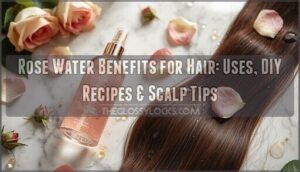
Your grandmother might have spritzed rose water on her face after a long day, but here’s what she probably didn’t know: that same bottle sitting in her vanity could have transformed her hair routine. Rose water benefits for hair go way beyond the fancy floral scent.
This gentle botanical liquid delivers real hydration to parched strands, calms angry scalps, and adds the kind of natural shine hair products spend millions trying to replicate in a lab. The best part? You don’t need a chemistry degree to use it.
Whether you’re battling frizz, dealing with an itchy scalp, or just want healthier-looking hair, rose water works across all hair types without weighing things down.
Table Of Contents
- Key Takeaways
- What is Rose Water for Hair?
- Hydration and Moisture Benefits
- Enhancing Hair Shine and Smoothness
- Scalp Health and Soothing Effects
- Supporting Hair Growth and Strength
- How to Use Rose Water on Hair
- DIY Rose Water: Making and Storing
- Safety Tips and Best Practices
- Frequently Asked Questions (FAQs)
- Does rose water need to be stored in the fridge?
- Can I use rose water if I’m pregnant or breastfeeding?
- How long does a batch of homemade rose water last?
- What’s the difference between rose water and rose essential oil?
- Can rose water help with split ends?
- Is rose water safe for color-treated hair?
- Does rose water work on all hair types?
- Can I use rose water every day?
- Whats the difference between rose water and rose oil?
- Conclusion
Key Takeaways
- Rose water delivers real hydration and natural shine to all hair types through its pH-balancing properties (4.5-5.5), antioxidants like gallic acid and vitamins A, C, and E, plus humectant sugars that lock in moisture without weighing strands down.
- It calms irritated scalps and fights dandruff by reducing inflammation, balancing sebum production, and combating Malassezia yeast with antimicrobial compounds—making it effective for sensitive or flaky scalp conditions.
- Rose water strengthens hair from root to tip by stimulating follicles through improved circulation, reducing breakage with cuticle-sealing action, and preventing premature shedding caused by oxidative stress or inflammation.
- You can use it four flexible ways—as a post-shampoo rinse, leave-in mist for frizz control, scalp toner applied with cotton pads, or mixed into existing hair products—and make DIY versions at home that last about a week refrigerated.
What is Rose Water for Hair?
Rose water is a gentle, floral liquid made by distilling rose petals with water. It’s been used for centuries in beauty routines, and now it’s having a moment in hair care.
Let’s break down exactly what it is, how it’s made, and why your hair might love it.
How Rose Water is Made
Rose water starts with a harvest—fresh rose petals, usually from Rosa damascena, picked at dawn when their fragrance peaks. The traditional method uses steam distillation: petals go into a pot, steam rises, then condenses into pure hydrosol.
You can DIY it at home with basic equipment, or buy commercial versions made with specialized stills. Production costs vary, but homemade rose water beats store-bought for freshness.
To learn more about creating rose water, consider exploring organic rose options for the best results.
Common Types of Rose Water
Once you know how it’s made, you’ll face a dizzying shelf full of options. Not all rose water is created equal—here’s what you need to know:
- Steam Distilled Rose Hydrosol – The benchmark. Pure Rosa damascena flower water with aromatic strength from concentrated petal-to-water ratios.
- Floral Waters – Often reconstituted with rose essential oil added to plain water. Cheaper, but less potent.
- Organic Rose Water – Grown without pesticides, certified food-grade, almost colorless when pure.
- Blended Formulations – Contains glycerin, preservatives, or pH adjusters for shelf stability and extra hydration.
Choose steam distilled hydrosol or organic rose water for maximum natural ingredients and minimal processing. When selecting a rose water product, consider the skin care benefits to verify you’re getting the best for your skin.
Natural Properties Beneficial to Hair
So what’s actually inside this floral mist that makes it work? It’s packed with antioxidant effects from phenolic compounds and flavonoids that shield your strands from free-radical damage. You’ll find natural moisturizer properties thanks to sugars that act as humectants, plus anti-inflammatory properties from those same flavonoids that calm your scalp microbiome.
| Component | Hair Benefit | How It Works |
|---|---|---|
| Gallic acid & terpenes | Cuticle care & protection | Form a sacrificial barrier against heat and UV damage |
| pH 4.5–5.5 balance | Seals cuticle, boosts hair elasticity | Matches your scalp’s acid mantle to reduce hair porosity |
| Vitamins A, B3, C, E | Promotes hair growth & hydration | Nourish follicles and strengthen the cortex with natural ingredients |
These aren’t marketing buzzwords—they’re real compounds doing real work on your hair.
Rose water’s active compounds—gallic acid, terpenes, vitamins, and pH-balancing properties—deliver measurable benefits to your hair and scalp
Hydration and Moisture Benefits

Your hair craves moisture, but heavy products can weigh it down or leave it greasy. Rose water offers a revitalizing middle ground—it hydrates without the buildup.
Here’s how it keeps your hair and scalp properly moisturized.
Moisturizing Dry Hair and Scalp
Your hair drinks in moisture like a sponge when you mist on rose water—those natural sugars act as tiny magnets for hydration.
Pair it with a weekly frizz-fighting hair mask to seal in that hydration and keep your strands smooth for days.
This gentle cleansing toner removes dirt without stripping oils, making it perfect for dry hair remedies that actually work.
The pH matches your strands, so you’re getting scalp soothing and hair nourishment in one lightweight natural moisturizer. No heaviness, just pure scalp moisture.
When paired with filtered shower water for hair, this balanced formula helps create the ideal environment for a healthier scalp and visibly softer strands.
Preventing Hair Breakage
Breakage happens when strands lose flexibility—but rose water’s antioxidants and vitamins A, C, and E reinforce your cuticles like armor for fragile hair repair. Those phenolic compounds seal lifted scales, keeping hair fiber strengthening in motion.
You can pair it with gentler alternatives like honey-based lightening treatments to brighten hair without the harsh pH drop that lemon juice causes.
Here’s how it works for hair breakage prevention:
- Moisture retention stops dryness-induced snapping
- pH balance (around 5–5.5) tightens cuticles for cuticle care
- Antioxidants shield against heat and chemical damage
- Humectants improve flexibility, reducing split end treatment needs
Your hair growth gets a boost when breakage stops stealing length.
Lightweight Hydration for All Hair Types
Whether you’re rocking coils, waves, or pin-straight strands, rose water’s humectant properties pull moisture into every texture without the grease. Its water-based formula means your hair hydration methods work across all hair porosity levels—fine hair stays bouncy while thick curls drink deep.
That aqueous balance delivers the hair moisturizer magic natural hair care devotees crave, minus buildup. Pure hair care tips gold.
Enhancing Hair Shine and Smoothness

Rose water doesn’t just hydrate your hair—it transforms how it looks and feels. That soft glow and smooth texture you’re after? Rose water delivers both without weighing your strands down.
Let’s look at exactly how it controls frizz, adds shine, and improves your hair’s overall texture.
Reducing Frizz and Flyaways
Your frizz battles just got a natural ally. Rose water’s humectant properties lock in moisture while its mild acidity helps align your cuticle—two science-backed frizz control methods that smooth flyaways without heavy silicones.
- Humidity defense: Hydrates strands so they don’t grab moisture from the air
- Static killer: Slightly acidic pH neutralizes electrical charge causing flyaways
- Cuticle sealer: Smooths lifted scales for sleeker hair texture
- Lightweight refresh: Works as a leave-in mist or curl refresher between washes
This simple anti-frizz spray delivers hair smoothening results you can actually see.
Boosting Natural Hair Luster
Want mirror-like shine without dimethicone buildup? Rose water’s pH sits around 4.5–5.5, naturally closing your cuticles so they reflect light like polished glass.
Those humectant sugars pull in moisture that keeps strands from looking matte, while antioxidants preserve color vibrancy.
Mist it on damp hair as a lightweight luster enhancer, or use it as a final rinse to seal down lifted scales and boost natural gloss on any curl pattern.
Improving Hair Texture
Think of texture enhancement as cuticle architecture—rose water’s pH naturally tightens those scales for measurable smoothness. Its humectants reduce static-driven frizz while antioxidants support structural integrity along damaged shafts.
You’ll notice easier detangling and improved curl definition because hydration restores pliability.
For natural hair care focused on frizz control without silicone coating, this hydrosol delivers functional hair refinement that builds with consistent use.
Scalp Health and Soothing Effects
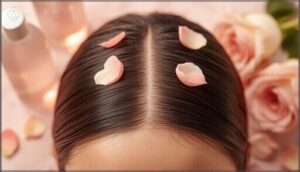
Your scalp is where healthy hair starts, and rose water knows how to treat it right.
If you’ve dealt with itching, flakes, or an oily mess that won’t quit, this gentle toner might be your new best friend.
Here’s how rose water works its magic on your scalp.
Calming Itchy or Irritated Scalp
If your scalp feels like it’s staging a rebellion—tight, prickly, and impossible to ignore—rose water’s anti-inflammatory properties can bring real relief. Its mildly acidic pH (around 5 to 5.5) mirrors your scalp’s natural balance, helping calm that fire without stripping your skin.
Here’s why it works for sensitive scalp care:
- Reduces redness and stinging by lowering inflammatory signals
- Soothes post-styling irritation from heat or chemical exposure
- Relieves itch sensations when massaged in as a toner
Apply it with a cotton pad, let it sit for 15 minutes, and feel the difference.
Reducing Dandruff and Flakiness
Those white flakes on your shoulders? Rose water addresses dandruff causes at the source. Its antimicrobial action fights Malassezia yeast—the culprit behind most flaky scalp issues—while anti-inflammatory compounds calm the irritation that makes you want to scratch.
Here’s how rose water delivers dandruff reduction:
| Rose Water Benefit | How It Helps Your Scalp |
|---|---|
| Antimicrobial power | Inhibits yeast and bacteria causing flakes |
| Anti-inflammatory action | Reduces redness and itchy relief |
| pH balancing | Aids healthy scalp barrier function |
| Gentle hydration | Prevents dry, powdery scaling |
For anti-dandruff results, apply rose water as a scalp toner twice weekly. You’re not just masking symptoms—you’re restoring scalp health from within.
Balancing Scalp Oil Production
Oily roots by noon? Rose water’s mild astringent action helps normalize sebum control without triggering rebound oiliness.
Its pH-balancing effect bolsters your scalp’s natural barrier, while antioxidants calm inflammation that can send oil glands into overdrive.
This gentle regulation means less grease between washes and better hair hydration overall—your scalp learns to produce just enough oil, not too much.
Supporting Hair Growth and Strength
Rose water won’t magically regrow lost hair, but it does create better conditions for what you’ve got.
It helps keep your follicles happy and your strands resilient from root to tip.
Here’s how rose water promotes stronger, healthier hair growth.
Stimulating Hair Follicles
Rose water can wake up sleepy follicles through a handful of smart pathways. Animal studies show rosehip oil from Rosa canina activates Wnt/β-catenin and Sonic hedgehog signaling—the biochemical switches that nudge follicles from resting into active growth mode.
Here’s how rose water aids follicle activation:
- Boosts scalp microcirculation to deliver oxygen and nutrients directly to your hair bulbs
- Activates growth-related genes like Lef1 and Gli1 in follicular stem cells
- Protects against oxidative stress with quercetin and kaempferol antioxidants
- Strengthens the follicle anchor by aiding collagen around each hair root
While it won’t replace medical treatments for serious hair loss, rose water creates a healthier environment where your follicles can actually thrive.
Preventing Hair Fall
Once your follicles wake up, you need to keep those strands from falling out prematurely. Hair fall happens when the follicle anchor weakens or inflammation disrupts your growth cycle. Rose water’s anti-inflammatory punch calms the scalp chaos that triggers excessive shedding.
| Hair Fall Trigger | How Rose Water Helps |
|---|---|
| Scalp inflammation | Quercetin soothes irritated tissues |
| Oxidative follicle damage | Antioxidants neutralize free radicals |
| Weak anchoring | Strengthens collagen around follicles |
| Unbalanced oil production | Mild astringency regulates sebum |
Think of it as creating a stable home base for each strand.
Strengthening Roots and Strands
You’ve tackled shedding—now let’s bulletproof every fiber. Vitamin C in rose water fuels collagen around each follicle, reinforcing the anchor point so strands resist tugging and styling stress.
Meanwhile, vitamin E repairs micro-tears in the cuticle, restoring elasticity that prevents snap during combing.
Over a few weeks, you’ll notice less breakage in your brush and tougher, springier hair that holds up to whatever you throw at it.
How to Use Rose Water on Hair

You’ve got your bottle of rose water—now what? The good news is there’s no single “right” way to use it.
Here are four easy methods that fit into any routine, whether you’re after a quick refresh or a deeper scalp reset.
Rose Water Rinse After Shampooing
Want silky strands in one easy step? Pour 1–2 cups of cooled rose water over your hair right after conditioning. This simple rinse technique locks in moisture and balances your scalp’s pH to around 5.5—perfect for hair care and scalp health.
Gently massage it into your roots to boost circulation, then let it air-dry or lightly rinse. Your hair growth journey just got a fragrant upgrade.
Leave-in Mist for Daily Refresh
Day-three curls looking dull? Fill a spray bottle with rose water and lightly mist from mid-lengths to ends—this leave-in mist brings instant life back to tired strands.
Perfect as a hair revitalizer between washes, this scalp refresher reactivates styling products and tames frizz without weighing you down. Just avoid oversaturating, and you’re golden.
Scalp Toner Application
Think of rose water as your scalp’s personal therapist—it tones, soothes, and resets between washes. This Scalp Health Solution addresses Itchy Scalp, Dandruff, and oiliness head-on.
Here’s your Toner Application routine:
- Part hair into small sections for even coverage
- Saturate a cotton pad with Rose Water Spray and dab onto your scalp
- Follow with gentle Scalp Massage using your fingertips
- Leave on—no rinsing needed for this Hair Refreshment ritual
Try this 2-3 times weekly.
Mixing With Hair Products
Rose water supercharges your existing Hair Care arsenal. Add a spoonful to your conditioner or Hair Masks before applying—you’ll boost hydration instantly.
Mix it into Leave-In Treatments or Scalp Serums for enhanced absorption. Blend with Hair Oils to create lighter Product Boosters that won’t weigh strands down.
This Natural Hair Care hack transforms ordinary Hair Treatment Options into Leave-In Mist alternatives that support Hair Growth beautifully.
DIY Rose Water: Making and Storing
Making your own rose water at home is easier than you think—and way cheaper than store-bought versions. You’ll need just a handful of fresh rose petals and some distilled water to get started.
Let’s walk through the simple recipe, smart storage tricks, and a few optional add-ins that boost the benefits.
Step-by-Step Homemade Rose Water Recipe

Making your own DIY rose water at home is easier than you’d think—and safer when you start with the right ingredients. Here’s a straightforward DIY recipe using infusion techniques:
- Choose pesticide-free petals from organically grown roses, not store-bought ornamental flowers.
- Simmer distilled water with washed petals for 15–30 minutes in a clean pot.
- Strain and cool before transferring to a sterilized glass bottle for natural hair care.
Storage Tips and Shelf Life

After you’ve made your homemade hydrosol, storage conditions matter. Keep your DIY rose water in an airtight glass bottle in the fridge—it’ll last about a week without preservatives. Watch for expiration signs like cloudy color or sour smell, which signal contamination.
Distilled versions can stretch to six months refrigerated, but simple infusions need stricter shelf life extension through contamination control and cool temps.
Enhancing DIY Rose Water With Additives

Want your DIY rose water to work harder? Try humectant additives like vegetable glycerin at 1–5 percent to lock in moisture.
Aloe vera benefits include soothing and film-forming action—mix equal parts for scalp health solutions.
Essential oil blends need careful dilution: about 5 drops per cup prevents irritation.
pH adjusters like citric acid (¼ teaspoon per 2 cups) smooth cuticles and boost natural remedies for hair.
Safety Tips and Best Practices

Rose water is gentle, but that doesn’t mean you should skip a few smart precautions. Knowing what to look for in a product and how often to use it protects your hair and scalp from unnecessary irritation.
Let’s cover the essentials so you can enjoy all the benefits without any surprises.
Choosing Quality Rose Water Products
When you’re picking rose water for hair care, don’t let pretty packaging fool you. Scan product labels for ingredient purity—look for “steam-distilled” and a clear rose species, like Rosa damascena. Skip anything with alcohol or fake scents.
Choose natural beauty products in sturdy, amber bottles. That’s how you get scalp health solutions that actually deliver, not just DIY beauty hype.
Frequency and Dosage Recommendations
Quality rose water won’t help if you overdo it. Start with two to three times per week—whether you’re rinsing post-shampoo or misting mid-lengths.
Oily scalps can handle daily application tips, but dry hair? Ease in slowly. A few drops on your scalp or a light spray on curls is all you need.
Watch for irritation and adjust your hair care routine accordingly. Less really is more here.
Frequently Asked Questions (FAQs)
Does rose water need to be stored in the fridge?
Store-bought rose water with preservatives doesn’t require refrigeration—keep it cool and dark. However, homemade versions need the fridge and last just 5–7 days to prevent spoilage.
Can I use rose water if I’m pregnant or breastfeeding?
Yes, you can safely use rose water on your hair and scalp during pregnancy and breastfeeding. Just patch test first, choose pure products without harsh additives, and avoid swallowing it.
How long does a batch of homemade rose water last?
Your homemade rose water’s shelf life depends on your method. Distilled versions last up to six months refrigerated, while simmered batches stay fresh about one month when chilled in airtight glass containers.
What’s the difference between rose water and rose essential oil?
Rose water is a gentle hydrosol with diluted aromatic compounds, perfect for direct application. Rose essential oil packs concentrated volatile compounds and needs dilution—it’s way more potent and pricey.
Can rose water help with split ends?
Once hair snaps like a frayed rope, there’s no gluing it back together. Split ends need trimming, but rose water may help prevent new ones by improving hydration and reducing breakage.
Is rose water safe for color-treated hair?
Most people with colored hair can safely use pure, alcohol-free rose water since its mildly acidic pH balance matches your hair’s natural level, helping seal color and prevent fading. Always patch test first.
Does rose water work on all hair types?
Yes, this hydrosol works across straight, wavy, curly, and coily hair types. Compatibility depends on your hair porosity, scalp sensitivity, and how you layer it with other products—patch test first.
Can I use rose water every day?
You can mist hair lengths daily, but limit scalp application to two or three times weekly to avoid pH disruption.
Always patch test first, especially if you have Rose Allergy Risks or Scalp Sensitivity concerns.
Whats the difference between rose water and rose oil?
Two petals, two worlds: rose water is a gentle hydrosol—mostly water with dissolved aromatic compounds from steam distillation—while rose oil concentrates lipophilic terpenoids into an intensely fragrant, costly essential oil requiring careful dilution before cosmetic applications.
Conclusion
Think of rose water as your hair’s quiet rebellion against harsh chemicals and complicated routines. You don’t need a salon appointment or expensive treatments when this simple botanical does the heavy lifting.
The rose water benefits for hair prove that sometimes the best solutions hide in plain sight. Your grandmother was onto something after all.
Now you’ve got the science and recipes to take it further. Your hair will thank you.
- https://www.clinikally.com/blogs/news/is-rose-water-good-for-hair-growth
- https://yuaiahaircare.com/blogs/news/rose-water-for-hair-benefits-diy-recipes-and-tips-for-healthier-hair
- https://www.womenshealthmag.com/beauty/a46520432/rose-water-for-hair/
- https://us.typology.com/library/damask-rose-hydrosol
- https://sincereskincare.com/ingredients/rosa-damascena-flower-extract/