This site is supported by our readers. We may earn a commission, at no cost to you, if you purchase through links. This content is for general informational and educational purposes only and is not a substitute for professional medical, dermatological, or nutritional advice.
Patchouli oil has a reputation built mostly on incense and 1970s nostalgia, but its bioactive compound profile tells a different story. The leaves of Pogostemon cablin yield a sesquiterpene-rich oil that binds directly to your scalp’s lipid film, giving it genuine physiological access most botanical ingredients never achieve.
For anyone dealing with persistent dandruff, oily buildup, or inflammation-driven shedding, that access matters. Patchouli alcohol disrupts the fungal membranes behind Malassezia globosa overgrowth, the same organism driving most flaking scalps, while terpene compounds support local circulation at the follicle level.
The science has limits, but the clinical applications are precise and practical.
Table Of Contents
- Key Takeaways
- What is Patchouli Oil for Hair?
- 7 Potential Patchouli Oil Benefits for Hair and Scalp
- Does Patchouli Oil Really Grow Hair?
- How to Use Patchouli Oil for Hair Safely
- Patchouli Oil Side Effects and Precautions
- Frequently Asked Questions (FAQs)
- Does patchouli oil help hair growth?
- Which oil is most powerful for hair growth?
- What does patchouli heal?
- What are the side effects of patchouli oil?
- Can patchouli oil prevent premature graying of hair?
- Does patchouli oil work for all hair types?
- How long until you see hair growth results?
- Can you use patchouli oil on colored hair?
- Does patchouli oil help with split ends repair?
- Can patchouli oil be combined with other oils?
- Conclusion
Key Takeaways
- Patchouli oil’s antifungal action against Malassezia globosa is its strongest evidence-backed benefit, with light-fraction patchouli oil reducing epidermal cell shedding by up to 43% in comparison to ketoconazole.
- It isn’t a clinically proven hair growth agent—no human trials confirm direct follicle stimulation—so it helps most by reducing inflammation, fungal imbalance, and sebum-related triggers of shedding, not by overriding genetic hair loss.
- Safe use depends on dilution: keep it at 1–2% in a carrier oil (about 2 drops per teaspoon), patch test on your inner forearm for 48 hours, and avoid combining it with strong exfoliants or medicated dandruff products.
- Expect scalp condition improvements around six weeks of consistent use, with any visible hair growth changes taking at least twelve weeks—and results depend more on your scalp condition than your hair type.
What is Patchouli Oil for Hair?
Although patchouli has long been associated with fragrance, its role in scalp health warrants clinical attention. Extracted from the leaves of Pogostemon cablin through steam distillation, patchouli oil is a concentrated botanical liquid dense with sesquiterpenes, the hydrophobic compounds responsible for both its earthy scent and its surface-level biological activity on the scalp.
Among the hair-moisturizing ingredients that support scalp balance, patchouli oil’s sesquiterpene profile positions it as a noteworthy candidate for addressing dryness and irritation.
When you apply it topically, it interacts with your scalp’s lipid layer and hair fiber surface. That’s why it appears in formulations targeting hair growth, sebum regulation, and microbial control, and why the potential patchouli oil benefits for hair extend beyond simple conditioning.
It’s never applied neat. You’ll use it diluted in a carrier oil or blended into a product, since concentration determines how your scalp responds.
7 Potential Patchouli Oil Benefits for Hair and Scalp
Patchouli oil’s bioactive compounds work across multiple scalp mechanisms, making it useful beyond simple conditioning.
What follows covers seven specific benefits backed by research on follicle health, microbial defense, and scalp physiology. Each one reflects a distinct way this oil can support your hair at a clinical level.
May Support Hair Growth
Think of patchouli oil as an indirect hair growth ally. Its terpenes, particularly patchoulol, may reduce scalp inflammation, a key disruptor of the anagen growth phase in hair follicles.
Three potential mechanisms supporting hair follicle stimulation:
- Reduces oxidative stress around the dermal papilla
- Lowers scalp inflammation that interrupts the growth cycle
- Creates a microbial environment more favorable to follicle activity
Improves Scalp Circulation
That anti-inflammatory action affects scalp circulation directly. When inflammation quiets, blood vessels work more freely, giving follicles steadier access to oxygen and nutrients.
Patchouli oil’s terpenes may function as natural vasodilators, influencing neurovascular tone in superficial scalp tissue. It’s an indirect follicular blood flow benefit, driven by reduced inflammation rather than systemic action.
Similar vascular mechanisms appear in citrus-derived extracts, as explored in this overview of pomelo oil’s terpene-driven effects on scalp circulation.
Where scalp circulation enhancement matters most:
- Reduced capillary swelling allows more consistent nutrient delivery to follicles
- Vascular dilation for hair follicles improves the local scalp microenvironment during growth
- Nerve-mediated vascular responses can shift quickly after topical application to the scalp
- Scalp massage paired with patchouli oil can boost local perfusion mechanically
- Steadier microcirculation may support a follicle density increase over time
Dilute properly. Irritation triggers erratic vascular responses that can undermine this effect.
Supports Hair Follicle Strength
Steadier circulation sets the stage for follicular integrity. With blood flow more consistent, patchouli oil’s bioactive compounds can do structural work.
Saponins and terpenoids promote tissue regeneration, increasing epidermal thickness and follicle density. Its antioxidant activity prevents the protein oxidation that degrades keratin, keeping your hair shaft resilient. The oil also contains sesquiterpene hydrocarbons like patchoulene, which contribute to its potent antioxidant and follicle-stimulating properties.
| Compound | Hair Benefit |
|---|---|
| Patchoulol | Follicle stimulation |
| Saponins | Tissue regeneration |
| Terpenoids | Antioxidant defense |
Helps Balance Excess Sebum
Your scalp’s sebaceous glands respond to surface signals, and patchouli oil’s lipophilic constituents integrate directly into the scalp’s surface lipid film, shifting how sebum spreads and feels. This helps with sebum regulation by reducing microbial lipid metabolism, a key driver of persistent greasiness.
For excess sebum control, diluted use is essential; it’s undiluted oil that disrupts your barrier and worsens oiliness.
Reduces Dandruff and Flaking
Because dandruff stems from Malassezia globosa overgrowth, patchouli oil’s antifungal efficacy makes it a clinically relevant solution. Research comparing light-fraction patchouli oil to ketoconazole found it reduced epidermal cell shedding by up to 43%, directly outperforming the prescription standard against this yeast.
These patchouli oil benefits for hair extend beyond eliminating fungi. It also reinforces your skin barrier, reducing the root cause that allows scalp flaking to persist between washes.
Apply it at a 1-1.5% dilution for consistent, targeted results:
- Targets Malassezia globosa by disrupting fungal cell membranes
- Reduces visible keratin buildup and white flake formation
- Restores scalp health by reinforcing your barrier integrity
- Maintains a scalp-friendly pH without harsh chemicals
- Decreases flaking with repeated, consistent scalp application
Calms Itching and Inflammation
Persistent itch is your scalp’s distress signal. Patchouli’s anti-inflammatory compounds interrupt that signal by suppressing cytokine activity in skin cells.
| Itch Trigger | Patchouli’s Response |
|---|---|
| Inflammatory cytokines | Downregulated by patchoulol |
| Impaired skin barrier | Lipophilic penetration helps it |
| Neurogenic itch drive | Cytokine suppression reduces it |
Its anti-inflammatory properties offer real scalp irritation relief by driving scalp inflammation reduction before the scratching escalates.
Fights Scalp Fungus and Microbes
Think of patchouli oil as a sustained siege on your scalp’s microbial invaders. Its antifungal properties target Malassezia globosa directly, producing inhibition zones of 31.18 mm in hair tonic formulations. Patchouli alcohol drives fungal membrane disruption by binding ergosterol in the fungal plasma membrane.
Its antimicrobial benefits extend beyond M. globosa: Candida and dermatophytes don’t escape, stopping fungal overgrowth comprehensively.
Does Patchouli Oil Really Grow Hair?
Here’s the honest answer: patchouli oil isn’t a clinically proven hair growth agent. No controlled clinical trials in humans confirm it directly stimulates follicles or extends the anagen growth phase. That’s what evidence-based trichology protocols require before any oil earns a legitimate growth claim.
Patchouli oil lacks clinical proof of hair growth — no human trials confirm it stimulates follicles
What patchouli oil can realistically do is improve the conditions your follicles need to function well. If your shedding stems from scalp inflammation, fungal imbalance, or seborrheic dermatitis-type irritation, its antimicrobial and anti-inflammatory properties may reduce the triggers driving that loss. Less inflammation means less disruption to the hair cycle, which can slow shedding.
But if your primary concern is androgenetic hair loss, patchouli oil benefits for hair won’t override your genetics. Manage your expectations accordingly.
How to Use Patchouli Oil for Hair Safely
Knowing the research is one thing — applying it correctly is another. Dilution and delivery method determine whether patchouli oil benefits your scalp or irritates it. These four approaches give you a safe, effective starting point.
Diluted Scalp Oil Treatment
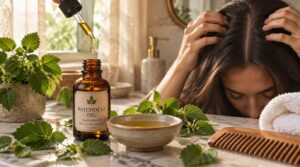
Dilution protects your scalp. Mix 1-2 drops of patchouli oil into one teaspoon of carrier oil, hitting the safe 1-2% dilution ratio.
- Section your hair for even access
- Apply the mix directly onto your scalp
- Leave on 20 minutes to boost scalp microcirculation
Done consistently, this routine delivers real patchouli oil benefits for hair and scalp health.
Pre-Shampoo Hair Treatment
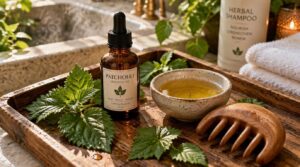
A pre-shampoo treatment builds on your scalp oil routine. You’ll apply your diluted patchouli oil mix 30 to 45 minutes before washing, letting it work before shampoo cleanses away surface residue.
| Phase | What Happens |
|---|---|
| Oil contact | Patchouli interacts with scalp surface |
| After shampoo | Excess oil rinses away cleanly |
This preshampoo method aids scalp health and fits any hot oil treatment.
Patchouli Oil Hair Mask
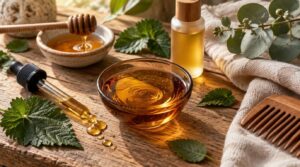
A hair mask takes this further. You’ll mix 3 drops of patchouli oil into 2 tablespoons of coconut or argan oil, then stir in a tablespoon of honey for added slip. Apply from scalp to mid-lengths, leave on for 20 minutes, then shampoo out.
The occlusive oil film locks moisture in while patchouli’s antimicrobial properties actively support a healthier scalp.
Shampoo and Conditioner Use
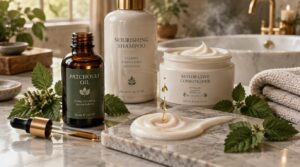
The mask method suits weekly use, but if you’re adding patchouli oil daily, mixing it into your shampoo or conditioner is more practical. Use a 1% dilution: 2 drops per ounce of product. For a ready-made option, a patchouli essential oil shampoo already balanced for scalp use takes the guesswork out of dilution.
In shampoo, it’s rinsed quickly, so scalp exposure stays brief. In conditioner, the oil lingers on hair fibers longer, improving retention and fragrance without raising irritation risk.
Patchouli Oil Side Effects and Precautions
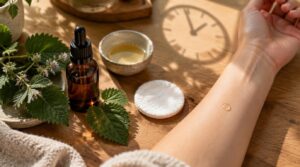
Those four methods only work if you respect the limits of topical application safety. Patchouli oil can trigger allergic contact dermatitis in susceptible individuals, producing redness, burning, and persistent itching that worsens with repeated exposure. Always run a patch test before scalp-wide use: apply a carrier-diluted drop to your inner forearm, wait 48 hours, and don’t continue if any reaction develops.
Essential oil dilution becomes even more critical when you have eczema, psoriasis, or active scalp inflammation. Combining patchouli with strong exfoliants or medicated anti-dandruff products compounds your irritation risk. Avoid tight, occlusive coverage after applying, since it raises local absorption and can worsen reactions. If irritation appears, shield the affected area from direct sun exposure until it fully resolves.
Frequently Asked Questions (FAQs)
Does patchouli oil help hair growth?
Patchouli oil doesn’t directly stimulate hair growth. Its Pogostemon cablin compounds may reduce scalp inflammation and microbial imbalance, indirectly limiting excessive shedding. If you’re targeting follicle-level growth, it’s not a proven botanical hair growth agent.
Which oil is most powerful for hair growth?
No single oil wins across every condition. The most effective botanical hair growth agent depends on what’s driving your shedding. Rosemary oil has the strongest clinical backing for androgenetic loss, while patchouli oil leans scalp-focused.
What does patchouli heal?
Roughly 50 million Americans actively deal with dandruff treatment challenges annually. Patchouli’s antiinflammatory properties, antifungal effects, and antimicrobial properties heal scalp conditions including seborrheic dermatitis, easing your irritation, reducing microbial load, and clearing persistent flaking.
What are the side effects of patchouli oil?
Can your scalp handle every topical ingredient? Contact dermatitis and skin irritation are patchouli oil’s most cited risks. Without correct dilution, you can expect redness, burning, or itching. Always patch test for topical dermatological safety.
Can patchouli oil prevent premature graying of hair?
There’s currently no clinical evidence that patchouli oil prevents premature graying, though its antioxidant compounds may theoretically help counter oxidative stress, which is directly linked to melanocyte damage and gradual pigment loss in your hair.
Does patchouli oil work for all hair types?
Does patchouli oil really suit every hair type? It’s your scalp condition that drives results more than your texture does.
Adjust your dilution for hair porosity and sensitivity to support your natural hair care routine.
How long until you see hair growth results?
Most people notice scalp condition improvements around six weeks. True hair growth increase, driven by follicle-level changes, takes at least twelve weeks to become visible, and your personal hair regrowth timeline varies by the specific cause.
Can you use patchouli oil on colored hair?
Color-treated hair can handle it. Take a fresh brunette balayage: dilute to 1–2% in a carrier oil and apply as a short rinse-off treatment to protect the hair cuticle and avoid darkening on lighter shades.
Does patchouli oil help with split ends repair?
No oil repairs your split ends. Once the hair cuticle fractures, that damage is permanent. Patchouli oil provides hair shaft conditioning that smooths strands and reduces friction, preventing future splits rather than reversing existing damage.
Can patchouli oil be combined with other oils?
Yes, you can and should combine it with carrier oils like jojoba, coconut, or sweet almond oil. Always dilute to a 1–2% ratio to protect your scalp from irritation while preserving patchouli’s beneficial active compounds.
Conclusion
Picture your scalp as soil, and patchouli oil as the gardener who works it properly. The patchouli oil benefits for hair aren’t folklore; they’re rooted in how its sesquiterpenes bind to your scalp’s lipid film, where Malassezia lives and feeds.
Dilute it to 2%, patch test first, and apply it consistently. Your follicles don’t need miracles. They need a balanced, calm, well-circulated environment, and this oil delivers exactly that.