This site is supported by our readers. We may earn a commission, at no cost to you, if you purchase through links. This content is for general informational and educational purposes only and is not a substitute for professional medical, dermatological, or nutritional advice.

Run your fingers through freshly moisturized hair and you can feel it happening: water slipping right back out before you even reach for a towel. That’s what happens without a proper seal. Your cuticle stays open, moisture escapes, and all that conditioning work goes to waste within hours.
The right sealant for hair changes that equation completely. It locks hydration into the cortex, smooths the cuticle layer flat, and buys you real protection against humidity or dry air, depending on what you’re fighting.
But not every oil or butter works the same way on every strand. Fine hair drowns in what curly hair craves, and picking wrong means buildup, greasiness, or strands that stay thirsty no matter what you apply.
Table Of Contents
- Key Takeaways
- Best Hair Sealants for Different Hair Types
- Hair Sealant Comparison: Oils, Butters, and Serums
- How to Choose The Right Hair Sealant
- How to Apply Hair Sealant Correctly
- Hair Sealants Vs. Moisturizers and Penetrating Oils
- Frequently Asked Questions (FAQs)
- What is a hair sealant?
- What can I use to seal my hair?
- How do I seal the moisture in my hair?
- Can I use vaseline to seal my hair?
- How often should I use a sealant for my hair?
- Does using a sealant on my hair damage it?
- How long does a sealant last for?
- Does using a sealant make my hair look greasy?
- Can you use hair sealant on color-treated hair?
- How often should you apply hair sealants weekly?
- Conclusion
Key Takeaways
- Your hair’s porosity decides everything: high-porosity strands need heavy sealants like shea butter or castor oil, while low-porosity hair does better with light oils like jojoba or grapeseed.
- Always apply sealant to damp, already-moisturized hair, since sealing dry strands just traps in dryness instead of locking in hydration.
- Sealants and moisturizers do different jobs, so you need both: moisturizers hydrate the cortex with water, while sealants (oil-based) lock that moisture in from the outside.
- Using too much product or skipping regular clarifying washes causes buildup and greasiness, so match the amount to your hair type and clarify every 1-4 weeks depending on the sealant.
Best Hair Sealants for Different Hair Types

Not every hair sealant works the same way on every head of hair, and that’s exactly why picking one matters so much.
If your strands are damaged or color-treated, comparing options through these in-depth hair product reviews for damaged hair can help you find a sealant that actually rebuilds strength instead of just masking dryness.
Your strand type, porosity, and texture all decide whether a sealant locks in moisture or just sits there weighing you down.
Here’s a breakdown of the best options for each hair type, so you can find the one that actually works for you.
Whether your hair is straight, wavy, or curly, this versatile microfiber hair towel adapts to your texture without causing frizz or damage.
Best Overall Hair Sealant
When you want one hair sealant that just works, look for a lightweight mix of silicones and natural oils. This mix seals the cuticle layer, locks in moisture retention, and controls frizz without weighing hair down. Daily wear performance stays strong, shine looks natural, and washout ease means no harsh clarifying needed.
Since the formula is gentle on color-treated hair and defines curls, pairing it with one of these leave-in conditioners for humid climates can keep frizz under control on muggy days.
Oils like avocado and Jamaican black castor oil work well because their oils and butters create a physical barrier that reduces water loss from the hair shaft. It’s a true grab-and-go moisturizer partner.
Best for Curly and Coily Hair
Curly and coily strands need sealants built for their unique bend. Shea butter blends hold up against humidity for a full day, while avocado oil locks in moisture up to 48 hours without buildup. Jojoba mimics natural sebum, sealing ends gently.
- Curl definition boosters for crisp coils
- Frizz control that resists humidity
- Scalp-friendly, lightweight formulas
Best for Fine, Low-Porosity Hair
Fine, low-porosity hair needs the opposite of a heavy coat. Lightweight oils like jojoba and argan absorb fast without sitting on the shaft. Grapeseed’s high linoleic content adds shine minus the weight.
| Sealant | Weight | Best For |
|---|---|---|
| Jojoba | Light | Daily use |
| Argan | Light | Shine |
| Squalane | Ultra-light | Buildup-prone hair |
Damp application prevents buildup and keeps strands airy.
Best for Dry, High-Porosity Hair
High-porosity hair drinks up moisture fast, then loses it just as quick, since the cuticle sits raised and open. That’s why you need heavier sealants like shea butter or castor oil to close the gap.
- Shea butter for a thick, lasting barrier
- Castor oil for high-viscosity sealing
- Jojoba oil to balance the heaviness
Apply after moisturizing, focusing on ends where damage runs deepest.
Best Natural Oil or Butter
Picking one all-around winner comes down to versatility, and jojoba oil takes the crown. Its structure mimics natural sebum, so it seals without heaviness.
For richer protection, shea butter still wins on natural hair needing deep cushioning. Pair either with a leave-in conditioner first. Skip castor oil unless your strands run coarse.
Hair Sealant Comparison: Oils, Butters, and Serums
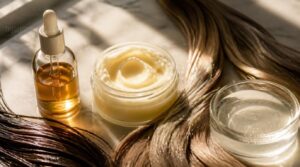
Not all sealants behave the same way once they hit your hair, and that difference matters more than most labels let on. Oils, butters, and serums each bring their own weight, finish, and staying power to the table. Here’s how they stack up against each other, side by side.
If you’re prone to redness or stinging, opting for fragrance-free beard oil benefits can help you sidestep the sealants most likely to trigger a reaction.
Texture and Product Weight
Ever picked up a jar and just known it’d sit heavy by lunchtime? That’s Sealant Viscosity talking. Thicker butters mean more Product Thickness and a denser Hair Feel, while serums glide on light.
| Texture | Hair Feel |
|---|---|
| Butter | Dense, weighted |
| Oil | Balanced, soft |
| Serum | Light, subtle |
| Mix | Varies |
| Thin oil | Barely there |
Match Weight Distribution to your strands to dodge buildup.
Moisture-Sealing Performance
Not every sealant fights moisture loss the same way. Butters build a thick film for strong humidity resistance; oils balance flexibility with real film durability; serums smooth the cuticle layer fast but fade sooner.
| Type | Moisture Retention |
|---|---|
| Butter | Excellent |
| Oil | Strong |
| Serum | Moderate |
| Mix | Varies |
| Thin oil | Light |
Choose based on how long you need hydration locked in.
Shine, Frizz, and Manageability
Shine comes down to light, and smooth cuticles reflect it evenly instead of scattering it.
| Sealant Type | Frizz Control |
|---|---|
| Butter | Strong, humid-proof |
| Oil | Balanced, lightweight |
| Serum | Fast, short-lived |
| Mix | Depends on combination |
Cuticle smoothing boosts shine and manageability, while humidity resistance keeps frizz down through heat, sweat, or rain.
Buildup and Washout
Not all sealants wash out the same, and that gap matters more than most people realize.
| Sealant Type | Buildup Risk | Wash Frequency |
|---|---|---|
| Silicone-based | High, waxy film | Clarify weekly |
| Oil-based | Low to moderate | Every 1-2 weeks |
| Butter-heavy | Moderate | Clarify biweekly |
Hard water worsens residue, so chelating cleansers protect your hair shaft without stripping it bare.
Price, Size, and Value
A dollar-store oil and a $28 serum can seal hair equally well, so price alone won’t tell you which sealant fits your hair type.
A dollar-store oil can seal hair just as well as a $28 serum, so price won’t tell you what fits your hair
Price per use matters more than sticker price. A 1 oz bottle runs $0.20-$0.75 per application, while travel sizes climb to $1.50.
| Size | Price Range | Best Value |
|---|---|---|
| Travel (0.25oz) | $6-$12 | Testing only |
| Standard (1oz) | $12-$25 | Daily use |
| Bundle (3-pack) | 15-35% off | Long-term |
How to Choose The Right Hair Sealant
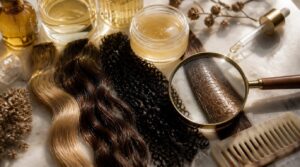
Picking the right sealant isn’t about grabbing whatever’s on the shelf, it’s about knowing your hair’s specific needs. Porosity, strand thickness, climate, and even how sensitive your scalp is all play a part in what works best for you. Here’s what to look at before you commit to a bottle or jar.
Match Sealant to Porosity
Before picking a sealant, test your porosity: drop a strand in water. Sinks fast? You’re high porosity, needing heavy butters like shea for real moisture retention. Floats? Low porosity wants lightweight oils like grapeseed. Medium porosity controls balanced silicones fine.
Match frequency accordingly, and try layering sealants, lighter oil beneath heavier butter, for better cuticle sealing without weighing strands down.
Fine Versus Coarse Strands
Porosity tells you how your hair drinks, but strand thickness tells you how much it can hold. Fine strands need light coverage to avoid flattening. Coarse strands demand richer butters for real moisture retention.
- Thread vs. yarn
- Feather vs. rope
- Silk scarf vs. wool blanket
- Whisper vs. shout
- Mist vs. downpour
Lightweight Versus Heavy Formulas
Weight matters as much as thickness. Lightweight hair oils absorb fast, leave a dry-touch finish, and need reapplication often since they sit thin on the cuticle layer.
Heavy formulas coat longer, lock in moisture balance for high-porosity strands, but build up fast without clarifying washes. Match formula weight to hair type suitability, not preference alone, for real texture improvement.
Ingredient Quality and Sensitivities
Check labels for CAS numbers and purity testing, this confirms heavy metals stay below safe limits.
Natural oils oxidize without antioxidants, so look for stabilized formulas.
Allergen labeling matters if you’re sensitive to fragrance.
Preservatives should carry safety assessments too.
Skipping this step risks buildup or reactions, not just wasted product.
Climate and Styling Routine
Your climate shapes your sealant routine more than you’d think. Above 70% humidity, switch to humidity-based sealing on ends only, avoiding buildup. Below 40%, apply a light sealant daily for cuticle protection.
Adjust seasonally: every wash in summer, every other in winter. Pair with protective styling like braids, and use overnight treatments with silk covers to lock in moisture through the LOC method.
How to Apply Hair Sealant Correctly
Picking the right sealant only gets you halfway there. How you apply it determines whether your hair actually holds onto moisture or just looks shiny for an hour. Here’s exactly how to get it right, step by step.
Moisturize Before Sealing
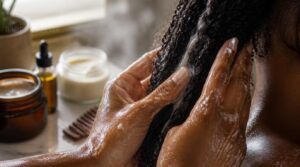
Skipping this step is like painting over a dusty wall, nothing sticks right. Your moisturizer builds the hydrated base a sealant needs to spread evenly.
Look for humectants like glycerin to pull in water, plus emollients to soften strands. Match the formula to your porosity, and adjust for climate, since dry air demands richer layers before sealing locks moisture in.
Apply to Damp Hair

Timing matters more than most people realize. Rub a small amount between your palms, then smooth it onto damp strands, never dry ones, so the cuticle layer traps water instead of just sitting on top.
High porosity hair drinks it in fast. Low porosity? Stick to lighter oils. Let it set two to three minutes before styling for real moisture retention.
Focus on Mid-Lengths and Ends
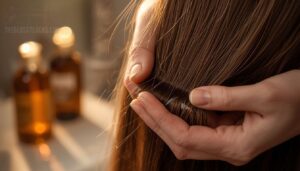
Ends take the most abuse, brushing, wind, friction from your collar. That’s why your end protection strategy matters most right here.
Work sealing oil into mid-lengths first, smoothing down for strand uniformity shine, then cup your palms around the ends for extra coverage. This targeted approach takes care of split end prevention and frizz control mid-lengths without piling product onto your roots.
Use The L.O.C. Method
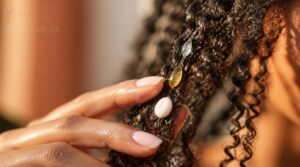
Think of the L.O.C. method as building layers, not just piling on product. Liquid first (your water-based moisturizer), Oil second, Cream third, your sealant. Each layer traps the one before it for real moisture retention.
Adjusting for porosity type matters here. High-porosity hair often needs all three steps for proper cuticle layer sealing.
Adjust Amount and Frequency
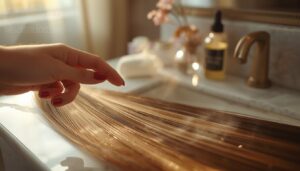
How much sealant should you actually use? Less than you think. For thin hair, a small amount daily works best. Medium hair needs a pea-sized dab through mid-lengths to ends. Thick or curly strands can start with a dime-sized amount.
Humidity changes things too. Seal daily when it’s muggy, every 2-3 days normally, and pull back if hair feels weighted down.
Hair Sealants Vs. Moisturizers and Penetrating Oils
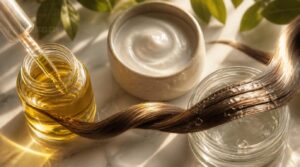
Sealants get lumped in with moisturizers and oils all the time, but they don’t do the same job. Mixing them up is usually why your hair ends up either bone-dry or weighed down. Here’s how these products actually differ, and how to use them together the right way.
Sealants Versus Water-Based Moisturizers
A hair sealant and a moisturizer aren’t competitors, they’re a team with different jobs. Moisturizers deliver surface vs internal hydration into the cortex; sealants lock that hydration in.
| Product | Base | Primary Job |
|---|---|---|
| Moisturizer | Water | Hydrates cortex |
| Sealant | Oil | Seals moisture |
| Combo | Both | Retention balance |
Sealing Versus Penetrating Oils
Not all oils work the same way, and that comes down to molecular size. Sealing oils sit on the cuticle as a surface barrier, while penetrating oils slip into the cortex for an internal hydration boost.
| Oil Type | Molecule Size | Main Effect |
|---|---|---|
| Sealing | Large | Coats, retains moisture |
| Penetrating | Small | Absorbs, softens fiber |
| Blended | Mixed | Seals and conditions |
Porosity decides which one your strands actually need.
When to Layer Each Product
Order matters more than the products themselves. Start with a leave-in conditioner or humectant, wait a minute or two, then add your moisturizer, then a sealing oil.
| Step | Product | Purpose |
|---|---|---|
| 1 | Humectant | Draws in water |
| 2 | Moisturizer | Hydrates cortex |
| 3 | Sealing oil | Locks it in |
Porosity and climate decide how heavy that last layer should be.
Avoid Trapping Dryness
Skipping a step in that layering order is how sealed-in dryness happens. A sealant only locks in what’s already there, so always start with damp hair application over a moisturizer, never dry strands.
| Mistake | Result | Fix |
|---|---|---|
| Dry hair sealing | Trapped dryness | Moisturize first |
| Heavy oil, fine hair | Buildup | Use lightweight sealant options |
| Skipping clarifying | Residue blocks moisture | Clarify every 2-4 weeks |
Prevent Greasiness and Buildup
Because oil’s molecular size keeps it from penetrating the hair shaft, too much sitting on the surface just turns greasy fast. Stick to lightweight formulas, apply to damp hair only, and rotate in scalp exfoliation before washing.
| Habit | Result |
|---|---|
| Small amounts | Even distribution |
| Weekly clarifying | No buildup |
| Cool rinse | Closed cuticle |
| Porosity match | Balanced routine |
Frequently Asked Questions (FAQs)
What is a hair sealant?
Think of it as a raincoat for your strands, not a drink of water. A hair sealant locks in moisture with a protective barrier, coating the cuticle so hydration can’t escape into thin air.
What can I use to seal my hair?
Grab an oil, butter, or serum based on your hair type matching needs.
Fine hair likes lightweight options like argan, coarse strands need heavy duty sealants like shea butter, and jojoba oil works as a gentle all purpose protective barrier.
How do I seal the moisture in my hair?
One client skipped sealing entirely and lost half her length in a year. Apply your hair sealant to damp strands after moisturizing, smoothing down the cuticle to lock hydration in and create a lasting protective barrier.
Can I use vaseline to seal my hair?
Yes, but sparingly. Vaseline hair sealing works as a dense occlusive barrier on damp ends, locking in moisture. Watch for Vaseline buildup risks though; it’s greasy, hard to rinse, and clarifying shampoo becomes essential for removal.
How often should I use a sealant for my hair?
Stick to 2–3 times weekly on wash days, adjusting for porosity: high-porosity hair needs more frequent sealing, low-porosity less. Watch for greasy strands or product buildup, that’s your cue to scale back and let hair breathe.
Does using a sealant on my hair damage it?
That myth about oils "damaging" hair doesn’t hold up. Real risk comes from overuse and buildup, not sealing. Applied correctly to damp, moisturized strands, a sealant actually helps breakage prevention by locking in hydration.
How long does a sealant last for?
Sealant reapplication frequency usually runs every two to four days, depending on hair porosity. High-porosity strands dry out faster, so they need sealing sooner to protect moisture retention and prevent product buildup between sessions.
Does using a sealant make my hair look greasy?
Only if you use too much. Oil amounts matter more than the product itself, since heavy layers sit on the hair shaft and reflect light. Match sealant to your hair porosity to avoid greasy buildup.
Can you use hair sealant on color-treated hair?
Yes, dyed strands do well with a color-safe sealant. Choose lightweight oils like jojoba, apply only to ends, and always patch test first, this locks in moisture, seals the cuticle, and guards against fading.
How often should you apply hair sealants weekly?
Two to three times weekly works for most textures, tied to your wash days. High-porosity strands may need 3-4 applications, low-porosity hair less. Adjust for dry seasons, and reapply once after sweaty workouts to restore moisture retention.
Conclusion
Picture a curly-haired client who switched from mineral oil to shea butter and finally stopped fighting frizz by noon. That’s what choosing correctly does.
The right sealant for hair isn’t about grabbing whatever sits on the shelf. It’s about matching porosity, texture, and climate to a formula that actually locks moisture in.
Master that match, and your strands stay soft, protected, and manageable for days, not hours. Your hair, finally under your control.