This site is supported by our readers. We may earn a commission, at no cost to you, if you purchase through links. This content is for general informational and educational purposes only and is not a substitute for professional medical, dermatological, or nutritional advice.

Most nicks don’t come from a bad blade. They come from bad prep.
Walk into any barbershop and watch a client wince after shaving his own head, and you’ll spot the same mistakes every time: dry skin, dull blades, wrong angle, too much pressure. A bald head has more curves and blind spots than a face ever will, which means shaving bald head smoothly takes a different playbook than your morning routine.
Get the prep, tools, and technique right, and razor burn stops being part of the deal. Here’s how to shave clean, protect your skin, and keep that finish looking sharp between sessions.
Table Of Contents
- Key Takeaways
- Prep Your Scalp for a Smoother Shave
- Choose The Best Tools for Shaving a Bald Head
- Shave Your Bald Head Smoothly Step by Step
- Care for Your Scalp After Shaving
- Maintain a Smooth Bald Head Without Irritation
- Frequently Asked Questions (FAQs)
- How to shave a smooth bald head?
- Is it a good idea to shave your head bald?
- How to get a smooth bald head with no razor bumps?
- How to get a smooth, shiny bald head?
- Why isn’t my head smooth after shaving?
- Is it better to shave head hair wet or dry?
- How often should I replace my razor blades?
- What causes razor bumps on bald heads?
- Can I shave with cold water instead?
- How to shave hard-to-reach head areas?
- Conclusion
Key Takeaways
- Prep your scalp with trimming, cleansing, exfoliating, warm water, and pre-shave oil before you ever pick up a razor, since most nicks come from poor prep rather than a bad blade.
- Shave with the grain using a shallow blade angle, light pressure, and short strokes, rinsing your blade often to keep it gliding instead of dragging.
- Finish every shave with a cool water rinse, pat-dry technique, alcohol-free aftershave, and daily moisturizer to prevent razor burn and flaking.
- Replace your blade every 5-7 shaves, adjust your shaving frequency to your skin’s recovery, and apply SPF 30 daily to protect your newly exposed scalp from sun damage.
Prep Your Scalp for a Smoother Shave

A smooth shave starts long before the razor touches your scalp. Skip the prep work and you’re asking for nicks, irritation, and a patchy finish. Here’s exactly what you need to do first, in order.
This step-by-step head shaving guide breaks down the prep essentials, from softening stubble to prepping skin, so your shave goes smoothly every time.
Trim Longer Hair First
Trim longer hair first, always, before your razor ever touches your scalp.
Grab your clippers and cut down bulk hair for stubble uniformity—this means hair length reduction upfront, less razor load later. You’ll get a clear scalp visibility boost, spotting patchy areas instantly. Don’t rush the process here; pre-shave trimming sets up a smoother, faster shave with fewer nicks and less irritation down the line.
Cleanse With Gentle Wash
Once trimmed, hop in a warm shower and work in a gentle cleanser for 30 seconds using circular motions.
Skip anything that strips your skin—a non-stripping wash removes sweat and oil without leaving your scalp feeling tight. Rinse with lukewarm water, then pat dry instead of rubbing. This short contact technique preps skin for the razor without irritation.
For those with reactive skin, choosing a pH-balanced cleanser can help maintain the skin’s natural barrier during shaving prep.
Exfoliate Dead Skin Gently
Skin still damp from the wash? Good—that’s your cue to grab a soft brush or washcloth and work in light circular motions for a quick 30-second session, two to three times weekly. Keep pressure gentle; you’re clearing buildup, not scrubbing leather. Rinse with lukewarm water after.
Skip this step entirely if your scalp’s irritated, cut, or sunburned—friction on damaged skin only makes things worse.
Soften Stubble With Warm Water
Once your scalp’s clean, hit it with warm water—not hot, just comfortably warm—for a minute or two before lathering up. This softens stubble and relaxes hair shafts so the blade glides instead of drags.
No time for a rinse? A warm, damp washcloth pressed against your head works just as well to prep skin for the razor.
Apply Pre-Shave Oil
Before lathering, work 3-4 drops of preshave oil into your scalp using small circular motions, covering every hair-bearing patch, especially around the crown.
- Massage for 20-30 seconds
- Wait about 30 seconds before lathering
- Add shaving cream directly over the oil
- Top up with a drop or two between passes
Dry skin? Don’t skimp. This combo softens stubble and lets your safety razor glide cleanly.
Choose The Best Tools for Shaving a Bald Head
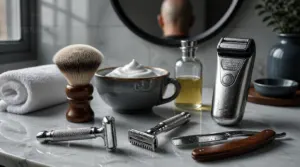
The right gear makes or breaks your shave. Before you touch your scalp, you need to know what’s actually in your toolkit and why it matters. Here’s what you’re choosing between.
Choosing the right razor and prep routine also ties into broader tips for shaving faster, since less drag means fewer passes and less irritation.
Manual Razor Options
Not all razors treat your head the same way. Cartridge razors pack multiple blades for speed, while single blade shaving with a fixed head gives you a controlled, consistent track.
Adjustable blade exposure lets you dial closeness for sensitive skin. Look for handle grip texture and balanced weight—wet hands need traction, and control matters more than speed here.
Safety Razor Basics
Want that old-school barbershop precision? A safety razor gets you there. Hold the handle at roughly a 30-degree blade angle, let the guard control exposure, and take short strokes with the grain.
Light pressure and a sharp blade matter more than force. Closed comb heads suit beginners; open comb setups clear thick stubble faster once you’ve got seating and grip dialed in.
Electric Shaver Benefits
Short on time or nicking yourself weekly? Electric shavers cut both problems.
Foil and rotary heads glide over skin, reducing friction, while floating heads follow your scalp’s curves for consistent closeness. Full shaves take 3-10 minutes, cordless. Rinseable heads simplify cleanup, and replaceable foils extend life.
Compared to manual blades, you’ll notice fewer irritation issues and less razor burn overall.
Shaving Cream Versus Gel
Cream or gel? Your skin type decides.
- Cream cushions dry or sensitive scalps with richer emollients
- Gel‘s transparency shows exactly where you’ve shaved
- Gel rinses cleaner off blades; cream needs quicker rinsing
Gel gives slicker glide when skin’s wet, aiding razor movement. Cream leaves a softer finish post-shave. Add preshave oil under either for extra cushion on dry skin.
Fresh Blade Importance
A dull blade drags, tugs, and punishes your scalp. Blade sharpness determines everything: clean cuts instead of scraping, better razor glide, fewer passes needed.
Stick to a strict blade replacement schedule—swap blades at the first sign of corrosion or pull. Fresh steel plus proper technique and tools equals real shave quality impact: smoother results, less irritation, no unnecessary re-shaving.
Shave Your Bald Head Smoothly Step by Step
Prep is done, so now it’s time to put blade to scalp. This is where technique matters most, since a few small habits separate a smooth finish from nicks and irritation. Follow these five steps in order every time you shave.
Start With The Grain

Before the blade touches skin, run clean fingertips over your stubble to feel which way it grows—this stubble resistance check reveals your grain direction, which often shifts between crown and sides.
Always make your with grain first pass using this map. Hold the razor nearly flat, aligning the angle with growth. Shaving against grain now invites ingrowns and razor burn later.
Use Light Pressure
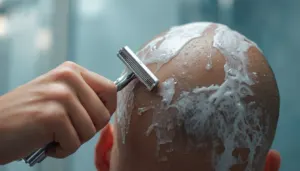
Grain direction only gets you so far—the real work happens in your grip. Use light pressure and let the blade do the cutting, not your hand.
Pressing hard causes scraping, nicks, and stinging you’ll feel immediately. Stay relaxed, keep the blade angle shallow, and read your stubble feedback as you go. Smooth shaving isn’t forced; it’s controlled.
Smooth shaving isn’t forced; it’s controlled—light pressure and a shallow blade angle beat brute force every time
Take Short Strokes
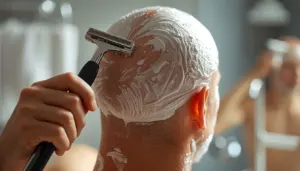
Long sweeps invite trouble. Short strokes keep your wrist steady and your blade angle consistent, especially over curves at the crown and back of your head.
Work in small zones instead of chasing full coverage in one pass. Section by section, overlap each stroke slightly, and check your progress. This method improves razor glide, reduces irritation, and catches missed patches before they become a problem.
Rinse Razor Often
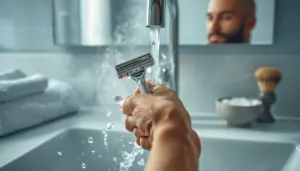
Short strokes only get you so far if your blade’s caked with gel and stubble. Rinse blade frequently under warm water to clear hair buildup and maintain blade glide.
- Prevents clogging between blades
- Reduces tugging and irritation
- Keeps water lubrication flowing
- Extends blade life
- Helps shaving bald head smoothly
Rinsing often is what separates a rough patch job from a truly smooth finish.
Reapply Gel as Needed

Once a section starts dragging instead of gliding, that’s your cue: reapply gel as needed before friction turns into razor burn.
| Warning Sign | Fix |
|---|---|
| Blade drags | Add gel |
| Skin feels dry | Touch up |
| Crown patches | Spot-treat |
| Post-rinse tackiness | Reapply |
| Hairline tightness | Extra gel |
Don’t overload already-slick spots. Smooth shave technique means lubrication where you need it, nowhere else.
Care for Your Scalp After Shaving

Your razor work isn’t done once the blade stops moving. What you do in the next few minutes decides whether your scalp feels calm or turns red and angry. Here’s exactly how to finish the job right.
Rinse With Cool Water
Cold water isn’t just nice, it’s your scalp’s reset button after the blade work is done.
Cool rinse benefits go beyond comfort: it tightens pores temporarily, calms redness, and locks in natural oils that hot water strips away.
- Lowers surface inflammation
- Constricts blood vessels for less redness
- Balances oil production
- Preps skin for soothing aftercare
That’s the bridge between shaving and true postshave soothing.
Pat Scalp Dry
Pat, don’t rub. Grab a clean towel and press it gently against your scalp—no wiping, no circles.
Rubbing creates friction, which irritates freshly shaved skin. Patting removes excess water fast, improving product absorption timing for whatever comes next.
Leftover moisture dilutes aftercare and can dilute your postshave soothing routine before it starts working.
Apply Alcohol-Free Aftershave
Skip the splash-and-sting stuff. Grab an alcohol-free aftershave balm instead, since traditional formulas strip moisture your scalp just lost.
Look for humectant ingredients like glycerin or aloe. They pull water into skin and calm redness fast.
For sensitive skin shaving, choose fragrance-free options with barrier support. This gives real razor burn relief without the burn you’re used to.
Moisturize to Prevent Flakes
A flaky scalp isn’t dry skin’s fault — it’s a moisturizing gap. Once your aftershave balm soaks in, lock in hydration with a lightweight, mattifying moisturizer while skin’s still slightly warm from rinsing.
Look for barrier-supporting ingredients like humectants or light occlusives. Use it after every shave, morning and night if needed. Skip this step and flaking creeps back fast.
Use Daily SPF 30
Your scalp never sees the sun until you shave it — and that’s exactly why sunburn hits fast. Apply a broad spectrum SPF 30 every morning as the final step in your routine.
Choose a lightweight, non-greasy formula with zinc oxide for sensitive skin. Reapply every two hours outdoors. Daily SPF isn’t optional — it’s your best defense against long-term UV damage.
Maintain a Smooth Bald Head Without Irritation
A clean shave is only half the job; keeping your head smooth day after day takes its own routine. Bumps, burn, and stray shine can creep in if you’re not paying attention. Here’s what to watch for and how to handle it.
If you’re also touching up thinning spots elsewhere, this guide on choosing hair color for thin, fine hair can help you match tones so regrowth and roots blend seamlessly.
If you’re switching up your shaving products, it’s worth checking whether common ingredients irritate your scalp, since even everyday brands like Pantene spark debate over hair and skin sensitivity.
Set Your Shaving Frequency
Rarely does a "perfect" shave schedule exist — your best shave interval depends on growth rate and skin sensitivity.
- Fast growth: daily or every-other-day
- Slow growth: every 2-3 days
- Any redness or stinging: push shave back a day
- Calm skin: keep your current pace
Match frequency to recovery, not the calendar. Replace blades every 5-7 shaves for a cleaner cut.
Prevent Ingrown Hairs
Once your interval’s dialed in, the real enemy shows up: hairs curling back into the skin.
Exfoliate before every shave to clear dead skin blocking follicles. Always shave with the grain, never against it, and keep blades sharp, dull edges snag hair at bad angles. Rinse your razor often mid-shave, and finish with a soothing, alcohol-free moisturizer.
Treat Razor Burn
Even with sharp blades and steady technique, razor burn still happens sometimes. Grab a cool compress or splash cold water on the area to calm the sting fast.
Follow up with aloe vera or an alcohol-free moisturizer, never fragrance-heavy products. If bumps swell, hydrocortisone cream helps. Pause shaving until skin fully heals. Redness lasting past three days? See a dermatologist.
Control Shine or Matte Finish
Once irritation settles, decide how your head looks: glossy or matte. Light bounces differently off smooth skin, so a light scattering finish hides texture better than shine.
- Dust oil control powder on shiny spots only
- Use a thin mattifying moisturizer, spread sparingly
- Try the blotting technique to lift excess wetness
Choosing matte products keeps your head shaving routine looking clean, not greasy.
Clean and Replace Blades
A dull blade drags, tugs, and irritates, so rinse after every stroke to clear buildup. Air-dry fully before storage—trapped moisture breeds rust.
Watch for tugging or corrosion; that’s your cue to replace. Wrap used blades before disposal.
If shaving every day, swap blades sooner. Always confirm blade compatibility with your razor model before installing a fresh one.
Frequently Asked Questions (FAQs)
How to shave a smooth bald head?
Warm water opens things up, and a 30-degree blade angle with the grain keeps nicks away. Rinse buildup often, moisturize scalp hydration after, and you’ll dodge razor burn without irritating fresh skin.
Is it a good idea to shave your head bald?
Yes, if you’re after scalp confidence and simpler upkeep. It suits your comfort, hair regrowth pattern, and desired social perception—just commit to proper scalp preparation, razor burn prevention, and consistent postshave moisturizing as part of your maintenance routine.
How to get a smooth bald head with no razor bumps?
Bumps come from bad angles, not bad luck. Shave with the grain, keep light pressure, and rinse often. Cool water and postshave moisturizing lock in skin hydration balance, while a sharp blade and steady technique keep razor burn off your scalp for good.
How to get a smooth, shiny bald head?
Sharp blades, light pressure, and the right technique matter most. Follow proper shave preparation, use quality shaving cream, then finish with a light-reflecting moisturizer.
Consistent scalp exfoliation and post-shave hydration keep your head glossy, smooth, and irritation-free every time.
Why isn’t my head smooth after shaving?
Not shear luck—it’s technique. Check grain direction impact, blade sharpness, and gel reapplication. Skipped exfoliation or a dull blade leaves rough patches. Fix your angle, rinse often, and lock in post-shave moisture for real smoothness.
Is it better to shave head hair wet or dry?
Wet shaving takes the win here. Warm water softens stubble, your blade glides smoother with less drag, and you’ll get a closer, cleaner cut with noticeably less irritation than dragging a dry razor across bare skin.
For technique tips tailored to different body areas and hair textures, this complete manscaping guide walks you through matching the right tools to your skin and style goals.
How often should I replace my razor blades?
Would you keep shaving with a blade that drags instead of glides? Replace blades every 5-7 shaves, sooner for coarse hair or daily use. Watch for tugging, dullness, or buildup, don’t wait for rust—your scalp deserves sharp care, not punishment.
What causes razor bumps on bald heads?
Razor bumps form when cut hairs curl back into the follicle instead of growing straight out. Wrong shaving angle, dull blades, clogged pores, and genetics all raise your risk—curly or coarse hair is especially prone to this trapping mechanism.
Can I shave with cold water instead?
Cold water can work if you rely on good lubrication and light strokes, since it tightens skin and cuts razor burn, but hair stays firmer. Stick to cool, not icy, to avoid shock and keep your technique sharp.
How to shave hard-to-reach head areas?
Grab a handheld mirror, pull skin taut behind ears and along the neckline, and use short stroke control with a 30-degree angle. Rinse often, reapply gel, and work slowly—patience beats nicks every time.
Conclusion
Practice makes perfect, and shaving bald head smoothly stops being a gamble once this routine becomes second nature. Prep the skin, respect the grain, and let a sharp blade do the work instead of muscle.
Rinse cool, moisturize daily, and never skip SPF, rain or shine. Skip just one step, and irritation always finds its way right back in.
Master this routine, and your head stays sharp, clean, and burn-free, shave after shave, without exception.