This site is supported by our readers. We may earn a commission, at no cost to you, if you purchase through links. This content is for general informational and educational purposes only and is not a substitute for professional medical, dermatological, or nutritional advice.

Your winter moisturizer just can’t keep up with July. Heat, sweat, and UV rays team up to strip your skin barrier faster than most people realize, leaving you oily by noon and tight by evening.
That’s not bad luck. It’s a sign your routine needs a seasonal update.
A smart skin care routine for summer swaps heavy creams for lightweight hydration, adds real sun protection, and gives your skin tools to recover after beach days and sweaty workouts. Get the order right, and you’ll spend less time fighting breakouts and sunburn, and more time actually enjoying the season.
Table Of Contents
- Key Takeaways
- Summer Skincare Essentials to Know
- Building Your Summer Skincare Routine
- Smart Sun Protection Strategies
- Post-Sun Skincare Recovery Tips
- Customizing Your Summer Routine
- Frequently Asked Questions (FAQs)
- What is the best skin care routine for summer?
- What is the 4 2 4 rule in skincare?
- What skincare is best for summer?
- What skincare to avoid in summer?
- What are the 5 skin care routines?
- What should I apply on my face in summer?
- What is the best skin care for hot weather?
- What are the 5 skin care routine?
- How to layer summer skincare?
- How often should I reapply sunscreen in summer?
- Conclusion
Key Takeaways
- Swap heavy winter creams for lightweight, layered hydration—gel cleanser, toner, serum, water-cream moisturizer—applied thinnest to thickest for proper absorption.
- Apply broad-spectrum SPF 30+ daily, reapplying every two hours or after swimming and sweating, since consistency matters more than the specific brand.
- Recover post-sun by rinsing off salt and chlorine, taking cool short showers, and applying chilled aloe vera within 30 minutes of exposure.
- Support your skin from the inside by drinking plenty of water, changing sweaty clothes within 10 minutes of exercise, and choosing non-comedogenic, fragrance-free formulas suited to your skin type.
Summer Skincare Essentials to Know
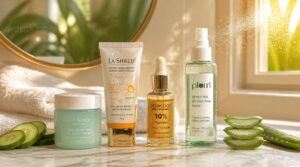
Summer heat changes what your skin needs, and your routine should change with it. You don’t need a complete overhaul, just a few smart swaps in key steps. Here are the essentials worth building your routine around.
For a deeper dive into lightweight layering and lasting moisture, this guide on hydration tips for humid weather breaks down exactly which products actually work when the air gets sticky.
Hydrating Cleanser for Gentle Purification
Wash away the day’s sweat and sunscreen without stripping your skin bare. Look for cleansers built on gentle surfactant systems like decyl glucoside, not harsh sulfates.
Choose pH-balanced formulas between 4.5-5.5 to protect your acid mantle. A gel-based cleanser rinses clean while ceramides and glycerin support barrier protection. This gentle purification keeps summer skin hydrated, calm, and less prone to sensitivity. Using hyaluronic acid ingredients can further help to prevent moisture loss during cleansing.
Hydrating Toners for Skin Balance
Toner isn’t optional this season—it’s damage control. Your cleanser just stripped away oil and pH balance, and skin sits vulnerable until you restore it.
Toner isn’t optional in summer—it’s damage control that restores your skin’s vulnerable balance after cleansing
Reach for pH-balanced, alcohol-free formulas around 5.5 that skip drying astringents. Look for multi-humectant blends layering hyaluronic acid with niacinamide and ceramides.
- Instant plumping and bounce
- Barrier that fights back
- Hydration that actually lasts
Hydrating Serums That Lock Moisture
Serum is where hydration gets serious. Look for multiple molecular weights of hyaluronic acid, which target both surface and deeper layers for real moisture retention.
| Serum | Key Tech | Benefit |
|---|---|---|
| OSEA Sea Serum | Seaweed + dual HA | Draws ambient moisture |
| Rodan + Fields | Air-draw matrix | 8-hour hydration |
| CeraVe Hydrating HA | Ceramide barrier mix | 24-hour lock |
Pair with a vitamin C serum each morning for antioxidant defense.
Water-Cream Moisturizers for Summer
Once your serum sinks in, seal it with a lightweight moisturizer built for heat. Tatcha’s water-burst technology shifts from cream to water on contact, delivering cooling texture without weight.
For the full layering order that makes these textures work together, check out this complete skin care routine for your 30s.
For oil-control ingredients, try Neutrogena Hydro Boost or Skinfix’s zinc complex. CocoKind’s electrolyte skin hydration formula helps skin bounce back from sweat. All layer well for humidity-proof layering under sunscreen, keeping your water-based skincare regimen breathable.
Building Your Summer Skincare Routine

Now that you know your summer essentials, it’s time to put them to work. Building a solid routine isn’t complicated, but it does take a few key steps done in the right order. Here’s what your daily lineup should include.
Prioritizing Broad-Spectrum Sunscreen
Sun damage doesn’t wait for a sunburn to start. Apply broad-spectrum SPF 30 daily—it blocks aging UVA rays and burning UVB rays alike.
Zinc oxide offers balanced, stable coverage; titanium dioxide works well against UVB but less UVA. Newly FDA-approved bemotrizinol adds a modern chemical option. Mineral or chemical, consistency matters more than brand.
Exfoliating to Remove Dead Skin
Sloughing off summer’s buildup keeps your glow from turning dull. Choose physical or chemical exfoliation—AHAs suit dry skin, BHAs clear oily pores, enzymes calm sensitive types.
- Prevents micro-tears
- Boosts cell regeneration
- Repairs skin barrier
- Reduces breakouts
- Improves texture
Exfoliate regularly, 2-3 times weekly, and always apply SPF 30+ afterward—chemical exfoliants heighten sun sensitivity for days.
Choosing Non-Comedogenic Formulas
Not every "oil-free" label tells the truth. Check ingredient lists yourself and skip heavy culprits like coconut oil or petrolatum.
Look for pore-friendly actives: squalane mimics natural sebum, zinc oxide soothes without clogging, salicylic acid helps with acne. True noncomedogenic products show clinical testing verification on packaging, not just marketing claims promising zero pore congestion or breakouts.
Adding Antioxidant Serums Daily
Think of your antioxidant serum as backup security for your sunscreen. Apply vitamin C serum each morning after cleansing, before moisturizer—a pea-sized amount is plenty.
This layering sequence neutralizes free radicals from UV and pollution before they cause damage. Pair it with niacinamide or hyaluronic acid, but skip retinol in the morning. That combo boosts your sunscreen’s protective power a lot.
Smart Sun Protection Strategies
Sunscreen is the single most powerful tool in your summer skincare arsenal, but only if you use it right. It’s not just about slathering on any bottle and calling it a day. Here’s what you need to know to protect your skin the smart way.
Meeting Minimum SPF Requirements

Not all SPF numbers mean equal protection. The FDA requires broad-spectrum labeling to guarantee UVA/UVB coverage, but SPF 15 is only the legal floor.
The Skin Cancer Foundation recommends SPF 30 minimum daily. Since most people underapply by half, that cushion matters.
Check your local UV index too—readings of 8+ demand shade, hats, and diligent coverage, not just a bottle.
Applying and Reapplying Sunscreen Correctly

Timing matters as much as SPF strength. Apply sunscreen 15 to 30 minutes before heading out, letting it bind to skin first.
Use a shot-glass amount for your body, a fingertip’s worth for your face. Don’t skip ears, neck, or hands.
Reapply every two hours, or right after swimming or sweating. Never spray directly onto your face—mist hands first, then pat on. Never leave without SPF.
If sunscreen leaves your freshly shaved legs red or bumpy, this guide to achieving smooth legs with sensitive skin can help you find gentler products.
Pairing consistent SPF habits with nutrient-rich foods can boost your skin’s defenses even further—check out these natural wrinkle-prevention tips for ways to support long-term skin health from the inside out.
Seeking Shade During Peak Hours

Sunscreen alone won’t cut it between 10 AM and 4 PM. Use the shadow rule: shorter than you, seek shade now.
- Trees block up to 75% of UV rays
- UPF 50 structures block 98%
- Umbrellas cover 50-80%
- Beach dunes reduce exposure 70%
- Cars block UVB, not UVA
Check the UV index daily—shade becomes critical at 8+.
Wearing SPF Lip Balm

Your lips have thin skin and no oil glands, so they burn fast. Never leave without SPF—grab a balm with zinc oxide or titanium dioxide for gentle mineral protection, or one blending chemical filters for lighter texture.
Reapply after eating, drinking, or licking your lips. Choose water-resistant formulas tested for 80 minutes of swimming. Tinted balms add color while blocking rays—no white cast, just smart sun protection.
Post-Sun Skincare Recovery Tips

A day in the sun takes a real toll on your skin, even when you’ve done everything right. Your recovery routine matters just as much as your prevention routine. Here’s what you should do once you’re back indoors.
Moisturizing Skin After Beach Trips
Rinsing off salt and chlorine right after the beach protects your skin from drying out. Use micellar water if a shower isn’t handy, then apply a humectant like hyaluronic acid to damp skin. Layer a ceramide-based moisturizer on top to repair your barrier and lock in hydration.
Moisturize daily to reverse sun damage and calm irritation.
Taking Cool, Short Showers
Once you’re clean, keep it cool. Water around 68°F (20°C) preserves 60-70% more natural skin oils than a hot rinse, protecting your barrier instead of stripping it.
Cap showers at 2-3 minutes. This boosts circulation, eases muscle soreness from beach activity, and prevents moisture loss, so your skin stays calm, hydrated, and less prone to redness.
Soothing Sunburns With Aloe Vera
Grab the aloe straight from the fridge — that chill boosts relief from 30 minutes to over 2 hours. Its natural compounds calm redness fast and outperform petroleum jelly for healing.
- Apply within 30 minutes of exposure
- Use pure gel, 90%+ concentration
- Reapply every 2-3 hours
Stop if blisters appear; that’s a sign you need medical care, not home remedies.
Changing Clothes After Outdoor Exercise
Sweaty gear left on skin for more than 10 minutes turns into a breeding ground for bacteria and fungus fast. Change within 10 minutes post-workout to avoid sweat-induced breakouts and pore clogging.
Choose moisture-wicking fabrics over cotton — they protect your skin barrier by pulling sweat away instead of trapping it. This simple habit prevents fungal infections and keeps acne management on track.
Customizing Your Summer Routine

No two faces handle summer the same way, and your routine shouldn’t either. What works for your friend’s oily skin might leave yours tight and irritated. Here’s how to fine-tune your approach so it actually fits you.
If you’re also dealing with dark spots or uneven tone, a targeted skin care routine for hyperpigmentation can help you layer the right steps without overwhelming your skin.
If shaving is part of your summer routine, pairing it with a proper post-shave skincare routine can help your barrier recover before heat and sweat make things worse.
Even the best time of day to cleanse your face can shift depending on your skin type, so pay attention to how it responds before locking in a routine.
Identifying Your Skin Type
Two easy tests reveal your skin type. Bare-face observation: cleanse, wait 30 minutes, then check for shine (oily), tightness (dry), or balance (normal). Blotting paper works too—press onto forehead, nose, cheeks, and chin. Heavy oil means oily skin; dry cheeks with an oily T-zone signals combination; minimal absorption means normal.
Genetics and hormones both shape these patterns, so retest during major life changes.
Balancing Oily or Sensitive Skin
Oily and sensitive skin can coexist, and summer heat makes both worse. Start niacinamide at 2-5% concentration, building tolerance gradually. Choose gentle surfactants like cocamidopropyl betaine over harsh sulfates for sebum control without stripping.
Introduce salicylic acid slowly, just 2-3 times weekly, watching for irritation. Pair actives with ceramides for barrier repair, and stick to fragrance-free formulas—your skin sensitivity will thank you.
Layering Products for Best Results
Order matters more than most people realize—apply products thinnest to thickest for real absorption.
Start with water-based serums, wait 30-60 seconds, then move to emulsions like Retinal. Finish with cream moisturizers. This sequence respects molecular weight penetration and prevents pilling, since oils block water-based actives from absorbing properly, cutting effectiveness by up to 40%.
Staying Hydrated From Within
No topical product can fix what dehydration causes from the inside. Aim for half your body weight in ounces daily—more if you’re sweating outdoors. Watch urine color; pale yellow means you’re on track.
Coconut water replenishes electrolytes lost to sweat, supporting cellular fluid balance. Snack on watermelon and cucumber. Space water intake throughout the day rather than chugging it all at once—your skin barrier depends on steady internal hydration.
Frequently Asked Questions (FAQs)
What is the best skin care routine for summer?
Your best bet: gentle cleansing, morning antioxidant serum, fluid SPF 30+, and evening retinoid use. Layer lightweight, non-comedogenic products to manage humidity, support skin barrier function, and prevent UV damage—while drinking plenty of water daily.
What is the 4 2 4 rule in skincare?
Rooted in Korean and Japanese beauty traditions, the 4-2-4 method is real: 4 minutes oil cleansing, 2 minutes water-based cleanser, 4 minutes rinsing. This timed ritual dissolves sebum, boosts circulation, and preps skin for better serum absorption.
What skincare is best for summer?
Effective picks pair broad-spectrum sunscreen (mineral or chemical) with antioxidant serums for lipid peroxidation prevention, lightweight water-cream moisturizers, and gentle cleansers.
Add iron oxide for visible light defense, plus water-rich foods to support hydration from within daily.
What skincare to avoid in summer?
Like sunbathing with an SPF-free umbrella, some habits leave you exposed.
Skip heavy moisturizers that clog pores, chemical sunscreens with high absorption rates, synthetic fragrances that irritate, over-exfoliation, and daytime retinoids—each raises sun sensitivity or triggers breakouts when heat’s already testing your skin barrier.
What are the 5 skin care routines?
Five essentials: cleanse gently, layer morning antioxidants, apply broad-spectrum sunscreen with post-swim reapplication, exfoliate weekly, and switch to lightweight textures.
Add nighttime retinoids for renewal.
Together, they help you manage sun exposure and prevent lasting UV damage.
What should I apply on my face in summer?
Layer an antioxidant serum first, then a lightweight moisturizer, finishing with broad-spectrum sunscreen (SPF 30+). Choose mineral blockers for visible light defense, keep textures gel-based, and mist throughout the day to prevent UV damage and dehydration.
What is the best skin care for hot weather?
Focus on broad-spectrum sunscreen with SPF 30+, lightweight humectants like hyaluronic acid, and antioxidant serums layered underneath.
Mineral blockers stay cool on skin, while thermal water mists and gel textures fight heat.
This dermatologist-recommended combo shields against UV rays and locks in hydration.
What are the 5 skin care routine?
Wondering where to even start? A dermatologist recommended summer skin care routine covers five steps: gentle cleansing, hydrating toner, antioxidant serum, water-cream moisturizer, and broad-spectrum sunscreen—applied daily, morning and night, to prevent UV damage.
How to layer summer skincare?
Go thinnest to thickest: cleanser, toner, serum, moisturizer, then sunscreen last. This consistency order ensures proper product absorption.
Sunscreen always seals everything in, protecting against UV damage while lighter formulas underneath actually penetrate instead of sitting blocked beneath heavier layers.
How often should I reapply sunscreen in summer?
Reapply your broadspectrum sunscreen every two hours outdoors, sooner after swimming or sweating. Cloudy days still bring UV damage. Even window exposure counts. Use stick formulas for makeup-safe touchups without smudging your look.
Conclusion
Picture two beachgoers at noon: one reapplies sunscreen, rinses off in a cool shower, and heads home glowing; the other skips both and pays for it with peeling skin by dinner. That gap is the whole point.
A solid skin care routine for summer isn’t about buying more products—it’s about applying the right ones, consistently, at the right moments. Master that rhythm, and summer stops being something your skin survives. It becomes something your skin actually enjoys.