This site is supported by our readers. We may earn a commission, at no cost to you, if you purchase through links. This content is for general informational and educational purposes only and is not a substitute for professional medical, dermatological, or nutritional advice.
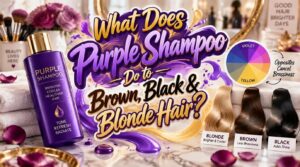
That gorgeous brassy orange creeping into your highlights? It’s not your imagination, and it’s not permanent. Purple shampoo deposits violet pigment onto your strands, and violet sits directly across from yellow on the color wheel, canceling warmth on contact.
But here’s where things get tricky: what does purple shampoo do to brown, black, blond hair, exactly? The answer changes dramatically depending on your base. Blondes get a cool, icy refresh. Brunettes see subtle shifts. Black hair? Barely a blip, unless it’s dyed.
Your exact timing, frequency, and technique matter, and getting them wrong can leave you lavender. Here’s the full breakdown.
Table Of Contents
- Key Takeaways
- How Does Purple Shampoo Neutralize Brassy Hair?
- What Does Purple Shampoo Do to Brown Hair?
- What Does Purple Shampoo Do to Black Hair?
- What Does Purple Shampoo Do to Blonde Hair?
- How Do You Use Purple Shampoo Correctly?
- Frequently Asked Questions (FAQs)
- Will purple shampoo lighten black hair?
- What are the downsides of purple shampoo?
- What happens if I leave purple shampoo in my hair for 30 minutes?
- Can purple shampoo permanently change my hair color?
- Is purple shampoo safe for color-treated hair?
- Why did purple shampoo stain my hands or scalp?
- Can I mix purple shampoo with my regular shampoo?
- Does purple shampoo expire or lose effectiveness over time?
- Conclusion
Key Takeaways
- Purple shampoo works through color theory: violet pigment sits opposite yellow on the color wheel and deposits onto your hair shaft to cancel brassy tones on contact—it coats rather than bleaches, so results are temporary and fade with washing.
- Its effect depends entirely on your base: blondes get the strongest cooling (1–3 minutes for platinum, 3–5 for ash), light brown with highlights tones fast on porous strands, dark brunette sees only subtle softening (where blue shampoo is often the better pick), and natural black hair barely changes unless it’s dyed.
- Overdoing it is the biggest risk—leaving it on too long or using it too often can turn your hair lavender, ashy, or dull, so cap usage at two sessions weekly, halve the time on freshly dyed hair, and follow with deep conditioner plus a clarifying wash every 2–3 weeks.
- Purple shampoo can’t lighten your hair or permanently change color; it only deposits pigment, so real color correction still requires bleach or a professional, and even the shampoo itself loses potency after about 12 months.
How Does Purple Shampoo Neutralize Brassy Hair?
Color theory is doing all the heavy lifting here. On a color wheel, purple sits directly opposite yellow, which means violet pigments cancel out warm, brassy tones on contact. That’s the whole trick, and it’s a surprisingly elegant one.
If you want to see this principle in action, our guide to fixing brassy hair color walks through exactly how to put violet pigment to work at home.
Purple sits opposite yellow on the color wheel, so violet pigments cancel brassy tones on contact
Purple shampoo deposits those pigments onto your hair shaft, concentrating on lighter, more porous strands where brassiness loves to settle. It doesn’t bleach anything or chemically alter your hair. It just coats it with color to neutralize brassy tones and shift the overall look cooler. No magic, just color science doing its thing.
Think of it like a filter for your hair. The longer you leave it on, the more intense the toning. Less orange, less yellow, more cool tone hair.
What Does Purple Shampoo Do to Brown Hair?
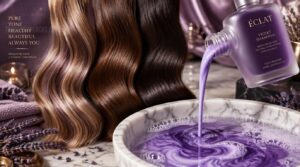
Brown hair isn’t one-size-fits-all, and neither is purple shampoo’s effect on it. Whether you’ve got light brown hair with highlights or a deeper brunette base makes a huge difference. Here’s what you can actually expect based on your shade.
Light Brown and Highlighted Hair
Since highlighted strands are more porous, purple shampoo hits them faster, neutralizing brassy tones before you can say ‘beige.’ Light brown hair with highlights responds well to hair toning, shifting warm hues cooler.
If you’re wondering whether purple shampoo works on darker shades too, this guide to using purple shampoo on brown hair breaks down exactly when it helps.
Leave it on for 3 to 5 minutes. Apply to your highlights only to avoid over-toning. Use it 1 to 2 times weekly for results that stick.
Dark Brown and Brunette Hair
Dark brown hair plays harder to get. Its deeper pigment hides brassiness better, so purple shampoo works subtler, softening orange tones rather than transforming anything. Expect gentle cooling, not drama.
Keep it on 1 to 3 minutes, once or twice weekly. Overdo it and cool brunettes can look dull or slightly violet. Want stronger toning on rich brown hair? That’s blue shampoo‘s job.
What Does Purple Shampoo Do to Black Hair?
If brown hair gave you subtle results, black hair takes things down another notch. On natural jet-black hair, purple shampoo barely makes a visible dent. Your cuticles are dense and tightly packed, so violet pigments struggle to deposit anything noticeable. Think faint cool tones, not a transformation.
Where it actually helps? Dyed or highlighted black hair. Processing can pull yellow tones to the surface, and purple shampoo combats that brassiness removal like a champ by neutralizing those warm undertones.
If you’re wondering whether the same trick works on your balayage or foils, this guide to using purple shampoo for highlights breaks it down step by step.
But here’s the catch: overdoing it on dark hair risks a dull, ashy cast or even a slight lavender tint if you leave it on too long. Buildup settles into that dense cuticle fast. Use it sparingly, rinse thoroughly, and follow with a clarifying wash occasionally to keep your black hair glossy, not shadowy.
What Does Purple Shampoo Do to Blonde Hair?
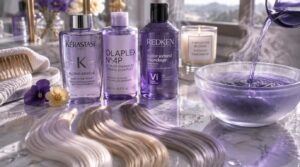
Shampoo formulated for blondes is where purple shampoo truly earns its keep. If you’ve got blonde hair, violet pigment deposition is your secret weapon against that pesky yellow cast that creeps in between salon visits. The science is simple: purple sits opposite yellow on the color wheel, so it works to neutralize yellow and orange tones fast.
Platinum or lightened? You’ll see brass fade within 1 to 3 minutes. Go longer and you risk a lavender tinge, so keep it short if you’re super pale.
Beige or strawberry blonde? A toning shampoo knocks down yellow while preserving your warm glow. Give it 3 to 5 minutes, biweekly.
Ash or cool blonde? Brassier notes need stronger violet pigments and longer contact, 3 to 5 minutes as needed.
How Do You Use Purple Shampoo Correctly?
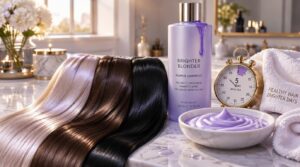
Here’s the thing: purple shampoo isn’t a "lather, rinse, repeat" situation. Timing, frequency, and technique all matter if you want cool, glossy color instead of a lilac mishap. Let’s break down exactly how to use it right.
Leave-on Time by Hair Color
Timing is everything. Blonde hair needs just 1–3 minutes to zap brass, stretching to 5 if yellow lingers. Light brown with highlights? 1–2 minutes, tops, or pale strands go coppery.
Medium brown sits at 2–4, deep brunette 3–5, focusing on mid-lengths. Black hair gets a quick 1–2 minutes to dodge that gray cast. Freshly dyed? Halve the time.
Safe Usage Frequency
Here’s the paradox: using purple shampoo less often can actually give you more color. Wild, right? Overdoing it builds pigment fast, and brassiness isn’t the only casualty.
Your toner usage frequency should start conservative, every 1–2 washes, then adjust after 2–4 weeks of watching your color. For color-treated hair, cap it at two sessions weekly. Your hair health maintenance depends on restraint.
Preventing Dryness and Purple Buildup
Picture your hair as a sponge that never quite wrings out. Keep feeding it pigment, and it keeps it.
Your dryness-prevention kit:
- Deep conditioner after every purple wash
- Lukewarm rinses to keep cuticles sealed
- Clarifying wash every 2–3 weeks
- Alternate sulfate-free shampoo between toning sessions
Watch your hair porosity; thirsty strands grab pigment fast. Guard your hair moisture, protect your hair health.
Purple Shampoo Vs. Blue Shampoo
So which one do you grab? Simple: purple shampoo kills yellow tones in blondes, while blue shampoo takes on orange and red undertones in darker brunettes.
Pick the wrong one and you’ll get a muddy, grayish cast instead of cool, glossy color. Match the shampoo to your brass: yellow means purple, orange means blue. Your tone, your call.
Frequently Asked Questions (FAQs)
Will purple shampoo lighten black hair?
Short answer: no. Purple shampoo deposits violet pigments to cancel yellow tones, but it can’t lift your hair pigment. On virgin black hair, expect zero lightening. Real color correction? You’ll need bleach or a professional.
What are the downsides of purple shampoo?
Purple shampoo isn’t perfect. Leave it on too long and you’ll get a lavender tint, especially on porous or highlighted hair. Overuse causes dryness, pigment buildup, and scalp irritation. Sulfate-heavy formulas make brittleness worse.
What happens if I leave purple shampoo in my hair for 30 minutes?
Last summer my friend left it in 30 minutes and walked out lavender. Here’s the deal: 30 minutes over-tones, especially porous strands. You’ll neutralize brass deeper, but risk a temporary violet cast. Follow with conditioner.
Can purple shampoo permanently change my hair color?
Nope, it can’t. Purple shampoo only deposits temporary pigment that fades with washing. Real color correction needs bleach or dye. Overuse might leave an ashy tint, but that washes out too.
Is purple shampoo safe for color-treated hair?
Worried it’ll strip your fresh color? Don’t be. Purple shampoo is safe for color-treated hair when used as directed.
Its violet pigments handle brass removal without lifting dye. Just patch test, follow with conditioner, and cap usage at two or three weekly sessions for color preservation.
Why did purple shampoo stain my hands or scalp?
Think of it as a painter’s fingerprint: where violet pigments touch, they leave a mark. Purple shampoo stains your hands or scalp because cosmetic-grade dyes bind to skin, especially when pores open, skin’s damp, or contact lingers. Rinse promptly.
Can I mix purple shampoo with my regular shampoo?
Start with a 1:1 ratio, purple as the minority. This dilutes pigment, softening toning. Use it 1–2 times weekly, follow with conditioner, and adjust as brassiness fades.
Does purple shampoo expire or lose effectiveness over time?
It does. Violet pigments fade, formulas separate, and brassy-canceling power weakens, especially after opening. Plan to replace it within 12 months, store it cool and dark, and toss it if the scent or texture shifts.
Conclusion
Purple shampoo is simple in theory and surprisingly layered in practice. That’s the whole game.
What does purple shampoo do to brown, black, blond hair? It cools blondes, subtly refines brunettes, and mostly skips over black hair unless it’s dyed.
Match your leave-on time to your base, go easy on frequency, and watch for purple buildup. Do that, and brass never stands a chance. Your color stays fresh, cool, and exactly where you want it.