
This site is supported by our readers. We may earn a commission, at no cost to you, if you purchase through links.

You set your timer, mixed the color, and started applying it strand by strand. But then life happened—a phone call, a kid’s emergency, or maybe you just lost track of time. Now you’re staring at the clock, realizing that box dye has been sitting on your head way longer than the instructions said.
As a cosmetic chemist, I’ve seen what happens when hydrogen peroxide and ammonia get too much time to work their magic—and it’s not pretty. Those extra minutes can turn your hair from strong and shiny to brittle and broken, or even give you a color that’s three shades darker than you wanted.
The good news? Understanding the chemistry behind what’s happening right now can help you minimize the damage and know exactly what steps to take next.
Table Of Contents
- Key Takeaways
- Risks of Leaving Hair Dye in Too Long
- How Hair Dye Chemistry Causes Damage
- Signs Your Hair Dye Has Been Left Too Long
- Color Outcomes of Overprocessing
- Factors Affecting Dye Processing Time
- Scalp Health Risks and Allergic Reactions
- Preventing Hair Dye Overexposure
- What to Do if You Left Dye in Too Long
- Repairing and Restoring Overprocessed Hair
- Top 5 Products for Damaged, Overprocessed Hair
- Frequently Asked Questions (FAQs)
- Conclusion
Key Takeaways
- Leaving hair dye in too long causes serious damage through oxidative weakening—hydrogen peroxide and ammonia break down your hair’s protein structure, leading to up to 40% loss in tensile strength, cuticle erosion, and breakage that can strip over 200% more protein from your strands than untreated hair.
- Your scalp faces real risks from overexposure, including chemical burns, blistering, and allergic reactions (especially to PPD, which affects 4-6% of users), with about 42% of dye users reporting adverse reactions like persistent itching, redness, or swelling that can require months of medical treatment.
- Timing matters because extended processing creates darker, muddy, or patchy color results—pigment molecules keep building up in porous areas, and once you pass the recommended 30-45 minute window, you’re gambling with both your hair’s health and the color outcome you actually wanted.
- If you’ve already overprocessed, act fast by rinsing immediately with cool water, using deep conditioning masks weekly, alternating with protein treatments to rebuild broken bonds, and waiting at least two weeks (preferably four to six) before attempting to re-dye or seeking professional color correction.
Risks of Leaving Hair Dye in Too Long

Leaving hair dye on longer than recommended isn’t just a minor mistake—it can seriously damage your hair and scalp. The chemicals in dye are formulated to work within a specific window, and going past that point triggers a cascade of problems.
Let’s look at what actually happens when you cross that timing line.
Chemical Hair Damage and Breakage
When you leave hair dye in too long, oxidative weakening kicks in as hydrogen peroxide breaks down your hair’s protein structure. This chemical damage doesn’t stop at the surface—it goes deep. You’ll notice:
- Cuticle erosion that leaves your hair shaft vulnerable to breakage
- Protein loss weakening each strand from the inside out
- Cumulative damage that worsens with every extra minute
- Hair breakage that snaps off with gentle combing
Oxidative hair dyeing can greatly impact hair’s mechanical integrity.
Scalp Irritation and Burns
Your scalp isn’t safe from overexposure either. About 42% of hair dye users report adverse reactions, with scalp itching affecting 38% of those cases. The hydrogen peroxide in dye—especially at concentrations above 6%—can cause chemical burns that range from mild redness to severe ulceration requiring months of medical treatment.
PPD allergies complicate things further—this common ingredient triggers allergic contact dermatitis in sensitized individuals, sometimes even after you’ve used the same product safely before. A key culprit is paraphenylenediamine or PPD, a common cause of allergic reactions.
Common Scalp Reactions by Severity
| Mild Irritation | Moderate Burns | Severe Chemical Burns |
|---|---|---|
| Itching, tingling sensation | Persistent redness, swelling | Open wounds, blistering tissue |
| Temporary discomfort | Scabbing, localized pain | Medical intervention required |
| Resolves with rinsing | Days to weeks healing | Months of treatment, scarring |
Excessive Dryness and Brittleness
Beyond the angry red scalp, your strands themselves start breaking down chemically. Nearly 70% of dye users report noticeable dryness after coloring. A single session can slash your hair’s water content by 40%. That’s because the alkaline environment strips away protective oils, leaving you with a straw-like texture that snaps at the slightest tension.
- Cuticle scales lift and separate, creating permanent porosity issues
- Hair loses its natural bounce and flexibility after chemical penetration
- Moisture evaporates rapidly post-washing when processing time exceeds recommendations
- Repeated dyeing builds residue that worsens the hydration imbalance
- Your hair’s stiffness can increase by 4% after just seven dye cycles
Protein Loss and Weakened Hair Structure
The chemistry gets worse: oxidative dyes literally dissolve structural proteins inside your hair. Studies show some red dyes strip over 200% more protein from virgin strands than untreated controls. Disulfide bonds—the molecular “glue” holding keratin together—break down under peroxide assault, and tensile strength plummets across all dye types (p Oxidative dyes dissolve structural proteins inside your hair, with some red dyes stripping over 200% more protein than untreated strands
| Damage Mechanism | Measurable Effect |
|---|---|
| Cuticle protein loss | 202% leached proteins (high-peroxide dyes) |
| Cortex keratin degradation | Cystine converts to cysteic acid |
| Mechanical strength reduction | Significant tensile strength drop |
| Microstructural changes | Cuticle lifting, cortex exposure |
| Oxidizing agent role | Higher peroxide = greater protein depletion |
Your hair shaft loses its backbone. Electron microscopy reveals cuticle layers peeling away, melanin granules degrading, and the internal matrix collapsing—all visible after mild treatments. The result? Hair that looks intact but snaps like a dry twig.
How Hair Dye Chemistry Causes Damage

To really understand why leaving dye in too long causes damage, you need to know what’s actually happening inside your hair. Hair dye isn’t just sitting on the surface—it’s working at a chemical level, changing your hair’s structure from the inside out.
Let’s break down the science behind the damage so you can see exactly why timing matters.
How Hair Dye Penetrates The Hair Shaft
Your hair shaft is like a fortress with layers. The outermost hair cuticle acts as armor—when alkaline chemicals raise the pH during coloring, those overlapping scales swell and lift, creating entry points for dye.
Once inside, molecules diffuse deeper into the cortex where melanin oxidation lightens your natural pigment and chromophore formation locks in new color through chemical reactions.
That’s why hair porosity and diffusion kinetics matter: timing affects how deeply dye penetrates.
Role of Ammonia and Hydrogen Peroxide
Think of ammonia as the doorman—it alkalizes your hair to 9-10 pH, swinging those cuticle doors wide open. Peroxide acts as the bleaching agent and color activator, working at 1.5% to 12% concentration.
Together, they’re a powerful duo: ammonia grants access while peroxide lightens melanin and forms permanent pigment.
But leave them working too long? That synergistic chemical interaction turns destructive, damaging keratin proteins and weakening your hair’s structural bonds beyond repair.
Permanent Vs. Semi-permanent Dye Effects
When choosing between permanent hair dye and semipermanent hair dye, understanding permanent vs semipermanent dye mechanics matters. The risks of prolonged dye exposure differ dramatically:
- Cortex Penetration: Permanent formulas burrow deep, causing hair damage with 356% more protein loss
- Surface Adhesion: Semipermanent coats externally, washing out in 5-10 shampoos
- Damage Profiles: Permanent weakens structure; semi stiffens without deep harm
- Scalp Reactions: PPD sensitivity hits 4-6.2% with permanent types
- Longevity Needs: Permanent requires touch-ups every 4 weeks
Signs Your Hair Dye Has Been Left Too Long
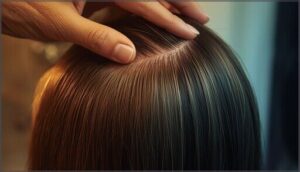
Sometimes you don’t realize you’ve left dye in too long until you rinse and see—or feel—the results. Your hair and scalp will usually give you pretty clear signals that something went wrong.
Here’s what to watch for so you can catch overprocessing early and take action.
Unusual Color Results or Darkening
Ever notice your roots look pitch-black instead of chestnut brown? That’s pigment concentration working overtime. When dye sits too long, chemical overprocessing lets molecules pile up inside your hair shaft—especially on porous or gray strands. The result? Darker, muddier color than you expected, with banding effects creating uneven color coverage from roots to ends.
| Hair Condition | Risk Level | Typical Outcome |
|---|---|---|
| Virgin hair | Moderate | Slightly darker tone |
| Previously colored | High | Obvious darkening, dullness |
| Bleached/lightened | Very High | Intense pigment load, muddiness |
| Gray hair | High | Opaque, overly dense color |
Patchiness and Uneven Tones
Stripes, blotches, or zebra-pattern color coverage? That’s what overexposure effects deliver when dye sits too long. Porosity variations mean some sections grab pigment 2–3 times faster, creating patchy finishes in 60% of overprocessed cases.
Previous treatments like bleach worsen uneven color—83.3% of pre-lightened hair shows tonal bands. Application errors, base color differences, and mineral buildup all increase color darkening and unevenness you didn’t sign up for.
Increased Hair Shedding or Breakage
If you’re noticing more strands in your brush or sink, overprocessing might be the culprit. Extended dye exposure reduces fiber yield strength and increases cuticle surface roughness, making hair snap under normal grooming stress.
Protein wash-out from excess oxidative stress weakens the shaft, turning routine brushing into a breakage festival. This hair damage doesn’t always mean true hair loss—it’s often breakage mimicking shedding, a common consequence of overdyeing hair that changes your hair fall perception entirely.
Persistent Scalp Discomfort
Beyond breakage, your scalp can tell you when dye’s overstayed its welcome. Burning, stinging, or chronic scalp itch that won’t quit? That’s your skin waving a red flag.
Scalp irritation from extended chemical exposure can escalate into allergic contact dermatitis or even chemical burns—especially if you’re sensitive to PPD. Occupational exposure risks are real for stylists, but anyone can experience scalp health issues when timing goes wrong.
Color Outcomes of Overprocessing
Leaving dye in too long doesn’t just damage your hair’s health—it messes with the color outcome too. You might end up with shades that are way darker than you wanted, or weird muddy tones that look nothing like the box.
Here’s what can go wrong when dye sits on your hair past its welcome.
Why Color Can Turn Darker or Muddy

When dye sits too long, oxidation acceleration kicks in—hydrogen peroxide keeps building color molecules that grow darker and muddier. Chemical overload from prolonged ammonia exposure can push your intended auburn into an unwanted muddy brown, especially if you’ve got high-porosity hair.
Your hair’s porosity plays a huge role in pigment penetration, with damaged strands soaking up excess dye like a sponge.
Banding and Patchy Results
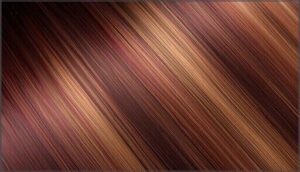
Overprocessing doesn’t just darken—it creates visible horizontal stripes where old color overlaps new applications. Uneven porosity from prior damage means some sections grab pigment faster, leaving you with patchy, multi-toned results instead of smooth color. Application issues like missed spots or inconsistent timing magnify these oxidation rate differences, turning a simple retouch into a banded mess.
- Horizontal stripes appear at previous retouch lines from color overlap
- Porous ends absorb more dye, creating darker bands than mid-shaft areas
- Uneven saturation leaves lighter patches next to over-deposited zones
- Prior damage changes how each section processes, producing irregular tones
Effects on Gray Roots and Lightened Hair
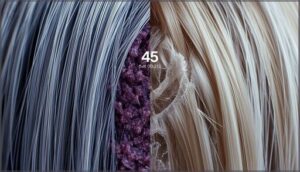
Gray roots face a double threat—they need up to 45 minutes for dye penetration, but that extended processing time increases your risk of overprocessing by 45%.
Lightened hair? Even worse. Its porous structure absorbs color 2-3 times faster, yet overexposure strips protein at alarming rates (208% increase when combined with bleach), leaving you with brittle, weak strands that break with minimal stress.
Factors Affecting Dye Processing Time
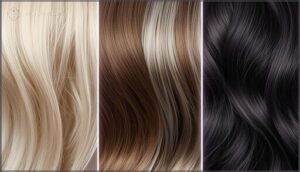
Not all hair is created equal, and that’s exactly why dye timing isn’t one-size-fits-all. Your hair’s unique characteristics, the amount of gray you’re covering, and the specific formula you’ve chosen all play a role in how long that dye should stay put.
Let’s break down the three biggest factors that determine your perfect processing window.
Hair Type and Porosity
Your hair type and hair porosity dramatically shape dye absorption and processing time. Low porosity strands resist color penetration, sometimes needing 50% longer than standard instructions suggest. High porosity hair grabs pigment fast—often within 20 minutes—risking darker results and hair damage.
Fine hair processes 20% quicker than coarse hair, while curly textures demand careful sectioning to prevent uneven hair color results and preserve hair elasticity.
Level of Gray Coverage Needed
Coverage targets reshape timing and chemistry from start to finish. Higher gray density levels demand stronger developer volume choices and strategic processing time adjustments:
- 0–25% gray uses 10–20 volume with standard 30-minute timing for blended results
- 50–75% gray requires 20-volume developer, extended 40-minute windows, and professional formulation strategies mixing natural base shades
- Above 75% gray needs permanent color with double-neutral series to meet consumer coverage expectations and prevent patchy hair color results.
Dye Formula and Manufacturer Instructions
Understanding hair dye chemistry starts with formula composition—each product’s ammonia, peroxide level, and alkalizers determine your hair dye processing time. Regulatory frameworks require manufacturers to confirm timing windows that balance color results and safety. Altering ratios or ignoring hair dye instructions risks under-processing (patchy color) or over-processing (damage). Batch quality controls guarantee consistency, so following hair dye application guidelines delivers the results you expect.
| Dye Type | Typical Processing Time | Why Timing Matters |
|---|---|---|
| Permanent oxidative | 30–45 minutes | Hydrogen peroxide + ammonia need full window for lift and deposit |
| High-lift formulas | 40–50 minutes | Stronger lightening action requires extended exposure |
| Direct (non-oxidative) | 10–30 minutes | Shorter window; no chemical reaction, just pigment deposit |
Scalp Health Risks and Allergic Reactions
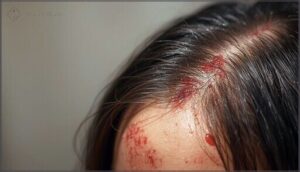
Your scalp isn’t just along for the ride when you’re dyeing your hair—it’s absorbing those same chemicals, and leaving dye on too long can turn a simple color session into a painful experience.
From mild irritation to serious allergic reactions, your skin will let you know when it’s had enough.
Here’s what to watch for, which ingredients cause the most trouble, and when you need to call a doctor.
Symptoms of Scalp Irritation
Scalp irritation from leaving dye on too long can feel like your skin’s throwing a tantrum. You might notice redness and inflammation creeping across your scalp, forehead, or ears within 48 hours.
That burning sensation? It’s real—some people experience stinging, pruritus (itchy discomfort), or even swelling. In severe cases, scalp burns can develop into blistering or painful ulcers requiring medical attention.
Allergic Reactions to PPD and Other Chemicals
About 4–6% of patch-tested dermatitis patients show allergic reactions to paraphenylenediamine (PPD), a common permanent dye ingredient. Cross-reactivity with related chemicals means even “PPD-free” products can trigger responses.
Black henna tattoos—sometimes containing over 15% PPD—cause early sensitization in roughly 2.5% of applications, priming your immune system for future reactions.
Regulatory limits cap PPD at 2–6%, but allergic responses, chemical burns, and scalp irritation still occur.
When to Seek Medical Attention
When your scalp throbs with intense pain, blisters appear, or open wounds develop, you’re looking at severe burns that need hospital care—not home remedies. Anaphylaxis symptoms like breathing difficulty, throat swelling, or dizziness demand immediate emergency treatment.
Eye exposure causing vision changes, spreading reactions beyond your scalp, or delayed healing with foul-smelling discharge all require prompt medical evaluation to prevent permanent damage.
Preventing Hair Dye Overexposure

The good news? You don’t have to learn the hard way. A few smart habits can protect your hair and scalp from overprocessing damage before it happens.
Let’s walk through the simple steps that make all the difference.
Importance of Following Instructions
Because hair dye manufacturers test their products extensively to establish safe processing times, following instructions isn’t just a suggestion—it’s your best defense against the risks of leaving hair dye on too long. Timing accuracy matters for both your hair color and processing time results. The FDA and regulatory compliance experts worldwide agree: those hair dye application guidelines exist to protect you.
Here’s why sticking to the instructions is non-negotiable:
- Product safety depends on tested exposure limits – manufacturers determine safe processing times through rigorous testing
- Overprocessing amplifies chemical damage – ammonia and peroxide cause more cuticle disruption and protein loss beyond recommended intervals
- Color outcomes can go haywire – continued oxidation leads to darker, muddy, or patchy results nobody wants
- Scalp irritation and burns escalate quickly – prolonged contact strips natural oils and can cause chemical burns requiring medical attention
- Patch-test necessity and professional consultation save you trouble – testing beforehand and seeking expert timing advice prevent disasters
Strand and Patch Testing
Before you even mix that dye, two simple tests can save you from disaster. A patch test—dab mixed product on your inner elbow 24–48 hours ahead—screens for allergic reactions to PPD and other chemicals, catching sensitivity before full-scalp exposure.
Meanwhile, a strand test on a hidden section previews your final color and checks hair response, especially important if you’ve previously colored or chemically treated your hair.
Using Timers and Setting Reminders
Once you’ve tested, your best insurance against overexposure is dead simple: set a timer. The FDA explicitly recommends tracking processing time with a clock or alarm—not guessing.
Digital reminders prevent the classic hair dye mistake of losing track while the formula sits, which matters because different hair types and formula variations need precise timing. Start your timer only after full saturation, then rinse the moment it buzzes.
What to Do if You Left Dye in Too Long

If you realize you’ve left hair dye on too long, don’t panic—acting quickly can help minimize damage to both your hair and scalp. The sooner you rinse and treat your hair, the better your chances of avoiding serious problems.
Here’s what you need to do right away to protect your hair and when it’s time to call in a professional.
Immediate Steps to Minimize Damage
The moment you notice dye processing too long, don’t panic—act fast. Gentle rinsing with cool water stops the chemical reaction immediately and helps reduce damage.
Use a mild shampoo to clear away residual developer that can worsen scalp burns or irritation. Apply a deep conditioning mask right after to start repair treatments.
These first aid steps for hair dye issues protect against severe chemical burns and hair damage.
When to Rinse and How to Treat The Scalp
As soon as your processing timer goes off—usually 30–45 minutes—rinse thoroughly with lukewarm water until it runs clear. If you notice burning or intense itching, rinse immediately regardless of timing.
Gently shampoo twice to remove all residue, then apply a fragrance-free aloe gel or mild corticosteroid cream for scalp soothing.
Persistent redness, blistering, or swelling beyond 48 hours requires medical evaluation.
Seeking Professional Help for Correction
When should you call in a pro? If your color turned muddy, patchy, or far too dark—or if you’re dealing with significant hair damage—a hair stylist trained in correction can assess the situation and design a staged plan.
About 44% of colorists regularly handle DIY mishaps, and professional assessment prevents further breakage. Correction cost generally runs $300–$500 per session, but structured long-term care and repairing damaged hair beats guesswork every time.
Repairing and Restoring Overprocessed Hair

So your hair took a beating from leaving dye in too long—now what? The good news is that you can bring it back to life with the right repair routine.
Let’s walk through three essential strategies that’ll help restore moisture, strength, and shine to your overprocessed strands.
Deep Conditioning and Protein Treatments
Once hair’s overprocessed, you’ll need a strategic repair plan. Deep conditioning treatments restore moisture lost during coloring—professionals recommend 1-2 weekly sessions to seal cuticles and reduce frizz. Protein treatments are equally important for structural repairs:
- Keratin K31 rebuilds broken bonds, increasing hair diameter by 49%
- Single treatments can double mechanical strength in damaged strands
- Hydrolyzed proteins penetrate deeply, boosting tensile strength by 86%
Alternate between protein and moisturizing masks weekly for balanced recovery.
Moisturizing Masks and Leave-in Conditioners
Think of moisturizing masks as emergency hydration for parched strands—jojoba and coconut oil formulas cut breakage by 61% in overprocessed hair.
Weekly mask ingredient efficacy shines here: argan oil blends boost elasticity in 97% of cases, while leave-in conditioners seal cuticles post-dyeing to lock moisture in.
You’ll see 88% improved combability after consistent deep conditioning treatments targeting dryness and hair damage.
Limiting Heat Styling After Damage
After overprocessing, your strands can’t handle the same thermal punishment—temperatures above 150°C literally cook weakened proteins and spike breakage by 40%. Temperature control isn’t optional anymore—it’s damage control.
Here’s how to protect what’s left:
- Apply heat protectants before every session to cut moisture loss by 25%
- Keep styling tools below 200°C to preserve hair elasticity
- Space out heat styling sessions—give damaged hair recovery days
- Style bone-dry strands only; damp hair shatters faster under heat
- Switch to air-drying methods when possible to prevent cumulative hair damage
Top 5 Products for Damaged, Overprocessed Hair
Once your hair is damaged from dye overexposure, the right products can make all the difference in bringing it back to life. You’ll want formulas that rebuild strength, lock in moisture, and protect what’s left of your hair’s structure.
Here are five solid options that actually deliver on their promises—whether you’re repairing damage or trying to undo a color mistake.
1. Schwarzkopf Keratin Intense Cocoa Hair Color
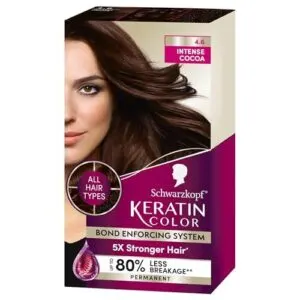
When you’re battling overprocessing and hair damage, Schwarzkopf’s Keratin Color Technology in 4.6 Intense Cocoa offers a gentler path forward. This permanent hair dye delivers 100% gray coverage in about 30 minutes while its K-Bond-Plex system claims up to 80% less hair breakage compared to untreated hair.
The three-step formula includes a pre-color serum and conditioning mask that work to minimize the dryness and brittleness that come from repeated coloring. Just don’t skip the patch test or exceed the recommended timing.
Best For: People with gray hair who want full coverage and reduced breakage, especially if they’re worried about damage from frequent coloring.
- The three-step system with pre-color serum and conditioning mask helps protect hair during the coloring process and claims up to 80% less breakage than untreated hair.
- Delivers complete gray coverage in about 30 minutes with long-lasting, fade-resistant color that stays true between touch-ups.
- The K-Bond-Plex technology targets the inner hair structure to strengthen during coloring, which is helpful if your hair is already damaged or aging.
- Contains para-phenylenediamine and other oxidative dyes that can cause allergic reactions in 0.1–2.3% of people, so the required 48-hour patch test isn’t optional.
- Leaving it on longer than 30 minutes won’t improve coverage but will increase dryness and brittleness, especially on bleached or porous hair.
- Some users report the color fades faster than expected, and the ammonia smell during application can be pretty strong.
2. Revlon ColorSilk Dark Brown Hair Color
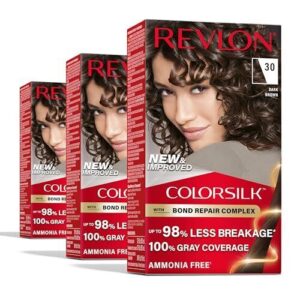
Revlon ColorSilk in Dark Brown takes a different approach with its ammonia-free formula and bond repair complex. You’ll get 100% gray coverage in 25 minutes—or 35 if you’ve got resistant gray strands.
The vegan keratin fillers work during the coloring process to cut breakage by up to 98% compared to uncolored hair.
But here’s the catch: some users report significant hair dye damage and increased shedding after hitting that 30-minute mark, plus you won’t find a conditioner tube in the box—just a single-use packet that barely covers shoulder-length hair.
Best For: People looking for ammonia-free gray coverage who want to repair their hair while coloring, as long as they stick to the timing and have extra conditioner on hand.
- Ammonia-free formula with bond repair complex cuts breakage by up to 98% and makes hair up to 9X shinier than uncolored hair
- Delivers 100% gray coverage in just 25 minutes (35 for resistant grays) with a no-drip application
- Works on all hair types and textures while leaving hair in better condition than before coloring
- Multiple users report significant hair loss and breakage after processing beyond 30 minutes, even with decades of use
- Only includes a tiny single-use conditioner packet instead of a full tube, which isn’t enough for most hair lengths
- Color fades relatively quickly (around 2-3 weeks for some users) and may come out darker than expected due to formula changes
3. Schwarzkopf Keratin Rich Caviar Hair Dye
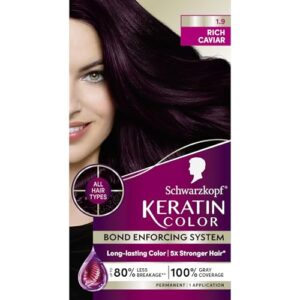
Schwarzkopf Keratin Rich Caviar confronts hair dye damage head-on with its 3-step Bond Enforcing System and pre-color serum loaded with Vitamin B6 and collagen. The keratin-and-caviar combo fights hair breakage and boosts hair elasticity loss—clinical tests show about 87% improvement in shine after two applications.
You’ll need 20–30 minutes for the Rich Caviar shade to develop, and sticking to that window is key since overprocessing can wreck the bond repair work. At-home application is straightforward, though that strong perfume might test your patience.
Best For: Anyone looking for rich, lasting gray coverage at home who wants a keratin-boosted formula that works to strengthen hair while coloring.
- Bond Enforcing System with keratin and collagen helps reduce breakage and supports hair structure during the dyeing process
- Delivers solid gray coverage with a fade-resistant finish that keeps its tone over time
- Comes with everything you need—gloves, instructions, pre-color serum, and post-color conditioner—for a complete at-home experience
- The strong perfume can be overwhelming if you’re sensitive to scents
- Can stain your skin, clothes, and bedding if you’re not careful with rinsing and cleanup
- Going past the 20–30 minute processing time can cause unexpected color shifts or increased dryness, even with the conditioning system
4. Color Oops Hair Color Remover
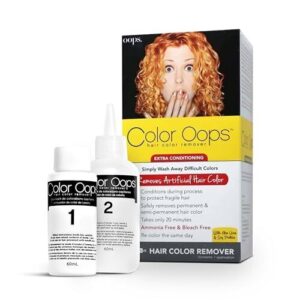
When bond repair isn’t enough and you’re stuck with color gone wrong, Color Oops Extra Strength flips the script by using hydrosulfite to shrink dye molecules and flush them out.
You’ll apply it to dry hair for 20 minutes—don’t push past 30—then rinse like your life depends on it. The ammonia-free formula limits hair brittleness and hair elasticity loss, though those bisulfites can still weaken keratin bonds.
Expect warmer, lighter tones as it reveals your previously bleached base, not your virgin shade.
Best For: Anyone stuck with a botched dye job who needs to strip oxidative color fast without ammonia or bleach—especially if you’re planning to recolor and can handle some warmth showing through.
- Shrinks and removes permanent dye molecules in 20 minutes without ammonia or bleach, so you avoid the harshest damage
- Works on stubborn shades like black, brown, and red oxidative dyes when you need a reset before going lighter or changing color
- Costs under $12 and includes aloe vera and soy protein to condition while it strips, which helps offset some of the drying effect
- Won’t touch direct dyes or fashion colors, and if you don’t rinse obsessively the color can creep back as molecules re-oxidize
- Reveals the lightened base from your previous dye jobs—not your natural color—so you’ll often see orange or yellow tones instead of your original shade
- Bisulfite byproducts can weaken keratin bonds and make hair fragile, plus the sulfur smell is strong enough to clear a room
5. L’Oreal Excellence Creme Dark Brown Hair
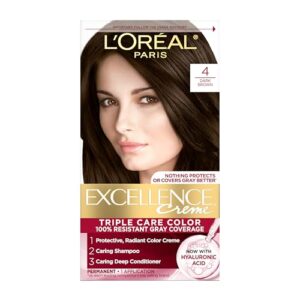
If you’re recovering from hair damage from overprocessing and ready to try again, L’Oreal Superior Preference Creme in Dark Brown offers a gentler path forward. Its Pro-Keratine formula helps with Dye Damage Repair, while the crème consistency won’t drip onto your already-sensitive scalp.
You’ll get decent Brown Shade Options, and the included conditioner aids your Hair Care Routine post-color. Just respect that 30-minute window—your Hair Porosity has changed after overdyeing, so even “safe” formulas demand precision timing for Color Fade Prevention.
Best For: People recovering from overprocessing damage who want reliable gray coverage with a gentler, Pro-Keratine formula that won’t drip onto sensitive scalps.
- Triple Care routine with Pro-Keratine complex helps repair hair while covering 100% of grays, especially stubborn ones
- Non-drip crème formula makes application easier and safer for damaged or sensitive scalps
- Includes caring shampoo and deep conditioner for up to 8 weeks of post-color maintenance
- Mixed results on gray coverage longevity—some users report color fades quickly despite claims
- Ammonia scent can linger during application and may irritate already-sensitive scalps
- Overprocessing past the 30-minute window can cause greenish tones, uneven color, and increased breakage on porous hair
Frequently Asked Questions (FAQs)
Can leaving dye in overnight cause permanent damage?
Falling asleep with dye still working? That’s pushing your luck.
Leaving hair dye in too long causes irreversible fiber damage to each strand, potential allergic sensitization, and chronic scalp conditions from cumulative exposure effects.
Does hair texture change after dye overexposure?
Yes, overexposure damages the hair cuticle and strips protein, reducing tensile strength by up to 40%.
You’ll notice texture alterations—rough, coarse strands with increased porosity—from the chemical disruption of your hair shaft’s structure.
How long before re-dyeing after overprocessing hair?
Wait at least two weeks before re-dyeing overprocessed hair—four to six weeks is better for severe damage.
Professional assessment of your hair porosity and protein loss helps determine safe recovery timelines.
Will clarifying shampoo remove excess dye buildup?
Clarifying shampoo effectively fades semi-permanent dye buildup with repeated washes, especially on porous hair. However, permanent color resists full removal—you’ll see minimal lightening even after multiple applications, requiring professional correction for significant dye type changes.
Can overprocessed hair return to its natural state?
Your strands won’t bounce back completely—disulfide bond damage from overprocessing is often permanent. However, follicle recovery potential remains strong, allowing healthy new growth.
Ongoing treatment helps manage existing hair damage repair, though restoration limits exist for severely compromised shafts.
Conclusion
Your hair is resilient, but it’s not invincible. Now you know exactly what happens if you leave hair dye in too long—and more importantly, how to fix it. Set that timer next time, do a strand test, and treat your hair like the living protein structure it is.
If damage has already happened, deep conditioning and protein treatments are your best friends. Your hair can bounce back—you just need to give it the right care.
- https://pubmed.ncbi.nlm.nih.gov/11982643/
- https://pmc.ncbi.nlm.nih.gov/articles/PMC11204684/
- https://themorfose.com/blogs/news/the-dangers-of-hair-color-damage-what-you-need-to-know
- https://moehair.com/blogs/blog/what-happens-if-you-leave-permanent-hair-dye-too-long
- https://www.coloredhaircare.com/what-happens-if-you-leave-hair-dye-in/