This site is supported by our readers. We may earn a commission, at no cost to you, if you purchase through links. This content is for general informational and educational purposes only and is not a substitute for professional medical, dermatological, or nutritional advice.

Most people agonize over the clock when starting a new supplement, and biotin is no exception. But when is the best time to take biotin comes down to a simpler answer than most supplement guides suggest.
Biotin is water-soluble, meaning your body absorbs it without needing food or a specific hour of the day. What actually shapes your results is consistency over time, not whether you swallow the capsule at 7 a.m. or 10 p.m.
There are a few timing details worth knowing, though, especially if you take high doses and have upcoming blood work.
Table Of Contents
- Key Takeaways
- When is The Best Time to Take Biotin?
- Should You Take Biotin With Food?
- Is It Okay to Take Biotin at Night?
- How Often Should You Take Biotin?
- Does Timing Affect Biotin’s Hair Benefits?
- When Should You Mention Biotin Before Blood Tests?
- Frequently Asked Questions (FAQs)
- What to avoid when taking biotin?
- How should I take biotin for best results?
- What happens to your body when you start taking biotin?
- Does biotin make you sleepy?
- Can I take biotin if I’m pregnant?
- Does biotin increase the number of hair strands?
- Is it safe to take biotin for long periods of time?
- Are there any side effects associated with biotin?
- Are there plant-based biotin supplements available?
- Can medications affect how your body absorbs biotin?
- Conclusion
Key Takeaways
- Biotin is water-soluble, so your body absorbs it effectively regardless of what time you take it — consistency over weeks matters far more than the hour on the clock.
- Taking biotin with food isn’t required for absorption, but it can ease mild stomach upset and help you build a reliable daily habit by anchoring it to an existing mealtime routine.
- If you take high-dose biotin (5,000 mcg or more), stop at least 72 hours before any blood work — biotin can distort results for thyroid, cardiac, and hormone tests, which the FDA has linked to at least one patient death.
- Biotin only supports hair growth if you’re genuinely deficient — if your levels are already normal, no amount of supplementation will improve hair thickness or growth rate.
When is The Best Time to Take Biotin?
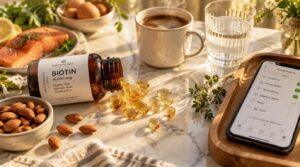
Regarding the best time to take biotin, the short answer is: whenever you’ll actually take it consistently. Unlike some nutrients that depend on specific conditions for proper nutrient absorption, biotin’s oral bioavailability isn’t tied to the clock. Your body absorbs it well regardless of whether you choose morning or midday supplementation. If you’re pairing biotin with your morning routine, a quality daily biotin vitamin slots right in beside your coffee without a second thought.
Pairing your supplement with a meal not only supports digestion but also builds the daily habit that makes biotin for clear skin most effective over time.
What actually drives results is daily consistency, not perfect timing. Biotin is a water-soluble B vitamin, meaning your body takes what it needs and excretes the rest. So supplement timing with biotin matters far less than you might think; the real priority is building a reliable daily habit.
Pick a time that fits naturally into your routine, and you’ve already made the most important decision.
Should You Take Biotin With Food?

Since biotin is water-soluble, it doesn’t rely on fat or bile for absorption the way fat-soluble vitamins A, D, E, and K do. That means taking it with food isn’t mandatory for good nutrient absorption or oral bioavailability.
That said, food can still help. Some people experience mild nausea when taking supplements on an empty stomach, and pairing biotin with a meal is a simple way to reduce that risk. If GI tolerance is a concern, it’s an easy adjustment.
The stronger case for food pairing is routine. If you already take other supplements with breakfast or dinner, adding biotin to that same habit keeps your supplement timing consistent and predictable, which makes it much easier to avoid missed doses.
A daily pill organizer makes this even easier by giving each morning’s supplements a dedicated slot, so you never have to wonder whether you’ve already taken your biotin.
Is It Okay to Take Biotin at Night?

That same flexibility extends to timing. Taking biotin at night is perfectly fine, and for many people, an evening routine is easier to maintain. Timing consistency matters more than what time the clock reads.
Pairing your evening biotin with a calming ritual—like the techniques covered in this guide to scalp massage benefits for hair growth—can turn a simple supplement habit into a fuller, more effective nighttime routine.
Biotin is water-soluble, so your body absorbs it through the gut regardless of supplement form or timing. The best time to take biotin is whenever you’ll remember it. Morning, afternoon, or night, your dosage works the same way over weeks of use.
The one practical constraint is GI comfort. If supplements upset your stomach, pair your biotin with a snack before bed.
One thing to flag: biotin can interfere with certain immunoassays used in lab tests. If bloodwork is scheduled, ask your provider when to pause.
How Often Should You Take Biotin?
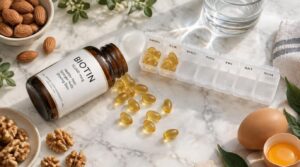
Most biotin supplements are taken once daily, and that’s usually all you need. Because biotin is water-soluble, your body controls absorption quickly, and any excess leaves through urinary excretion rather than building up. That makes the timing between doses less of a concern.
Your product label is your best guide. Some formulations use split dosing (twice daily) to match pill strength or tolerability, but the total daily dosage is what counts, not how many times you take it.
A few things worth knowing about frequency:
- Taking biotin once daily is standard for most standalone supplements
- Split dosing doesn’t improve absorption, just divides the total
- Consistency over weeks matters more than daily timing
- Changing your schedule changes your delivered daily dose
Does Timing Affect Biotin’s Hair Benefits?

For biotin and hair, timing isn’t the whole story. A few key factors shape whether supplementation actually works. Here’s what’s worth knowing before you adjust your routine.
No Best Time
Here’s the good news: there’s no clock time that makes a biotin supplement work better. It’s water-soluble, so your body absorbs what it needs and gets rid of the rest through urinary excretion. Morning, noon, or evening, the timing itself doesn’t change absorption much. Whether biotin comes from dietary sources or a pill, your gut treats it similarly. So relax about the clock.
Consistency Matters More
Rarely does the exact hour matter more than taking your biotin supplement at the same time each day.
Four habits that strengthen consistency:
- Anchor it to a fixed meal or routine
- Set a phone reminder
- Keep the bottle visible on your counter
- Track missed doses in a habit app
Steady absorption depends on consistent dosage guidance, not on perfect timing.
Food Is Optional
Most people absorb biotin equally well with or without food. GI comfort, not absorption, is the only real variable here.
| Supplement Form | With Food | Without Food |
|---|---|---|
| Capsule | Comfortable | Usually fine |
| Gummy | Fine | Fine |
| Tablet | Comfortable | May cause upset |
If you’re experiencing nausea, pair your dose with a small meal. That one small change can improve your consistency without affecting absorption.
A daily pill organizer with reminders makes it easy to build that mealtime habit without relying on memory alone.
Hair Benefits Depend On Deficiency
Say your hair’s been thinning and someone suggests taking a biotin supplement. Before buying, ask whether you’re truly biotin deficient. A high-potency biotin deficiency supplement is worth considering only after a blood test confirms your levels are actually low.
Eating eggs, nuts, or salmon already provides solid dietary biotin sources, making true deficiency uncommon. If you’re not deficient, supplementing won’t improve hair growth or give you healthier hair. Your body doesn’t need more of a nutrient it already has.
If you’re not biotin deficient, no supplement will grow your hair—your body ignores what it doesn’t need
When Should You Mention Biotin Before Blood Tests?
Biotin interference with lab test results is more common than most people realize. At high doses, it can cause false readings on thyroid function tests, cardiac markers like troponin, and hormone panels, making results appear abnormal when they aren’t.
Tell your provider at least 48 hours before any scheduled blood work. If you’re taking high-dose biotin (5,000 mcg or more), that window extends to 72 hours before the test. Don’t assume your provider will always ask about supplements; many don’t routinely inquire about over-the-counter products.
In emergency situations, always mention biotin use before any blood draws. A falsely low troponin result could mask a serious cardiac event. Give your provider your exact dose and how often you’ve been taking it. The FDA has even linked biotin-induced lab inaccuracies to at least one death caused by a falsely low troponin test result.
Frequently Asked Questions (FAQs)
What to avoid when taking biotin?
Avoid high doses before bloodwork, since biotin can cause lab test interference, leading to false thyroid results. Tell your healthcare provider about all supplements you currently take, especially combination products that can stack biotin unexpectedly.
How should I take biotin for best results?
Imagine pairing your capsule with dinner nightly. Consistent timing is what matters most. Biotin helps with metabolic function regardless of the clock, and supplement forms like capsules or gummies absorb the same with food or without.
What happens to your body when you start taking biotin?
Hair loss affects around 50 million men and 30 million women in the U.S. alone. When you start biotin, blood levels rise quickly, giving your metabolism more available cofactor activity before hair growth visibly responds.
Does biotin make you sleepy?
There’s no solid evidence that biotin causes drowsiness. It’s not a sedating nutrient. If you notice sleepiness soon after starting it, factors like timing, caffeine intake changes, or other dietary supplements are more likely responsible.
Can I take biotin if I’m pregnant?
Yes, biotin is generally safe during pregnancy. Your prenatal multivitamin likely already meets the 30 mcg daily requirement. Skip separate high-dose supplements unless your healthcare provider recommends them, as they can interfere with lab results.
Does biotin increase the number of hair strands?
Who wouldn’t want more strands? But biotin doesn’t actually add them. It helps keratin synthesis and overall hair skin and nail health, yet it won’t create new follicles unless you’re already correcting a true deficiency.
Is it safe to take biotin for long periods of time?
Biotin is water-soluble, but that alone doesn’t make long-term supplementation inherently risk-free for everyone. The main concern is laboratory accuracy: high biotin levels can distort certain blood test results until they clear from your system.
Are there any side effects associated with biotin?
Worried about supplement safety? Biotin has a strong safety profile for most people. Mild digestive symptoms like nausea, cramping, or abdominal pain can occur, but they’re uncommon and often linked to taking it without food.
Are there plant-based biotin supplements available?
Sesbania agati provides up to 10,000 mcg of biotin per dose, far exceeding common biotin-rich foods like nuts. These plant-based biotin supplements are vegan-certified, come in vegetable capsules, and sell widely at major online retailers.
Can medications affect how your body absorbs biotin?
Yes. Antiseizure drugs like carbamazepine and phenytoin reduce your intestinal absorption of biotin and speed up excretion. Certain antibiotics also kill the gut bacteria that naturally make it. Talk to your doctor if either applies.
Conclusion
Supplement timing often feels complicated, but when is the best time to take biotin turns out to be straightforward: whenever fits your routine. Morning, evening, with food or without, none of it matters nearly as much as taking it reliably every day.
What does matter is telling your doctor if you’re supplementing before any blood work. That one detail can prevent a misread result and save you an unnecessary follow-up.