This site is supported by our readers. We may earn a commission, at no cost to you, if you purchase through links. This content is for general informational and educational purposes only and is not a substitute for professional medical, dermatological, or nutritional advice.

You started retinol three weeks ago, and your chin now looks like it did at sixteen. Your skin isn’t rejecting the product. It’s showing you what was already underway.
Retinol converts to retinoic acid and speeds up cell turnover, which pushes trapped oil, debris, and bacteria toward the surface. Those microcomedones were forming weeks before any pimple appeared. About 78% of new users see this, and the breakouts that would have trickled in over 4 to 8 weeks arrive in 2 to 4.
Here’s why retinol causes skin purging, how to tell it from irritation or an allergic reaction, and when to stop.
Table Of Contents
- Key Takeaways
- Why Does Retinol Cause Skin Purging?
- Does Retinol Purging Happen to Everyone?
- Is It Retinol Purging or Something Else?
- How Long Does Retinol Purging Last?
- How Can You Manage Retinol Purging?
- When Should You Stop Retinol for Breakouts?
- Frequently Asked Questions (FAQs)
- Does retinol cause purging for everyone?
- How long will purging last on retinol?
- Does purging mean your skin is getting better?
- How to calm down a retinol purge?
- Can you use retinol while pregnant or breastfeeding?
- Should you apply retinol on damp or dry skin?
- Can retinol be used safely around the eyes?
- Is it okay to wear makeup during retinol purging?
- Conclusion
Key Takeaways
- Retinol speeds up cell turnover and pushes clogs that were already forming in your skin to the surface, so a purge is existing congestion clearing out rather than new acne.
- You’ll most likely purge if your skin is oily or congestion-prone, and the bumps will be small whiteheads and blackheads in your usual breakout zones, typically fading within 4 to 8 weeks.
- Breakouts in places you never flare, burning or stinging, hives, or swelling point to irritation or an allergic reaction, not purging.
- You can ease a purge by cutting back how often you apply retinol, moisturizing before and after it, and wearing daily sunscreen, but stop and see a dermatologist if symptoms worsen after 6 to 8 weeks or persist past 12.
Why Does Retinol Cause Skin Purging?
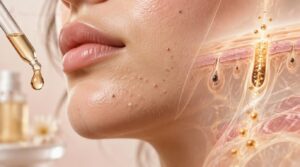
Why does your skin break out right after you start a product that’s supposed to clear it? Because retinol speeds up cell turnover. Your skin converts it to retinoic acid, which hurries dead cells off the surface and pushes trapped oil, debris, and bacteria upward faster than usual.
If you’re wondering which formulas are gentle enough to get through this adjustment phase, these best acne treatment product reviews can help you pick one that fits your skin.
That congestion was already there. Microcomedones form weeks before you ever see a pimple, and retinization simply brings them to the surface early. A retinol purge, then, is existing clogs being expelled, not new acne forming. In effect, purging condenses future breakouts that would normally take 4-8 weeks to surface into a span of just 2-4 weeks.
Purging isn’t the same as retinoid irritation, which comes from barrier disruption and shows up as redness, stinging, or burning. Purging looks like small whiteheads and blackheads where you usually break out.
Does Retinol Purging Happen to Everyone?

No, and believing otherwise is the most common retinol purge myth. Purging depends on how much congestion already sits beneath your surface. About 78% of new users purge; many don’t.
If you have oily, congestion-prone skin, retinization will likely bring visible breakouts, clustered where you usually get them. If your skin is drier and clearer, you may see almost nothing. That doesn’t mean the retinol isn’t working. Texture, tone, and fine lines improve either way.
Your approach matters too. Starting at low frequency, say twice a week, and choosing a gentle formula lowers your odds of purging. Expect your skin purging timeline to vary, because skin tolerance does. A smooth start simply means your skin is handling faster turnover well.
Is It Retinol Purging or Something Else?
Not every breakout after you start retinol is purging, and treating the wrong problem can cost you weeks. The three points below show you how to tell true purging apart from ongoing acne, irritation, and allergic reactions. Check each one against your own skin so you know whether to stay the course or change it.
Purging Versus Ongoing Acne

A retinol purge follows your skin’s script. Ongoing acne rewrites it.
If your breakouts linger well past the first few weeks, this guide to anti-aging skincare for acne-prone skin can help you build a gentler routine around retinol.
During retinization, check these five signs:
- Breakouts appear in your usual zones.
- Bumps are small whiteheads or blackheads.
- Cysts and nodules are rare.
- Visible improvement arrives within 4-6 weeks.
- Cheeks stay clear if they never broke out.
Breakouts past eight weeks signal ongoing acne. Track your skin purging timeline.
Purging Versus Skin Irritation

Ongoing acne isn’t the only lookalike. Skin irritation is another, and location gives it away.
A retinol purge stays in your usual zones. Skin irritation sends a breakout to places that never flare, like your cheeks. It burns, stings, or leaves skin tight and red. Purging fades as retinization progresses. If it worsens or turns painful and cystic, suspect irritation.
Supporting your skin barrier with a gentle routine, like these tips for achieving a healthy skin glow, makes the adjustment period much easier.
Purging Versus Allergic Reactions
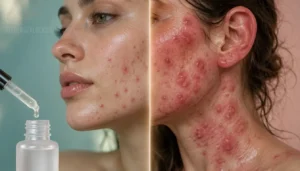
Hives, intense itching, and swelling signal an allergic reaction, not a retinol purge. Purging stays in your usual breakout zones; allergic reactions can spread to your neck or ears. For mild itching, a hydrocortisone cream for sensitive skin can offer relief, but spreading hives or swelling need prompt medical care.
Retinoid contact dermatitis and retinization are far likelier than true allergy, which worsens with each application.
If symptoms worsen after six weeks, stop retinol and ask a dermatologist about patch testing.
How Long Does Retinol Purging Last?

The typical retinol purge lasts four to six weeks, matching one full skin cell turnover cycle. Purging usually begins within the first two weeks, peaks around weeks three and four, and fades by weeks six to eight.
If your skin is oily or congested, it can stretch to 12 weeks, since there’s more buried congestion to clear. Your retinol strength and a lowandslow rampup also influence the pace.
Here’s what the weeks often feel like:
- Weeks 1 to 2: You’re hopeful, then startled by new bumps.
- Weeks 3 to 4: Frustration peaks, and you’ll want to quit.
- Weeks 5 to 6: Breakouts slow, and relief finally creeps in.
- Week 8 onward: Still breaking out? Suspect your skin barrier, not purging.
How Can You Manage Retinol Purging?

You can’t speed up a purge, but you can make it far easier to get through. Two adjustments do most of the work: how you dose the retinoid and how you support your skin around it. The points below cover both approaches in the order you should apply them.
Adjusting Retinol Strength and Frequency
Adjust one variable at a time, strength or frequency, never both. That’s how you’ll know what’s actually calming your skin.
If you’re still in a retinol purge, drop your frequency first. Go from nightly to every other night, then follow a lowandslow rampup. Retinol strength matters too: switch to 0.25% if purging lasts past six weeks.
Building a Barrier-Friendly Skincare Routine
Think of your skin barrier as a brick wall: retinol loosens the mortar, so you rebuild it while purging runs its course.
Retinol loosens your skin’s mortar like a brick wall, so rebuild it while the purge runs its course
- Cleanse with a gentle, fragrance-free formula.
- Moisturize with ceramides and cholesterol.
- Wear mineral SPF daily.
- Add one new product weekly.
Use a buffering protocol: moisturize before and after retinol. This calms a retinol purge without stopping your treatment.
When Should You Stop Retinol for Breakouts?

Purging has a deadline. Once you’re past week 8, a worsening breakout isn’t purging anymore.
Stop retinol if your skin shows any of these signs:
| Sign | What it means |
|---|---|
| Burning, oozing, or swelling | Damaged skin barrier or allergy |
| Cystic acne or new problem areas | Reaction, not purging |
| No improvement by weeks 8 to 10 | Wrong product for you |
Severe symptoms mean you should stop immediately, so don’t try to push through them. Retinoids can’t fix a compromised skin barrier; they’ll only deepen the damage.
Book a dermatologist visit if breakouts turn painful or severe, or if they persist beyond 12 weeks. Bring your full product list and a timeline. A professional can rule out root causes and suggest effective alternatives.
Frequently Asked Questions (FAQs)
Does retinol cause purging for everyone?
Think of retinol purging as a lottery, not a guarantee. Not everyone purges. Oily, congestion-prone skin breaks out more visibly, while drier, clearer skin rarely does. One 2020 survey found 22% never purged.
How long will purging last on retinol?
Most people see purging last 4 to 6 weeks, peaking around weeks 3 and Oilier, congestion-prone skin can take 8 to 12 weeks. If breakouts worsen after week 6, see a dermatologist.
Does purging mean your skin is getting better?
Not always. Purging means epidermal turnover is speeding up, and that usually precedes clearer pores. You’ll often notice improvement around week six, but if you don’t purge, retinol can still be working.
How to calm down a retinol purge?
You can’t speed a purge along, but you can calm it. Keep your retinoid at two or three nights weekly, pause acids, and sandwich it between moisturizer. Add niacinamide for barrier repair.
Can you use retinol while pregnant or breastfeeding?
Think of retinol as a door you lock before a baby arrives. Avoid retinol during pregnancy, because retinoid exposure, including vitamin A derivatives, risks birth defects. While breastfeeding, topical retinol is low-risk, but keep it off your chest.
Should you apply retinol on damp or dry skin?
Apply retinol to completely dry skin. Damp skin lets more retinol penetrate, which raises irritation risk, especially during retinization. If you’ve washed, wait until your face dries, then use a pea-sized amount.
Can retinol be used safely around the eyes?
Picture a silk scarf draped over your orbital bone. Yes, retinol can work there. Apply a pea-sized amount around the bony rim only, tap gently, avoid lids, and start low.
Is it okay to wear makeup during retinol purging?
Yes, you can wear makeup during skin purging, but choose noncomedogenic, lightweight formulas and remove them gently every night. Skip makeup if you notice pain, swelling, or itching, and call your dermatologist.
Conclusion
Why does retinol cause skin purging, and is the wait worth it? Usually, yes. Your skin is clearing out what was already brewing, just faster than you’d like.
Stay patient for six to eight weeks, keep your routine simple, and use a moisturizer and sunscreen daily. Pimples in your usual spots are normal. Burning, swelling, or hives aren’t, so stop and call your dermatologist. Know the difference, and you stay in control of the process.