This site is supported by our readers. We may earn a commission, at no cost to you, if you purchase through links. This content is for general informational and educational purposes only and is not a substitute for professional medical, dermatological, or nutritional advice.

Most people raiding their kitchen for a hair removal solution aren’t thinking about egg whites—but estheticians have known for years that albumin proteins do something genuinely useful to fine facial hair. When egg white dries against skin, it forms a thin, flexible film that grips vellus hairs—those soft, colorless strands covering your upper lip and chin—and peels them away cleanly.
It won’t touch coarse terminal hairs, and the results won’t last forever, but for peach fuzz, it works on a surprisingly reliable basis.
Learning how to remove facial hair with egg white correctly comes down to the right mixture, timing, and technique.
Table Of Contents
- Key Takeaways
- How Egg White Removes Facial Hair
- Use an Egg White Peel Mask
- Gather Safe Mask Ingredients
- Prepare The Egg White Mixture
- Apply and Peel Correctly
- Soothe Skin After Removal
- Follow Egg White Safety Tips
- Frequently Asked Questions (FAQs)
- How does egg white remove hair?
- How do you apply egg white to your face?
- How to use egg white for skin whitening?
- How to remove facial hair?
- How do you remove hair from a face with cornstarch & egg white?
- How does egg white mask work?
- Can egg white remove facial hair?
- Does egg white stop hair growth?
- How to remove facial hair at home with egg?
- Is it OK to put egg white on your face?
- Conclusion
Key Takeaways
- Egg white works on fine peach fuzz by forming a protein film that grips and peels away vellus hairs, but it won’t touch coarse terminal hair no matter how many times you try.
- The mixture only works if you let it dry fully—20 to 30 minutes—because a tacky, rushed mask tears instead of peeling cleanly and takes the hair with it.
- Always use pasteurized egg whites, patch test 24–48 hours before applying to your face, and stop immediately if your skin stings, since raw eggs carry real bacterial risks.
- Results last just one to three days since follicles stay intact, so treat this as a regular maintenance routine rather than a permanent fix.
How Egg White Removes Facial Hair

Egg white isn’t just for omelets—it’s a surprisingly effective tool for tackling fine facial hair. The science behind it is simple, and once you understand how it works, the process makes complete sense. Here’s what’s actually happening when egg white meets your skin.
When combined with olive oil, egg white becomes even more powerful—this egg white and olive oil face mask tightens pores while nourishing skin at the same time.
Sticks to Fine Hairs
Egg white works as a natural depilatory because its proteins latch onto fine hairs the moment the mixture meets your skin. These proteins form a tacky coating that grips each strand of vellus hair — that soft peach fuzz sitting close to the surface. The lighter and finer the hair, the stronger the protein film adhesion relative to each strand’s weight. This fine layer also offers a protective barrier function for the skin.
Here’s what’s actually happening during that grip:
- Albumin proteins spread across the skin and make direct contact with individual hair strands.
- Vellus hair capture works because fine hairs lie flat and offer little resistance to the sticky film.
- The coating tightens around each strand as it starts to set, locking hairs into the film.
- Skin friction dynamics keep the film anchored while drying tension builds around the hair base.
- Fine hair requires less pulling force to detach, which is why DIY hair removal with egg white targets peach fuzz specifically.
Coarse terminal hairs are simply too thick and rooted too deeply for surface adhesion to grip effectively. That’s why this egg white mask technique delivers reliable results on soft facial hair rather than dense, wiry growth.
Dries Into Peelable Film
Once the protein film grips those fine hairs, the real work begins. As the egg white dries, water evaporates and the mixture shifts from sticky paste to a firm, continuous film. This is the film drying process at work — the layer stiffens until it holds its shape against your skin.
Full drying takes 20–30 minutes. Rush it, and the film stays tacky and tears instead of peeling cleanly.
Removes Dead Skin Cells
The dried film doesn’t just pull hair — it takes something else with it. When you peel, you’re also lifting dead skin cells from the stratum corneum, the outermost layer that dulls your complexion over time. This double action makes the egg white mask a genuine natural exfoliation tool, not just a DIY skincare trick for facial hair removal.
Here’s what peeling actually clears away:
- Flaky surface cells that make skin look uneven and rough
- Surface oil and grime trapped in the top layer
- Loose debris sitting around hair follicles
That mechanical lift is what gives your skin a brighter, smoother look after removal. Gentle peel effect matters here — because unlike harsh scrubs, the mask releases the surface layer gradually, reducing irritation while still delivering real exfoliation benefits. The result is skin brightening you can see, without aggressive rubbing.
Works Best on Peach Fuzz
That exfoliating lift works most reliably when the hair underneath is fine and soft.
The egg white film is designed for vellus hair capture — those light, downy strands covering your upper lip and cheeks. Upper lip results tend to be the most noticeable, since peach fuzz is usually thin enough for the peel film to grip and release cleanly.
Results Are Temporary
The results from this home remedy are real — but short-lived. Facial hair regrows within a day or two because the follicles stay active beneath the skin. Think of it as a temporary hair removal reset, not a permanent fix.
Egg white removes peach fuzz temporarily, but active follicles guarantee hair returns within days
- Hair returns within 1–3 days
- Skin smoothness fades as oils rebuild
- Follicles remain fully intact after peeling
- Repeat treatment works whenever new fuzz reappears
- Results vary by your individual hair regrowth timeline
Use an Egg White Peel Mask

An egg white peel mask isn’t a one-size-fits-all fix — where and how you use it matters. Before you mix anything, it helps to know which areas it actually works on and what it can’t do. Here’s what you need to keep in mind before getting started.
Best for Upper Lip
The upper lip is one of the best places to try this technique. Upper lip care starts with knowing your hair type — and most people have fine hair removal territory here.
For a gentler approach, natural upper lip hair removal methods can work well on fine hair without the irritation that harsher treatments cause.
That soft peach fuzz responds well to egg white’s adhesive film, making it an ideal candidate for a gentle peel technique without harsh chemicals.
Best for Chin Fuzz
Chin fuzz follows the same rules as upper lip peach fuzz — it’s mostly vellus hair removal territory, which means the egg white film can grip those fine strands effectively.
The chin can accumulate dry skin too, so you’re getting gentle exfoliation alongside temporary smoothness.
Stick to a comfortable repeat frequency to avoid irritating this sensitive area.
Avoid Coarse Facial Hair
Egg white works on fine peach fuzz, but coarse terminal hair is a different story. Thick hair shafts resist the dried film, so the mask can’t grip or pull them cleanly.
Trying anyway often causes skin micro-irritation without actual hair removal. If you’re dealing with stubble that regrows within a day or two, this home remedy isn’t your best tool.
Not Permanent Removal
The mask gives you a clean, smooth finish, but it won’t stop hair from growing back. Follicles stay fully intact, so regrowth is guaranteed — just a matter of timing.
Think of it as a frequent reapplication routine rather than a solution.
For natural ways and home remedies, that’s a realistic trade‑off worth knowing upfront.
Gather Safe Mask Ingredients

Before you mix anything, make sure you’re working with the right ingredients — what you use matters as much as how you apply it. This isn’t complicated, and you likely already have most of it at home. Here’s exactly what you’ll need to get started.
One Pasteurized Egg White
Your single most important ingredient is one pasteurized egg white. Unlike a raw egg cracked straight from the shell, pasteurized egg white has been gently heated to eliminate harmful bacteria like Salmonella — making it the smarter choice for any home remedy applied directly to your skin.
- Pasteurization kills harmful microorganisms without destroying the proteins responsible for film formation.
- The albumin proteins set into a flexible film as the mask dries, gripping fine facial hair.
- Pasteurized liquid egg white is widely available in cartons at most grocery stores.
- Once opened, refrigerate immediately to slow any residual microbial growth.
- Even pasteurized egg white can trigger reactions, so skin sensitivity test on your hand first.
One Tablespoon Sugar
Next up is one tablespoon of granulated sugar — about 12.5 grams. Sugar does double duty here: the crystals provide mild exfoliation as you spread the paste, and once wet, they dissolve into the egg white to help form a firm, peelable film.
Measure accurately, because too much sugar shifts the texture and can make the dried mask harder to remove cleanly.
Two Teaspoons Cornstarch
Cornstarch is your thickening agent here — measure out exactly two teaspoons, which works out to roughly 6.25 grams. It absorbs surface oil, adds body to the paste, and helps the mixture dry into a peelable film layer that grips fine facial hair effectively.
Without it, the egg white stays too runny to form that clean, skin-tightening gel texture you need.
Optional Honey Variation
If you’d prefer a simpler formula, swap out the sugar-cornstarch combo for one teaspoon of honey.
Honey acts as a natural binder that helps the mask grip fine facial hair, while its hygroscopic nature keeps the film from drying too brittle. It also adds a smoother application feel — though patch-test first, since honey can irritate sensitive skin.
Clean Bowl and Brush
Once your honey or sugar-cornstarch mixture is ready, your prep work isn’t done yet.
Use a clean silicone bowl — its ridged bristle texture helps you mix thoroughly without residue buildup. A brush with an ergonomic handle and compact head diameter gives you control during application.
Store both in a caddy to keep contamination away between uses.
Prepare The Egg White Mixture
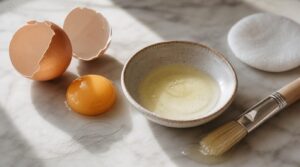
Getting the mixture right makes all the difference between a mask that actually pulls hair and one that just sits on your face. The steps are straightforward, but the order and technique matter more than most people expect. Here’s exactly how to put it together.
Separate The Egg White
Getting a clean separation is the foundation of this entire process. Crack the egg gently over a clean separation bowl, transfer the yolk between shell halves, and let the white fall through.
Even a small yolk break contaminates your egg white yield and disrupts the dry film you’re building toward. For a safer mask, always choose pasteurized egg whites — they reduce bacterial risk without changing how the mask performs.
Whisk Until Foamy
Once your egg white is separated, whisk it until foamy before adding anything else. Using a fork or small whisk, beat the white steadily for about 60 seconds. You’re aiming for visible tiny bubbles and a slightly thickened, frothy texture — not stiff peaks.
This light foam stage is exactly what helps the mask adhere to fine facial hair during application.
Add Sugar Slowly
With your egg white foamy and ready, add the tablespoon of sugar slowly and in small amounts, rather than all at once.
This gradual sugar integration gives each portion time to dissolve and disperse evenly, preventing visible clumps that can disrupt the mask’s texture. A smooth, well‑mixed base means the mask will form a uniform film across fine facial hair when it dries.
Mix in Cornstarch
Once your sugar is fully mixed in, measure out two teaspoons of cornstarch and add them to the bowl. Cornstarch thickens the paste, giving it enough body to coat fine facial hair evenly without sliding off.
Stir it in slowly using circular motions so the starch absorbs into the mixture rather than sitting dry on top.
Remove Visible Lumps
A lumpy paste is a red flag. Before you apply anything to your face, hold your bowl up to the light and look for dry specks or gritty patches — those are unmixed cornstarch or sugar crystals that will dry unevenly on your skin and tear instead of peel cleanly. Stir until the mixture flows like a smooth, uniform paste.
Apply and Peel Correctly
Getting this part right makes all the difference between smooth results and irritated skin. The way you apply and remove the mask directly affects how much hair actually comes off. Follow these steps closely to get the most out of your egg white mask.
Cleanse Face First
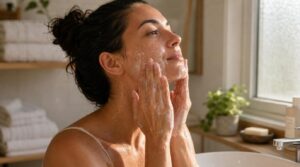
Before you apply anything to your face, cleanse thoroughly first. A gentle cleanser removes surface oils, dirt, and dead skin cells that would otherwise prevent the egg white from gripping evenly.
Think of it as clearing the canvas — the mask needs clean, dry contact to form a proper film. Skipping this step means uneven drying and weaker hair removal.
Apply a Thin Layer
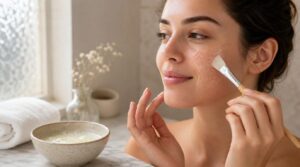
With your face already clean and dry, take your prepared mixture and use a clean brush or your fingertips to spread a thin, even layer over the target area. Light pressure is all you need — think gentle brush strokes, not pressing.
Consistent thickness helps the film grip fine peach fuzz uniformly, far better than depilatory creams irritate sensitive skin.
Let Dry Completely
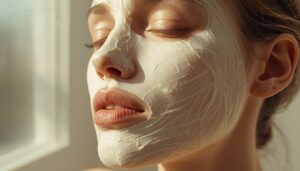
Once the layer is on, don’t touch it — let it sit undisturbed for 20 to 30 minutes.
You’ll know it’s ready when the surface looks matte, feels tight, and the edges start to lift slightly.
High humidity slows evaporation, so give it extra time if needed.
A mask that still feels tacky will tear instead of peel cleanly.
Peel Against Hair Growth

Once the mask is fully dry, find a corner — usually at the edge of your chin or lip — and peel slowly against hair growth. That means if your peach fuzz grows downward, you pull upward.
This hair-facing angle lets the dried film grip and extract fine hairs more cleanly, reducing irritation compared with other facial hair removal methods.
Rinse Remaining Residue

After peeling, rinse with tepid water right away — don’t wait. Warm-to-cool water lifts the remaining dried protein film, sugar, and cornstarch before it re-adheres to your skin.
Use your fingertips in light, circular passes rather than scrubbing. Pat dry gently with a clean cloth.
If your skin still feels sticky, re-rinse briefly until it’s completely clear.
Soothe Skin After Removal

Your skin just did something — it got pulled, tugged, and exfoliated all at once, so it needs a little recovery time. Skipping aftercare is where most people go wrong and end up with redness or irritation that lasts for days. Here’s exactly what to do right after peeling to keep your skin calm and protected.
Use Fragrance-free Cleanser
After facial hair removal, your skin is more reactive than usual — so what you reach for first really matters. A post peel cleanser that’s fragrance-free keeps your allergen free routine simple and focused.
- Fragrance-free formulas skip scent-related triggers entirely
- Barrier friendly cleansing avoids stripping your skin’s natural defenses
- Gentle surfactants lift residue without causing tightness
- A non comedogenic formula won’t clog freshly cleared pores
- Sensitive skin cleanser options often include glycerin for added comfort
Choose a skin barrier protection cleanser to support recovery.
Apply Gentle Moisturizer
Once the cleanser rinses away, your skin is open and ready to absorb. Apply a fragrance-free moisturizer within minutes of pat-drying, while skin is still slightly damp.
A fingertip-sized amount is enough. Look for glycerin, ceramides, or hyaluronic acid on the label — these ingredients actively rebuild your barrier. If tightness returns after 30 minutes, apply a second thin layer.
Avoid Scrubs Afterward
Scrubbing right after a peel is one of the fastest ways to undo everything you just did for your skin. The surface is freshly stretched, the follicles are open, and adding friction — even from a washcloth — can push residue into pores and trigger redness that lingers for days.
Stick to these three rules for post-removal skincare:
- Gentle rinse only — lukewarm water, fingertips, nothing abrasive
- No towel rubbing — pat dry with a clean cloth instead
- Skip makeup application — removing it later means more rubbing on sensitive skin
Watch for redness, stinging, or dry patches. Those are your skin’s signals to back off and let it recover before any exfoliation returns to your routine.
Skip Retinoids Temporarily
Retinoids are powerful resurfacing agents — and your skin doesn’t need that kind of pressure right after an egg white peel. Pause retinoids temporarily while your barrier recovers from the physical stress of removal.
| Signal | What It Means | Action |
|---|---|---|
| Burning or stinging | Barrier is compromised | Stop retinoid immediately |
| Ongoing redness | Skin is still inflamed | Delay restart by several days |
| Unusual tightness | Surface is overstretched | Switch to gentle, hydrating products |
Restart with reduced frequency — every other night instead of daily — once sensitivity settles.
Protect Skin With Sunscreen
Your skin is freshest — and most vulnerable — right after facial hair removal. Apply a broad spectrum sunscreen with SPF 30 or higher before stepping outside.
- Choose a water resistant formula for outdoor activity
- Apply enough to cover your full face evenly
- Reapply every two hours, or after swimming or sweating
- Prioritize sun damage prevention on freshly treated areas
- Avoid SPF sprays that may sting sensitive post-removal skin
Follow Egg White Safety Tips

Egg whites work, but they come with a few rules you shouldn’t skip. Raw eggs carry real risks, and your skin deserves a little respect before you start peeling. Keep these safety tips in mind every time you use this mask.
Patch Test Before Use
Before you spread this mask anywhere near your face, run a quick patch test — it’s the smartest move you can make. Apply a small amount to your inner forearm or behind the ear, then wait 24 to 48 hours.
Watch for redness, itching, or swelling. If nothing appears, your skin sensitivity is low enough to proceed safely.
Avoid Eyes and Mouth
Once your patch test checks out, placement becomes the next rule to follow.
Keep the mask well away from eyes and mouth — these zones are off-limits. The skin around your eyes is thinner and reacts faster to irritation, while the mouth area can accidentally transfer residue to your lips.
Apply only to targeted areas like your upper lip or chin, staying outside those boundaries entirely.
Use Pasteurized Egg Whites
Where you apply matters — but what you use matters just as much.
Raw eggs carry Salmonella risk, which is why switching to pasteurized liquid egg whites is the smarter move for any home-based solution.
They deliver the same protein film needed for facial hair removal, but with reduced bacterial risk already built in.
Cartons are shelf-stable, easy to measure, and free of added preservatives.
Stop if Skin Stings
Your skin’s response is its clearest signal — and stinging means stop immediately.
- Rinse quickly with lukewarm water
- Don’t reapply the mask that day
- Patch test first on future attempts
- Seek medical advice if swelling or hives appear
- Avoid further irritation by skipping actives for 48 hours
Persistent burning after rinsing can signal an adverse reaction beyond mild skin sensitivity, so don’t push through it.
Repeat Only as Needed
Once your skin is calm and no longer red from the last session, you can repeat — but once per week is the ceiling for most people.
Fine peach fuzz responds well with consistent, spaced sessions. Coarser hair just won’t budge cleanly, so repeating only adds irritation.
Moisturize after every removal, and always let your skin barrier recover fully before going again.
Frequently Asked Questions (FAQs)
How does egg white remove hair?
Egg white works as a protein film grip: as it dries, it locks around fine facial hairs and peels them free — a simple, chemical-free depilation method using what’s already in your fridge.
How do you apply egg white to your face?
Start with a clean, dry face — no makeup, no oils. Using a brush or fingertips, smooth a thin layer over the upper lip or chin, avoiding eyes and brows. Wait until fully dry.
How to use egg white for skin whitening?
Egg white brightening works on surface appearance only. It temporarily lifts dullness through gentle exfoliation when you peel, but it won’t change your skin’s melanin production or deliver lasting whitening results.
How to remove facial hair?
Facial hair removal comes down to what your skin can handle. You’ve got options — waxing, threading, shaving, depilatory creams, or gentler home-based solutions like organic masks that remove fuzz without chemicals or irritation.
How do you remove hair from a face with cornstarch & egg white?
Whisk one egg white until foamy, stir in one tablespoon sugar and two teaspoons cornstarch, spread thinly on target areas, let dry completely, then peel against hair growth to lift fine hairs away.
How does egg white mask work?
When egg white dries on skin, its proteins form a peelable adhesive film that grips fine facial hairs and lifts them away along with dead skin cells as you peel.
Can egg white remove facial hair?
Yes, egg white can remove facial hair — but only fine, surface-level peach fuzz. The adhesive film grips soft hairs and pulls them free when peeled. Results are temporary; hair regrows normally.
Does egg white stop hair growth?
No, egg white doesn’t stop hair growth. It temporarily lifts fine hairs during peeling, but follicles stay intact, so regrowth continues as normal. It’s cosmetic, not biological.
How to remove facial hair at home with egg?
You can remove facial hair at home using a simple organic face mask made from egg white — a home-based solution that grips fine facial hair and peels it away without chemicals.
Is it OK to put egg white on your face?
For most people, yes — but with conditions. Egg allergy or reactive skin can trigger redness or hives. Raw egg also carries bacterial contamination risk, so always patch test and use pasteurized whites.
Conclusion
Why keep reaching for harsh chemicals when your kitchen already holds a surprisingly effective solution?
Learning how to remove facial hair with egg white gives you real control over peach fuzz without irritating your skin or emptying your wallet. Stick to the right mixture, time your peel carefully, and always soothe your skin afterward.
Done consistently and safely, this method delivers clean, smooth results that prove simple techniques often outperform the complicated ones.