This site is supported by our readers. We may earn a commission, at no cost to you, if you purchase through links.
Hair that stretches like warm taffy in the shower, then snaps on a comb, isn’t asking for more oil. It often needs structural support. Bleach, repeated heat styling, and chemical services can lift the cuticle, leaving strands porous, dull, and weak.
A protein treatment for damaged hair uses small hydrolyzed proteins to temporarily strengthen those worn areas. Used well, it can improve elasticity and reduce breakage. Used too often, it can leave hair stiff and brittle.
The key is reading what your hair is telling you, then matching the treatment, application time, and schedule to damage in front of you.
Table Of Contents
- Key Takeaways
- Signs Damaged Hair Needs Protein
- How Protein Treatments Repair Damaged Hair
- How to Choose a Protein Treatment
- How to Apply Protein Treatment Step-by-Step
- Protein Treatment Frequency and Overuse Risks
- Frequently Asked Questions (FAQs)
- Can protein treatments repair damaged hair?
- What is the best protein treatment for damaged hair?
- What is the best treatment for extremely damaged hair?
- Which protein treatment is best for hair?
- Do and don’ts after protein treatment?
- What is the best hair treatment for severely damaged hair?
- Can I make protein treatments at home?
- Are protein treatments safe during pregnancy?
- Do protein treatments affect hair color?
- Can children use protein treatments?
- Conclusion
Key Takeaways
- Use a protein treatment when wet hair feels gummy, stretches without springing back, or breaks easily after bleach, heat, or chemical services.
- Protein treatments temporarily reinforce weak, porous strands, helping reduce breakage, frizz, and rough texture while improving elasticity and shine.
- Match the formula and processing time to your damage level, then follow it with conditioner or a moisture mask to keep hair flexible.
- Start slowly, usually every 4–6 weeks, and pause or reduce protein if your hair becomes stiff, straw-like, rough, or more prone to breakage.
Signs Damaged Hair Needs Protein
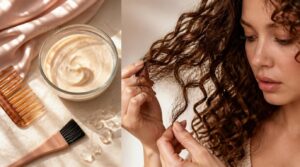
Your hair often sends signals before the damage becomes obvious. Learning to read those signals is the first step to knowing when a protein treatment is actually what your strands need. Here are the key signs to watch for.
For a targeted at-home option, explore these DIY protein hair mask ingredients to strengthen weakened, overly elastic strands.
Gummy Hair When Wet
If your hair feels like wet rubber after washing, that’s a sign worth paying attention to. Gummy hair when wet means the cuticle is damaged and absorbing water too fast and unevenly.
Drop a clean strand into water. If it sinks within two minutes, you likely have high-porosity hair that’s lost structural integrity. Bleach and heat processing are common causes. This happens because water temporarily breaks the hydrogen bonds in keratin, leaving a damaged cortex unable to restore its structure upon drying.
Poor Elasticity After Stretching
Gummy texture is one clue. Poor elasticity is another. Wet a single strand and gently pull it. Healthy hair stretches up to one-third its length, then bounces back. Protein-deficient hair stays stretched or breaks immediately. Check for:
- Strands that stretch far beyond their limit
- No bounce-back after gentle tension
- Curls that sag and won’t spring back
- Hair that snaps with minimal pull
Breakage From Bleach or Heat
Bleach and heat are two of the worst offenders for hair breakage. Bleach strips pigment at a high pH, and that process tears through the cuticle and weakens keratin bonds. Heat adds more stress, especially on damp strands.
| Sign | Likely Cause |
|---|---|
| Snaps when brushed | Bleach or heat damage |
| Straw-like texture | Cuticle breakdown |
| Dull, no shine | Keratin loss |
| Excess split ends | Structural damage |
| Longer drying time | Compromised cuticle layer |
Protein treatments fill those gaps, restoring strand strength and supporting cuticle repair.
High Porosity and Persistent Frizz
Damage from bleach and heat can raise your hair’s porosity over time. High porosity hair has a more open cuticle, so moisture gets in fast but escapes just as quickly. That’s why your hair can feel dry again just minutes after conditioning. The result is persistent frizz. Protein treatments help by sealing those open cuticle scales and slowing moisture loss.
Protein Need Versus Moisture Need
How do you tell if your hair needs protein or moisture? The wet stretch test answers that. Pull a single wet strand gently.
- Bounces back: your hair is balanced
- Stays limp or gummy: your hair needs protein
- Snaps with no give: your hair needs moisture
Good protein-moisture balance prevents protein overload and keeps dry damaged hair strong and manageable.
For limp strands, explore why conditioner can weigh hair down and adjust your routine accordingly.
How Protein Treatments Repair Damaged Hair

Protein treatments don’t just coat your hair — they actually work inside the strand to fix what’s broken. Understanding the mechanism helps you use them smarter and get real results. Here’s what’s happening each time you apply one.
Filling Gaps in Hair Cuticles
Think of your hair cuticle as roof shingles. When they crack or lift, moisture escapes and frizz moves in. Hydrolyzed protein molecules are small enough to slip into those gaps, pressing damaged scales back into place.
Deep treatments give protein enough contact time to bond and fill gaps along the shaft. The surface gets smoother, but water and friction will gradually strip it away.
Reinforcing Weak Hair Strands
When your hair is chemically processed, the cortex takes the hardest hit. That’s where keratin chains give your hair its ability to flex and spring back.
Hydrolyzed protein molecules penetrate that layer and begin repairing cortex damage, filling gaps left by bleach and heat. The result is enhanced hair elasticity, so your strands can handle tension without snapping.
Reducing Breakage and Split Ends
Breakage and split ends share a root cause: failing protein bonds.
Protein treatments reduce breakage by up to 50% and cut split ends by up to 40% in chemically treated hair. Here’s how protein works:
- Fill cuticle gaps to seal frayed tips
- Improve elasticity so strands stretch, not snap
- Strengthen cortex against combing tension
- Seal ends to cut moisture loss
Improving Shine, Frizz, and Manageability
Repaired cuticles change how your hair looks and feels. When protein fills porous gaps along the shaft, the surface becomes smoother and more uniform, reflecting light evenly. That’s where shine comes from.
A flat cuticle also blocks humidity from sneaking in, which causes frizz. Protein-treated hair can show up to 50% more shine, and it combs through with far less snagging.
Why Results Are Temporary
Your hair is dead tissue. It can’t hold onto added protein the way living cells regenerate. Protein molecules attach through weak ionic bonds that break down with every wash and shampoo.
Because hair is dead tissue, added protein bonds wash away over time and must be replenished
Most treatments last 4 to 6 weeks before washing out. UV exposure and pollution speed that up. That’s why consistent protein replenishment is the whole strategy for damaged hair.
How to Choose a Protein Treatment
Not every protein treatment works the same way, and the wrong one can do more harm than good. Your damage level, hair type, and how often you wash all factor into which formula actually fits your routine. Here are four options worth knowing, each suited to a different need.
Match Formula to Damage Level
Not every protein treatment is built the same. Matching treatment intensity to your damage level is what drives real hair repair and prevents overloading.
Do a quick hair elasticity test: stretch a wet strand. Fast snapping signals protein deficiency.
- Light formulas suit mild hair damage
- Moderate treatments address heat or chemical damage
- Strong concentrations target severe breakage or overprocessed strands
SheaMoisture Manuka Honey Hair Mask
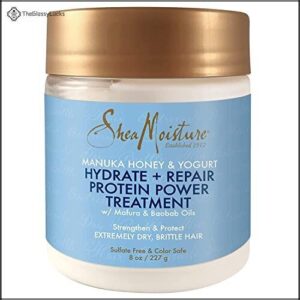
For mild to moderate damage, the SheaMoisture Manuka Honey Hair Mask sits in a sweet spot. It combines Manuka honey, Mafura oil, and Baobab oil to draw moisture into the hair shaft and seal the cuticle.
Apply it to clean, wet hair and leave it for 5 minutes, or up to 30 minutes with heat for deeper repair. It’s sulfate-free and well-suited for curly or dry hair, though fine hair types may find it slightly heavy.
- Repairs hair breakage by up to 76% with just one use, making it a strong option for seriously damaged hair
- Packed with Manuka honey, Mafura oil, and Baobab oil to deeply hydrate and seal the cuticle
- Sulfate-free formula that improves curl definition and leaves hair soft, shiny, and easier to manage
- Can feel too heavy for fine or low-porosity hair, potentially weighing it down
- Results vary depending on hair type, so it doesn’t work equally well for everyone
- Needs to be rinsed out thoroughly — any residue left behind can leave hair feeling coated or weighed down
It’s a 10 Keratin Leave-In
If the SheaMoisture mask is your deep-repair choice, the It’s a 10 Keratin Leave-In controls daily upkeep. It delivers hydrolyzed keratin to smooth cuticles, cut frizz, and protect against heat. Spray it on damp hair from mid-shaft to ends, comb through, and style as normal. Lightweight and non-greasy, it works for all hair types, including color-treated hair.
Briogeo Don’t Despair, Repair Mask
Where the leave-in controls daily defense, the Briogeo Don’t Despair, Repair Mask goes deeper. It blends rose hip and argan oils with proteins and vitamins to rebuild dry, brittle strands. Vegan, cruelty-free, and safe for color-treated hair, it suits all hair types. Apply it as your weekly deep conditioning step, leave on for a few minutes, then rinse.
ApHogee Two-Minute Keratin Treatment
The ApHogee Two-Minute Keratin Treatment is the option for seriously damaged hair. If bleach or chemicals have left your strands brittle and snapping, this reconstructor drives concentrated keratin amino acids directly into the hair shaft to fill structural gaps fast.
Here’s what you get:
- Rapid repair in two minutes
- Reduced breakage from chemical stress
- Smoother cuticle alignment and less frizz
- Improved elasticity in over-processed strands
- A prep step before your next chemical service
Apply half an ounce from roots to ends, cover with a warm towel, wait two minutes, then rinse and condition.
How to Apply Protein Treatment Step-by-Step
Correct application helps a protein treatment strengthen damaged hair without leaving it stiff or dry. Your product’s directions should guide the timing and frequency, since formulas vary in strength. Follow these steps for an even, controlled treatment.
Read Label and Patch Test
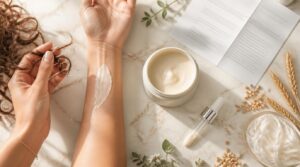
Read the label first. Ingredients appear in descending concentration, so the first several ingredients reveal the formula’s main base and protein sources for hair strand fortification and hair porosity balance.
Before full use, patch test a quarter-sized area on your inner forearm or elbow bend twice daily for seven to 10 days. Apply it as directed. Stop for burning, swelling, rash, blistering, or worsening redness.
For gentle options, explore natural skincare products for teenagers formulated without added fragrance.
Shampoo and Towel-Dry Hair
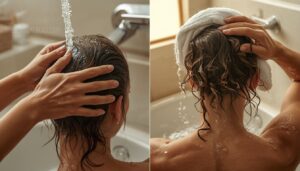
Start with warm or cool water. Hot water can dry the scalp and roughen the hair cuticle, which works against a protein treatment for damaged hair.
Use a 5–10 cent amount of shampoo, massage the scalp for about 30 seconds, then rinse thoroughly. Gently squeeze excess water from scalp to ends. Towel-dry with microfiber or a soft cotton T-shirt. Blot, don’t rub, until hair is damp, not dripping.
Apply Evenly in Sections
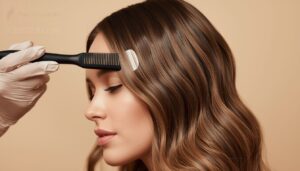
Apply Evenly in Sections: sectioning hair properly into four to six parts helps even product distribution. Applying in sections, use a tint brush to place protein treatment one inch below the scalp, then work toward the ends. Make sure root-to-end coverage without overload. A wide-tooth comb spreads the hair mask, helping hair cuticle repair and hair damage repair on each strand.
Follow The Recommended Processing Time

Processing time matters. A protein treatment needs time for hair damage repair. Too long can make strands stiff.
- Mild damage: shortest label time.
- Moderate damage: 10–20 minutes.
- Severe damage: up to 30 minutes if directed.
- Use moderate hooded heat when the hair mask permits it.
Product-specific guidelines: ApHogee Two-Minute requires two minutes. Deep conditioning won’t correct protein overload either.
Rinse and Deep Condition

Rinse thoroughly with lukewarm water, then finish with a cool-water rinse to support conditioner performance.
| Step | What to do | Why it helps |
|---|---|---|
| Rinse | Remove treatment fully | Prevents stiffness |
| Condition | Use mid-lengths to ends | Restores softness |
| Comb | Distribute with a wide-tooth comb | Covers strands evenly |
Deep condition weekly, or after stronger rinseout treatments. Keep conditioner off your scalp for balanced hair.
Protein Treatment Frequency and Overuse Risks

Protein treatments work best when you use them with restraint. Your hair’s damage level, texture, and current condition all affect how often it needs one. Use the following guidelines to build a routine that strengthens hair without overloading it.
Start With Occasional Treatments
Use a Beginner protein routine every 4–6 weeks. This Initial treatment schedule lets you assess hair response while you start slowly with treatments.
- Use lower-strength OTC formulas first
- Follow the label exactly
- Keep a simple hair journal
Start With Occasional Treatments to support hair repair, hair damage prevention, and hair elasticity improvement. This helps you avoid protein overload.
Adjust Frequency by Damage
Your schedule should follow damage. Weekly for Severe Damage suits freshly bleached or heat-stressed hair during a post-processing recovery plan. Choose Biweekly for Moderate damage, then Monthly for Healthy hair.
Track elasticity and breakage. A Gradual Reduction Schedule, from weekly to biweekly to monthly, helps with protein treatment: hair damage prevention, hair breakage prevention, hair elasticity improvement, and hair moisture retention.
Alternate Protein With Moisture
Build a protein-moisture balance as damage improves. Try a Weekly rotation method: use a moisture mask one week, then a light protein treatment the next. This helps hair protein replenishment without sacrificing hair moisture.
Monitor hair response. Strong, flexible strands suggest good hair conditioning balance. A Combination treatment approach, protein followed by moisture, can support hair breakage prevention. Make a Seasonal schedule adjustment as sun, swimming, dry air, and humidity change your needs.
Watch for Stiff, Straw-Like Hair
As you rotate moisture and protein, watch how your hair feels. Stiff, straw-like hair often signals protein overload, dryness, or both. It may look dull, frizz easily, clump together, and feel rough instead of flexible.
Repeat the hair elasticity test. Healthy strands stretch slightly, then recover. Loss of elasticity or a rigid feel means your moisture-protein balance needs attention. Protein can support cuticle repair, but hydration keeps repaired strands supple.
Reduce Use if Breakage Worsens
If breakage increases after a protein treatment, pause protein use. Stiffness, reduced elasticity, extra shedding, and rough detangling are warning signs of overload.
Focus on moisture masks and water-based conditioning for several wash cycles. This restores flexibility and reduces snapping during brushing.
Delay your next treatment, then retest hair for softness and stretch. If it improves, restart with a lighter formula or lower frequency.
Frequently Asked Questions (FAQs)
Can protein treatments repair damaged hair?
Yes. Protein treatments provide temporary repair by filling cuticle gaps and reinforcing keratin in weakened strands. They can reduce breakage and shedding, smooth frizz, and improve shine, but won’t fully reverse severe hair chemical damage.
What is the best protein treatment for damaged hair?
Measure twice, cut once: an ingredient comparison guide names ApHogee best protein treatment for damaged hair repair and hair breakage.
Salon vs at-home, budget-friendly options include natural protein sources, DIY treatment recipes, and hair strength.
What is the best treatment for extremely damaged hair?
For extremely damaged hair, choose a professional hair treatment after a hair porosity assessment. Use a keratin mask, timed with collagen infusion methods and Vitamin B5 conditioning. This protein treatment rebuilds damaged hair without rigidity.
Which protein treatment is best for hair?
The best protein treatment for hair matches your texture and damage: choose keratin for breakage, collagen for elasticity, or a lightweight leave-in. For damaged hair, use weekly, follow product texture preference, then alternate with moisture.
Do and don’ts after protein treatment?
Treat the first 48 hours after protein treatment like a no-touch quarantine: don’t wash, heat-style, or tightly tie hair. Use sulfate-free cleanser afterward, moisturize cuticle and cortex, sleep on satin, limit washing to prevent breakage.
What is the best hair treatment for severely damaged hair?
For severe damage, combine bond repair solutions with a keratin or collagen protein treatment. Follow with deep conditioning routines, moisture balance, heat protection strategies, and scalp health focus. This strengthens hair, limits breakage, and slows split ends.
Can I make protein treatments at home?
Yes, limitless repair awaits in DIY protein mask recipes: egg, yogurt, coconut milk, and oil. Apply homemade protein treatment, rinse, then deep condition.
Avoid protein overload; hydrolysed proteins offer consistency, while protein-rich diet helps growth.
Are protein treatments safe during pregnancy?
Most protein treatments are low-risk in pregnancy because absorption is minimal. Choose formaldehyde-free, paraben-free keratin or collagen formulas, patch test first, and consult your OB before use, especially with hormonal hair changes or uncertain ingredients.
Do protein treatments affect hair color?
Your color won’t usually shift; pigment appearance can change. A protein treatment affects surface light reflection: cuticle repair in porous, color-treated strands after hair dye damage helps hair color protection; clarifying formulas may fade dye.
Can children use protein treatments?
Children can use gentle protein treatments from age five. Choose pH-balanced formulas, patch test, and use monthly. Apply without heat, condition, and monitor stiffness.
This hair care routine helps with hair strengthening, hydration, and hair-damage repair.
Conclusion
After bleaching, Maya’s hair stretched and broke when she detangled it. She used a protein treatment for damaged hair once, followed it with moisture mask, and paused heat styling for a week. Her strands felt firmer, not rigid. That distinction matters.
Treat protein as a targeted repair tool, not a daily rescue. Listen to texture, adjust the schedule, and protect new growth. Healthy hair is built through measured care, one wash day at a time.
- https://www.vogue.com/article/does-your-hair-need-protein
- https://www.natuurlijkehaarverzorging.nl/en/hydrolysed-protein-for-your-hair
- https://beautycluboutlet.com/blogs/curly-hair-help/what-are-the-benefits-of-protein-treatments-1
- https://www.makingcosmetics.com/blog-15.html?lang=en_US
- https://www.curlytools.com/en/blogs/krullend-haar/beste-haarproducten-met-proteine