This site is supported by our readers. We may earn a commission, at no cost to you, if you purchase through links.
A coarse beard isn’t a grooming failure — it’s biology working exactly as designed. Testosterone converts inside the follicle into dihydrotestosterone (DHT), a compound that signals your hair to grow thicker, denser, and rougher with every passing year. Add a tightly coiled strand structure that creates constant friction against itself, and you’ve got a beard that scratches like steel wool whether it’s two weeks or two months long.
The problem runs deeper than surface dryness. Your beard cuticles — the overlapping scales that coat each strand — lift and stay raised, letting moisture escape faster than your skin can replace it. Hard water makes it worse, coating each strand with a calcium film that no amount of conditioner can penetrate on its own.
The good news: softening a coarse beard isn’t complicated. It just takes the right sequence, the right ingredients, and a few minutes of consistency.
Table Of Contents
Key Takeaways
- Coarse beard texture is driven by DHT converting testosterone inside follicles, raised cuticles losing moisture fast, coiled strand friction, uneven sebum distribution, and hard water mineral buildup — fix the cause, not just the symptom.
- Washing two to three times weekly with a sulfate-free cleanser, using lukewarm water, applying beard oil daily, sealing with balm, and brushing with boar bristles in that exact order is what actually produces lasting softness.
- Jojoba mimics your skin’s natural sebum, argan smooths frizz, shea butter locks in moisture, glycerin pulls hydration from the air, and hydrolyzed keratin fills damaged cuticle gaps — these five ingredients do the real work inside your products.
- Diet, sleep quality, stress levels, and age all directly affect beard texture because they control testosterone output, sebum production, and follicle activity — your grooming routine can only go as far as your body lets it.
Why Beard Hair Feels Coarse

Beard hair doesn’t go coarse by accident — your body is actually behind most of it. Everything from your hormones to the water coming out of your tap plays a role in how your beard feels day to day. Here’s a breakdown of the main reasons your beard hair is fighting you.
If your beard is also causing discomfort, understanding why beard hair hurts and what causes beard pain can help you connect the dots between texture, coarseness, and irritation.
Testosterone and Thicker Strands
Testosterone doesn’t just grow your beard — it reshapes it. Once converted into dihydrotestosterone (DHT) by the enzyme 5-alpha-reductase, it binds aggressively to androgen receptors inside your follicles, shifting them toward thicker, coarser output.
Your follicles’ androgen receptor sensitivity determines how strongly they respond. Higher sensitivity means denser, rougher strands — which is why two men with identical hormone levels can have completely different beard textures.
This same receptor sensitivity varies widely across ethnic backgrounds, a genetic link explored in depth in this breakdown of beard growth genetics and ethnicity.
This receptor-driven variation explains why the myth that Native Americans can’t grow facial hair ignores real genetic diversity across tribes.
Coiled Beard Hair Friction
Strand structure compounds what DHT started. Tightly coiled 4B and 4C facial hair creates constant surface-to-surface drag — coils press, catch, and interlock with neighboring strands all day.
That friction isn’t just uncomfortable. It creates mechanical stress points where your beard snarls against collar fabric, pillow surfaces overnight, and itself during brushing — leaving hair wiry, tangled, and harder to manage without proper hydration. Understanding why beard hair is wiry can help you better manage these textures.
Dry Cuticles and Porosity
Friction damages more than comfort — it lifts the cuticle layer, exposing the inner cortex to moisture loss. Once those scales are raised, you’re dealing with porosity-driven dryness: hair absorbs water fast but can’t hold it.
High porosity retention is the real problem. Your beard drinks in moisture, then loses it just as quickly. A good beard conditioner reseals that surface and locks softness in.
Uneven Sebum Distribution
Porosity isn’t the only culprit. Your skin’s sebum distribution is naturally uneven — the T-zone produces more oil than your cheeks and jaw, so beard patches in low-gland areas get less coating.
After washing, those drier sections rebuild slower, leaving you with alternating soft and rough spots. That patchy moisture barrier is why your beard never feels consistent.
Hard Water Effects
Check your faucets — if you see white, chalky scale around the spout, your water is leaving mineral film buildup on your beard too. Those calcium and magnesium deposits coat each strand, reducing lather, blocking conditioners from penetrating, and leaving hair rough and dull.
That film also dries out the skin underneath, making your beard feel scratchier than it actually is. Rinse with lukewarm water and condition your beard immediately after every wash to offset it.
Step-by-Step Beard Softening Routine
Getting your beard soft isn’t complicated — it just comes down to doing the right things in the right order. Once you lock in a consistent routine, the difference shows up fast. Here’s exactly what your daily and weekly process should look like.
Wash Two to Three Times Weekly
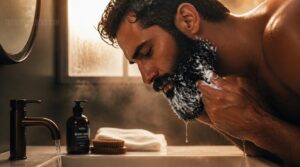
Washing your beard two to three times weekly removes product buildup and sweat without stripping the natural oils your skin works hard to produce.
For coarser beard types, pairing this routine with techniques like straightening black beard hair can make washing and styling even more manageable.
- Space washes evenly — Monday, Thursday, Saturday works well
- Rinse with water on workout days instead of shampooing
- Drop to twice weekly during dry winter months
- Always use a sulfate-free beard wash
- Condition immediately after every cleanse
Use Lukewarm Water
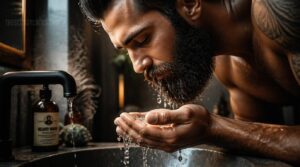
Temperature matters more than most guys realize. Aim for 95–104°F — warm enough to relax the cuticle layer without dehydrating your strands. Hot water strips moisture fast, leaving beard hair stiff and brittle before you even reach for product.
Cooler water keeps the shaft receptive, so your beard wash rinses clean and your oils absorb evenly right after.
Apply Beard Oil Daily

Beard oil is the backbone of any serious beard softening routine. After washing, rub 3–5 drops between your palms and massage it into your beard and the skin underneath — that skin contact is what prevents beardruff and stops the itch before it starts.
Daily use keeps moisture levels consistent, so your beard feels soft every day, not just post-wash.
Seal With Balm or Butter
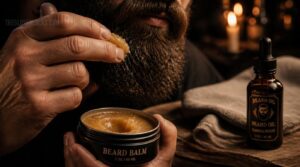
Oil hydrates — beard balm seals it in. Think of it as a cap on a bottle: take it off and everything evaporates fast.
- Anhydrous balms contain no water, so moisture stays exactly where you put it
- Shea butter conditions while beeswax shapes and holds
- Always layer balm over oil, never under it
- Too firm? Melt it down and mix in more oil
Brush With Boar Bristles

Once your balm is locked in, grab your boar bristle brush. Those natural bristles distribute sebum and product from root to tip — smoothing frizz and stimulating the skin underneath.
| Step | Why It Works |
|---|---|
| Brush after oiling | Moves product evenly through strands |
| Brush in growth direction | Prevents breakage and tames flyaways |
| Use daily | Builds consistent sebum distribution |
| Detangle with comb first | Boar bristles aren’t built for knots |
Best Ingredients for Softer Beards
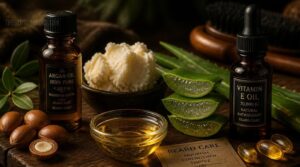
Not all beard products are built the same — the ingredients inside them are what actually do the heavy lifting. Once you know what to look for on that label, you can stop guessing and start picking products that work for your beard specifically. Here are the five ingredients worth putting your money behind.
Jojoba Oil for Hydration
Jojoba oil is your beard’s closest ally — it mimics human sebum almost perfectly, which means your skin recognizes it and absorbs it fast without feeling greasy or clogged.
That sebum mimicry does real work: it seals your moisture barrier, keeping hydration locked into each strand while shielding against environmental dryness. A few drops of jojoba beard oil daily is all it takes to consistently hydrate and soften coarse hair.
Argan Oil for Frizz
Where jojoba provides hydration, argan oil fights frizz and roughness. Its oleic and linoleic fatty acids coat each strand, smoothing raised cuticle edges that catch light wrong and cause flyaways.
That coating also acts as a humidity moisture barrier — limiting how much moisture your beard absorbs in humid air, which stops the puffing and fraying. A few drops delivers lightweight lubrication without grease.
Shea Butter for Protection
Shea butter is the heavyweight in your softening arsenal. Unlike oils that absorb quickly, it forms a physical occlusive barrier that locks moisture in and keeps harsh elements out — including mild UV exposure, thanks to its natural cinnamic acid compounds.
It’s loaded with vitamin E and fatty acids that soothe irritated skin beneath the beard while conditioning every strand from root to tip.
Glycerin for Moisture
Where shea butter locks things down on the outside, glycerin works from within — it’s a humectant, meaning it pulls water from the air directly into your hair and skin. In moderate humidity, that effect is strong.
Pair it with an emollient or occlusive, though, so moisture doesn’t evaporate right back out. Your beard stays flexible, not brittle.
Keratin for Cuticle Repair
Think of your hair cuticle as overlapping roof shingles — when they lift, everything underneath dries out fast. Hydrolyzed keratin breaks the protein into smaller pieces that fill those gaps, smoothing the surface so strands slide past each other instead of snagging.
Hydrolyzed keratin fills lifted cuticle gaps like mortar between shingles, letting strands glide instead of snag
Pair it with an oil or butter. Keratin takes care of the cuticle layer repair; lipids provide the comfort. That combination is what actually makes your beard feel soft.
Top 5 Beard Conditioning Products
Knowing the right ingredients is only half the battle — you still need products that actually deliver them. The market’s crowded, so I’ve narrowed it down to five that consistently perform for coarse, coiled beard hair. Here’s what’s worth your money.
1. Jack Black Beard Conditioning Oil
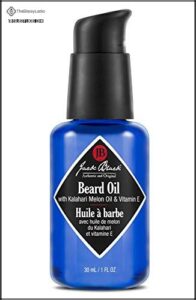
Jack Black Beard Conditioning Oil earns its price tag. The plum oil and argan formula absorbs fast — no greasy residue, just softer, more manageable hair by the next morning. Jojoba esters mimic your skin’s natural sebum, so it hydrates without buildup. Dermatologist-tested, free of synthetic fragrances and parabens.
Apply 2–4 drops to damp beard skin after showering, then work it down to the roots. The 1 oz bottle runs small, so stock a backup.
| Best For | Anyone with a coarse or unruly beard who wants a clean, lightweight oil that hydrates without leaving a greasy film. |
|---|---|
| Hair Softening | Plum oil blend |
| Skin Moisturizing | Facial & skin hydration |
| Fragrance | Mild scent |
| Natural Ingredients | Plum oil |
| Frizz Control | Improves manageability |
| Shine Enhancement | Healthy shine |
| Additional Features |
|
- Absorbs quickly with no greasy residue, leaving hair soft and manageable
- Dermatologist-tested and free of synthetic fragrances, parabens, and colorants
- Moisturizes both the beard and the skin underneath for all-day comfort
- Higher price point than most beard oils on the market
- The 1 oz bottle is small and may need frequent reordering
- Has a mild scent, which may not work for those who prefer fully unscented products
2. Every Man Jack Vanilla Cedar Beard Oil
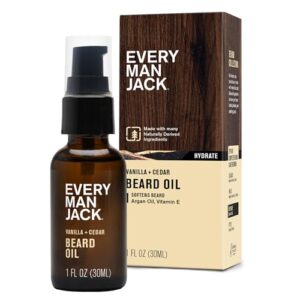
Every Man Jack’s Vanilla Cedar Beard Oil is the budget-friendly pick that punches above its price point. The argan and vitamin E mix absorbs quickly, softens coarse strands, and cuts frizz without leaving your beard feeling greasy.
The vanilla-cedarwood scent is warm and masculine — present without being loud. Pump once into your palm, work it through a damp beard after washing, and pair it with a balm to lock in that moisture.
| Best For | Guys on a budget who want a natural, fast-absorbing oil that tames coarse beard hair without any greasy residue. |
|---|---|
| Hair Softening | Argan & Shea Butter |
| Skin Moisturizing | Reduces dryness & itch |
| Fragrance | Vanilla & Cedarwood |
| Natural Ingredients | Argan, Borage & Vitamin E |
| Frizz Control | Improves manageability |
| Shine Enhancement | Natural shine |
| Additional Features |
|
- Argan oil and vitamin E absorb quickly, softening even wiry strands without weighing them down
- The vanilla-cedarwood scent is warm and subtle — great for daily wear without overwhelming
- B Corp Certified and made in the USA, so you know what you’re putting on your skin
- The scent can fade pretty fast, so don’t expect it to last all day
- The pump can be a bit aggressive and release more product than you need
- Guys with thicker or drier beards may find they need to apply more to get the full moisturizing effect
3. Biotin wave shampoo and brush kit
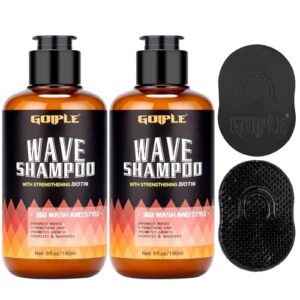
Wave kits aren’t just for scalp hair — the biotin-infused formula here works hard on coarse beard strands too. Biotin helps with keratin production, while glycerin pulls moisture into each shaft. The included brush helps distribute lather evenly and trains your beard’s growth direction.
Use it two to three times weekly. The sulfate-free wash cleans without stripping your natural oils, so your beard stays soft between sessions rather than drying out by midday.
| Best For | Men with coarse or curly hair who want to define 360 waves while keeping their scalp and beard hydrated and healthy. |
|---|---|
| Hair Softening | Biotin-infused formula |
| Skin Moisturizing | Locks in hydration |
| Fragrance | Light scent |
| Natural Ingredients | Biotin |
| Frizz Control | Reduces frizz |
| Shine Enhancement | Wave definition |
| Additional Features |
|
- Biotin-infused, sulfate-free formula cleanses without stripping natural oils, keeping hair soft and moisturized
- Comes as a complete starter kit with shampoo bottles and textured wave combs, so you have everything you need right away
- Works double duty — effective for both scalp waves and beard training when used consistently
- Results vary depending on hair type, length, and whether the technique is applied correctly
- At 6oz per bottle, the supply may run out faster for those washing frequently
- Bundle may not include a high-quality durag, so you might need to purchase one separately for best wave results
4. Bevel Moisturizing Beard Oil
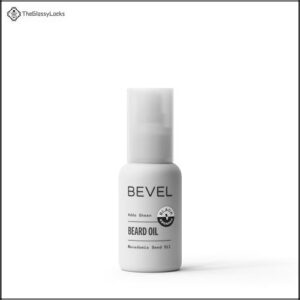
Bevel’s formula punches above its weight for a 1 oz bottle. Jojoba, argan, macadamia seed, and grapeseed oils work together to seal the cuticle and smooth coarse strands without leaving that heavy, greasy coat behind — just a clean, natural sheen.
A few drops massaged in daily keeps dryness and frizz in check, and the formula absorbs fast enough that you won’t be patting your face all morning. Sensitive skin types will appreciate the dermatologist-tested, alcohol-free formula too.
| Best For | Men with coarse or sensitive facial hair who want a lightweight, non-greasy oil that hydrates, reduces frizz, and soothes the skin underneath. |
|---|---|
| Hair Softening | 5-oil complex |
| Skin Moisturizing | Soothes irritated skin |
| Fragrance | Subtle fragrance |
| Natural Ingredients | Jojoba & Argan oils |
| Frizz Control | Clinically reduces frizz |
| Shine Enhancement | Adds sheen & shine |
| Additional Features |
|
- Blend of five natural oils (jojoba, argan, grapeseed, macadamia seed, and evening primrose) deeply nourishes without clogging pores
- Dermatologist-tested and gentle enough for sensitive, breakout-prone skin
- Absorbs quickly and leaves a clean, natural sheen rather than a heavy or oily residue
- At 1 oz, the bottle is small and may not last long for heavy daily users relative to its price
- The subtle fragrance may feel underwhelming for those who prefer a more pronounced scent
- Works best as part of a full routine — you’ll get the most out of it paired with a compatible beard softener and balm
5. Blind Barber Rejuvenating Face Beard Oil
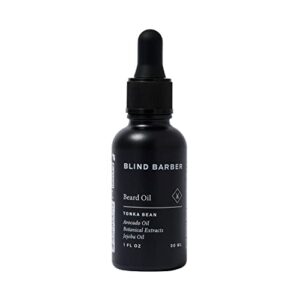
The Blind Barber Rejuvenating Face & Beard Oil earns its spot for one reason: it does double duty. Sweet almond protein, jojoba, and shea butter oil work together to soften coarse strands while the avocado and sunflower oils nourish the skin underneath — clean-shaven or fully bearded.
The tonka bean scent is the quiet differentiator here. Warm vanilla-almond, subtle enough for daily wear, never competing with your cologne. Warm a few drops between your palms, press it in root to tip, and you’re set.
| Best For | Men who want a single oil that works for both beard conditioning and bare-skin hydration, especially those who prefer a light, everyday scent. |
|---|---|
| Hair Softening | Almond protein & jojoba |
| Skin Moisturizing | Prevents skin dryness |
| Fragrance | Tonka bean vanilla |
| Natural Ingredients | Sweet almond & shea |
| Frizz Control | Tames hair texture |
| Shine Enhancement | Natural luster |
| Additional Features |
|
- Softens coarse beard hair and hydrates the skin underneath, making it useful whether you’re growing a beard or freshly shaved
- The tonka bean scent is warm and subtle — easy to wear daily without clashing with cologne
- Nutrient-rich blend of sweet almond protein, jojoba, and shea butter absorbs without leaving a greasy feel
- The scent is on the lighter side, so if you love a bold fragrance, it might disappoint
- Beard growth results can vary — don’t expect miracles, just support
- Contains botanical oils that could irritate skin with sensitivities to plant-based ingredients
Frequently Asked Questions (FAQs)
Can diet affect beard softness and texture?
Yes, what you eat shows up in your beard. Low protein, dehydration, and poor fat intake make strands brittle and rough. Omega-3s, zinc, and biotin feed the follicle from the inside out.
How does sleep quality impact beard health?
Poor sleep tanks your beard. Low testosterone from sleep loss slows follicle activity, while cortisol spikes shrink hair follicles. One study found 48 hours of sleep deprivation cut beard growth by 19%.
If you’re already dealing with uneven growth from puberty, skimping on sleep only makes patchiness worse, so pairing better rest with proven tips to fix a patchy beard can speed things along.
Should you soften your beard before trimming?
Prepare the canvas before you paint. Softening your beard before trimming reduces snapping and clumping, giving you cleaner cuts. A warm-water rinse makes hairs pliable — so you trim what you see, not what springs back.
Does beard hair change texture with age?
Yes, it does. Testosterone and DHT levels shift as you age, altering how strands grow in. Gray hairs arrive drier and wirier, and your skin produces less sebum — making the whole beard feel rougher.
Can stress cause beard hair to feel coarser?
Stress raises cortisol, which disrupts sebum balance and pulls moisture from your hair shaft. The result? Drier, rougher strands that feel scratchy against the skin — even without any change in your grooming routine.
Conclusion
Marcus spent three weeks convinced his beard was a lost cause — coarse, brittle, scratching his girlfriend’s face every time. One bottle of jojoba oil and a boar bristle brush later, he texted me: "It actually works."
That’s the thing about finding the best way to soften and condition beard hair — it’s not about products alone. It’s about order, consistency, and understanding what your beard actually needs. Give it two weeks. You’ll feel the difference.
- https://www.doctornicks.com/blogs/news/are-jojoba-and-argan-oil-bad-for-beards
- https://hairlust.com/blogs/blog/beard-shampoo-how-to-wash-your-beard
- https://www.zeusbeard.com/blogs/zeus-beard-blog/why-beard-shampoo-is-a-must-and-hair-shampoo-won-t-cut-it
- https://www.menshealth.com/grooming/g42285189/best-beard-shampoo
- https://1821manmade.com/blogs/behind-the-barrel/how-to-soften-beard-hair