This site is supported by our readers. We may earn a commission, at no cost to you, if you purchase through links. This content is for general informational and educational purposes only and is not a substitute for professional medical, dermatological, or nutritional advice.

Your skin has a tiny closing window, and most people miss it every single day. Step out of the shower, walk to grab your phone, answer a text, and by the time you reach for your moisturizer, half your skin’s natural water has already evaporated into the air. That gap between cleansing and moisturizing matters more than the product sitting in your jar.
Here’s the thing estheticians know that rarely makes it into skincare ads: timing changes how well your moisturizer works, not just what’s in the bottle. Damp skin absorbs ingredients differently than dry skin does, and your body’s repair cycles shift between morning and night too.
Get the timing right, and you’ll lock in hydration that actually lasts, protect your barrier before it weakens, and stop wasting good product on skin that’s already lost its moisture edge.
Table Of Contents
- Key Takeaways
- Best Time of Day to Moisturize
- Follow The Three-Minute Moisturizer Rule
- Apply Moisturizer During Morning Skincare
- Apply Moisturizer Before Bed
- Layer Moisturizer in The Right Order
- Reapply Moisturizer When Skin Needs It
- Adjust Timing for Your Skin
- Frequently Asked Questions (FAQs)
- Is it better to moisturize my face at night or morning?
- What is the 3 minute rule for moisturizer?
- Should you rub in moisturizer or let it sit?
- How long do you leave moisturizer on your face?
- Can you moisturize too many times in a day?
- Does skin type change how often you moisturize?
- Should moisturizer be applied under or over makeup?
- Is it bad to skip moisturizer some days?
- Can you use the same moisturizer year-round?
- Conclusion
Key Takeaways
- Apply moisturizer within about three to five minutes of cleansing, while your skin is still damp, since that’s when it absorbs ingredients best and before water starts evaporating from your skin.
- Pat your skin mostly dry instead of rubbing it, leaving a thin layer of moisture behind so humectants like hyaluronic acid have something to grab onto.
- Your skin needs different things morning versus night, so use a lightweight formula with SPF prep during the day and a richer, more emollient cream at night when your body naturally repairs itself.
- Layer your products in the right order, cleanser, then toner and serum, then moisturizer, then oil, and sunscreen last, since getting this sequence wrong can block your best ingredients from working.
Best Time of Day to Moisturize

Timing really is everything for moisturizer doing its job. Get it wrong, and you’re basically wasting product on skin that’s already lost its chance to soak it up. Here’s what you need to know about when, and how soon, to apply it.
The general rule is to smooth it on within a minute or two of cleansing, while skin is still slightly damp, and this guide to properly applying facial moisturizer breaks down that window step by step.
Morning and Night Applications
Twice a day, your skin asks for something different. Your morning hydration boost preps skin for makeup and daytime defense, while your night repair ritual works with skin’s natural overnight recovery. Both matter equally.
Apply moisturizer after cleansing, morning and night, within about five minutes of washing your face. That simple habit keeps hydration locked in when your skin needs it most.
Just as consistent morning and evening routines help strengthen positive habits through repetition, pairing your moisturizer application with an existing daily ritual makes it easier to stick with long term.
Immediately After Cleansing
Here’s the thing about clean skin: it’s a little vulnerable right after washing. Your pH shifts upward, and moisture starts evaporating fast. That’s why you should apply moisturizer after cleansing, ideally within 5 minutes of washing, to catch skin during its moisture retention peak and kickstart real barrier repair.
While Skin Remains Damp
Timing is only half the story. How wet your skin is when you moisturize matters just as much.
Skip the dripping-wet face and the bone-dry one. Gently pat yourself mostly dry, leaving a thin film of moisture behind. That damp skin application boosts absorption, giving humectants like hyaluronic acid something to grab onto within that same three-minute window after washing.
Follow The Three-Minute Moisturizer Rule

Here’s a little secret most people skip right past: the minutes right after you cleanse actually matter. Your skin sends out a narrow window where it’s primed and ready, and missing it means working against yourself. Let’s break down exactly what to do in that window and why each step earns its place.
Why Timing Matters
Ever notice how skin feels tight minutes after washing? That’s your cue. Your face has a natural skin hydration rhythm, and transepidermal water loss kicks in fast.
Apply moisturizer within 5 minutes of washing, ideally to damp skin, so humectant activation actually works.
Whether it’s your morning moisturizer routine or nighttime moisturizer application, timing helps barrier repair and keeps hydration locked where it belongs.
Pat Skin Mostly Dry
Grab a soft towel, not that rough washcloth. Gentle skin patting beats rubbing every time, especially for dry or reactive skin.
Pat, don’t drag, leaving skin damp for damp skin preparation.
- Use a clean, soft towel
- Pat, never rub
- Leave skin slightly damp
- Skip scrub brushes
- Move straight to moisturizer
This moisture retention method sets up Apply Moisturizer Within Three Minutes of Washing Your Skin perfectly.
Prevent Transepidermal Water Loss
Once your face meets air, water starts sneaking out through your skin’s outer layer, a process called transepidermal water loss. Cleansing strips away oils that normally slow this down, so applying moisturizer after cleansing, right onto damp skin, helps strengthen barrier lipids and form an occlusive layer.
Moisturize twice daily and you’re locking moisture in before it escapes.
Maximize Humectant Performance
Since hyaluronic acid works by pulling water toward itself, applying moisturizer to damp skin gives it more to grab. That’s humectant absorption at its best, within three minutes of washing your skin.
Even if you’re oily or breakout-prone, don’t skip this step—understanding whether moisturizer causes clogged pores can help you pick the right formula instead of avoiding hydration altogether.
Try humectant layering: a hydrating serum first, moisturizer after shower to seal it in. This humectant pairing boosts stability and teamwork, so your skin actually holds onto that hydration instead of losing it by lunchtime.
Apply Moisturizer During Morning Skincare

Mornings set the tone for how your skin reacts to the day ahead, so this step deserves a little intention. It’s not just about slapping on a lotion and heading out the door. Here’s what your morning moisturizing routine should actually look like, step by step.
Moisturize After Cleansing
Your skin is basically thirsty right now. Apply moisturizer after cleansing, while still damp, within three minutes of washing your skin.
- Pat, don’t rub, dry
- Apply within the moisture-lock window
- Massage in gently
- Let it absorb fully
This post-cleanse hydration step triggers humectant activation, locking in water before it evaporates and setting up healthy morning skin.
Prepare Skin for Makeup
Foundation loves a hydrated canvas. Apply moisturizer in the morning right after you wash your face, then give it a minute before primer.
This is real makeup base prep: primer glides over hydrated skin, filling pores instead of clinging to dry patches. Skip a full cleanse if you did one at night (avoid overcleansing). Skipping makeup? Moisturizer alone still gives you that healthy, hydrated finish.
Support Daytime Barrier Protection
Think of your morning moisturizer as a shield, not just a drink of water. Look for multi-ceramide hydration blended with niacinamide barrier support, both work together for real skin barrier repair against wind, pollution, and daily grit.
Lightweight daytime formulas with environmental shielding ingredients keep you protected without feeling heavy under makeup, setting up strong ceramide UV protection before sunscreen even enters the picture.
Wait Before Applying Sunscreen
That ceramide shield needs a minute to settle before sunscreen joins the mix.
Give your moisturizer absorption time of at least 30 seconds, then follow the FDA’s advice: apply sunscreen 15 minutes before sun exposure.
- Prevents pilling under makeup
- Lets broad spectrum sunscreen fully bond
- Sets up your reapplication scheduling for later
That short wait makes a real difference once you’re outside.
Choose SPF 30 Protection
Once your moisturizer settles, grab a broad-spectrum sunscreen covering both UVA and UVB rays. Check the label for SPF 30 minimum, the daily baseline dermatologists recommend, and "water resistant" wording if you’ll sweat or swim (lasts 40-80 minutes).
Try L’Oréal Paris Revitalift Triple Power Day Lotion SPF 30, a moisturizer with SPF that simplifies your routine while still protecting properly.
Apply Moisturizer Before Bed

Your nighttime routine deserves just as much attention as your morning one, maybe even more. While you’re catching some sleep, your skin gets busy fixing itself, and the right moisturizer can make that process work better. Here’s what you need to know about giving your skin what it wants before you turn in for the night.
Moisturize After Evening Cleansing
Rinse your face at night, then get moisturizer on right away, while skin’s still damp. That timing matters: damp skin absorption helps hydrating ingredients sink in deeper.
This simple habit, moisturizer after evening cleansing, gives you an evening hydration boost and locks in the moisture cleansing can strip away. Don’t wait around, your skin’s asking for it now.
Support Overnight Skin Repair
Here’s the thing about bedtime: your skin isn’t just resting, it’s working. Cell mitosis peaks between 11pm and midnight, and growth hormone kicks nighttime cell regeneration into overdrive through 4am. That’s your peak repair window.
While you sleep, cell mitosis peaks and growth hormone drives skin regeneration until 4am, your body’s true repair window
Applying moisturizer before bed feeds that process, supporting collagen boost sleep delivers and giving skin what it needs for real overnight recovery.
Choose Richer Night Formulas
Not all moisturizers are built for nighttime work. Rich night formulas pack 2-3 times more emollients, creating a thicker barrier while you sleep.
Look for ceramides and squalane, they support ceramide barrier repair and lipid complex renewal.
Since skin absorbs actives better overnight, richer creams deliver ingredients deeper.
Acne-prone? Stick with non-comedogenic night formulas.
Counter Nighttime Moisture Loss
While you sleep, your skin loses more water than it does during the day. That’s nighttime transepidermal loss at work, and it’s sneaky.
Applying moisturizer to damp skin right after cleansing helps seal that moisture in before it escapes. This helps moisture retention overnight and gives your evening barrier reinforcement a real fighting chance.
Leave Moisturizer on Overnight
Skip the urge to rinse off nighttime moisturizer before bed. That leave-on time is exactly what fuels barrier repair overnight, giving humectants a full activation time to pull water into the stratum corneum.
Worried about a greasy pillowcase? Applying a thin, even layer helps pillowcase transfer reduction while still delivering overnight skin recovery, balanced sebum, and real repair while you sleep.
Layer Moisturizer in The Right Order
Timing your moisturizer is only half the battle, because the order you layer your products matters just as much. Put things on in the wrong sequence, and you could block your best ingredients from actually working. Here’s the order that gets you the most out of every product in your routine.
Cleanser Before Moisturizer

Cleanser always comes first, no shortcuts here. Washing removes sweat, oil, and buildup, creating a clean base. Pat dry, don’t rub, then apply moisturizer right away while skin’s still damp.
Why the order matters:
- Removes barriers to absorption
- Preps damp skin
- Locks in surface moisture
- Sets up every product after it
Toner and Serum First

Why does toner even matter? It restores your skin’s pH to around 5.5, the sweet spot for absorption.
Apply serum next while skin’s still damp, this boosts penetration by 25%.
| Step | Purpose |
|---|---|
| Toner | Restores pH |
| Serum | Delivers actives |
| Moisturizer | Locks in hydration |
Thin-to-thick layering keeps everything working, morning and night.
Moisturizer Before Facial Oils

Love a good face oil? Save it for last. Oil works best as a sealing step, locking in the water and humectants your moisturizer just delivered.
Skipping straight to oil means it sits on dry skin instead of trapping hydration, so moisture escapes before oil can seal it in. Pat oil on gently, give your moisturizer a minute to absorb first.
Sunscreen After Moisturizer

After facial oil comes sunscreen, always in that order. Apply moisturizer before sunscreen, then let it fully absorb.
- Wait 2-5 minutes for absorption
- Use broad-spectrum SPF 30 or higher
- Reapply every two hours outdoors
This layering keeps sunscreen sitting evenly on top, forming that protective film your skin actually needs.
Prevent Product Pilling

Ever end up with little product balls rolling off your chin? That’s pilling, and it usually means you’re rushing the process.
Use a pea-sized amount, apply thin layers, and pat gently instead of rubbing. Wait between layers so each one absorbs fully, layering water-based products first. Applying moisturizer to damp skin also helps it sink in smoothly, morning and night.
Reapply Moisturizer When Skin Needs It
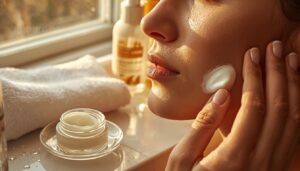
Morning and night aren’t the only times your skin asks for moisturizer. Sometimes life throws extra dryness your way, and your routine needs to catch up. Here are the moments that call for a little more moisture.
Dry or Flaky Skin
When flaky patches show up, your usual twice-daily routine isn’t enough. Boost frequency and richness right away.
- Layer a richer cream with ceramides
- Reapply after cleansing, while skin’s still damp
- Add a barrier repair oil at night
Zinc or fatty acid deficiencies can worsen flaking too, so hydration from outside matters just as much as consistency.
After Swimming or Sweating
Chlorine and sweat both strip your skin’s barrier fast, so treat pool days and workouts like any other cleanse. Apply moisturizer right after you wash your face, while skin’s still damp, since wet skin absorbs product deeper.
| Situation | Action |
|---|---|
| After swimming | Moisturize within 3 minutes |
| After sweating | Cleanse, then hydrate |
| Chlorine exposure | Repair barrier immediately |
| Damp skin | Apply while still wet |
| Delayed care | TEWL spikes fast |
Before and After Flights
Airplane cabins pull moisture from your skin fast, sometimes down to 6-20% humidity. Smooth on moisturizer the night before flying, then reapply mid-flight once skin feels tight. Pick formulas with glycerin or ceramides for real barrier reinforcement.
Landed and drained? Apply a rich, ceramide-based moisturizer immediately. Your skin recovers faster when you treat travel days like any other stripped-barrier situation.
During Cold, Dry Weather
When temperatures drop, your skin barrier takes a real hit, and winter dryness compensation becomes essential.
Apply moisturizer twice daily using ceramide-rich moisturizers for barrier function support. Layer on humectant hydration techniques like hyaluronic acid before heading out. A bedroom humidifier helps too.
Studies show skin hydration dropped from a baseline of 79 to 6, proving moisture evaporation prevention matters most in winter.
After Exfoliation
Just scrubbed away dead skin cells? You’ve got a golden minute to lock in moisture before it evaporates.
- Skin feels tight and thirsty
- Pores look clearer, more open
- Redness may briefly appear
- Products absorb noticeably faster
Wait 2-3 minutes after acids, then moisturize. This helps barrier recovery and enhanced product absorption, especially applying moisturizer after serum at night.
Adjust Timing for Your Skin

Here’s the thing: there’s no one-size-fits-all schedule for moisturizer. Your skin type calls the shots, whether you’re dealing with dryness, oil, or a stubborn breakout. Let’s break down what your routine should actually look like based on what your face is telling you.
Dry Skin Needs More
Tight, flaky skin doesn’t play by the twice-a-day rulebook. If your skin feels parched by afternoon, reapply every couple hours, especially in cold or dry weather. Reach for a thicker cream with ceramides or hyaluronic acid, always on damp skin. Consistent, generous moisture keeps your barrier strong and your skin comfortable all day long.
Oily Skin Still Needs Hydration
Shiny skin still gets thirsty. Oil and water are two separate jobs, so sebum can’t replace hydration.
Skip moisturizer and skin often overcompensates with more oil, making shine worse. Use a lightweight gel moisturizer with hyaluronic acid or niacinamide, applied to damp skin morning and night. A non-comedogenic formula keeps pores clear while restoring the water balance oily skin actually needs.
Moisturize During Breakouts
Breaking out is tempting to treat with a dry-it-out approach, but that backfires fast.
Skipping moisturizer strips your barrier support during breakouts, triggering more oil. Use gentle application techniques, just a pea-size amount massaged in, never rubbed onto active bumps. Stick with your dermatologist-recommended moisturizer twice daily, balancing hydration and oil control without over-moisturizing.
Choose Non-Comedogenic Formulas
Since gentle formula choices matter mid-breakout, check labels before buying. Look for pore-friendly labels reading "noncomedogenic moisturizer" or "acne-safe."
Ingredient safety check tip: scan for non-clogging oils.
- Squalane
- Jojoba oil
- Niacinamide
A fragrance-free moisturizer suits sensitive skin best. Since labeling isn’t FDA-regulated, reviewing ingredients yourself, morning and night, keeps your routine trustworthy after cleansing.
Watch for Barrier Damage
Reading ingredient labels only gets you so far. Your skin will tell you when something’s off, so pay attention.
Watch for tightness after washing, burning within 30 seconds of applying actives, or itching that lingers. These are real sensory warning signs of barrier-compromised skin, and they call for gentler, richer products, not more exfoliation.
Frequently Asked Questions (FAQs)
Is it better to moisturize my face at night or morning?
Honestly, both matter. Morning hydration boost preps skin for SPF layering, while nighttime repair focus works with your skin’s natural overnight recovery. Apply moisturizer after cleansing on slightly damp skin either time for best absorption.
What is the 3 minute rule for moisturizer?
The three-minute rule means applying moisturizer while skin is still damp after cleansing, before transepidermal water loss kicks in. This locks in hydration and boosts humectant absorption, whether it’s your morning routine or moisturizer before bed.
Should you rub in moisturizer or let it sit?
Go with gentle patting, not rubbing. Use your fingertips in light circular motions, then let moisturizer absorb into damp skin instead of forcing it in, this protects your barrier while boosting hydration whether you’re doing your morning or evening routine.
How long do you leave moisturizer on your face?
Funny how a "quick step" turns into an eternity when you’re staring in the mirror. Give it 30 seconds to a minute before makeup or sunscreen, since damp-skin absorption happens fast and rushing it only causes pilling.
Can you moisturize too many times in a day?
Yes, and it can backfire fast. Signs of overuse include clogged pores, excess oiliness, and slow absorption. Stick to morning and night, do a skin comfort check, and adjust frequency rather than moisturizing after every hand wash.
Does skin type change how often you moisturize?
Absolutely, your skin type sets the rhythm. Dry skin loses moisture fast, needing richer creams more often, while oily skin tolerates less frequent hydration.
Combination skin often needs extra care on drier cheeks, adjusting for season and barrier repair along the way.
Should moisturizer be applied under or over makeup?
Under, always. Apply moisturizer under foundation after serum, wait a few minutes to avoid pilling, then layer sunscreen and makeup. Moisturizer over makeup risks smudging your whole look, so save skipped-makeup days for extra moisture instead.
Is it bad to skip moisturizer some days?
Occasional skips won’t wreck your skin, but making a habit of it can. Watch for tightness or flaking, especially on oily skin, since even oily types need hydration to keep their barrier protected and comfortable.
Can you use the same moisturizer year-round?
Sticking with one fragrance-free moisturizer works fine if you adjust texture seasonally, a lighter formula with sunscreen for summer, a richer cream or night-specific option for winter, supporting humidity-responsive moisturizing and better skin barrier adaptation year-round.
Conclusion
What’s three minutes really worth? Enough to change how your skin ages.
The best time of day to apply facial moisturizer isn’t some rigid rule, it’s simply catching skin while it’s damp, morning and night, every single time.
Your barrier remembers every choice you make. Treat that small window with care, and hydrated, healthy skin stops being a hope. It becomes your everyday normal, quietly, reliably, yours.