This site is supported by our readers. We may earn a commission, at no cost to you, if you purchase through links. This content is for general informational and educational purposes only and is not a substitute for professional medical, dermatological, or nutritional advice.

Most people who switch to a silicone face scrubber notice something unexpected: their skin feels cleaner, but also calmer. That’s not what you’d expect from a cleansing device, given how aggressive traditional scrubs can be. Silicone bristles move differently than nylon or microfiber, distributing pressure more evenly and skipping the micro-tears that leave skin reactive.
The catch is that how you use it matters as much as which one you buy. Speed, pressure, and timing all affect what your skin actually gets out of each session.
Get those variables right, and you’ve got a tool that works with your skin’s natural renewal cycle. Get them wrong, and even the gentlest scrubber can cause more friction than it solves.
Table Of Contents
- Key Takeaways
- Choose The Right Silicone Face Scrubber
- How to Use a Silicone Face Scrubber
- How Often Should You Use It?
- Adjust Use for Your Skin Type
- Combine Scrubbers With Active Ingredients Safely
- Avoid Common Silicone Scrubber Mistakes
- Clean and Store Your Scrubber Properly
- Frequently Asked Questions (FAQs)
- How often should I use my silicone face scrubber?
- Should you wash your face with a silicone scrubber?
- Do dermatologists recommend face scrubbers?
- Do I use face scrub before or after soap?
- Can silicone scrubbers improve product absorption into skin?
- How long do silicone face scrubbers typically last?
- Are silicone scrubbers safe during pregnancy or chemotherapy?
- Can children or teenagers use silicone face scrubbers?
- Do silicone scrubbers work on the neck and décolletage?
- Conclusion
Key Takeaways
- Silicone bristles distribute pressure evenly across your skin, which means you get a genuinely cleaner face without the micro-tears that nylon or physical scrubs typically cause.
- How often you use your scrubber matters as much as how you use it — sensitive skin caps out at 1–2 times a week, while oily skin can handle up to three sessions without triggering excess oil production.
- Never pair your scrubber with retinoids or exfoliating acids on the same day; alternating them protects your skin barrier while still letting both do their jobs.
- Sixty seconds is your hard limit per session — go longer and you’re not getting cleaner skin, you’re just stripping your barrier and inviting breakouts.
Choose The Right Silicone Face Scrubber

Not all silicone face scrubbers are built the same, and picking the wrong one can work against your skin instead of for it. A few key differences — like bristle firmness, motor strength, and silicone quality — determine whether you’ll actually see results. Here’s what to look for before you buy.
Matching your scrubber to your skin type matters just as much as the specs — a guide to gentle face scrub exfoliation techniques can help you figure out where your skin actually falls on the sensitivity spectrum.
Manual Versus Electric Models
The right choice comes down to control versus convenience.
- Manual models use hand movement to guide circular motions and gentle exfoliation.
- Electric silicone sonic brush devices offer multiple vibration settings for automated brushing intensity.
- Auto-shutoff timers help regulate your cleansing session without any guesswork.
- No power source required with manual scrubbers, keeping them travel-ready.
Pick what fits your daily routine. Just as students benefit from a data-centered reading approach to build focused habits, choosing the right scrubber helps you build a more intentional skincare routine.
Soft Bristles for Sensitive Skin
If your skin reacts to everything, bristle design matters most. Silicone scrubbers pack 50 to 60 filaments per square centimeter, each just 0.2 millimeters wide. That density makes gentle exfoliation possible without irritation.
Soft bristle flexibility lets them bend under pressure, contouring to your face. The hypoallergenic material contains no BPA or latex, making nonabrasive cleansing safe for sensitive skin.
Facial Versus Body Scrubbers
That softness carries over into the scrubber’s overall shape. A silicone face scrubber uses softer silicone and contoured edges to follow your cheeks, nose, and chin closely.
A silicone body scrubber does the opposite. Firmer silicone and larger heads cover arms, legs, and back, where skin is thicker and withstands more pressure without risking skin barrier damage.
Useful Speed and Vibration Settings
Shape matters, but so does what’s happening beneath the surface.
On a silicone sonic brush, speed settings do the heavy lifting. Low speed (around 1,500 to 2,500 vibrations per minute) suits daily gentle cleansing. High speed climbs to 7,000 VPM for deeper exfoliation. Pulse vibration modes deliver intermittent bursts that mimic circular motions, reducing fatigue without over-stimulating your skin.
Medical-Grade Silicone Benefits
The label medical-grade silicone isn’t just marketing. It means the material passed biocompatibility and regulatory safety testing for direct skin contact.
Why it matters:
- Nonporous material resists bacteria growth
- Chemical stability holds up through washing
- Soft, flexible bristles enable gentle exfoliating without micro-tears
- Durable construction outlasts nylon by years
- Hypoallergenic formulation protects your skin barrier
That’s not a minor distinction.
How to Use a Silicone Face Scrubber
Using a silicone face scrubber isn’t complicated, but technique matters more than most people realize. A few small habits — done consistently — are what separate a genuinely effective cleanse from one that just feels like it’s working. Here’s exactly how to do it right.
Wash Hands and Wet Face

Before anything touches your face, wash your hands thoroughly for at least 20 seconds. The average person touches their face over 20 times per hour, so fingertips carry more bacteria than you’d expect.
Dry your hands with a clean towel, then wet your face with warm water. Warm water helps open pores slightly, letting the silicone bristles glide without tugging.
Apply a Gentle Cleanser

Reach for a gentle, non-alcohol cleanser and squeeze out a pea-sized amount. That’s genuinely all you need.
For a full walkthrough of what to look for on labels and why it matters, this fragrance-free skincare routine for sensitive skin is a solid place to start.
With your face still damp from warm water, apply it using your fingertips:
- Dot cleanser across your forehead, nose, and chin
- Spread evenly to your cheeks and neck
- Let it sit for a breath before reaching for your silicone face scrubber
Use Light Circular Motions

Your silicone face scrubber works best with light, unhurried contact. Think less pressure, and more patience. Guide it in slow, circular motions, starting at your T-zone where oily skin usually builds up the fastest.
Around your eyes and especially cheeks, ease off. Sensitive skin genuinely benefits most from that lighter touch. If redness shows up, you’re pressing too hard.
Cleanse for Under 60 Seconds

Your silicone face scrubber needs no more than 60 seconds. Thirty works for most. Use the time division method: four quadrants, 15 seconds each:
- Forehead and upper cheeks for oily skin
- Nose and chin to hit blackhead zones
- Lower cheeks and jawline for full coverage
Gentle strokes and proper duration matter more than time. Going longer won’t mean cleaner skin.
Rinse, Dry, and Moisturize

Lukewarm water is the right call here. Hot water strips moisture faster than you’d think, so keep it comfortable. Rinse it thoroughly until no cleanser foam or film remains on your face.
Pat dry with a soft, clean towel, and don’t rub. That leftover surface moisture gets your skin ready for moisturizer to seal in hydration and strengthen your protective barrier.
How Often Should You Use It?

Frequency is where most people get it wrong — and where the real results either happen or fall apart. The good news is that the right cadence depends entirely on your skin type, not on some universal rule. Here’s how to match your usage to what your skin actually needs.
Daily Use for Balanced Skin
For balanced skin, daily use is straightforward. A balanced cleansing routine twice a day, morning and evening, keeps your skin clean without stripping it. Use your silicone face scrubber with a pH-balanced formula and a gentle massage for best results:
- Gentle daily exfoliation without irritation
- Skin hydration maintenance post-wash
- Non-irritating cleansing method for sensitive skin
- Better absorption of follow-up serums
Oily and Combination Skin Frequency
Oily and combination skin work well with a silicone face scrubber 2-3 times a week for sebum regulation. Beginners start twice weekly, then build after two weeks if skin stays calm. Your T-zone controls three sessions; drier cheeks stay at two. Seasonally, lean toward three times in summer, twice in winter. Exceed that and over-exfoliation kicks oil production into overdrive.
| Intensity Setting | T-Zone | Cheeks |
|---|---|---|
| Low/Manual | Up to 3x/week | 2x/week |
| High Vibration | 2x/week | 1-2x/week |
| Beginner | 2x/week | 2x/week |
Sensitive Skin Frequency Limits
Sensitive skin plays by different rules. Start at once a week, treating it as sensitivity threshold testing before committing to more. If your skin feels calm after 24 hours, build to 1-2 times a week. Keep each session under 30 seconds. Stinging, itching, or dryness afterward are your post-cleansing recovery signs that your barrier needs more rest.
Acne and Rosacea Considerations
Acne and rosacea skin needs a more careful approach. Limit use to 2-3 times per week, keeping sessions under 60 seconds.
- Avoid scrubbing over active breakouts or inflamed patches
- Keep pressure fingertip-light; excess force increases water loss by 25%
- Morning sessions are better tolerated than evening use for rosacea
Heat from the scrubber motor can trigger rosacea flare-ups within minutes.
Signs of Over-Exfoliation
Your skin will tell you when it’s had enough. Watch for redness and flushing, a tight dry feeling, or a stinging sensation that wasn’t there before. Peeling, flaking, and unexpected breakouts all signal a damaged skin barrier.
If spot treatments leave your skin feeling tight or irritated, this guide on how to use spot treatment without drying out your skin shows simple ways to adjust your routine.
When these signs appear, skip a few days and switch to a pH-balanced cleanser while your skin rebuilds its defenses.
Adjust Use for Your Skin Type
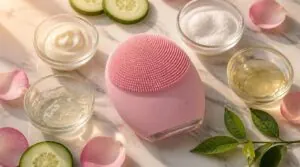
Not every face works the same way, and neither should your technique. The way you use your silicone scrubber should shift based on what your skin actually needs — not just a one-size-fits-all routine. Here’s how to tailor your approach for your specific skin type.
Normal Skin Technique
Your skin cleansing routine is forgiving when you have normal or combination skin. A silicone face scrubber fits right in:
- Keep sessions to 30 to 60 seconds
- Use light circular motions, moving upward and outward
- Pick a compatible, gentle cleanser that won’t strip
Start with twice weekly frequency. Gentle pressure application is all you need; the bristles handle the rest.
Oily Skin Technique
With excess sebum working against you, T-zone focus is your first priority. Spend extra time on the forehead, nose, and chin using higher vibration settings to cut through oil without pressing hard.
Start at twice weekly, then build toward daily use once your skin adjusts. Apply cleanser to damp skin before scrubbing, and let the bristles do the heavy lifting.
Sensitive Skin Technique
Think of your silicone face scrubber as a tool that works best when you barely push it. Start on the lowest vibration setting and cap sessions at 30 seconds. Twice weekly is the ceiling for sensitive skin tolerance.
Apply feather-light pressure and let gentle mechanical cleansing do the work. Moisturize immediately after to support skin barrier protection and prevent overexfoliation.
Acne-Prone Skin Technique
For acne-prone skin, the silicone face scrubber demands one thing: restraint. Limit use to 2-3 times per week and keep sessions under 30 seconds.
Light circular motions and minimal pressure are non-negotiable. Over-scrubbing triggers more oil production, not less. Pair with a gentle, alcohol-free cleanser and rinse the scrubber after each use to block bacteria buildup on the skin.
Skip Irritated or Broken Skin
Open wounds, active cysts, or a raw, irritated patch are clear signals to put the silicone face scrubber down. Even with excellent bacterial resistance, bristles against broken skin invite infection and stall healing. Avoid active lesions entirely.
A gentle hand wash works fine in the meantime.
Resume after recovery, once redness is gone and skin feels stable.
Combine Scrubbers With Active Ingredients Safely

Your silicone scrubber works great on its own — but pair it with the wrong actives at the wrong time, and you’re asking for irritation. The good news is that a few simple adjustments keep your routine effective without pushing your skin over the edge. Here’s how to use your scrubber safely alongside retinoids, acids, and serums.
Alternate Retinoid Use Days
Retinoids and silicone scrubbers are both doing real work on your skin, so layering them on the same night is honestly asking for trouble.
Use your scrubber on the nights when you skip the retinoid. This alternate-night cycling keeps your skin barrier intact while still delivering solid results.
On retinoid nights, keep your cleansing light and skip the scrubber entirely.
Separate Exfoliating Acid Routines
The same logic applies to exfoliating acids. Using a BHA like salicylic acid or an AHA on the same day as your scrubber doubles your exfoliation load and strips your barrier fast.
Schedule acids as leave-on steps after cleansing, on scrubber-free days. That spacing keeps skin pH stable and lets dead cells shed evenly without tipping into irritation.
Avoid Harsh Physical Scrubs
Acids aren’t the only double-up risk. Pairing your silicone face scrubber with walnut shell or apricot kernel scrubs creates real trouble.
Those jagged, irregular particles cause microscopic cuts that compromise your skin barrier, and silicone bristles then work against already-damaged skin.
Stick with gentle cleansing alternatives that rely on abrasion-free exfoliation, avoiding any particle that tears rather than cleanly glides.
Apply Serums After Cleansing
Your silicone scrubber preps skin better than hands alone, and that matters most when serums come next. Clean, freshly exfoliated skin absorbs vitamin C serum 17% more effectively than hand cleansing.
Layer thinnest serums first, building up to richer formulas before moisturizer. Apply each with light fingertip pressure in small circles, letting every layer settle before adding the next.
Prioritize Moisturizer and Sunscreen
Seal everything in with moisturizer, then sunscreen. That order matters more than most people realize. Your silicone face scrubber enhances product absorption, so every layer you apply works harder.
- Apply moisturizer first and let it absorb before sunscreen
- Finish with broad-spectrum SPF 30+ as your final step
- Reapply sunscreen at least every two hours
- Pick water-resistant formulas for sweating or swimming
Avoid Common Silicone Scrubber Mistakes

Even with the best intentions, a few easy-to-miss habits can quietly undermine your results — or worse, irritate your skin. Most mistakes come down to technique and expectations rather than the tool itself. Here are the most common ones to watch out for.
Pressing Too Hard
Your scrubber should glide, not grind against your skin.
Pressing too hard creates micro-abrasions in the skin barrier, letting irritants in and triggering visible redness within just minutes.
Over time, that chronic pressure breaks down collagen and can permanently enlarge pores.
Experts recommend using only the weight of the scrubber itself, nothing more. Feel resistance? You’re already pushing too hard.
Scrubbing Too Long
More time doesn’t mean cleaner skin. Sixty seconds is your limit, and anything beyond that starts working against you. Prolonged scrubbing strips the skin microbiome, breaks down the barrier, and triggers redness or fresh breakouts within days.
Tight, irritated skin after a session is the clearest sign you’ve overdone it. Set a timer if you need to.
Using It on Dry Skin
Dry skin plus a scrubber equals irritation, not cleanliness. Wet your face with warm water first, then apply a non-foaming cleanser directly to the bristles.
- Always start with warm water, never hot
- Choose a gentle non-foaming cleanser
- Stay under 60 seconds total
- Air dry skin briefly before moisturizing
This sequence preserves your skin barrier and keeps gentle exfoliation truly safe.
Sharing Your Face Scrubber
Your face scrubber is as personal as your toothbrush. Silicone surfaces harbor 99.9% fewer bacteria than nylon bristles, but that stat only holds when it’s yours alone.
Your face scrubber is as personal as your toothbrush — share it, and that 99.9% bacteria advantage disappears instantly
Sharing transfers Staphylococcus aureus and other microorganisms even when skin looks healthy. Give every household member their own scrubber, stored separately in a clean, dry, ventilated space.
Expecting It to Clear Acne
It won’t clear your acne overnight. Acne forms from clogged pores and inflammation, not surface debris.
- Clearing breakouts takes consistent acne treatment support over weeks
- Salicylic acid targets pores better than scrubbing alone
- Over-cleansing worsens redness and irritation
- Persistent acne needs professional acne guidance
Your silicone face scrubber controls dead skin cell removal and pore prep. That’s its lane.
Clean and Store Your Scrubber Properly

Your silicone scrubber does a lot of work for your skin — but it can only keep doing that job well if you take care of it between uses. The good news is that maintenance is genuinely simple and takes less than a minute. Here’s exactly what to do to keep it clean, hygienic, and working like new.
Rinse After Every Use
Every use leaves behind something: oils, cleanser residue, and dead skin cells that cling to the bristles.
Rinse it thoroughly under warm water right after each session. Without this step, that buildup quietly degrades the silicone surface and undermines its natural bacterial resistance, cutting its lifespan short and making every subsequent cleanse less effective. Ten seconds is all it takes.
Wash With Mild Soap
A quick rinse takes care of the surface, but your silicone face scrubber needs a soapy clean 2-3 times per week. Work a mild facial soap into the bristles using lukewarm water around 100-110°F and swirl gently for 15-30 seconds, then rinse it thoroughly.
Avoid granular or oil-based cleansers; they’ll break down the silicone. For electric models, keep the handle completely dry.
Air-Dry Completely Between Uses
After a proper soapy clean, drying is what keeps your scrubber genuinely hygienic. Silicone is non-porous and hydrophobic, meaning it sheds water almost instantly and usually dries fully within 30 seconds to 2 minutes.
- Shake off excess water after rinsing
- Hang it using the built-in loop or suction cup
- Keep it away from pooling water
- Store upright for full air circulation
A damp environment invites bacteria even on silicone. Dry it properly and the surface stays clean between uses.
Sanitize Weekly When Appropriate
Daily rinsing keeps your scrubber clean, but weekly sanitization is what resets it properly.
Soak it in warm water (100-110°F) with mild antibacterial soap for 10-15 minutes. If you prefer a natural route, a 30-minute white vinegar soak removes mineral buildup without damaging the silicone.
Daily users should sanitize twice weekly.
Replace Damaged or Worn Scrubbers
Silicone scrubbers can last 2-3 years, but that assumes you’re watching for signs of wear. Bent or broken bristles, surface cracks, discoloration, and persistent odors all signal that your worn scrubber needs to go.
A damaged scrubber risks micro-tears and bacterial buildup on your skin. Most manufacturers recommend replacing every 6-12 months, with daily users leaning toward the shorter end.
Frequently Asked Questions (FAQs)
How often should I use my silicone face scrubber?
Most skin types handle daily use fine. Oily or combination skin does well at 2-3 times a week, while sensitive or rosacea-prone skin should limit to 1-2 times weekly to avoid overexfoliation and irritation.
Should you wash your face with a silicone scrubber?
Think of it as trading a garden hose for a precision sprinkler. Yes, a silicone scrubber cleans more effectively than hands alone, lifting oil, sunscreen, and stubborn dead skin cells that hand washing usually misses.
Do dermatologists recommend face scrubbers?
Not exactly. Dermatologists advise caution with physical scrubs, noting they’re not right for every skin type. Silicone versions are gentler than nylon brushes, but matching any tool to your skin’s actual tolerance still comes first.
Do I use face scrub before or after soap?
Soap first, scrub after. Cleanser first lifts oil, makeup, and debris so your scrub can actually reach skin cells. Exfoliation after cleansing means you’re polishing skin, not just shuffling surface grime around.
Can silicone scrubbers improve product absorption into skin?
Does cleaner, smoother skin actually help your serums sink in better? Removing dead surface cells can improve how products spread. One study found a 17% boost in vitamin C absorption compared to hand application.
How long do silicone face scrubbers typically last?
With proper cleaning and air drying, most scrubbers last 6 to 12 months. Daily use pushes you toward the shorter end of that range. Cracks, persistent odor, or flattened bristles mean it’s time to replace.
Are silicone scrubbers safe during pregnancy or chemotherapy?
Picture skin stretched thin, more reactive and far less forgiving than usual. For most, silicone scrubbers are nontoxic and hypoallergenic, but during pregnancy or chemotherapy, always use minimal pressure and stop if any irritation appears.
Can children or teenagers use silicone face scrubbers?
Yes, but age matters. Children under 3 should skip silicone scrubbers entirely. From age 3 up, gentle use with parental supervision works well. Teens can manage 4-5 sessions weekly if their skin stays calm.
Do silicone scrubbers work on the neck and décolletage?
Yes, your silicone face scrubber works well on the neck and décolletage. Use the same gentle circular motions, light pressure, and damp skin approach you use on your face.
Conclusion
The right pressure, the right timing, the right cleanser. These aren’t minor details. They’re what separates a tool that genuinely transforms your skin from one that quietly irritates it over time.
Knowing how to use a silicone face scrubber correctly means reading your skin’s signals and adjusting as you go, not just following a rigid daily routine.
Less friction. Cleaner skin. Better results. Your skin already knows what it needs. You’re just learning to listen.